Almost 500 questions

OUTPLAY is building a toolkit that helps teachers take science outdoors with children aged three to ten, and helps children understand their feelings while they are out there. It is an Erasmus+ project working in Croatia, Poland, Slovakia and Slovenia.
Here is an unusual way to understand a teaching resource: Count its words. What happened when we counted the words in the OUTPLAY toolkit? The results say more about the approach than any summary could.
The toolkit is comprised of roughly:
- 500 question marks: The toolkit asks the readers far more than it tells them.
- 40 exclamation marks. But don’t worry, there is no shouting.
- More than 240 appearances of a variation of the word "observe," More than build, measure, or any other thing an adult or a child is asked to do.
A resource that asks
All too often, teaching materials are written in the imperative: Do this, then this, then this. There is comfort in that, and sometimes it is what a teacher needs at half past eight in the morning.
But a resource full of questions is modeling what OUTPLAY is all about while also helping to transform practice. It encourages professionals to think and have confidence that they know their environment better than anyone else. As such, the questions that appear in the toolkit are aimed as much at the adults as at the children, e.g.,:
- What is your relationship with nature?
- Do you believe that some children are naturally better at science than others?
- How would you help a young child who is disappointed when slugs eat the seedlings she planted?
Why observing wins
The most repeated action in the whole toolkit is deliberately the quietest one. Observation is the beginning of everything else in science, and it is the part that gets skipped most often. A child who has not had a chance to look carefully has nothing to measure, nothing to test, and no reason to be curious.
Observation is also something young children are best at. While adults will often walk past it, a four-year-old will stop for eleven minutes over a snail.
The toolkit's seven themes lay out a clear pattern. It begins with Micro Worlds, where young children look very closely at something very small. Then Sound and Light, where they learn their senses are instruments. Only then they start testing, building, and looking for forces they cannot actually see. There is even a theme called Slow Science, which asks children to come back to the same thing over days and weeks and notice what changed. Time becomes data and a real scientific idea to five-year-olds.
What the outdoors is for
Water appears in the toolkit roughly twice as often as soil while wind appears three times as often as shadow. These, too, are the materials of outdoor science that are readily available in outdoor settings. They also behave differently every single day, which is exactly why they are useful. A puddle in April is not the same puddle in July, and wind cannot be prepared in advance. A worksheet gives the same answer to every child but a puddle does not.
To learn more about OUTPLAY and access the helpful resources and activities, visit: https://issa.nl/outplay/home.
OUTPLAY is an Erasmus+ project co-funded by the European Union. It is led by Škola dokorán – Wide Open School, n. o. (Slovakia), with ICDI (the Netherlands), Fundacja Pro-Fil (Poland), Pučko otvoreno učilište Korak po korak (Croatia), Pedagoški inštitut (Slovenia) and the International Step by Step Association (the Netherlands).
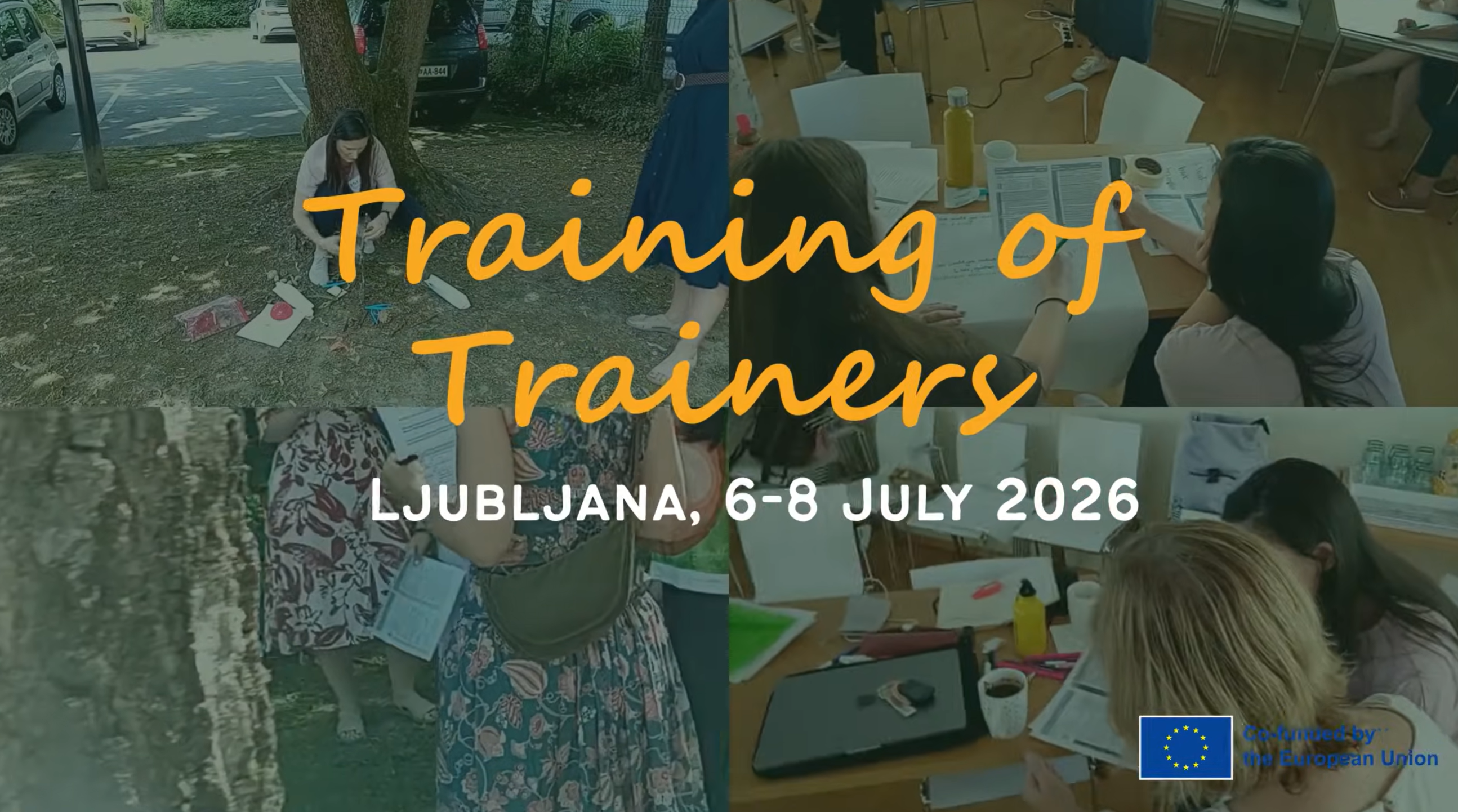
Learning Outdoors: Inside the OUTPLAY Teacher Training
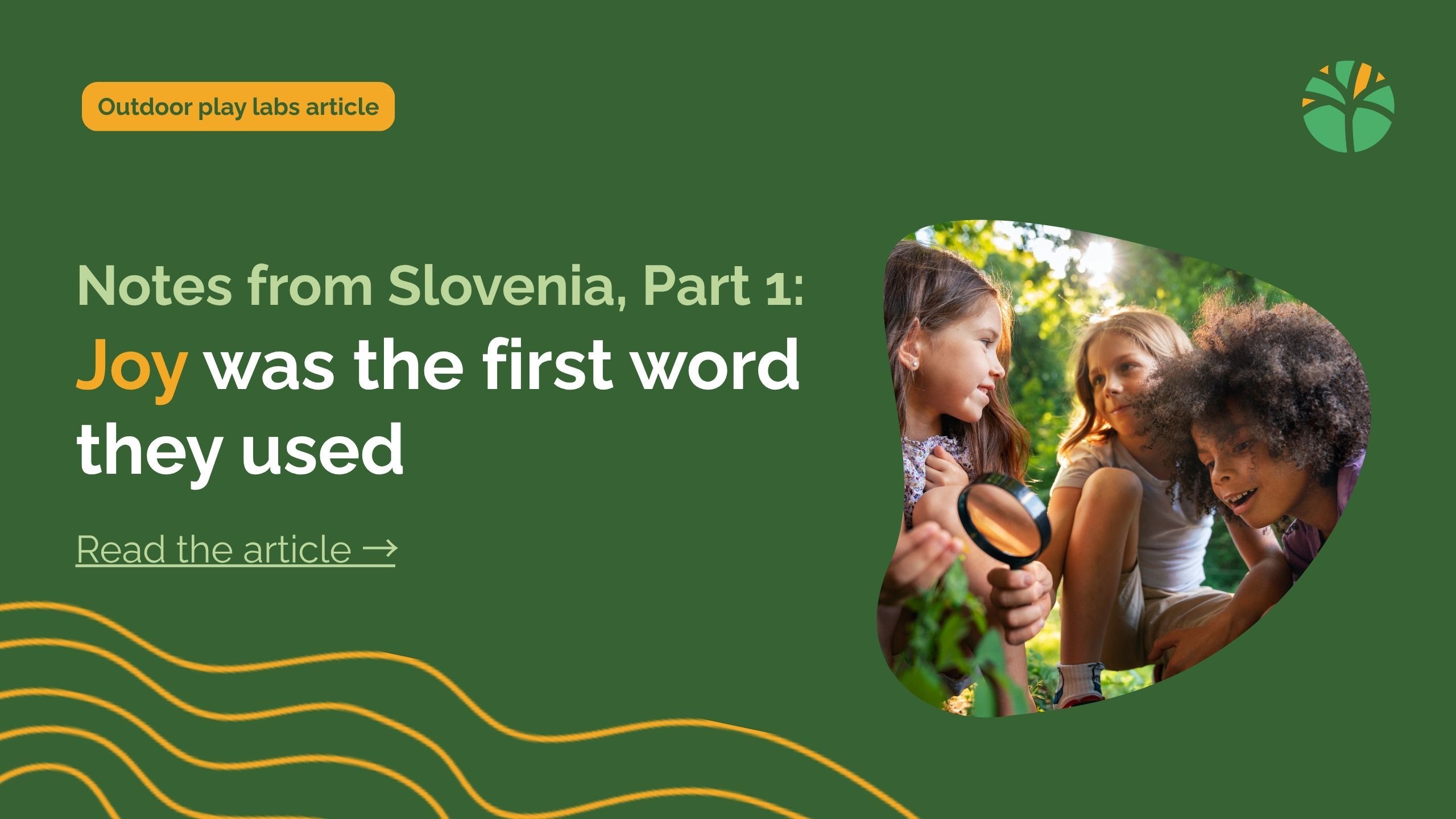
Notes from Slovenia, Part 1: Joy was the first word they used