Aflatot: Early Childhood Education for Sustainable Development
Aflatot: Early childhood education for sustainable development. This study took place in the following countries: Albania, Serbia, Slovakia, Kenya, Zambia, Bolivia, Ecuador, Honduras, India and the Philippines to document the effects of the Aflatot programs on social emotional outcomes for young children. The program is implemented in 45 countries by NGOs that are partners of Aflatoun International as well as on governmental level, for example in Ukraine and Indonesia.
The study demonstrated that children are much more likely to think and act independently after having participated in the Aflatot programme. They improve their self–understanding, are managing their emotions in a healthier way, and they are able to identify other children’s and adult’s emotions and to adjust their behavior accordingly. Children better promote and maintain mutual, positive relationships with other children and significant adults after the programme. In addition, children become more confident in realizing their basic needs and they better understand the concept of value by practicing habits that are fundamental to financial literacy, such as delayed gratification, sharing and saving.
Some key indicators of Aflatot program impact: improvement pre- and post-intervention:
INITIATIVE +19%;
SELF-REGULATION +36%;
RIGHTS & RESPONSIBILITIES +20%;
RELATIONSHIPS +17%;
REDUCED CONDUCT PROBLEMS +12%;
DELAYED GRATIFICATION +20%.
Read more

Supporting families for nurturing care: Training resource package for home visiting practices
This training package equips trainers of home visiting professionals with essential knowledge, skills, and tools to deliver consistent, high-quality pre-service and in-service training.
Developed by UNICEF ECARO and the International Step by Step Association (ISSA), it builds on almost ten years of collaboration and earlier home visiting modules (2017–2025). The goal is to strengthen home visiting as a key community health service supporting families from pregnancy to early childhood.
The package includes three guides: General Overview, Foundational Training, and Extended Training, each offering adaptable materials such as session plans, slides, and handouts based on nurturing and family-centered care.
It combines two main areas: (1) programmatic knowledge on child development, health, nutrition, and parental wellbeing, and (2) practical skills such as communication, relationship building, observation, problem-solving, and cultural responsiveness.
Grounded in adult learning principles, the training encourages reflection, peer learning, and practical application, fostering the professional growth of trainers and home visitors while improving the quality of home visiting services.
Trainer Guide: General Overview
Trainer Guide: Foundational Training
Trainer Guide: Extended Training
button[src="https://cdn.prod.website-files.com/694724257114b734f4bb749a/6985cff74ab2bbd98fabe605_SUPPORTING%20FAMILIES%20FOR%20NURTURING%20CARE%20Training%20Resource%20Package%20for%20Home%20Visiting%20Practices_0.pdf"][label="Download the Resource Package"] button[src="https://clearinghouse.unicef.org/sites/ch/files/ch/teams-ECARO-Planning-ECA%20Knowledge%20at%20UNICEF-Guide%201.General%20Overview-2.0.pdf"][label="Trainer Guide: General Overview"] button[src="https://clearinghouse.unicef.org/sites/ch/files/ch/teams-ECARO-Planning-ECA%20Knowledge%20at%20UNICEF-Guide%202.Foundational%20training-2.0.pdf"][label="Trainer Guide: Foundational Training"] button[src="https://clearinghouse.unicef.org/sites/ch/files/ch/eams-ECARO-Planning-ECA%20Knowledge%20at%20UNICEF-FT_2025_PowerPoints_Day_I%20-2.0.pptx"][label="PPT"] button[src="https://clearinghouse.unicef.org/sites/ch/files/ch/teams-ECARO-Planning-ECA%20Knowledge%20at%20UNICEF-FT_2025_PowerPoints_Day_I%20-2.0.pdf"][label="PDF"] button[src="https://clearinghouse.unicef.org/sites/ch/files/ch/eams-ECARO-Planning-ECA%20Knowledge%20at%20UNICEF-FT%202025_PowerPoints_Day%20II-2.0.pptx"][label="PPT"] button[src="https://clearinghouse.unicef.org/sites/ch/files/ch/teams-ECARO-Planning-ECA%20Knowledge%20at%20UNICEF-FT%202025_PowerPoints_Day%20II-2.0.pdf"][label="PDF"] button[src="https://clearinghouse.unicef.org/sites/ch/files/ch/eams-ECARO-Planning-ECA%20Knowledge%20at%20UNICEF-FT%202025_PowerPoints_Day%20III-2.0.pptx"][label="PPT"] button[src="https://clearinghouse.unicef.org/sites/ch/files/ch/teams-ECARO-Planning-ECA%20Knowledge%20at%20UNICEF-FT%202025_PowerPoints_Day%20III-2.0.pdf"][label="PDF"] button[src="https://clearinghouse.unicef.org/sites/ch/files/ch/eams-ECARO-Planning-ECA%20Knowledge%20at%20UNICEF-FT%202025_PowerPoints_Day%20IV-2.0.pptx"][label="PPT"] button[src="https://clearinghouse.unicef.org/sites/ch/files/ch/teams-ECARO-Planning-ECA%20Knowledge%20at%20UNICEF-FT%202025_PowerPoints_Day%20IV-2.0.pdf"][label="PDF"] button[src="https://clearinghouse.unicef.org/sites/ch/files/ch/eams-ECARO-Planning-ECA%20Knowledge%20at%20UNICEF-FT%202025_PowerPoints_Day%20V-2.0.pptx"][label="PPT"] button[src="https://clearinghouse.unicef.org/sites/ch/files/ch/teams-ECARO-Planning-ECA%20Knowledge%20at%20UNICEF-FT%202025_PowerPoints_Day%20V-2.0.pdf"][label="PDF"] button[src="https://clearinghouse.unicef.org/sites/ch/files/ch/teams-ECARO-Planning-ECA%20Knowledge%20at%20UNICEF-Guide%203.Extended%20training-2.0.pdf"][label="Trainer Guide: Extended Training"] button[src="https://clearinghouse.unicef.org/sites/ch/files/ch/eams-ECARO-Planning-ECA%20Knowledge%20at%20UNICEF-ET%20Day%20I-2.0.pptx"][label="PPT"] button[src="https://clearinghouse.unicef.org/sites/ch/files/ch/teams-ECARO-Planning-ECA%20Knowledge%20at%20UNICEF-ET%20Day%20I-2.0.pdf"][label="PDF"] button[src="https://clearinghouse.unicef.org/sites/ch/files/ch/eams-ECARO-Planning-ECA%20Knowledge%20at%20UNICEF-ET_Day%20II%20merged-2.0.pptx"][label="PPT"] button[src="https://clearinghouse.unicef.org/sites/ch/files/ch/teams-ECARO-Planning-ECA%20Knowledge%20at%20UNICEF-ET_Day%20II%20merge-2.0.pdf"][label="PDF"] button[src="https://clearinghouse.unicef.org/sites/ch/files/ch/eams-ECARO-Planning-ECA%20Knowledge%20at%20UNICEF-ET_Day%20III%20merged-2.0.pptx"][label="PPT"] button[src="https://clearinghouse.unicef.org/sites/ch/files/ch/teams-ECARO-Planning-ECA%20Knowledge%20at%20UNICEF-ET_Day%20III%20merge-2.0.pdf"][label="PDF"]Published in:
2025
Organization(s):
ISSA, UNICEF ECARO
Language:
Contact:
Ayca Alayli, aalayli@issa.nl
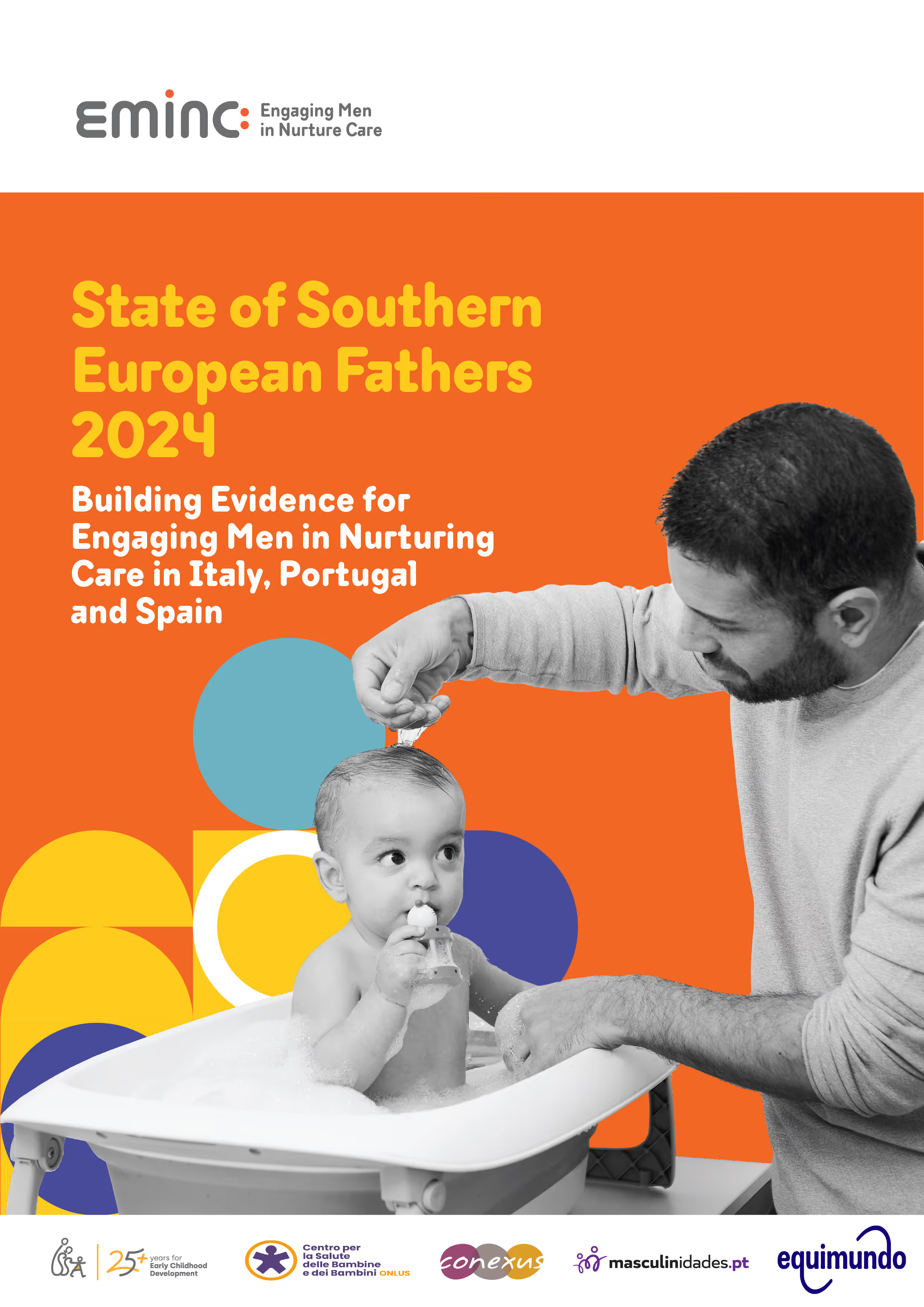
State of Southern European Fathers 2024: Building Evidence for Engaging Men in Nurturing Care in Italy, Portugal, and Spain
The State of Southern European Fathers 2024 report, developed under the EMiNC initiative, explores fathers’ involvement in caregiving across Italy, Portugal, and Spain. While many men report active participation in daily care, a significant perception gap remains: 74% of fathers believe caregiving is equally shared, but only 51% of mothers agree. The findings show that mothers still carry the greater caregiving and household burden, often at the expense of their well-being and professional opportunities. At the same time, the report highlights the vital role fathers play in children’s development—greater involvement is linked to stronger emotional bonds, improved learning outcomes, and better long-term well-being for children.
Yet barriers persist: rigid workplace cultures, limited access to paid leave, and lack of affordable, quality childcare constrain men’s ability to participate equally. The report calls for robust policy reforms—such as fully paid, non-transferable leave for fathers—and investments in early childhood services that actively engage men. Public campaigns and local peer support networks are also essential to shift norms and expectations. Promoting men’s caregiving is not only a matter of gender equality, it is a key strategy to ensure all children thrive from the very start.
The report, developed under the EMiNC initiative, explores fathers’ involvement in caregiving across Italy, Portugal, and Spain. While many men report active participation in daily care, a significant perception gap remains: 74% of fathers believe caregiving is equally shared, but only 51% of mothers agree. The findings show that mothers still carry the greater caregiving and household burden, often at the expense of their well-being and professional opportunities. At the same time, the report highlights the vital role fathers play in children’s development—greater involvement is linked to stronger emotional bonds, improved learning outcomes, and better long-term well-being for children.Yet barriers persist: rigid workplace cultures, limited access to paid leave, and lack of affordable, quality childcare constrain men’s ability to participate equally. The report calls for robust policy reforms—such as fully paid, non-transferable leave for fathers—and investments in early childhood services that actively engage men. Public campaigns and local peer support networks are also essential to shift norms and expectations. Promoting men’s caregiving is not only a matter of gender equality, it is a key strategy to ensure all children thrive from the very start.
Published in:
2025
Organization(s):
ISSA
Language:
Module 3: Nutrition for Infants and Young Children
The Module 3 ‘Nutrition for Infants and Young Children’ is intended to support home visitors and other health professionals in providing advice and support to parents and families on infant and young child nutrition. It includes three modules:
Module 3b: ‘Introducing Complementary Foods’
Module 3c: ‘Nutrition of Children Aged 2-6 Years’
You can access the whole package here.
button[src="https://cdn.prod.website-files.com/694724257114b734f4bb749a/6985cf735eb0b715b71d6271_3a.Nutrition-BreastfeedingNEWBORN-ENG-WEB.pdf"][label="Download 3a. Breastfeeding"] button[src="https://cdn.prod.website-files.com/694724257114b734f4bb749a/6985cf743139d7275e743a0a_3b.Nutrition-InfantYoungChild-ENG-WEB.pdf"][label="Download 3b. Introducing Complementary Foods"] button[src="https://cdn.prod.website-files.com/694724257114b734f4bb749a/6985cf766ca73e3f96db4776_3c.Nutrition-YoungChild2-6-ENG.pdf"][label="Download 3c. Nutrition of Children Aged 2-6 Years"]
Published in:
2025
Organization(s):
UNICEF ECARO & ISSA