Peer Learning Activities 2020 - A Conversation with Zsuzsa László

The Persona Doll Method is a practical approach to help children talk about emotions and feelings in early childhood settings. The method provides a powerful, non-threatening, and enjoyable way to raise equality issues and counter stereotypical and discriminatory thinking with young children. The dolls help children express their feelings and worries, think critically, develop empathy, and challenge unfair treatment.
We sat down with Zsuzsa László of Partner’s Hungary who ran the Peer Learning Activity (PLA)* titled Using the Persona Doll method during and after COVID. Zsuzsa explains the PLA, the process, and what she found meaningful about it in the interview below.
Can you share a brief overview of the topic of your PLA?
The Persona Doll Method is for preschool teachers. They use 60 centimeter long dolls to teach children how to work on stereotypes or prejudices and include children who have disabilities or belong to any minority group. It's a very useful and very fun tool for a serious and delicate topic. It's delicate because we all have prejudices. We all have stereotypes, and preschool teachers are no exception.
We always try to work on our stereotypes first before giving the doll to the practitioners. The core point of the method is this: it brings a story to the class, a story of another child, or a story of his or her family, a story about himself or herself, or a story about something that happened. The children in the class help the doll solve the problem. For example, the doll went to another kindergarten, but because her skin color is darker, some children told her that they don't like Roma. And then, she brings the story to the class. It's a preschool -- I mean, they are five, six years old, sitting in a circle, and they get shocked by the story.
"Wow, wow, that happened?" they ask. And they try to find a solution. Sometimes the children will say, "oh, okay, you should talk to your mom," or "you should speak with the teacher," or "you should tell them that it's very hurtful" — they come up with ideas. The research suggests that when a situation happens in real life, they know what to say. They know how to act when something discriminative happens or when there is bullying in a preschool community. So this is the method.
In the training, we always start with a whole day of working on ourselves and saying that it's okay that we have stereotypes. But we have to deal with it. It's okay if you hold prejudices, but then we have to do something about it. That's why it's a long process.
So, that's what we did on the first day of the training. Then, on the second day, we went to the core -- practicing, watching films, and again practicing and practicing. Then, the practitioners went back to their communities and tried the method. After several weeks, we held the third session.
The PLA we hosted had two groups. One group was for the practitioners. And then we had another group of trainers because we thought this would be very good for trainers to be able to share the method in their countries.
The first two days were combined. On the last day, we split the groups because with the practitioners; we were talking about their experiences. With the trainers, we talked more about how to teach the method. We did this step-by-step; we also produced training material for the trainers and a handout for the practitioners.
We also produced two different kinds of materials because there were two groups. We had a huge training material step-by-step and the stories for the trainers. Whereas, for the practitioners, we shared many stories on how to use it, which was also important because of COVID-19. We had a huge session on how to talk about the COVID pandemic with the children, how to talk when we go back to normal, how to check if they are okay. So we produced some stories that the doll might bring in, not related to prejudice, but other important things that happened in the children's lives about COVID or the pandemic time.
What was the most meaningful part of hosting a PLA for you and your organization?
I am the coordinator of REYN Hungary, and that is one of my missions. The other is the Persona Doll Method - spreading Persona Doll Method. I'm really happy when I don't have to organize the participants because you are already the trainer, the methodology developer, and then it is a lot to be the organizer and marketeer.
So I'm really grateful that I just received a list of great people who just jumped on the zoom, and we started the work. I think it's, it's really, really good for, for a trainer or for someone who wants to share their work. Of course, we could do it, but it takes a lot more work.
ISSA has such a huge network, and I think it's great that people can choose what PLA they want. You go as a trainer, and the people are already signed up for the PLA, and they are the right people. I think just perfectly organized, and it was one of the best training for the Persona Dolls that I ever did, so I truly enjoyed it.
For Partner's Hungary, it was very good that we are now linked with many other people or other organizations that we might not have had contact with before. We will continue working with them. We also created a closed Facebook group for these practitioners, and they can share their experiences. And, and so if let's say we want to do something with similar innovative methods, we can go into this group, and they are there. I know all their faces, they know my face -- it's a new network that started. So it was also a very useful thing.
Can you tell us what you think were the main outcomes of your PLA despite, or maybe due to being organized online?
Doing the PLA online was good because we had so many people from so many countries. When you have to travel, it can be difficult to go. I mean, sometimes it's a whole week off, and this way, participants are able to switch on from anywhere. The Latvian group that attended our PLA, a group that had five people, they were able to join from one laptop. Online PLAs allow people to attend from the workplace. Other people can also hear it, and participants can share it right there in the kindergarten. Sometimes I had a feeling that we walked into their community. It was also good, for this PLA, that we could take two weeks of break. When I do the training in Hungary, I always use these breaks because they have to digest the information and have to practice. It was very good. If people travel for this PLA, you cannot do it. And the downside, of course, is that we missed the real-life we miss the contact -- doing something together, learning about each other.
What would you like to let other ISSA members know about hosting or participating in an online PLA?
Hosting an online PLA can attract more people because it is more flexible. For individuals, when you get an invitation, you have a better chance to attend if you don't have to travel. You don't think about your schedule if you have family things or another appointment because you can click on Zoom, switch on the camera, and you are a part of the PLA! I think it's a huge advantage.
Can you share an example of how the topic of your PLA is important for your work?
I'm not only very enthusiastic about the Persona Doll Method but always about embracing diversity. I either do an Embracing Diversity or Persona Doll trainings. So this is my mission.
Where can one find more information on this question?
You can check our website Partner's Hungary. If you speak Hungarian, you can also visit the REYN Hungary website.
If you want much more information about the Persona Doll Method, I suggest you check the Persona Doll Training website, because they have many resources.
The Practitioners Training Manual developed for this PLA is on the ISSA Knowledge Hub.
*Every year ISSA Members benefit from Peer Learning Activities (PLAs), which aim to build Members’ capacity, deepen their knowledge and act as enabling spaces for Members to co-create new knowledge. You can learn more about Peer Learning Activities offered in the ISSA Network here.
Read more

Supporting families for nurturing care: Training resource package for home visiting practices
This training package equips trainers of home visiting professionals with essential knowledge, skills, and tools to deliver consistent, high-quality pre-service and in-service training.
Developed by UNICEF ECARO and the International Step by Step Association (ISSA), it builds on almost ten years of collaboration and earlier home visiting modules (2017–2025). The goal is to strengthen home visiting as a key community health service supporting families from pregnancy to early childhood.
The package includes three guides: General Overview, Foundational Training, and Extended Training, each offering adaptable materials such as session plans, slides, and handouts based on nurturing and family-centered care.
It combines two main areas: (1) programmatic knowledge on child development, health, nutrition, and parental wellbeing, and (2) practical skills such as communication, relationship building, observation, problem-solving, and cultural responsiveness.
Grounded in adult learning principles, the training encourages reflection, peer learning, and practical application, fostering the professional growth of trainers and home visitors while improving the quality of home visiting services.
Trainer Guide: General Overview
Trainer Guide: Foundational Training
Trainer Guide: Extended Training
button[src="https://cdn.prod.website-files.com/694724257114b734f4bb749a/6985cff74ab2bbd98fabe605_SUPPORTING%20FAMILIES%20FOR%20NURTURING%20CARE%20Training%20Resource%20Package%20for%20Home%20Visiting%20Practices_0.pdf"][label="Download the Resource Package"] button[src="https://clearinghouse.unicef.org/sites/ch/files/ch/teams-ECARO-Planning-ECA%20Knowledge%20at%20UNICEF-Guide%201.General%20Overview-2.0.pdf"][label="Trainer Guide: General Overview"] button[src="https://clearinghouse.unicef.org/sites/ch/files/ch/teams-ECARO-Planning-ECA%20Knowledge%20at%20UNICEF-Guide%202.Foundational%20training-2.0.pdf"][label="Trainer Guide: Foundational Training"] button[src="https://clearinghouse.unicef.org/sites/ch/files/ch/eams-ECARO-Planning-ECA%20Knowledge%20at%20UNICEF-FT_2025_PowerPoints_Day_I%20-2.0.pptx"][label="PPT"] button[src="https://clearinghouse.unicef.org/sites/ch/files/ch/teams-ECARO-Planning-ECA%20Knowledge%20at%20UNICEF-FT_2025_PowerPoints_Day_I%20-2.0.pdf"][label="PDF"] button[src="https://clearinghouse.unicef.org/sites/ch/files/ch/eams-ECARO-Planning-ECA%20Knowledge%20at%20UNICEF-FT%202025_PowerPoints_Day%20II-2.0.pptx"][label="PPT"] button[src="https://clearinghouse.unicef.org/sites/ch/files/ch/teams-ECARO-Planning-ECA%20Knowledge%20at%20UNICEF-FT%202025_PowerPoints_Day%20II-2.0.pdf"][label="PDF"] button[src="https://clearinghouse.unicef.org/sites/ch/files/ch/eams-ECARO-Planning-ECA%20Knowledge%20at%20UNICEF-FT%202025_PowerPoints_Day%20III-2.0.pptx"][label="PPT"] button[src="https://clearinghouse.unicef.org/sites/ch/files/ch/teams-ECARO-Planning-ECA%20Knowledge%20at%20UNICEF-FT%202025_PowerPoints_Day%20III-2.0.pdf"][label="PDF"] button[src="https://clearinghouse.unicef.org/sites/ch/files/ch/eams-ECARO-Planning-ECA%20Knowledge%20at%20UNICEF-FT%202025_PowerPoints_Day%20IV-2.0.pptx"][label="PPT"] button[src="https://clearinghouse.unicef.org/sites/ch/files/ch/teams-ECARO-Planning-ECA%20Knowledge%20at%20UNICEF-FT%202025_PowerPoints_Day%20IV-2.0.pdf"][label="PDF"] button[src="https://clearinghouse.unicef.org/sites/ch/files/ch/eams-ECARO-Planning-ECA%20Knowledge%20at%20UNICEF-FT%202025_PowerPoints_Day%20V-2.0.pptx"][label="PPT"] button[src="https://clearinghouse.unicef.org/sites/ch/files/ch/teams-ECARO-Planning-ECA%20Knowledge%20at%20UNICEF-FT%202025_PowerPoints_Day%20V-2.0.pdf"][label="PDF"] button[src="https://clearinghouse.unicef.org/sites/ch/files/ch/teams-ECARO-Planning-ECA%20Knowledge%20at%20UNICEF-Guide%203.Extended%20training-2.0.pdf"][label="Trainer Guide: Extended Training"] button[src="https://clearinghouse.unicef.org/sites/ch/files/ch/eams-ECARO-Planning-ECA%20Knowledge%20at%20UNICEF-ET%20Day%20I-2.0.pptx"][label="PPT"] button[src="https://clearinghouse.unicef.org/sites/ch/files/ch/teams-ECARO-Planning-ECA%20Knowledge%20at%20UNICEF-ET%20Day%20I-2.0.pdf"][label="PDF"] button[src="https://clearinghouse.unicef.org/sites/ch/files/ch/eams-ECARO-Planning-ECA%20Knowledge%20at%20UNICEF-ET_Day%20II%20merged-2.0.pptx"][label="PPT"] button[src="https://clearinghouse.unicef.org/sites/ch/files/ch/teams-ECARO-Planning-ECA%20Knowledge%20at%20UNICEF-ET_Day%20II%20merge-2.0.pdf"][label="PDF"] button[src="https://clearinghouse.unicef.org/sites/ch/files/ch/eams-ECARO-Planning-ECA%20Knowledge%20at%20UNICEF-ET_Day%20III%20merged-2.0.pptx"][label="PPT"] button[src="https://clearinghouse.unicef.org/sites/ch/files/ch/teams-ECARO-Planning-ECA%20Knowledge%20at%20UNICEF-ET_Day%20III%20merge-2.0.pdf"][label="PDF"]Published in:
2025
Organization(s):
ISSA, UNICEF ECARO
Language:
Contact:
Ayca Alayli, aalayli@issa.nl
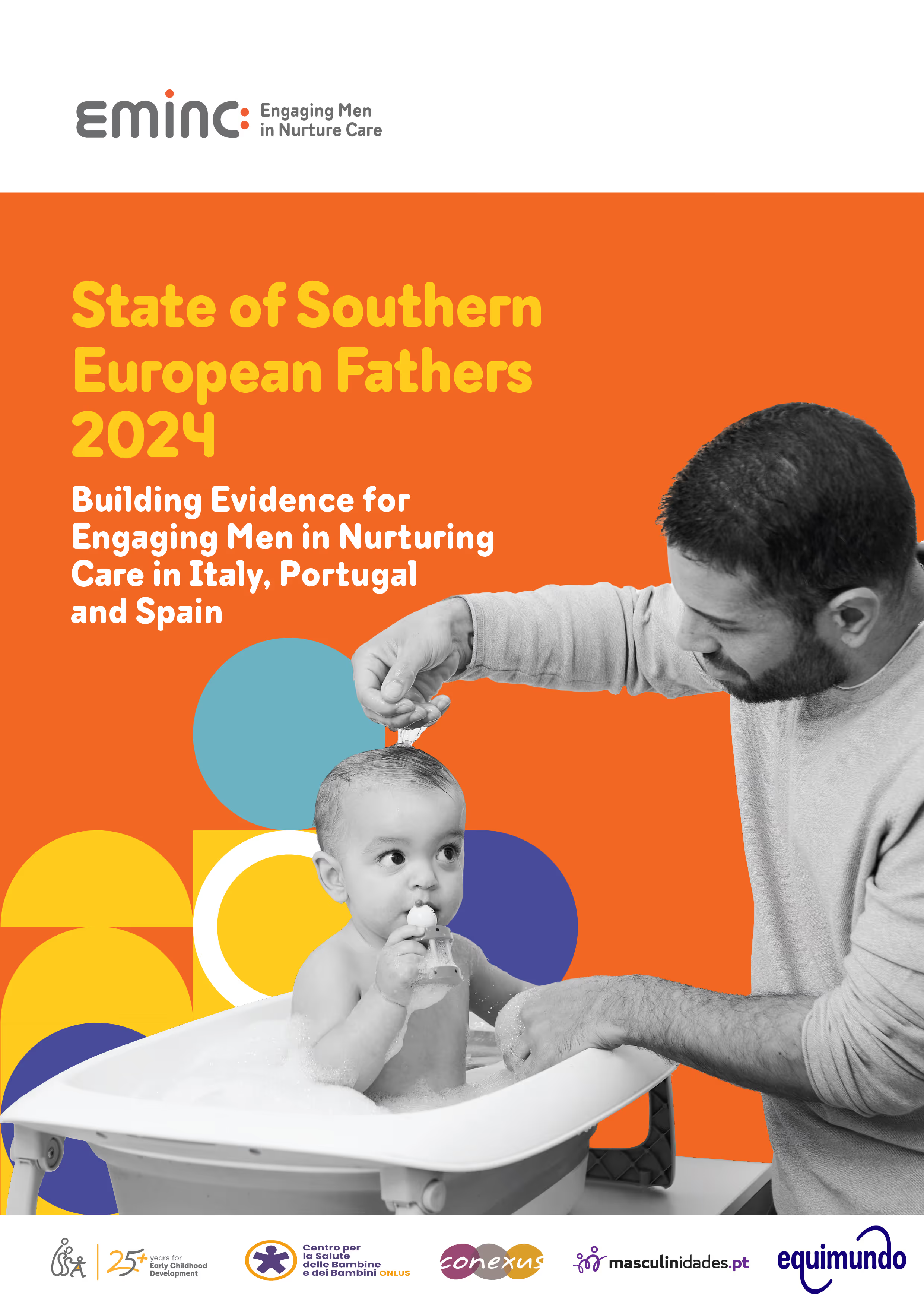
State of Southern European Fathers 2024: Building Evidence for Engaging Men in Nurturing Care in Italy, Portugal, and Spain
The State of Southern European Fathers 2024 report, developed under the EMiNC initiative, explores fathers’ involvement in caregiving across Italy, Portugal, and Spain. While many men report active participation in daily care, a significant perception gap remains: 74% of fathers believe caregiving is equally shared, but only 51% of mothers agree. The findings show that mothers still carry the greater caregiving and household burden, often at the expense of their well-being and professional opportunities. At the same time, the report highlights the vital role fathers play in children’s development—greater involvement is linked to stronger emotional bonds, improved learning outcomes, and better long-term well-being for children.
Yet barriers persist: rigid workplace cultures, limited access to paid leave, and lack of affordable, quality childcare constrain men’s ability to participate equally. The report calls for robust policy reforms—such as fully paid, non-transferable leave for fathers—and investments in early childhood services that actively engage men. Public campaigns and local peer support networks are also essential to shift norms and expectations. Promoting men’s caregiving is not only a matter of gender equality, it is a key strategy to ensure all children thrive from the very start.
The report, developed under the EMiNC initiative, explores fathers’ involvement in caregiving across Italy, Portugal, and Spain. While many men report active participation in daily care, a significant perception gap remains: 74% of fathers believe caregiving is equally shared, but only 51% of mothers agree. The findings show that mothers still carry the greater caregiving and household burden, often at the expense of their well-being and professional opportunities. At the same time, the report highlights the vital role fathers play in children’s development—greater involvement is linked to stronger emotional bonds, improved learning outcomes, and better long-term well-being for children.Yet barriers persist: rigid workplace cultures, limited access to paid leave, and lack of affordable, quality childcare constrain men’s ability to participate equally. The report calls for robust policy reforms—such as fully paid, non-transferable leave for fathers—and investments in early childhood services that actively engage men. Public campaigns and local peer support networks are also essential to shift norms and expectations. Promoting men’s caregiving is not only a matter of gender equality, it is a key strategy to ensure all children thrive from the very start.
Published in:
2025
Organization(s):
ISSA
Language:
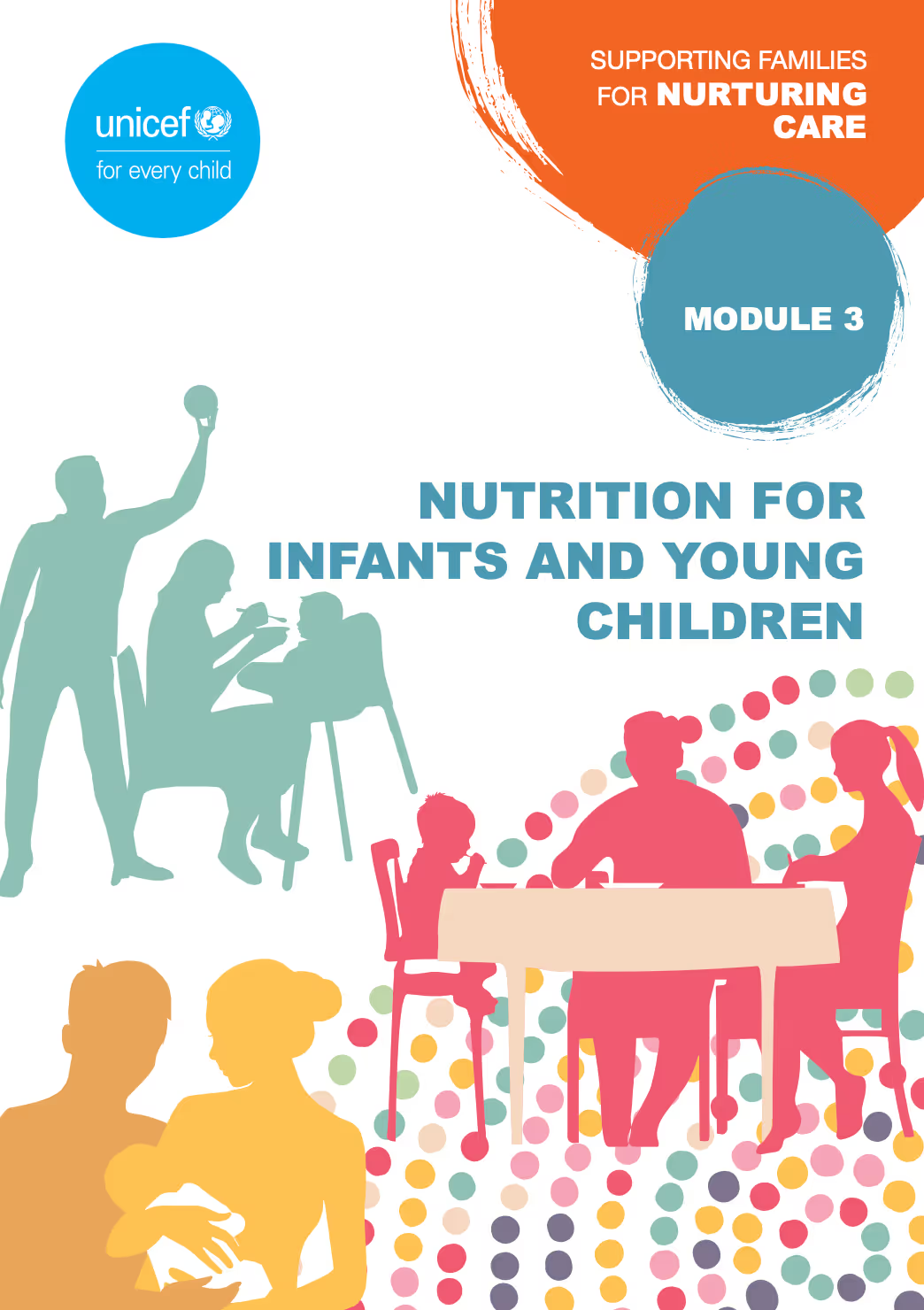
Module 3: Nutrition for Infants and Young Children
The Module 3 ‘Nutrition for Infants and Young Children’ is intended to support home visitors and other health professionals in providing advice and support to parents and families on infant and young child nutrition. It includes three modules:
Module 3b: ‘Introducing Complementary Foods’
Module 3c: ‘Nutrition of Children Aged 2-6 Years’
You can access the whole package here.
button[src="https://cdn.prod.website-files.com/694724257114b734f4bb749a/6985cf735eb0b715b71d6271_3a.Nutrition-BreastfeedingNEWBORN-ENG-WEB.pdf"][label="Download 3a. Breastfeeding"] button[src="https://cdn.prod.website-files.com/694724257114b734f4bb749a/6985cf743139d7275e743a0a_3b.Nutrition-InfantYoungChild-ENG-WEB.pdf"][label="Download 3b. Introducing Complementary Foods"] button[src="https://cdn.prod.website-files.com/694724257114b734f4bb749a/6985cf766ca73e3f96db4776_3c.Nutrition-YoungChild2-6-ENG.pdf"][label="Download 3c. Nutrition of Children Aged 2-6 Years"]
Published in:
2025
Organization(s):
UNICEF ECARO & ISSA