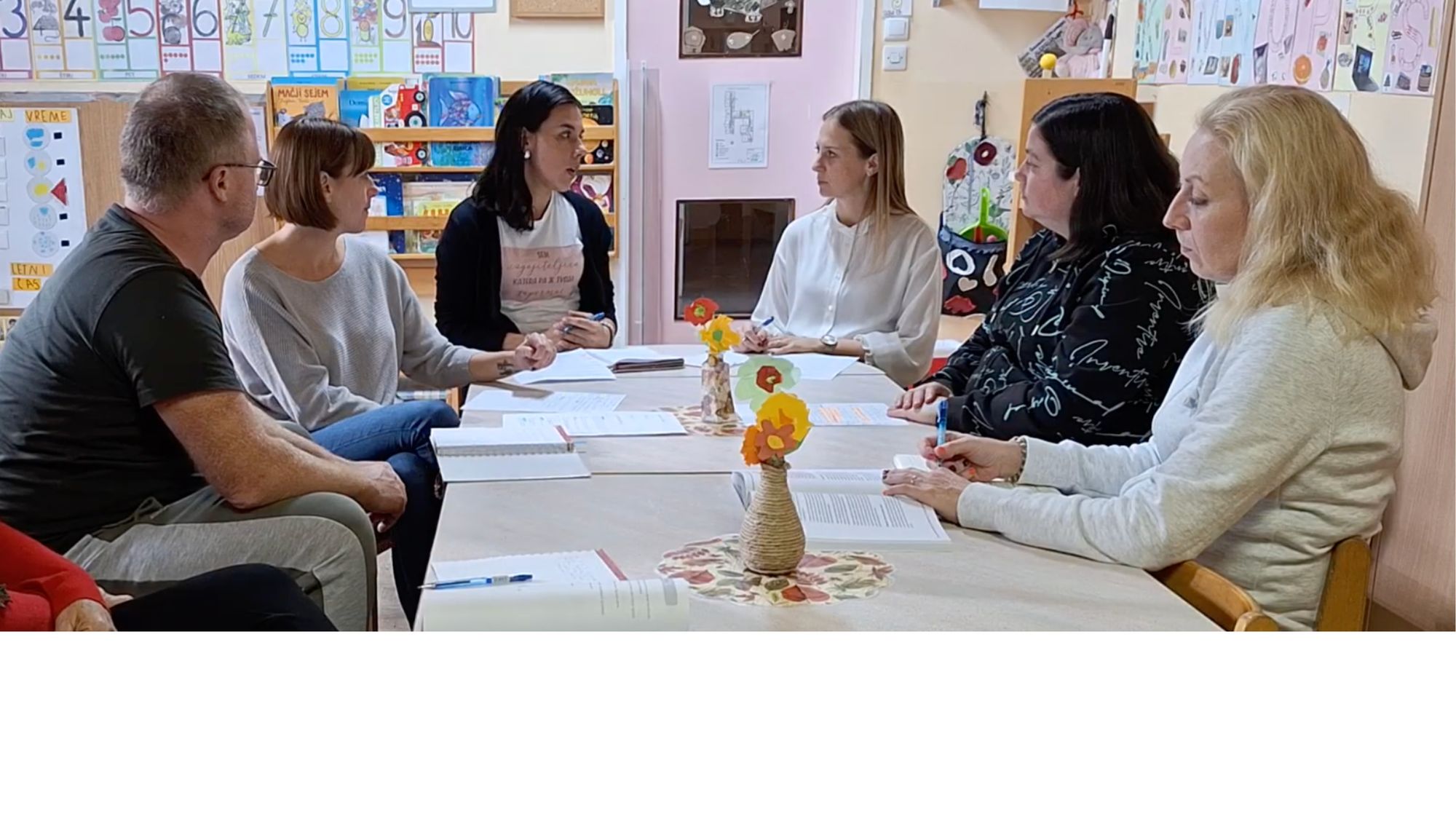
Soft Skills for High Quality Education is an Erasmus+ project that supports early childhood education by strengthening the soft leadership skills of Teacher Support Learning Group (TSLG) leaders who facilitate professional learning communities. Co-financed by the European Union, it will produce a Soft Skills Toolbox and accessible learning modules to help teams apply these skills in practice.
Over the past year, the project moved from design to real-life implementation. The training programme for leaders of Teacher Support Learning Groups (TSLGs) was piloted in kindergartens across Estonia, Slovakia, Slovenia, and Croatia. The results offer encouraging evidence — and important lessons.
Across all four countries, evaluation data show consistently high ratings, with overall averages ranging between 4.3 and 4.6 (out of 5) in areas such as understanding and use of soft skills, leadership role clarity, confidence, and practical application
What shifted in practice?
Participants reported a clearer understanding of what soft skills mean in the context of leading professional learning groups. Many described more conscious use of communication techniques such as active listening, mirroring, structuring meetings, and creating psychologically safe environments.
In Slovakia and Slovenia in particular, leaders reported strong uptake of new facilitation tools and structured approaches to guiding discussions. Estonian and Croatian participants highlighted improvements in group atmosphere, the use of engagement activities, and increased awareness of values and self-reflection.
Importantly, the training did not remain theoretical. Many leaders confirmed they had already applied newly acquired strategies in real TSLG meetings — from introducing icebreakers to managing conversations more intentionally and encouraging quieter colleagues to contribute.
A unique outcome: practice captured on video
One of the most significant milestones of the piloting phase was the creation of short practice-based videos by participating kindergarten teachers. These videos document how selected soft skills — such as communication, empathy, feedback, and meeting facilitation — are used in real TSLG settings.
Rather than external trainers modelling techniques, the leaders themselves demonstrated how they apply the 20 identified soft skills in their own professional communities. These materials will form part of the upcoming Soft Skills Toolbox, offering practical, peer-generated examples that other educators can learn from.
Where challenges remain
The evaluation results also reveal an important insight: understanding soft skills is easier than sustaining them in complex institutional realities.
Across countries, participants expressed a need for further support in:
· conflict resolution and difficult conversations,
· motivating colleagues with varying levels of engagement,
· stress management and burnout prevention,
· maintaining consistent application of soft skills over time.
In Croatia and Estonia in particular, some leaders reported contextual barriers such as limited opportunities to implement new methods or fluctuating team motivation. Even in countries with the strongest overall scores, leaders acknowledged that confidence in handling challenging group dynamics still requires continued development.
What we are learning about soft leadership
The piloting phase confirms that strengthening soft skills among TSLG leaders contributes to clearer leadership roles, improved communication, and a more supportive professional climate. The multi-session structure and peer-learning format were consistently valued, suggesting that ongoing reflection and community support are essential for sustainable change.
At the same time, the data highlight that soft leadership is not a one-time competence to be acquired — it requires reinforcement, practice, and institutional support.
As the project moves into its next phase, including national online trainings and the finalisation of the Soft Skills Toolbox, these lessons will inform how we deepen and sustain impact across early childhood education communities.