ISSA CONFERENCE 2026 · LISBON · 21–23 OCTOBER
Working as one
around every child and family
What we shared, learned and are building together
01
Working as one
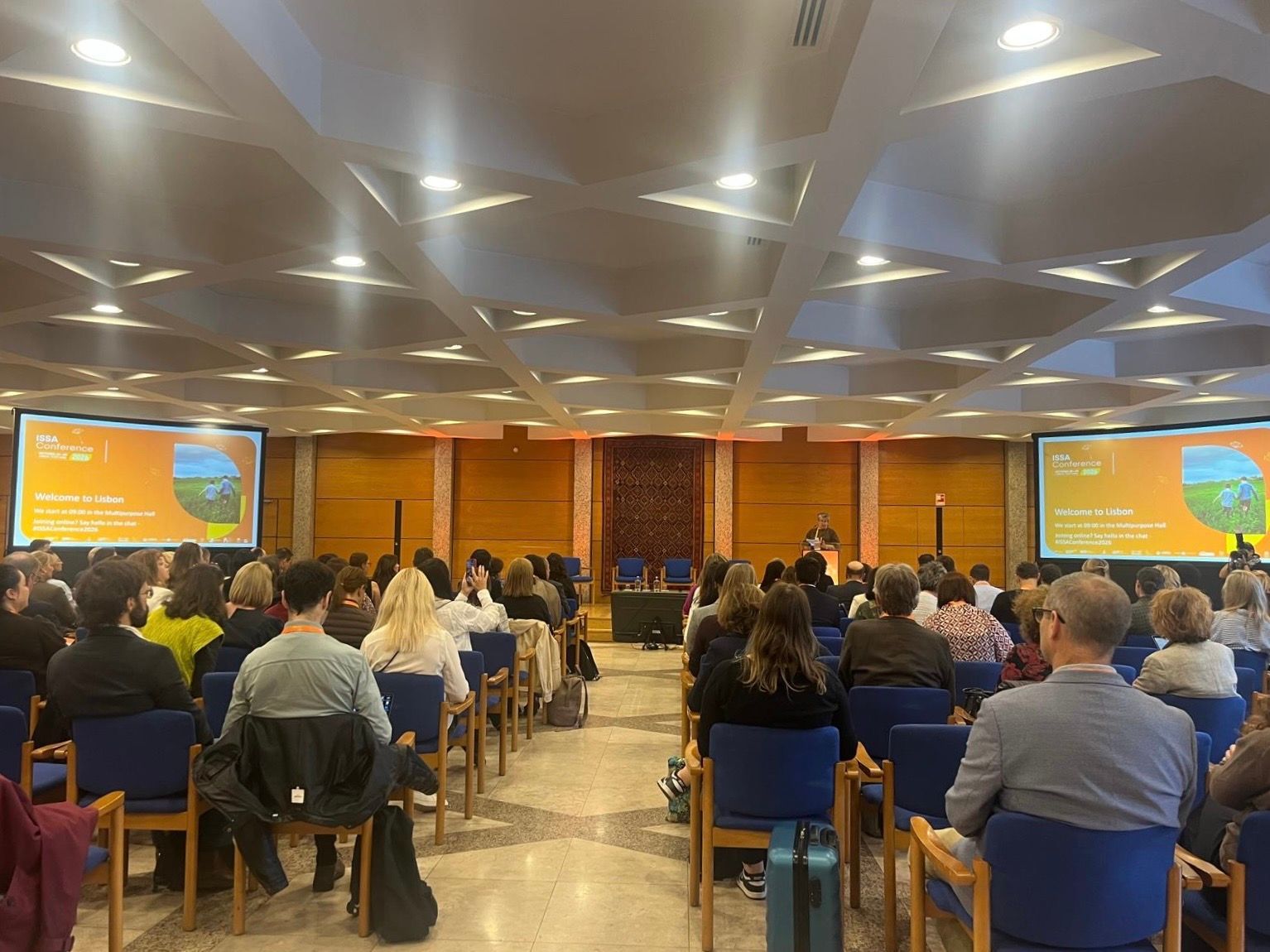
They say it takes a village to raise a child, but the village first needs someone to bring it together. In October 2026 more than 340 people from more than 60 countries answered that call, meeting in Lisbon and online to explore, side by side, how the systems around young children can work as one for every child and every family.
We know how full everyone’s diaries are these days, which is why it meant so much to us that policy makers, researchers, funders and practitioners set other commitments aside to spend these days learning from one another, and we are deeply grateful to each of you who joined us in the hall, around the workshop tables or through a screen.
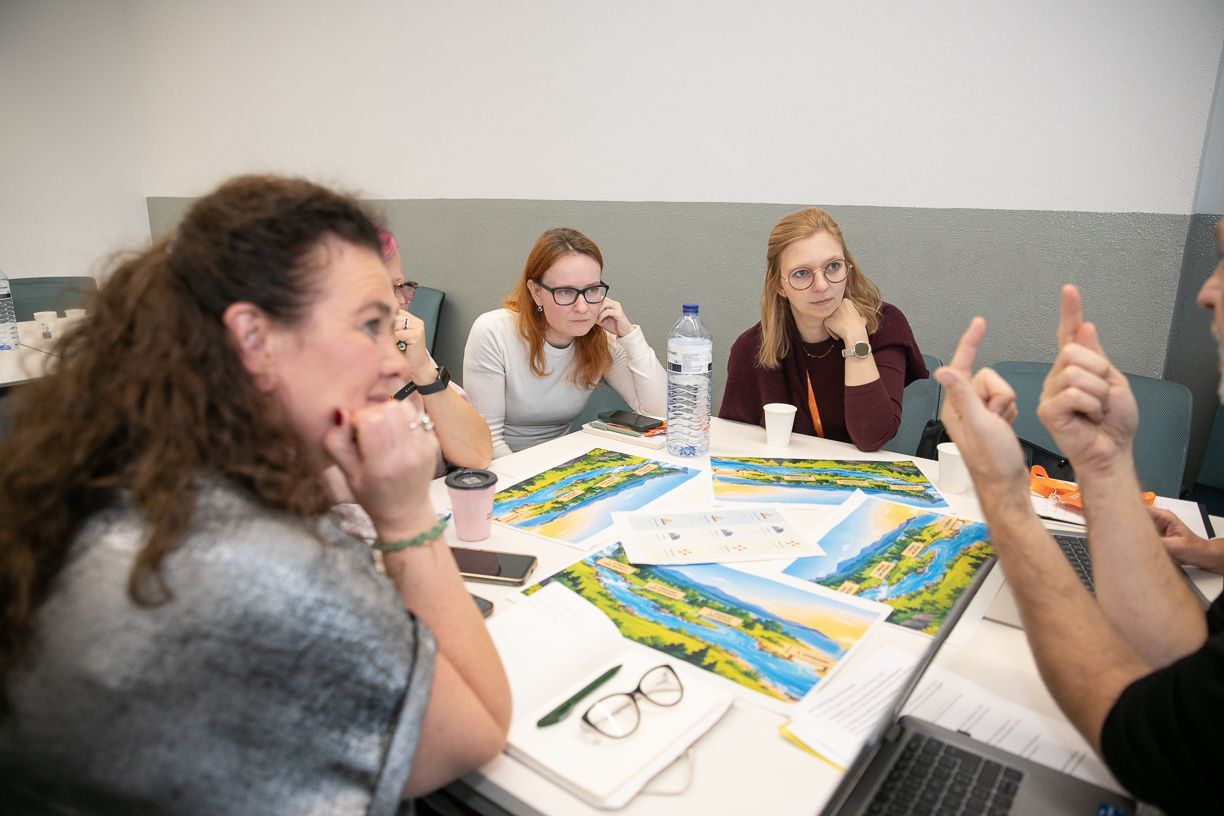
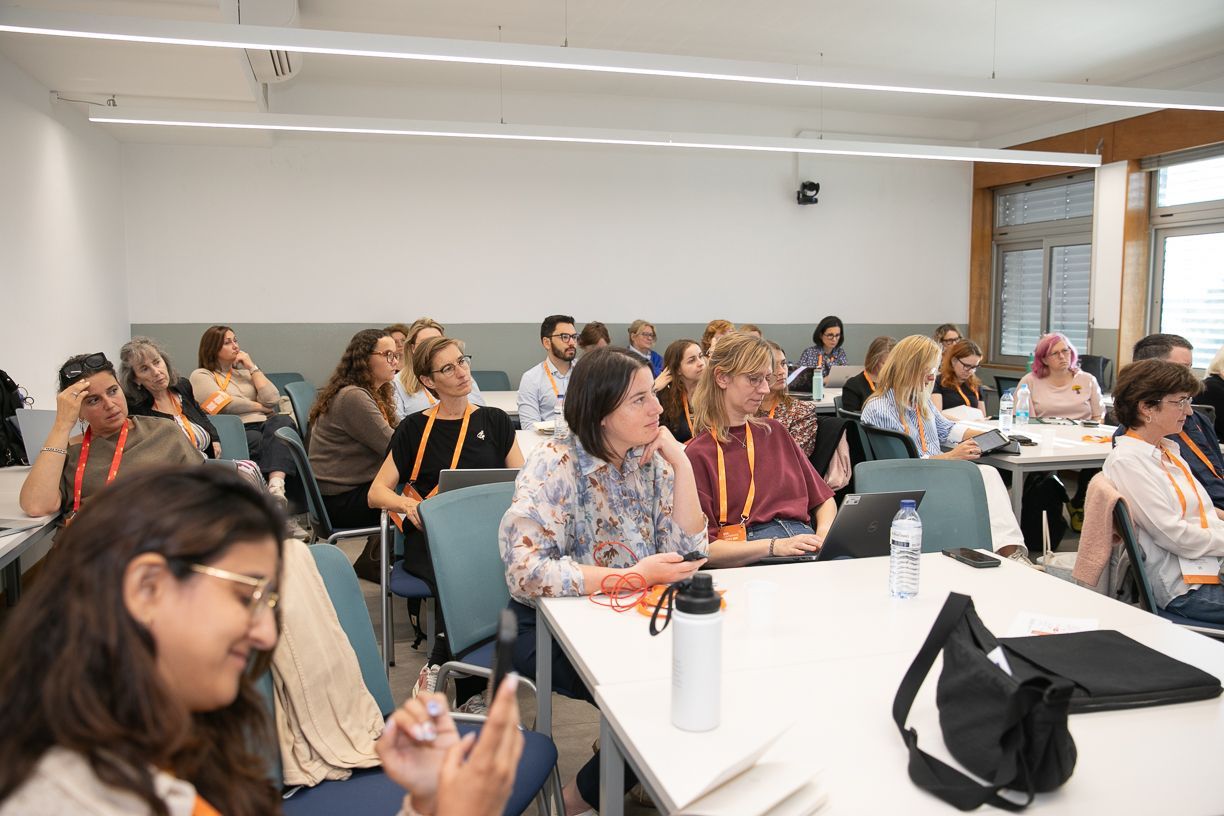
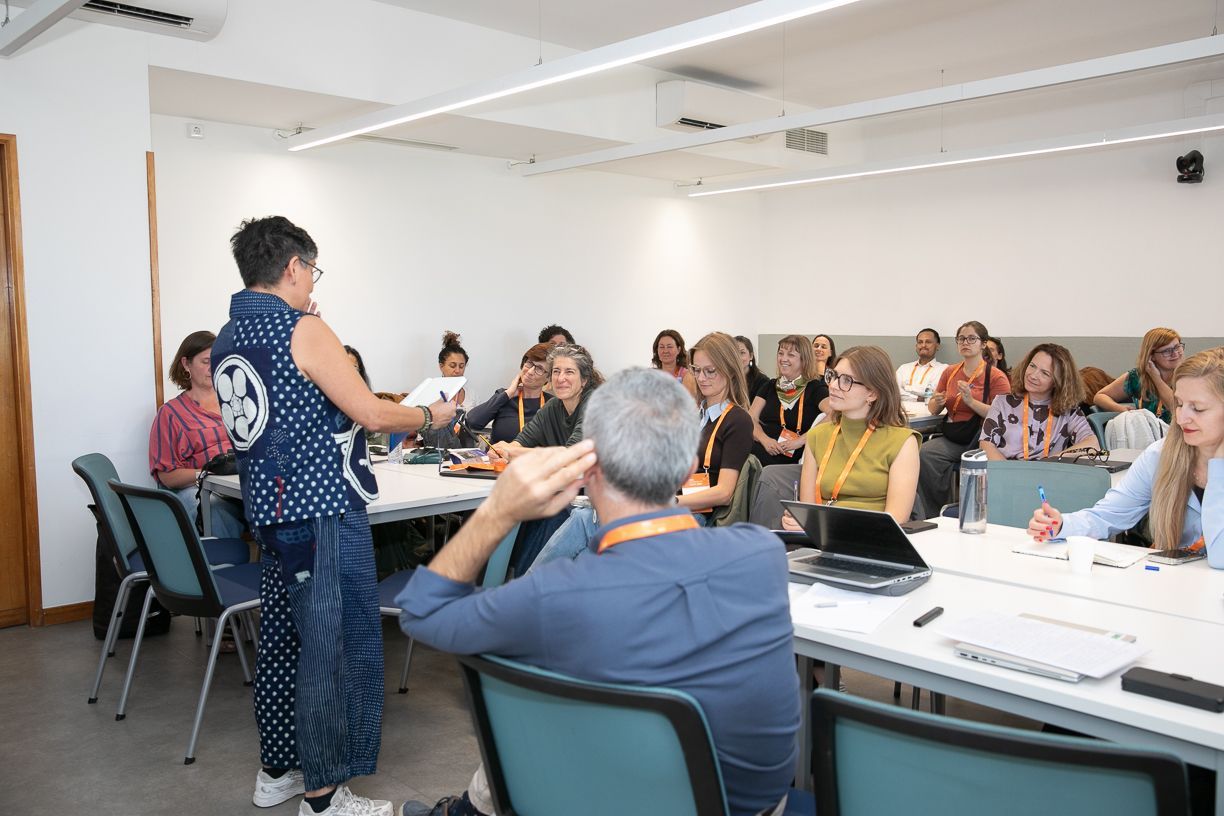
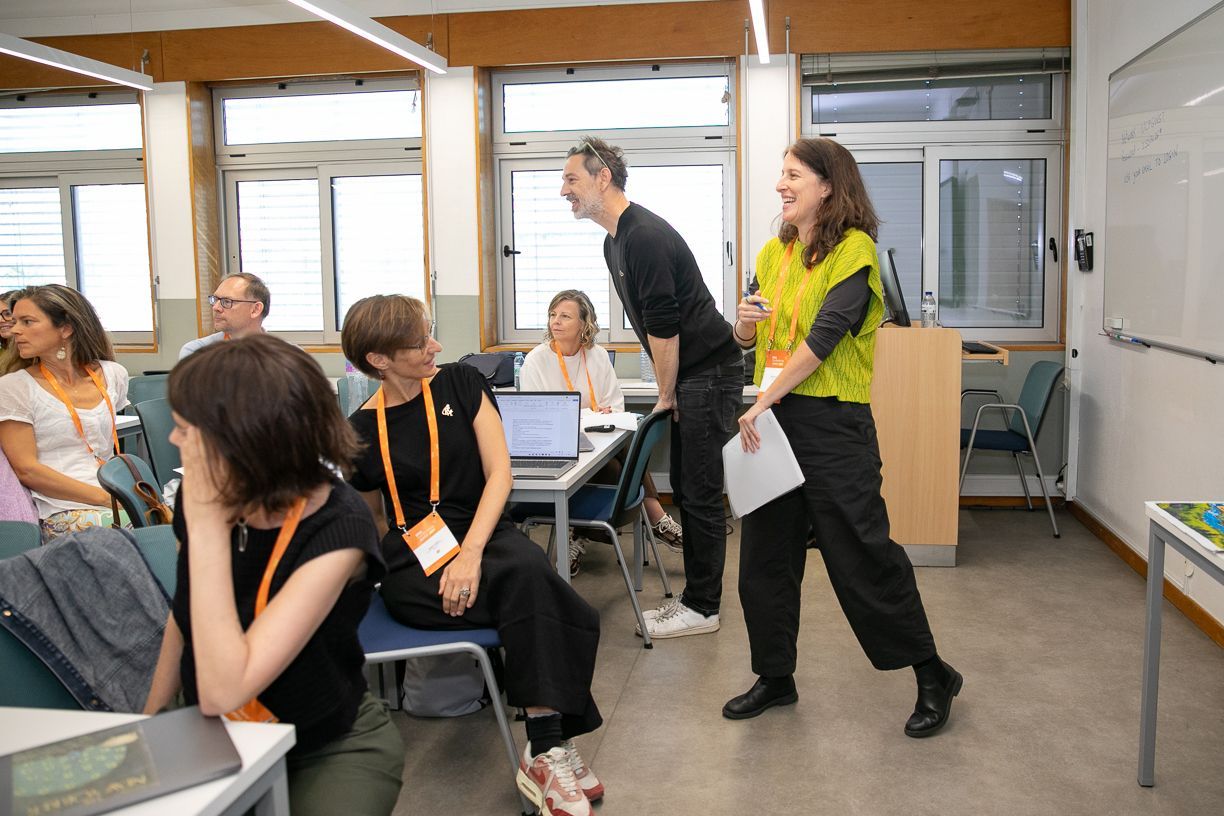
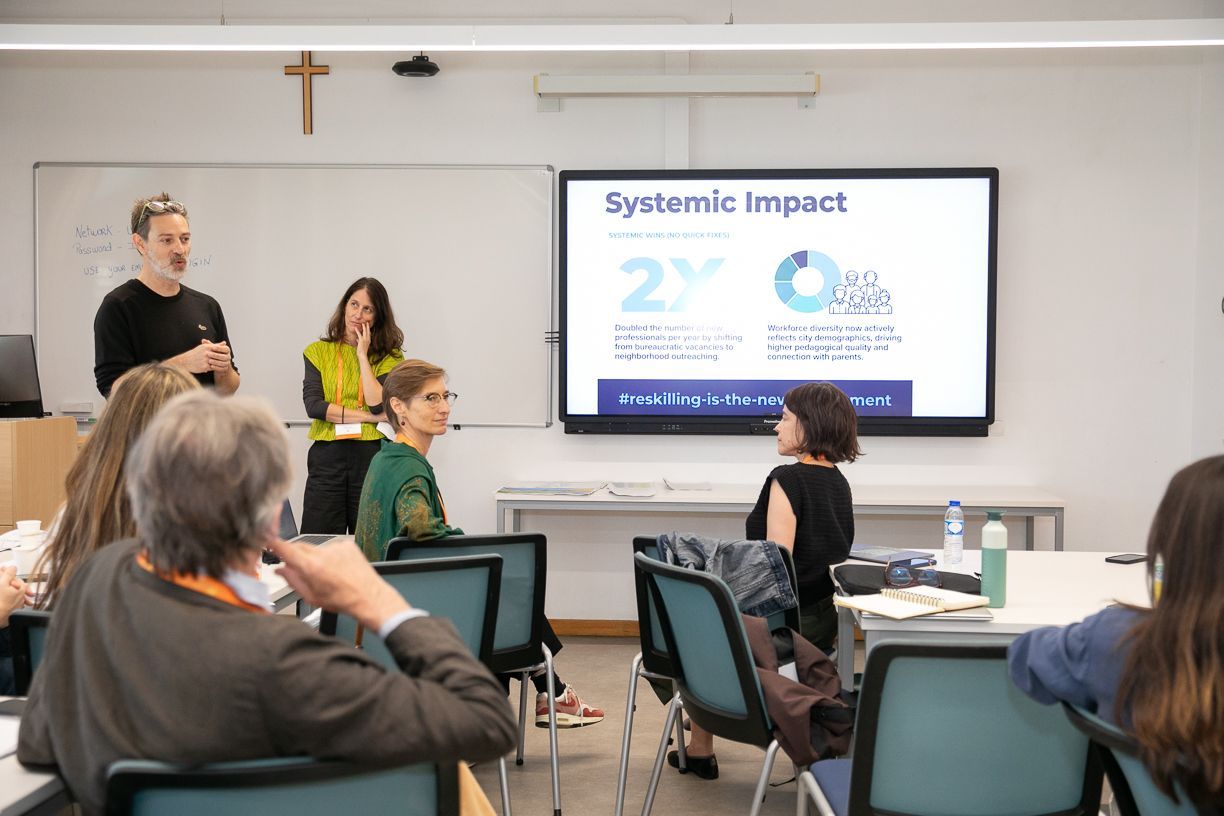
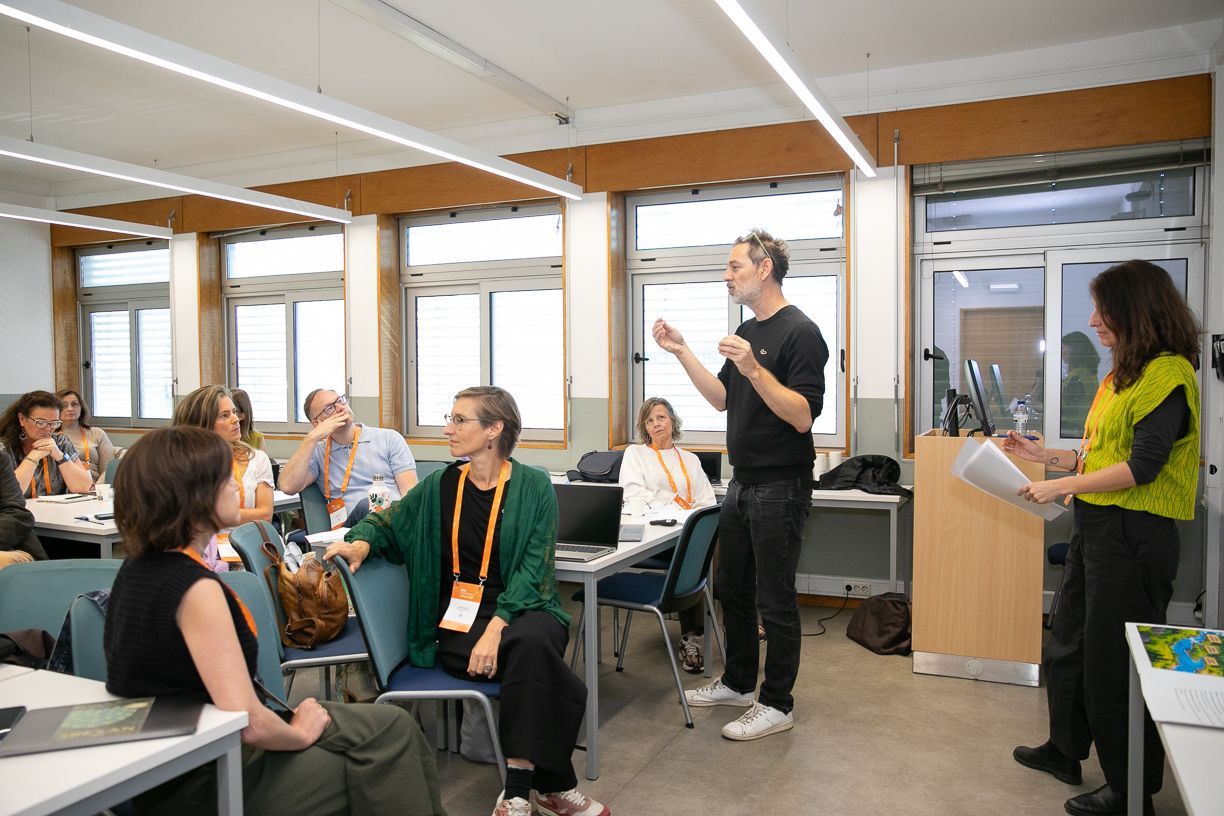
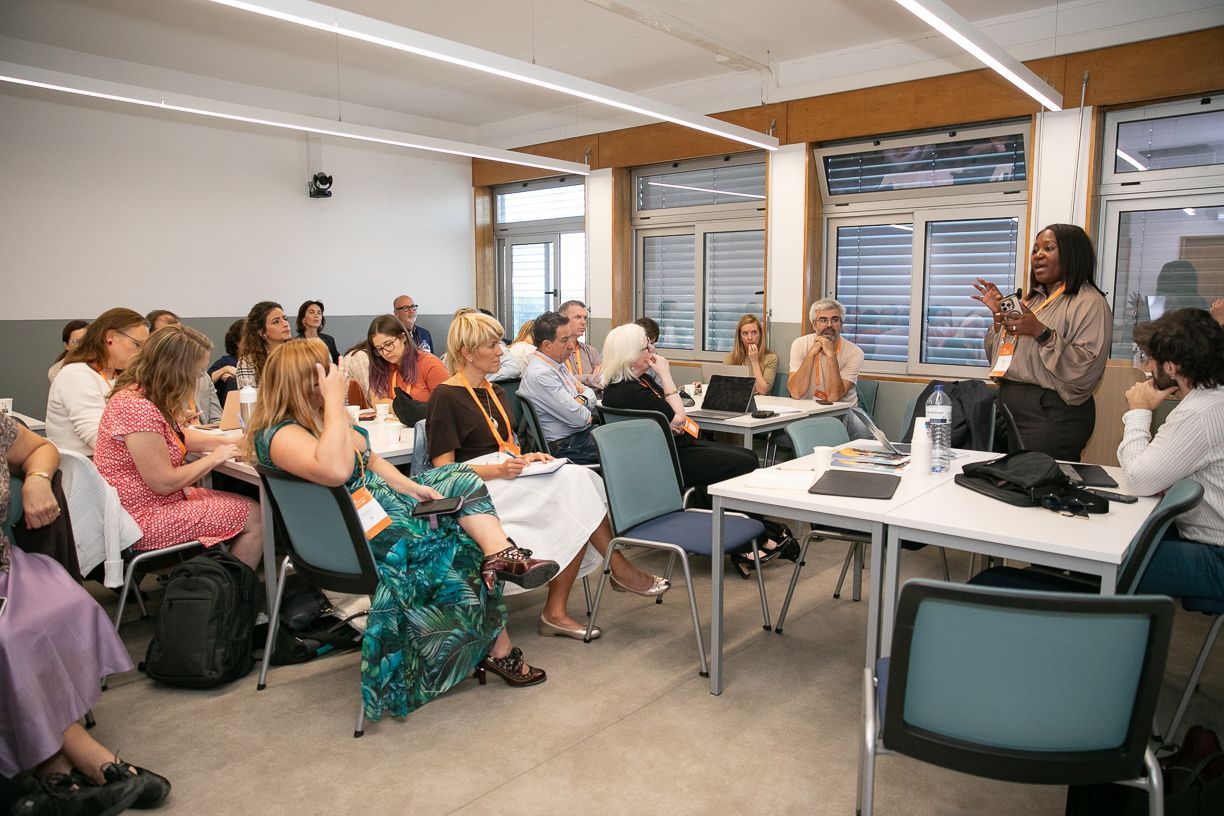
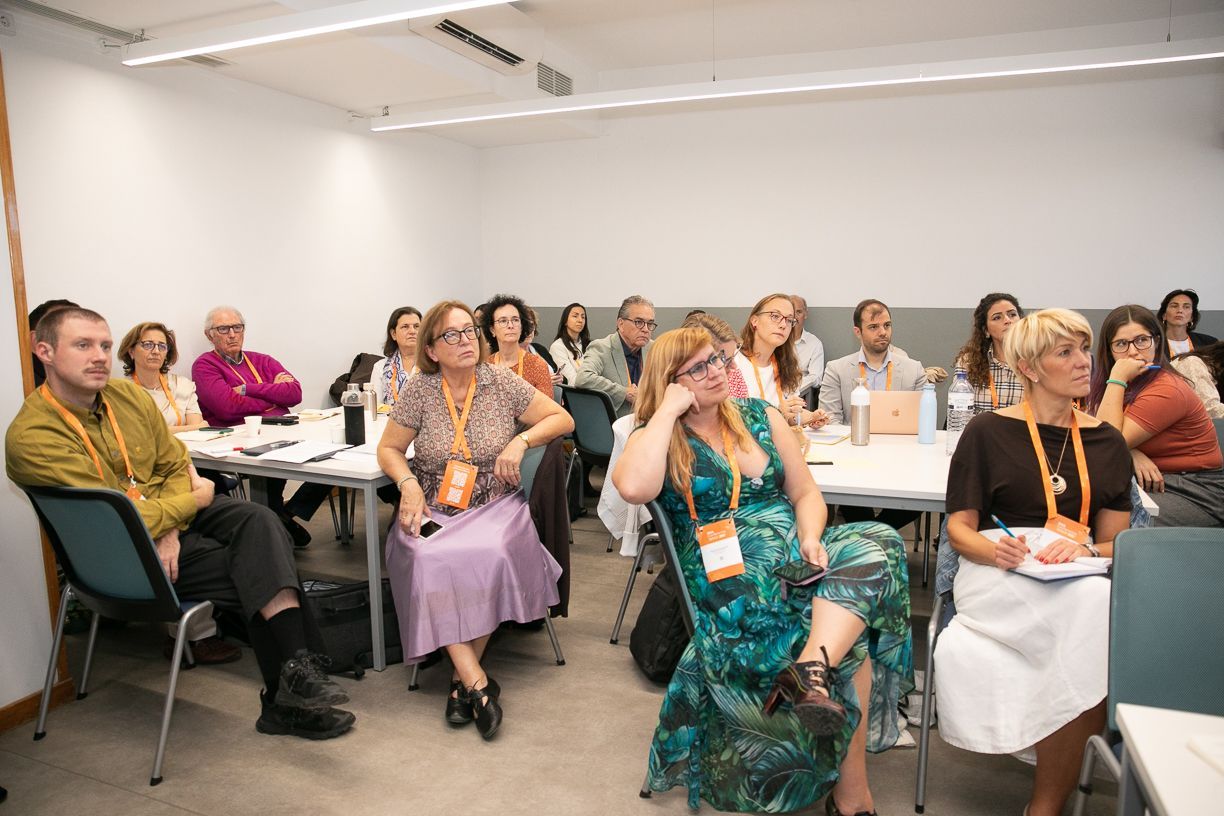
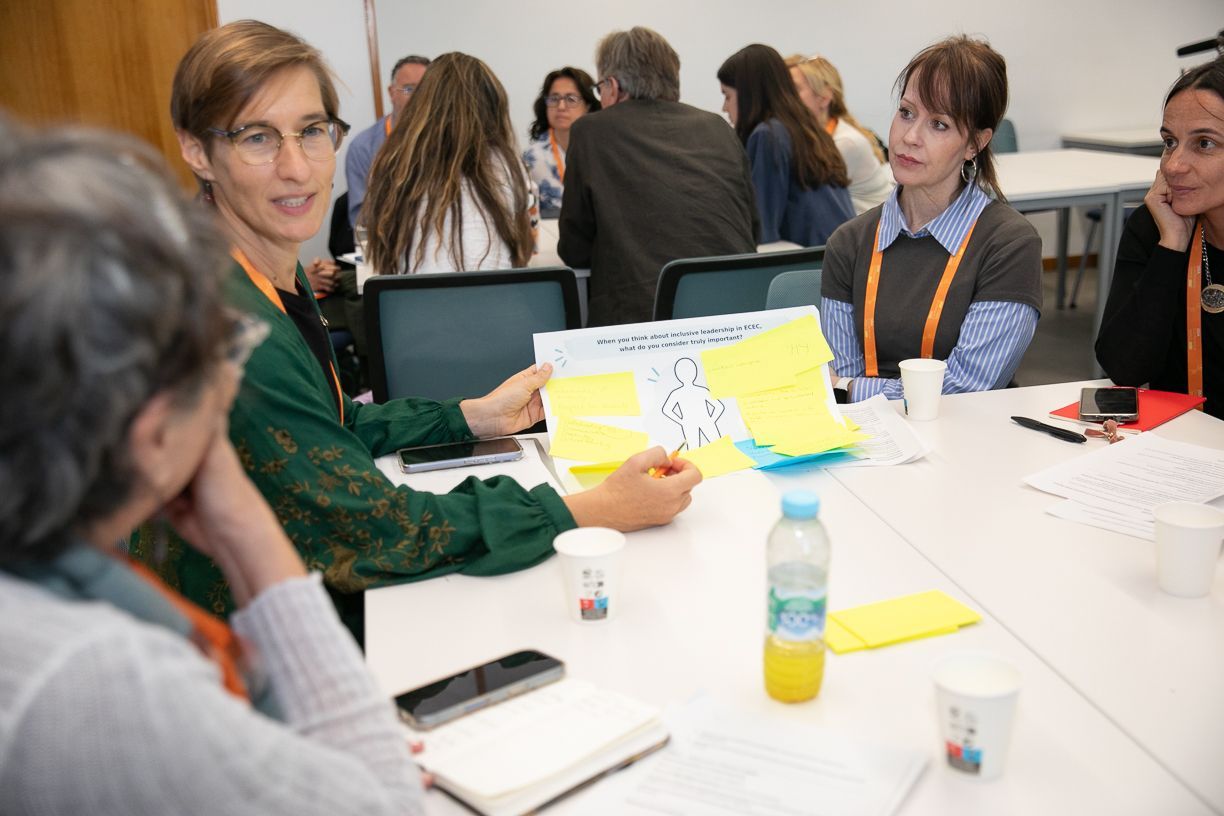
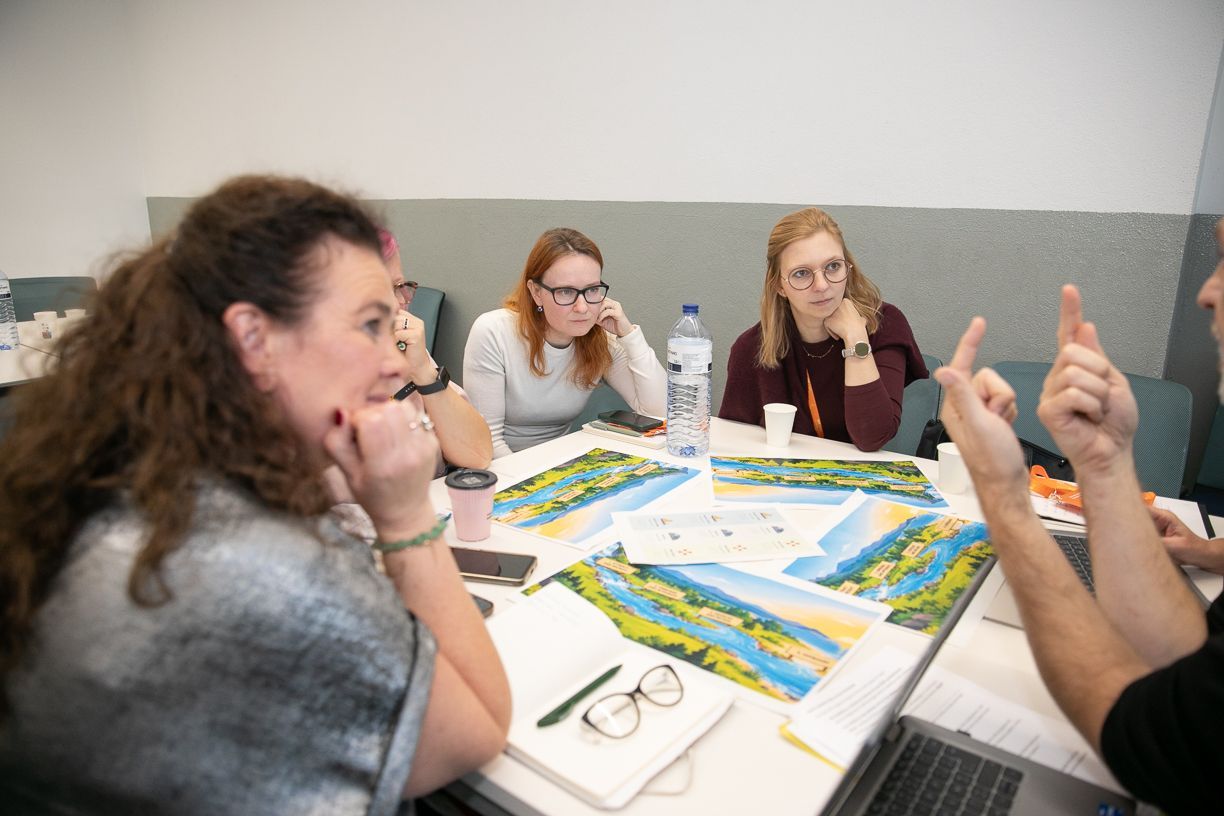
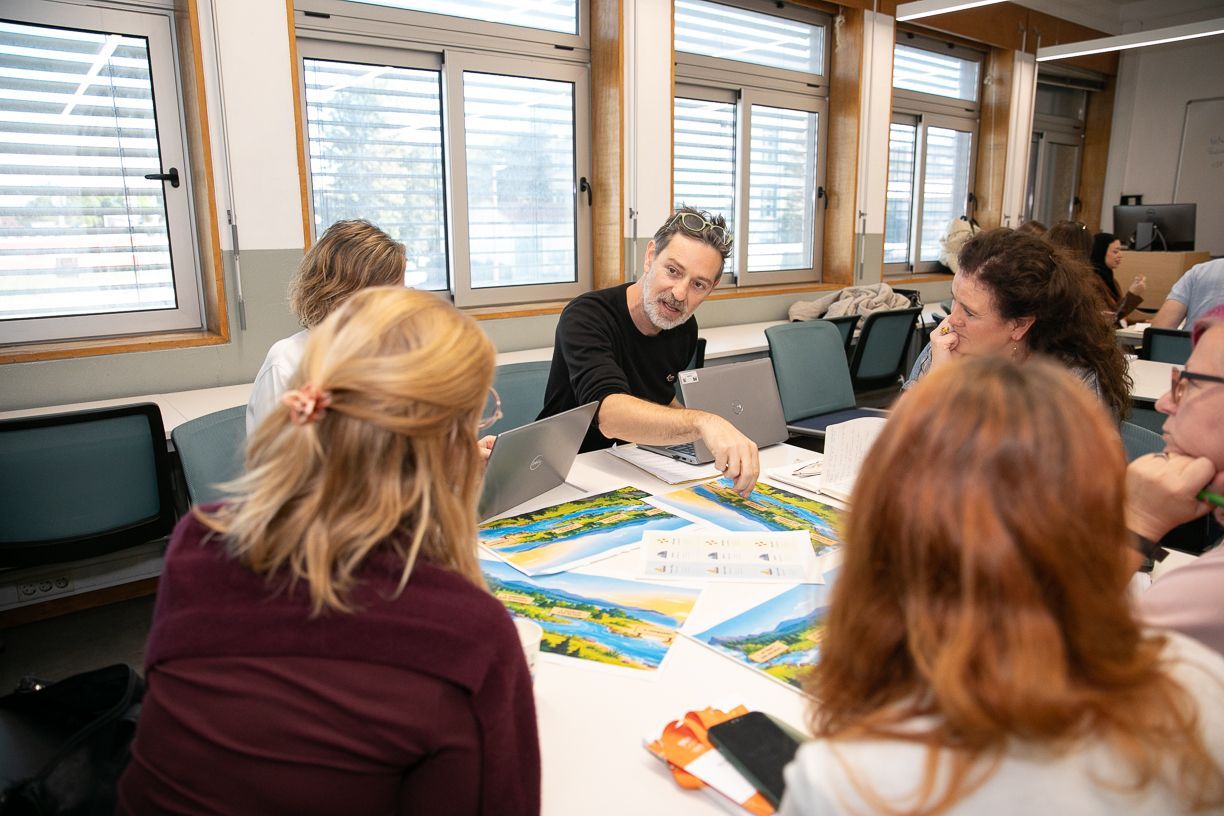
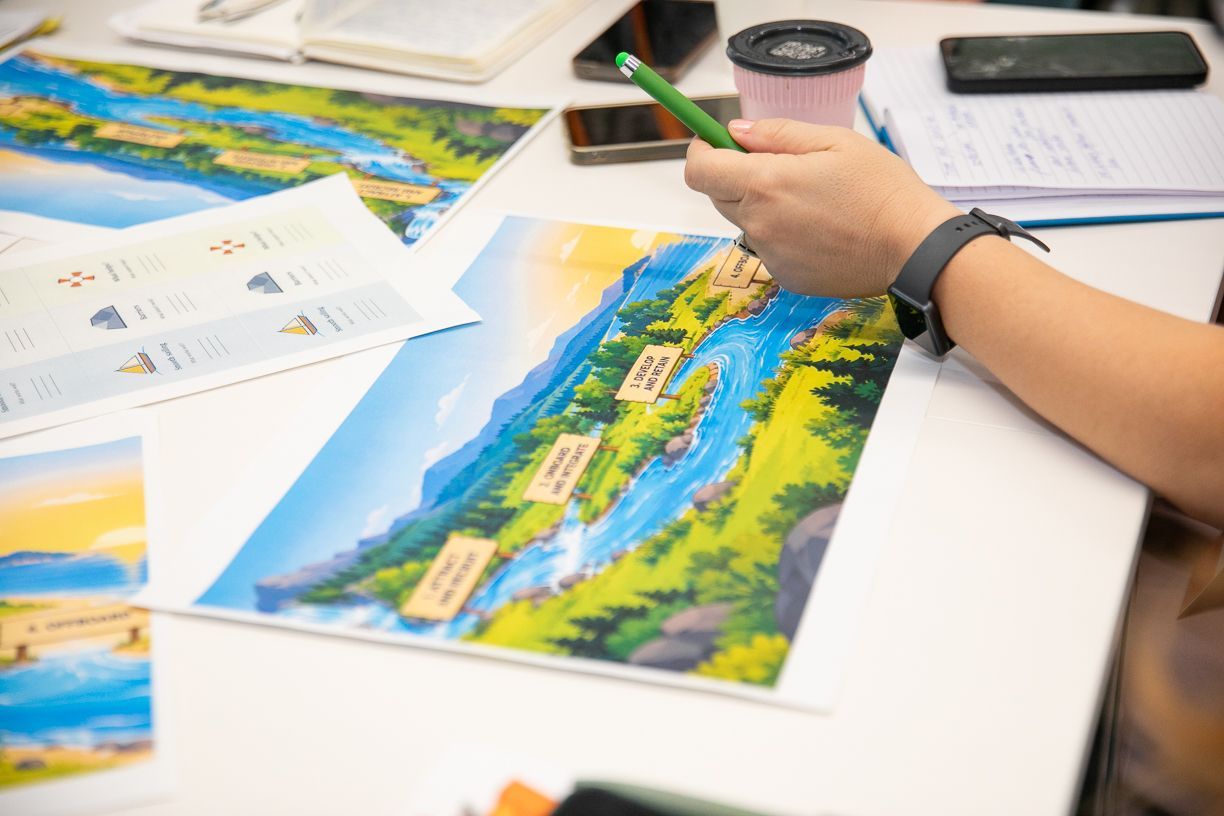
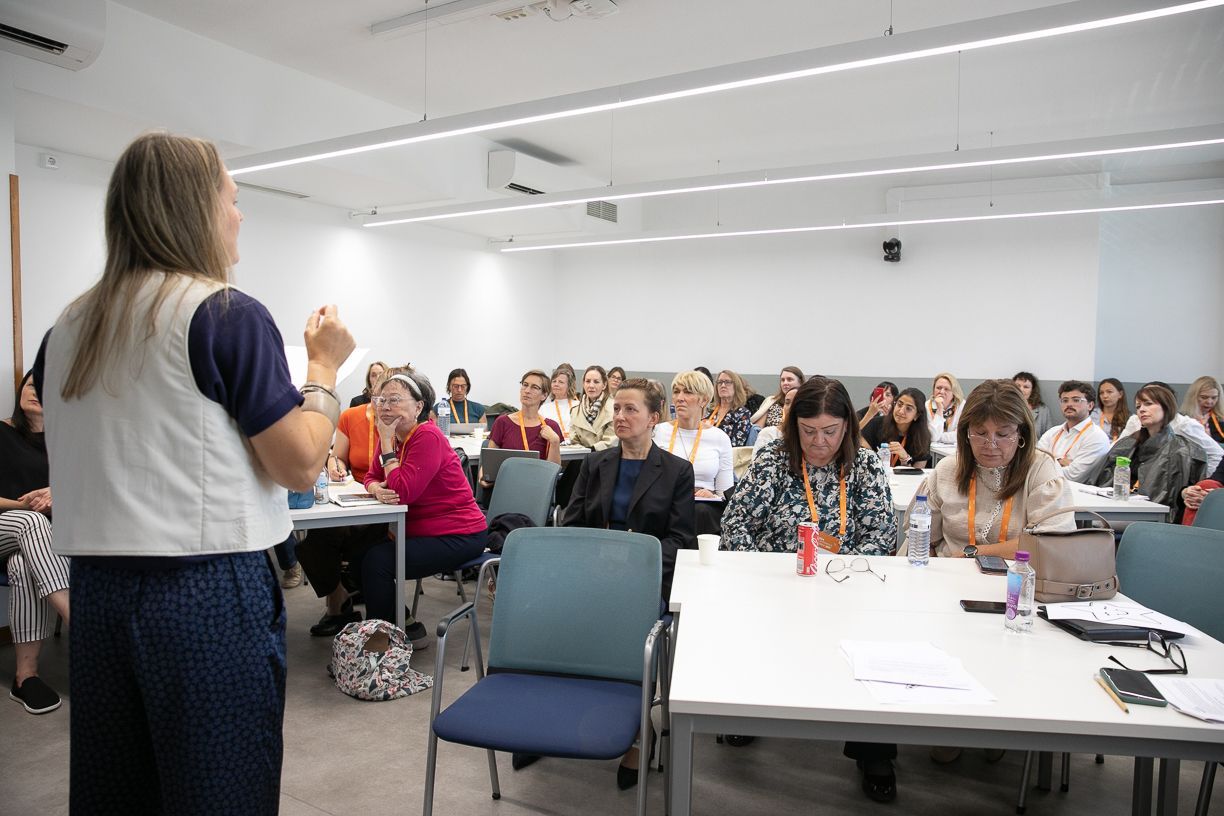
Many of you also took a leap with us into a new way of working. Our eighteen workshops ran like a hackathon across two venues, with people taking part in the room and online at the same time, in a format built for conversation so that there was finally time to listen properly and dig deeper together. Each contributor offered a spark, the tables carried it further, and by Friday afternoon everything the rooms had built came together in a consolidation plenary where our conversations began to turn into commitments.
What we heard was both clear and hopeful, because while policies, strategies and budgets create the conditions for integration, yet it is people who bring it to life, from those who decide, fund, govern, train and support to those who are with children and families every day, all of them reaching across the lines between sectors so that shared commitments become something families can actually feel.
Throughout the conference we followed Leonor, a fictional young child whose story ran through the plenaries and showed how many people and services touch a single child’s earliest years, and each time she appeared she gently reminded everyone in the room who all of this work is for.
The thread through this publication
No one integrates alone. Integration lives in relationships across sectors, governance levels and professional borders, and in networks that outlast any single project.
Integration has to be lived, not only written down. It becomes real when policy and decision makers, leaders and professionals, families and communities work differently, every day.
LISBON AT A GLANCE
- participants
- 340
- countries
- 60
- workshops
- 18
- site visits
- 9
- strands
- 3
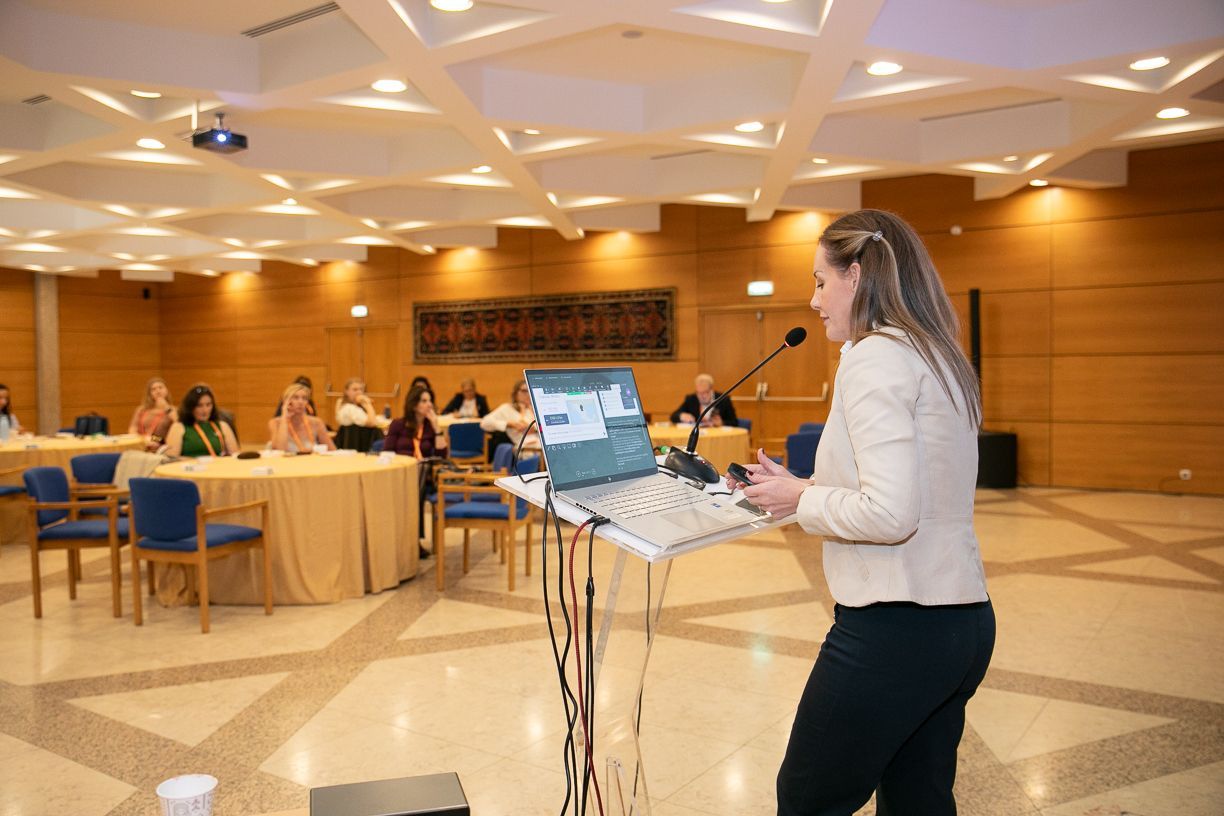
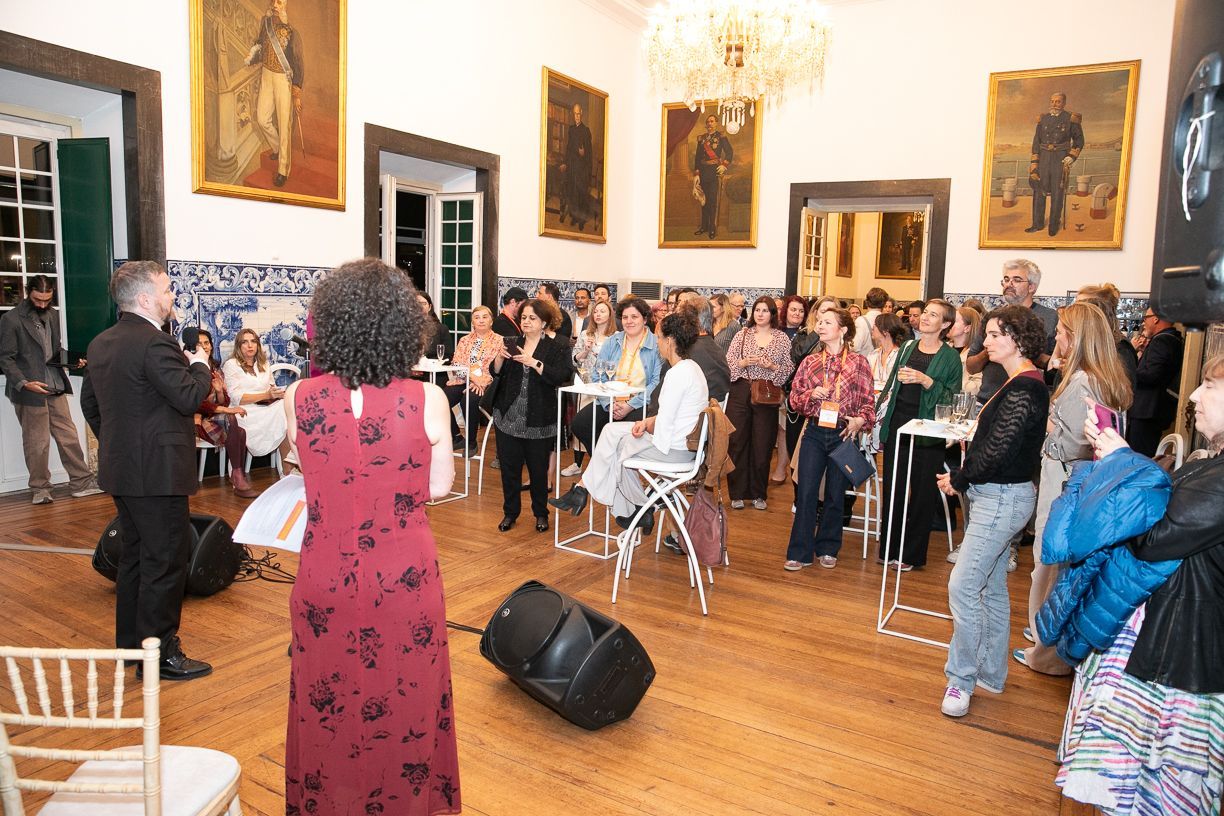
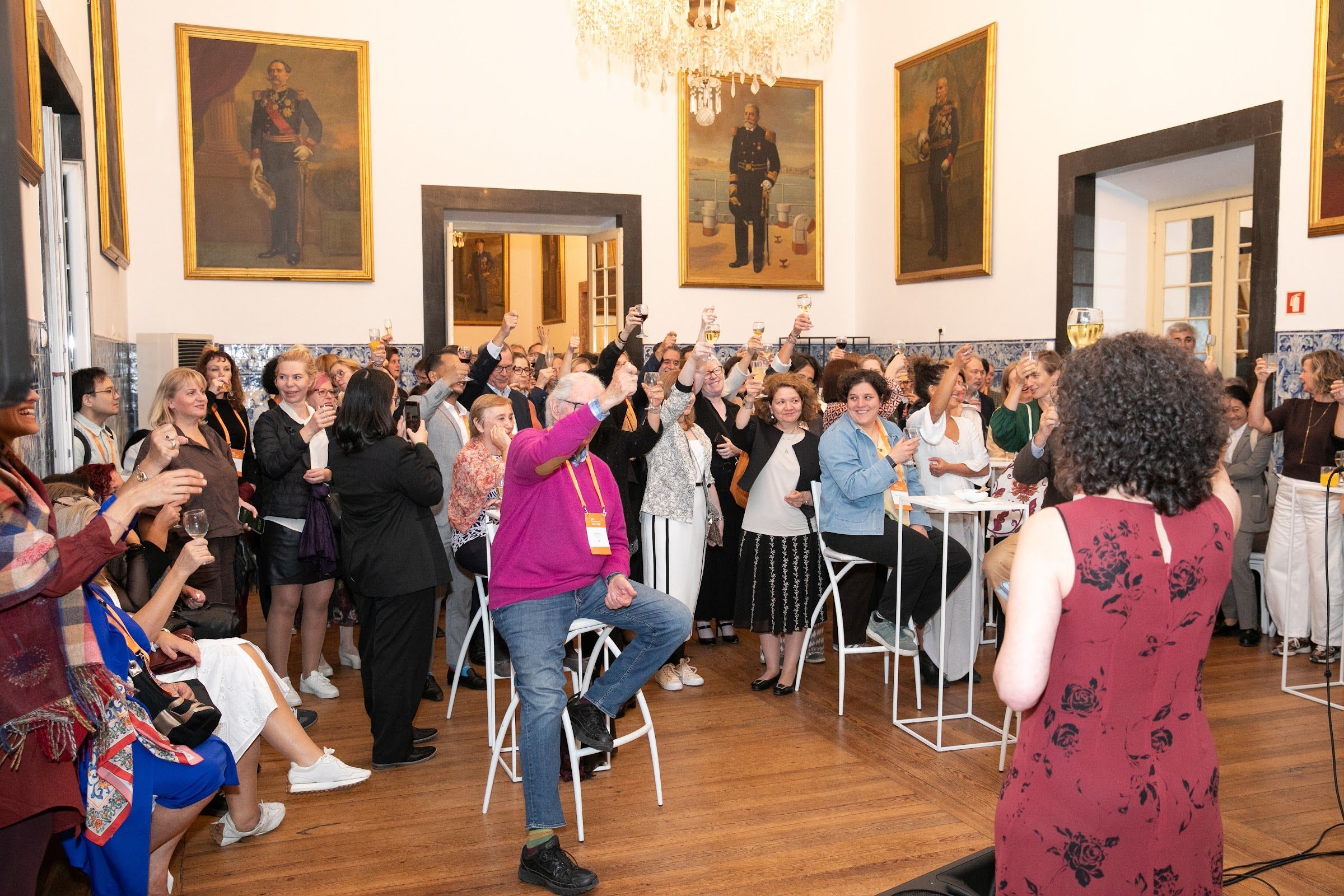
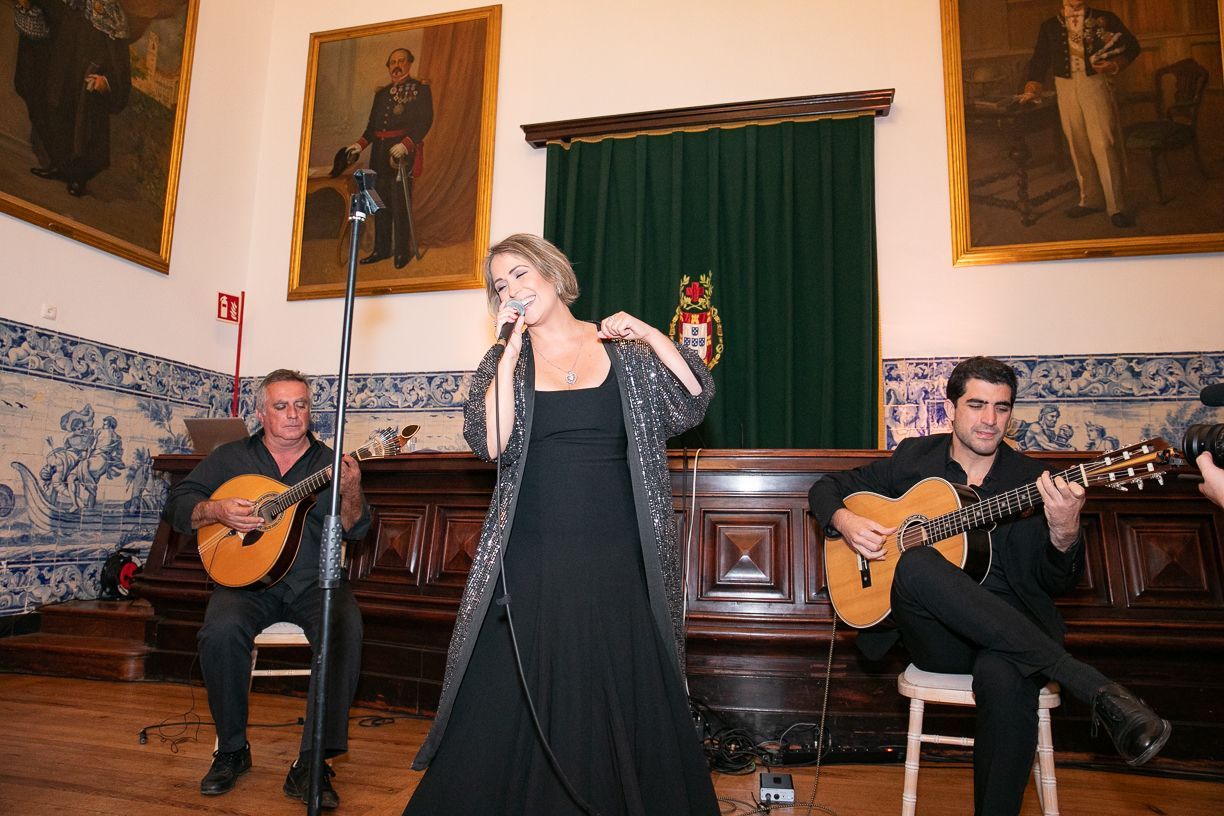
We gathered at the Ismaili Centre Lisbon and Universidade Católica Portuguesa on 22 and 23 October, after a pre-conference day of workshops and site visits on 21 October, and in the evenings we found each other again at Casa de Desenho on the waterfront and at the Palácio da Cruz Vermelha. Lisbon was also an official Pre-Summit Regional Early Years Finance Dialogue, which means that what we built together will travel on to the tables where decisions about funding for young children are made, along the road to the first Global Early Years Finance Summit. In a sense the conference picked up where Sofia 2024 left off, when 450 professionals from more than 50 countries explored why “it takes an ecosystem,” and in Lisbon we went one step further and asked how such an ecosystem is built.
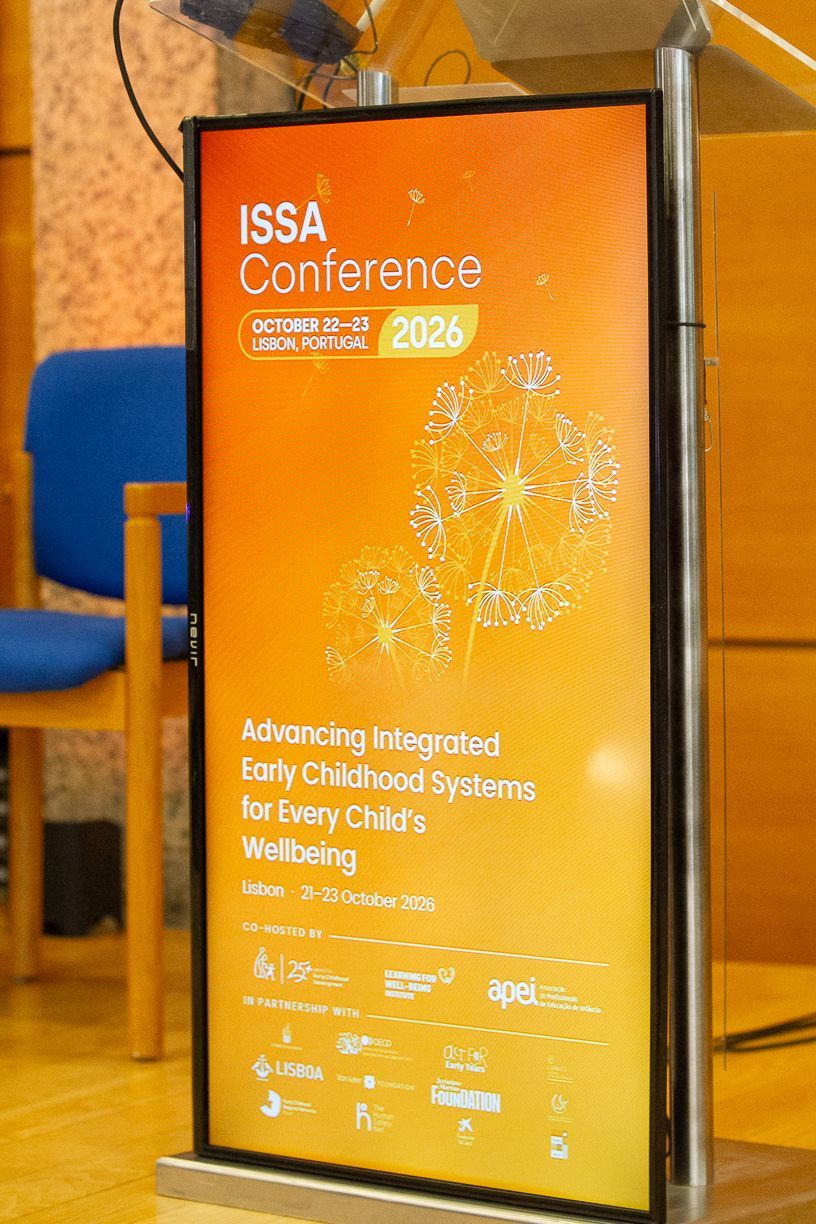

The full program
Every session, speaker, venue and time from the three days in Lisbon, including the pre-conference sessions, site visits and plenaries, is available in the program.
BUILT TOGETHER
This conference was not one we organised while others supported it, rather from the very beginning we built it together with our co-hosts, the Learning for Well-being Institute and APEI, and with our partners: the Aga Khan Foundation Portugal, the OECD WISE Centre, Act for Early Years, the Faculty of Human Sciences at Universidade Católica Portuguesa, Lisbon City Council, the Van Leer Foundation, the Jerónimo Martins Foundation, the Khalifa International Award for Early Learning, the Early Childhood Regional Networks Fund, The Human Safety Net, Fundação “la Caixa” and the Lisbon Tourism Association. Our heartfelt thanks go to every one of them, and to each facilitator, contributor and participant, because together you are the network that made Lisbon happen and the one that will carry its work forward.
Conference co-hosts
Conference partners
02
Highlights from the plenaries
Over two days, the plenaries brought voices from across and beyond our field onto one stage, from government, research and philanthropy to young people, film, sport and architecture. The highlights below capture what each session added to the conversation, and every plenary can be watched again in full for anyone who could not be with us or would like to return to it.
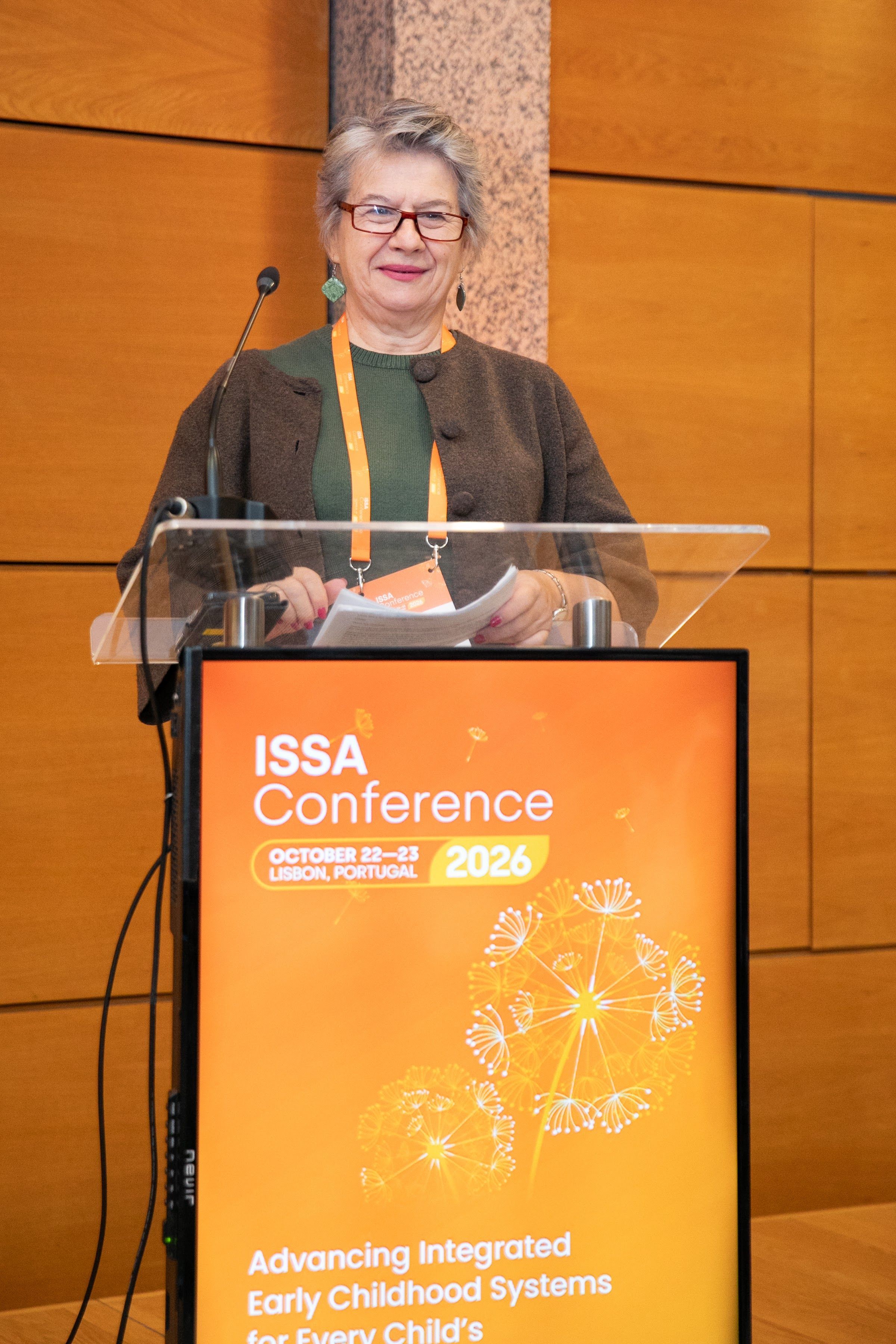
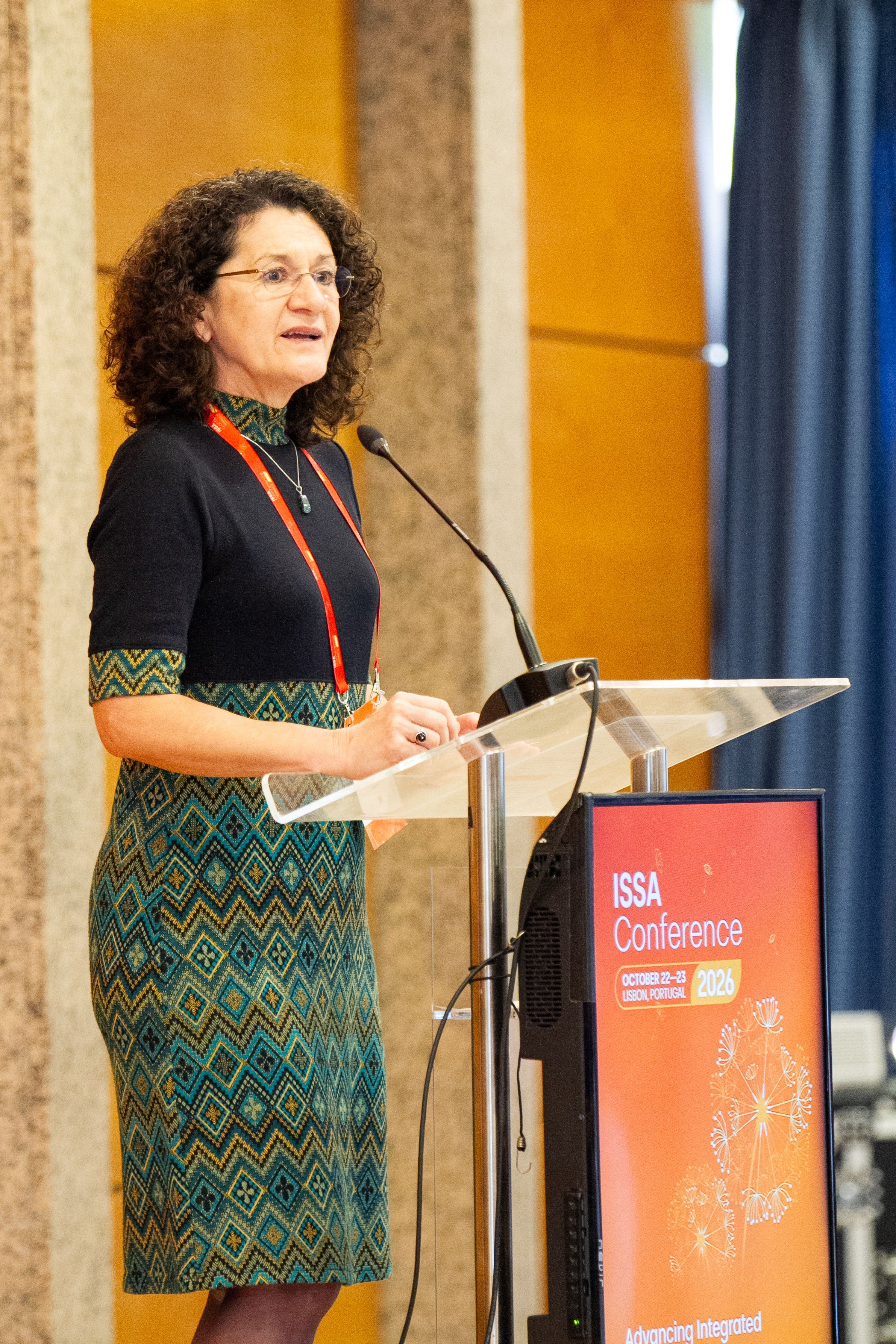
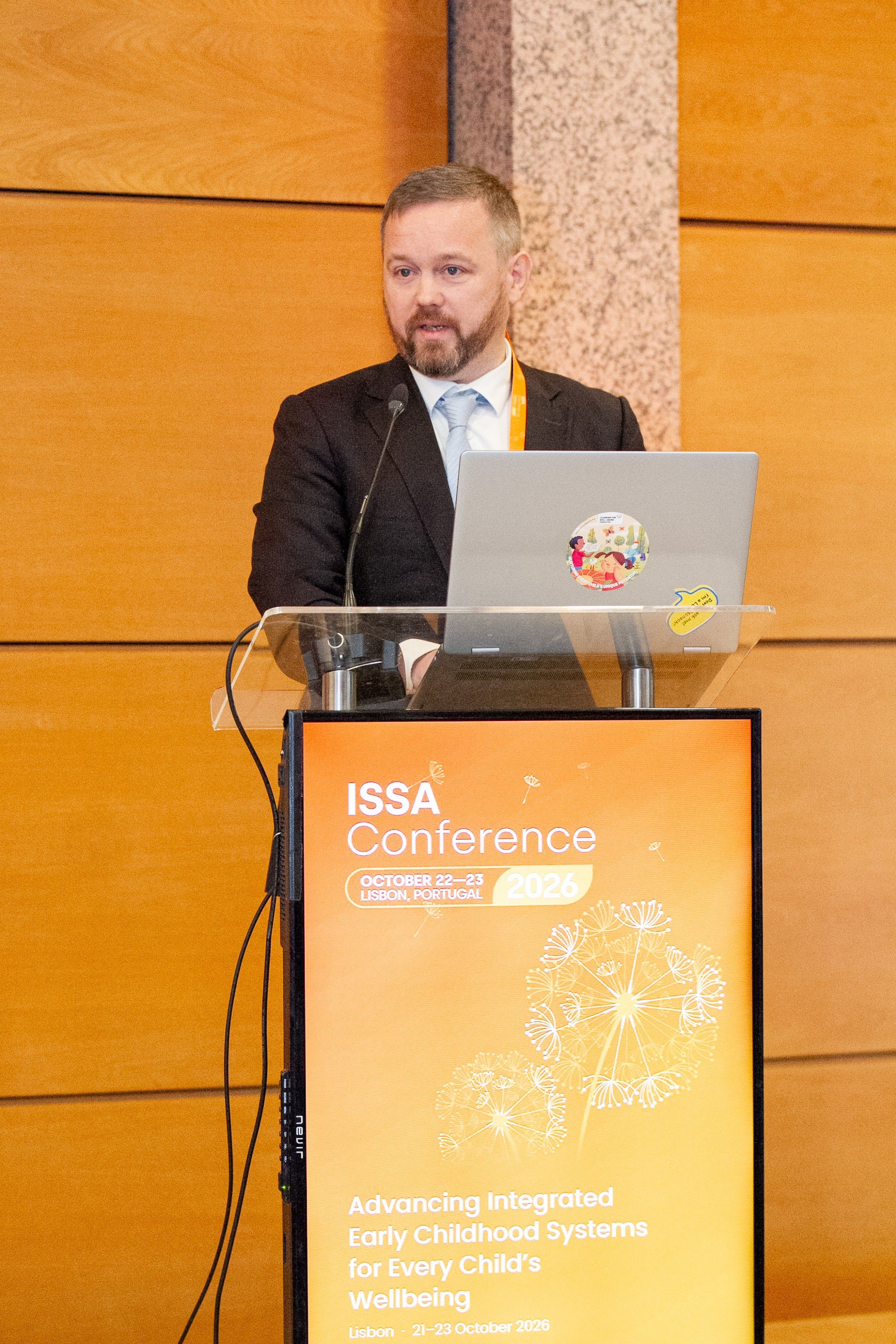
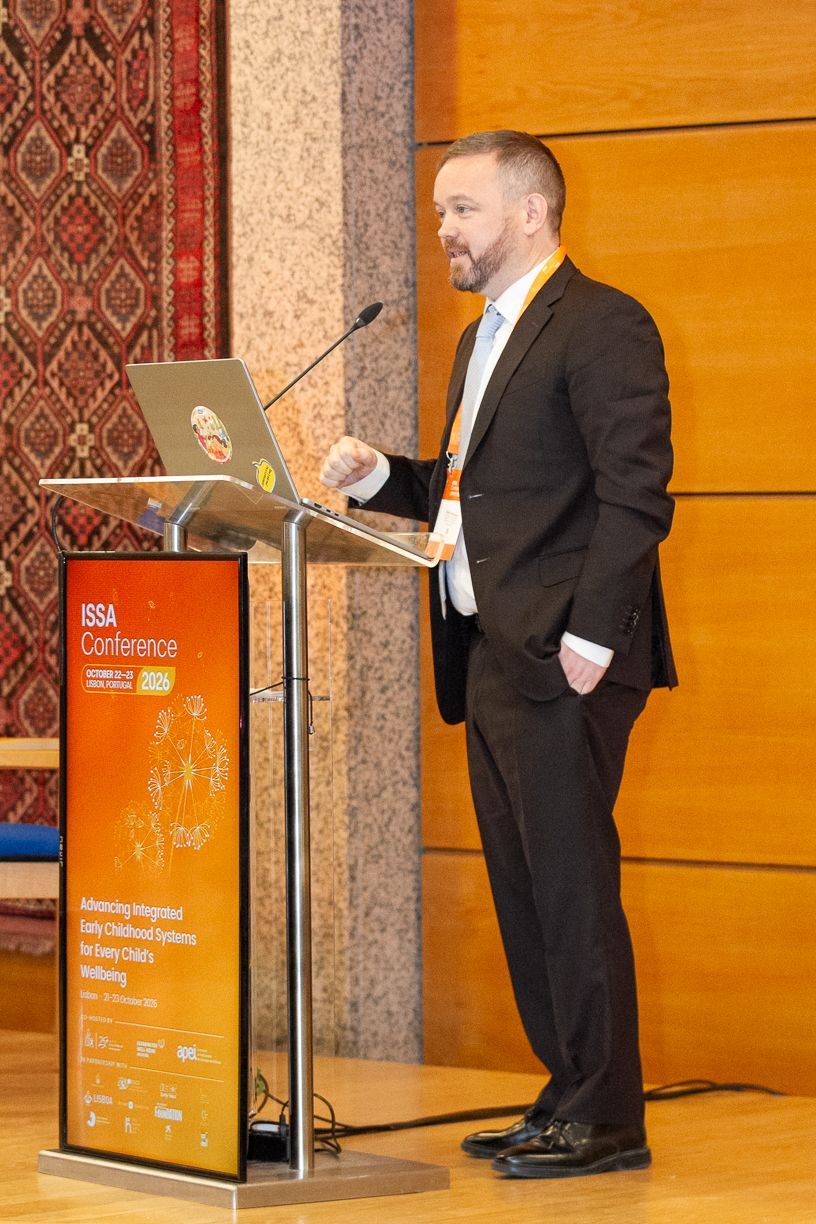
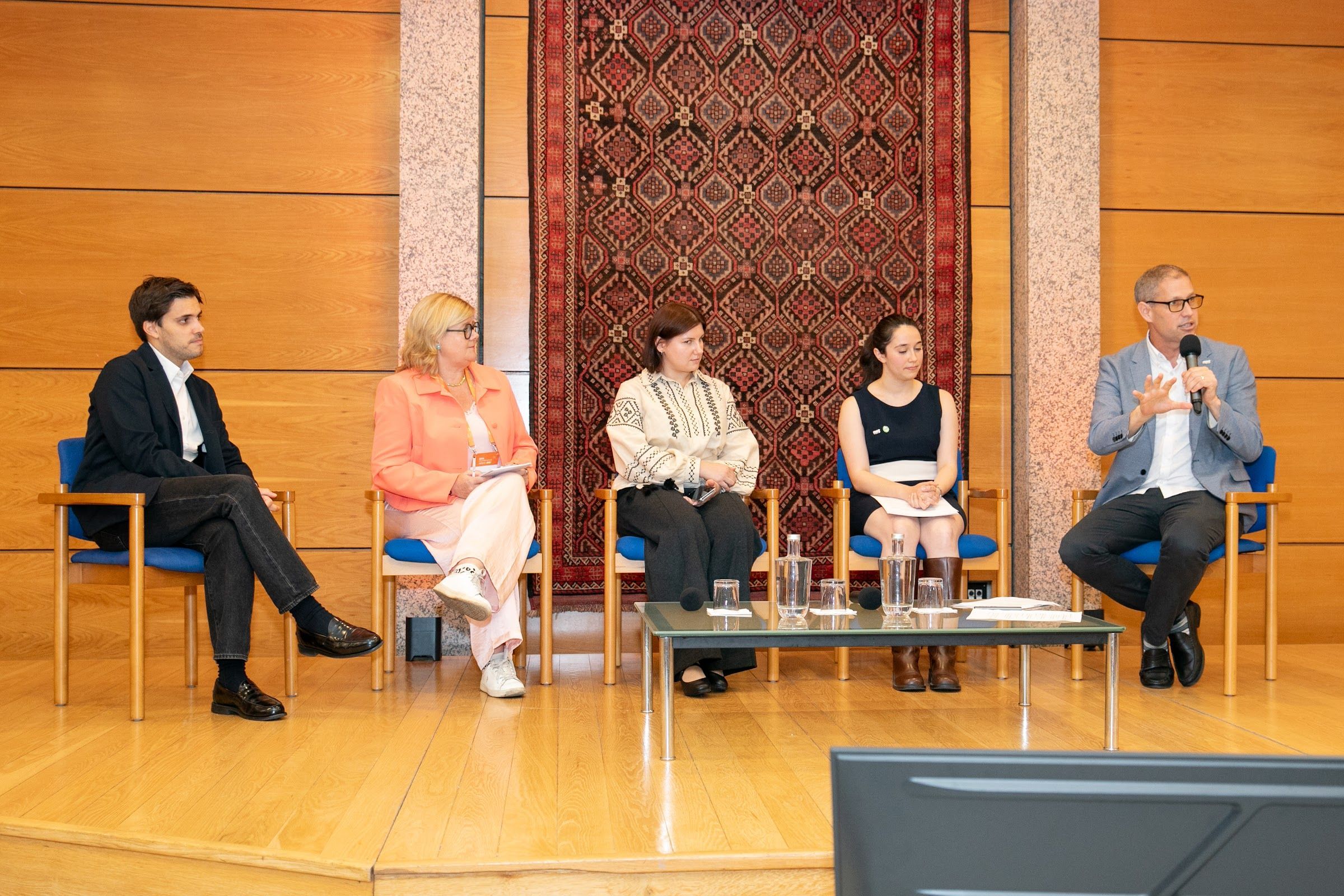
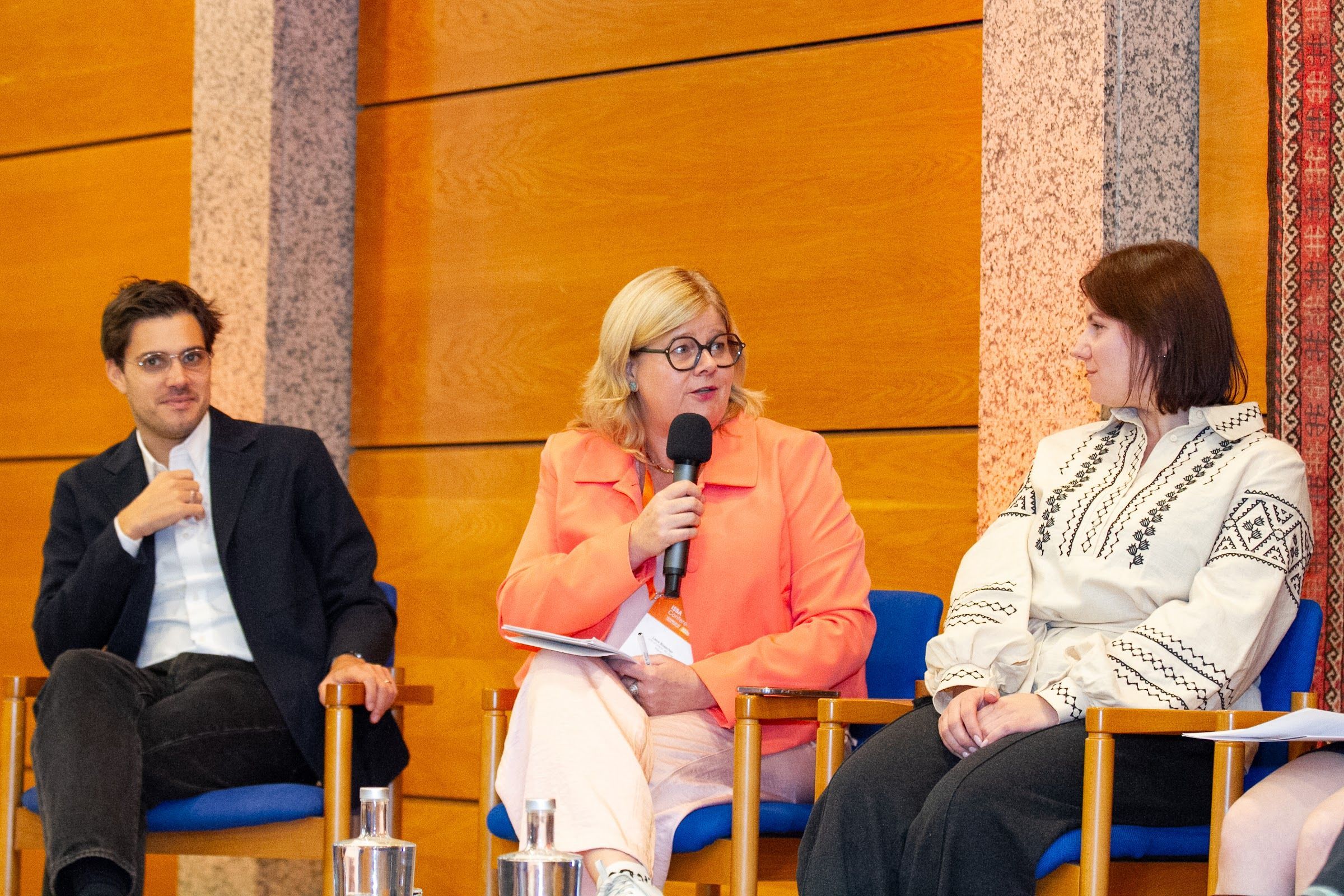
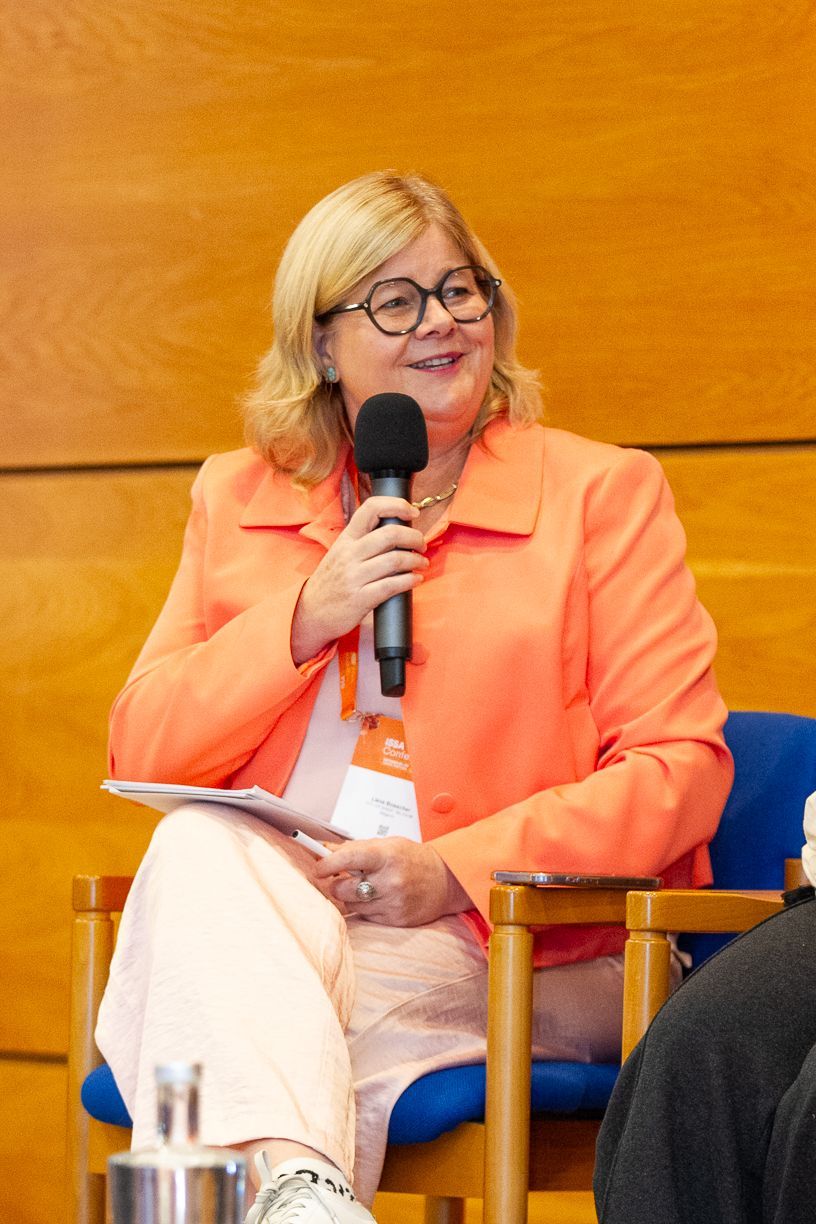
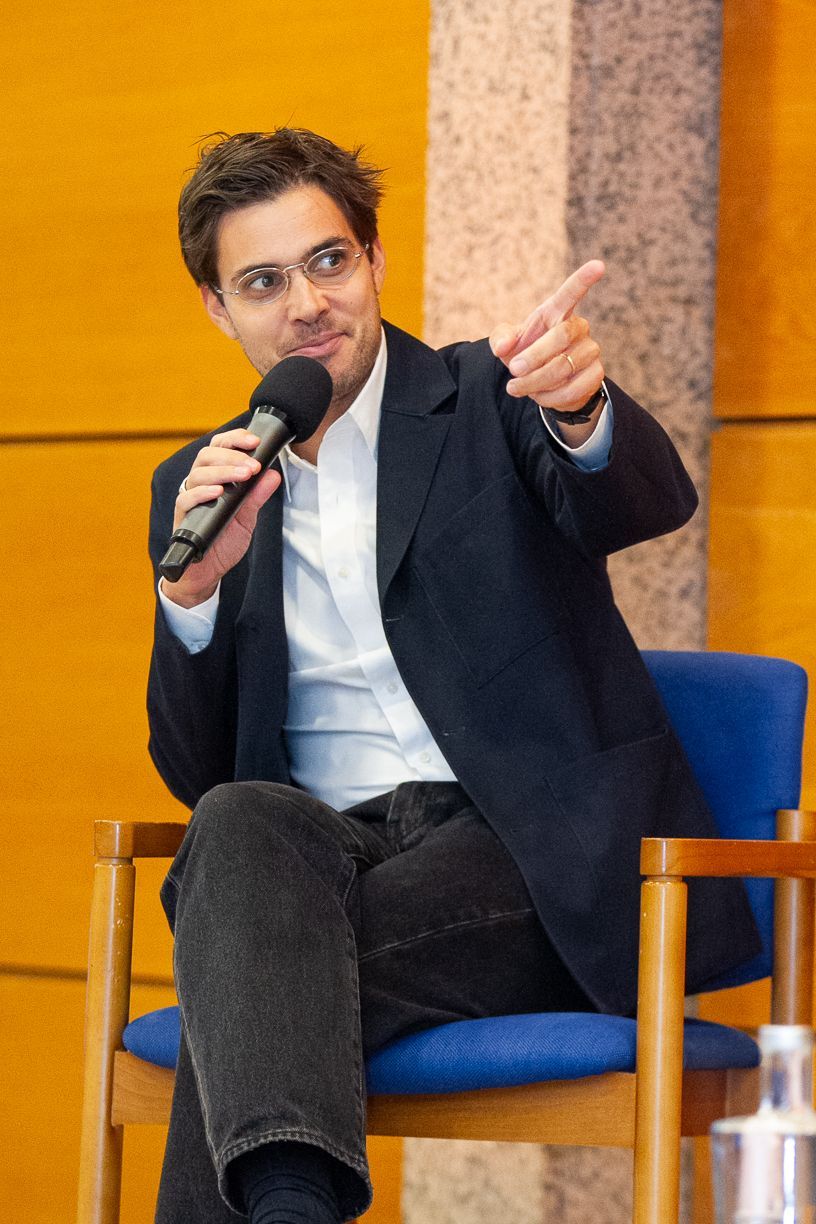
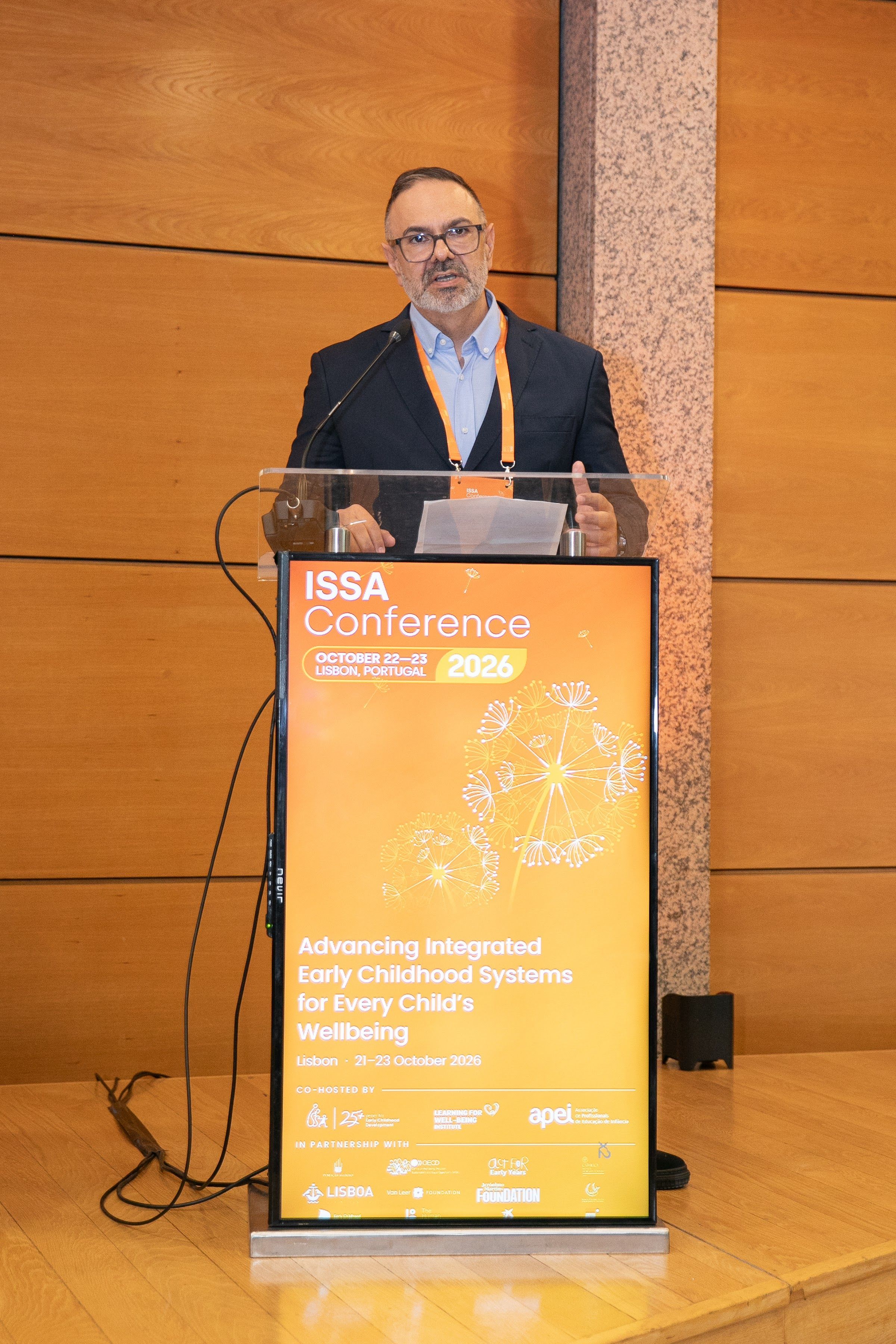
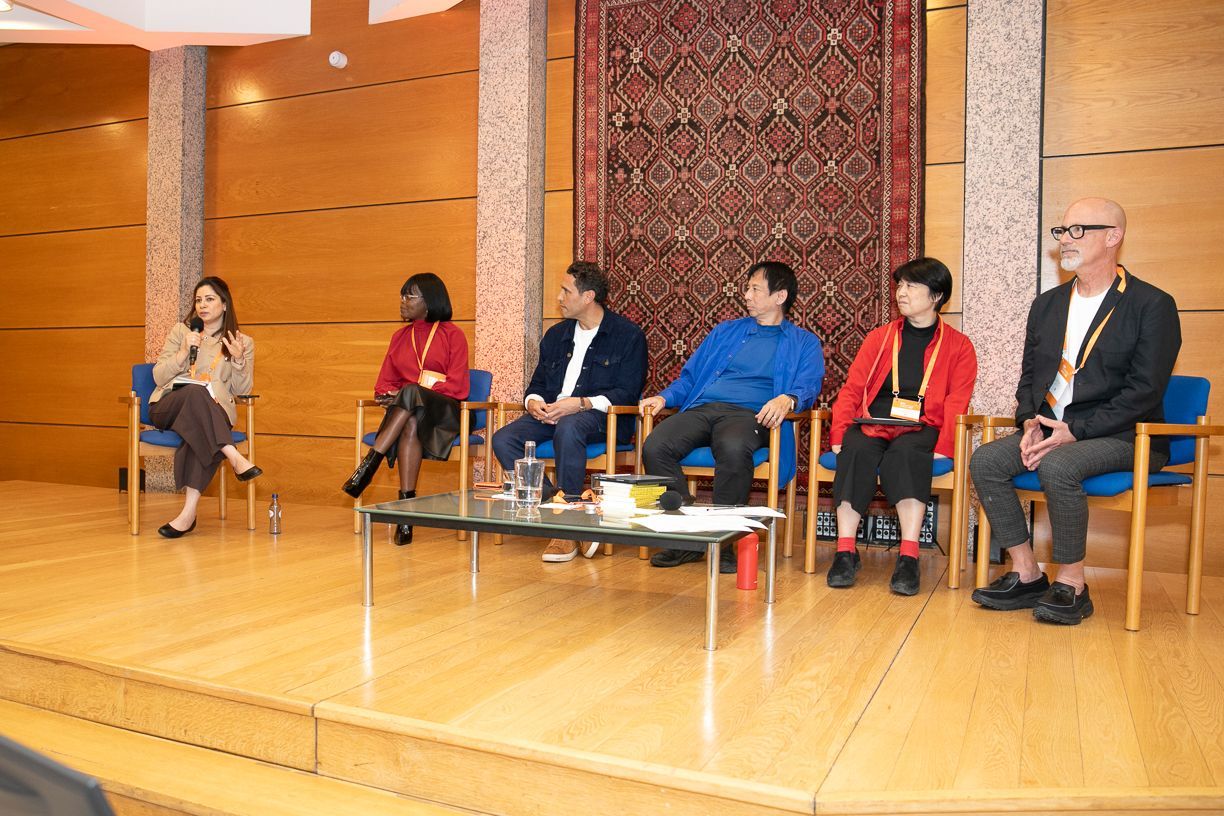
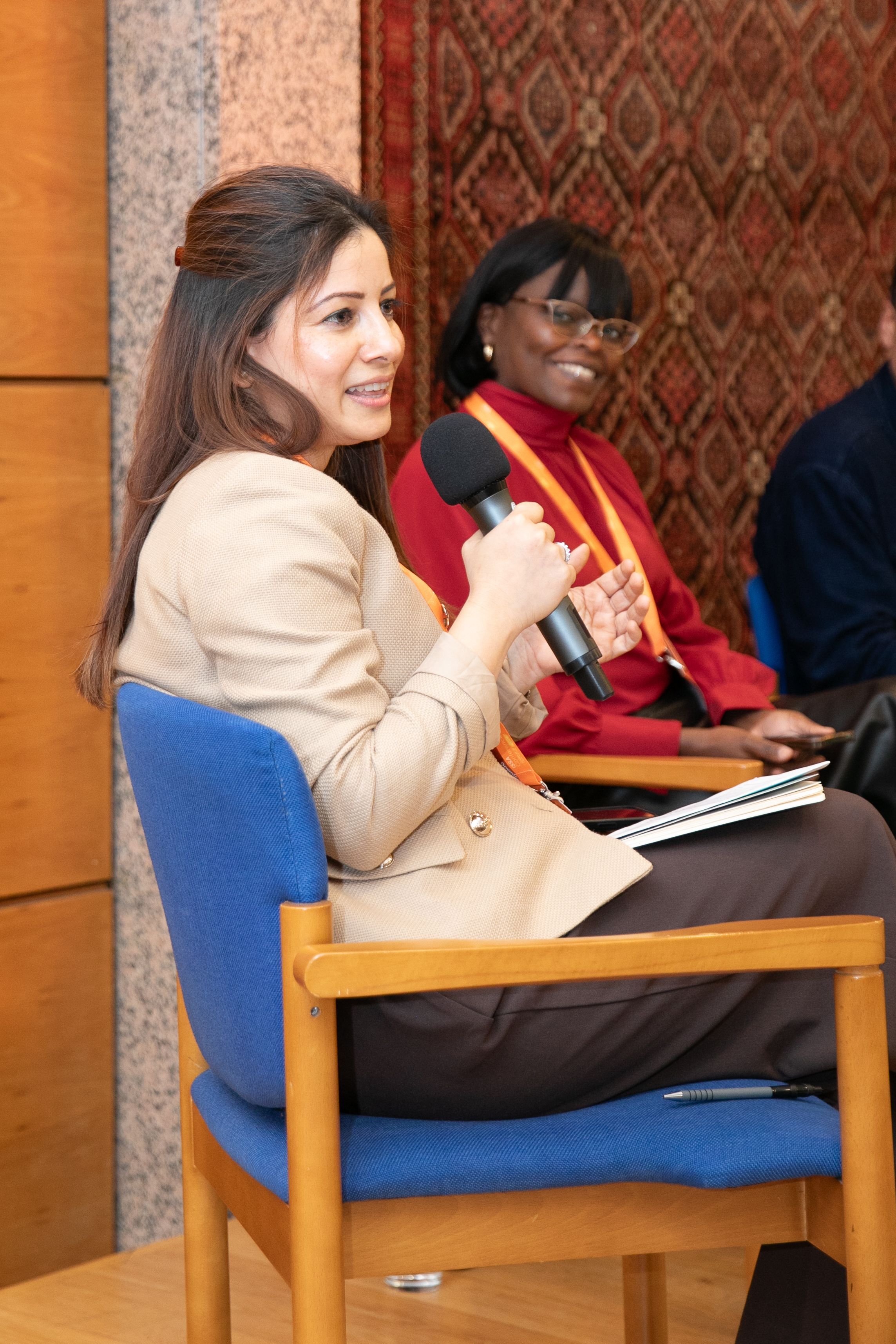
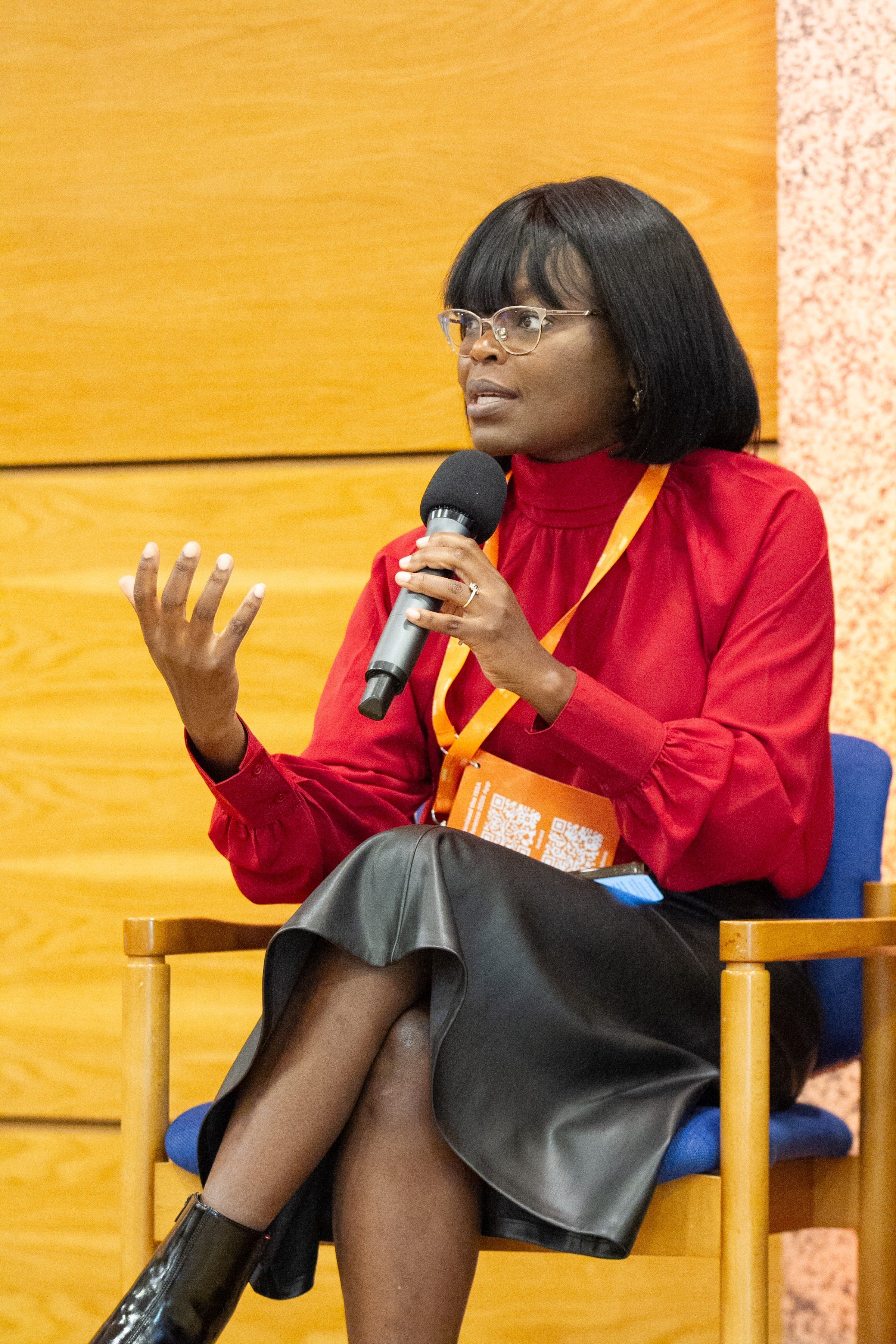
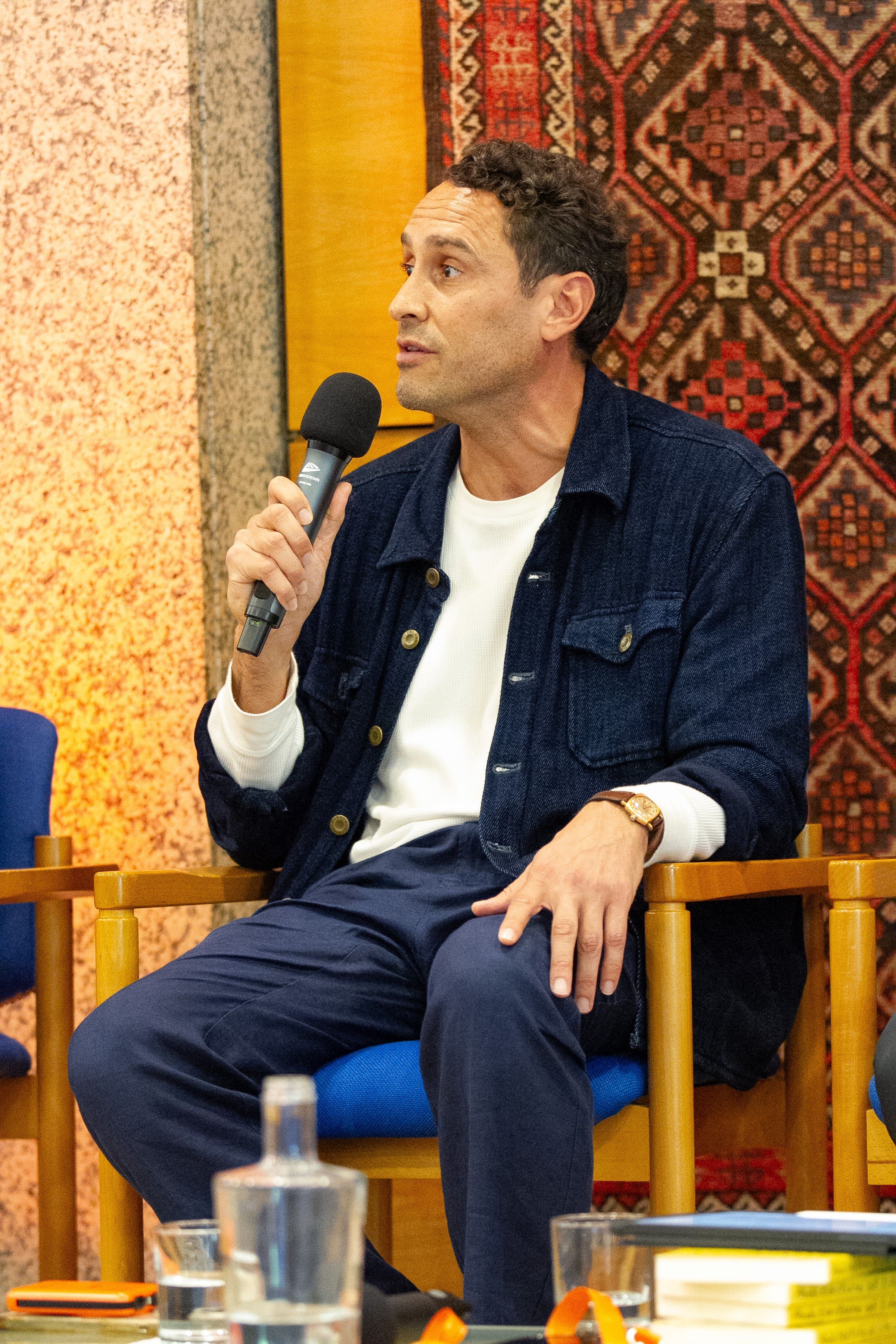
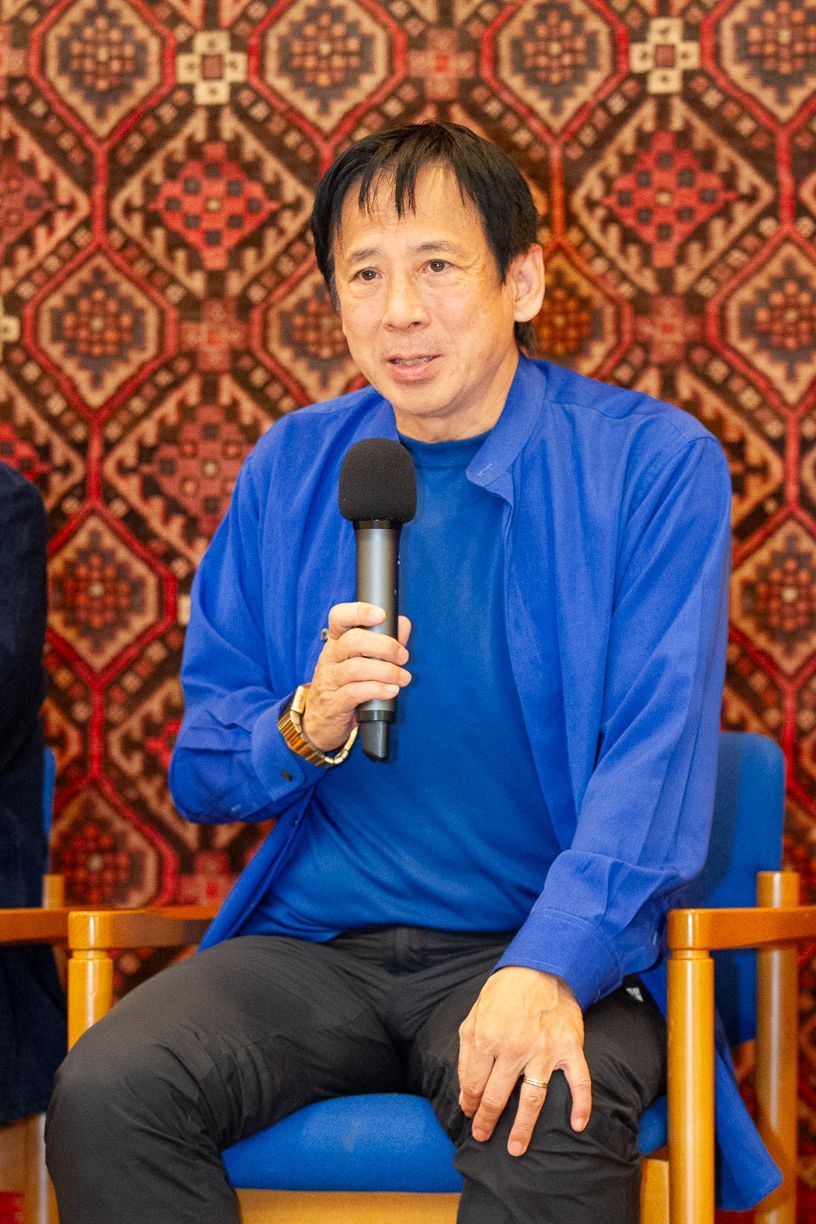
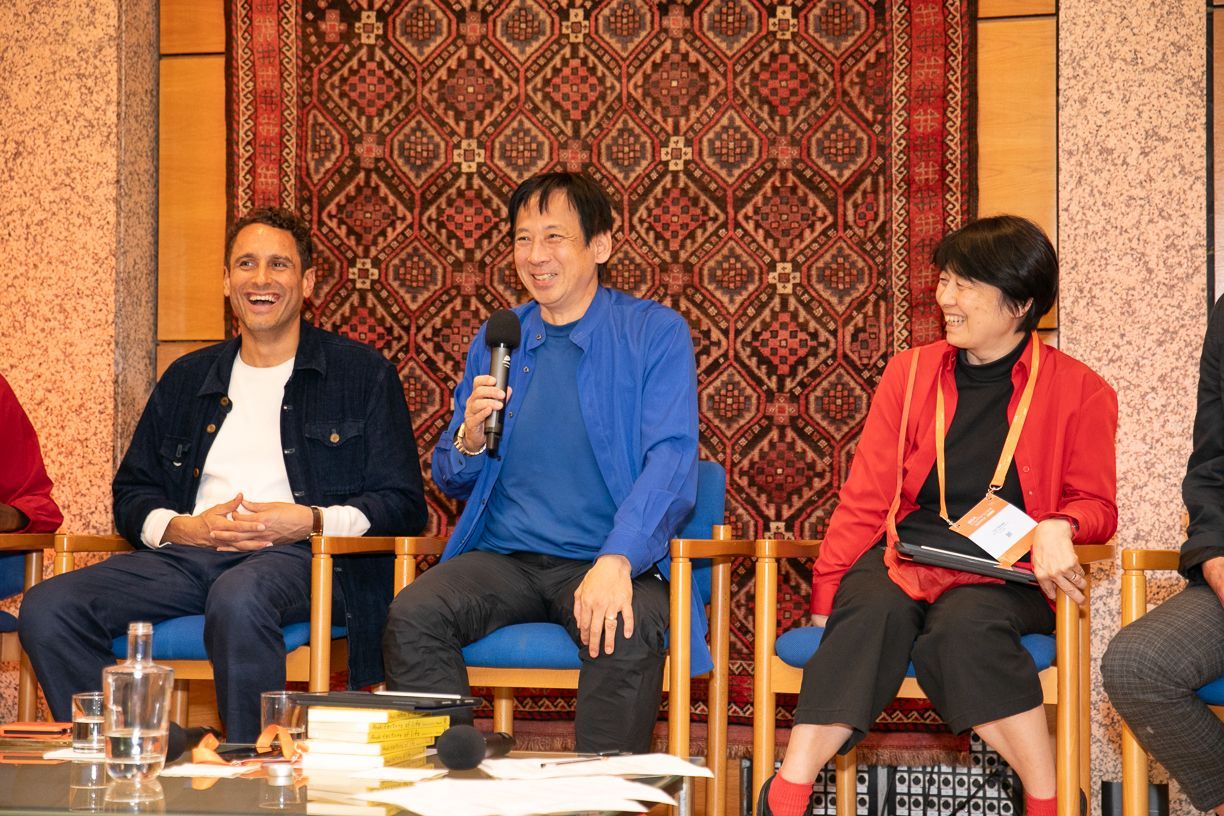
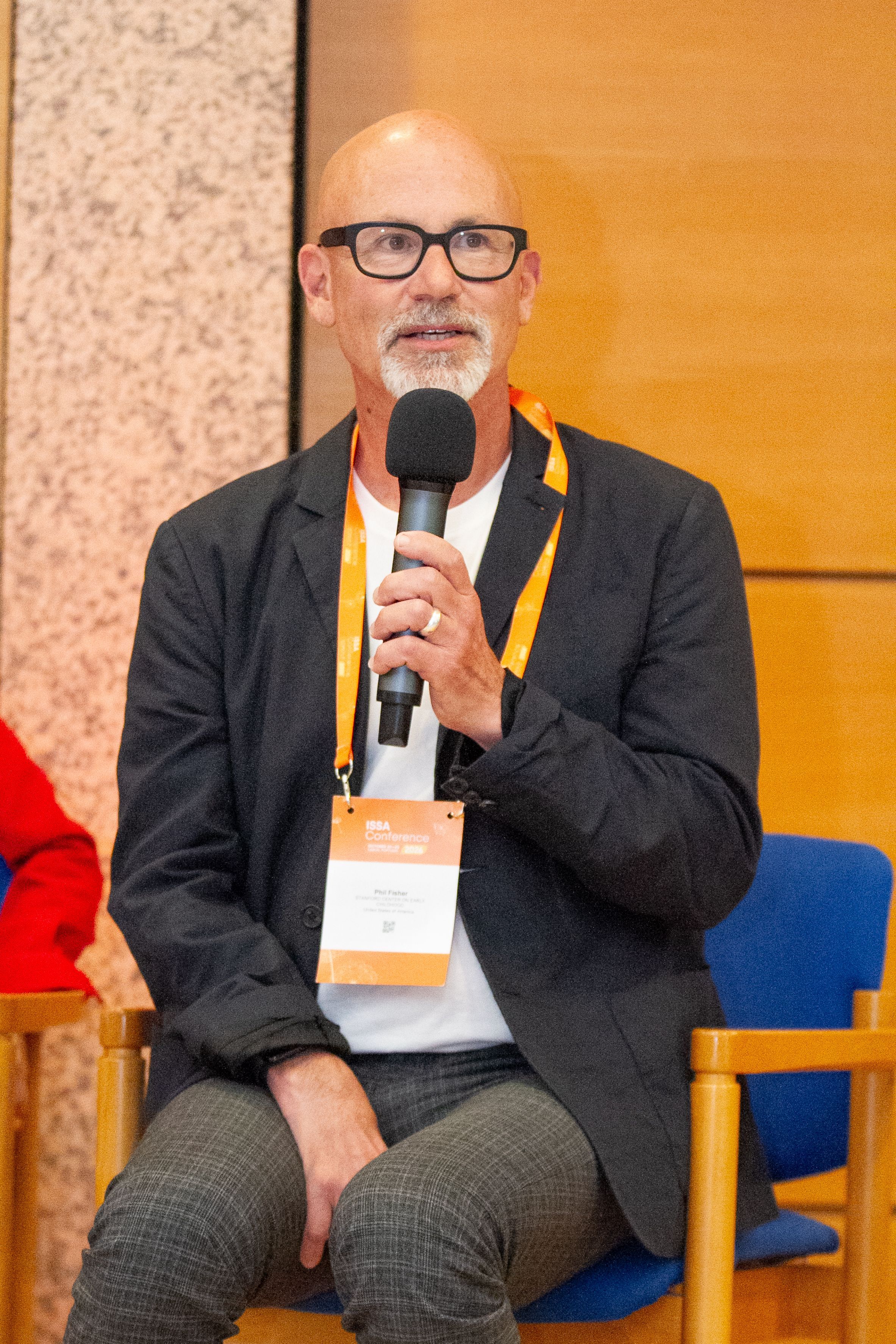
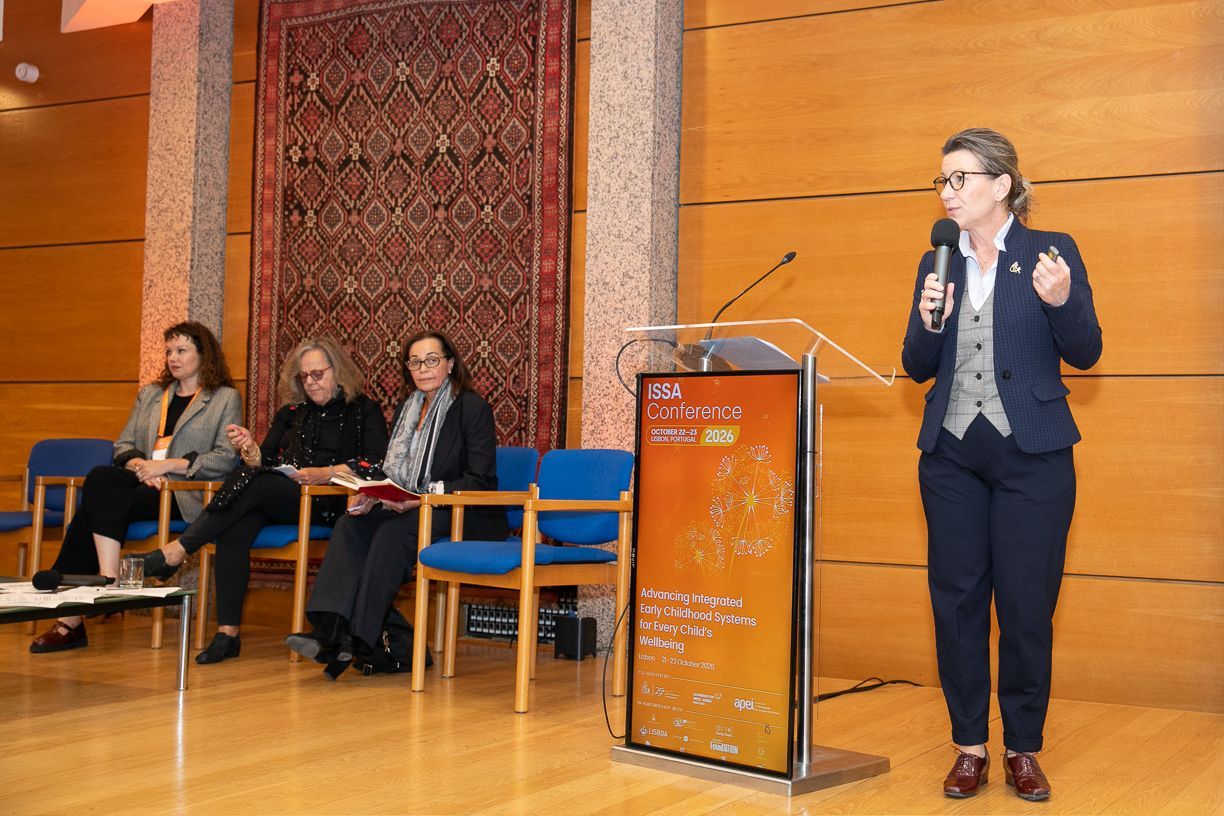
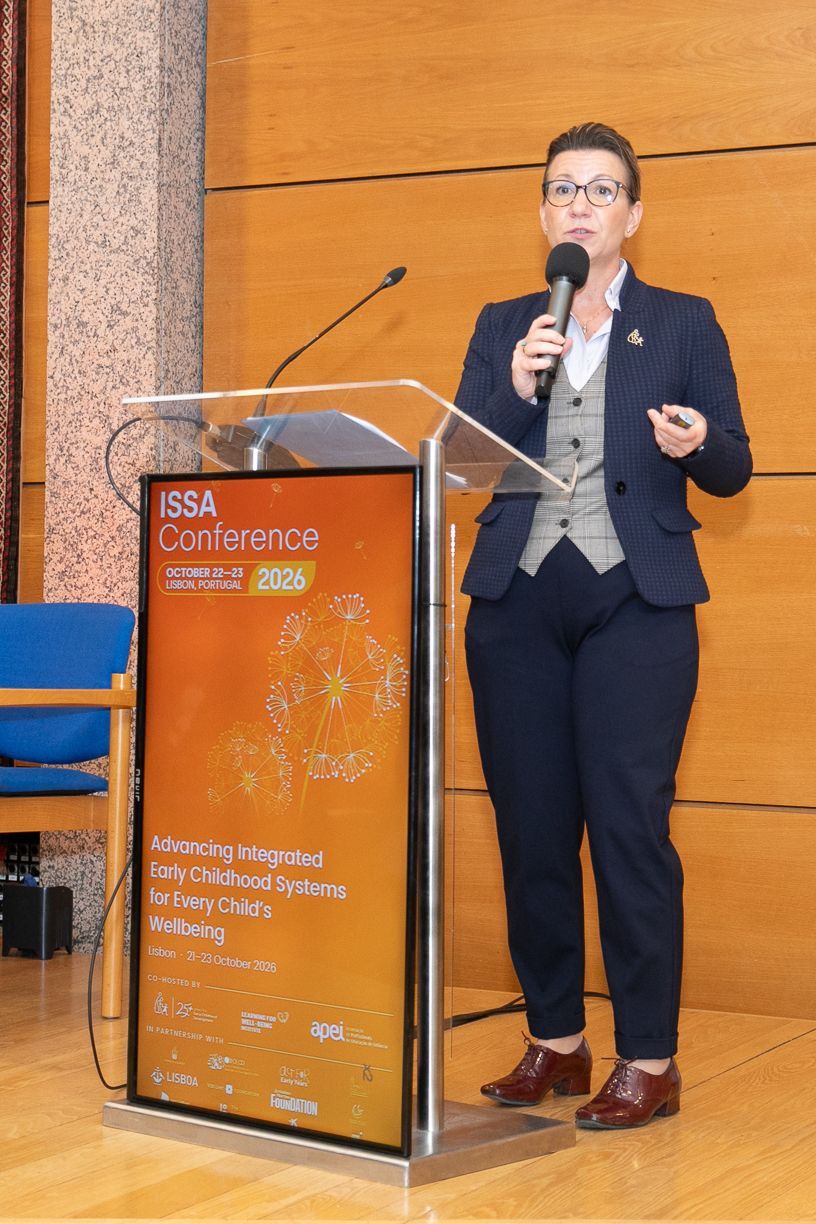
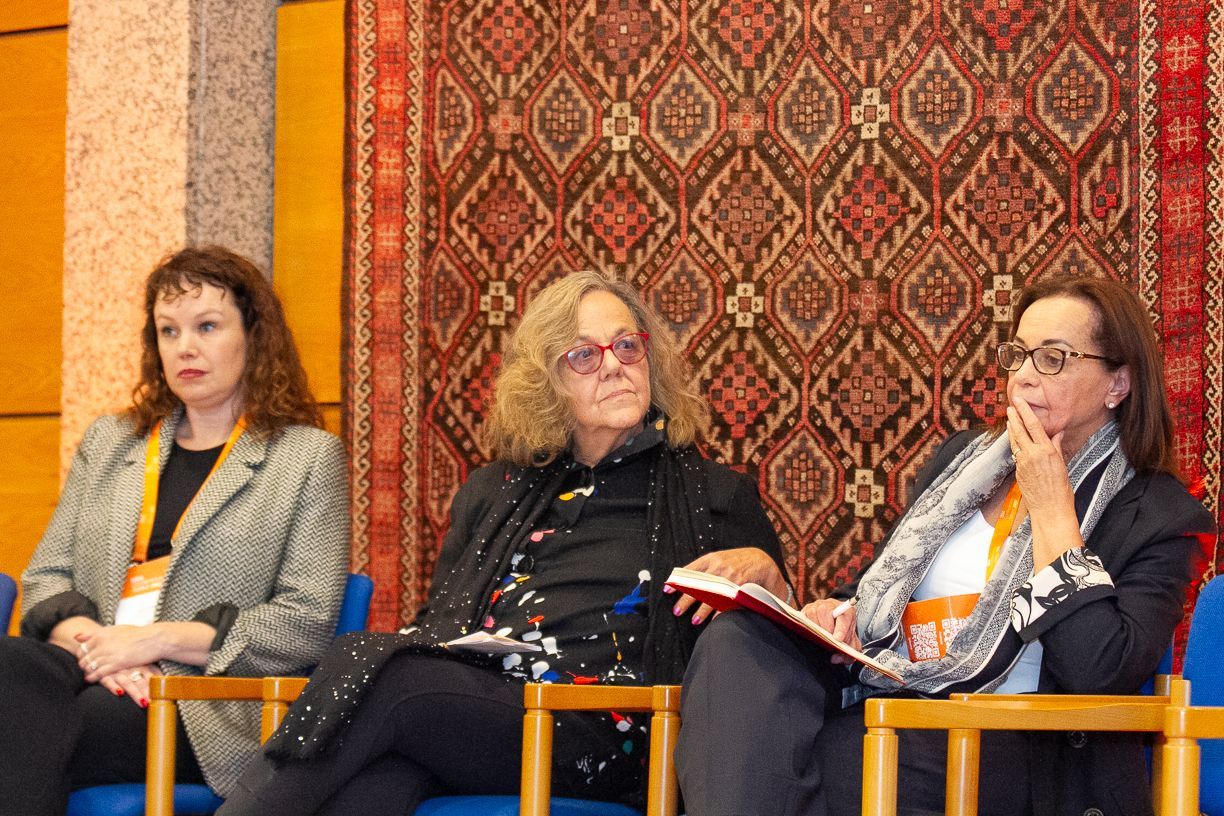
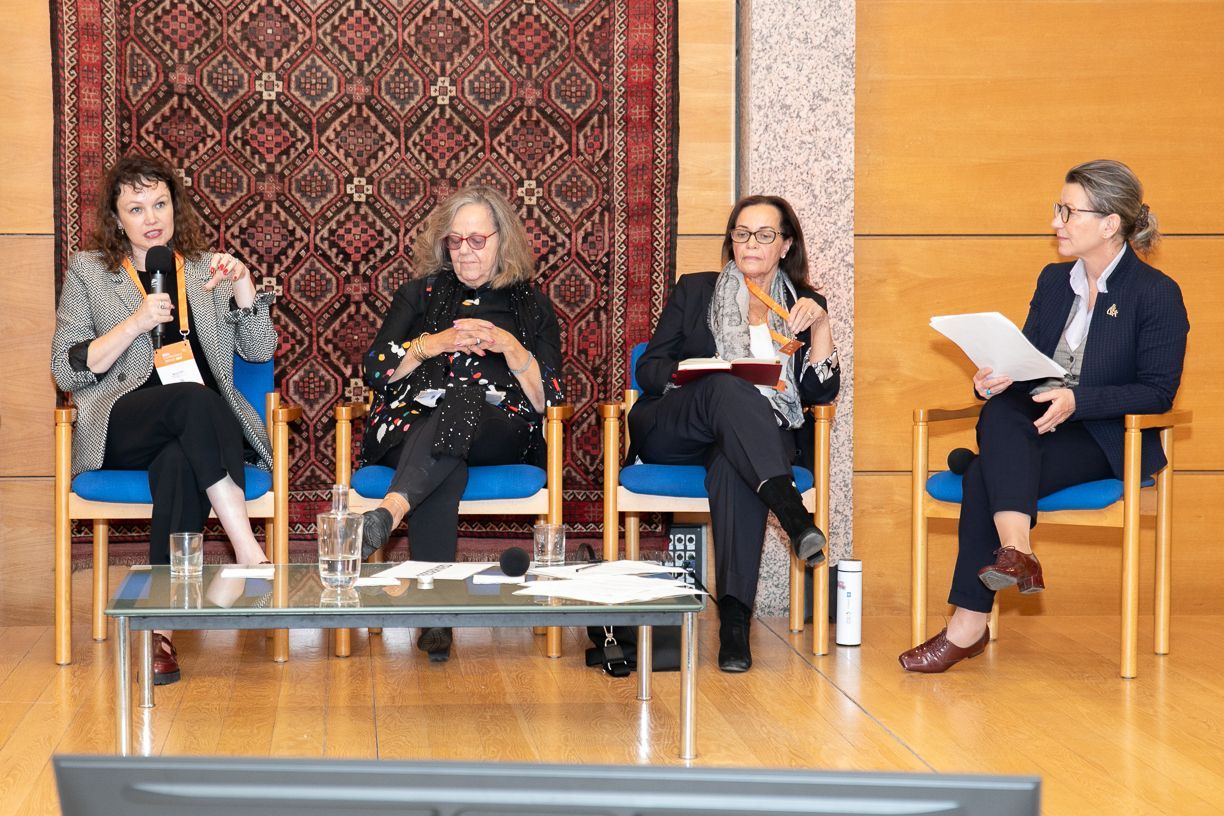
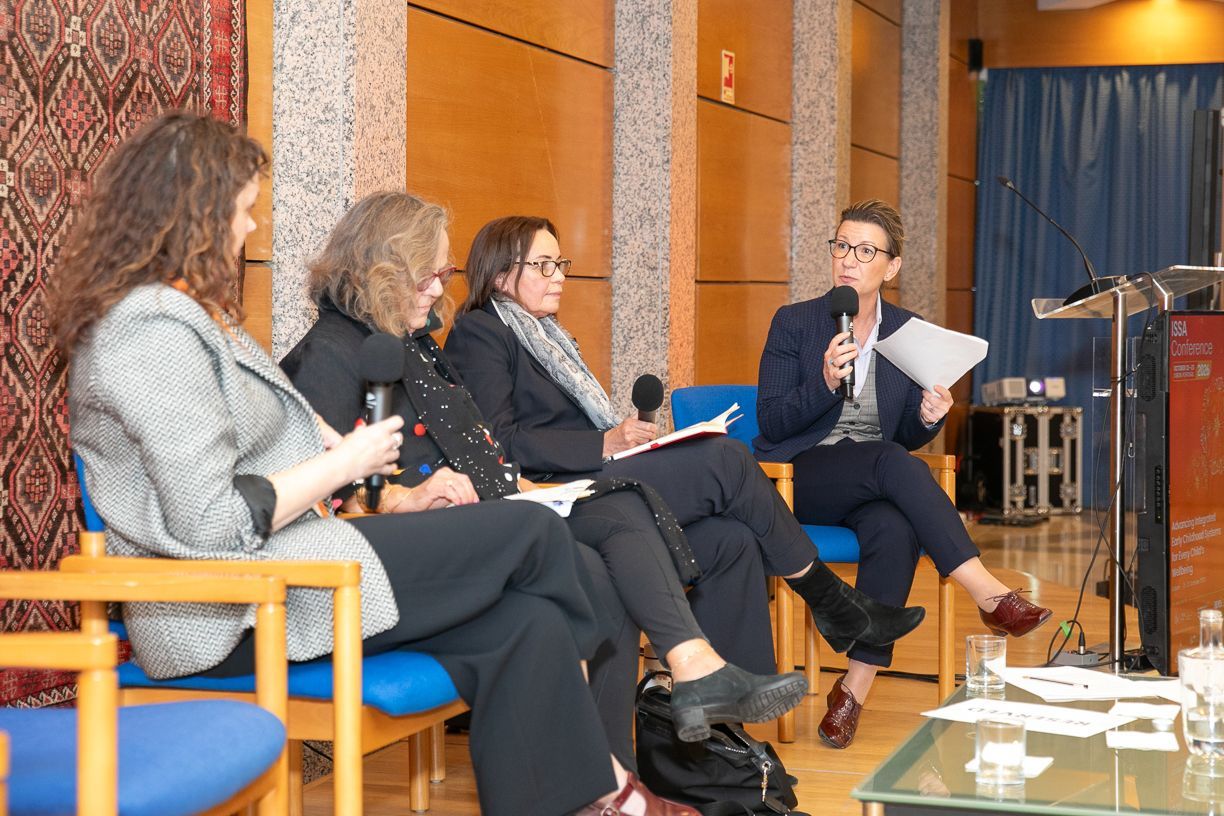
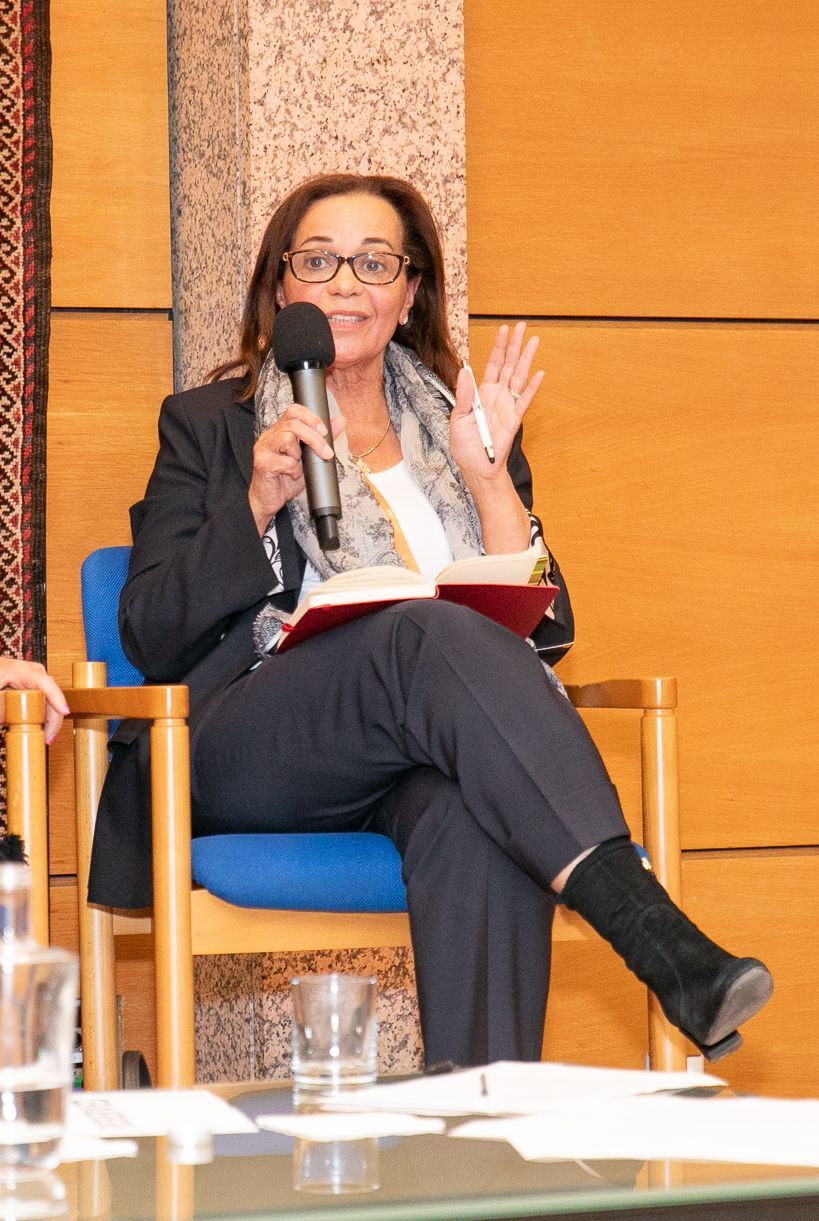
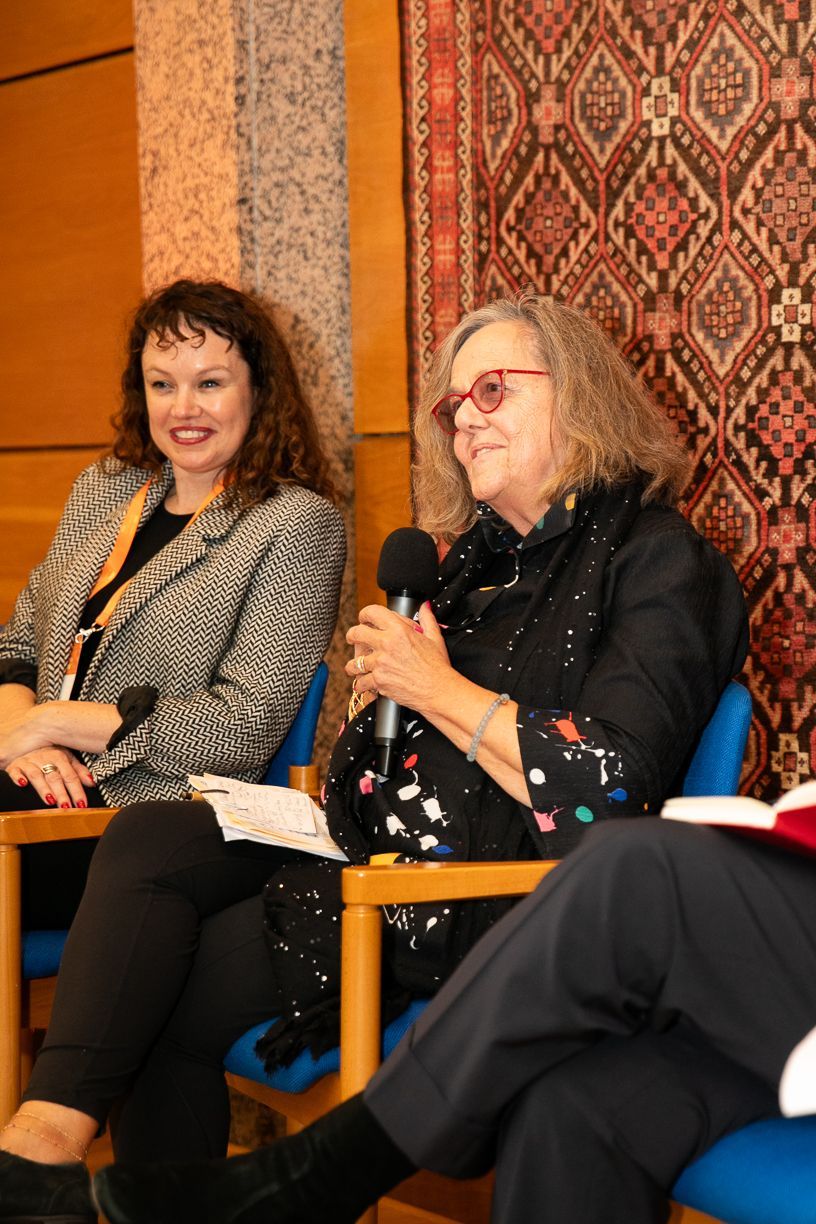
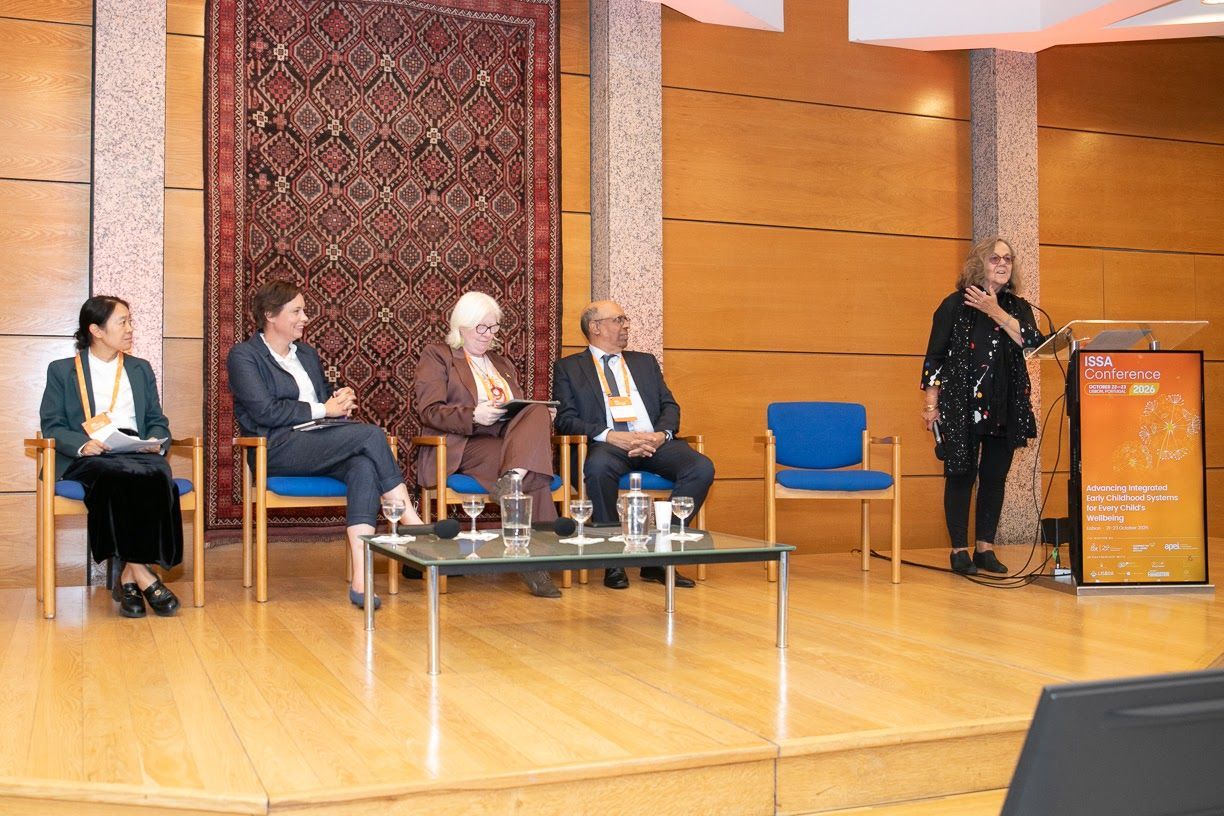
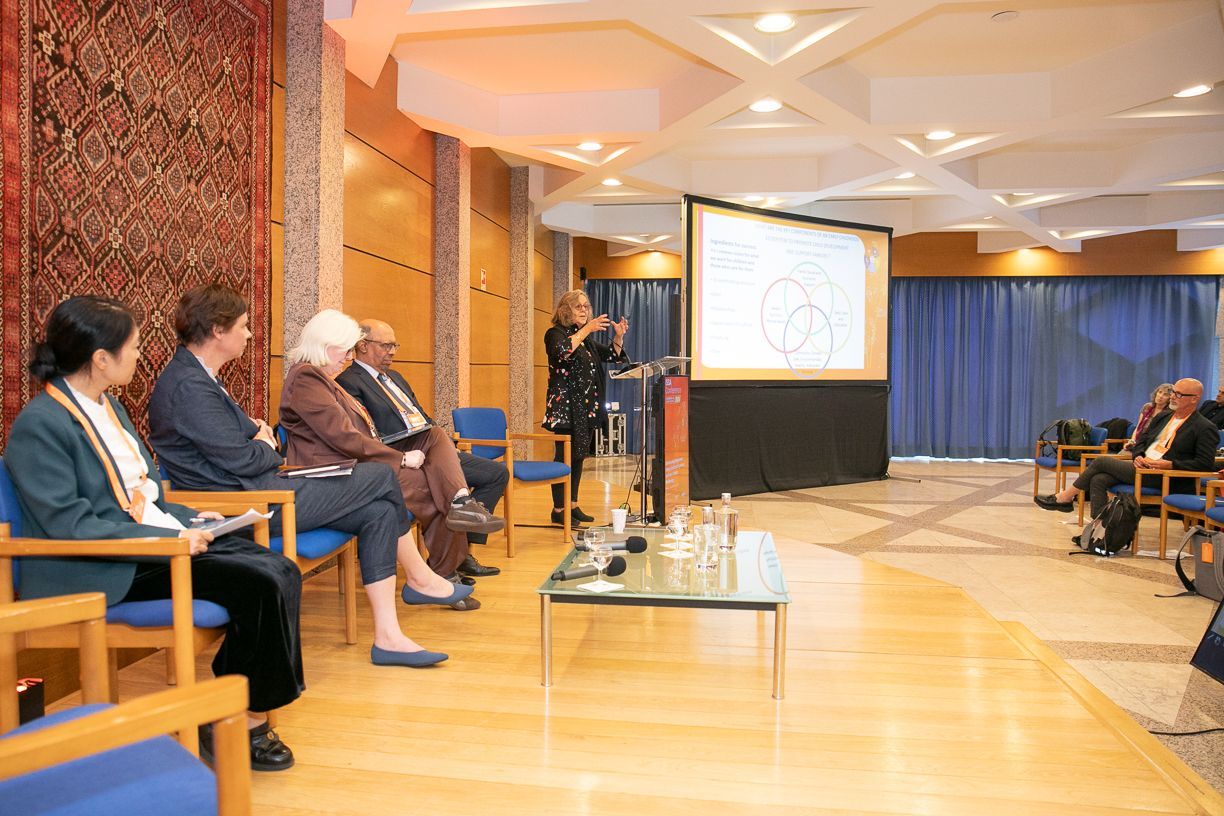
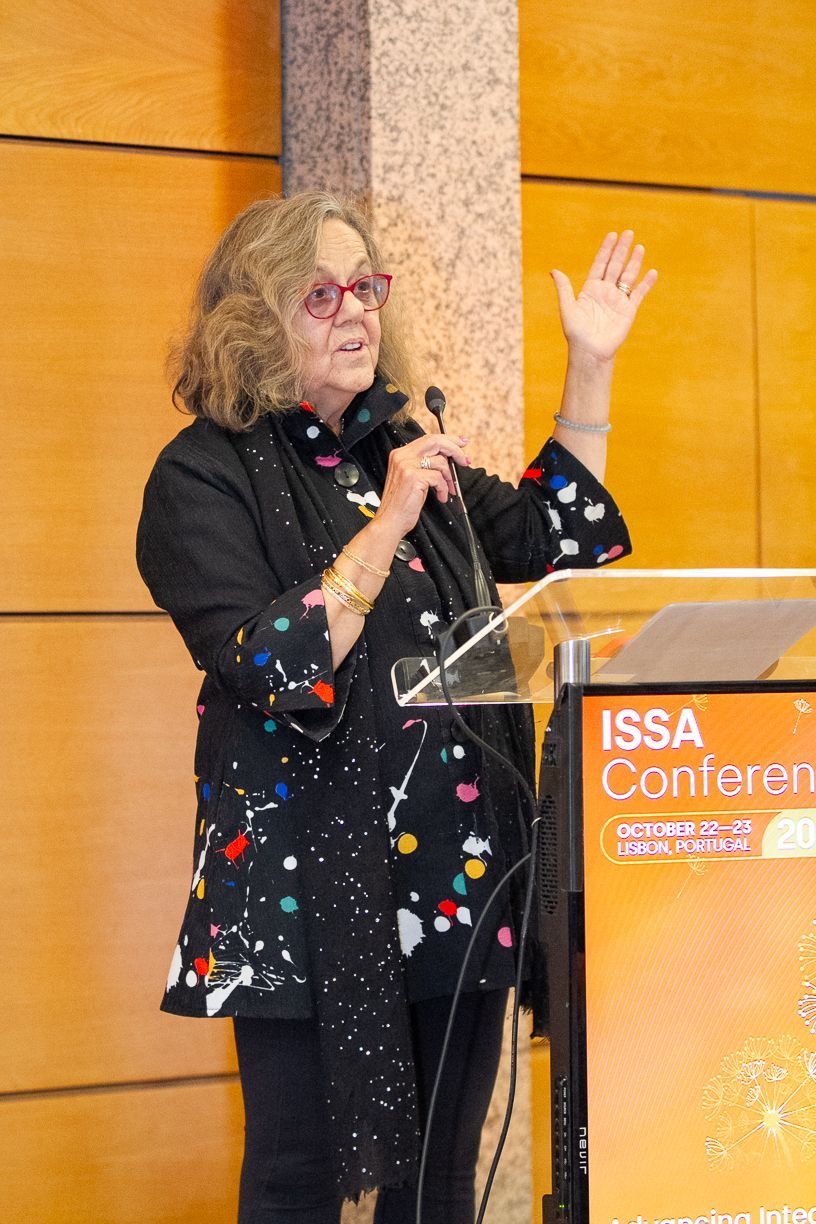
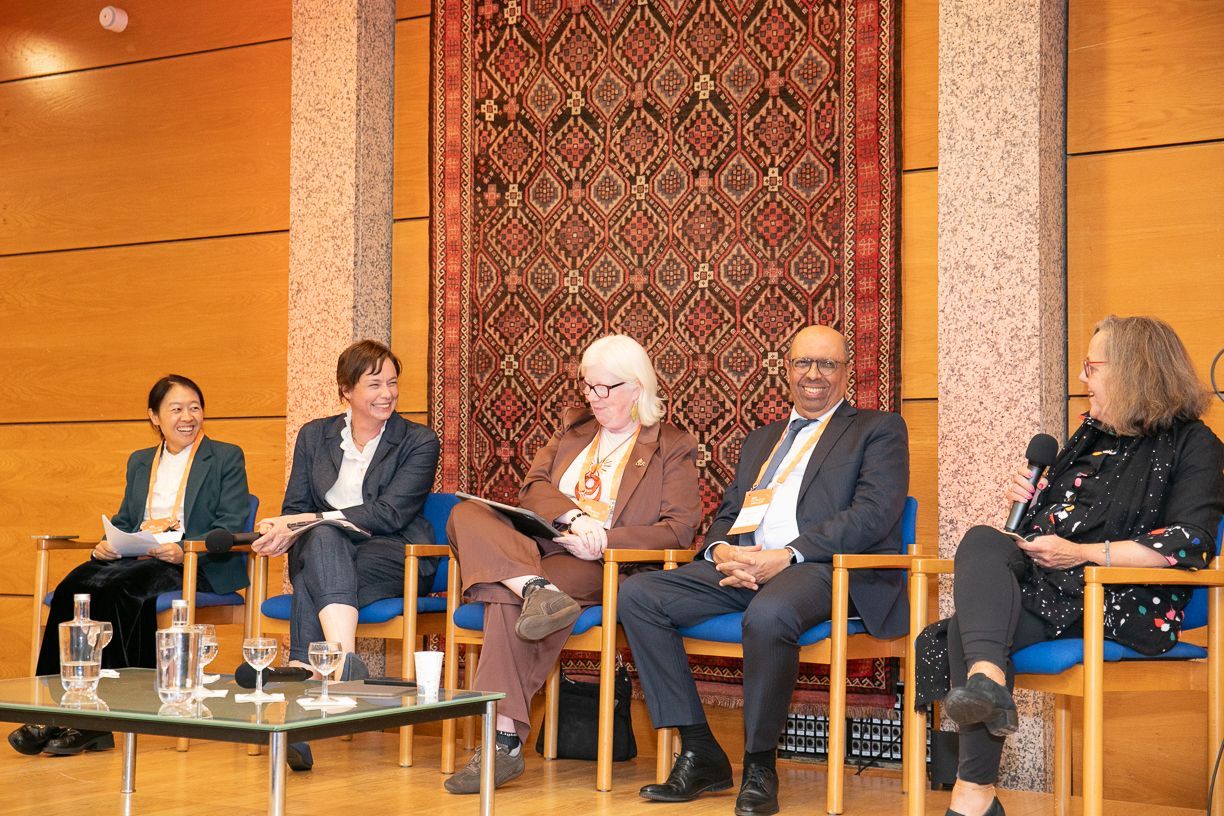
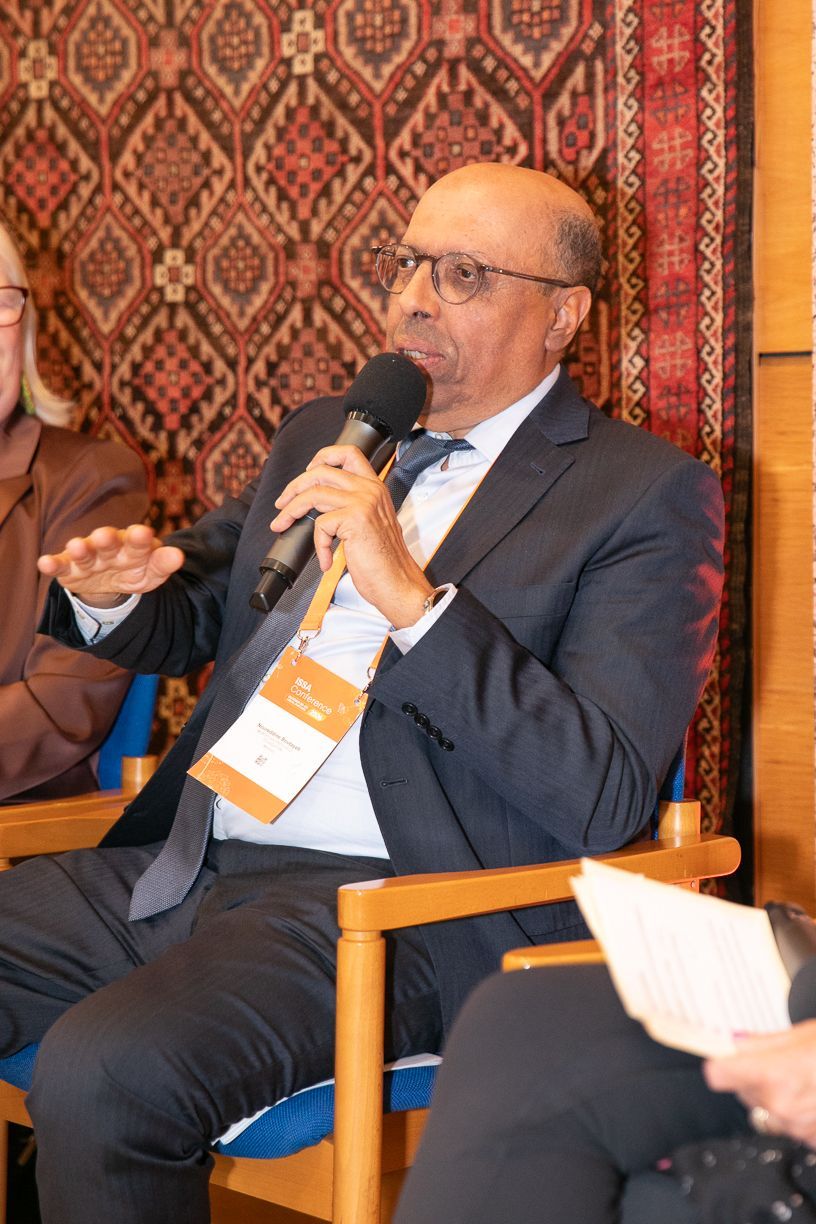
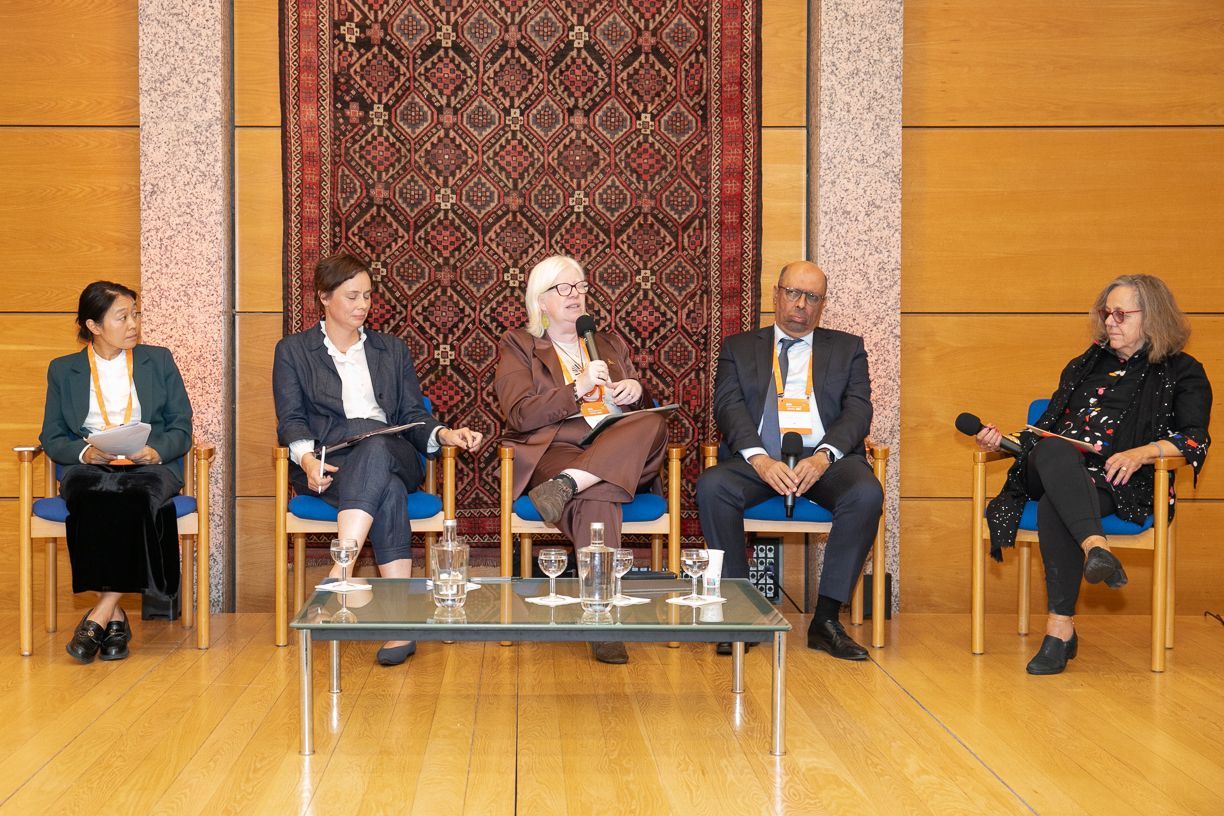
Opening: why Lisbon, why now
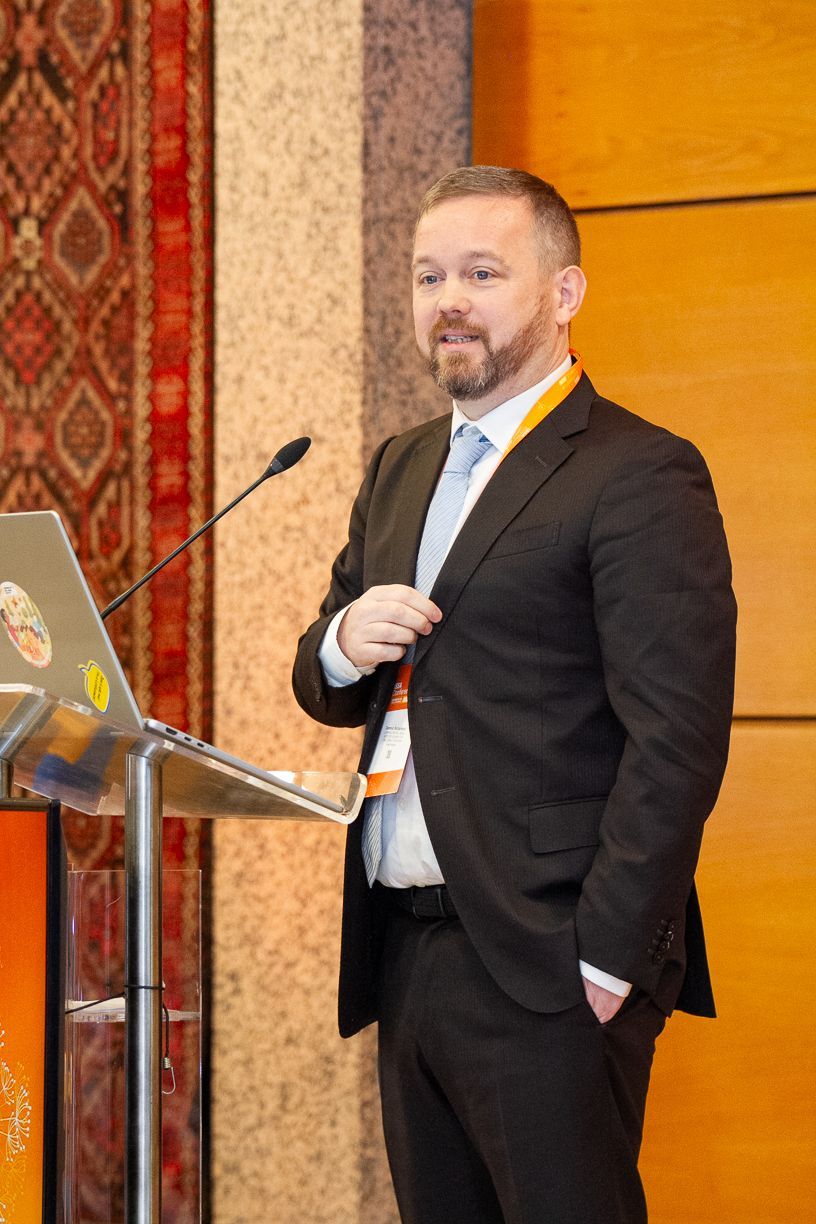
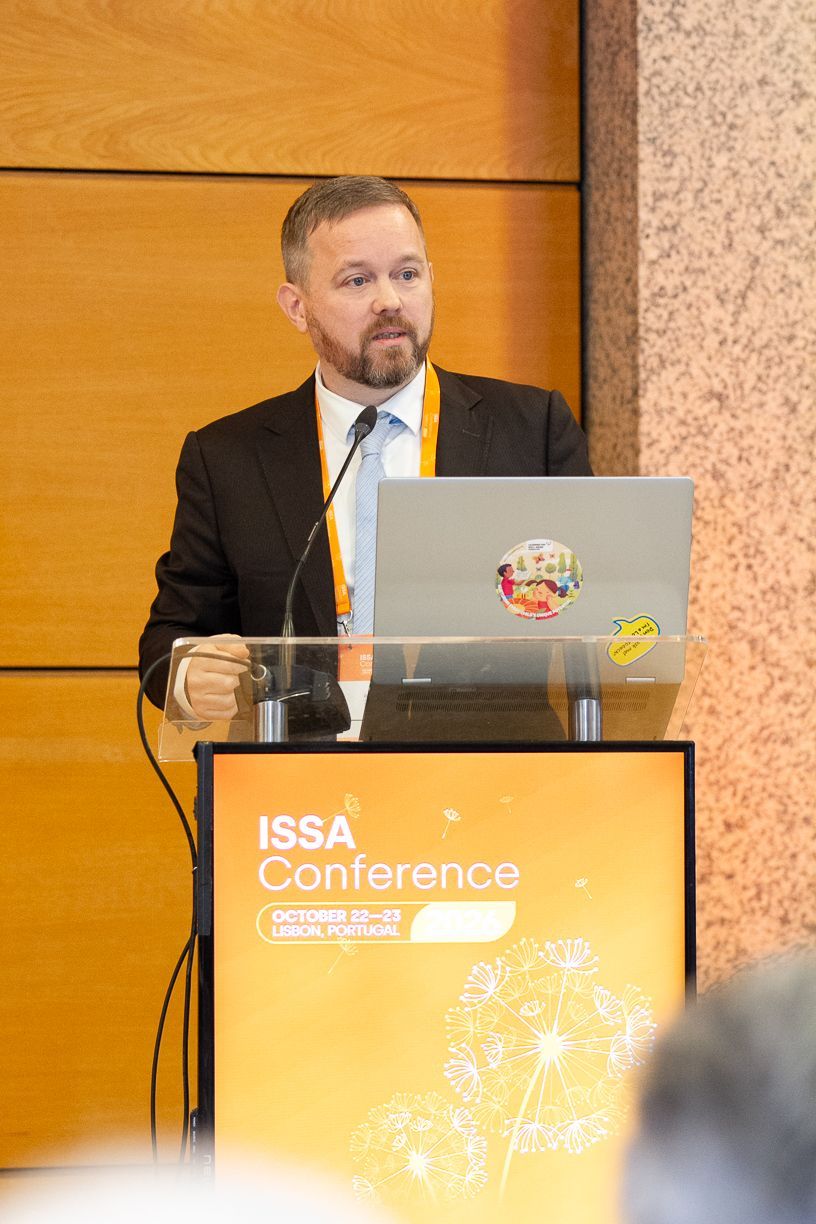
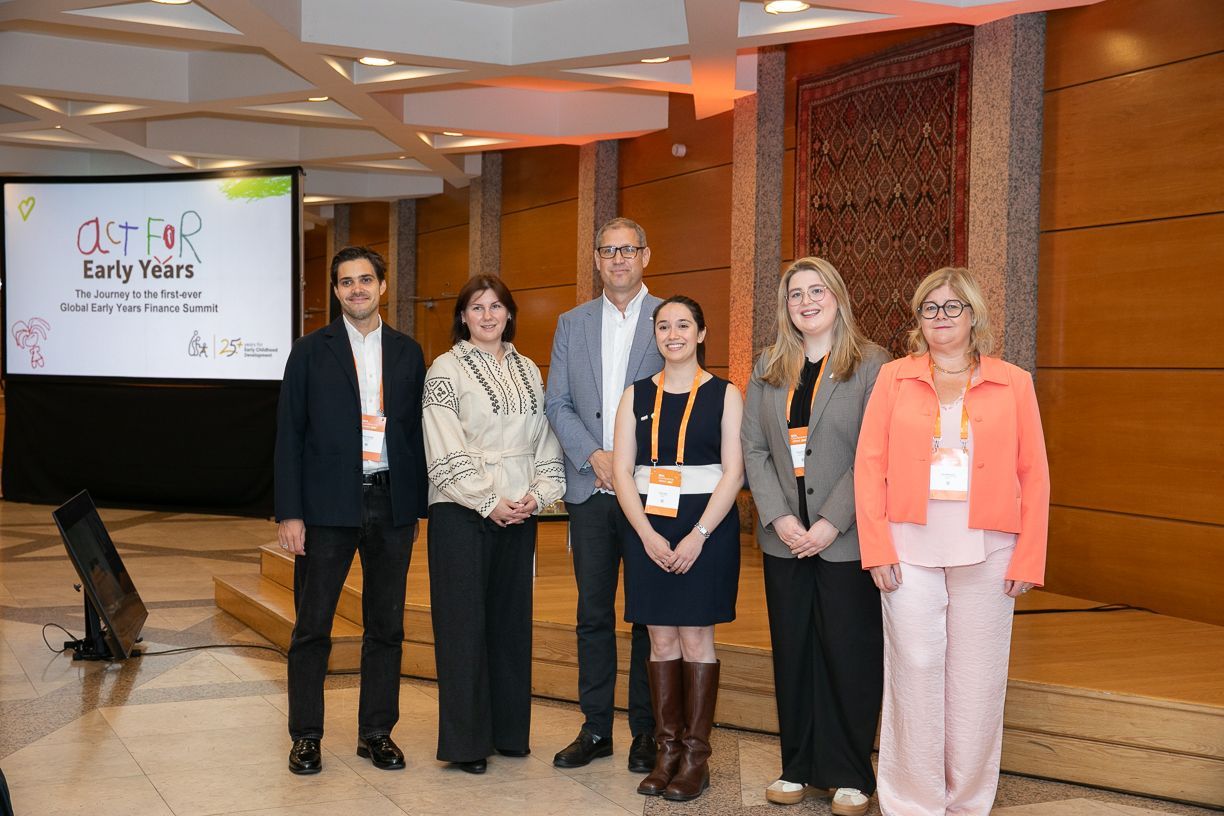
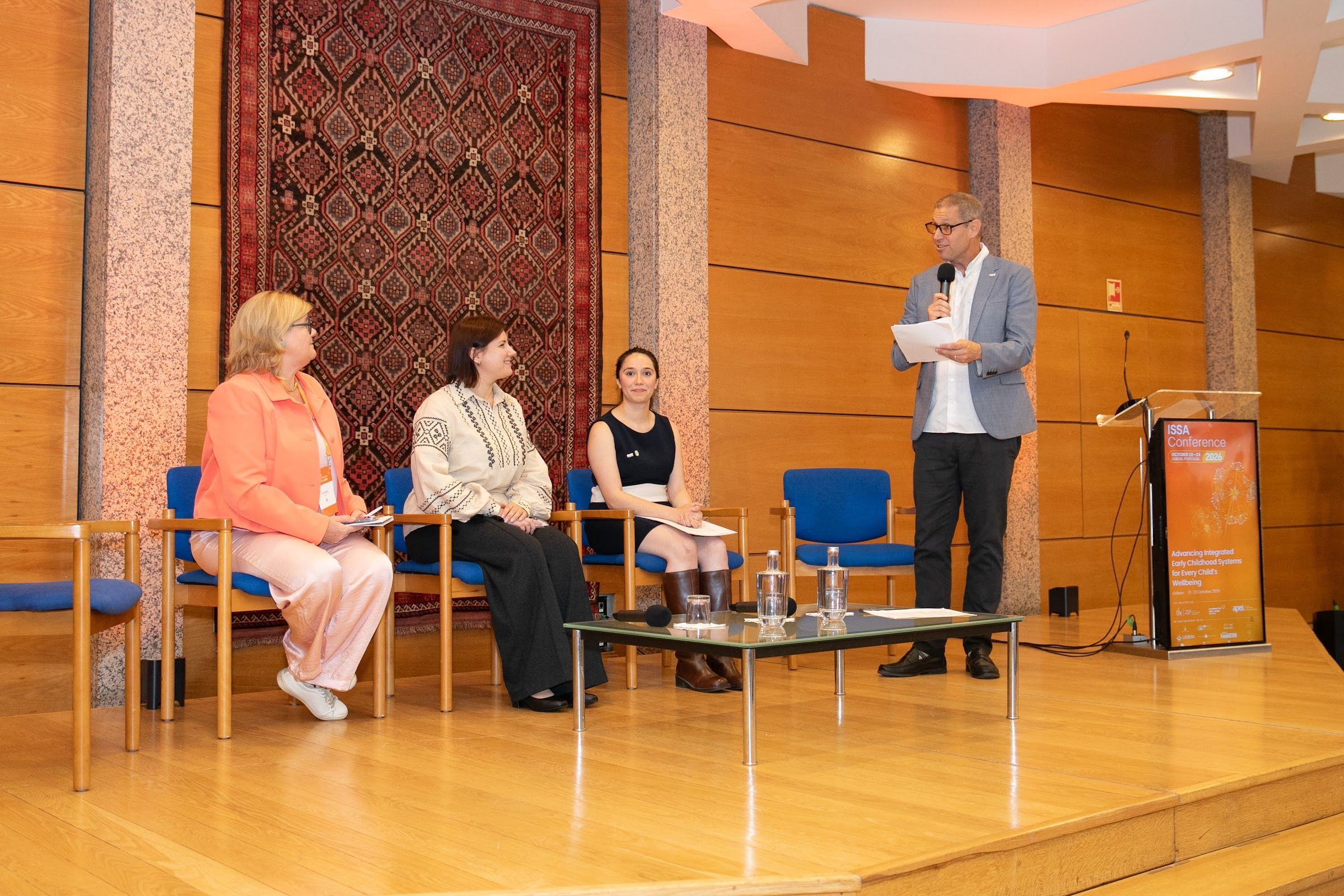
Eva Deak, Co-President of the ISSA Board, and Liana Ghent, ISSA’s Executive Director, opened the conference on Thursday morning by welcoming more than 340 participants from more than 60 countries, in the hall and online. They thanked our co-hosts, the Learning for Well-being Institute and APEI, together with every partner who made the gathering possible, and invited everyone to see the two days ahead as a shared effort to build integrated early childhood systems rather than only to talk about them. Lisbon, they reminded the room, was the right place for this conversation, in a country taking real strides for its youngest children and open about the work that still lies ahead.
Keynote: Beyond coordination
Introduced by Deepa Grover (ISSA Board; Early Childhood Authority, Abu Dhabi), Dominic Richardson (Learning for Well-being Institute) set our course on the first morning with an invitation to look beyond coordination. Better referrals, shared data and services under one roof are valuable, he argued, yet they remain the means rather than the goal, which is to break the inequality that passes from one generation to the next and to help every child thrive.
He showed how fragmented systems keep reproducing unequal outcomes, and how even well-connected systems fall short when nothing changes inside each sector, before calling for a complete early childhood policy portfolio to be treated as essential public infrastructure, universal, preventive and publicly accountable, and designed from pregnancy onwards rather than backwards from school.
His argument did not stay on the stage, travelling instead with participants into every workshop room and coming back to us on Friday, when everything we had built came together in the consolidation plenary.
Integration is more than coordination, because services and the people who lead and fund them need a shared purpose, so that each adds what the others cannot and together they cover the whole of a child’s early years.
Joining up services achieves little if each sector keeps working the old way, so reform has to reach inside health, education and social protection, into how professionals are trained, supported and asked to work every day.
In under a minute, Dominic Richardson shares the most important take-away from his keynote
Watch the full keynote
Making early years a priority
On Friday morning, in a plenary opened by Hana Zylfiu Haziri (ISSA Board; Kosova Education Center, Kosovo), we turned to how champions transform advocacy into action. Ben Hewitt (Theirworld) brought together Theirworld’s Global Youth Ambassadors Danielle Gray and Anna Luiza Huth, who have engaged thousands of young people around the world, with Maryna Stoliar (Ministry of Education and Science, Ukraine), Lieve de Bosscher (City of Ghent) and Miguel Herdade (Jerónimo Martins Foundation), while films from Sarah Brown and from Clara Marques Mendes, Portugal’s Secretary of State for Social Action and Inclusion, placed the discussion within the Act for Early Years campaign and the road to the first Global Early Years Finance Summit.
The conversation moved between national and local progress, the voices of young people and the perspective of business, as the panel explored how advocates build political will, bring new supporters on board and turn commitment into concrete action for young children. The Global Youth Ambassadors carried with them the hopes and expectations of the young people they have listened to, and these sat alongside the national, city and business perspectives that Maryna Stoliar and Lieve de Bosscher brought to the stage, as well as Miguel Herdade, who emphasized the need to fund the early years.
A message from Clara Marques Mendes
A message from Sarah Brown
Who else can advance early childhood?
Evidence alone rarely changes systems or social norms, and so this plenary, opened by Miroslav Sklenka (ISSA Board; Wide Open School, Slovakia) and moderated by Rushda Majeed (Van Leer Foundation), welcomed people who shape culture, environments and the public imagination, among them Philip Fisher (Stanford Center for Early Childhood), filmmaker Dorothy Ghettuba (Van Leer Fellow), Morad Fareed (FC Mother), and architects Yui and Takaharu Tezuka.
The panel began from a simple tension, that the case for investing in early childhood has never been stronger while evidence on its own still struggles to move hearts and habits, and went on to explore how storytellers, designers, builders of platforms and people from the world of sport can translate and amplify what our field knows, in film and science, on the pitch, and in the very buildings where children grow up. Participants left with an invitation to think differently about who shapes the environments, narratives and norms around young children, and about the unexpected allies they might bring into their own work.
From conversations to commitments
On Friday afternoon, the consolidation plenary gathered the outputs of all eighteen workshops into one picture. Mihaela Ionescu (ISSA) shared what the rooms had concluded, and three experts then helped us move from synthesis to consequence, a journey you can follow in full in Section 03, What we built together.
❶ How do we frame it? Moira O’Neill, FrameWorks Institute
❷ How does it change systems thinking? Elizabeth Lule, ECDAN
❸ What will leaders do differently? Joan Lombardi, Stanford University
Mihaela Ionescu shared what the eighteen workshops signalled, building on the rich contributions from across more than 30 countries across the globe, and the discussions carried out in groups. What stood out in connecting the three lenses of integration used during the conference (governance, resources and relationships) was that relationships are the architecture of an integrated system, they are making integration work. She then set out five shifts in how all of us work to support integration, such as moving from coordination as an extra task to coordination that is funded and mandated, from rolling down policies to feedback loops between practice and policies, from listening to families to having them and communities involved in decisions affecting them, as well as from relying on champions and pilots to shared leadership and predictable resources. She asked everyone in the room which of these shifts their own system is furthest from. The three panellists then responded in turn, with Moira O’Neill reflecting on how to frame these lessons so that they resonate beyond our field, Elizabeth Lule on what they mean for systems thinking, and Joan Lombardi on what leaders will need to do differently.
Integration becomes real when learning changes decisions.
Turning collective learning into action
In the closing session, Joan Lombardi was joined by Anna Visser (Department of the Taoiseach, Ireland), Noureddine Boutayeb (Moroccan Preschool Foundation), Penny Dakin (Minderoo Foundation) and Jie Xing (National Health Commission, China), who each connected what they had heard to the realities of policymaking in their own countries, before we launched the ECOS Collaborative, the new home where this work now continues (Section 05).
Building on the consolidation plenary, the panellists responded to two days of shared work and connected it with the everyday realities of policymaking, implementation and system leadership in Ireland, Morocco, Australia and China, turning collective learning into clear messages and real opportunities for action. Again and again, they came back to the conviction that integrated systems grow from shared language, enabling policy, sustained investment and leadership at every level of government and society, rather than from isolated initiatives or reforms in a single sector. We closed with the image of the dandelion, whose seeds travel on the wind and take root in places nobody planned, as an invitation to every participant to carry what we built in Lisbon home into their own systems.
03
What we built together
Eighteen workshops, three strands and nine topics, spread across two venues with participants in the room and online, all flowed into the consolidation plenary on Friday afternoon. This section brings together what participants told us, what it means once we put it side by side, and what it asks of the way each of us works.
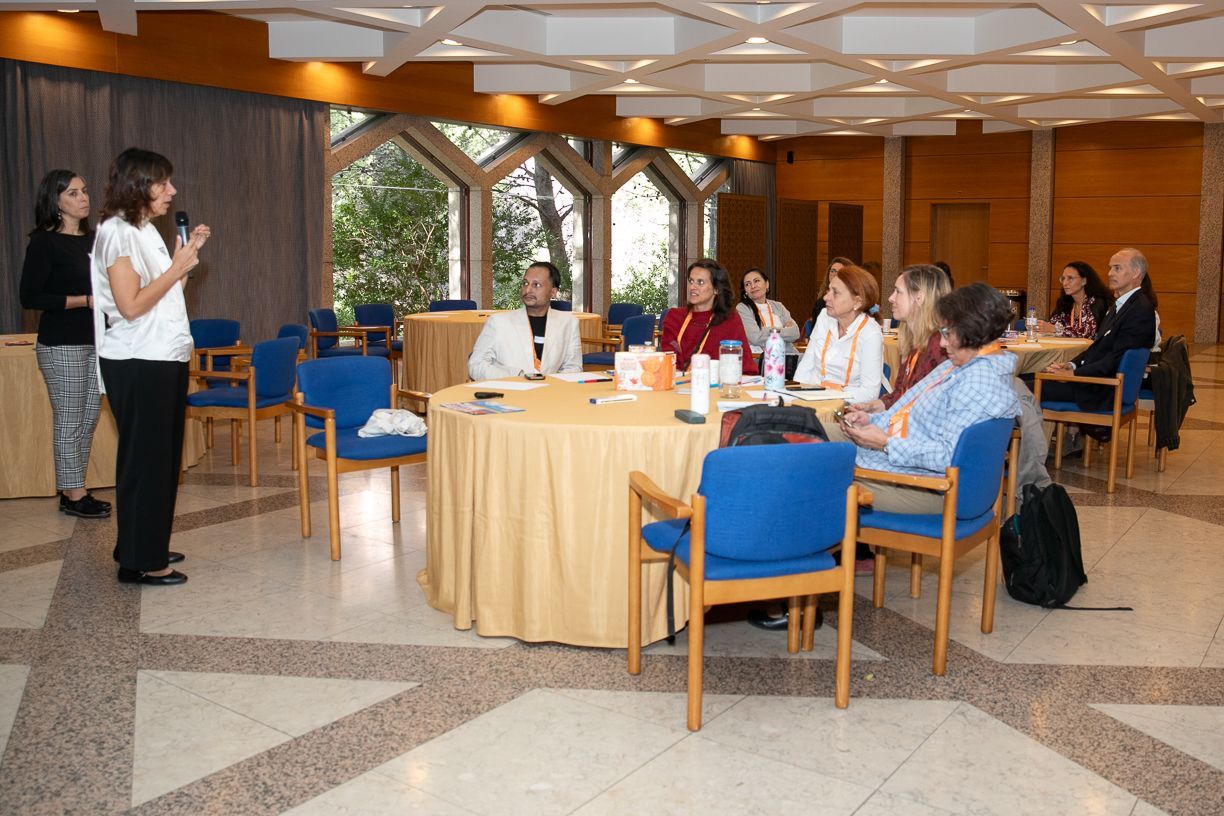
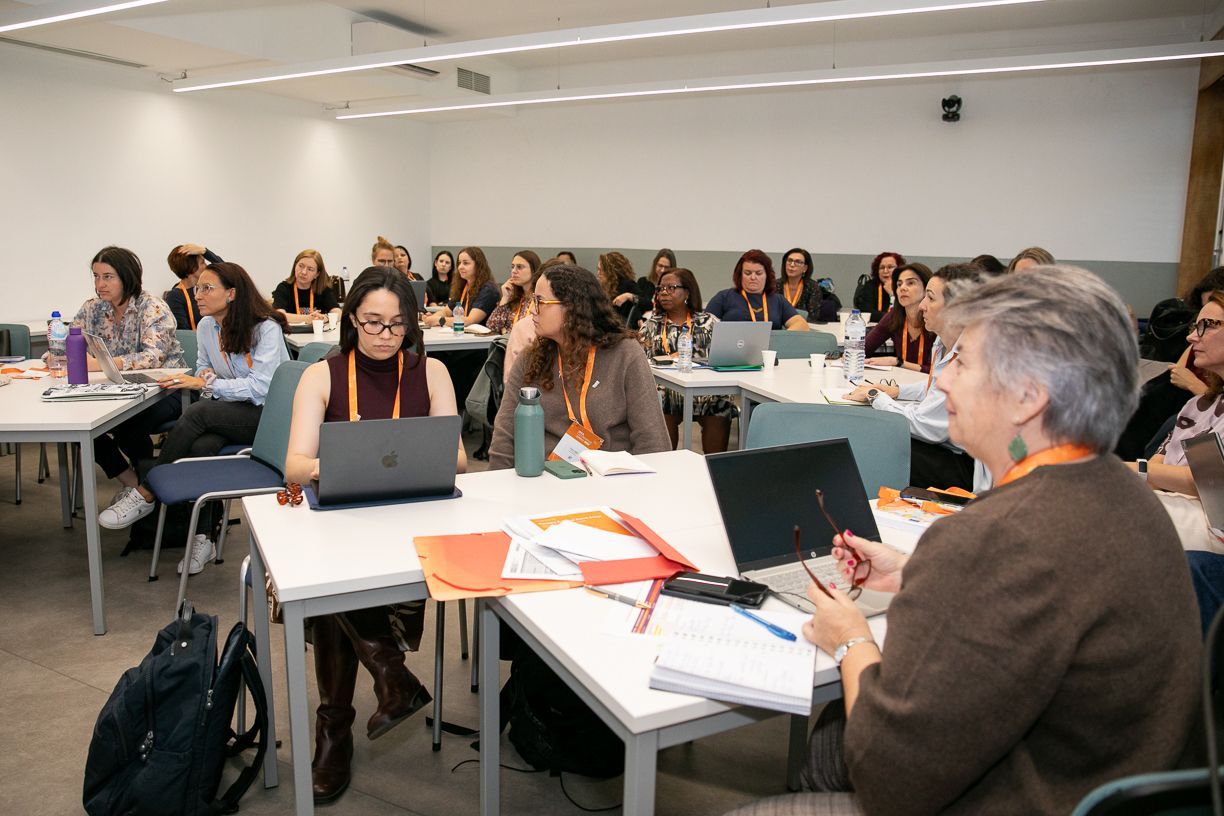
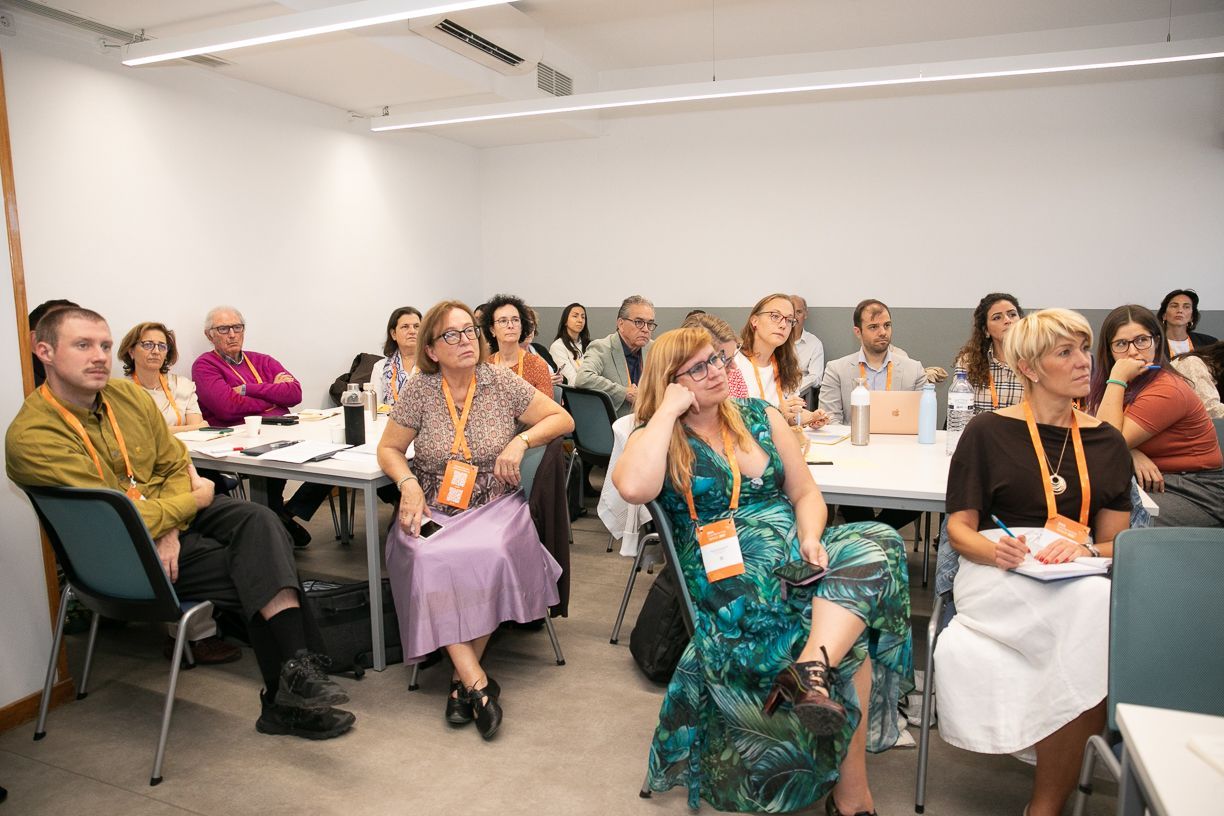

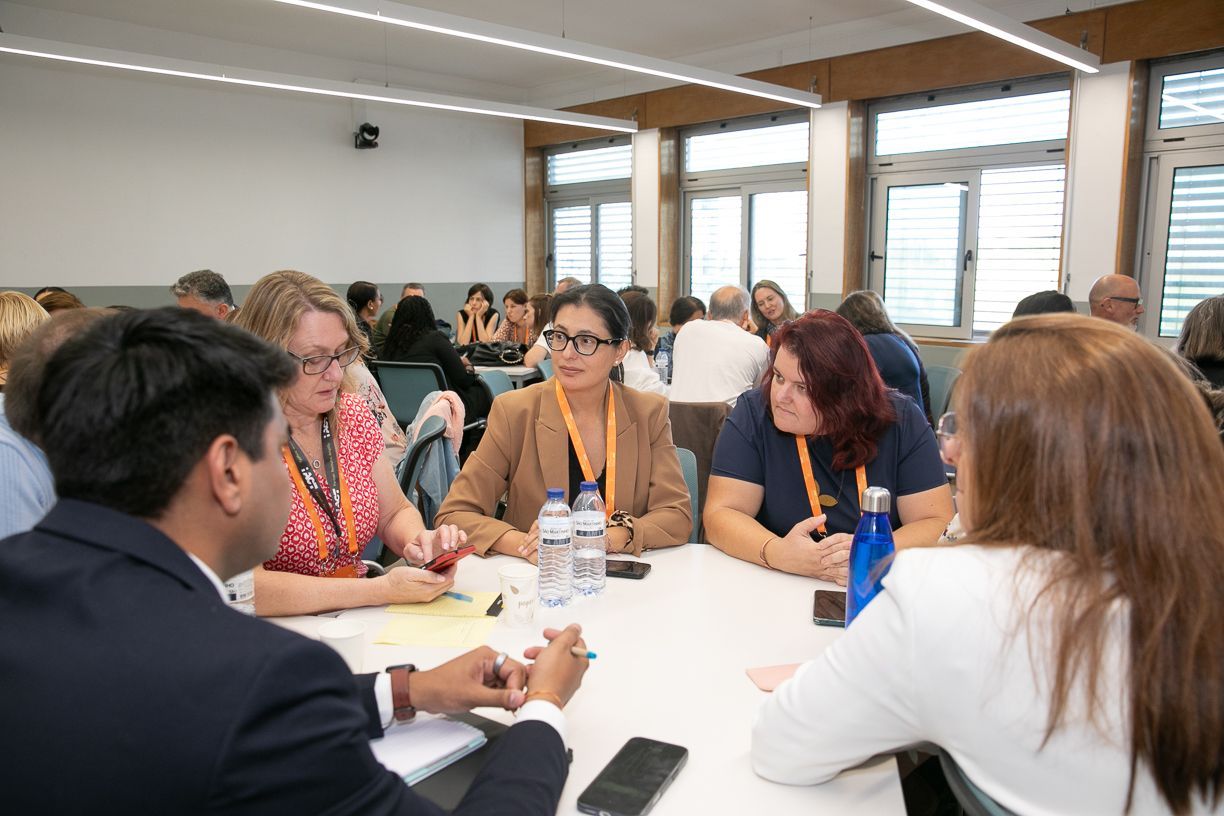
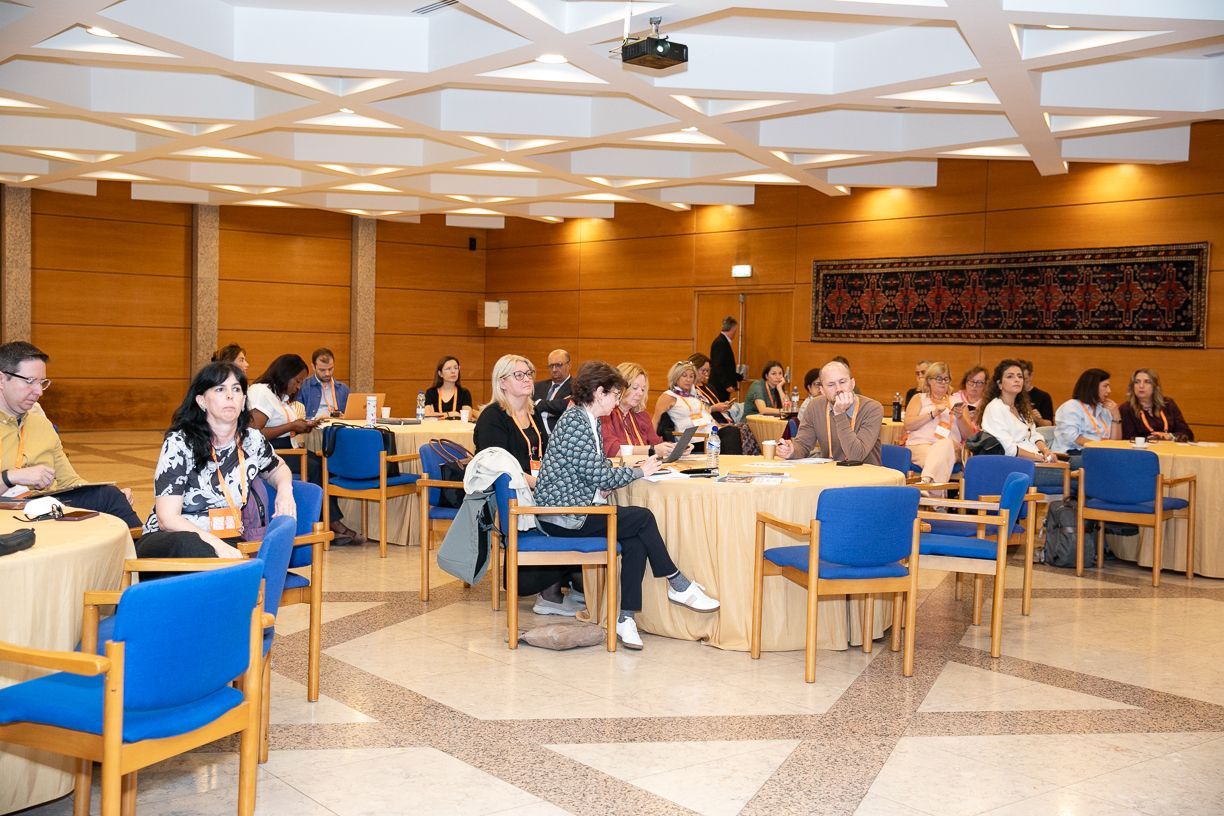
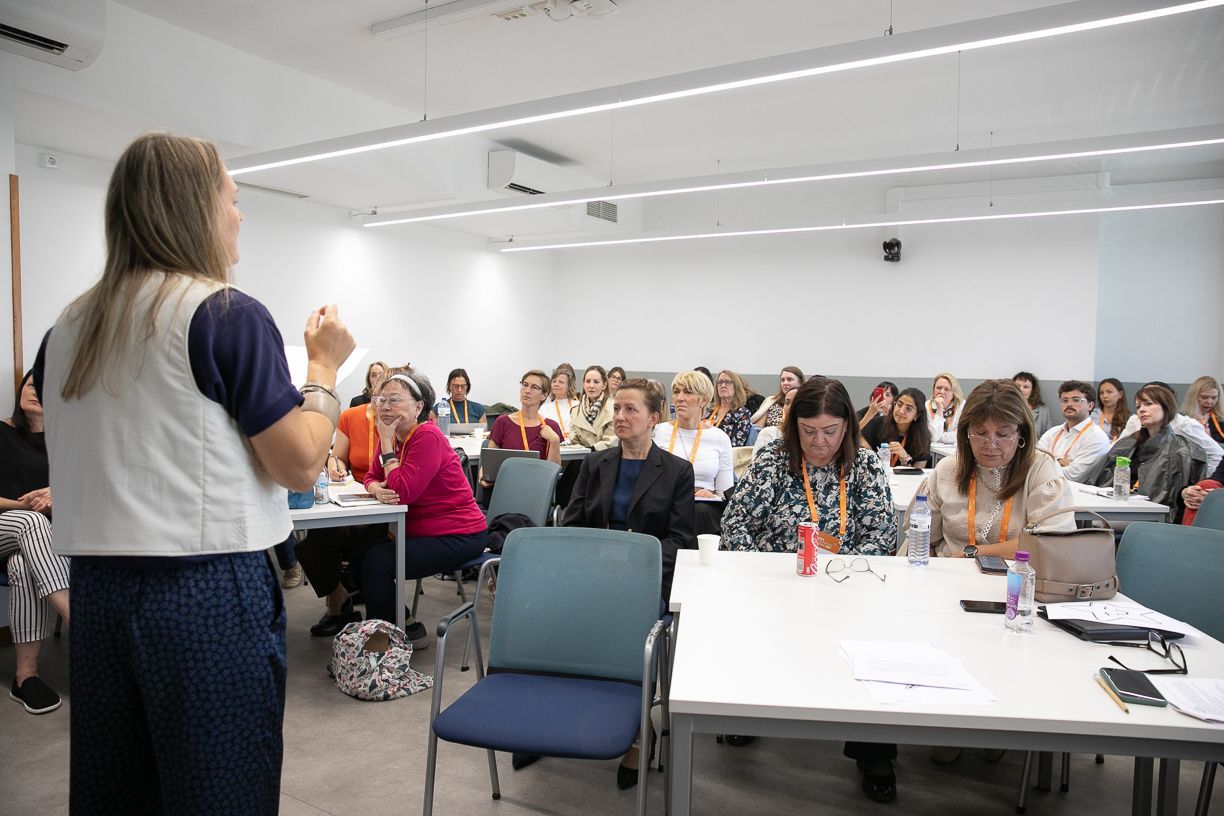
18 WORKSHOPS · 3 STRANDS
Three lenses, one system
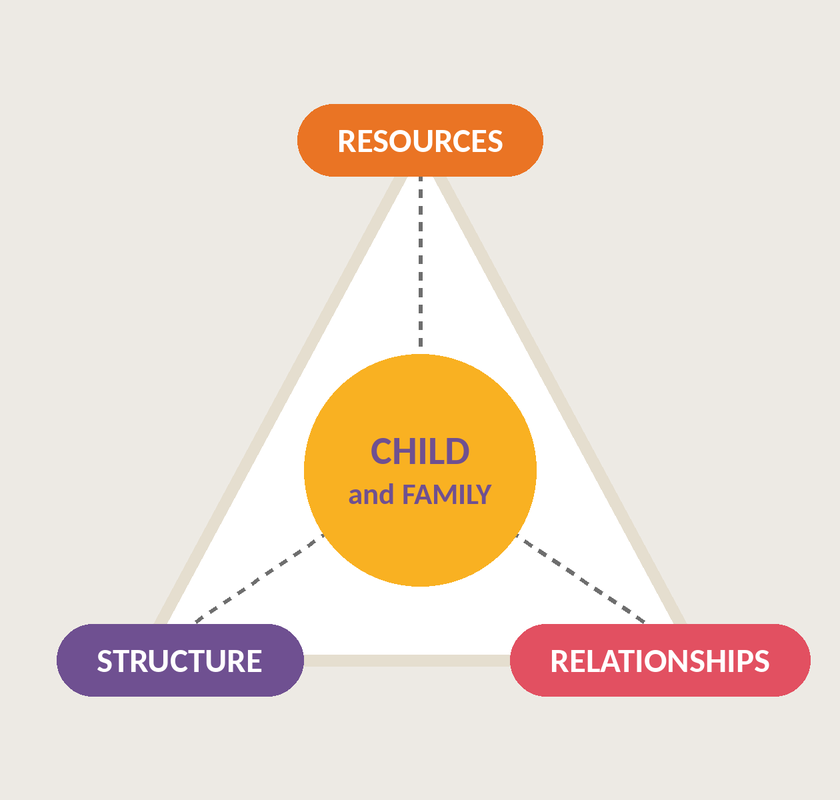
To make a complex question workable, the conference looked at integration through three lenses, each with a strand of its own: the structures that govern it, the resources that fund and measure it, and the relationships that hold it together.
Yet in almost every workshop, participants found themselves describing the links between the three, because in a family’s life governance, money and trust are never experienced separately.
What matters most is what happens in between, with the child and the family at the centre.
One discovery came up repeatedly, and it is perhaps the most important thing we learned: the toughest challenges and the biggest breakthroughs were about people, meaning not only those who work with children and families but also those who decide, fund, govern, train and support. Whether decision makers see the value of working together and back it, whether policy makers create room for a shared vision and clear pathways for coordination, and whether professionals from different sectors trust one another, share a language, lead well and involve families mattered every bit as much as any structure or budget.
What we heard, strand by strand
STRAND 1 · STRUCTURE
How integration is governed
Integration needs an owner, a mandate and a memory.
STRAND 2 · RESOURCES
How integration is financed and measured
You cannot coordinate what you cannot see.
STRAND 3 · RELATIONSHIPS
How integration is co-constructed and sustained relationally
Trust is built by people and must be protected by systems.
Six signals, tested by you
Before a word was spoken, the abstract submissions had already given us five signals, and in the workshops participants put them to the test. Four were confirmed, with Strand 3 affirming most strongly of all that “relationships are system architecture,” two were sharpened by the discussions, and one new signal emerged that was raised in every strand.
4
CONFIRMED
- Integration is how a system works
- Fund what connects services
- Relationships are system architecture
- Structures, resources and relationships move together
2
SHARPENED
- Start with the child and family, give them real influence, and show what changed
- Scale deep as well as wide: start local, adapt, and embed in public systems
1
NEW
- Invest in the people who make integration work: time, wellbeing, fair conditions and skills to work across sectors
Sharpened signals: “Start with the child and family” has come to mean giving children and families real influence, in how quality is defined, in multidisciplinary teams and even in budget decisions, and then showing them what changed as a result, while “scaling is not replication” has become a concrete call to scale deep as well as wide, starting locally, adapting to context and embedding what works in policy, budgets and institutions.
New signal: invest in the workforce, by protecting frontline staff from overload, giving leaders the time they need to lead, ensuring fair pay and conditions, and helping professionals build the skills to work across sectors.
Leave behind · Grow
The warning that came from the workshops was never a warning against ambition, and was instead a warning against fragmentation, rigidity and disconnection.
LEAVE BEHIND
- Silos and single-issue thinking
- Policy handed down without ownership
- Short-termism
- Tokenistic participation
- Rigid replication of off-the-shelf models
GROW
- Shared purpose and language
- Connective infrastructure
- Trust and shared power
- Learning loops
- Shared leadership that outlasts individuals
Relationships need investment, learning needs infrastructure, and continuity needs shared leadership.
What it takes
From Ghent to Quetta and from Berlin to Chibuto, contributors described strikingly similar conditions for integration to work, and these come down to two things: what connects people, and what people need.
WORKING TOGETHER What connects people
- A standing ‘table’ where sectors, government, NGOs and families meet regularly, not just for the length of a project.
- Shared goals and a common language that every profession, and every parent, understands.
- Trust between levels, with governments that let civil society lead and communities that trust institutions enough to take part.
- Visibility of where funding goes and how services connect.
- Networks that last beyond any funding cycle or political term.
MAKING IT REAL What people need
- Leadership at every level, from ministries to the leader on the service floor, with time to lead the coordination.
- Skills for working across boundaries, from coordination to the fiscal know-how that makes integration affordable.
- Time to plan and learn together through mentoring, reflection and peer learning across sectors and professions, with that time protected.
- Data that matter, that reflects real needs of children and families, and feeds into learning loops for sectoral and cross-sectoral improvement.
- A workforce that can stay, through inclusive recruitment, fair pay and conditions, and care for frontline wellbeing.
- Room to adapt, so that tested approaches become commitment rather than compliance.
How we work to support integration
If we take this learning seriously, the change begins in how all of us work, and each of the shifts below links back to one of the themes that shaped this conference.
HORIZONTAL INTEGRATION
Coordination as an extra
To: Coordination as funded, mandated work
VERTICAL COHERENCE
Policy handed down
To: Policy and practice learning from each other
RESOURCES · MEASUREMENT
Siloed funding; data solely for reporting
To: Resources and data for learning and improvement
RELATIONS · CO-CREATION · CO-OWNERSHIP
Listening to families
To: Families and communities influencing decisions
SUSTAINING INTEGRATION
Relying on champions and pilots
To: Shared leadership, predictable resources, public commitment
Which shift is your own system furthest from?
EXPLORE IN MORE DETAIL
Go deeper into each strand: its topics, its workshops and what the rooms built.
STRAND 1 · STRUCTURE
How integration is governed
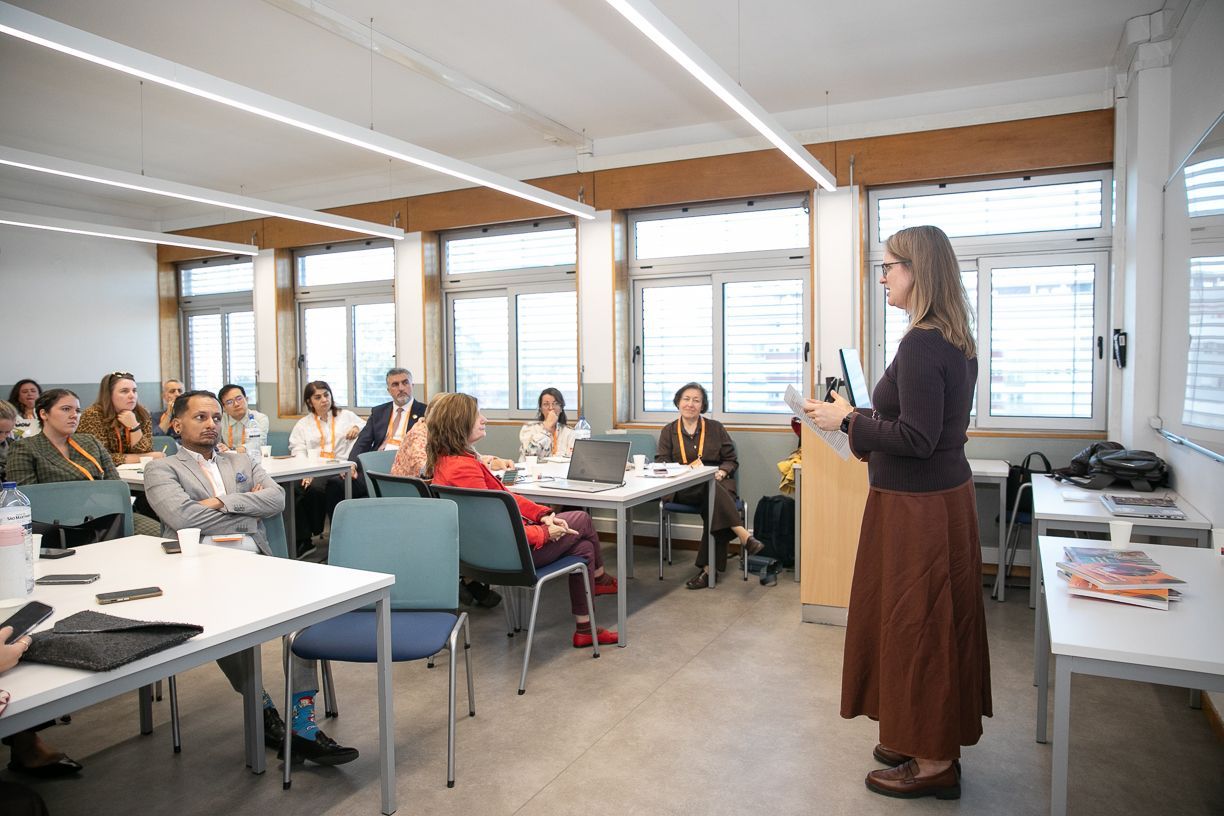
Ministries, strategies and laws open the door to integration, and on Thursday morning six workshops explored what it takes for everyone involved to walk through that door together, and to keep walking once the first enthusiasm has faded.
STRAND FOCUS
This strand examined the formal and informal structures that connect or fragment early childhood systems, focusing on how governance shapes whether and how services work together.
Guiding question: What does effective integration look like in practice, and how can it be sustained across levels of governance?
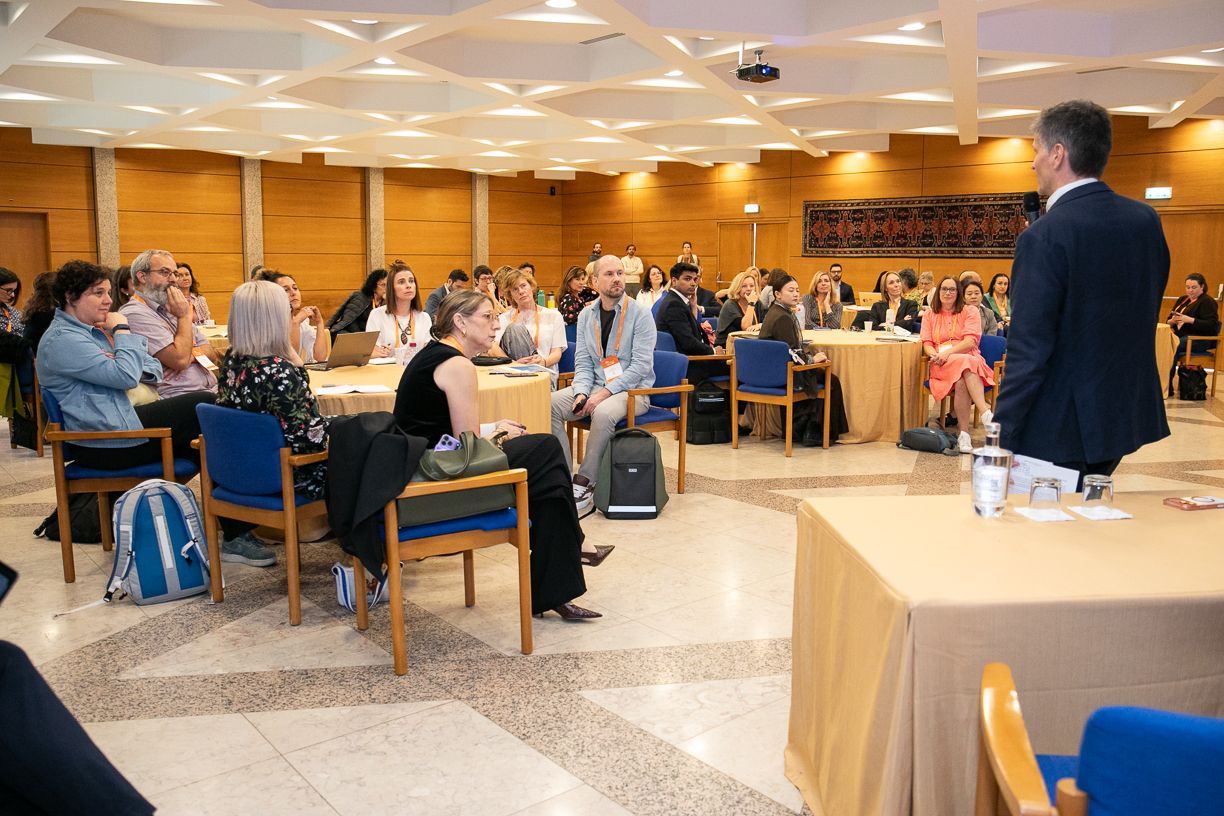
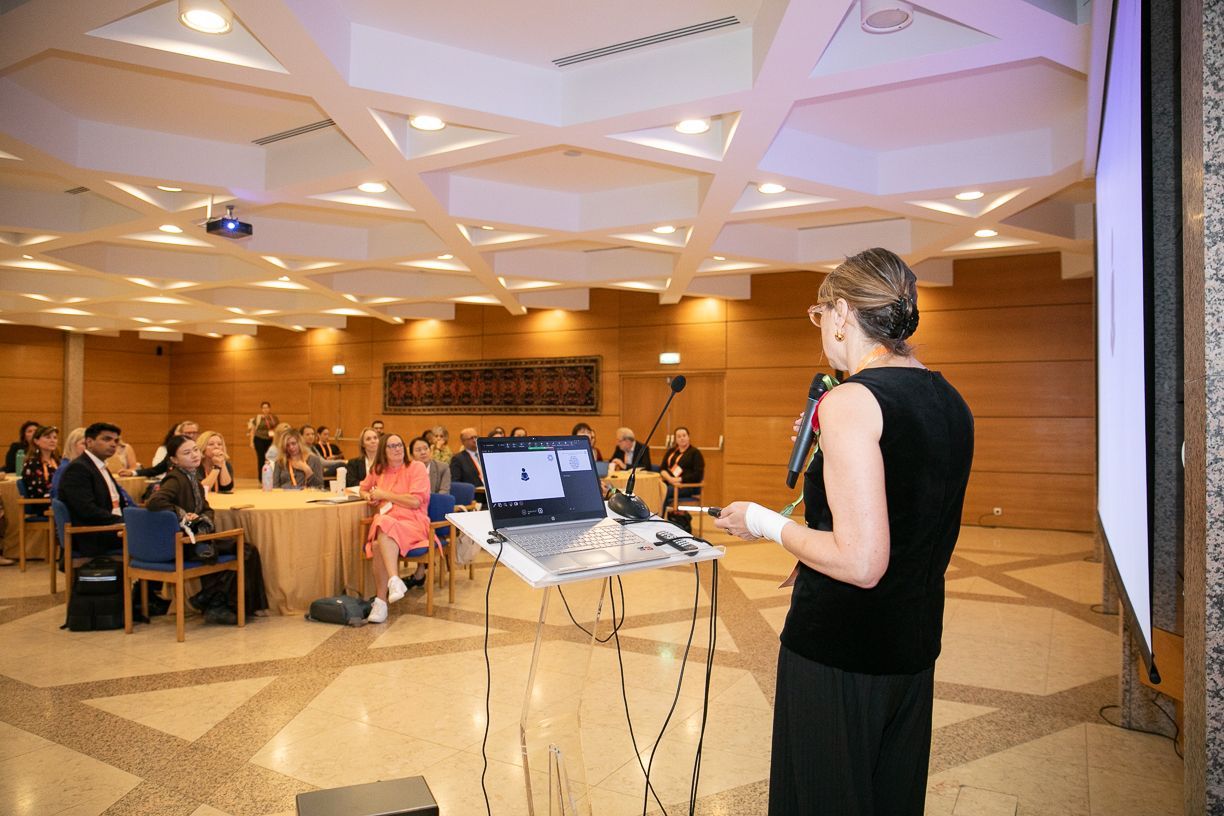
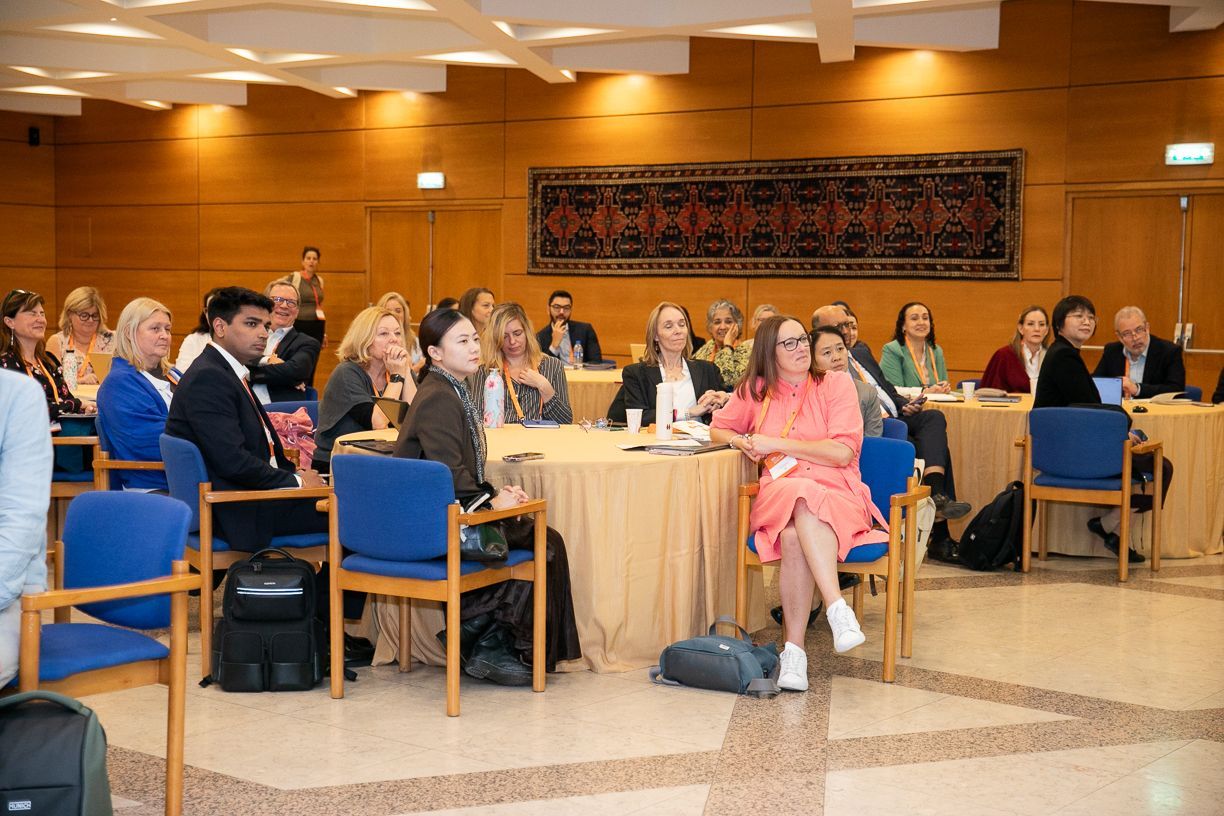
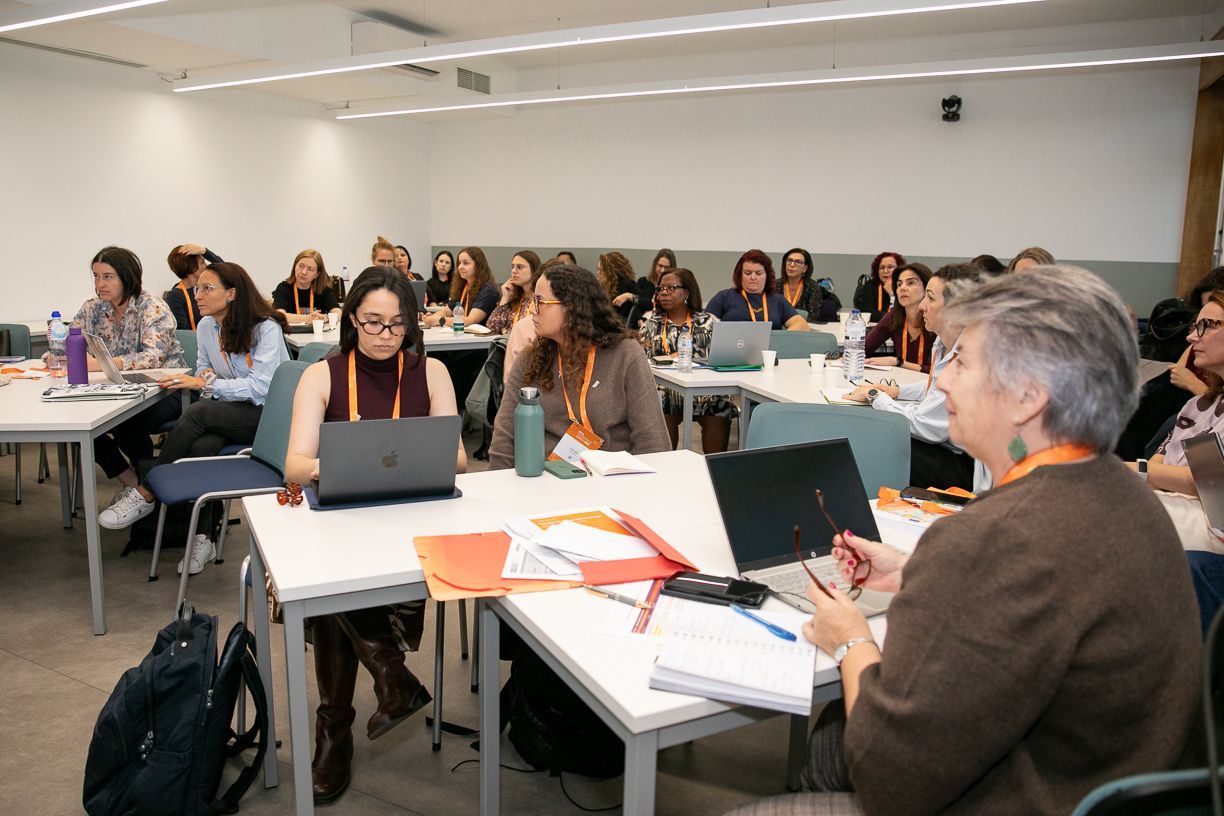
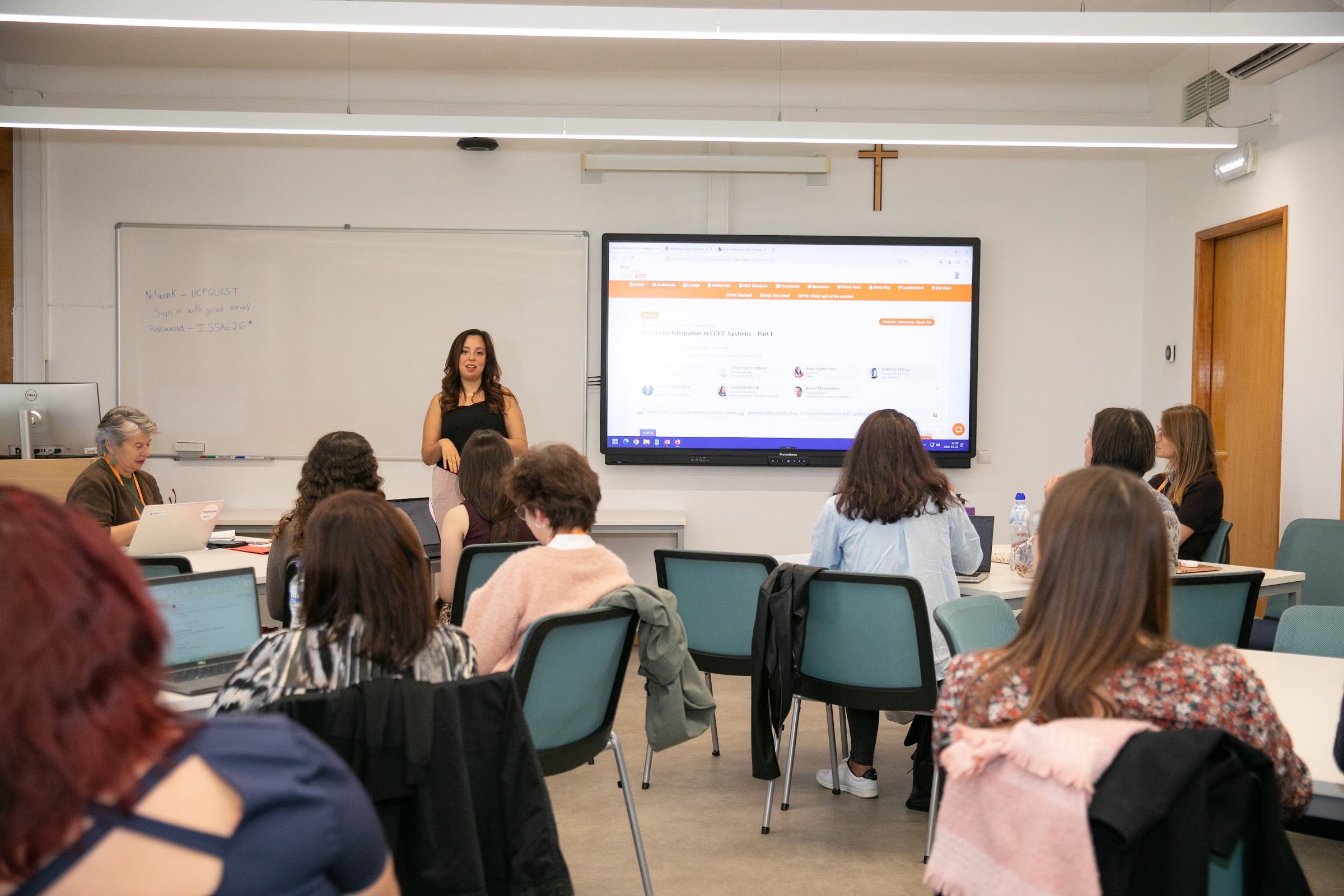
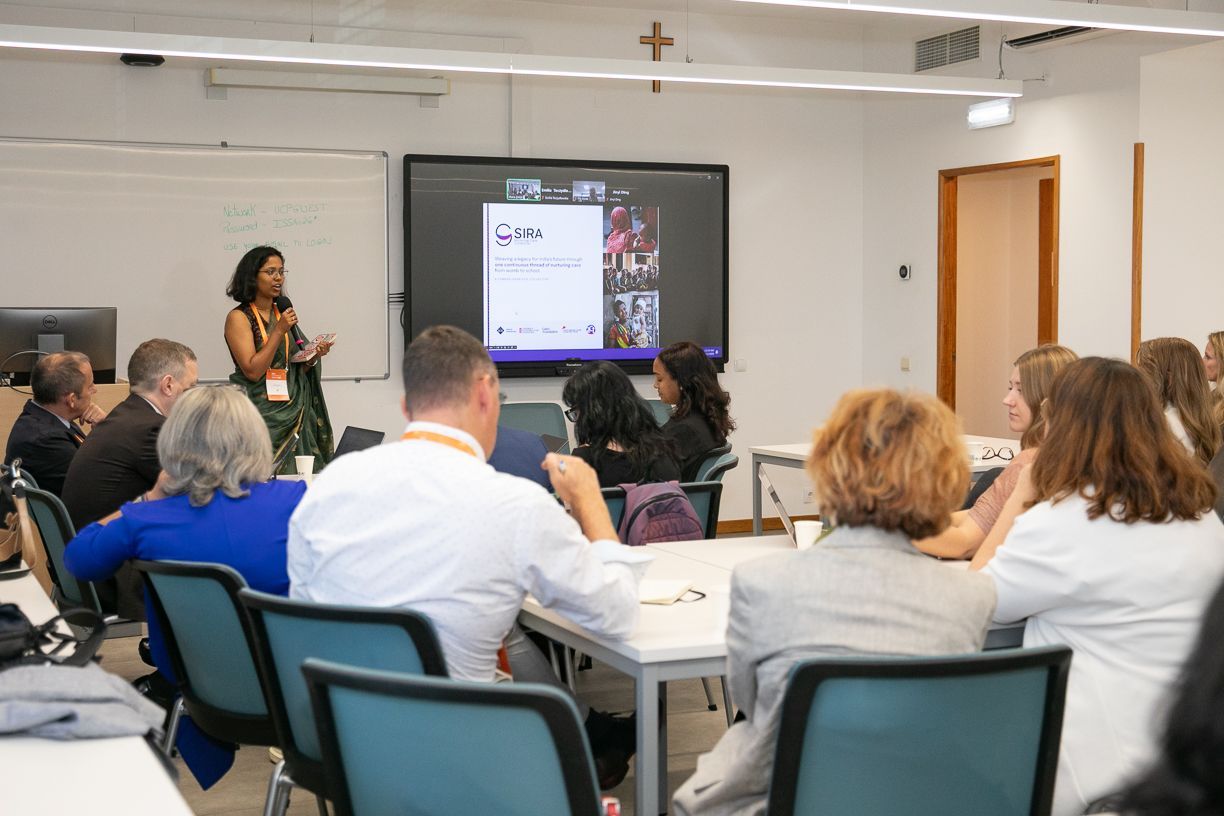
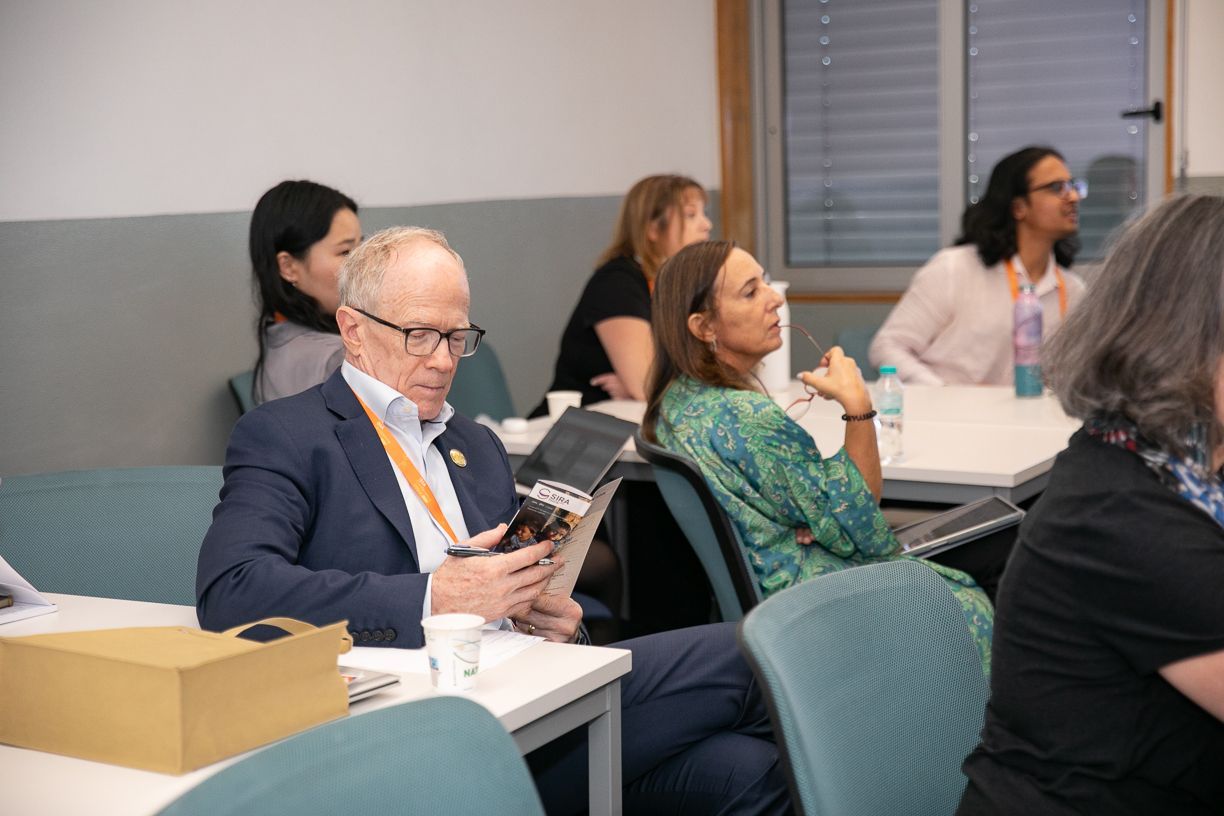
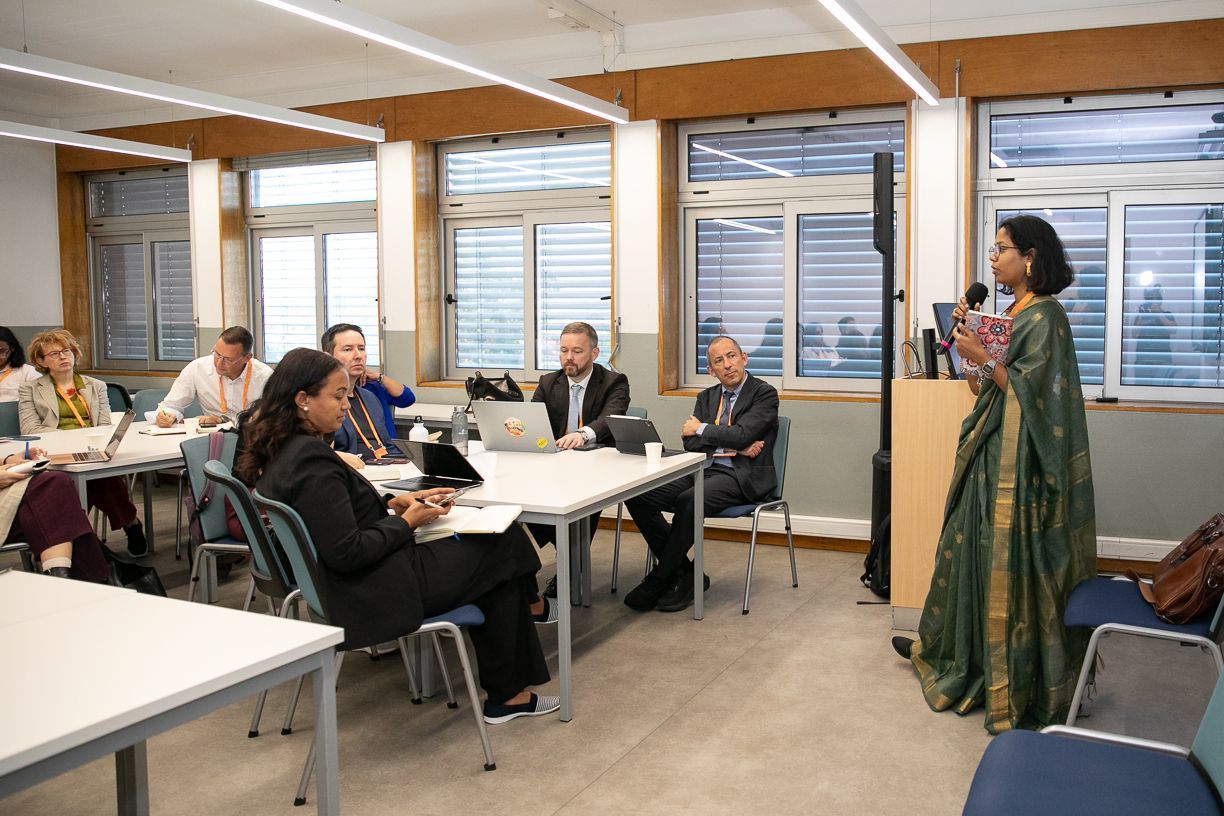
STRAND 1 OF 3 · WHAT WE LEARNED
Integration needs an owner, a mandate and a memory.
“Everyone in the system should have a reason to act.”
WHAT TO DO
- Give coordination a home. Clear mandates, ownership at every level, bridge-builders and shared governance, whether that home is a lead ministry, the mayor’s office or a champion at every level.
- Make policy and practice a two-way conversation. Co-design, feedback loops, shared data and supported implementation, so that government acts as “an enabler, not a controller.”
- Anchor integration so it outlasts political change. Legislation, cross-party backing, implementation plans and budgets attached to policy, and leadership and a common language that do not depend on individuals.
Unclear ownership of coordination surfaced again and again as something to avoid, as did policy that arrives without the means to deliver it, which one group summed up with the reminder to “add implementation plans and budgets with the policy change, otherwise nothing actually changes.”
Participants were just as clear that the people inside the early childhood system need room to do this well, asking decision makers not to ask professionals to do more, and instead to let them, and support them, to do things differently, while giving leaders the time they need to lead.
Topic 1.1 Horizontal integration across sectors (national/local level)
Health, education, social care and family support still too often sit side by side instead of working together, so what actually joins them up around a family?
TOPIC FOCUS
This topic looked at how services and sectors operating at the same level coordinate around children and families, and which governance arrangements make that easier or harder, including shared priorities across sectors, what transfers across contexts, and whether governance reaches the most marginalised children.
Contributors agreed that bringing departments together helps, although on its own it is not enough, because integration works best when services are organised around the child’s needs and when someone holds the ‘table’ together, whether that is a city, a whole-of-government strategy or a collective of funders.
Every example rested on a standing ‘table’ where people with different mandates agreed on a shared vision and outcomes for children and kept coming back to it.
Collaboration between professions is where integration becomes tangible for families, and it thrives on good leadership and a shared view of how children learn and grow.
WHAT EMERGED IN THE ROOM
- Coordination is work, so it must be funded. Both rooms called for the “funding of roles that sit across sectors” and for a clear coordination mandate, often at municipal level, so that coordination stops being an extra.
- Start with the child and family. A welcoming entry point and, one consistent contact can spare families from navigating fragmented services and repeating their story, while careful planning avoids gaps at age thresholds.
- Change how people work rather than adding to their workload. Participants warned against overburdening frontline staff and asked for protected time for collaboration and joint training that starts in professionals’ initial education and continues in in-service training.
- Start local and start now. Child and family hubs, developed step by step from existing premises and partnerships, emerged as the most practical model to carry forward.
THE TWO WORKSHOPS
WORKSHOP · TOPIC 1.1
Horizontal Integration in ECEC Systems
Thursday 22 October · 10:45–12:15 and 12:45–13:45 · Universidade Católica Portuguesa
WORKSHOP · TOPIC 1.1
Horizontal Integration in ECEC Systems
Thursday 22 October · 10:45–12:15 and 12:45–13:45 · Universidade Católica Portuguesa
Workshop focus
Looking at horizontal governance within early childhood education and care, this workshop asked how services working at the same level can coordinate around children and families, drawing on experience from Belgium and Poland.
What the room built from the session notes
✓ What worked
- Funding roles that sit across systems, with outcomes-based accountability
- A shared vision that brings stakeholders in different departments on board
- Training staff to cooperate with other professionals, starting in initial education
✕ What to avoid
- Single-issue thinking and waiting for top-down reform
- A stigmatising “front door” to services
- Evidence no one can use, and digital tools bolted on outside services
❧ What to nurture
- Relationships, backed by structural support, shared language and joint training
- Holistic wellbeing at the centre, not only communication between services
- A community-wide approach that values the culture and resources already there
➜ What to take forward
- Start local and start now, with cross-sector shared training
- Integrate horizontal and vertical integration rather than treating them apart
- Bring people together, because, as one group wrote, it “makes wonders”
Who made this workshop
Facilitated by Eva Deak (Executive Director, Partners Hungary, Hungary).
SPEAKER
Akvile Motiejunaite · Senior Analyst, European Education and Culture Executive Agency, Belgium
“The limits of structural integration: governance, workforce and coordination in European ECEC systems”
PRESENTERS
Mathilde Mathys · Director Family Policy, City of Ghent, Belgium
“Governance in Action: The power of the Ghent Network Model to overcome the silo approach”
Amy Szymanska · Director, HiKids, Poland
“From Silos to Systems: Making Horizontal Integration Work for Early Childhood – A Practical Model Inspired by HiKids”
Lobke Van Lombergen · PhD Researcher, Ghent University, Belgium
“Towards integrated ECEC: the role of interprofessional collaboration”
DISCUSSANT
Lobke Van Lombergen · PhD Researcher, Ghent University, Belgium
“Bridging care and education: how integrated ECEC practices shape children’s everyday experiences”
WORKSHOP · TOPIC 1.1 Hybrid
Horizontal Integration Across ECD Sectors and Services
Thursday 22 October · 10:45–12:15 and 12:45–13:45 · Ismaili Centre Lisbon
WORKSHOP · TOPIC 1.1 Hybrid
Horizontal Integration Across ECD Sectors and Services
Thursday 22 October · 10:45–12:15 and 12:45–13:45 · Ismaili Centre Lisbon
Workshop focus
Taking a broader early childhood development lens, this workshop explored how health, education, social and family services at the same level can coordinate around children and families, with experience from Australia, Ireland, the United Kingdom, the Czech Republic, Mexico and India.
What the room built from the session notes
✓ What worked
- Organising collaboration around each family’s circumstances, using children’s rights as a shared basis
- A welcoming entry point and one consistent contact point who helps families navigate support
- Changing how professionals work, building collaboration into existing routines instead of adding tasks
✕ What to avoid
- Integrating mandates without integrating resources, and leaving coordination unclear
- Making families responsible for navigating fragmented services, or creating gaps at age thresholds
- Overburdening frontline staff, and depending on short-term funding and political cycles
❧ What to nurture
- A shared diagnosis of local needs and strengths, agreed with families, practitioners and decision-makers
- Protected time for collaboration and respect for each other’s expertise
- Evidence that sustains commitment beyond political cycles, combining service data with families’ accounts
➜ What to take forward
- Advance child and family hubs, developed step by step from existing premises and partnerships
- Make coordination a routine, supported part of service delivery
- Regularly review how the partnership itself is working, not only individual cases
Who made this workshop
Facilitated by Olivier Thévenon (Head of Child Well-Being Unit, OECD WISE Centre, France) in the room, and Andre Abreu (Learning for Well-being Institute) online, with online and technical support from Juliana Zapata (Learning for Well-being Institute).
SPEAKER
Sharon Goldfeld · Director, Centre for Community Child Health, Australia
“Integrated Child and Family Hubs: local solutions to population early childhood development challenges”
PRESENTERS
Des Cox · Assistant Principal Officer, Department of Children, Disability and Equality, Ireland
“Effective Integration in Practice: Lessons from First 5 Ireland’s whole-of-government strategy”
Josie Dickerson · Research Professor, Born in Bradford, Bradford Hospitals, United Kingdom
“A co-produced early years system to reduce inequity in child health and development”
Petr Pabian · Public Policy Coordinator, Early Childhood Platform, Czech Republic
“It’s not rocket science, just good governance”
Manuel Pérez Jiménez and Adriana Gidi · Director and Associate Director, Centro de Primera Infancia, Mexico
“Leading an Early Childhood Center at the University–Foundation–Government Interface”
DISCUSSANT
Naman Gupta · Investment Associate, LGT Venture Philanthropy, India
“A USD 20M Integrated Nurturing Care Collective: Womb to School”
Topic 1.2 Vertical coherence: aligning policy and practice
A strategy signed in a ministry does not change a child’s day in a nursery on its own, so what keeps the long chain from policy to practice connected?
TOPIC FOCUS
This topic addressed the gap between policy intent and the lived experience of services and families, and how integration weakens as it is translated across levels, exploring how policy frameworks, quality standards and local implementation can be aligned and sustained.
The gap between policy and practice has a name, the implementation deficit, and contributors showed how it begins to close when every policy comes with a plan for how it will work for each actor involved, when different levels of government invest in the same place, and when practice is able to feed back into policy.
Coherence ran on trust between levels of government, and on municipalities acting as the vital middle layer between national policy and families’ lives.
Small teams, good communication and leaders close to the work floor are what make structures work from one day to the next.
WHAT EMERGED IN THE ROOM
- Co-design and co-ownership, with a lead ministry and a champion at every level, worked better than split systems where responsibility is divided.
- Feedback loops in both directions: ongoing data, supported implementation and a “dual translation” between what communities need and what government can deliver.
- From standards to principles. The second room favoured shared pedagogical principles, co-created with teachers, children and families, over rigid standards and huge overhauls, and asked for quicker cycles of improvement.
- Children’s voices in defining quality, with information on quality made public so that parents can take part.
THE TWO WORKSHOPS
WORKSHOP · TOPIC 1.2 Hybrid
Aligning Policy Frameworks, Governance and Implementation
Thursday 22 October · 10:45–12:15 and 12:45–13:45 · Universidade Católica Portuguesa
WORKSHOP · TOPIC 1.2 Hybrid
Aligning Policy Frameworks, Governance and Implementation
Thursday 22 October · 10:45–12:15 and 12:45–13:45 · Universidade Católica Portuguesa
Workshop focus
This workshop focused on vertical coherence, examining where integration breaks down between policy intent and the services and families it is meant to reach, with examples of policy alignment from Australia, the Czech Republic, Poland, Belgium and South Africa.
What the room built from the session notes
✓ What worked
- Co-design and co-ownership of the system, with a lead ministry and a champion at every level
- Feedback loops with ongoing data, and “dual translation” between community needs and government
- Bridge builders, such as provincial governments and trusted intermediaries, and supported implementation
✕ What to avoid
- Forgetting that communities need to own the change
- Thinking you can do it alone: “be an enabler, not a controller,” while still monitoring quality
- Unrealistic expectations, rushed quality assurance and unexamined assumptions about who provides care
❧ What to nurture
- “Everyone in the system should have a reason to act”
- Cross-party policies backed government-wide, and safe spaces to share difficulties honestly
- Common language, shared data pools and horizontal learning, organised by local government with a mandate
➜ What to take forward
- Data integration across levels
- Young children’s participation in defining quality
- Small field coaching teams and learning communities with a neutral steward
Who made this workshop
Facilitated by Mihaela Ionescu (Program Director, ISSA), and Luis Manuel Pinto (Learning for Well-being Institute) for online, with technical support from Tania Lomba (ISSA).
SPEAKERS
Juan Larranaga and Penny Dakin · Director, Place, and Executive Director, Communities, Minderoo Foundation, Australia
“Aligning Policy, Investment and Community Voice: The Derby Early Learning Hub as a Model for Vertical Coherence”
PRESENTERS
Kateřina Sirotková · Director, Early Childhood Platform, Czech Republic
“Implementation deficit as a major barrier to creating early childhood ecosystems”
Monika Rościszewska-Woźniak · President of the Board and Leading Expert, The Comenius Foundation for Child Development, Poland
“How can social organizations support government and private sectors in strategic, country-wide transformations?”
DISCUSSANTS
Sofie Vastmans and Michiel Voet · Researchers, Artevelde University of Applied Sciences, Belgium
“Beyond the Org Chart: What Makes Structures Actually Work?”
Sarah Klaus · Senior Global Program Advisor, OneSky, United Kingdom
“Role of Municipalities and Local Governments in Putting Democratic, Socially-Inclusive Policies Into Practice”
Dadisai Taderera · Head of Partnerships, SmartStart Early Learning NPC, South Africa
“When practice drives systems change: A SmartStart case study”
WORKSHOP · TOPIC 1.2
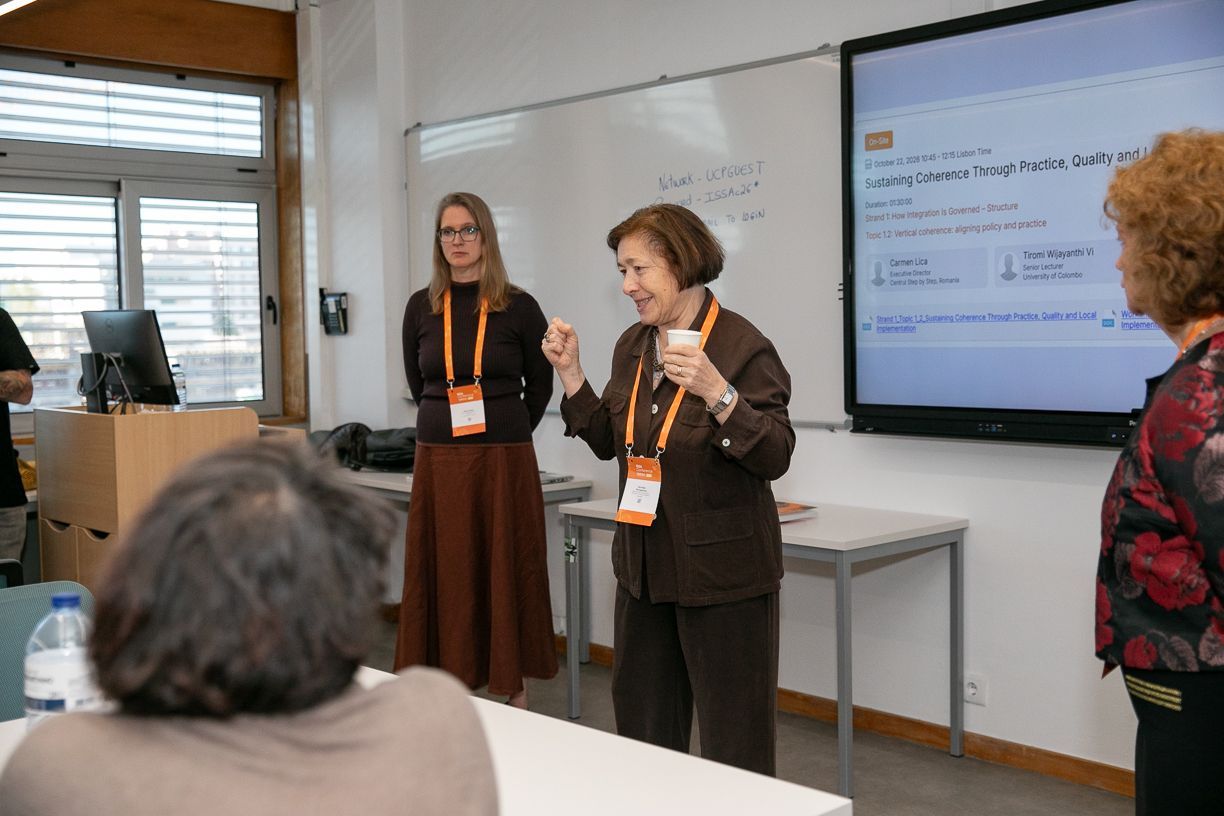
Sustaining Coherence Through Practice, Quality and Local Implementation
Thursday 22 October · 10:45–12:15 and 12:45–13:45 · Universidade Católica Portuguesa
WORKSHOP · TOPIC 1.2
Sustaining Coherence Through Practice, Quality and Local Implementation
Thursday 22 October · 10:45–12:15 and 12:45–13:45 · Universidade Católica Portuguesa
Workshop focus
Focusing on quality and local implementation, this workshop asked how policy intentions remain coherent as they reach early childhood settings and practitioners, drawing on experience from Germany and the United States.
What the room built from the session notes
✓ What worked
- Moving from pedagogical standards to pedagogical principles, co-created with teachers, children and families
- Communities of reflective practitioners, built on trust and kept apart from inspection
- Closing the feedback loop, so people on the ground hear what changed
✕ What to avoid
- Top-down systems that send mixed messages about trust and control
- Over-standardisation and one-size-fits-all approaches
- Huge overhauls, where quicker cycles of improvement would serve better
❧ What to nurture
- Ways for children to participate meaningfully and shape local planning
- Trust across the system, and investment in trusting professionals
- A balance between children’s developmental stages and nationwide programmes
➜ What to take forward
- Thinking twenty years ahead when setting standards
- Developing new theories of how children learn
Who made this workshop
Facilitated by Cristiana Boca (Early Childhood Lead, Centrul Step by Step, Romania).
SPEAKER
Henriette Heimgaertner · Co-Founder and past Managing Director, Berlin Early Years Institute for Quality Development, Germany
“Introducing, Rooting and Sustaining an ECEC programme based on a co-constructed Framework on Quality”
PRESENTERS
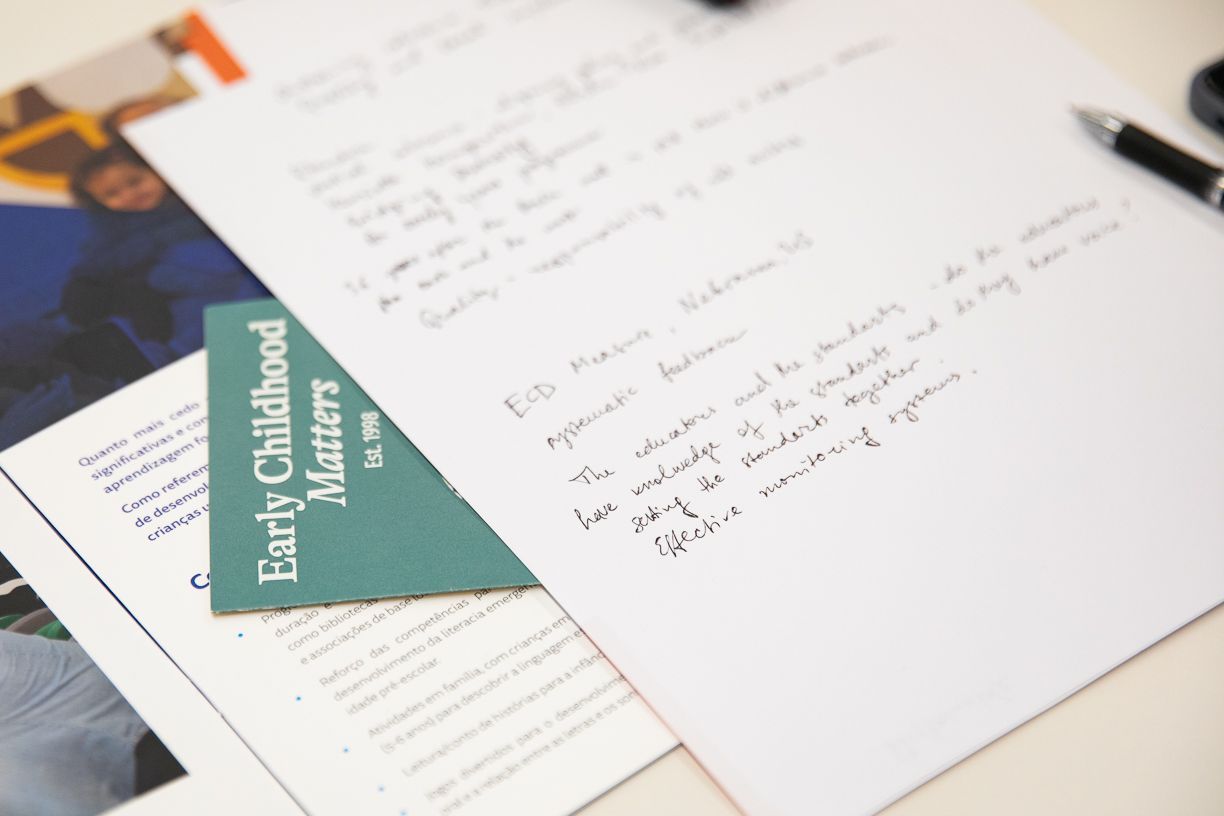
Abbie Raikes · Professor and Founder, ECD Measure, University of Nebraska, United States
“Aligning quality standards with practice: Experiences with BEQI”
Topic 1.3 Sustaining Integration: leadership and system infrastructure
Too often, integration starts as a project and ends when the funding does, so what turns cooperation into something that lasts?
TOPIC FOCUS
This topic considered the leadership and system infrastructure that allow integrated early childhood systems to last over time, from municipal coordination structures and shared protocols that outlast changes in leadership to the development of leaders and professional learning ecosystems.
Two ingredients came up again and again, permanent structures that give integration a home and leaders with the skills to keep it going, and contributors were refreshingly honest about the risks, from treating integration as an education-only issue to involving sectors only on paper and asking too much of coordinators.
In Ghent integration lasted because people from different services kept meeting, sharing responsibility and building relationships that outlive any single project.
Leadership at every level, mentoring and reflective practice are not extras but the conditions that keep a diverse workforce in the sector.
WHAT EMERGED IN THE ROOM
- Continuity is the goal, “ensuring continuity across time without being completely at the mercy of election cycles,” through legislation, cross-party backing and budgets attached to policy.
- Anchor coordination where power sits, for example in the mayor’s office, with ownership at every level and shared governance beyond government.
- Give leaders time to lead. Participants asked for less administrative burden, systematic supervision and intervision, and strategic planning and networking written into leaders’ job descriptions.
- Build competent systems, not only competent leaders, with regional peer learning networks for leaders and pathways that bring talented interns into the workforce.
THE TWO WORKSHOPS
WORKSHOP · TOPIC 1.3 Hybrid
Sustaining Integration Through Governance Infrastructure and System Architecture
Thursday 22 October · 10:45–12:15 and 12:45–13:45 · Universidade Católica Portuguesa
WORKSHOP · TOPIC 1.3 Hybrid
Sustaining Integration Through Governance Infrastructure and System Architecture
Thursday 22 October · 10:45–12:15 and 12:45–13:45 · Universidade Católica Portuguesa
Workshop focus
This workshop looked at how integration can be sustained through governance infrastructure and system architecture, from municipal governance structures in Brazil to policy foundations and funding collectives in the United States, India and Ethiopia.
What the room built from the session notes
✓ What worked
- Political buy-in, a champion, and coordination anchored in the mayor’s office
- Implementation plans and budgets attached to the policy change, “otherwise nothing actually changes”
- Ownership at every level, shared governance beyond government, and full involvement of communities
✕ What to avoid
- Single-sector dominance and cabinet planning without data
- Policies “just handed down,” and uniform implementation that ignores context
- Panicked downscaling when results come slower than hoped
❧ What to nurture
- Agreed frameworks for what to measure, including lived experience, not only attendance
- Hubs for knowledge exchange, and celebrating wins together
- Continuity of implementation beyond the announcement
➜ What to take forward
- Voice for young children and families in policy
- National legislation, so continuity does not depend on election cycles
- A shift from performance reviews to child outcomes
Who made this workshop
Facilitated by Dominic Richardson (Managing Director, Learning for Well-being Institute, and Jinyi Ding (Learning for Well-being Institute) for online, with online technical support from Flo Adwe (Learning for Well-being Institute).
PRESENTERS
Claudio Marcelo de Faria Rodrigues · Architect and Urban Planner / Early Childhood Special Coordinator, Mogi das Cruzes City Hall, Brazil
“Structuring Early Childhood Governance in Mogi das Cruzes, SP, Brazil”
David Harris · Senior Research Fellow, Columbia University Center on Poverty and Social Policy, United States
“How a Universal Child Benefit Can Provide a Foundation for a Comprehensive Early Childhood Policy Portfolio”
Anuja Kadam · Investment Manager and SIRA Lead, LGT Venture Philanthropy, India
“SIRA – A USD 20M Integrated Nurturing Care Collective: From Womb to School”
DISCUSSANT
Meseret Zelalem Tadesse · Deputy CEO, Programs and Research, African Center for Early Childhood Development, Ethiopia
“Sustaining Integration Through Governance Infrastructure and System Architecture”
WORKSHOP · TOPIC 1.3
Leadership for Sustaining Integrated Systems
Thursday 22 October · 10:45–12:15 and 12:45–13:45 · Universidade Católica Portuguesa
WORKSHOP · TOPIC 1.3
Leadership for Sustaining Integrated Systems
Thursday 22 October · 10:45–12:15 and 12:45–13:45 · Universidade Católica Portuguesa
Workshop focus
Exploring leadership as a condition for sustaining integrated systems, this workshop brought together experience of leadership development and workforce inclusion from Belgium and Latin America.
What the room built from the session notes
✓ What worked
- Leaders with time to lead, freed from administrative burden, who motivate and challenge their teams
- Role models and peer learning, valued more than reading about leadership
- Pathways from internships into jobs, and strong ties with training institutions and other sectors
✕ What to avoid
- Leaving leaders alone and unprepared for the job
- Filling staff shortages with unqualified staff and no guidance
- Rigid hiring procedures, and treating language diversity as a deficit rather than an asset
❧ What to nurture
- The wellbeing of the whole team, with systematic supervision and intervision
- A shared and clear definition of inclusion and diversity
- Strategic planning and networking written into leaders’ job descriptions
➜ What to take forward
- Regional peer learning networks for leaders, as in Bulgaria
- Inclusive leadership and cross-sector collaboration built into initial and continuing training
- Developing competent systems, not only competent leaders
Who made this workshop
Facilitated by Patricia Núñez Zamora (Early Years Expert, Van Leer Foundation).
SPEAKER
Hester Hulpia · Researcher, Artevelde University of Applied Sciences, Belgium
“Leadership for inclusion: Building capacity to strengthen a whole system approach to early childhood education and development (ECED)”
PRESENTERS
Bjorn Martens · Project Manager, City of Ghent, Belgium
“Integrated Systems & Inclusive Employment in Early Years Initiatives”
Alejandra Cortazar · Visiting Faculty, Early Childhood Center, Tecnológico de Monterrey; Chile
“Early Childhood Policy Certificate for Leaders in Latin America: Contributing to the development of a field of study”
DISCUSSANT
Vicky Cauwels · Lecturer and Researcher, Artevelde University of Applied Sciences, Belgium
“Reflecting on the preconditions for an integrated approach towards inclusive workforce in ECEC”
STRAND 2 · RESOURCES
How integration is financed and measured
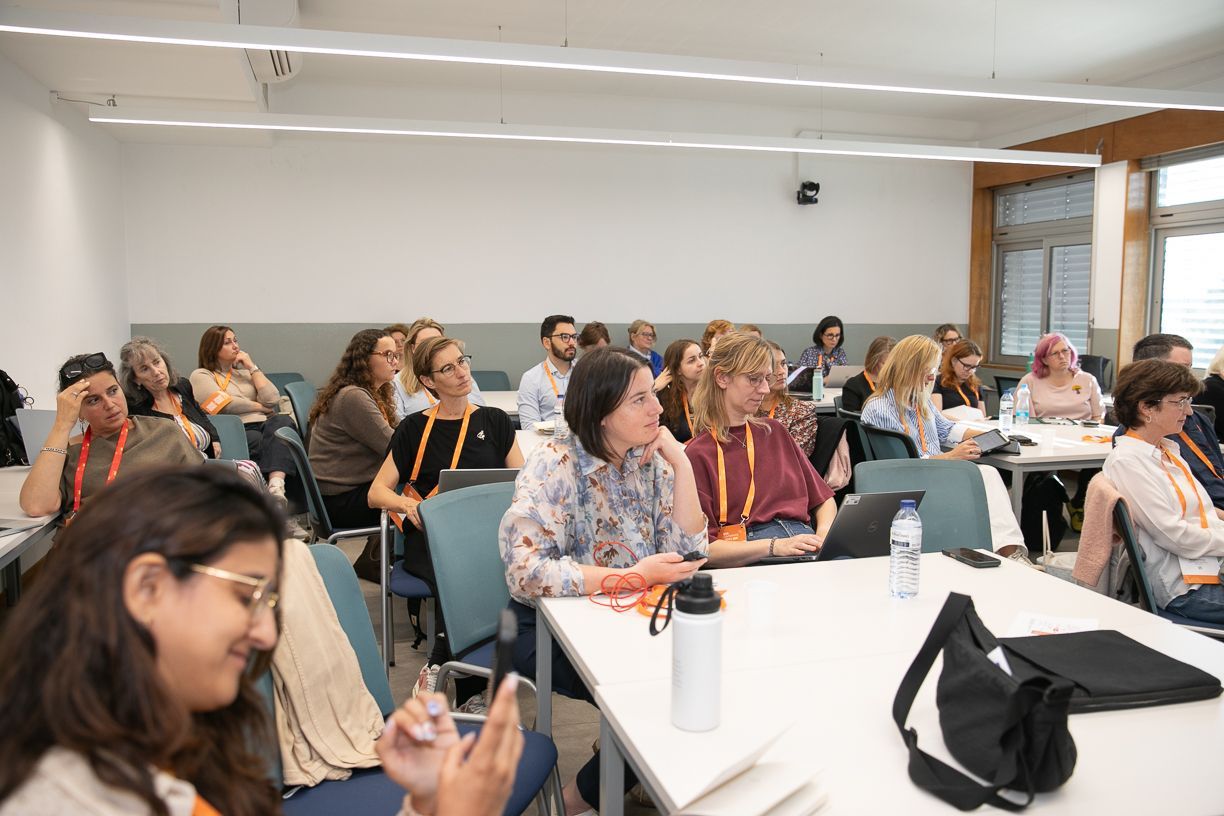
Fragmented funding tends to build fragmented services, and on Thursday afternoon six workshops followed the money and the data around the child to see how the two could work together rather than pull apart.
STRAND FOCUS
This strand focused on the money, data, mandates and accountability mechanisms that either support or undermine integrated systems.
Guiding question: How can funding and resources align with policy and practice to support integration rather than reinforce fragmentation?
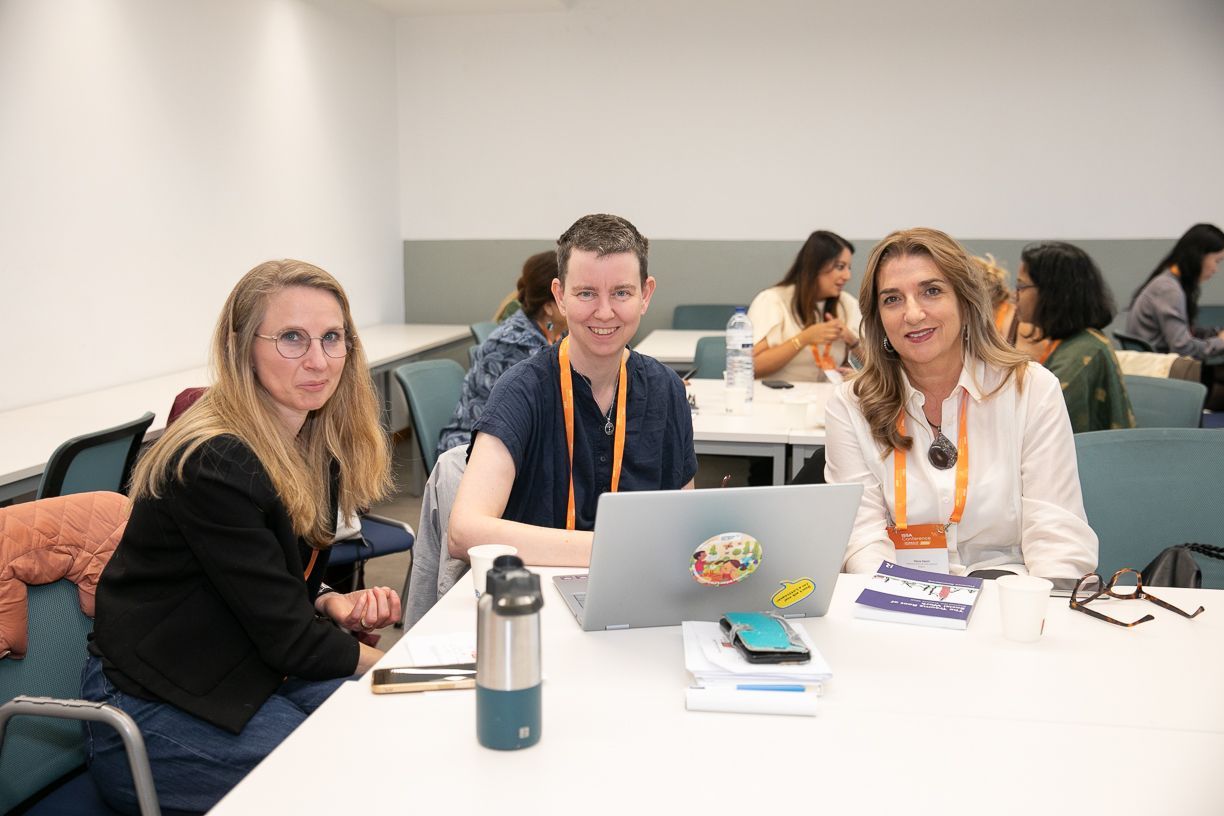
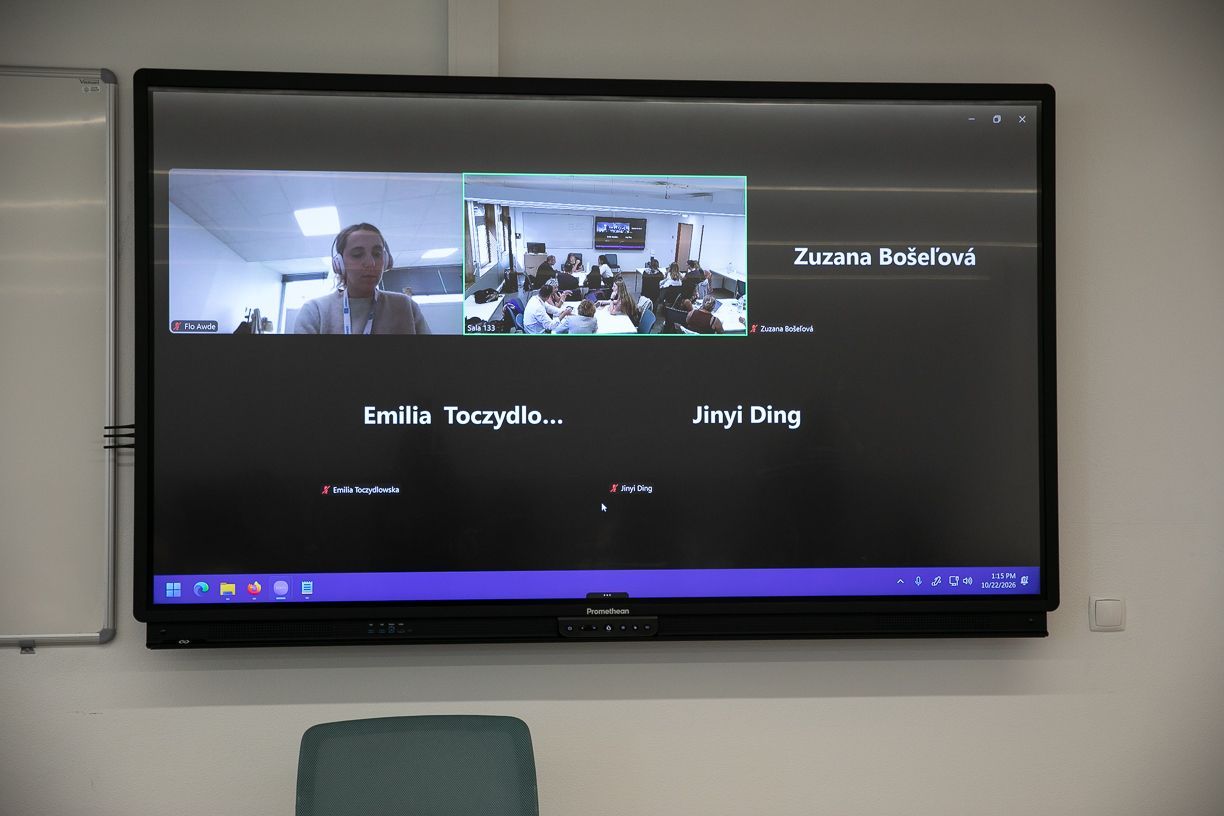
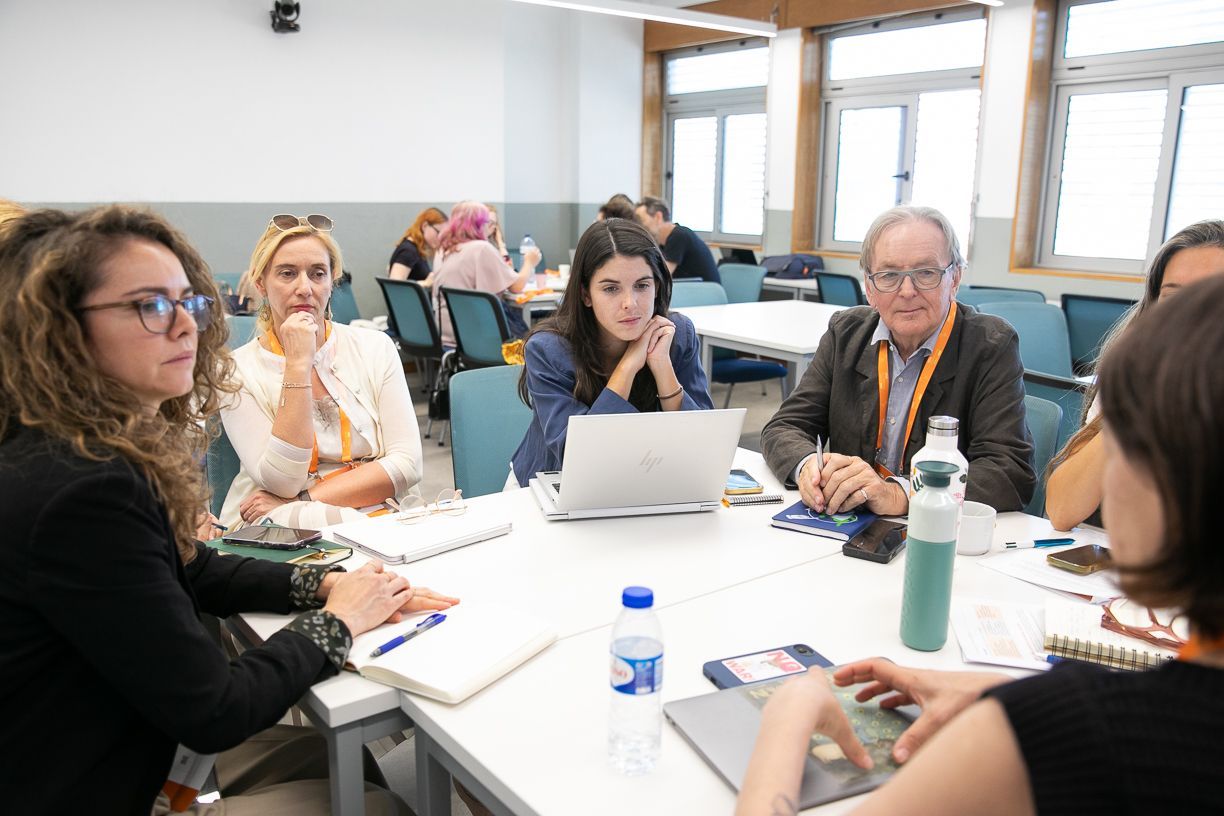
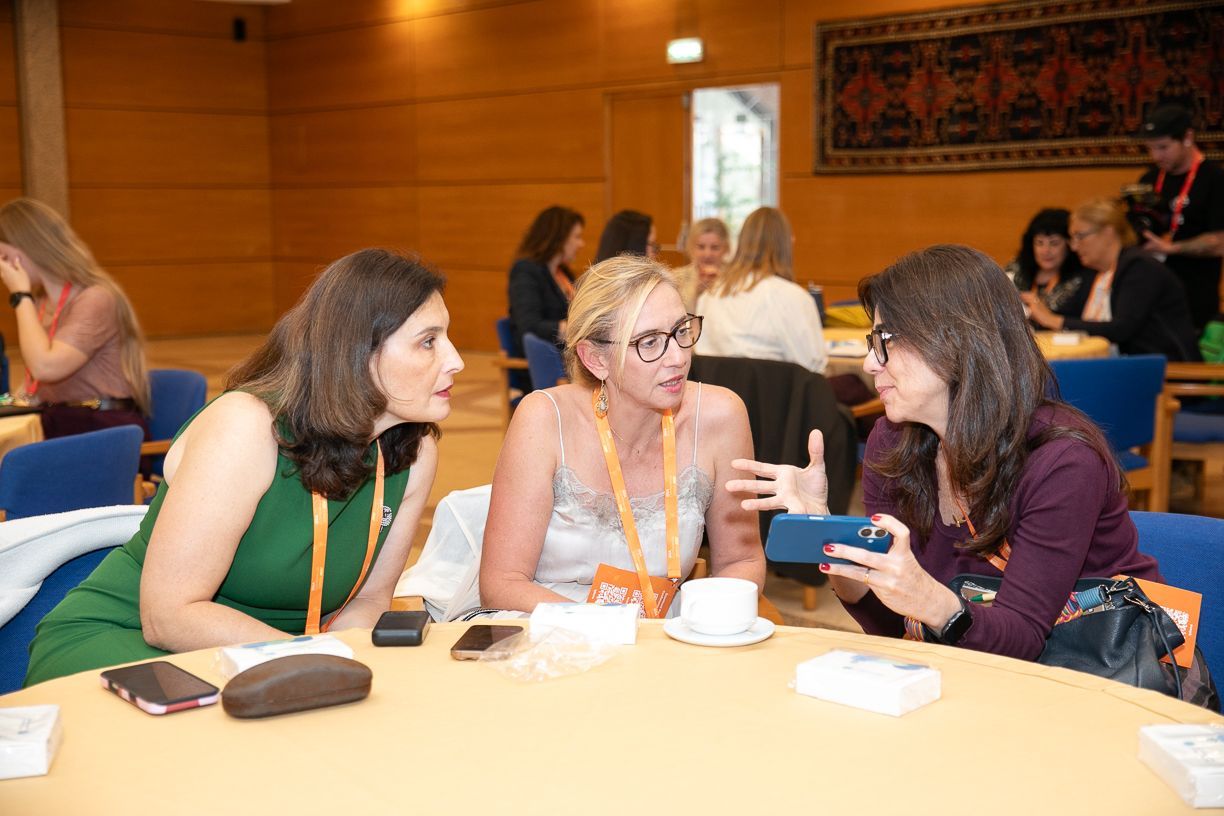

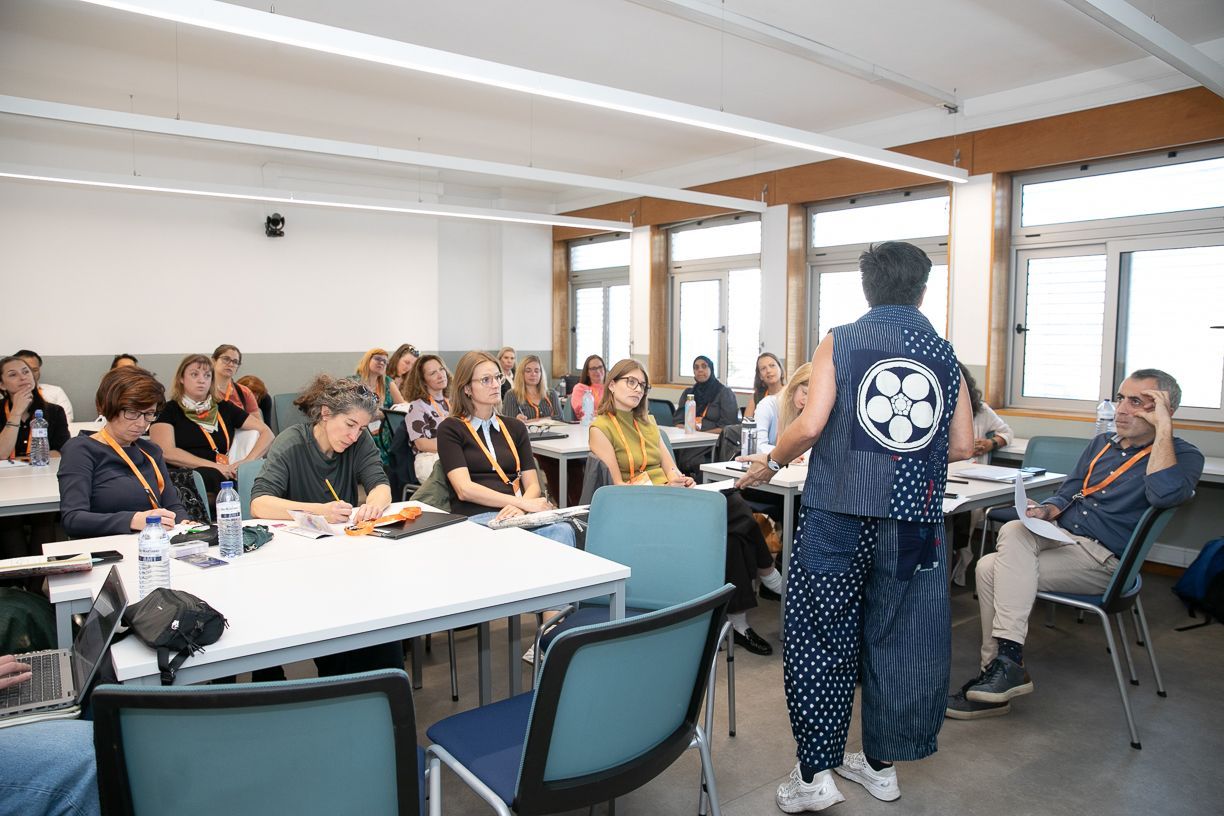
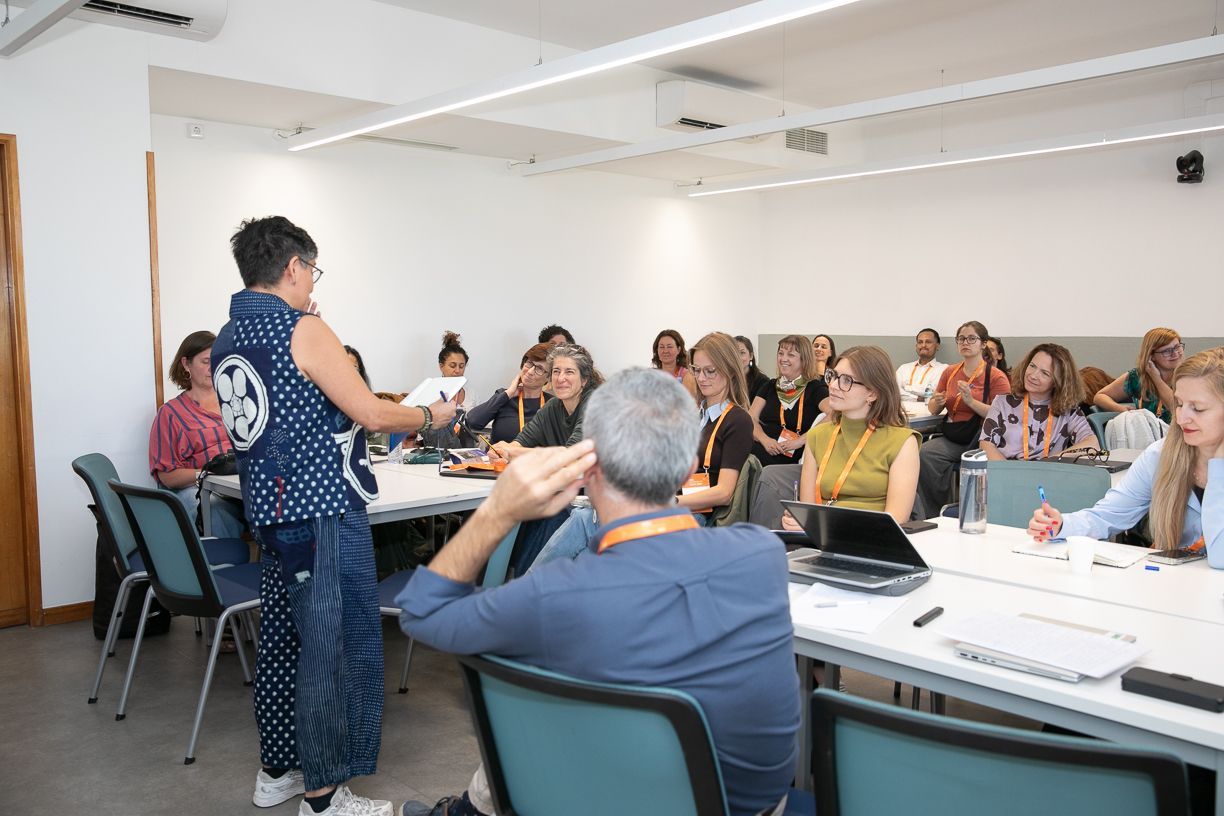
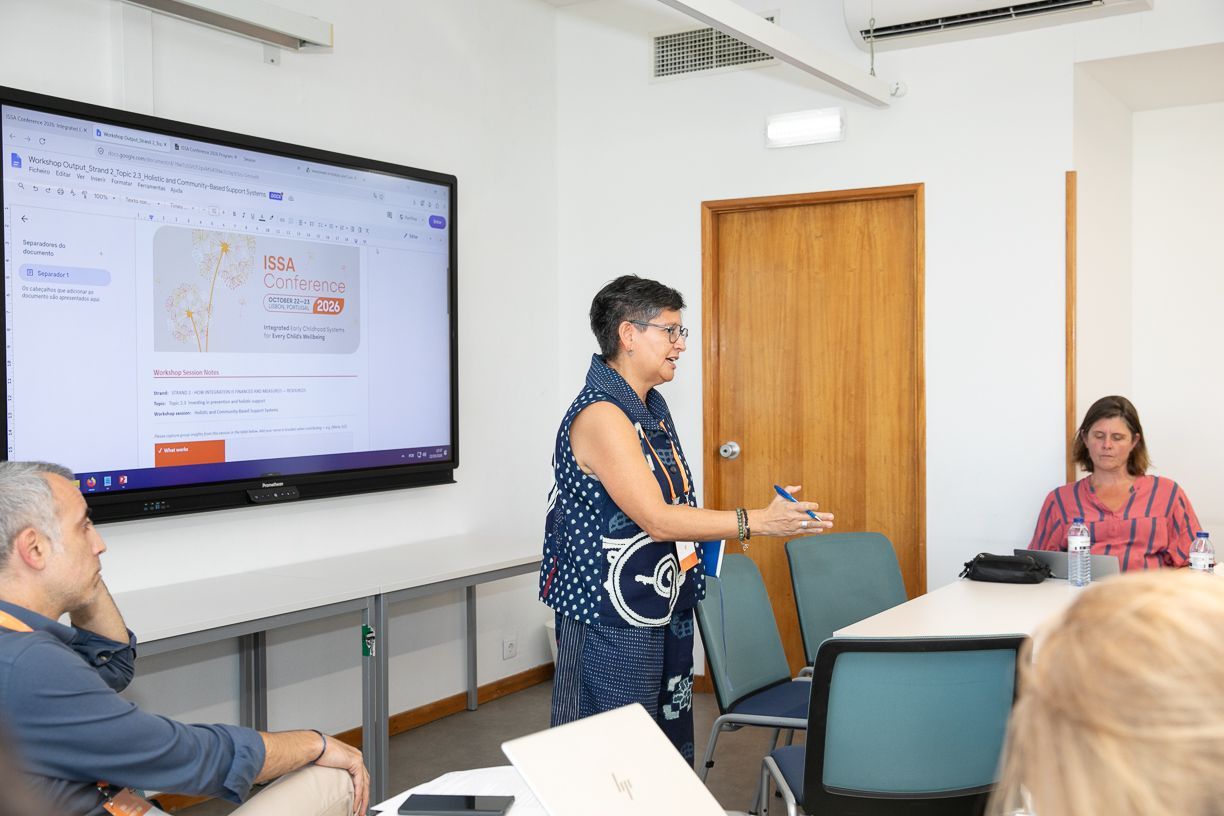
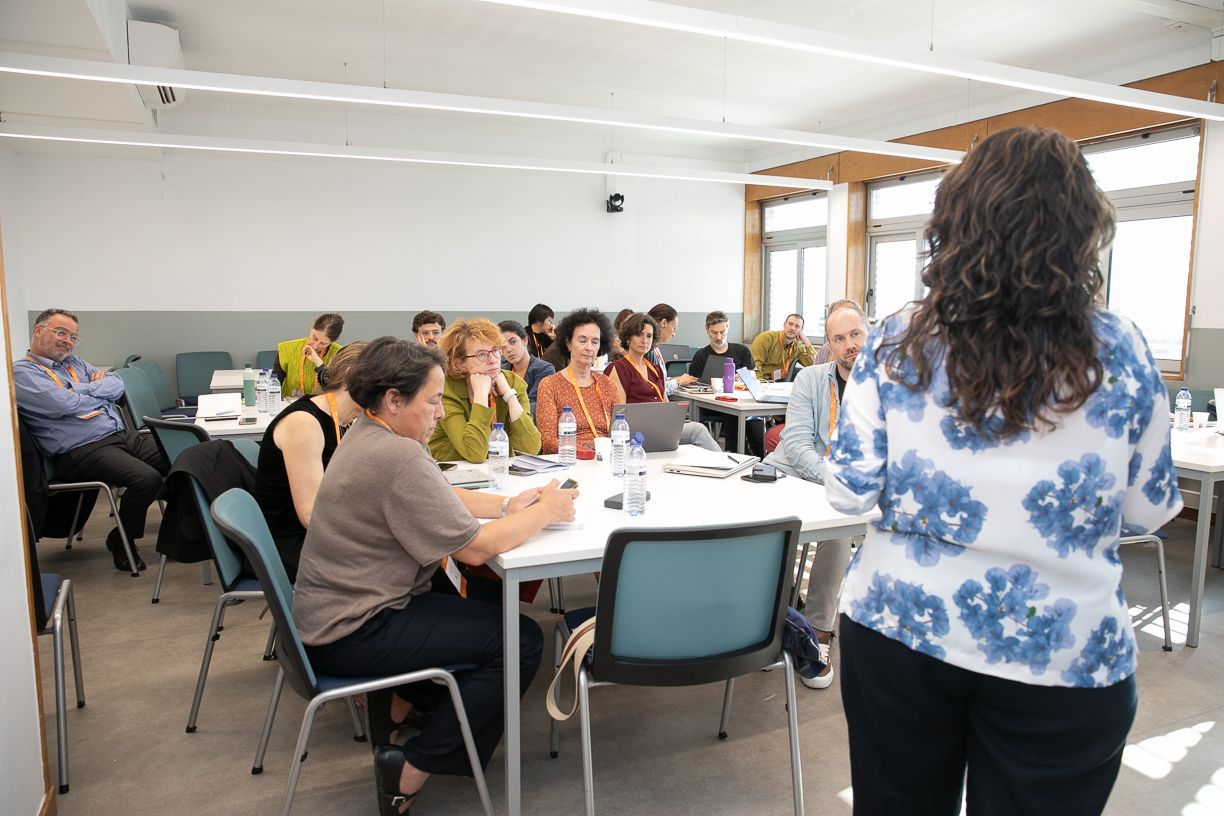
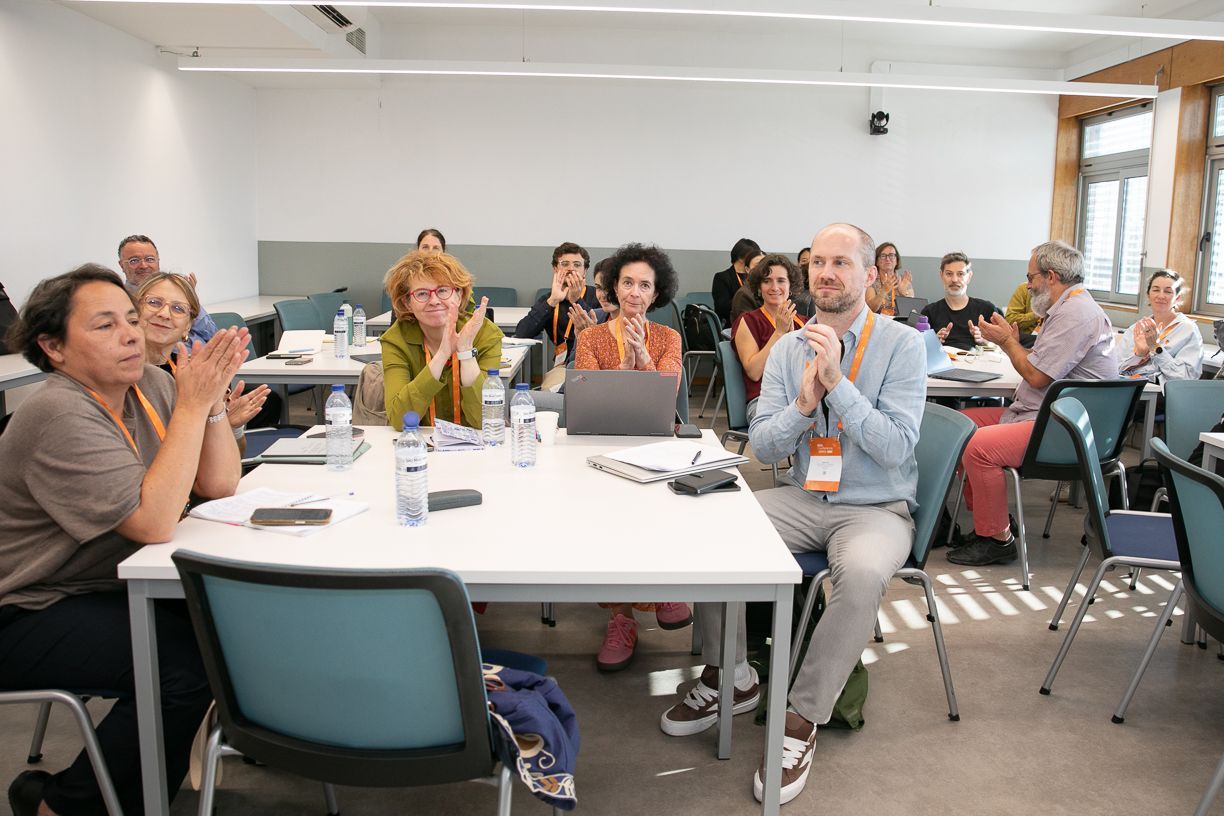
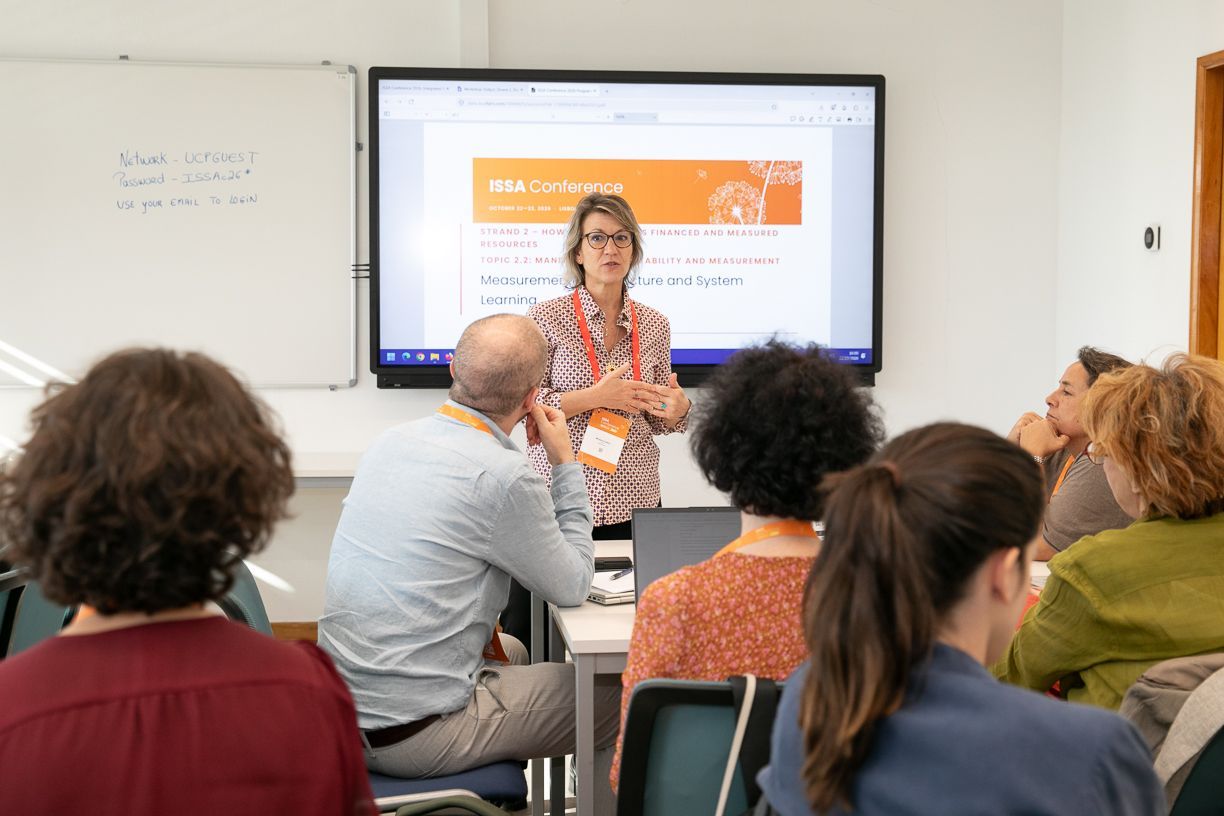
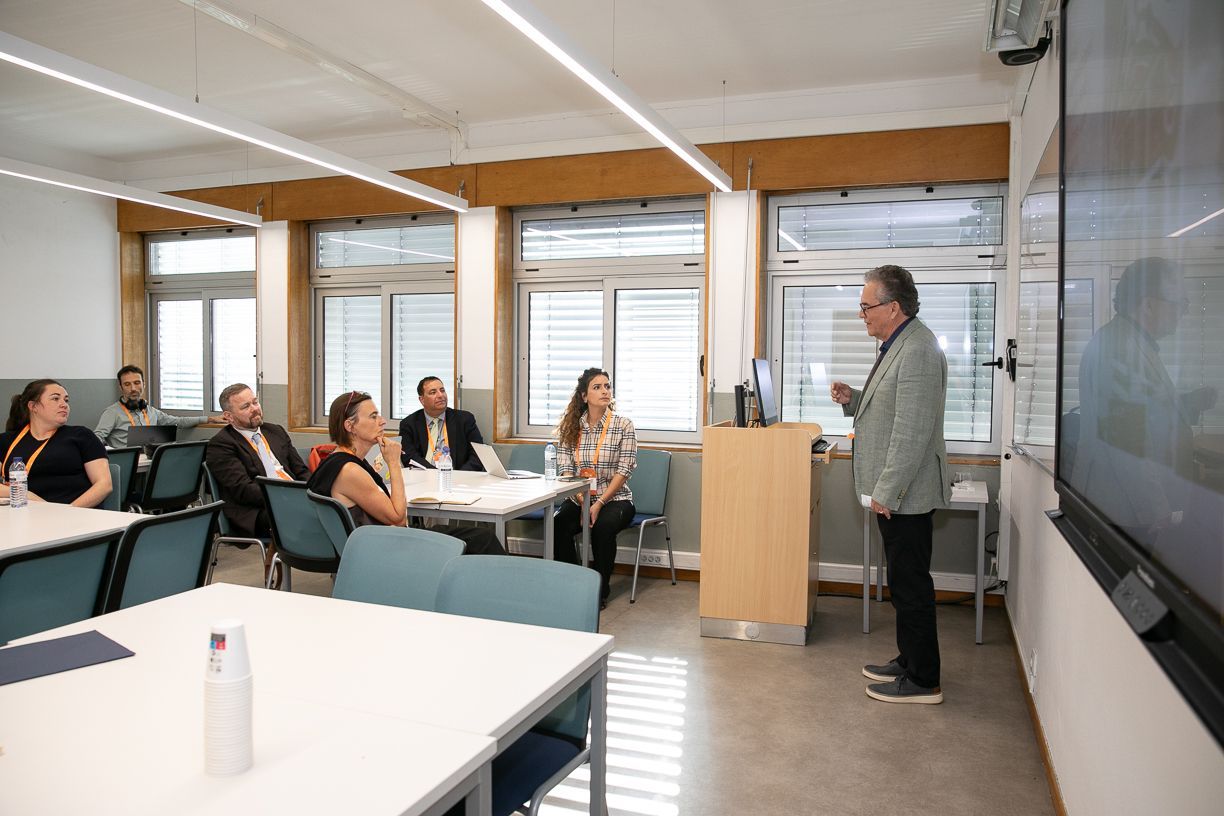
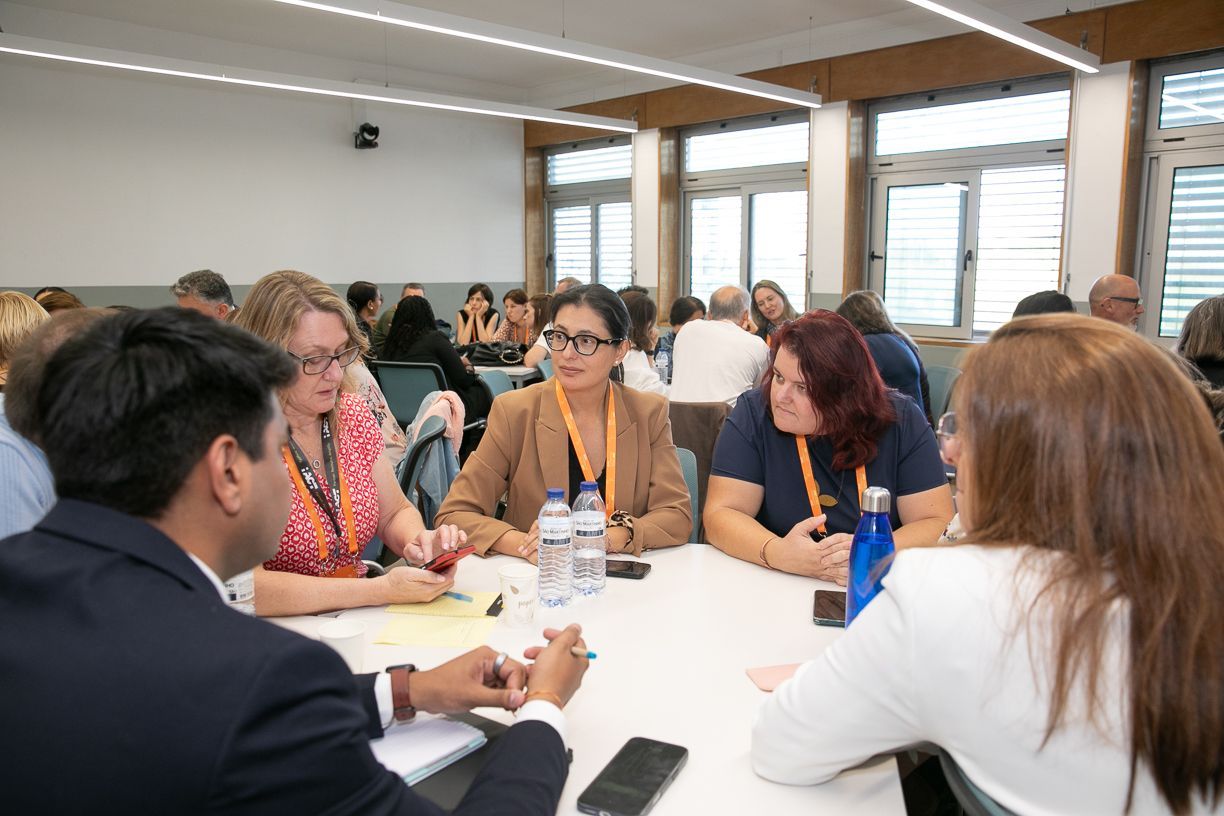
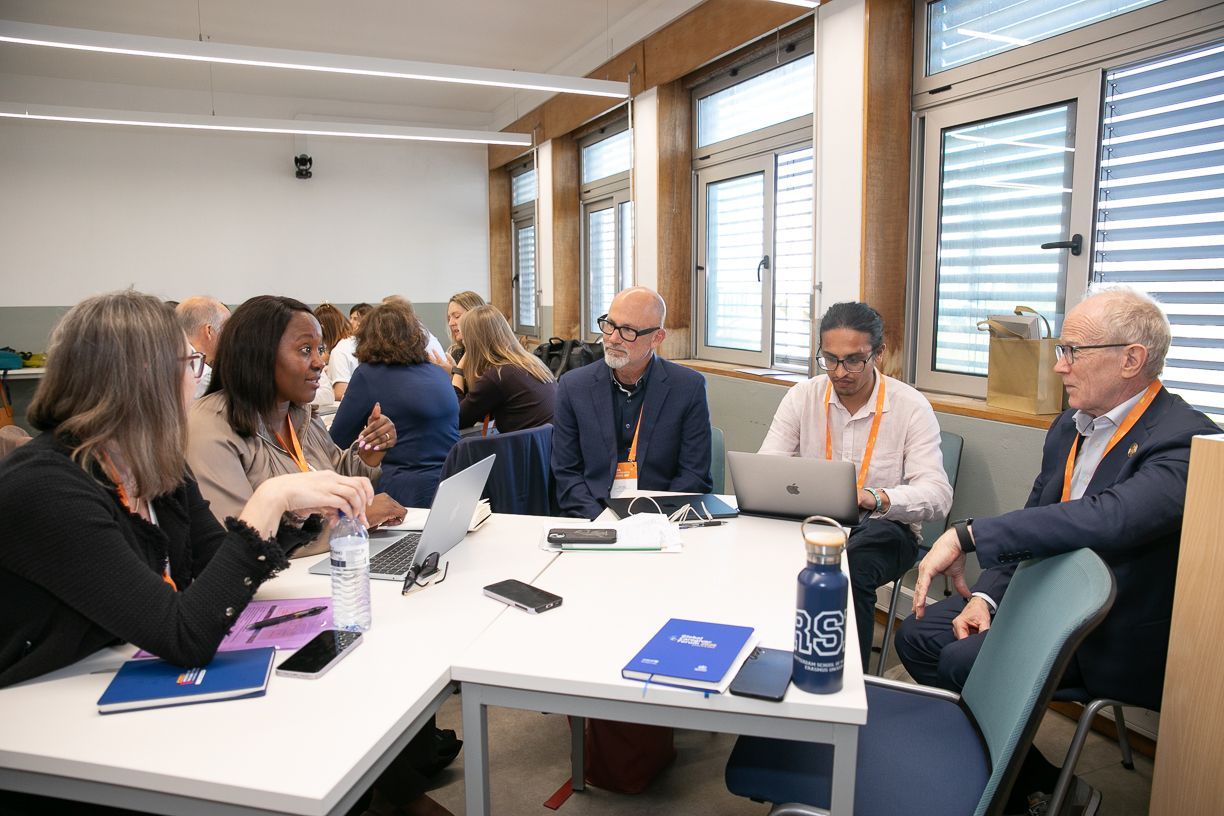
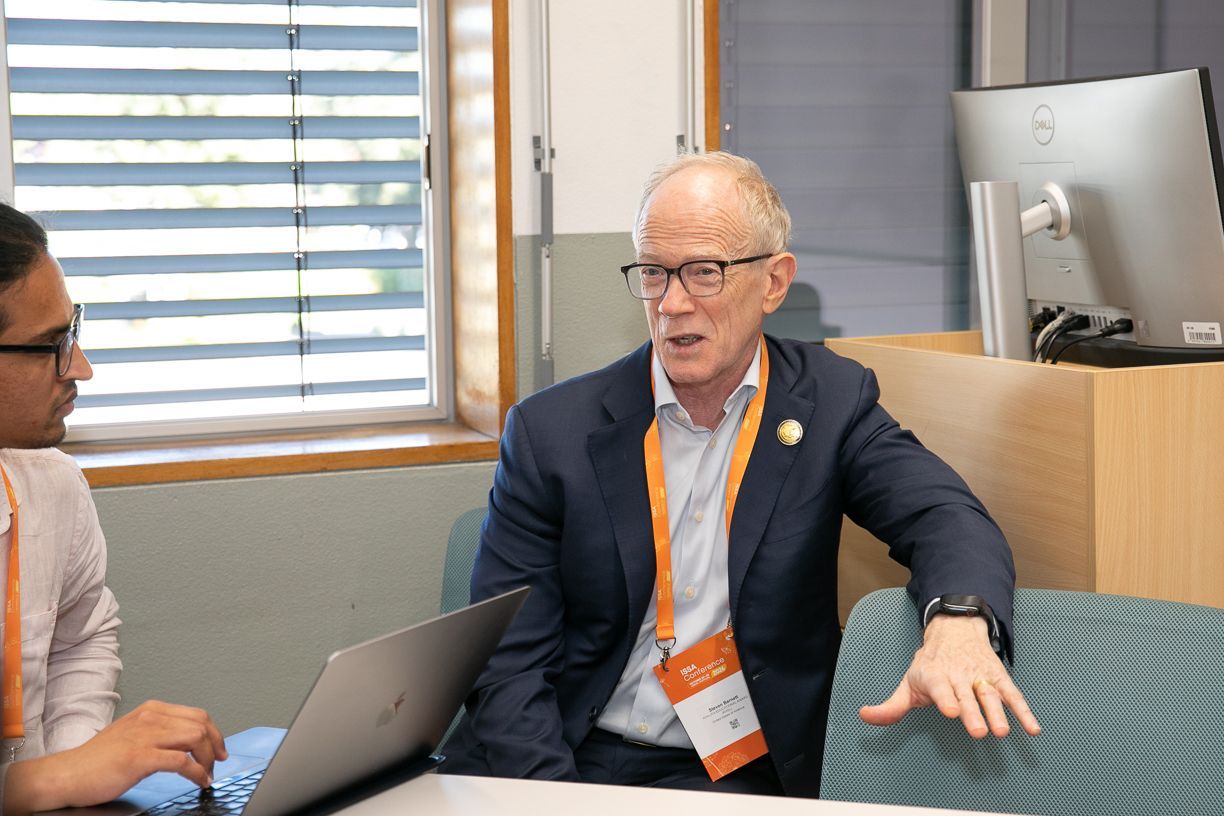
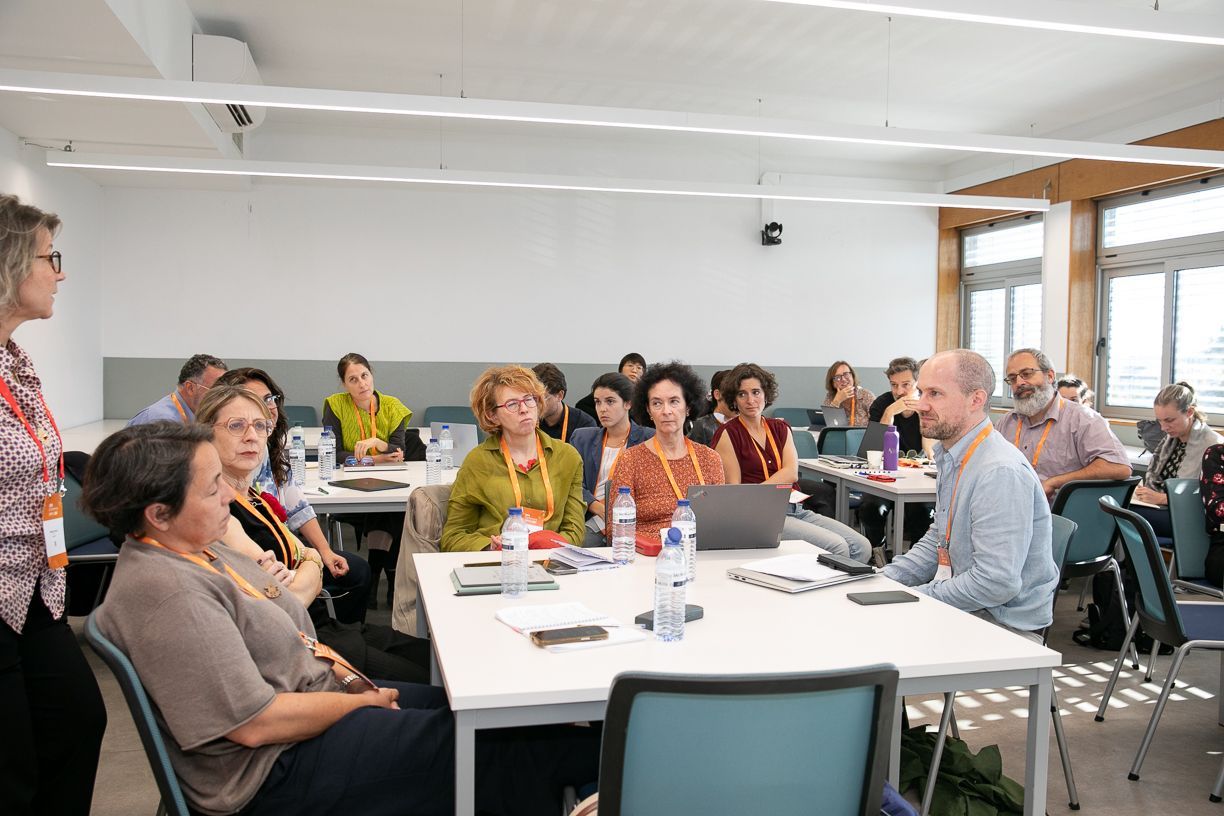
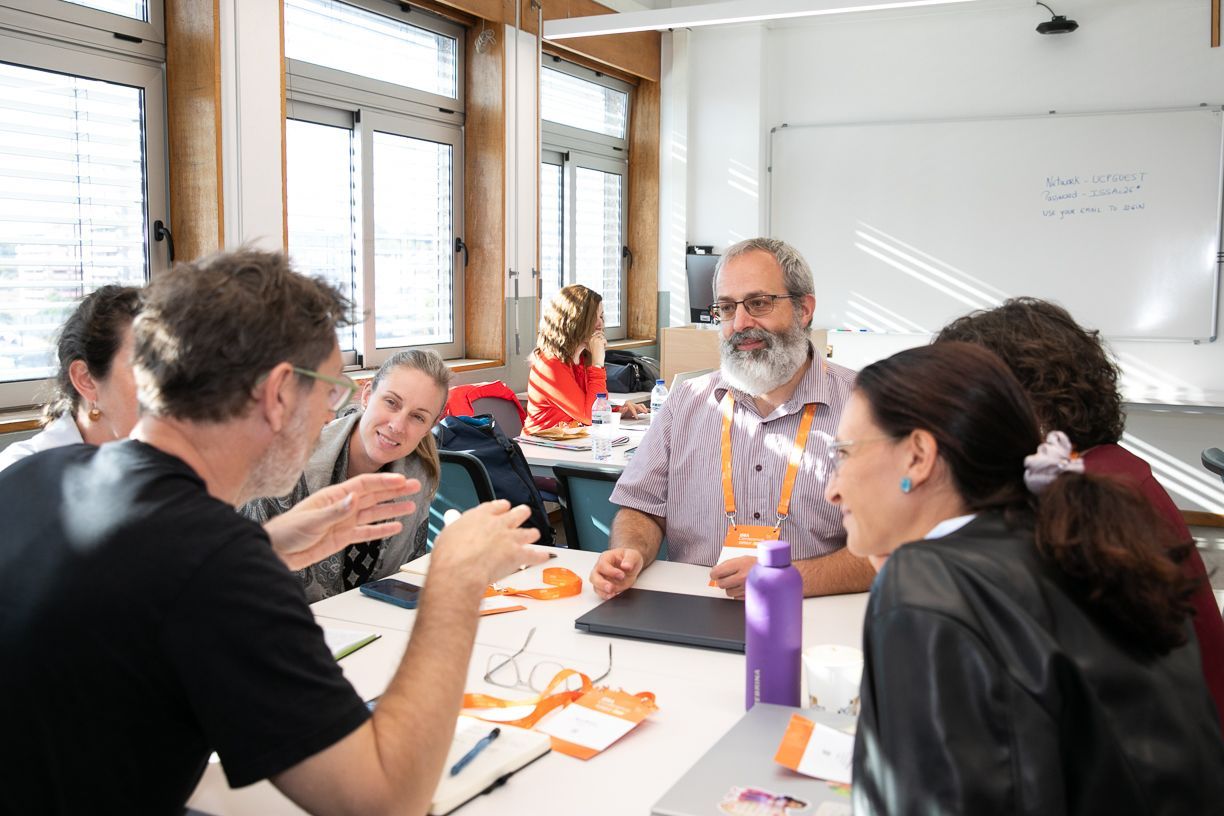
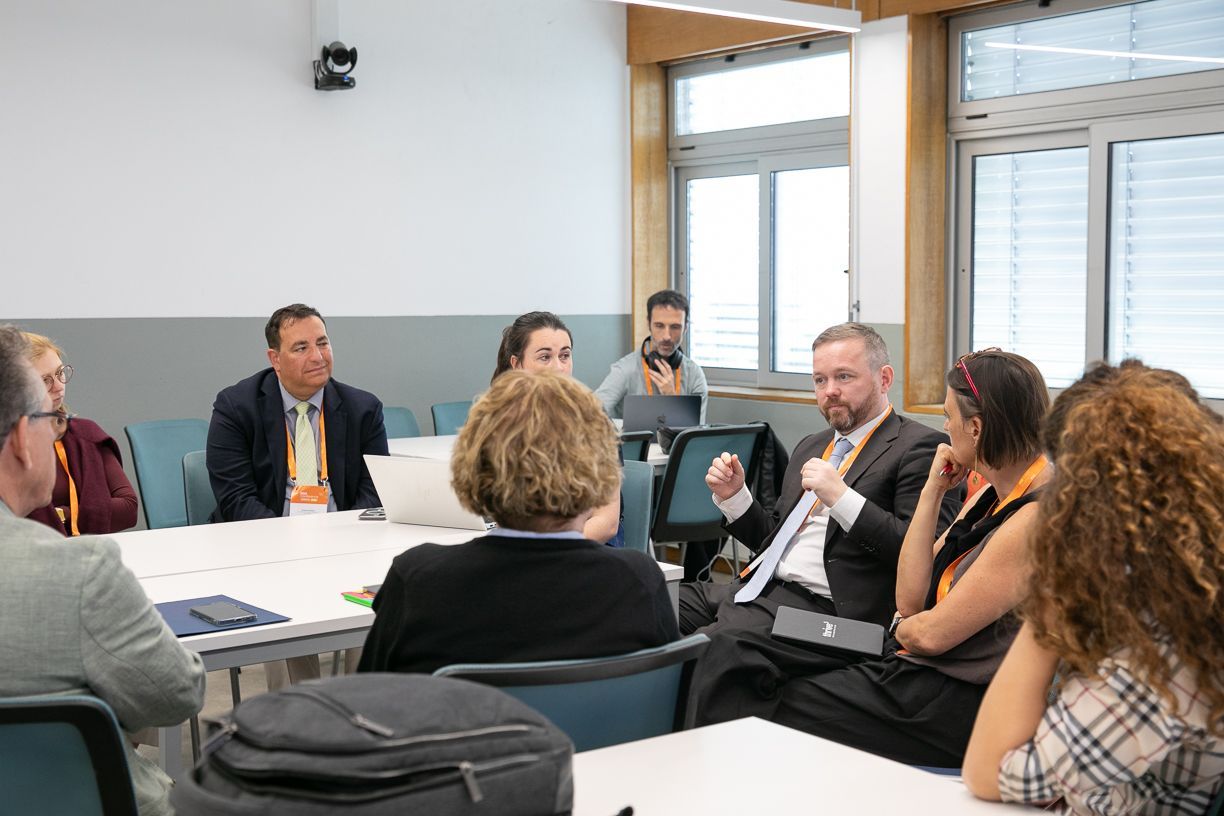
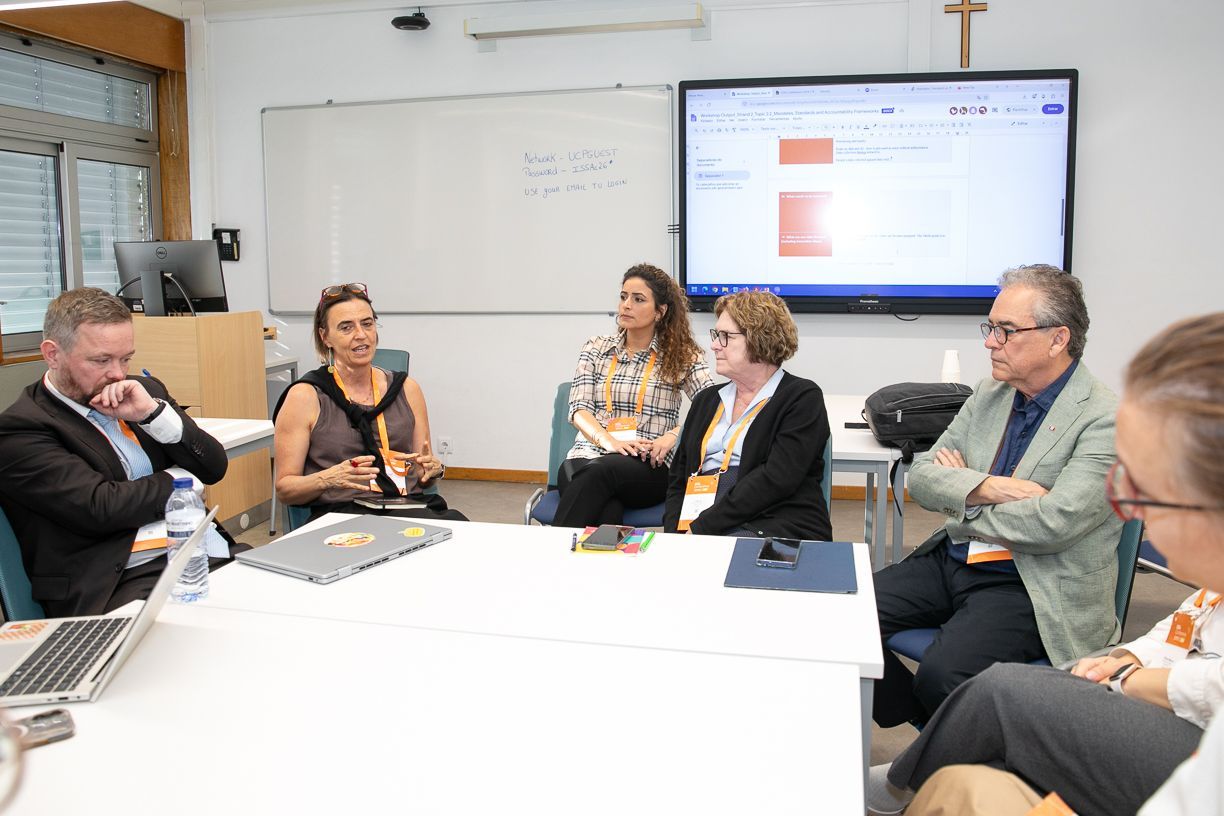
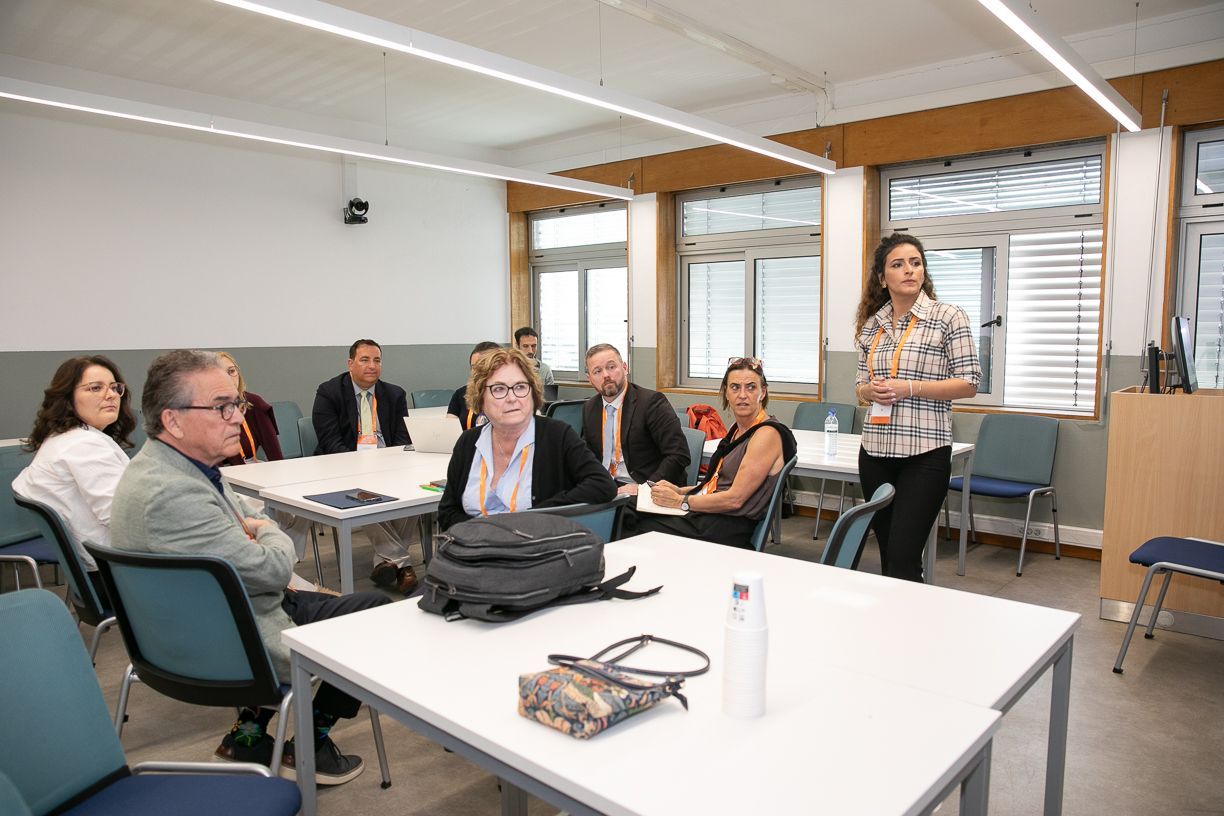
STRAND 2 OF 3 · WHAT WE LEARNED
You cannot coordinate what you cannot see.
“Lots of evidence on the value of prevention, but almost impossible to fund it.”
WHAT TO DO
- Make investment visible, then align it. Map spending across sectors through early childhood budget tagging, realign budgets, and use disaggregated data to see which children and families are being missed.
- Fund prevention and the work that connects. Coordination, participation, the workforce, relationships and referral pathways need resources too, and prevention needs protection from short-termism and political cycles.
- Make data useful for learning and improvement. Shared indicators agreed between actors, data that is locally meaningful and protected, and feedback loops between national and local levels.
The workshops moved beyond the familiar call for “more funding” towards how existing resources could work differently, and they asked that data earn its place, since “data for the sake of data” costs the time of everyone who provides it.
Participants also cautioned that expanding services without attention to quality can do real harm, reminding us that “access without quality can even be harmful.”
- You can’t align what you can’t see. Making spending on young children visible lets different sectors plan together, from Mexico’s states to the local governments of Metro Manila.
- How money is structured matters as much as how much there is, and funders rarely pay for the coordination that integration depends on.
- Measure what connects, from continuity for families to referrals that lead to real help and evidence that leads to action, because shared measures work when they are genuinely shared.
- Prevention pays overtime, provided that funding horizons and evaluation match, and that there is long-term investment in the people who deliver it.
Topic 2.1 Financing architecture for integration
Fragmented funding builds fragmented services, so how can public budgets and philanthropy pull in the same direction around the child?
TOPIC FOCUS
This topic examined how early childhood services are financed across ministries, sectors and levels of government, and which financing choices enable more integrated and equitable systems, from making investment visible and aligning cross-sector budgets to how philanthropic and international funding interacts with government finance.
One message ran through every contribution, that you cannot align what you cannot see, and tools that make spending on young children visible allowed sectors to plan together, while even well-resourced systems discovered that the real challenge lies in how budgets are structured and not only in how much they hold.
Funders rarely pay for coordination itself, and rigid grant rules make partnership hard, which is why backing coordination builds systems rather than projects.
Making budgets work for children took new skills, from participatory budget analysis to leaders who can design pooled funds.
WHAT EMERGED IN THE ROOM
- Early childhood budget tagging, so that every office serving young children makes its spending visible, with disaggregated data showing who is left behind.
- An investment scorecard rated by children and parents, and family participation in decisions on budget allocation, not only in rating results.
- Costed programmes and integrated budgets across the early years, with philanthropy taking on risk to test what can be scaled.
- Avoid short-termism and off-the-shelf models, and align the timing of policy and budget conversations, which participants found particularly difficult.
THE TWO WORKSHOPS
WORKSHOP · TOPIC 2.1 Hybrid
Public Financing Coordination and Budget Architecture
Thursday 22 October · 15:15–16:45 and 17:15–18:15 · Ismaili Centre Lisbon
WORKSHOP · TOPIC 2.1 Hybrid
Public Financing Coordination and Budget Architecture
Thursday 22 October · 15:15–16:45 and 17:15–18:15 · Ismaili Centre Lisbon
Workshop focus
This workshop examined how public budgets can be coordinated across ministries and levels of government so that financing is organised around the child, with experience from Mexico, the Philippines and the United Arab Emirates.
What the room built from the session notes
✓ What worked
- Making investment visible, because “you cannot coordinate what you cannot see”
- Phased investments with room to realign budgets
- A mutual understanding of starting points, translated between institutions
✕ What to avoid
- Siloed offices for health, education and social welfare
- Missing disaggregated data, which hides which groups are left behind
- “Short-termism” jargon, tokenism and off-the-shelf models not adapted to local context
❧ What to nurture
- An interagency coordinating body or technical working group
- A gender and disability lens in financing, and climate resilience
- Transparency in the use of public funds
➜ What to take forward
- Early childhood budget tagging across every office that serves young children
- An investment scorecard rated by children and parents
- Family participation in budget allocation, and results-based incentives (as in Peru)
Who made this workshop
Facilitated by Juan Larranaga (Director, Place, Minderoo Foundation, Australia) in the room, and Jinyi Ding (Learning for Well-being Institute) online, with online and technical support from Tania Lomba (ISSA).
SPEAKERS
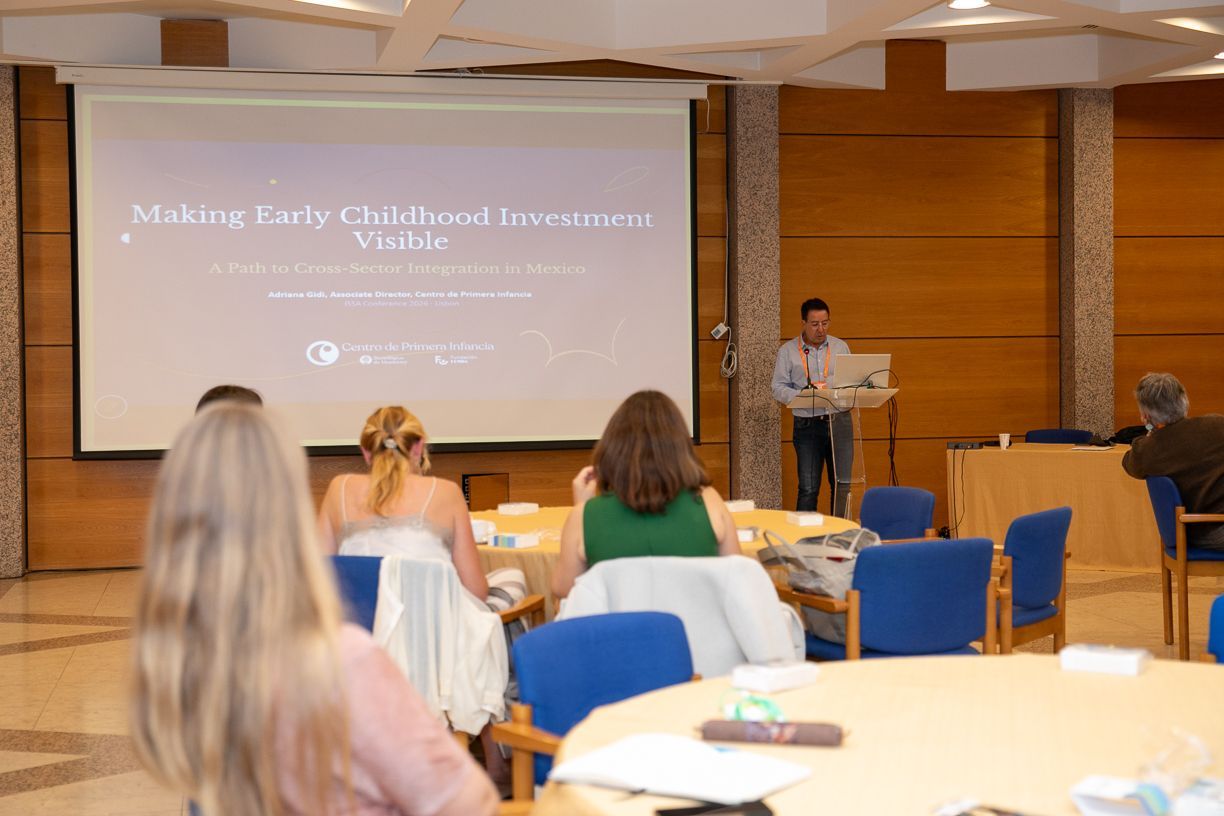
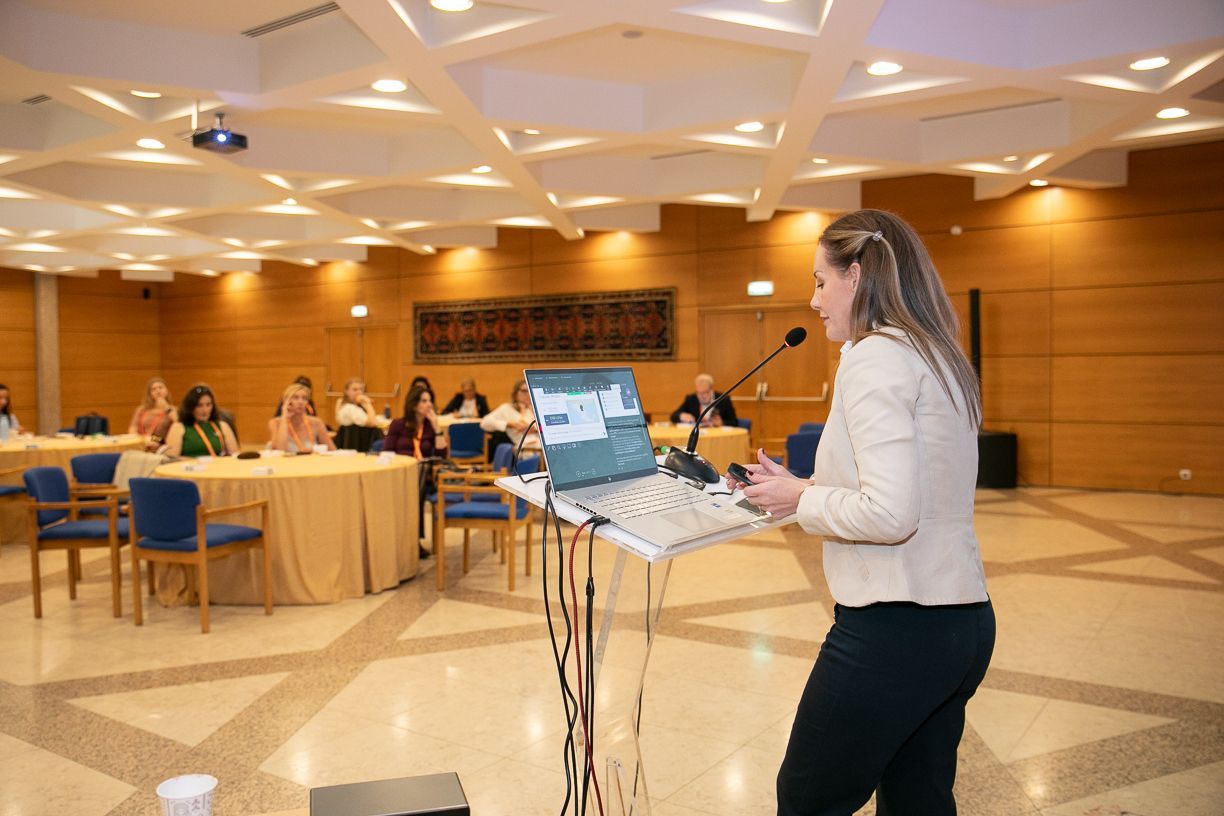
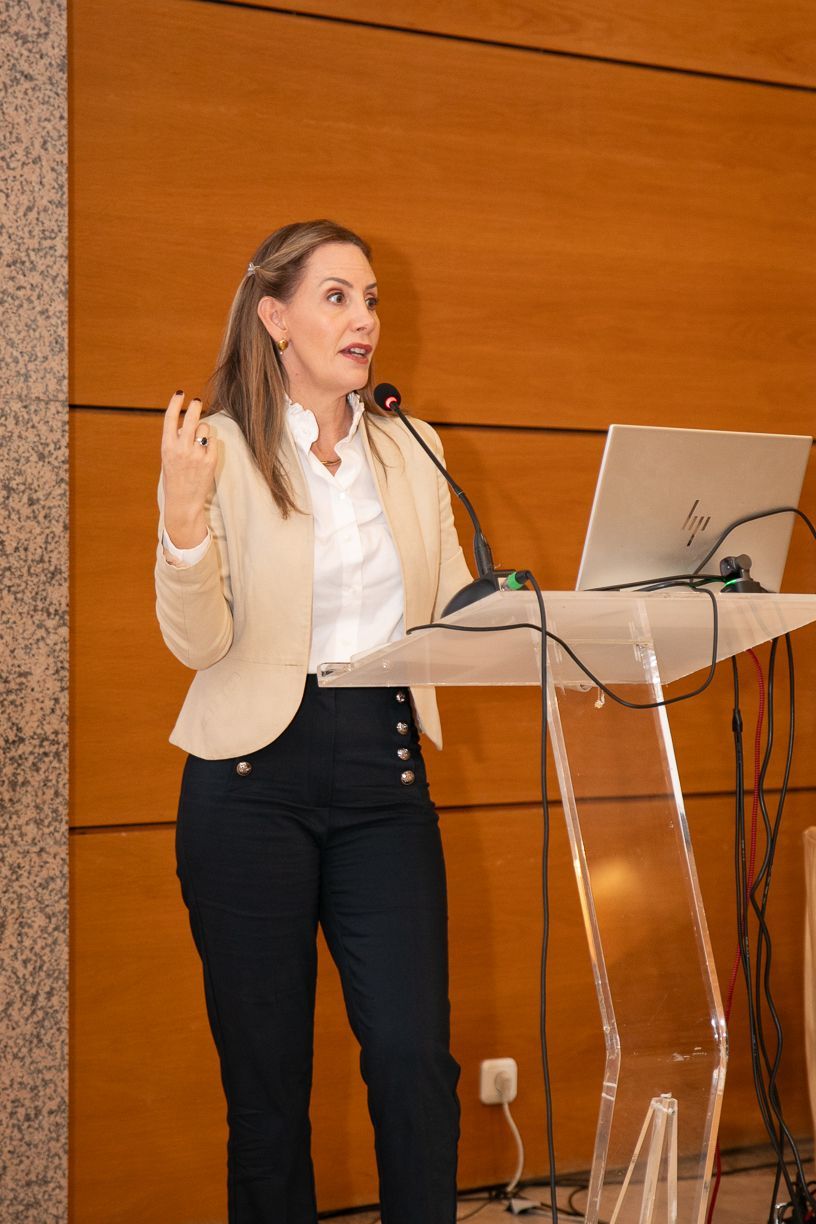
Adriana Catalina Gidi Vargas and Manuel Pérez Jiménez · Associate Director and Director, Center for Early Childhood, Tecnológico de Monterrey and Fundación FEMSA, Mexico
“Making Early Childhood Investment Visible: A Path to Cross-Sector Integration in Mexico”
PRESENTERS
Ramon Jericho Santos · Project Officer, Save the Children Philippines, Philippines
“Aligning Financing for Integrated ECCD Systems: Lessons from Alternative Budgeting in the Philippines”
Bochra Kaddoura · ECCE Strategic Advisor, Sharjah Private Education Authority, United Arab Emirates
“From Provision to Platform: Financing the Full Chain Around the Child – Sharjah’s Three Circles of Responsibility as an Architecture for Integration”
Khawla Alhosani · Vice Chancellor, Sharjah Education Academy, United Arab Emirates
“From Subsidy to System: Financing Government Nurseries as the Backbone of an Integrated Mixed Sector in Sharjah”
WORKSHOP · TOPIC 2.1
Philanthropy, Scaling and Financing Architecture for Integration
Thursday 22 October · 15:15–16:45 and 17:15–18:15 · Universidade Católica Portuguesa
WORKSHOP · TOPIC 2.1
Philanthropy, Scaling and Financing Architecture for Integration
Thursday 22 October · 15:15–16:45 and 17:15–18:15 · Universidade Católica Portuguesa
Workshop focus
Looking at the role of philanthropy and the financing architecture needed for integration to scale, this workshop drew on experience from the United States, Italy, South Africa and Mongolia.
What the room built from the session notes
✓ What worked
- Costed programmes that make all costs visible, from start-up to sustaining
- Inter-ministerial collaboration and integrated budgeting across the early years
- Philanthropy taking on risk, testing innovation and backing gaps in the system
✕ What to avoid
- Fragmented funding, duplication and unequal distribution
- Broad talk of integration without attention to the details of budgets
- Inadequate monitoring that leaves some programmes over-funded and others with nothing
❧ What to nurture
- Mapping which services are delivered and funded, to coordinate them
- Support for new providers to meet requirements, and recognition of the varying cost of delivery
- Aligning the timing of policy and budget conversations
➜ What to take forward
- Bring politicians, economists, social workers and health professionals together, as the conference did
- Use philanthropy to de-risk and test what can then scale
- Explore direct support to families, such as cash transfers, alongside services
Who made this workshop
Facilitated by Steven Barnett (Board of Governors Professor and Founding Director, NIEER, Rutgers University, United States).
SPEAKER
Michelle Neuman · Senior Fellow, Results for Development (R4D), United States
“Financing Strategies to Promote Integrated Early Childhood Systems”
PRESENTERS
Aimee Vachon · Programme Manager, The Human Safety Net, Italy
“Cross-Country Perspective on Financing Architecture”
Dadisai Taderera · Head of Partnerships , SmartStart Early Learning NPC, South Africa
“Scaffolded support: Building a sustainable financing architecture for home- and community-based early learning programmes”
DISCUSSANT
Sarah Klaus · Senior Global Program Advisor, OneSky, United Kingdom
“Aligning Policy, Funding and Family Needs in Integrated ECD Systems: Perspective from Mongolia”
Topic 2.2 Mandates, accountability and measurement
Systems are held together by what they agree to be accountable for, so what should integrated systems actually measure?
TOPIC FOCUS
This topic explored how mandates, standards, accountability frameworks and data systems can build or weaken integration and what measurement infrastructure supports system-level learning, considering standards as shared tools, data that builds cross-sector accountability, and the structural problem of investing early but funding late.
The shift proposed in Lisbon was to measure the connections between services as well as the services themselves, and contributors showed how measurement done well once can serve monitoring, professional development and evaluation alike, while standards rooted in practice can draw sectors together.
Shared measures worked when they were genuinely shared, used by teachers, intermediaries, funders and government alike, and owned by the people who collect them.
Data mattered when practitioners and managers could make sense of it and act on it, through feedback loops and continuous improvement close to the frontline.
WHAT EMERGED IN THE ROOM
- Data as a process for improvement, with standards used to affirm strengths and guide continuous improvement rather than as a checklist.
- Trust before standards, with data sovereignty, lighter burdens on respondents and clear explanations of why data is collected and how it will be used.
- Shared indicators agreed between actors, with municipalities acting as data “brokers” and better feedback loops between national and local levels.
- Avoid labelling children and families, collecting the wrong data, or letting the need for data override the needs of families.
THE TWO WORKSHOPS
WORKSHOP · TOPIC 2.2 Hybrid
Mandates, Standards and Accountability Frameworks
Thursday 22 October · 15:15–16:45 and 17:15–18:15 · Universidade Católica Portuguesa
WORKSHOP · TOPIC 2.2 Hybrid
Mandates, Standards and Accountability Frameworks
Thursday 22 October · 15:15–16:45 and 17:15–18:15 · Universidade Católica Portuguesa
Workshop focus
This workshop explored how mandates, standards and accountability frameworks can hold integrated systems together, with experience from the United States, South Africa and Canada.
What the room built from the session notes
✓ What worked
- Using data as a process to drive improvement, with a strengths-based approach to standards
- Co-designing standards with “interest holders and rights holders”
- Balancing achievability and aspiration, and celebrating incremental change
✕ What to avoid
- Data collection that feels extractive or punitive
- “Data for the sake of data,” and standards used as a checklist
- Funders forcing specific tools on organisations
❧ What to nurture
- Trust before standards, and data sovereignty
- Data made tangible, from children’s drawings to community stories
- Lighter burdens on respondents through responsible data sharing
➜ What to take forward
- Intention-setting postcards explaining why data is collected and how it will be used
- Local tools, local buy-in and data used locally
- Honest conversations about results-based financing
Who made this workshop
Facilitated by Alia Al-Rawashdeh (Senior Programme Coordinator, Jordan, Van Leer Foundation) in the room, and Andre Abreu (Learning for Well-being Institute) online, with online and technical support from Juliana Zapata (Learning for Well-being Institute).
SPEAKER
Andrew Russo · Co-Founder, International Association of Family Support Networks, United States
“What Difference Can Standards Make? The Transformational Journey of the Family Support and Strengthening Field”
PRESENTER
Sonja Giese · Founder and Executive Director, DataDrive2030, South Africa
“DataDrive2030 as an enabler of a data-rich early learning ecosystem in South Africa”
DISCUSSANTS
Larry K. Bremner · Consultant and Partner, Proactive Information Services Inc., Canada
“Understanding and Unlearning: The Need to Address the Impact of Organizational Origin Stories and Culture”
Linda E. Lee · Consultant and Partner, Proactive Information Services Inc., Canada
“Policy Matters: Leveraging Policy to Support Funding and Practice”
WORKSHOP · TOPIC 2.2
Measurement Infrastructure and System Learning
Thursday 22 October · 15:15–16:45 and 17:15–18:15 · Universidade Católica Portuguesa
WORKSHOP · TOPIC 2.2
Measurement Infrastructure and System Learning
Thursday 22 October · 15:15–16:45 and 17:15–18:15 · Universidade Católica Portuguesa
Workshop focus
Focusing on national measurement systems and system learning, this workshop asked what integrated systems should measure, what data should be collected and shared (horizontally and vertically), and how data can support continuous system improvement, with experience from Colombia.
What the room built from the session notes
✓ What worked
- Measurement and policy reinforcing each other within an integrated framework
- Agreement between actors on outcomes, shared indicators and responsibilities
- Municipalities acting as data “brokers” in decentralised systems
✕ What to avoid
- Labelling children and families
- Collecting the wrong data, or letting data needs override families’ needs
- Treating quantitative data as the only source of impact
❧ What to nurture
- Ongoing conversation about quality, because “access without quality can even be harmful”
- Better feedback loops between national and local levels
- Skills and trust to collect, analyse and use data at every level
Who made this workshop
Facilitated by Mihaela Ionescu (Program Director, ISSA).
SPEAKER
Ivelina Borisova · Co-Founder, Early Years Impact Center, Spain
“Measuring What Connects: Building Lean Measurement Infrastructure for Integrated Early Childhood Systems”
PRESENTER
Carolina Maldonado · Full Professor, Universidad de los Andes, Colombia
“National Quality Measurement Infrastructure to Monitor and Evaluate the Scaling of Early Childhood Programs”
Topic 2.3 Investing in prevention and holistic support
Everyone agrees that prevention pays, yet it is often the first thing cut, so how do we make family-centred support part of the system rather than an optional extra?
TOPIC FOCUS
This topic asked how prevention can serve as a systemic investment strategy and what conditions make holistic, community-based support sustainable, focusing on public investment rather than fragile project funding, integrated support for vulnerable families, and the difficulty of proving preventive impact.
Governments are pulled towards managing crises while prevention asks for a long view, and contributors from Ireland, Italy, Moldova, Portugal and Bradford brought evidence that the long view pays off, showing what it takes to weave support into everyday services.
Prevention worked best when communities helped govern their own support, as Irish Family Resource Centres and Italy’s P.I.P.P.I. both show.
Embedding support in everyday services took training, supervision and clear referral routes across health, education and social care, together with long-term investment in the people who deliver it.
WHAT EMERGED IN THE ROOM
- Resource community participation, through place-based approaches and trusted doorways built on local partnerships, starting as early as pregnancy.
- Protect prevention from political cycles with frameworks that outlast changes in government, and be honest about how long it takes for prevention to pay off.
- Address root causes rather than symptoms, instead of closing cases that later reopen, and invest in long-term peer learning rather than short project cycles.
- Family hubs and community centres offering different services, with families involved in multidisciplinary teams and test-and-learn evaluation built into everything.
THE TWO WORKSHOPS
WORKSHOP · TOPIC 2.3 Hybrid
Prevention as an Integrated System Strategy and Public Investment
Thursday 22 October · 15:15–16:45 and 17:15–18:15 · Universidade Católica Portuguesa
WORKSHOP · TOPIC 2.3 Hybrid
Prevention as an Integrated System Strategy and Public Investment
Thursday 22 October · 15:15–16:45 and 17:15–18:15 · Universidade Católica Portuguesa
Workshop focus
This workshop examined prevention as a system-wide strategy and public investment, with experience from Ireland, the United Kingdom, Moldova and Belgium.
What the room built from the session notes
✓ What worked
- Place-based approaches that resource community participation
- Trusted doorways through local partners and historical relationships, starting antenatally
- Changing the narrative, with research showing prevention’s long-term benefits
✕ What to avoid
- Managing symptoms and closing cases instead of addressing root causes
- Promising quick results that prevention cannot deliver
- Rigid top-down systems that displace community participation
❧ What to nurture
- Long-term peer learning rather than short project cycles
- Technology with safeguards, combined with in-person support
- Training professionals to share power in participatory processes
➜ What to take forward
- Technology with an “off ramp,” measured by how well it returns parents to their baby and to real-world services
- Place-based funds decided by communities, with light-touch reporting
- Group care for families as universal prevention, and lessons from Wales’ Future Generations Commissioner
Who made this workshop
Facilitated by Olivier Thévenon (Head of Child Well-Being Unit, OECD WISE Centre, France) in the room, and Luis Pinto (Learning for Well-being Institute) online, with online and technical support from Flo Adwe (Learning for Well-being Institute).
SPEAKER
Fergal Landy · CEO, Family Resource Centre National Forum, Ireland
“Irish Family Resource Centres – Making Place Matter”
PRESENTERS
Tove Gant · COO, Parent Sense (Sense-IT), United Kingdom
“Measuring the Wrong Moment: Why Payers Undervalue the Highest-Leverage Preventative Intervention They Have”
Mihaela Iurașcu and Cornelia Cincilei · Program Manager, Street Child Moldova, and Executive Director, Step by Step Moldova
“Building Integrated Early Childhood Systems in Moldova through Government Partnership and Workforce Development”
DISCUSSANTS
Meg Faure · CEO and Founder, Parent Sense (Sense-IT), United Kingdom
“The Technoference Paradox: Why the Same Technology That Threatens Early Childhood May Be the Best Strategy to Scale Support”
Florence Koenderink · Independent Consultant, Beyond the Trauma Wall, Belgium
“More Effective Systems with a Trauma Proactive Approach”
WORKSHOP · TOPIC 2.3
Investment in Holistic and Community-Based Support Systems
Thursday 22 October · 15:15–16:45 and 17:15–18:15 · Universidade Católica Portuguesa
WORKSHOP · TOPIC 2.3
Investment in Holistic and Community-Based Support Systems
Thursday 22 October · 15:15–16:45 and 17:15–18:15 · Universidade Católica Portuguesa
Workshop focus
Looking at community-based and holistic support for families, this workshop explored how investment in prevention can become part of everyday services, with contributions from Portugal, Italy and the United Kingdom.
What the room built from the session notes
✓ What worked
- Being present in the community, with ideas coming from the community
- Government support from the start, and pooled funding across services
- Broadening what counts as evidence, and framing the early years for each audience
✕ What to avoid
- Planning without government buy-in
- Designing interventions without plans for scale or sustainability
- Silos and the risk of “schoolification”
❧ What to nurture
- Community centres offering different services, and “spaces for having a cup of tea”
- Quality standards and rights anchored in legislation
- National early childhood strategies with dedicated funding
➜ What to take forward
- Family hubs
- Families involved in multidisciplinary care teams and decisions
- Test-and-learn evaluation built into everything we do
Who made this workshop
Facilitated by Andrea Torres (Director, Programme Support and Learning, Van Leer Foundation).
SPEAKER
Marília Solange Ornelas Fernandes · Researcher, ISPA – Instituto Universitário, Portugal
“VIPP-SD in Portugal: Investing Early in Evidence-Based Parenting Support”
PRESENTERS
Andrea Petrella · Researcher and Full Professor, University of Padova, Italy
“Towards an integrated welfare system for families and children in vulnerable situations: the Italian case of P.I.P.P.I. between public governance and local implementation”
DISCUSSANT
Josie Dickerson · Research Professor, Born in Bradford, Bradford Hospitals, United Kingdom
“Lessons learnt from a ten-year programme to reduce inequity in early child development”
STRAND 3 · RELATIONSHIPS
How integration is co-constructed and sustained relationally
On Friday morning, the conversation turned to what holds everything else together, from trust and a shared language between professions to families taking part as real partners in the decisions that shape their lives.
STRAND FOCUS
This strand explored the relational foundations of integration, from co-creation, participation, trust and shared language to how local innovations influence wider systems, while asking who is included and whose voices are heard.
Guiding question: How do we ensure all voices co-create solutions for integrated early childhood systems?
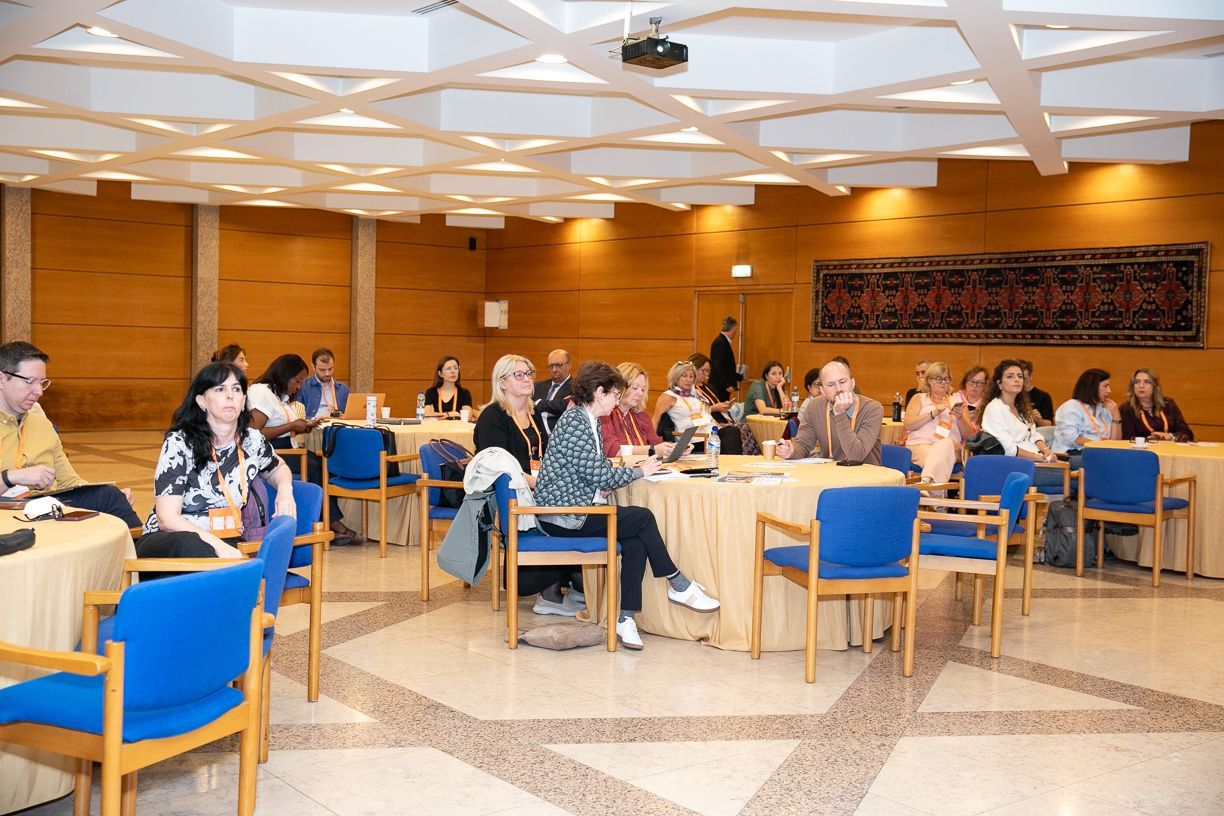
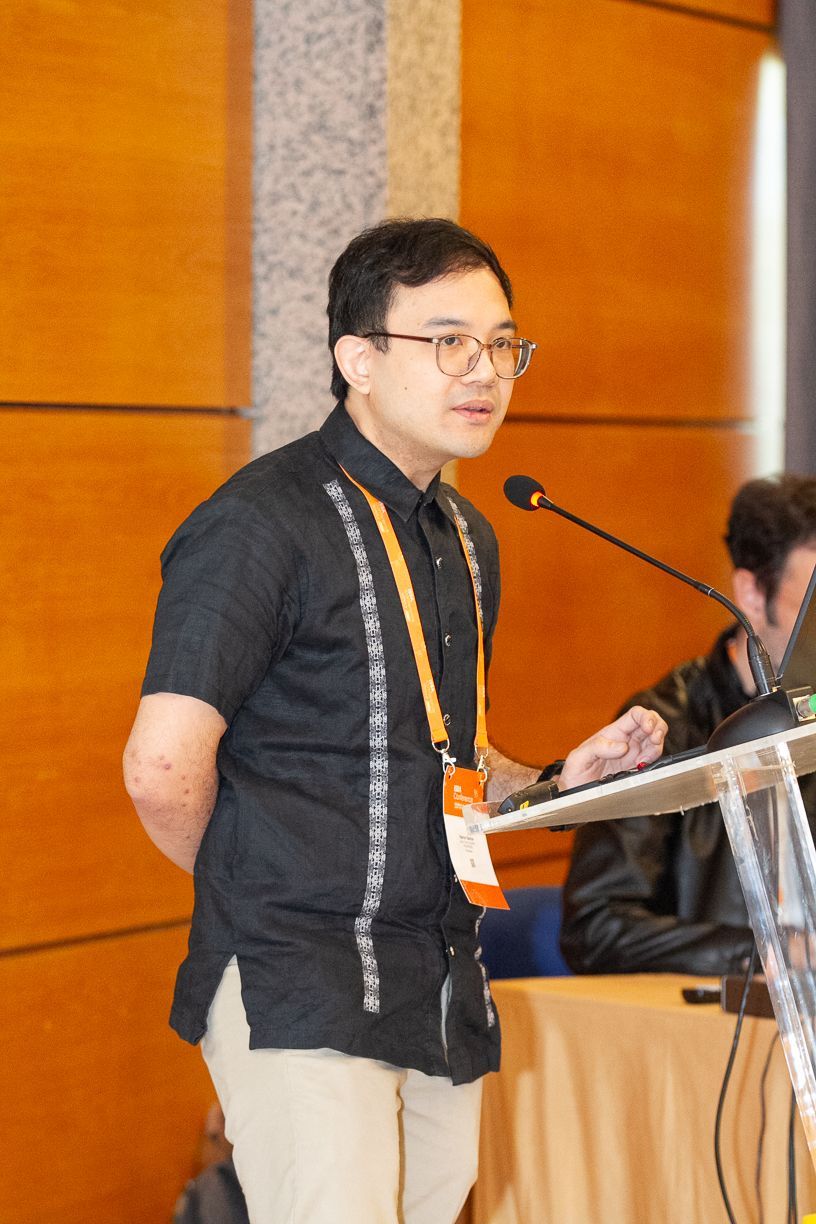
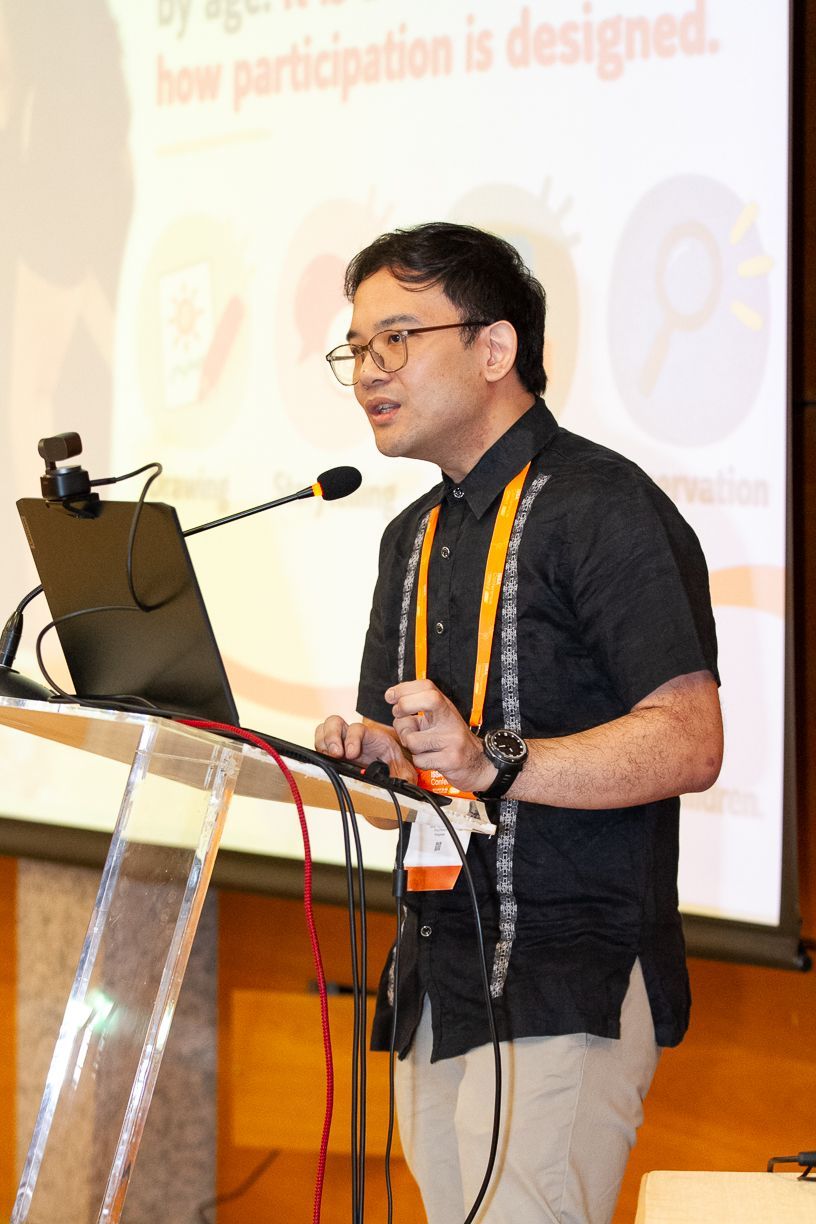
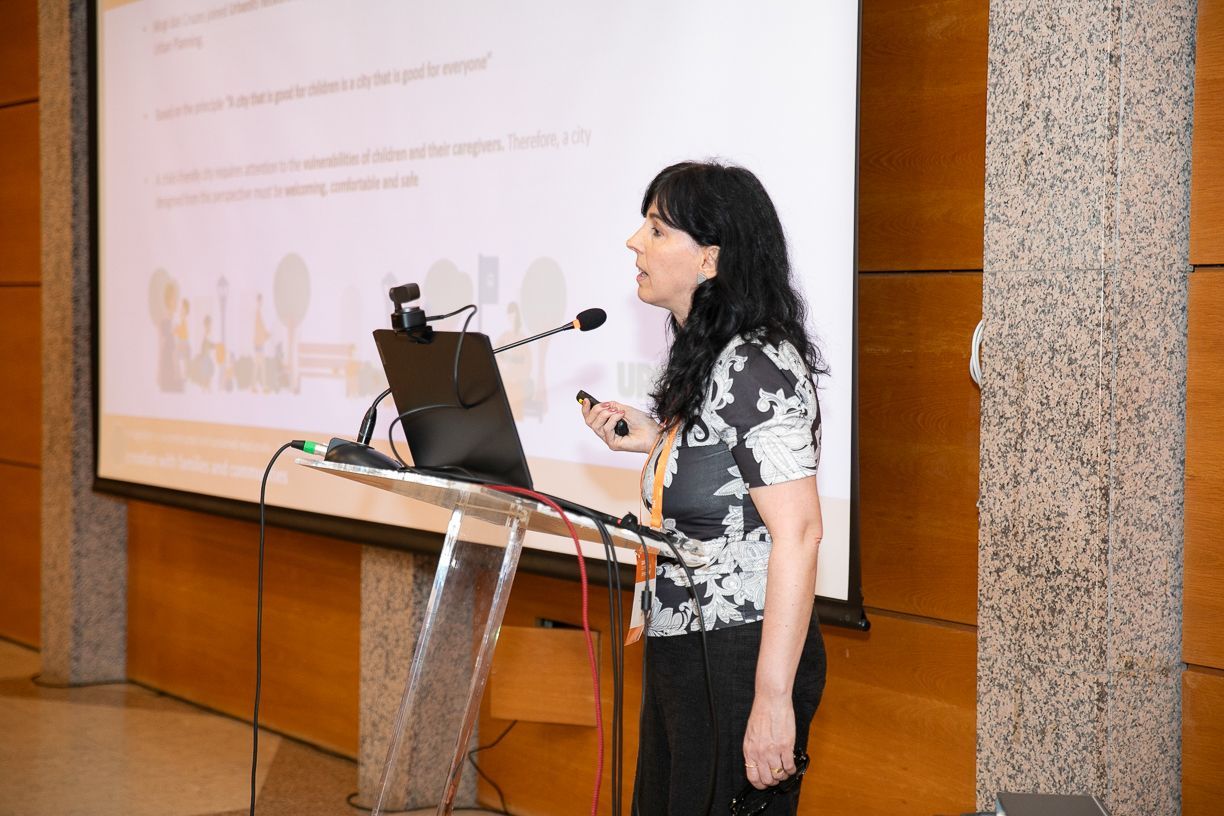
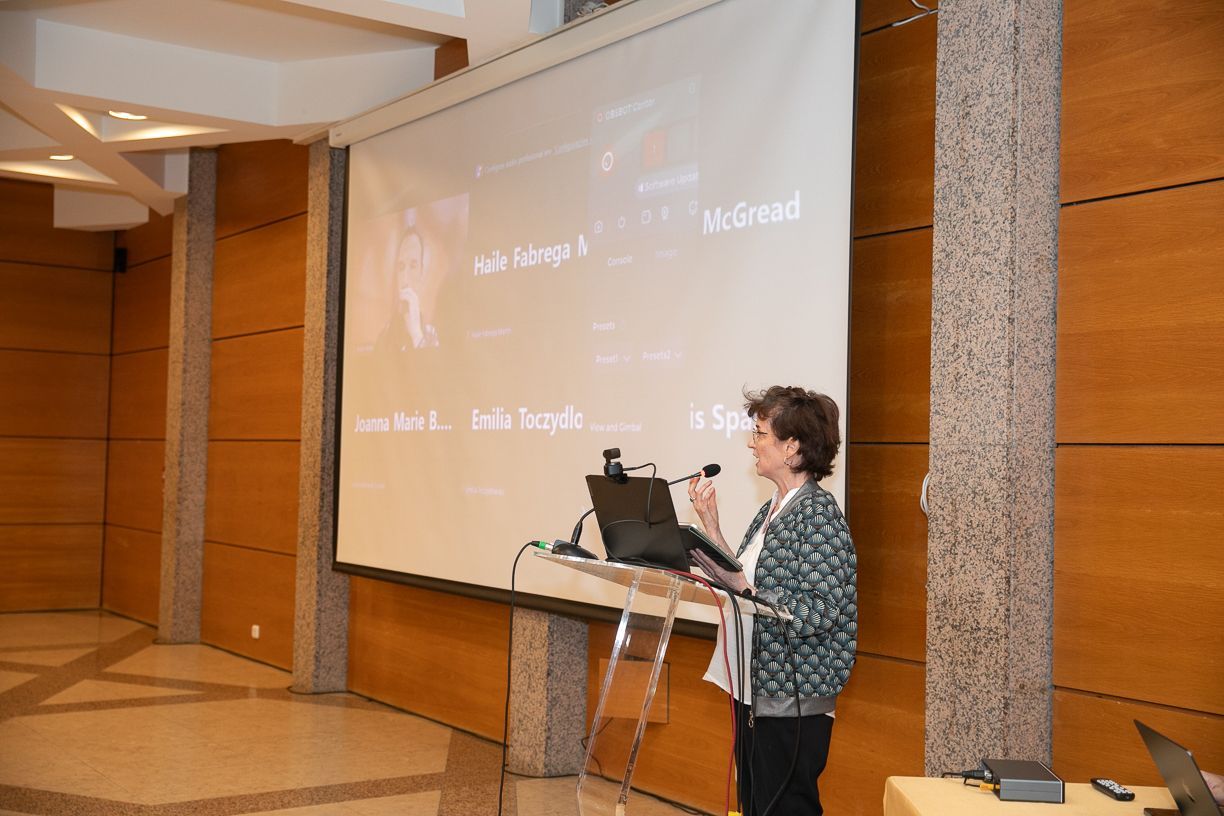
STRAND 3 OF 3 · WHAT WE LEARNED
Trust is built by people and must be protected by systems.
“How do we scale trust?”
WHAT TO DO
- Build shared language, and people who “translate” between the layers of the ecosystem. Each profession keeps its own identity, but integrated work needs common constructs and “policy translators, people that circulate between worlds.”
- Make participation real: listen, act, and show what changed. Moving from listening to influence means avoiding tokenism and the “usual suspects,” not rushing trust, and practising forward accountability: “You said, we did.”
- Scale deep as well as wide: keep the principles, adapt the delivery. Clear principles with local flexibility, without rigid replication or parallel systems.
The six workshops shared one message, which Topic 3.3 described as moving “from fragile to robust,” away from depending on exceptional individuals and temporary funding and towards shared leadership, capable institutions and predictable resources.
Participants found that trust grows from honesty, from following through on promises and from messengers people already believe in, and one group left us with a question we are still holding close: how do we scale trust?
- Trust comes first, participation follows, with families as partners in real decisions rather than only in the consultation report, because tokenism does more harm than good.
- Trust and a shared language are infrastructure that has to be built deliberately, with structured time, reflective support and care for frontline workers.
- From personalities to institutions, local innovation lasts when it is secured in governance, law and networks connected to decision-making, rather than in one leader’s goodwill.
- A method is only as strong as the relationship it lives in, and holding too tightly to a framework builds compliance rather than commitment.
Topic 3.1 Co-creation with families and communities
Systems built around families need families at the table, not just in the consultation report.
TOPIC FOCUS
This topic looked at how families, communities and practitioners can move from being consulted to becoming genuine co-constructors of the systems that affect them, covering participatory governance and shared power as well as co-creation in fragile or resource-constrained settings, including the role of faith-based and informal actors.
Contributors described participation that reaches beyond asking for opinions to sharing real decisions, from parents writing local policy to children helping to design their city, and time after time this turned out to be exactly where integration began.
True participation built on trust came first, as relationships with families and community partners created the conditions for real participation and co-creation.
Integration took shape when professionals stepped outside their usual roles and treated families as partners, with mentoring to help them do it, while everyone agreed that tokenism does more harm than good.
WHAT EMERGED IN THE ROOM
- From listening to influence, with communities sharing power and choosing the right people to involve, not only the “usual suspects.”
- Forward accountability, showing what changed as a result of listening, with “You said, we did” boards and results shared back with families together with action plans.
- Prepare the ground for participation with culturally safe places, home visits, mobile spaces, face-to-face contact and tools that suit families, such as WhatsApp.
- Avoid rushing trust, patronising expert approaches, putting families on the spot with policymakers, and collecting data that is not needed.
THE TWO WORKSHOPS
WORKSHOP · TOPIC 3.1 Hybrid
Embedding Participation and Shared Power in Systems
Friday 23 October · 10:30–12:00 and 12:30–13:30 · Ismaili Centre Lisbon
WORKSHOP · TOPIC 3.1 Hybrid
Embedding Participation and Shared Power in Systems
Friday 23 October · 10:30–12:00 and 12:30–13:30 · Ismaili Centre Lisbon
Workshop focus
This workshop explored how participation and shared power can be embedded in systems so that families and communities influence decisions, with experience from Australia, the Philippines, Brazil, the Netherlands, South Africa, Serbia, Italy and Portugal.
What the room built from the session notes
✓ What worked
- Moving from listening to influence, and choosing the right people, not only the “usual suspects”
- Culturally safe places and many ways to meet: home visits, mobile spaces and centres
- Forward accountability: “You said, we did” boards that show what changed
✕ What to avoid
- Rushing trust, or creating unrealistic expectations
- Expert approaches that patronise parents
- Rigid formalisation of practice when scaling up
❧ What to nurture
- Parents involved in decision-making, from petitions to fundraising
- Distributed, democratic leadership and continued mentoring for professionals
- A dignity-based lens that recognises how communities already organise themselves
➜ What to take forward
- Documenting change and the process behind it
- Exchanging knowledge within and across communities
- Involving children in social accountability
Who made this workshop
Facilitated by Edda Olsson (Research Analyst and Partnership Strategist, Learning for Well-being Institute) and Andre Abreu (Learning for Well-being Institute) for online, with online and technical support from Haile Fabrega Martin (Learning for Well-being Institute).
SPEAKERS
Juan Larranaga and Nina Derbyshire · Director, Place, and Place-Based Principal, Minderoo Foundation, Australia
“From Participation to Shared Power: Co-creating Early Childhood Systems in Place”
PRESENTERS
Ramon Jericho Santos · Project Officer, Save the Children Philippines, Philippines
“Driving Systems Change Through Child-Centered Social Accountability: Parent-Led Policy Development for Inclusive ECCD for Children with Disabilities in the Philippines”
Fabíola de Almeida Rodrigues · Architect and Urban Planner / Specialist in Early Childhood Friendly Territories, Mogi das Cruzes City Hall, Brazil
“Inclusion of listening to children and co-creation in the development of projects focused on Early Childhood, in Mogi das Cruzes, SP, Brazil”
Margaret Kernan · Head of Programmes and Learning, International Child Development Initiatives (ICDI), the Netherlands
“Rethinking young children’s participation from a caregiver’s perspective”
Denver Swanepoel · Chief Operating Officer, Zifumane Foundation NPC, South Africa
“Rooted in the Soil: A Community-Driven Early Childhood Development Model for Farming and Rural Communities”
DISCUSSANTS
Milena Mihajlović · Associate, CIP – Center for Interactive Pedagogy, Serbia
“Strong from the Start: Building Children’s Well-Being Through Family and Preschool Partnership”
Gabriela Filipa Fonseca Pinto · PhD Fellow and Psychologist, University of Modena and Reggio Emilia (UNIMORE), Italy/Portugal
“An “Ecological Culture of Relationships”: Reggio Emilia’s Participation Principles as a Lens for Family-School-Community Partnerships in Portuguese ECEC”
Arianna Lazzari · Associate Professor and Professor, University of Bologna, Italy
“Enhancing equity through Early Childhood Systems: from family participation to community empowerment”
WORKSHOP · TOPIC 3.1
Community-Based and Relational Co-Creation
Friday 23 October · 10:30–12:00 and 12:30–13:30 · Universidade Católica Portuguesa
WORKSHOP · TOPIC 3.1
Community-Based and Relational Co-Creation
Friday 23 October · 10:30–12:00 and 12:30–13:30 · Universidade Católica Portuguesa
Workshop focus
Focusing on community-based co-creation, including in crisis and fragile contexts, this workshop drew on experience from the United States and Brazil, Slovenia, Croatia, Ukraine, and Mozambique.
What the room built from the session notes
✓ What worked
- Listening continuously to children and families, with feedback loops that stay open
- Face-to-face contact before surveys, and tools that suit participants, such as WhatsApp
- Sharing results back with families, together with action plans
✕ What to avoid
- Tokenistic participation, and putting families on the spot with policymakers
- Jargon, stereotypes and pre-conceived narratives
- Starting from scratch again and again
❧ What to nurture
- Trust and an active role for families before any data collection
- Multi-method approaches, online and in person
- Families helping to design the questions
➜ What to take forward
- Multi-stakeholder structures bringing together research, government, communities and families
- Asking what parents want to know about other parents
Who made this workshop
Facilitated by Mihaela Ionescu (Program Director, ISSA).
SPEAKER
Philip Fisher · Director, Stanford Center for Early Childhood, United States
“Lifting up caregivers’ voices and experiences through rapid-cycle research”
PRESENTERS
Mateus Morante Mazzaferro · PhD Candidate, Stanford University, Brazil
“Reaching families where they are: Equidade – Primeira Infância in Brazil”
Jerneja Jager and Mateja Mlinar · Researchers, Educational Research Institute, Slovenia
“From Participation to Integration: Co-Creating Support for Young Roma Children and Families”
Marina Matešić · Programme Director, Open Academy Step by Step, Croatia
“TOY4Inclusion community play-based model for strengthening mental health competences of young children across sectors”
Khrystyna Bohatyrova · Country Director, Rise Ukraine, Ukraine
“Leveraging Community Hubs for Resilience and Early Learning in Ukraine”
DISCUSSANT
Susana Patrícia Damasceno Pereira · Executive Director, AIDGLOBAL – Action and Integration for Global Development, Portugal
“Playing, Learning and Growing Up – An Early Childhood Education Community Experience”
Topic 3.2 Trust, shared language and frontline voice
A health visitor, a teacher and a social worker can work with the same family but not being aligned with each other about what is best for the child, which is why trust and a shared language turned out to be infrastructure too.
TOPIC FOCUS
This topic explored how trust and shared understanding are built across professional, institutional and community boundaries, highlighting the role of narrative change, common language, shared pedagogical frameworks, frontline voice and workforce wellbeing.
Trust between professionals, and a language they all understand, have to be built with intention, and contributors found that training and tools alone did not change practice, whereas trust and shared understanding across levels did.
Young people are building trust too, as Theirworld’s Global Youth Ambassadors carry their communities’ voices to the first Global Early Years Finance Summit.
Integration that stays procedural rather than relational falls short and listening to and caring for frontline workers is part of the work.
WHAT EMERGED IN THE ROOM
- Common constructs with distinct identities: each profession keeps its own identity and language, but integrated work needs shared concepts that everyone understands.
- Policy translators, “people that circulate between worlds” of children, families, practitioners and politicians, and frontline workers and elected officials visiting each other without a funding request.
- Honesty and following through, stories that make children’s learning visible, and trusted messengers rather than assuming you are one.
- Positive, strengths-based narratives rather than chasing headlines, with flatter hierarchies among professionals and with families.
THE TWO WORKSHOPS
WORKSHOP · TOPIC 3.2 Hybrid
Building Trust and Shared Language Across the ECD System
Friday 23 October · 10:30–12:00 and 12:30–13:30 · Universidade Católica Portuguesa
WORKSHOP · TOPIC 3.2 Hybrid
Building Trust and Shared Language Across the ECD System
Friday 23 October · 10:30–12:00 and 12:30–13:30 · Universidade Católica Portuguesa
Workshop focus
This workshop looked at narrative change across the early childhood sector, asking how trust and a shared language can be built across the system and with the public, with experience from the United Kingdom, Italy and Portugal and the voices of Theirworld’s Global Youth Ambassadors.
What the room built from the session notes
✓ What worked
- Honesty and following through on actions
- Stories, photos and videos that make children’s learning visible to different audiences
- Frontline workers and elected officials visiting each other without a funding ask
✕ What to avoid
- Over-simplifying the message
- Assuming you are a trusted messenger
❧ What to nurture
- Support for institutions moving from autocratic to democratic approaches
- Honest conversations about experiences, including trauma
➜ What to take forward
- More focus on responsive care
- The connection between early learning and democratic development
Who made this workshop
Facilitated by Iram Siraj (Professor of Child Development and Education, University of Oxford) in the room, and Vicky Ardi (L4WB Foundation) online, with online and technical support from Tania Lomba (ISSA).
SPEAKER
Sally Hogg · Director (CEO), Start Strong, United Kingdom
“Shifting public mindsets to support systemic, sustained and ambitious action”
PRESENTERS
Diletta Mauri and Francesca Schir · Researchers, University of Trento and Free University of Bozen-Bolzano, Italy
“Beyond professional boundaries: strengthening social work and interprofessional collaboration in early childhood communities”
DISCUSSANTS
Ana Maria da Costa Oliveira and Mariana Farinha · Universidade Católica Portuguesa, Portugal
“Relational Integration in Practice: Trust, Child Voice and Frontline Experience in Early Childhood Systems”
Ana Maria da Costa Oliveira · Professor, Universidade Católica Portuguesa, Portugal
“From Coordination to Relational Integration: The Role of Child Voice and Strengths-Based Practice in Early Childhood Systems”
Anna Luiza Huth Amaral, Danielle Ruth Hannah Gray · Global Youth Ambassadors, Theirworld, United Kingdom
“Youth Vision for the Early Years: using Youth Foresight methodology to capture young people’s demands for early years provision”
WORKSHOP · TOPIC 3.2
Building Trust and Shared Language Across Systems
Friday 23 October · 10:30–12:00 and 12:30–13:30 · Universidade Católica Portuguesa
WORKSHOP · TOPIC 3.2
Building Trust and Shared Language Across Systems
Friday 23 October · 10:30–12:00 and 12:30–13:30 · Universidade Católica Portuguesa
Workshop focus
Focusing on trust-building across systems and between practitioners, this workshop drew on experience from Bulgaria, Belgium, Greece and the United States.
What the room built from the session notes
✓ What worked
- “Policy translators,” people who circulate between the worlds of children, families, practitioners and politicians
- Common constructs, while each profession keeps its own identity
- Regular reflective meetings and connections built before coalitions form
✕ What to avoid
- Chasing headlines instead of long-term change in mindsets
- Assuming that many agencies involved means a child is supported
- Procedural participation in technical language
❧ What to nurture
- Positive, strengths-based narratives
- Time, consistency and relationships, even though they are hard to measure
- Flatter hierarchies among professionals and with families
➜ What to take forward
- A mandate for practitioners to develop a common language together
- Shared learning between frontline workers, decision-makers and communities
- A shared public understanding of why the early years matter
Who made this workshop
Facilitated by Olivier Thévenon (Head of Child Well-Being Unit, OECD WISE Centre, France).
SPEAKER
Eugenia Volen · Program Officer, Early Learning and Care, Trust for Social Achievement Foundation, Bulgaria
“Climbing the Quality Ladder: Building Trust and Shared Language Across System Levels”
PRESENTERS
Lisandre Bergeron-Morin, Nima Sharmahd and Meldy Ypelaar · Senior Researcher, Elmer Brussels; Senior Researcher, VBJK; and Community and Project Officer, Elmer, Belgium
“Professionals and Families Working Together on a STEAM Integrated Approach in the 0–6 Sector”
DISCUSSANTS
Irene Caselli · Director, Early Childhood Journalism Initiative, Greece
“Reframing the Child in Our Work: Ethical Storytelling That Respects Children’s Agency”
Desislava Koleva · Early Learning and Care Program Coordinator, Trust for Social Achievement Foundation, Bulgaria
“Climbing the Quality Ladder: Building Trust and Shared Language Across System Levels”
Jane West · Executive Director and Founder, The Two Lilies Fund, United States
“Workplace Wellbeing: Voices from the frontlines and thought leaders of the global early childhood development movement”
Topic 3.3 From local innovation to system change
Local innovation is where integration is often invented, and the challenge is helping it outlive its founders, its funding and its political champions.
TOPIC FOCUS
This topic examined how locally developed integrated approaches are adapted, scaled and institutionalised and why some are diluted or lost, distinguishing scaling, which expands reach, from deepening, which influences systems, and considering how integration can withstand political cycles and changes in leadership.
Contributors described two routes, growing from the bottom up through networks and turning innovation into lasting institutions, and both depend on strengthening what already exists and on relationships that hold steady when people and politics change.
A method is only as strong as the relationship it lives in, and holding too tightly to a framework builds compliance rather than commitment.
Integration can grow through relationships before structures, as in wartime Ukraine, while staff turnover and a lack of protected learning time can stall even a promising programme.
WHAT EMERGED IN THE ROOM
- From fragile to robust, moving from exceptional individuals and temporary funding to shared leadership, capable institutions and predictable resources.
- Scale horizontally and vertically, spreading approaches across communities while embedding them in policy, budgets, standards and institutional responsibilities.
- Scale deep as well as wide, with clear principles, local flexibility and networks of communities that already operate at scale, avoiding rigid replication and parallel systems.
- Invest in the people who carry it, through training, coaching, reflective spaces and good pay and conditions, and keep asking how we scale trust.
THE TWO WORKSHOPS
WORKSHOP · TOPIC 3.3
Adaptive Scaling
Friday 23 October · 10:30–12:00 and 12:30–13:30 · Universidade Católica Portuguesa
WORKSHOP · TOPIC 3.3
Adaptive Scaling
Friday 23 October · 10:30–12:00 and 12:30–13:30 · Universidade Católica Portuguesa
Workshop focus
This workshop explored adaptive scaling, asking how local approaches can grow while staying true to what makes them work, with experience from Belgium, Ireland, Bulgaria, China, Ukraine and the United States.
What the room built from the session notes
✓ What worked
- Statutory responsibility with regional and national backing, as in Better Start Bradford
- Local leaders who carry communities’ needs, and a workforce that reflects them
- Radical pragmatism, and trust
✕ What to avoid
- Assuming a programme will work everywhere
- Implementing before understanding local needs: the “we know better” approach
- Short-term funding and a single champion
❧ What to nurture
- Iterative cycles of implementation using real-time data
- Investment in people through training, mentoring and reflective spaces
- Good pay and conditions for those who care for children
➜ What to take forward
- Scaling deep, not only wide, by networking communities that already operate at scale
- Human-centred design as an advance on scaling tested programmes
- A question to carry forward: how do we scale trust?
Who made this workshop
Facilitated by Dominic Richardson (Managing Director, Learning for Well-being Institute).
SPEAKER
Karolien Huylebroek · Researcher, Artevelde University of Applied Sciences, Belgium
“Building interconnected systems in practice: lessons from local Out-of-School Care trajectories and practice-oriented research in Flanders”
PRESENTERS
Ellen Duggan · Chairperson, Family Resource Centre National Forum, Ireland
“Prevention as Place-Based Systems Change”
Rositsa Bogalinska-Petrova · Country Director, Rise Bulgaria Foundation, Bulgaria
“The curious case of the Bulgarian chitalishta model as play spaces for early learning”
Xiaona Huang · UNICEF China, China
“Integrating childcare in a life course perspective: Lessons from China”
DISCUSSANTS
Cristal Palacios · Systems of Care Manager, Amna Refugee Healing Network, United Kingdom
“Relationships Before Reform: Trust-Building and Systems Change in Crisis Contexts”
Mara Durrell · Executive Director, Rise Alliance for Children, United States
“Partnership as the Engine: Co-Constructing Early Childhood Integration from Local Innovation to System Change”
WORKSHOP · TOPIC 3.3 Hybrid
Institutionalizing Innovation
Friday 23 October · 10:30–12:00 and 12:30–13:30 · Universidade Católica Portuguesa
WORKSHOP · TOPIC 3.3 Hybrid
Institutionalizing Innovation
Friday 23 October · 10:30–12:00 and 12:30–13:30 · Universidade Católica Portuguesa
Workshop focus
Looking at how innovations become institutionalised within government and public systems, this workshop drew on experience from Italy, the Czech Republic, Israel, Brazil, Vietnam, Colombia, the Netherlands and Ukraine.
What the room built from the session notes
✓ What worked
- Clear standards with local flexibility
- Community ownership and collective governance
- Investment in the workforce, through training, coaching and peer learning
✕ What to avoid
- Dependence on individual personalities or political goodwill
- Rigid replication and parallel systems
- Scaling at the expense of quality
❧ What to nurture
- Trust that holds through leadership and ministry changes
- Time to collaborate, test adaptations and respond to evidence
- Participatory evaluation with families
➜ What to take forward
- From fragile to robust: shared leadership, capable institutions and predictable resources
- Scaling horizontally across communities and vertically into policy, budgets and standards
- “Thinking the unthinkable and finding ways to do what cannot be done”
Who made this workshop
Facilitated by Ivelina Borisova (Co-Founder, Early Years Impact Center) in the room, and Jinyi Ding (Learning for Well-being Institute) online, with online and technical support from Flo Adwe (Learning for Well-being Institute).
SPEAKER
Debora Sanguinato · Program Coordinator, Save the Children Italy, Italy
“Moving from local innovation to system change: lessons learnt from the experience of “Poli 1000 giorni” within the reform of the integrated ECEC system in Italy”
PRESENTERS
Petr Pabian · Public Policy Coordinator, Early Childhood Platform, Czech Republic
“National coalition of local NGOs as a vehicle to influence national policy”
Anat Bar · Early Childhood Director, Tirat Carmel municipality, Israel
“Beyond Political Goodwill: Scaling Local Innovation into Systemic Stability”
Ana Maria Bastos · Director, Descobrir Brincando, Brazil
“Bebetecas: Reading and Conviviality Spaces for Early Childhood”
DISCUSSANTS
Sarah Klaus · Senior Global Program Advisor, OneSky, United Kingdom
“From Big to Better: Strengthening Existing Systems for Scalable ECD Change”
Eduardo Escallón · Associate Professor, Universidad de los Andes, Colombia
““We Planted a Seed That Must Germinate”: Enablers and Barriers for Scaling a Play-Based Learning Program in Rural Colombia”
Anne Bedaux · Trainer, Stichting Centering Nederland, the Netherlands
“Group Antenatal Care and Group Postnatal Care Implementation: Building Resilient Care Networks Together”
Maryna Stoliar · Program Director, Sesame Workshop, Ukraine
“Addressing ECE Teacher Shortages in Ukraine through an Accelerated Pathway”
04
Connecting the field, strengthening practice
Many of the conditions named in Lisbon are ones that ISSA network through its members have spent more than 25 years building together, from networks that connect people across borders and sectors to the quality and learning that make integration real in children’s lives.
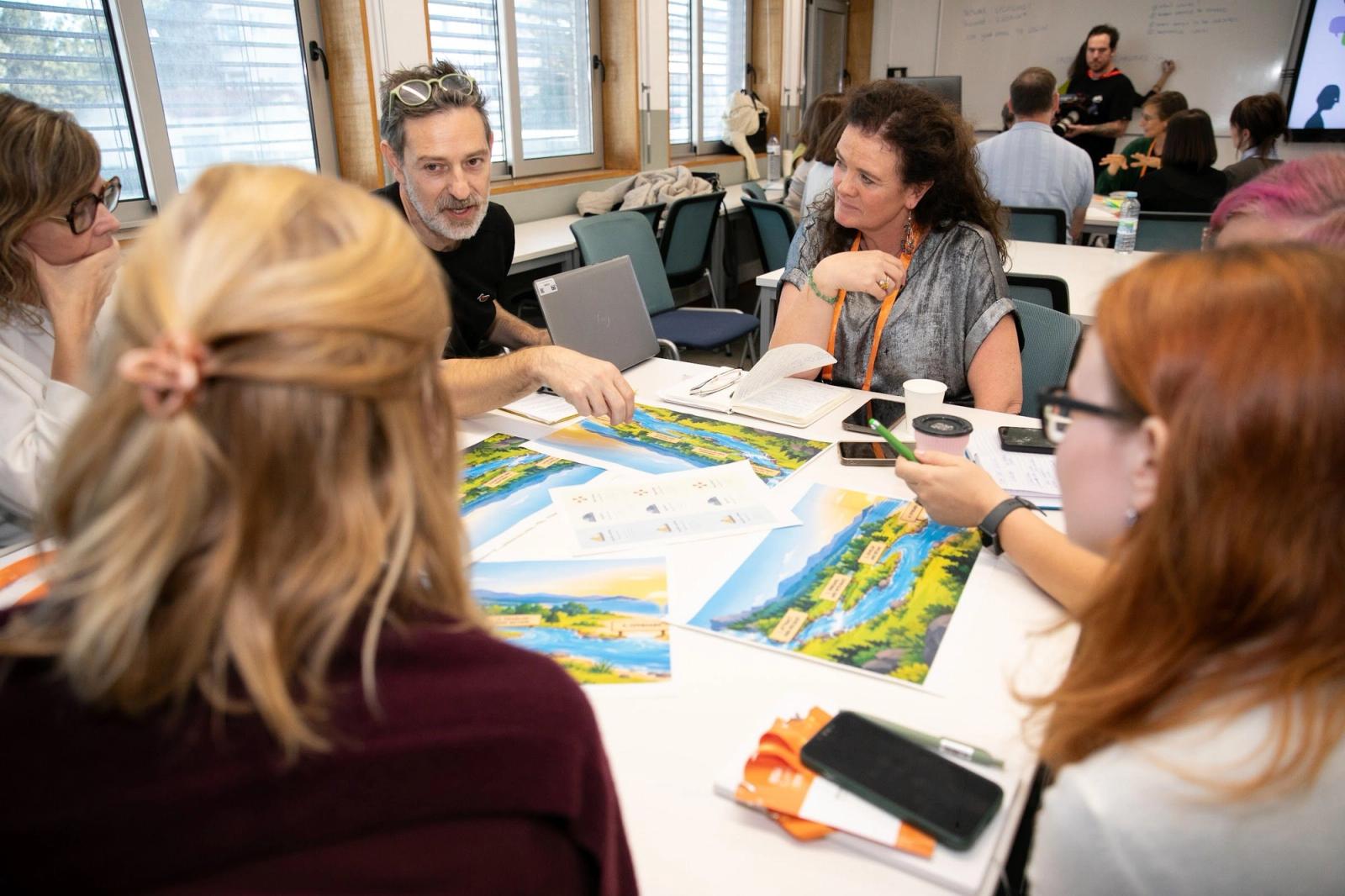
CONNECTING THE FIELD
ISSA drives early childhood systems change in close to 40 countries, bringing together 93 member organisations alongside regional networks across the field. Born from the Step by Step programme, which improved the quality of early childhood services across Europe, Eurasia and beyond, ISSA convenes governments, researchers, funders and practitioners and connects regional experience to global agendas such as the first Global Early Years Finance Summit, and in Lisbon at least 12 ISSA member organizations contributed across all three strands.
STRENGTHENING PRACTICE
ISSA’s quality frameworks, know-how and professional learning give practitioners, leaders and systems a shared picture of quality and the skills to deliver it. A few examples include its Quality Framework for Services for Children under Three establishes 31 principles and 143 recommended practices across nine areas, connecting children's relationships, wellbeing and learning with professional development, enabling environments and intersectoral cooperation. Through INTESYS, ISSA helped develop a framework for quality integrated early childhood services and a toolkit, informed by stakeholders from over 20 countries and tested in Belgium, Italy, Portugal and Slovenia. This work continues to inform ISSA's approach to building integrated systems, now supporting more than 40 municipalities across four countries through Primokiz. Also, ISSA supported training in Psychological First Aid and Embracing Diversity across more than 15 countries. The work went beyond individual training sessions, contributing to accreditation, integration into professional learning curricula and national rollouts in several countries.
WHERE CONNECTION AND PRACTICE MEET: PRIMOKIZ
Developed by the Jacobs Foundation and implemented under ISSA mentorship, Primokiz helps municipalities bring every sector that touches young children to one table and build a shared local strategy, and Lisbon heard about it from Romania, Slovenia, Hungary, and Slovakia.
For ISSA, Primokiz is the thread of this publication in action, with municipalities working together and local actors learning to plan and deliver differently.
05
Join us: keep working as one
Lisbon was a beginning rather than an end, and in the closing session we launched the ECOS Collaborative, a shared home where the work of these days can continue and grow, open to everyone in the early childhood field.
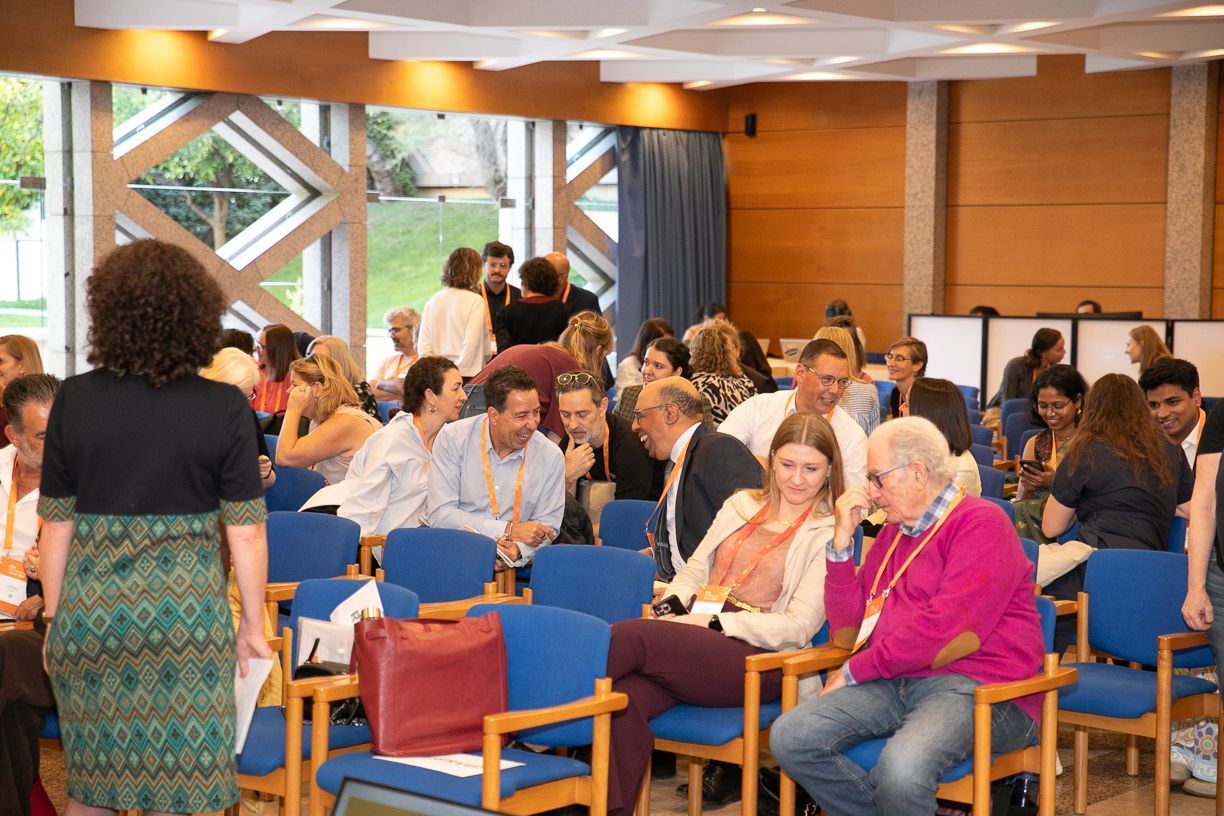
ECOS, founded and hosted by ISSA and co-stewarded by regional networks, is where we keep learning and building together, and we would love you to be part of it: collabs.ecosinstitute.net/integrated-systems-for-child-wellbeing
The Collaborative is the public home for this shared priority, offering news, events, courses and publications that are open to everyone, and it is where this publication lives.
The Hive is the working space for the collaborative, where partners and practitioners connect, share and co-create, and where we hope you will bring the colleagues who should be part of this conversation.
The ECOS Academy offers certified, practice-based learning in many languages, building the competences that integration depends on.
THE ROAD AHEAD
The road from Lisbon now leads on to the first Global Early Years Finance Summit and to our next ISSA conference in spring 2028, on the digital world and AI in the early years, and we very much hope you will travel it with us.
Participants share where they came from, what they came for, and what they’re taking back home
Anna Visser, Department of the Taoiseach, Ireland
Penny Dakin, Minderoo Foundation
Philip Fisher, Stanford Center for Early Childhood
Maryna Stoliar, Ministry of Education and Science, Ukraine
Eva Deak, Partners Hungary and ISSA Board
Hana Zylfiu-Haziri, Kosova Education Center
Explore the fun we also had with the conference app
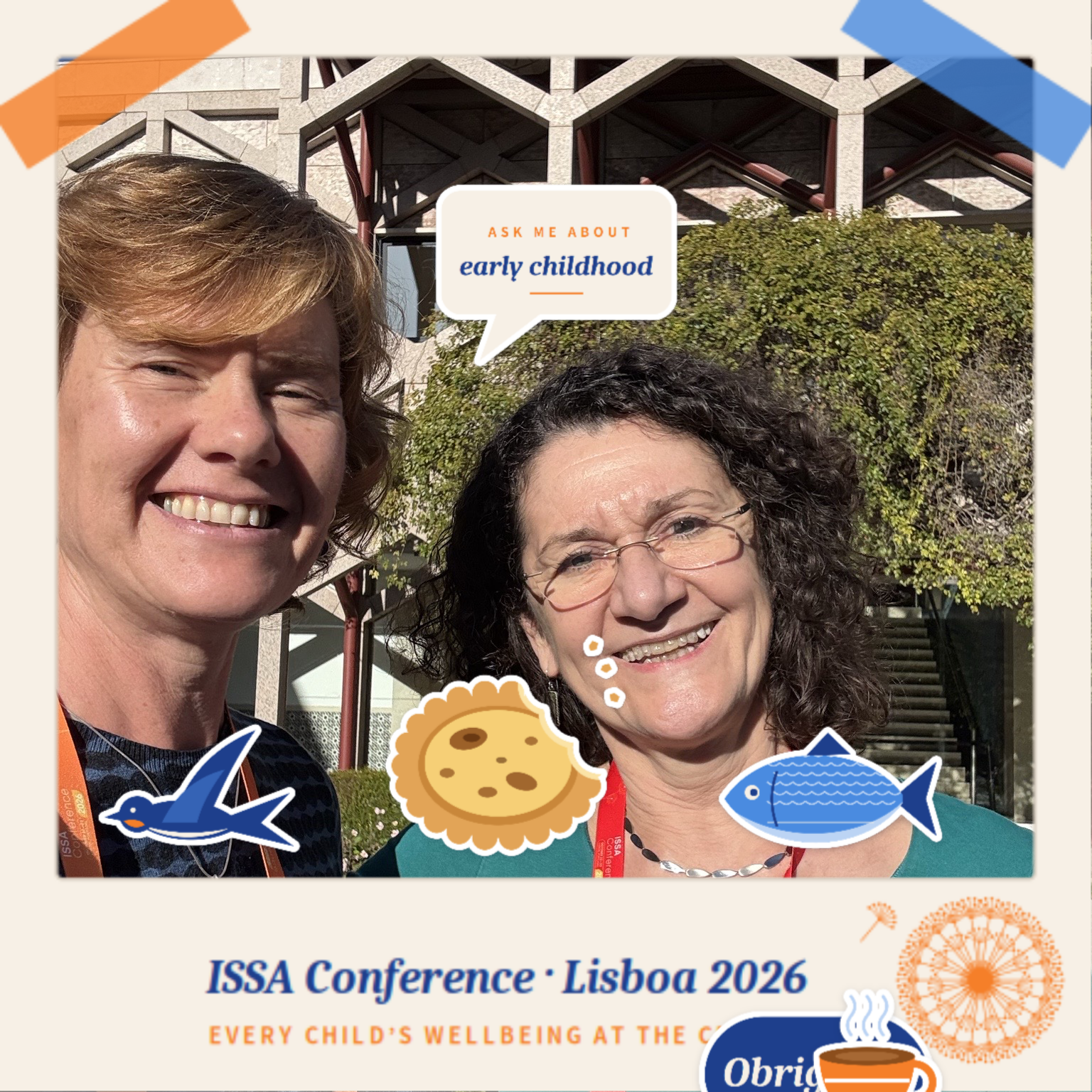
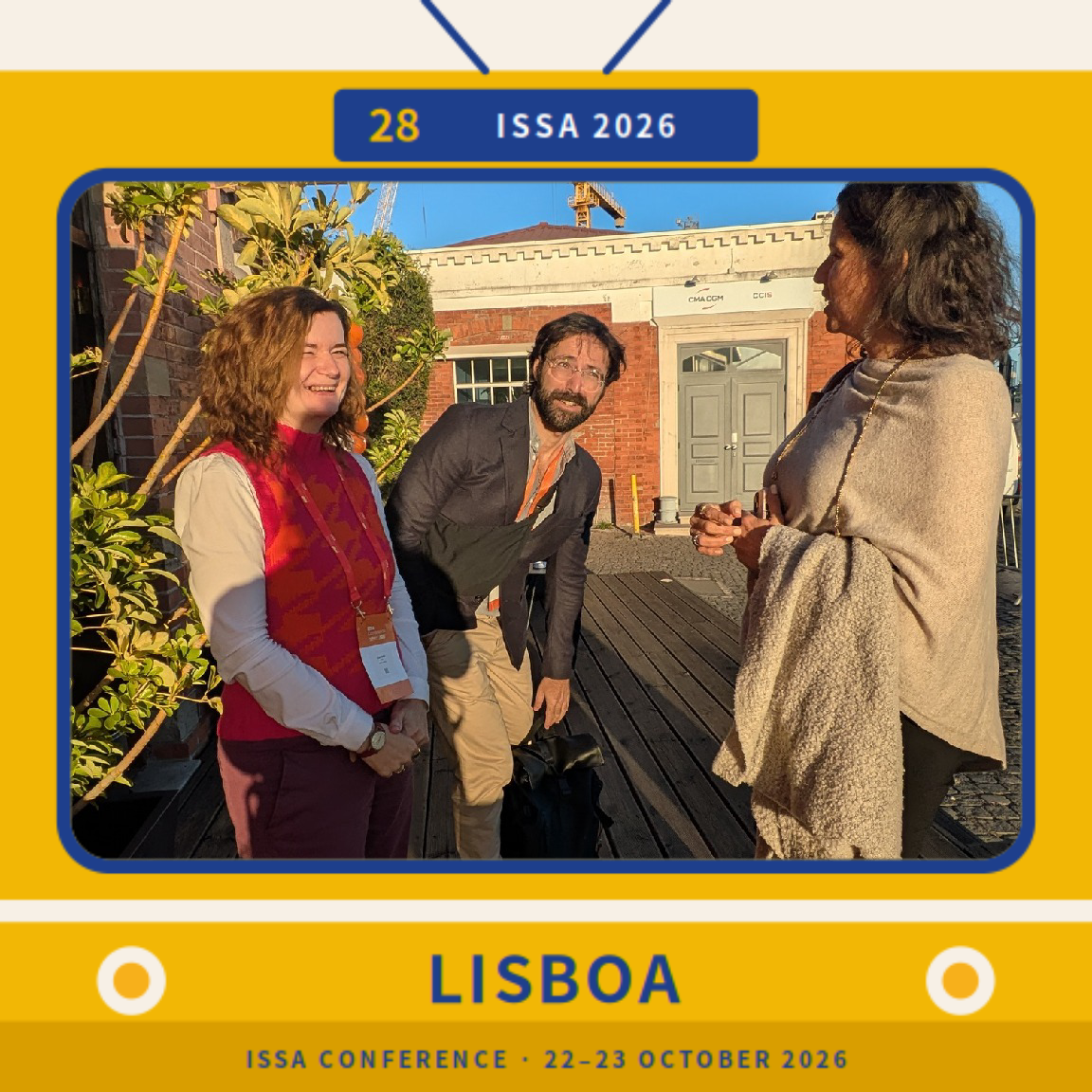
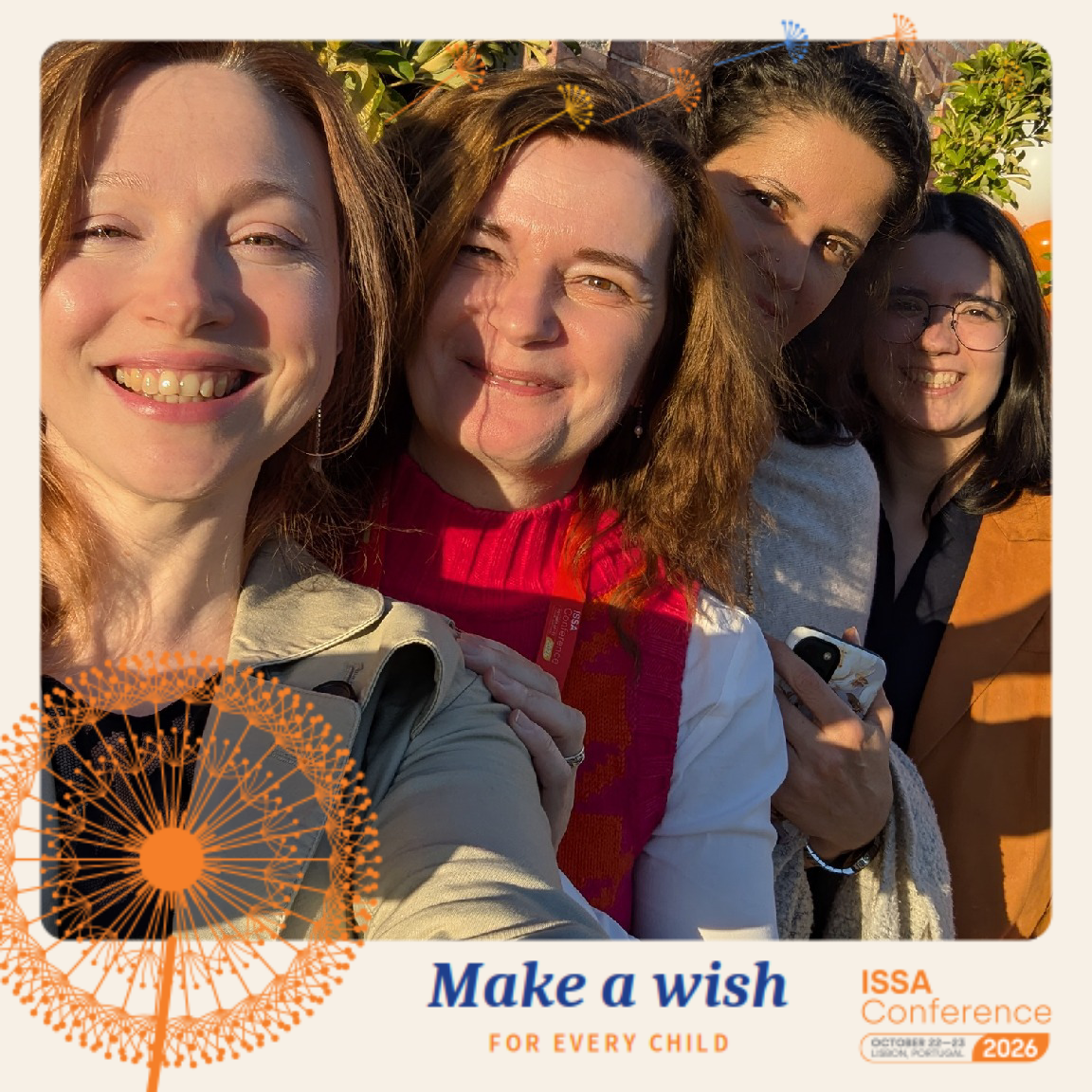

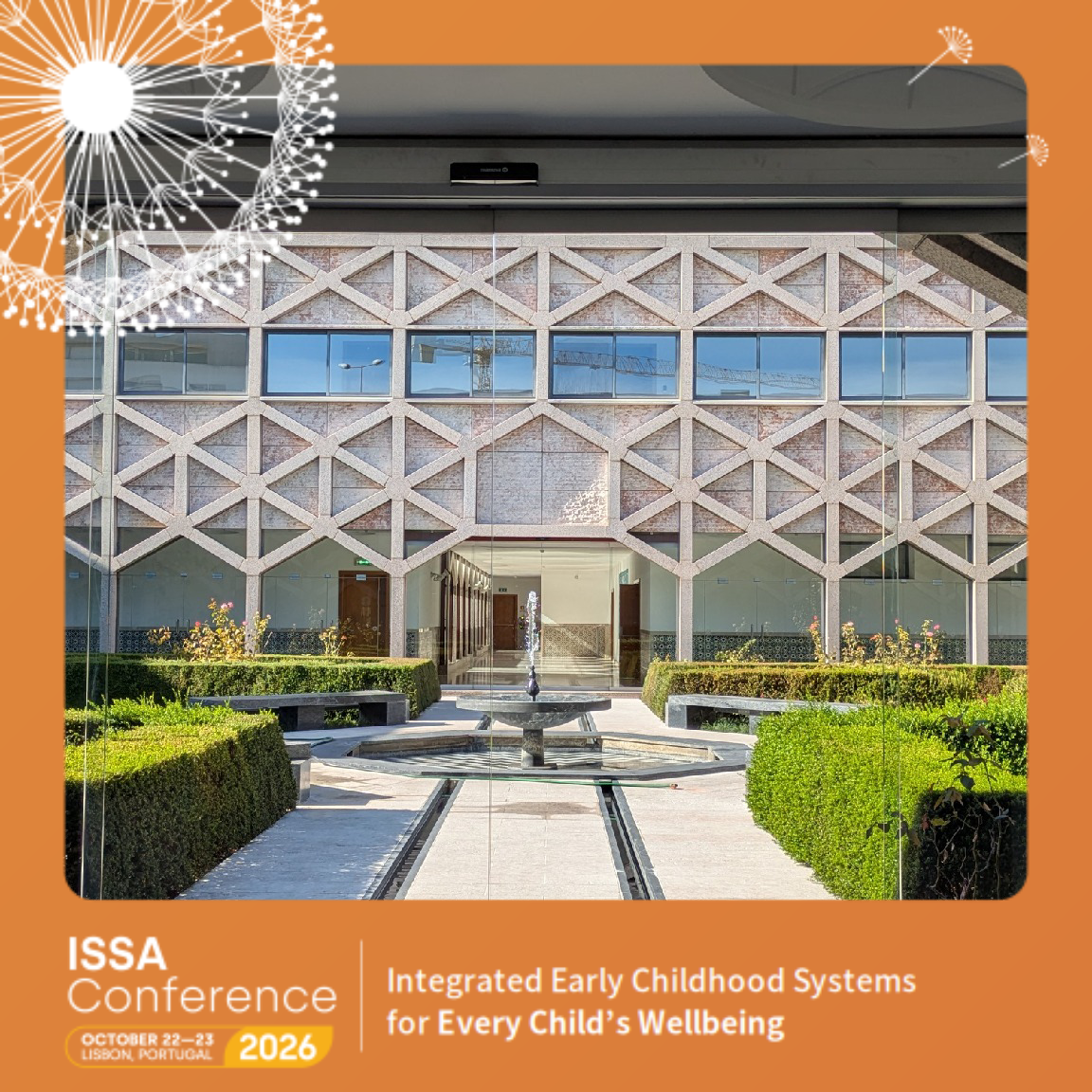
06
Spotlights
Lisbon was much more than its sessions, and these spotlights share some of the partnerships, ideas and moments that showed us what working as one looks like, and where we might take it next.
07
Thank you to our partners
ISSA Conference 2026 was never something we organised while others supported it, because we built it together with you, and in Lisbon everyone could feel the difference that makes.
Conference co-hosts
ISSA
A network driving early childhood systems change in more than 40 countries.
Learning for Well-being Institute
Gave the conference much of its thinking, from the keynote to the online facilitation and technical support that made our hybrid rooms work, and produces research on holistic child development and wellbeing guided by the Learning for Well-being Framework.
APEI
Welcomed us to Portugal and brought the voice of Portuguese early childhood educators into every room, as the national association of early childhood education professionals with more than 5,000 members.
Conference partners

Aga Khan Foundation Portugal
Part of the Aga Khan Development Network and active in Portugal since 1983, with a focus on early childhood development and educator training.
OECD WISE Centre
Generates data and policy approaches on wellbeing and inequality, including the OECD Child Well-Being Data Portal.
Act for Early Years
A global campaign to mobilise new funding and raise the political priority of the early years.
Faculty of Human Sciences, Universidade Católica Portuguesa
Our host for the workshops, offering social science and social work programmes in Lisbon.

Lisbon City Council
Treats early childhood as a strategic priority, with integrated responses across education, social inclusion and family support.

Van Leer Foundation
An independent foundation, active since 1949, supporting young children, caregivers and communities worldwide.
Jerónimo Martins Foundation
Works on health, poverty reduction, education, employment and family and youth wellbeing, with a focus on community needs.
Khalifa International Award for Early Learning
Recognises outstanding early learning research and innovative programmes around the world.

Early Childhood Regional Networks Fund
Launched in 2022 and hosted by the Swiss Philanthropy Foundation, supporting four regional early childhood networks.
The Human Safety Net
Supports vulnerable families with children aged 0–6 and helps refugees integrate through work and entrepreneurship.
Fundação “la Caixa”
Active in Portugal since 2018, funding social, research, educational and cultural projects with a focus on vulnerable groups.

Lisbon Tourism Association (Turismo de Lisboa)
Supports the conference through the Lisbon Support Fund for congresses and conferences.
AND EVERYONE WHO MADE IT HAPPEN
Our thanks also go to the more than 110 contributors who stepped onto our stage or into our workshop rooms; to the facilitators both in the room and for the online participants, and technical teams who held the rooms in person and through a screen; to the rapporteurs who captured what each room built; to the Ismaili Centre Lisbon and Universidade Católica Portuguesa for welcoming us; to the services across Lisbon that opened their doors; to THE House of Events; Lemon Pie Photography, Ricochete Filmes, and to the vFairs team, with special thanks to Aroosa Amjad.
08
Partner with us in 2028
Lisbon showed us what becomes possible when the field works as one, and in 2028 we would love to go even further, together with you.
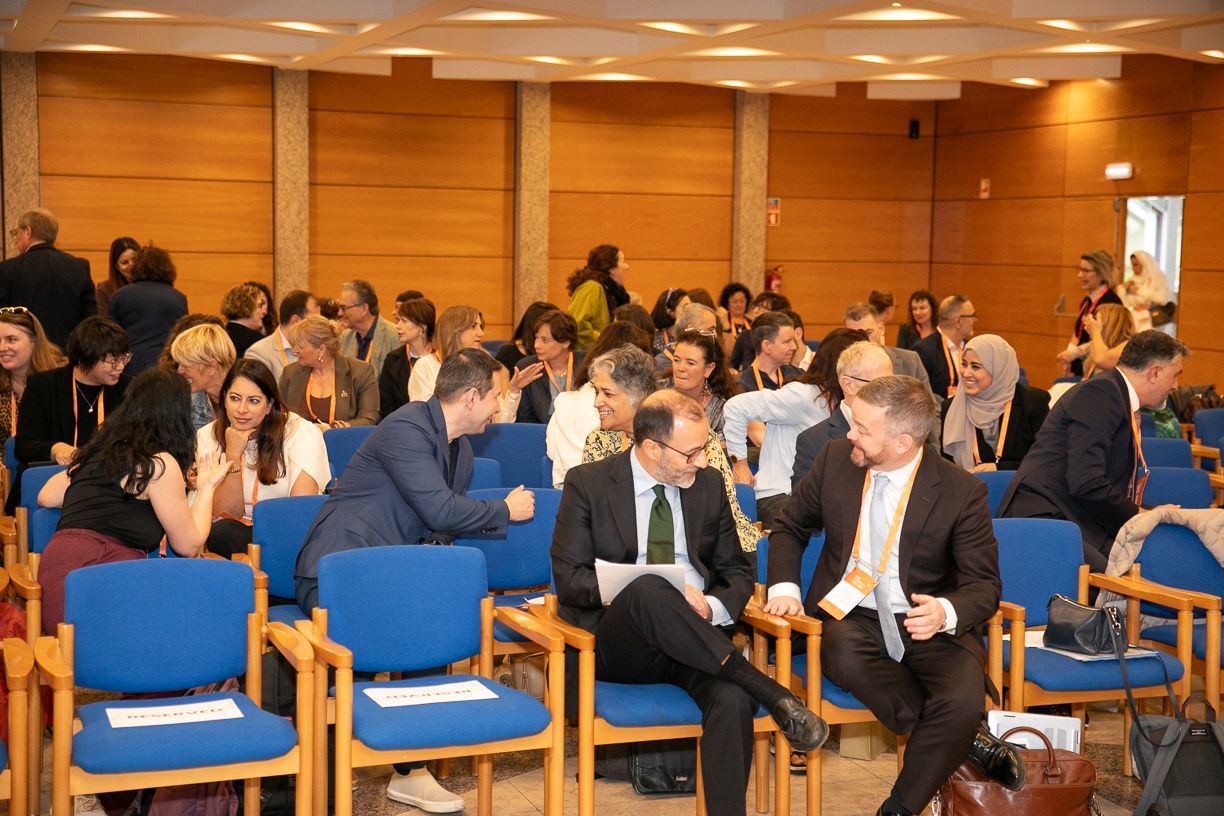
We are already preparing the next ISSA conference for spring 2028, on the digital world and artificial intelligence in the early years, a challenge far larger than any one organisation can meet on its own.
We are looking for partners who would like to help us convene the field, bringing governments, researchers, funders and practitioners together across sectors and regions, and to strengthen practice, so that what is shared at the conference truly reaches the people who work with children and families every day.
Get in touch: info@issa.nl
REFERENCE
The full program
The program is not reproduced on this page, and is available instead as a downloadable reference.
The full program
Every session, speaker, venue and time from the three days in Lisbon, including the pre-conference sessions, site visits and plenaries, is available in the program.