Diversity+

Diversity+
The high quality, inclusive Early Childhood Education and Care (ECEC) is an essential foundation for children’s successful lifelong health, learning, social integration, and personal development. It can also help close the achievement gap for children from vulnerable and disadvantaged groups and provide them with the best start in life. Yet, ECEC facilities, approaches and services have not always been designed and professionals prepared to meet the pluralistic needs of all children and their families.
What Diversity + project aims to?
To address these challenges Diversity+ aims to provide ECEC professionals, managers and practitioners with governance, benchmarking, recognition and professionalization tools to help them transform their practice and open up to diversity that exists among children and families.
What are we going to do?
This three-year project will develop concrete and practical resources that offer a structured and supported approach to quality inclusive service design. The toolkit will contain:
- A Diversity+ Charter to set out the minimum requirements for an ECEC organization to be considered as “Diversity positive”;
- An interactive digital Assessment tool which ECEC practitioners and managers will be able to use to assess current services and track improvements;
- A “European Qualification Framework” (EQF) profile and training resources to profile key knowledge, skills and attitudes required to respond to the individual needs of children from different backgrounds or with special educational needs
- A set of thirty interactive games that will help ECEC practitioners to work with children on recognizing and addressing biases, prejudice, discrimination, and exclusion, to sustain critical thinking in children, and support them to speak out for themselves and others, and threat everybody with empathy and respect regardless of their origin, gender, background, level of abilities, language and other existing differences.
Who is involved?
The project is led by the Italian partner CIAPE, and it involves other partners such as Link Campus University in Italy, Aspire-Igen in UK, Fondatsiya na Biznesa za Obrazovani in Bulgaria, Skola Dokoran in Slovakia, and Schola Empirika in the Czech Republic. ISSA contributes to the project by providing technical support for the development of different tools and resources, and leads its dissemination activities.
Diversity+ Toolkit
Diversity+ Charter
A set of minimum requirements that ECEC services and institutions have to meet to accommodate different types of diversity and be classified as inclusive and diversity positive (Diversity+). The Diversity+ Charter aims to provide practical guidelines and recommendations on how to make the ECEC environment more inclusive. Read more.
Download: ENGLISH | BULGARIAN | DUTCH | CZECH | ITALIAN | SLOVAK
Read more about the Diversity+ Charter
Diversity+ Footprint Assessment Tool
Based on the European Quality Framework for Early Childhood Education and Care, this interactive digital tool is meant to support ECEC officers - often not specialised in diversity inclusion - to assess current services and mostly understand in a visual way the concrete, necessary steps needed to improve their provision. The organizations rated as having an ‘excellent’ Diversity footprint get a Certificate likely to increase the prestige of the organisation itself and encourage others to undertake a similar path.
Apply the tool in ENGLISH | BULGARIAN | CZECH | DUTCH | ITALIAN | SLOVAK
Read more about the Diversity+ Footprint Assessment Tool
EQF of Diversity Ambassador in ECEC environments
The "European Qualification Framework of Diversity Ambassador in ECEC environments” is expected to improve ECEC HR management, to profile key knowledge, skills and attitudes required to respond to individual and group needs of children from different backgrounds and with special educational exigencies. Specific learning resources complement the EQF profile in order to smoothly develop the role of a Diversity Ambassador: key feature of a diversity positive ECEC provision. Also, the tool eases the readability of the profile, thus ultimately the professionals' mobility, across Europe.
Download: ENGLISH | BULGARIAN | CZECH | ITALIAN | SLOVAK
Read more about the Diversity+ Ambassador
Diversity+ Serious Game
An online game-based tool with 30 interactive scenarios, addressing teachers and other staff in early childhood education and care (ECEC). The animated scenarios are built around common situations arising in everyday dynamics related to discrimination, racism, bias and stereotypes.
Play the interactive scenarios ENGLISH | BULGARIAN | CZECH | ITALIAN | SLOVAK
Diversity+ eBook
The Diversity+ eBook aims to present the variety of approaches found across different European countries during the research phase of the project, and to provide examples of inspiring practices and solutions to existing problems. Read more.
Read more
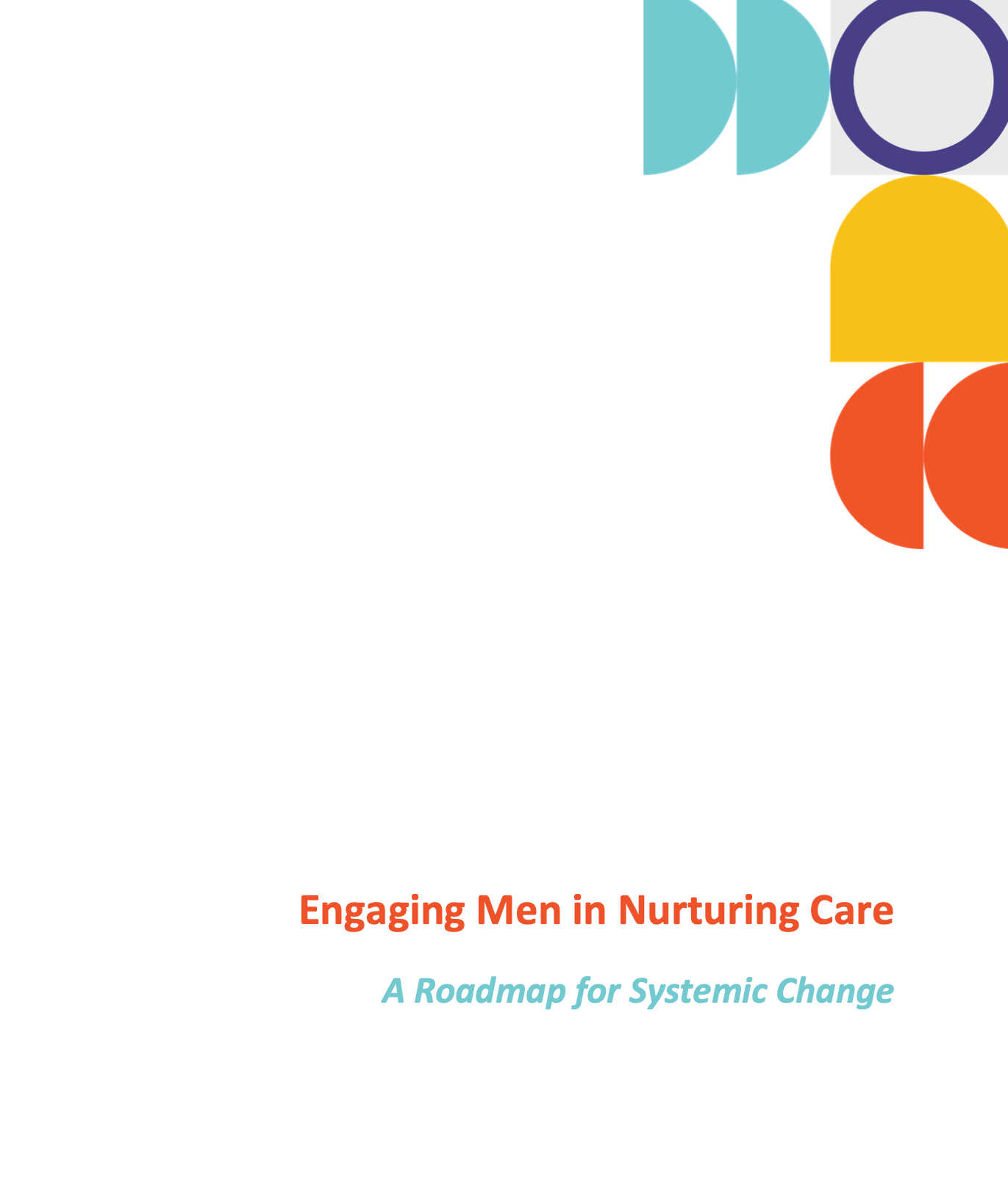
Engaging Men in Nurturing Care A Roadmap for Systemic Change
The Engaging Men in Nurturing Care: A Roadmap for Systemic Change provides a practical, evidence-informed framework for strengthening men’s and fathers’ involvement in early childhood care and development. Developed through the EMiNC initiative, the Roadmap responds to persistent gender inequalities in caregiving, where structural barriers—such as limited leave policies, workplace norms, and service design—continue to limit fathers’ participation. It highlights the critical role of engaged fatherhood in improving child development outcomes, supporting family well-being, and advancing gender equality across societies.
Grounded in a multi-level, systems-based approach, the Roadmap outlines how change can be driven simultaneously across policies, services, workplaces, communities, and public narratives. It offers actionable guidance for policymakers, practitioners, training institutions, and civil society actors to transform professional practices, engage fathers directly, adapt parenting programmes, and influence workplace and policy environments. Drawing on tested interventions from across Europe, it combines research, practical tools, and real-world examples to support context-specific adaptation and scaling.
Ultimately, the Roadmap positions father engagement not as a standalone issue, but as a key lever for systemic change. By promoting shared caregiving, challenging gender norms, and building strong cross-sector partnerships, it contributes to more inclusive, responsive early childhood systems. It calls for coordinated action across sectors to create the enabling conditions in which all caregivers can participate fully—ensuring better outcomes for children, families, and society as a whole.
Published in:
2026
Organization(s):
International Step by Step Association,
Language:
Soft Skills Toolbox
This Handbook is part of the Soft Skills Toolbox, a resource developed within the Erasmus+ project Soft Skills for High Quality Education (KA220-SCH-966C750C). The project brings together national leading organisations and partner kindergartens from Slovenia, Croatia, Slovakia, and Estonia, united by a shared commitment: to strengthen the quality of early childhood education and care (ECEC) through the professional development of those who lead it from within.
The Toolbox was created for you — leaders of Teacher Support Learning Groups (TSLGs). Whether you are a preschool teacher who facilitates a professional learning community in your kindergarten, a coordinator supporting colleagues in reflective practice, or a principal fostering a culture of continuous learning, this resource is designed to support your growth.
This Handbook serves two purposes. First, it provides the conceptual and theoretical foundation that underpins the Toolbox: how adults learn, why soft skills matter for professional learning, how learning communities can be effectively facilitated, and how trust and psychological safety enable meaningful professional dialogue. Second, it offers practical guidance on how to navigate and use the other components of the Toolbox — the videos, the reflective cards, the collection of practical activities and techniques, and the tips & tricks.
You do not need to read this Handbook from beginning to end before using the Toolbox. Think of it as a companion you can return to. Some readers will find it most useful before a new series of TSLG meetings; others will come back to specific sections when a particular challenge arises. Both approaches are valid. The handbook connects theory and practice and helps users understand not only what to do, but why these approaches matter.
Authors: Jerneja Jager, Mateja Režek, Educational Research Institute, Slovenia; Katarína Pániková, Erika Szabóová, Miroslav Sklenka, Wide Open School n.o./Škola Dokorán, Slovakia; Liivi Türbsal, Gerda Sillaste, Hea Algus, Estonia; Bojana Gotlin, Marina Matešić, Open Academy Step by Step, Croatia; Janja Zupančič
Published in:
2026
Language:
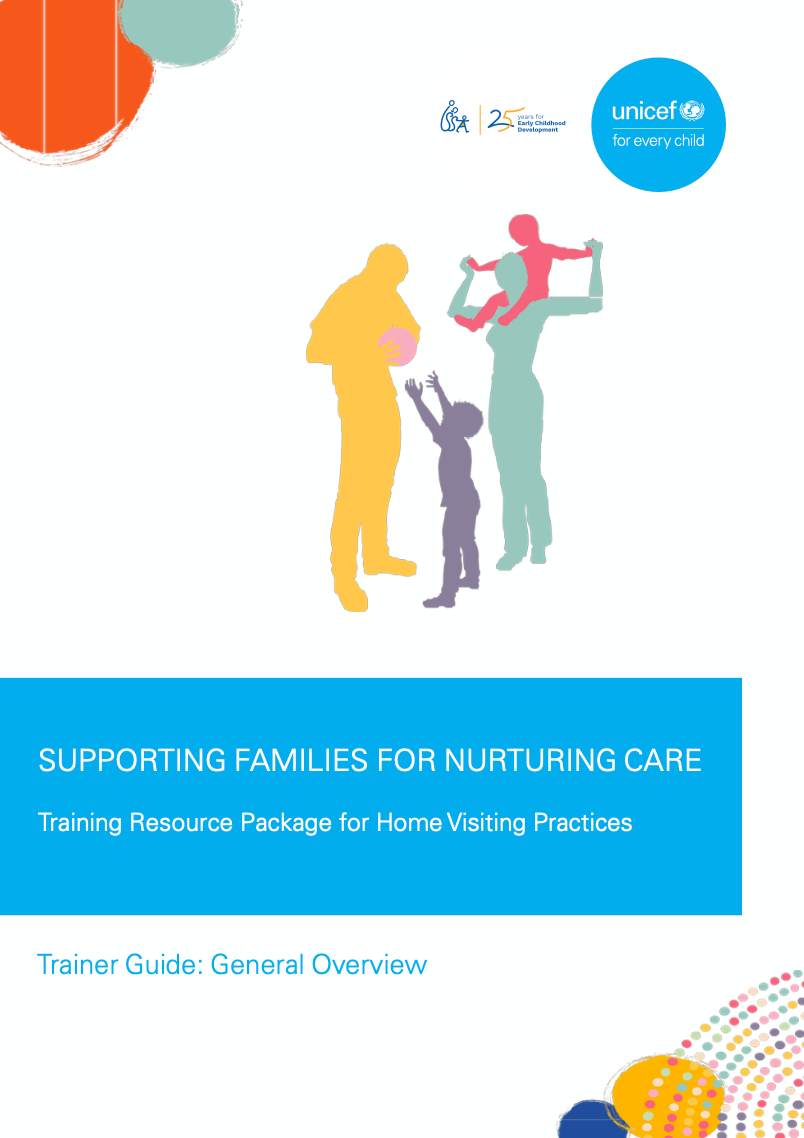
Supporting families for nurturing care: Training resource package for home visiting practices
This training package equips trainers of home visiting professionals with essential knowledge, skills, and tools to deliver consistent, high-quality pre-service and in-service training.
Developed by UNICEF ECARO and the International Step by Step Association (ISSA), it builds on almost ten years of collaboration and earlier home visiting modules (2017–2025). The goal is to strengthen home visiting as a key community health service supporting families from pregnancy to early childhood.
The package includes three guides: General Overview, Foundational Training, and Extended Training, each offering adaptable materials such as session plans, slides, and handouts based on nurturing and family-centered care.
It combines two main areas: (1) programmatic knowledge on child development, health, nutrition, and parental wellbeing, and (2) practical skills such as communication, relationship building, observation, problem-solving, and cultural responsiveness.
Grounded in adult learning principles, the training encourages reflection, peer learning, and practical application, fostering the professional growth of trainers and home visitors while improving the quality of home visiting services.
Trainer Guide: General Overview
Trainer Guide: Foundational Training
Day 1 PPT | PDF
Day 2 PPT | PDF
Day 3 PPT | PDF
Day 4 PPT | PDF
Day 5 PPT | PDF
Trainer Guide: Extended Training
Day 1 PPT | PDF
Day 2 PPT | PDF
Day 3 PPT | PDF
Published in:
2025
Organization(s):
ISSA, UNICEF ECARO
Language:
Contact:
Ayca Alayli, aalayli@issa.nl