Knowledge Hub
All the resources stored here have been created by ISSA Members
or ISSA Secretariat in partnership with Members or partners.


Supporting Development of Early Inclusive Education in Tbilisi Kindergartens
Supporting Development of Early Inclusive Education in Tbilisi Kindergartens is a project aiming to support development of early childhood inclusive education: 1) by empowering mainstream kindergarten teachers and specialists working in kindergartens through modelling, practicing and sharing experiences, 2) by training Tbilisi Kindergarten Management Agency monitors/advisory team in observing, assessing and monitoring skills, using service standards developed by UNICEF Georgia and 3) by developing and conducting university accredited certificated courses for kindergarten practitioners and future teachers.
In addition two kindergartens were transformed into training centres for placing students during practicums and served as models for best practice. The achievements in the project included the introduction of peer supervision in practice based trainings in Kindergarten centres and the creation of 2 6ECT university based courses on Early Inclusive Education. The courses are shared with other regional Universities. The project can be scaled up by increasing accessibility of professionals beyond the current two kindergarten centres.
Published in:

Step by Step ČR is helping Ukrainian children settle into Czech schools
Since the start of the war in Ukraine, more than 120,000 Ukrainian children have arrived in the Czech Republic. Step by Step ČR responded swiftly to this influx of Ukrainian families by hosting webinars in late March and early April, titled “We have new, Ukrainian classmates” in which they examined how Ukrainian children can be supported and included in their transition into Czech schools.
The webinars unpacked the impacts that the current situation is having on everyday life at school and offered guidance to teachers on how to work with the newly arrived children and their families. They also gave tips on encouraging students to cooperate, communicate, and learn from each other.
Plans for integrating Ukrainian children
Despite the swift response from NGO’s, Iveta Pásaková from Step by Step ČR says that, overall, the response from the government has been “uncoordinated and random”. The government is currently in the process of developing new rules and guidelines that will take effect at the start of the new school year. At this point, school attendance will become mandatory for all Ukrainian children.
In order to facilitate the smooth transition of Ukrainian children into Czech schools, Step by Step ČR has obtained a grant which will be used to train teaching assistants who will work with Ukrainian children in schools and kindergartens in the new school year. Currently, the organization is busy planning how these funds will be used.
What do Ukrainian parents and children need most right now?
Iveta says that, “What Ukrainian families need most right now is guidance and support in settling into their new environments.” For parents, it is essential that they receive help in applying for visas, looking for jobs, and finding schools for their children. Without first addressing these bureaucratic hurdles, settling into a new society will be even more challenging and complex.
"For children, it is important that they are included and received with empathy to help them process their traumatic experiences and re-establish a sense of normalcy. This is crucial to their development."
- Iveta Pásaková, Director, Step by Step ČR
Ultimately, Iveta says that the main priority of Step by Step ČR currently is influencing the school climate with the aim of supporting teachers as they try to facilitate cooperation between the families of Czech and Ukrainian children in order to avoid frustration on both sides. She adds that Step by Step ČR is actively traying to “encourage sympathy and receptivity for the needs of Ukrainian children”. However, the biggest challenge they are faced with at the moment is in developing strategies for effectively understanding and communicating with the children in another language.
You can offer financial support to the Association and other ISSA Members here.
Published in:

Services and policies on Early Childhood Intervention
Early Childhood Intervention (ECI) services focus on strengthening the capacities of the parents to support their child with developmental problems in daily routines. The natural environment is crucial for the best possible development of the child’s abilities and its inclusion in the education system. In this Lab, ISSA Members form a learning community, share good practices on both policy and practice levels and organize professional development opportunities for ECI service providers from their countries.
Co-hosted by the SOFT Tulip Foundation, the Netherlands and the For Our Children Foundation, Bulgaria, the Lab has provided important peer support to the participating five ISSA Member Organizations.
Published in:

Seasons greetings, best wishes, and many delicious recipes
Dear Members, Partners, and Friends,
As 2024 comes to a close, let’s take a moment to celebrate an extraordinary year! Together, we marked 25 years of ISSAand 30 years of Step by Step—a testament to decades of shared passion, commitment, and impact for young children and their families.
This year, we embraced fresh energy and bold changes. We began implementing our 2024–28 strategy, focused on stronger distributed leadership and shared ownership in our diverse, growing network, with the aim of furthering our collective impact. The long-awaited ISSA Conference brought us together for the first time in five years, inspiring connections and reaffirming our commitment to an early childhood ecosystem where all children can thrive.
Together, yet again we took great strides this year in advancing the Early Childhood Development field—through advocacy, knowledge-sharing, and capacity-building initiatives that promote quality practices and systemic change. Reflecting our momentum, we unveiled a vibrant branding refresh to carry us confidently into the next 25 years. It captures the spirit of who we are: a dynamic network dedicated to championing holistic and integrated systems, policies, and high-quality services for all young children. Throughout, we’ve also shown incredible resilience in the face of challenges, remaining steadfast in our mission.
As we look to 2025, exciting opportunities await us! We’ll continue to push boundaries, amplify our impact, and harness the new network tools such as the Members Room introduced this year to help members connect and collaborate more effectively.
But before we dive into the new year, let’s pause to celebrate and recharge. This holiday season, we invite you to explore a special cookbook we’ve compiled with recipes from each of the countries where we have members, featuring submissions from members and others we’ve sourced. We hope you’ll try some of these dishes as you gather with loved ones, sharing the warmth of good food and cherished company. May this season bring you peace, laughter, and inspiration to greet the year ahead with renewed energy and hope.
Thank you for being part of this incredible journey. Together, we are building a brighter, more equitable future for all young children—and we can’t wait to see what we’ll achieve next.
With festive cheer and gratitude,
The ISSA Network Hub
Published in:

The Road of Early Childhood to National Plans for Recovery and Resilience – a successful advocacy effort in Italy
COVID-19 pandemic is putting all countries in Europe under a hard test now: the ‘early childhood’ test, or in other words, the ‘long-term, visionary investment in the youngest generation’ test. While across the European Union, Member States are preparing and submitting their National Plans for Recovery and Resilience (NPRR), we are learning about different advocacy pathways and strategies undertaken by ISSA Members in their efforts to convince country politicians that there is no better way to address inequalities, the vicious circle of poverty and exclusion, unless we start from the very beginning: the early years. Recently, we have learned about the successful advocacy work carried out by our Member in Italy, the Centre for Child Health and Development (Centro per la salute del bambino) and their contribution to an important achievement: the Italian National Plan for Recovery and Resilience includes financial investment in early childhood services. Today we are talking to Director, Centre for Child Health and Development Giorgio Tamburlini about this achievement.
Giorgio, what is the history of and what was the main driver for this advocacy effort focused on bringing more public attention to and investment in early childhood?
Somewhere between May and June 2019 a small group of seven or eight people – mostly academics – met at the Department of Sociology of the University of Milan. The aim of the meeting was to start an alliance to advocate for children and families. I remember that we said we should advocate for children and for their families, but with a vision that does not put this investment in a possible contradiction with other investments. We all agreed that families need to be supported as well, not only through day care services. The home environment is extremely important, especially in the first three years of a child’s life, and we need to support families too, and not just those families that have very serious problems, but all the families.
We wanted to have a proposal that could fit well into a broader view of the country development. There were many disciplines represented in the core group – mostly from political science, sociology, education, statistics, demographics. I was the only one from the health sector at that time. From there we moved to establish an advocacy network, Alleanza per l’Infanzia (Alliance for Childhood), and writing a sort of Manifesto.
We said that the country had an extreme need to invest more in children and their families for a number of reasons – it’s an issue of rights, an issue of social and economic development, an issue of demographics and so on. We sent this Manifesto to a variety of entities. We discussed about involving the main trade unions and we agreed that they should be on board, as they represent an important constituency. We also addressed the main NGOs, from Save the Children to many others that may not be international, but nationally very well-known and some professional bodies representing educators, paediatricians, psychologists. We immediately gathered quite a few supporters around the Manifesto, and, by the end of October 2019, we gathered more than 12 organizational adhesions, including the main trade unions, which was quite important as they are representing millions of people.
We then had two meetings in Rome where we decided to develop a more elaborated version of the Manifesto and focus on three main directions. One direction regarded the cash transfers to families – the fiscal policy etc. In Italy, the situation of cash transfer was very fragmented. We asked for one comprehensive measure for all families with children up to 18 or 21 years. The second strategic direction was regarding the day care services for children aged from birth to 6, asking for increased access and affordability. The third direction was about the parental leave - for mothers and fathers, and particularly for the fathers because it was so marginal. We devoted specific seminars to the three thematic drivers so that gradually we started to define an articulated analysis and proposal for each of the three directions. Gradually, other partners joined us and now there are almost 30 of them.
We know that in Italy, back in 2015 an important decree which provided a legal framework for vertical integration in the early childhood education and care system for children from birth to 6 years of age passed. A great step for many early childhood systems. How does this advocacy effort build on an already important policy change?
Well, it is very important, because the decree provided the legal framework, but then you need to put money and the know-how to implement the policies, and that has not happened evenly across the country. For example, the access to day care for children aged under 3 in Italy, on average, is 25%. This is not acceptable; the number should be higher. There are enormous regional disparities between the Center, North and South, with the South being much more disadvantaged.
This is the important achievement that I see with the NPRR. It indicates the financial resources that are to be allocated to make the policy work across the country. Secondly, the integration between birth to 3 and 3 to 6 services has to be built on models and mechanisms. In the 50 pages report which we submitted in collaboration with another network focusing on Education to the Parliament, there are also some detailed suggestions about who should lead the process, what should be the role of the municipalities or the regions and what kind of personnel they should hire, what should be their qualification, what is the typology of their contracts and so on. All these issues are absolutely crucial. One of the last steps was to indicate very clearly that this vertical integration within the education system should also have a component of horizontal integration with the social and health sectors. This is one of the Centre for Child Health and Development’s specific area of interest. We mainly deal with the health sector and we are increasingly working with the education, the social and the cultural (libraries, museums) sectors.
From the outside the work of the Alliance appears to be a great achievement. Do you also see it as an achievement talking into consideration all the work done?
The first achievement is the fact that we have created the Alliance for Childhood itself, that it is there. The second achievement is the fact that through this Alliance we started to work quite closely with parliamentarians. In mid-2020, an interparty group devoted to infancy was formed between the main parties representing the majority from the past government. We started having quite frequent meetings between parliamentarians and the members of the Alliance, thus strong supporters inside the Parliament.
Was this interparty group created because of the lobby that the alliance has made or was there an intrinsic motivation from the politicians’ side to do it?
I think it was both, and maybe more the second. There are two parliamentarians who have been particularly active: one is a leader of the Paediatrician Association, the other one a former Save the Children officer, so they both have a whole professional history focusing on childhood behind them. We still are having meetings together. At the end, based on our work they produced a document that was ultimately presented in a Parliament on April 14th and it passed. The final text reflected all the key points that were made in our well documented proposal. The Parliamentary passed motion led to having in the NPRR provisions regarding early childhood education services with an allocated budget of 4.6 billion euros, and other substantial investments for social cohesion programmes and services, particularly for vulnerable families and disadvantaged areas. The NPRR was approved by the Italian Parliament on April 28 and sent to the European Commission.
Please tell us more about the important steps that you undertook from having a Manifesto to developing a well-documented report ‘Investing in early childhood’ that led to a Parliamentary motion. What were the discussions and how this worked out in the Alliance itself? Because I suppose that it was kind of a joint work that was put together, right?
Yes, absolutely. I should mention a few things. First, that the initial group included at least three or four people that are very well-known and have a high professional reputation. Besides, since the beginning, the idea was to produce something very solid: a good articulated documented with very precise proposals. The document was prepared by dividing us in working groups. I was for example in the working group that was looking at the services for early childhood and parents. Each working group had a wide participation from different actors, including the technical secretariats of the trade unions that were taking care of the of the aspects regarding the personnel, which was very important. I think that each section had about 20 to 25 different people representing different constituencies working on it.
Was the Alliance created only for persuading Government to allocate funds in the early childhood and to provide guidance on spending to state actors? Or was the Alliance going to be also a watchdog who observes and monitors how the policy will be implemented based on the funds allocated?
I don't think we are capable of monitoring every step in the way, it would require a lot more human resources than we have. The watchdog for the time being is on the political process. However, equally important is that the report we produced is a powerful source of inspiration for the local administrators and local actors, even beyond the legislation and any political process. There are clear directions there regarding the know-how. For example, a municipality may decide that they would like to do something in a specific direction with the resources they have and with the partners they found the locally. They could get enough insight regarding a framework for action from our report.
I could say that several parts of the documents could be applicable even without major additional resources because it talks about integration and things that you can do even with very little money. Certainly, we need a robust injection of money, particularly for expanding the day care offer. It’s an infrastructure issue, although the main cost is the personnel. It is an investment. You invest in young people, in female employment, in the South. Thus, all three requisites are met. But we have two concerns. The first is that the parties typically would like to put more money there where there is an immediate political gain, such as the cash transfer, and less where the gain takes more time. The second risk is the fact that investments in early childhood compete with other kinds of investment such as industry, technology, energy, communication, etc. which have very powerful lobbies behind.
Is the document that you developed public, can be accessed by local and regional actors?
Yes, it is published on the websites of the different organisations in Italy (see www.csbonlus.org and www.allenazinfanzia.it), and it has been presented publicly in a series of webinars. It has an executive summary in English.
Would you say that you are optimistic about the future?
The approval of the NPRR with a section devoted to children and a specific budget allocation is something that we would have not expected just a year ago. I don't know whether in the near future we will really achieve what we would like to, or less, but we will know that over the next 3-4 years. It should be stressed that it is not only a matter of policy development and resource allocation. A lot will depend on the capacity of the Government, of the regional and municipal administrations to implement the NPRR.
What would be the indicator for saying that this is a big success?
Besides the success represented by having a specific section in the NPRR devoted to the importance of investing in children, the main success is that we have now resources particularly allocated for ECEC services, though they are less than what we asked for.
What would be the advice is that you would give to other ISSA Members who are embarking on advocacy?
Two main pillars: one is the strong civil society engagement and representation which should not be limited to the usual champions – the experts that usually speak. We managed to do this with a strong support from the trade unions and the big NGOs. The second, I would say, is the engagement of parliamentarians. You have to build a strong link with whoever you think is necessary for your case. I would personally suggest having the professional associations on your side. Usually, paediatricians are not very powerful, but some of them are usually well-known in the country. Local administrations (regional and municipal) have a big role too and they should be highly involved at the local level.
How do you think that your organisation has benefited from this effort?
Our organisation benefited because we got a better positioning on the national arena. This is due to two main things. One is our contribution to Alliance and to the parliamentarian work. Another one is because of what we are doing in the field. We are recognised as an organization that has the feet on the ground country-wide and therefore a relevant expertise when it comes to implementation.
Published in:

Quality Principles for Continuous Professional Development Educators
The PIQET Principles represent a groundbreaking initiative under the Erasmus+ project, designed to elevate the standard of Continuous Professional Development (CPD) for educators across diverse educational landscapes. Authored by a consortium including the Educational Research Institute in Slovenia, Open Academy Step by Step in Croatia, and the International Step by Step Association, this resource articulates a set of nine comprehensive principles aimed at refining the recruitment, training, and ongoing support of CPD educators. These principles are meticulously crafted to address the core needs of educator development, emphasizing subject expertise, diversity and inclusion, participant-centered planning, and continuous self-improvement among others.
Rooted in the values of social justice, equity, and inclusion, the PIQET Principles serve as both a policy framework and a hands-on tool, offering quality statements, indicators, and reflective questions to guide CPD educators in enhancing their practice. This document not only aims to foster a shared understanding of CPD quality across educational institutions but also encourages active contribution and professional engagement within the CPD community, setting a new benchmark for educator professional development globally.
Published in:

Psychological First Aid Training Guards Children’s Safety in Trostianets, Ukraine
Not a single kindergarten was open in the city of Trostianets that is in Sumy oblast in Ukraine in May of 2022. The community had suffered significant destruction of infrastructure, schools, kindergartens, and community residents' homes because of the war in Ukraine. Three kindergartens opened only at the beginning of June 2022 and one kindergarten in September 2022. Substantial funds were needed for their restoration. In collaboration with War Child Holland, ISSA supported the provision of furniture, toys, meals and stationery for children's activities in these kindergartens. However, these needs have not disappeared. It is still necessary to restore or build new houses, schools, and kindergartens. The war continues, and children’s safety remains a priority.
“Residents who were abroad or in western Ukraine are gradually returning to the community, creating a new need to attract more children to kindergarten,” says Olena Hloba, consultant of the Ukrainian Step by Step Foundation and project expert of Reform Support Team at the Ministry of Education and Science of Ukraine. “Therefore, it is necessary to restore kindergartens or create working conditions in those kindergartens – repair group rooms, purchase furniture, bedding, dishes, washing machines, kitchen appliances, build/reconstruct bomb shelters, etc. At the same time, there is a need to overcome trauma and restore the emotional and psychosocial well-being of young children and families. We need to teach parents to help themselves and their children.”
Twenty-seven teachers in Trostianets have already received training in PFA. Among those trained are preschool educators, special needs teachers, and representatives of the education department. Educators gained practical skills in physical and breathing practices for self-regulation. They learned how to create a safe space in a group room, on the street, or in a bomb shelter; how to facilitate children's play, especially when children want to play war all the time; how to talk and initiate conversations with children; how to communicate with parents, how adults have changed and what to pay attention to during communication.
When Ukraine experienced major electricity cut-offs from October 2022 to January 2023, teachers started exchanging “ideas in the dark” – how to keep children busy when it is dark. Individual drawing kits were purchased, and children could draw with a small flashlight. Teachers also instructed parents on how to perform learning and healing activities with their children at home and how to play with them in the darkness.
“We can see that after receiving the training, preschool teachers became more confident in their actions. They are not afraid to make decisions, they know how to calm children and parents down,” continues Olena Hloba. “Children also became less anxious, and their parents became more aware of their needs and reactions, and started to consult with educators, which was not observed for many years. As to the training that we had, I can say that the materials such as the Training Guide created by ISSA, Amna and War Child Holland are well developed, and the trainers did a perfect job in adapting the materials to the needs of our ECD professionals and practitioners on the ground. Besides, the Peer Learning Exchange Sessions hosted by ISSA, during which teams of trainers coming from different countries shared their experiences about the adaptation and implementation of the training at the country level, were also very useful for us.”
-----------
A partnership between ISSA, War Child Holland and Ukrainian Step by Step Foundation (amongst other ISSA Members) provided trainings on Psychological First Aid (PFA) to a 10 master trainers who gave subsequent trainings for teachers in Ukraine. These trainers are now providing subsequent training to ECD professionals and practitioners on the ground in a cascade model that aims to benefit thousands of young children, parents and caregivers all over the country.
Published in:

Playful Parenting Series | Navigating Digital Play: A Fun Guide for Safe, Responsible, and Beneficial Screen Time for Kids
In today's digital age, children are growing up surrounded by technology. Screens are everywhere, and they're here to stay. For parents, teachers, and caregivers, this can feel like riding a rollercoaster. How can we ensure that screen time is a fun yet positive experience for our kids? How can we turn digital play into something safe, beneficial, and responsible? This guide will help you navigate the digital landscape with confidence, making sure that screen time boosts learning and development while keeping things safe and balanced.
Digital play refers to any play activity that involves digital technology. This can include a wide range of activities, such as playing video games, using educational apps, watching videos, or interacting with digital toys. It's important to recognize that digital play is not inherently bad; it can offer numerous benefits when used appropriately.
Making Screen Time Beneficial
Not all screen time is created equal! Here’s how to make digital play both fun and beneficial:
- Choose High-Quality Content: Pick apps, games, and shows that are educational and interactive. Look for content that sparks problem-solving, creativity, and critical thinking.
- Engage Together: Dive into screen activities with your child. Watching and playing together can turn screen time into an opportunity for bonding and learning. Chat about what you see and do, ask questions, and connect the content to real-life experiences.
- Set Clear Boundaries: Make rules about when and where screens can be used. Create screen-free zones, like bedrooms and dining areas, to encourage other activities and family interactions.
- Model Healthy Habits: Kids learn by watching you! Show them balanced and mindful use of digital devices. Let them see that screens are tools, not toys, and prioritize face-to-face interactions.
Addressing Parental Concerns
We get it—parents worry about how screen time affects their kids’ health and development. Let’s tackle these concerns head-on with some simple tips:
- Sleep Tight: Too much screen time, especially before bed, can mess with sleep. Encourage a bedtime routine that includes screen-free time before hitting the hay.
- Social Butterflies: Little ones learn best through direct interactions with caregivers and friends. Make sure screen time doesn’t replace valuable face-to-face communication.
- Stay Active: Balance screen activities with plenty of physical play. Encourage breaks and active playtime to support overall health and development.
Leveraging Digital Play for Learning
Digital play can be a goldmine for learning! Here’s how to make the most of digital tools for educational purposes:
- Interactive Learning Apps: Use educational apps that boost literacy, numeracy, and problem-solving skills. Interactive apps that need active participation can be more engaging and beneficial than just watching videos.
- Creative Expression and Active Participation: Encourage your child to use digital tools for creative activities like drawing, making music, and storytelling. Choose interactive games and activities that require thinking and problem-solving rather than passive consumption like watching videos
- Connection with Real-World Activities: Find ways to connect what your child is doing digitally with real-world experiences. For example, if they enjoy building virtual structures in a game, encourage them to build something with blocks.
A Healthy Balance of Screen Time with Physical Activity
The World Health Organization (WHO, 2019) also recommends that kids under two should have no screen time, and those aged two to five should have no more than one hour per day. The secret sauce to healthy screen use is balance. Mix screen time with plenty of physical activity and other kinds of play. Fun activities like reading, storytelling, puzzles, and games can provide rich experiences that help develop fine motor skills, cognitive abilities, language, and social-emotional skills.
Supporting Parents, Educators, and Caregivers
Supporting children in their digital play requires a collaborative effort between parents, educators, and caregivers. Here are some tips to help you work together effectively:
- Communicate Openly: Keep the lines of communication open between parents, teachers, and caregivers. Share information about what digital tools and activities children are using and discuss any concerns or observations.
- Provide Guidance and Support: Offer guidance on choosing appropriate digital content and setting boundaries for screen time. Support each other in reinforcing these guidelines at home and in educational settings.
- Stay Informed: Stay up to date with the latest research and trends in digital play. Attend workshops, read articles, and participate in discussions to ensure you are informed about the benefits and risks associated with digital play.
Special Considerations for Young Children
For the tiniest tots, screen time needs to be handled with extra care. Research shows that young children learn best through hands-on experiences and interactions with their caregivers. Here’s some advice for this age group:
Guidelines for Infants (0-18 months)
- Avoid Screen Time: The American Academy of Pediatrics recommends avoiding screen time for infants, except for video chatting with family members, which can be beneficial for social development.
- Focus on Real-World Interactions: At this stage, the most important interactions are those that happen in the real world. Engaging in face-to-face play, talking, singing, and reading to your infant are vital for their development.
Guidelines for Toddlers (18-24 months)
- Introduce High-Quality Digital Content: If you choose to introduce screen time, ensure it is high-quality, educational content. Apps and programs should be interactive and encourage participation.
- Co-View and Co-Play: Watch and play with your child to help them understand what they are seeing and doing. This co-engagement can enhance learning and make the experience more meaningful.
Guidelines for Preschoolers (2-5 years)
- Limit Screen Time: Limit screen time to no more than one hour per day of high-quality programming. Ensure that digital play does not replace physical activity, sleep, or other important activities.
- Choose Educational and Interactive Content: Select apps and games that are educational and promote active engagement. Avoid passive consumption like non-interactive videos.
- Encourage Creative and Active Play: Choose digital activities that encourage creativity, such as drawing apps, music creation, and storytelling games. Balance screen time with plenty of physical play and outdoor activities.
- Discuss Digital Content: Talk to your child about what they are doing and learning from digital play. Ask questions and encourage them to think critically about the content.
To sum up: Informed choices help promote positive outcomes in digital play
By engaging with your kids, choosing high-quality content, setting clear boundaries, and modelling healthy habits, you can ensure that digital play enhances learning and development while keeping things safe and balanced.
References
Scott, F. L. (2021). Digital Technology and Play in Early Childhood. The School of Education, Faculty of Social Sciences, The University of Sheffield. Retrieved from https://www.child-encyclopedia.com/pdf/expert/technology-early-childhood-education/according-experts/digital-technology-and-play-early-childhood
UNICEF. (2022). Digital technology and play: Implications for child well-being. Retrieved from /mnt/data/UNICEF-RITEC-Digital-technology-play-child-wellbeing-2022.pdf.
UNICEF. (2024). Rights of the child and digital technology: Towards a comprehensive approach. Retrieved from https://www.unicef.org/innocenti/media/8056/file/UNICEF-Innocenti-RITEC-P2-report-2024.pdf.pdf
UNICEF, International Step by Step Association. (2023). Heatly weight: physical activity and sedentary time. Module 20. Supporting Families for Nururing Care. Retrieved from: https://www.issa.nl/Module-20-healthy-weight-physical-activity-and-sedentary-time
World Health Organization (2019). To grow up healthy, children need to sit less and play more. Retrieved from: https://www.who.int/news/item/24-04-2019-to-grow-up-healthy-children-need-to-sit-less-and-play-more
In partnership with LEGO Foundation and UNICEF, ISSA is committed to protecting children's right to play. Together, we are supporting parents and caregivers to engage in Playful Parenting.
Published in:

Play Hubs: nonformal ECEC supporting young Ukrainian children in Slovakia and Hungary
From February 2022, 8 million Ukrainian refugees were registered across Europe. The vast majority has arrived in Poland, Romania, Moldova, Hungary, Slovakia, and Czech Republic. Forty percent of these refugees are children, who have witnessed distressing events and are experiencing anxiety and unhappiness that could develop into long-term mental health difficulties.
It is difficult to retrieve official statistics about Ukrainian refugees by age, but according to a report published by UNHCR in February 2023, an estimated 26% of Ukrainian refugees are between zero and 10 years old, with an equal distribution of boys and girls.
Integrating Ukrainian refugees into national systems is proving to be challenging for smaller European countries, such as Slovakia and Hungary, especially when it comes to ensuring that refugee children have access to education. According to the same UNHCR report, in Slovakia and Hungary, approximately 40% of Ukrainian refugee households with (pre)school-aged children have at least one child not registered for education in the hosting country. The reasons for not enrolling in education within the host country vary from preferring online education in Ukrainian (63%), to the lack of space in schools (15%), to language barriers (13%), to the belief that they will only stay in the hosting country for a very limited time (7%).
Providing safe, welcoming, multi-service spaces for these children and their caregivers is crucial to promote their psychosocial well-being and ensure their access to education, health, and protection services, as well as to increase their chances to integrate in their hosting countries.
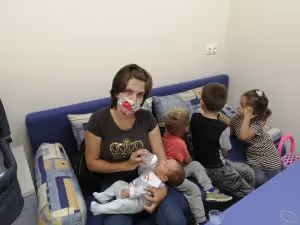
Since July 2022, ICDI and the national coordinators of the TOY for Inclusion program in Slovakia, Škola dokorán, and in Hungary, Partner Hungary Foundation, have been providing support to young Ukrainian refugee children and caregivers through play and learning opportunities. All three organizations are long-standing ISSA Members.
In Slovakia, thanks to UNICEF’s support, partners were able to open six new Play Hubs in 2022 and four more will open their doors in 2023 alongside a mobile Play Hub supported by EPIM.
In Hungary, a mobile Play Hub will reach underserved communities starting in the Spring 2023 (also supported by EPIM), and 12 Play Hubs will be established in cooperation with War Child.
In 2023, ICDI will open the first Play Hub in Ukraine, in Kyiv, in cooperation with Labour and Health Social Initiatives – LHSI.
The TOY for Inclusion Play Hubs are community-based inclusive non formal educational spaces for young children and families. In the Play Hubs relationships between young children and families from all backgrounds are built through playing together, borrowing toys, connecting services and sharing information about childrearing, health, early learning and development.
The Play Hubs offer safe and welcoming spaces for internally displaced children and families, where they:
- socialize and make new friends,
- learn the local language,
- express emotions, and process traumatic experiences,
- get to know their new community,
- be introduced to education and other services,
- get specialized support in different areas through direct referral: education, health, housing, employment, etc.
In January 2023, ICDI published two new resources for practitioners working in formal and nonformal ECEC services who want to promote the psychosocial well-being and integration of young refugee children and their caregivers:
- the ‘Play for Inclusion’ Handbook, which provides important background theory on the effects of war, displacement and trauma on child development and well-being, the concept of community-based child-friendly spaces in emergencies and an easy-to-use selection of simple activities that can be organized in Play Hubs and other non-formal and informal education settings involving children and caregivers. (Available in English and Slovak, and soon also in Ukrainian and Hungarian)
- the “Mobile Play Hub Operating Guidelines”, intended for organizations wishing to set up and run Mobile Play Hubs for children aged birth to 10 years old and make (outdoor) play more accessible to children of all ages. This resource also comprises of a set of Activity Cards that provide inspiration for outdoor play. (Available in English and soon also in Slovak, Hungarian, and Ukrainian).
The experiences of those working in Slovakia and Hungary have been rich and provide inspirational insights into the impact the TOY for Inclusion approach can make. The teams from Slovakia and Hungary share their expriences below.
Play and Learning Hubs in Slovakia
Play and Learning Hubs for Slovak and Ukrainian children have been implemented in Slovakia as a part of the UNICEF humanitarian response since July 2022. This intervention has evolved from a first humanitarian response to a more targeted long-term response focusing on integration and inclusion.
The project is implemented by Škola dokorán - Wide Open School n.o., with the aim of strengthening understanding and cooperation between people from different cultures, as well as supporting an approach based on social cohesion, where all members of local communities, including refugees, share services and have equal access to activities and workshops.
In coordination with the participating municipalities, our organization has established Play and Learning Hubs and mobilized local communities to provide quality and inclusive learning opportunities for children aged zero to 10 years and their caregivers. The Hubs are located in six municipalities in Slovak Republic – Žilina, Prešov, Košice, Tatranská Lomnica, Poprad, Spišská Nová Ves. These locations have been identified in a prior needs analysis, and on average, the Hubs reach more than 5,000 beneficiaries per month.
Four more Play and Learning Hubs and several mobile Play Hubs will be established in 2023.
What exactly do we do in the Play and Learning Hubs?
- We play and learn together. We strengthen relationships between children, parents and grandparents through joint activities based not just on common interests, but also on topics and issues of concern to both children and adults.
- We read together. We do not take reading literacy lightly! As well as promoting reading skills, we also work to develop reading comprehension and language skills of children. We also work very diligently to build children's love of books and stories.
- We stay healthy and strong together. We place great emphasis on the physical and mental health of children and adults. Human closeness, shared activities outdoors and indoors are healing for individuals, and help us build community and supportive relationships.
We also provide capacity building and training opportunities for teachers, professionals, assistants, and others who care for children in the Hubs.
One of the challenges we faced early on was the lack of data and information. Given the constantly changing situation in Ukraine, we had to be very flexible and adapt our activities and interventions “as we went”. The group of children and adults who are our target group is very diverse — as are their needs, limitations, expectations, etc. However, all situations we have faced have taught us a lot and we are now able to offer tailor-made services for everyone entering our Hubs.
The implementation of this project has taught us to respond very flexibly to the needs of children and adults. We see that psychosocial support is extremely important for people who have experienced adverse circumstances. For this reason, we provided psychosocial support trainings to our staff, and we cooperate frequently with psychologists. In all our activities, we keep in mind that it is essential to create an environment (both in terms of physical space and atmosphere) for activities where children and adults feel safe, comfortable and like to return. We also realized that connecting Ukrainians and other people from the community and involving all of them in common activities is important for the well-being of Ukrainian children and adults, fostering their sense of belonging and building strong foundations of social cohesion in the community and the whole society.
It is amazing for us to see how Slovak children help Ukrainian children, how they play with them and try to get along without using any language, or using all the languages they speak at once. What is even more beautiful for us is to see situations when you cannot determine where a child is from because they all laugh and have fun in the same way and all feel equally accepted and involved in the activities.
We are very happy that we are already seeing Ukrainian families "putting down roots". Many families have already started to build relationships with people (other Ukrainians, Slovakians or other nationalities), in the workplace, the Play Hubs, schools, kindergartens and neighborhoods where they live.
Play Hubs in Hungary
When the war broke out, thousands of Hungarians — individuals, civil society organizations, companies, large humanitarian organizations, and municipalities — immediately started to help. They did this mostly by providing food, accommodation, and other kinds of humanitarian aid.
All our staff at Partners Hungary also started to help in some ways, as individuals. One colleague went to the border to help, while another went to the Keleti railway station to distribute food, and another volunteered at a temporary shelter for refugees.
As an organization we needed some time to understand the situation until we could intervene in a strategic way. We realized that we were not very experienced in providing humanitarian aid, and there were a lot of other organizations and individuals more capable than us to offer this kind of support. So, we started to look at our strengths and how they could be put in use in this situation.
We realized that Hungary is in a special situation regarding the Ukraine response, as the refugees are not refugees in legal terms. While those entering Hungary are fleeing the war, and they are disadvantaged not only because of the war. Most of the Ukrainians staying in Hungary belong to the Hungarian minority in Ukraine, and most of them are Roma by ethnic background. Some have Hungarian citizenship according to a law introduced in 2011. Most of them are children and women coming from the Transcarpathian region hoping to have a safer and better life in Hungary.
We knew that the Play Hubs we established in that past four years in cooperation with ICDI, and other civil society organizations in the region, were providing safe environments for Roma and non-Roma children and families to play, and access services. Every Play Hub offered tailor-made support and programs based on the needs that were identified by the Local Action Team, composed of the professionals who work for the children and families across sectors (education, health, and social services).
It became obvious that our Play Hubs be our strongest response for Ukrainian children as well. Based on this analysis, we took different steps in this direction.
In October 2022, we partnered with ICDI and Skola Dokoran and are going to open the first Mobile Play Hub in Hungary in the Spring 2023.
At the end 2022, we started cooperating with War Child, and in the course of 2023, we will establish 12 new Play Hubs all over Hungary to serve all the children in local communities with special focus on the Ukrainian children for whom play can be a tool to heal their trauma and stress caused by the war.
We have also realized in our extensive experience working with and supporting Roma, that through their lens it was very unfair that “other Roma” – coming from Ukraine – were receiving free food, accommodation and clothes, while those who has been living in Hungary for hundreds of years still suffered from many forms of discrimination - in the labor market, housing and education - and many of them suffer from deep poverty as well. This double standard is leading to more prejudice and tension in Hungary. We believed that Partners Hungary could try to mitigate the risks. Our approach of intercultural mediation seemed like a fitting solution for bringing the local Roma and the newcomers together and helping them identify their joint interest in advocating for themselves. We will train 12 mediators in six locations to form their joint community action teams and bring the interested stakeholders together to find the solutions for their problems and implement local projects.
While thinking and planning our strategy and analyzing the needs, we started to see the situation as an opportunity to build more cohesive communities. We believe that by persuading municipalities of the benefits of inclusion, not only in the case of the refugees but for everyone, and the need to provide better services for all, we can increase everyone’s resiliency and provide better life quality for all.
We always find that we need to deepen our knowledge and need to learn new things when we step into a new field. While getting into the work with the Ukrainian refugees, we realized that we did not know enough about the consequences of a war on children’s and adults’ well-being, so we found the way to learn more on the nature of trauma and stress and how to create a safe environment for children and families to heal and being able to reorganize their lives. This knowledge is very important for all those professionals who are working with children. Now we have started to spread this knowledge through trainings and workshops all over Hungary.
Authors:
Giulia Cortellesi, Co-Director of International Child Development Initiatives
Erika Szaboova, Communications Manager of Škola dokorán - Wide Open School n.o.
Éva Deák, Executive Director of Partners Hungary Foundation
Photos Courtesy of Škola dokorán - Wide Open School n.o.
Published in:

For Our Children has Published “Bulgaria Grows with its Children” Study
Recent European studies show that quality of education and care in the early childhood depends on the presence of a professional and competent workforce. As part of their research on early childhood development, ISSA Member, For Our Children Foundation has conducted a study which focuses on professionals working with young children and their families in the health, education and social systems in Bulgaria.
The research study, Bulgaria grows with its children: Building professional competences of the early childhood workforce, was carried out in 2020 by a team of For Our Children Foundation with the support of the Active Citizens Fund of Bulgaria.
The topic of people working directly with children and families in the health, education and social work stands out when looking for sustainable solutions to challenges faced in early childhood care and education. More and more, European policies highlight the importance of education, motivation and support for the workforce. This topic is even more important in Bulgaria given the workforce shortage in these sectors as well as the low indicators of reach of healthcare, early childhood education and care, and social protection to children.
With this in mind, the goal of ‘Bulgaria grows with its children’ is to outline the main directions for improvement of the professionalisation of the early years workforce, as well as to formulate recommendations for policy development in this area.
The report outlines policies and measures aimed at the development of the workforce, including initial education, professional development and working conditions, as well as presents data from the experience of 461 specialists working directly with children and families.
The research among professionals working with children reveals the need for targeted measures to upgrade the competencies of professionals, both in their initial education and continuing professional development. With regard to working conditions, the study shows that professionals who are dedicated to the care, health, education and development of children deserve to work in an environment that supports their professional development and provides secure and motivating working conditions. Their knowledge, skills and competences are key for the wellbeing of the children and hence for preparing a strong future of the nation. It is of particular importance that state policies should ensure the necessary knowledge, skills and competencies of the workforce as well as dignified working conditions. This is the enabling environment for professionals to work in partnership with parents and help them cope with difficulties in the upbringing and development of their children.
One of the main conclusions of the research team is that the lack of a comprehensive, consolidated vision for investment in early childhood development, as a key to our prosperity as a society, has a negative impact on the quality of education and care for young children. It concludes with a call for an integrated modern early childhood development policy with clearly defined roles and responsibilities of the various stakeholders and a strategic plan for the provision of quality and accessible services by a motivated and competent workforce.
Published in:

Online learning support to Roma children in grades I to IV of primary school
Responding to the COVID-19 crisis in Serbia, the Group for Children and Youth INDIGO, developed a noteworthy practice aiming at providing on-line learning support to Roma children enrolled in grades I to IV at the “Sreten Mladenovic Mika” Primary School. The learning support is provided three times a week, for three hours. One educator, one mediator and five volunteers work with 49 children (each person has seven children maximum in his/her group).
Before starting the provision of the on-line support, Indigo assessed the situation of the children and their families. The parents were involved in designing the support. The school was also involved by providing the information on the involvement of the children in the on-line learning provided by the school. As a result, we developed the instructions for the educator and volunteers, detailing the on-line learning and psychosocial support, having in mind the changed circumstances, the new challenges the families may face and difficulties in providing the basic sustenance for the children. Furthermore, we worked on the instructions having in mind that the volunteers are students in various fields such as psychology, pedagogy, history, social work, etc.
The educator and each volunteer established good communication with schoolteachers and they cooperates and acted together on including the children in on-line learning and providing the on-line learning support.
The schoolteachers included the educator, mediator and volunteers in Viber groups and other on-line learning platforms, so that they can follow the assignments and activities of the children in the learning process. The on-line learning support is organized individually or in groups via Messenger, Viber, Skype. The educator and volunteers support children in doing homework and other school related activities. When a child finishes homework, s/he sends the photo of the homework to the volunteer. The child and the volunteer check the homework together, abefore the child sends it to the school teacher.
The project coordinator and the supervisor are at the disposal of the volunteers and the educator for providing supervisory support, whereas they also provide psychosocial support to the children and parents, if the mediator, educator or volunteers decided that such support is needed.
The educators and volunteers report on the implemented activities with the children, as well as on their emotional state and family situation (in case it affects the learning process). They also report on the communication with the school teachers. The supervisor and the project coordinator provide advice and suggestions and they also plan the future steps in the work with each child, together with the educator and volunteers.
At the beginning, some staff members had problems to establish the “new” routine with the children. Some children were not at home during the support time and a lot of time was spent on getting used to a new schedule, new ways of communication and new ‘requirements’ by the school teachers. In order to overcome some difficulties, especially those related to using the devices and learning applications, we engaged two young people who live in the same settlement as the children and they now act as assistants to both the children and the staff members. As the time passes by, the on-line support to children is getting better and more productive.
Published in:

The Novi Sad Intersectorial Network for Children - NSMEDE
Novi Sad Intersectorial Network for Children (NSMEDE) is a local inter-sectorial network aiming to provide a strategic and systematic framework for improving the position of children in Novi Sad. Through the establishment of a flexible model of inter-sectorial cooperation among actors at the local level, the practice works to develop an optimal environment for the development of all children. Activities are tailored to the specific needs of children in the community. The Network merges members' resources into an integrated, structured system of cooperation. This system benefits the local community and creates conditions for peer education and exchange.
Published in:

My Green Childcare Booklet
A number of childcare facilities (children under 3 years of age) of the City of Ghent incorporated sustainability and ‘green principles’ in their pedagogical vision and daily practice, engaging children, parents, community and the care team. Each of our childcare centers works from a well-defined, holistic pedagogical vision, focusing on total wellbeing and involvement of children and their environment. The so-called ‘profiled centers’ elaborate a specific aspect of this vision. The “Green childcare centers” look for different ways to bring children in contact with nature and to bring nature into their childcare. To support this, each child gets its own ‘GREEN BOOKLET’: a personalized notebook with a series of ‘green’ activities each child should experience before the age of 3, such as walking barefoot on grass or sand, play with water, dance in the rain, stare at clouds, make mud cakes, smell flowers, watch a bug, help to prepare and eat natural healthy foods… Whenever a child does any of these activities for the first time, it’s indicated in his green booklet, if possible with a picture of the child enjoying this activity and personal notes of the childcare team, such as when did the child do this, how did he experiment, enjoy the activity….
It stimulates the care team to ensure that each child (as an individual and member of the group) is offered a varied scale of green and sustainable experiences. Nature offers a wide range of materials stimulating children’s phantasy, creativity and senses. The goal is that each child does each of the ‘green’ activities at least once before he leaves childcare. The booklet is used as a tool to talk with the team, children and parents about what the kids do, focusing on the green and total development and wellbeing of each child. The practitioners start participation with observing children in a natural environment. Children’s language development is stimulated by telling and sharing the stories of their discoveries. The care team and parents can discuss the child’s development, wellbeing and the integration of green principles in the child’s education. And most of all, the Green booklet is a valued souvenir for children and parents when they say goodbye to the childcare. The green booklet was first designed by Childcare center, De Bubbels, and further developed and implemented by the “Green colleague group”, consisting of the coordinators of all green childcare centers and a pedagogical coach of the City of Ghent. The booklet can be easily adapted to any child and any environment a childcare center works in.
Published in:

Mektebim (My School)
Mektebim is a women-led, child-centred, community-based, inclusive preschool business.
Our mission
To provide the sustainable community-based and inclusive Early Childhood Education (ECE) services for all children, including those who do not have the chance to study, due to location, disability, or poverty, through empowering and engagement of local women to entrepreneurship in preschool education business.
Mektebim program
- Plays an important role in improving of socio-economic situation in the country by creating job opportunities for women. It empowers women to manage and sustain inclusive preschool services independently, turning preschool into a profitable business for them.
- Creates inclusive preschool education opportunities and equal participation in society for all children aged 2-6 years who do not have access to alternative services, including who are typically excluded from mainstream society due to location, poverty and disability.
The Program addresses below mentioned target groups from the low-income rural areas:
- Children, including those with disabilities.
- Women - entrepreneurs
- Community/parents
Currently Mektebim supports 24 active Mektebim schools in Azerbaijan in the following cities and regions: Baku, Sumgayit, Absheron, Gandja, Haciqabul, Lankaran, Shirvan, Zaqatala, Neftchala.
To ensure the sustainability of the program, we organise capacity building and awareness raising activities to empower women entrepreneurs who run Mektebim groups and strengthen their abilities to market their business in local communities. Right after joining Mektebim, our team provides selected women with preschool assets; training packages on preschool pedagogy and management, and the “Mektebim” brand name. the “Mektebim” brand name offers advantages such as a child-oriented preschool program, a single preschool design, and a country-wide PR. In later stages, women engage in Membership activities such as regular meetings, training, and conferences.
Mektebim is inspired by Step by Step approach and Azerbaijani Government National Curriculum for their program. All the kids can participate in the classes together to improve their creativity, critical and logical thinking, communication skills etc. to get fully ready for the school life later. Mektebim also involves parents in order to keep them updated about their child’s development and work together to achieve the best experience for the children.
Our supporters are:
- United Aid For Azerbaijan (UAFA)
- ShokkiMokki
- Azerbaijan Public Employment Agency
- Small and Medium Business Development Agency of the Republic of Azerbaijan
- Xoşbəxt Sabahlar (happy Mornings) TV Show
Watch a video about the program here.
Published in:

The MANDELA model for Early Childhood Education and Care
The MANDELA model for Early Childhood Education and Care is a framework to place inclusivity at the heart of practice with babies, children, and families. It recognises the importance of relationships and belonging and ensuring environments reflect this. It also acknowledges that if we change the start of the journey, we can change educational outcomes for children that can impact across their life course.
The MANDELA way is not about prescription it is about FREEDOM and the workbook uses the word MANDELA to frame questions to enable a deeper understanding of practice to emerge, develop developmental plans and then embed a practice that is constantly evolving:
- Make Time– to really understand the community that uses the setting-staff, children, families. Use this information to shape different conversations, develop relationships, co-construct action plans and ensure they are enacted.
Acknowledge- is about striving for inclusivity in all we do through acknowledging our Needs, Differences, Education, Life experiences and Age. - Needs – what are the different needs of those using the setting, remembering people have the right not to share. How can you ensure the setting in inclusive of all needs? How do staff know and feel their needs are being addressed? How do parents and carers know their child’s needs will be met?
- Difference – this is about recognising we are all different. How do I know I am safe in you setting? Do you see me? Do you value who #I am?
- Education Experiences- acknowledging previous education experiences, providing training and further development of staff. Supporting parents and carers develop their knowledge about child development.
- Life Experience – our journey are all different, how to we value these and how do we create safe environments for people to use and work. How do we ensure are staff are safe practitioners? How does the setting value family diversity and the different experiences of the children using the setting?
- Age -how does the setting value people of different ages. What is its approach to intergenerational sharing? Does it know how age is viewed in different culture?
To learn more about the MANDELA Model, listen to this podcast episode with Dr Prospera Tedam who developed the Model, and Professor Eunice Lumsden who designed the Unique Childhoods Workbook. In the episode, they discuss these tools and how they can be used to support connection and build trust, deepening our anti-discriminatory practice and bringing about change in early childhood education.
Published in:

Learning Together
The Learning Together project has created a network of 15 Centres for Peer Support, which provide a platform for mutual learning across institutions. This platform provides peer support across eight kindergartens and eight primary schools to help improve the competences of teachers, create practice-based resources for staff, and organize internships for educators.
The project produced video samples to monitor the process of creating such peer support programs and developed spaces to share experiences among colleagues and further professional development. The project helps teachers systematically reflect on their own work and receive direct support tailored to the conditions in which they work.
Published in:

Learning Centers Network
The Learning Centers Network initiated by Balkan Sunflowers connects 40 Learning Centers managed by different NGOs in Albania. These centers include preschool services, curriculum support, literacy and science programs, and an education mediator targeting the most vulnerable children and their families. The mediator works with schools and families to ensure children's school enrolment. Due to these efforts, 93% of the eligible children from the areas where centers are and mediators work enroll in the first grade fo school.
The Planned Activities for Cohesive Education (PACE) program has been implemented throgh the centers since 2015 and it was designed alongside national curriculum to provide children with the competencies needed to thrive in school. In addition to the academic support provided at these Learning Centers, they also act as community hubs where volunteers are able to get involved. Other activities provided by the Learning Centers include: School Preparatory and Language Programs (ages 5-7), Summer Programs, Women's Literacy Programs, Networking Programs.
Published in:

New Flemish ECEC Magazine is Launched by the ISSA Member
ISSA Member VBJK is launching the new Flemish magazine on ECEC Kindertijd (which means ‘childhood’ in Dutch). The first issue of the magazine will be published in the fall of 2021. That means that VBJK will end the collaboration with the Dutch magazine KIDDO in June.
“Childcare and education in Flanders and The Netherlands are becoming more and more different worlds, so it is difficult to make a mutual magazine for both countries. That is why we have started the new Flemish magazine Kindertijd – a word with a lot of positive connotations, because who does not like to look back at his or her own childhood?” says Wouter Bulckaert, editor in chief of the new magazine, and communications officer of VBJK. “The new magazine will be more interesting for Flemish readers, because it is focused entirely on ECEC in Flanders. In Kindertijd we will cover good practices and new trends in ECEC. The magazine will show what happens on-the-job, without shying away from larger in-depth articles about new ECEC research and policy.”
Kindertijd will be a magazine aimed and made by ECEC professionals: people who work with young children, mainly in pre-school and after-school childcare, but also in kindergarten. Kindertijd will inform, inspire and innovate. The magazine aims to strengthen and appreciate ECEC professionals in an accessible, connecting and positive way.