Knowledge Hub
All the resources stored here have been created by ISSA Members
or ISSA Secretariat in partnership with Members or partners.



Associazione 21 Luglio Brings a Mobile Play Hub to Community Meeting Spots in Rome
TOY for Inclusion Play Hubs give children a save, welcoming place to interact, play and spend quality time with other children and adults. As part of their work to fight educational poverty and create growth opportunities from a young age, Associazione 21 Luglio formed two Play Hubs in the suburb of Tor Bella Monaca in Rome for children aged zero to three years and their families.
While one of the Play Hubs sits inside the former headquarters of Associazione 21 Luglio, the other is a mobile trolley. In 2021, their mobile Play Hub began traveling around the neighborhood for the first time.
It was positioned on the Piazza Castano square in Rome, where the community welcomed the mobile Play Hub and its Toy Library with great interest and curiosity.
Read more about the activities of the mobile Play Hub and how they are fostering community connection, here.
Published in:
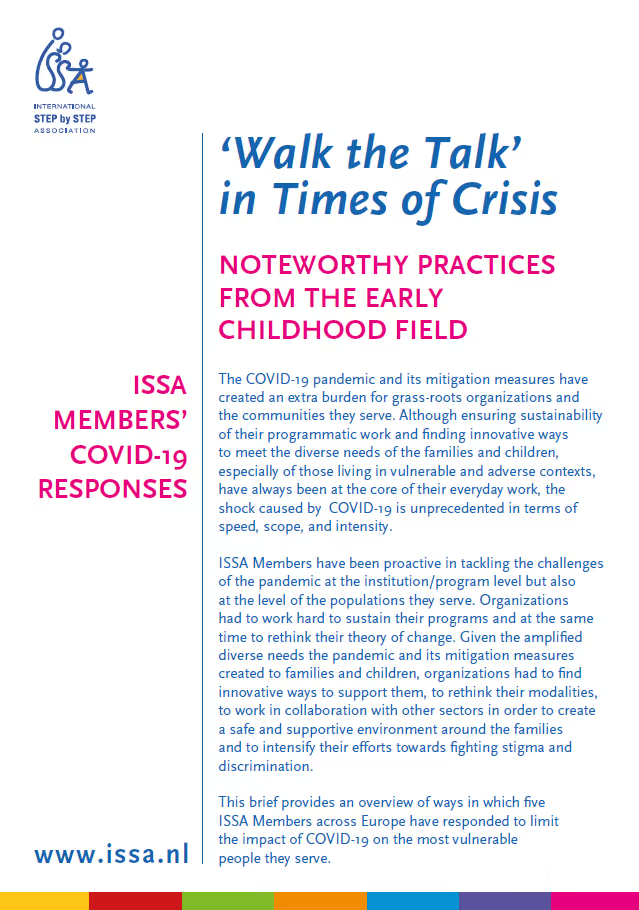
‘Walk the Talk’ in Times of Crisis: Noteworthy Practices from ISSA Members
The COVID-19 pandemic has brought many unprecedented challenges for grassroots organizations and the communities they serve, especially those living in vulnerable and adverse context. The shock caused by this crisis is incomparable in terms of speed, scope, and intensity.
As part of our efforts to better understand the impact of the COVID-19 pandemic and contribute to the learning in the early childhood development field, ISSA has reached out to its Members across Europe to consolidate and synthesize evidence on interventions or services that they have developed as a response to the COVID-19 to support children, parents and caregivers.
Drawing on ISSA Members’ input, we have synthesized a set of noteworthy practices and put together an overview of ways in which five ISSA Members have responded to alleviate the impact and challenges created by COVID-19 on the most vulnerable people they serve. We invite you to read, download and share ISSA’s brief “‘Walk the Talk’ in Times of Crisis: Noteworthy practices from the early childhood field – ISSA Members’ COVID-19 responses”.
Would you like to know more about how ISSA Members have responded to the COVID-19 pandemic and the wide range of resources they have created? Click here.
Published in:
"Tell me"
A combilation of videos addressed to families and ECD professionals, that aim at explaining the developmental stages of the child and how we can support children's holistic development and autonomy.
Learn more about Ensemble for Early Childhood Education on the website, Facebook, Twitter and Youtube. Follow #EduEnsemble on social media to see more posts.
Published in:
Organization(s):
Ensemble for Early Childhood Education
Language:
Contact:
Aurelia Rabe, aurelia.rabe@eduensemble.org
Systemic approach
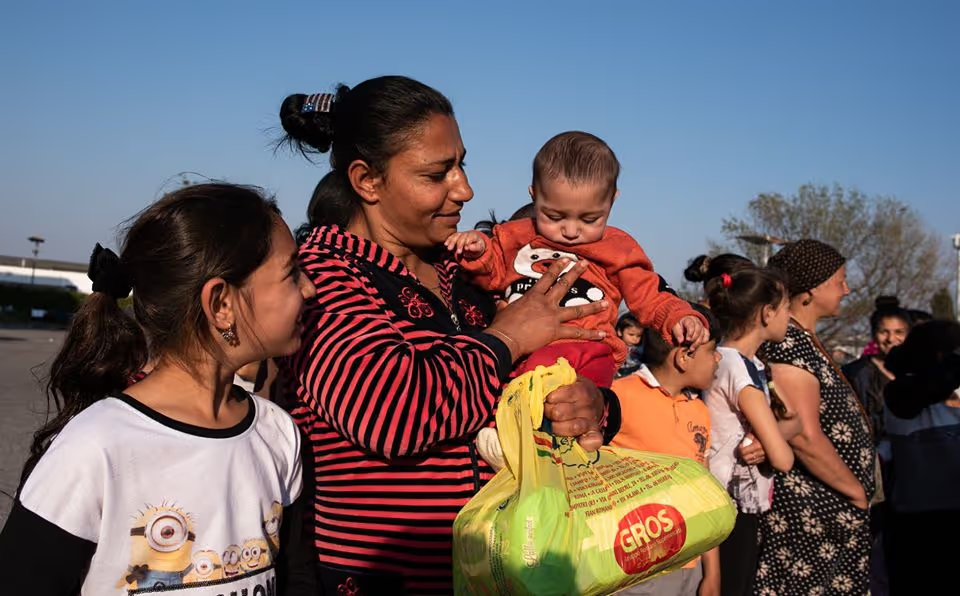
During the COVID-19 pandemic, food deprivation of households with young children has emerged as a priority among priorities.
Associazione 21 luglio applied the following method:
1) selecting five formal monoethnic settlements of special emergency housing;
2) carrying out a survey by telephone that highlighted the malnutrition of many children, particularly infants and young children;
3) designing a food aid program for three settlements (Castel Romano, Salone and Tor Cervara) which, in the study, was reported as the most disadvantaged contexts in Rome and for one of the most poor neighborhood in Rome (Tor Bella Monaca);
4) thinking to an operational strategy post-covid-19 to empower women and children.
The concrete intervention is focused on:
a. the fight against food deprivation for children 0 to 3 years old. The methodological elements that characterized this action were:
- personalizing the intervention (face-to-face interview with all the mothers to find out their specific needs and drew up a list of around 250 beneficiaries – 200 from the villages, 50 from the neighborhood);
- designing a typology composed of 5 types of baby packs, differentiated according to the size of the baby and the dietary needs for baby food and semolina, and according to the need or not for powdered milk;
- giving a personalized card to the mothers to pick up their personal package every week.
b. To overcome stereotypes and stigmatization of Roma communities:
- the request for help emphasize the dimension of food deprivation of children 0/3 years old and not ethnicity, according to a principle of our association. However, we underline the fact that these are children living in “slums”.
c. In addition to the food delivering we implemented some relational and political actions:
- we have created whatsapp groups through which we keep in touch with mothers to give them advice, listen to their discomforts, bring relief, send activities to do with their children;
- we have activated a service that allows to listen to fairy tales in Italian and Romanes (Romani chib): "Tales on the phone";
- we have provided children with some internet access so that they can connect to platforms designed by schools;
- we help the children to do their homework with remote volunteer support and the use of mobile phones;
- we periodically send to all 3-6 aged children attending a school of the neighborhood videos where a psychologist and a Roma paraprofessional read a story that can help them to process the lockdown period;
- we have reinforced the pressure and advocacy aspects with an appeal to Mayor Virginia Raggi and Prefect Pantalone for urgent measures to protect the right to health and school continuity.
d. Planning of sustainability interventions
- through our website, we have launched an appeal to the citizens of Rome to buy the products needed for baby parcels. We have favored the purchase of foodstuffs and consumer goods rather than sending money by bank transfer, convinced that this would strengthen solidarity;
- we asked additional funds to Foundations who support us in different projects.
The systemic approach has led to:
1. Research #IStayCamp. Health Conditions, Food Deprivation and Solidarity Problems in the First Days of Lockdown in the Roma Villages of Rome by Carlo Stasolla and Tommaso Vitale.
Quoting the research:
“During the lockdown we made the following urgent public policy recommendations:
• To map the conditions of greatest fragility within shantytowns and deprived public shelters with the aim of guaranteeing the distribution of basic necessities, particularly to minors and the elderly.
• To guarantee adequate sanitary conditions within each individual shantytown, primarily by rapidly ensuring access to drinking water.
• To ensure the presence of health workers and cultural mediators within the settlements who can carry out an information campaign aimed at illustrating the prevention measures recommended by health authorities and distributing personal protective equipment to inhabitants.
• To strengthen and coordinate a network of volunteers (Roma included) in order to monitor the hygienic and health conditions of those living in the shantytowns and to orient people with symptoms.
• To promote measures to safeguard the right to distance learning for students living in slums.
• To coordinate support and food supply actions for the needy, especially for babies and toddlers aged 0 to 3 years.
• To systematically listen to people living in shantytowns in order to understand their needs in a precise way, and to enhance and mobilize their skills, with precise reports that allow for concreteness and timeliness.
• To prepare in advance an adequate and timely intervention plan in case of a COVID-19 contagion within a village.”
2. During the lockdown we made 5 videos addressed to around 200 children attending a pre-primary school located in the disadvantaged neighborhood of Tor Bella Monaca. The videos represent a continuum of an emotional literacy intervention started two years ago in the school. There was one video sent every week until the end of June.
3. One video was made on the goods stored in the community center "Polo Ex Fienile" that we manage in the area of Rome, Tor Bella Monaca. The parcels are packed there once a week on Saturday mornings in the open air in the garden of the community center by a group of well-spaced volunteers (divided into five groups, one for each type of baby food aid-package), in order to give maximum visibility to the preparation of the parcels.
4. Ten fairy tales told in Italian and eight of them translated in Romani languages.
Photo by Fabio Moscatelli
Published in:
Organization(s):
Associazione 21 luglio; many individuals, organizations and institutions collaborated to implement all the activities in this systemic approach
Language:
Contact:
Francesca Petrucci, educazione@21luglio.org
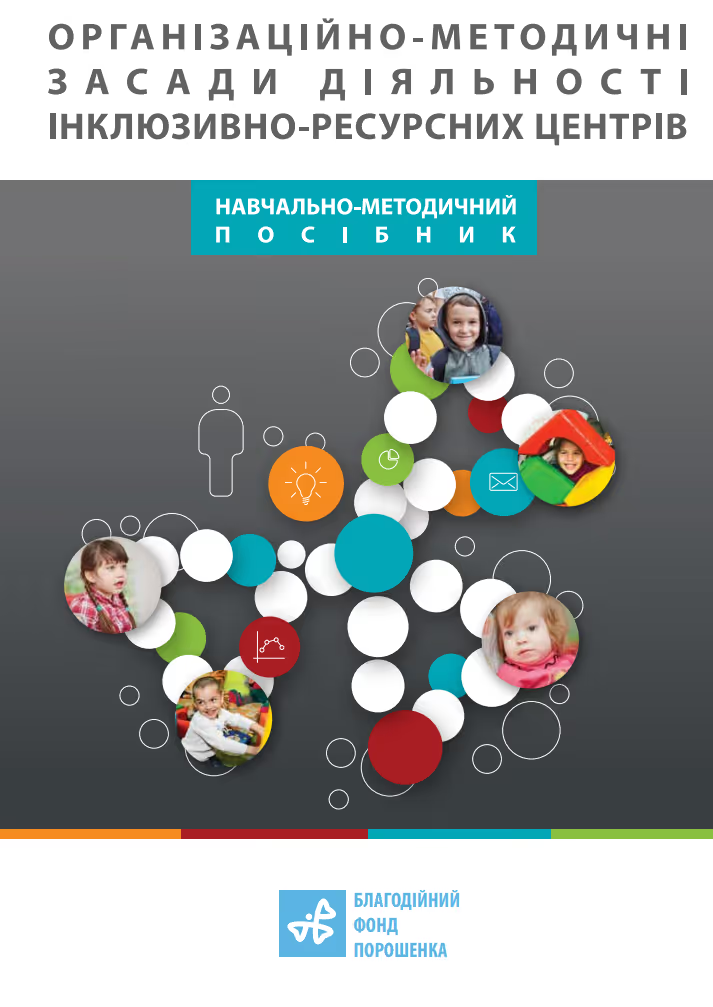
Organizational-Methodological Grounds of Inclusive Resource Centers' Activities
The purpose of this manual is to equip members of Inclusive Resource Centers (IRC), parents of children with special needs, schools and other institutions dealing with the issues of inclusive education, providing special support to children with special needs with necessary practical information. The main issues the manual addresses are the following: the concept of inclusive education as a rights based approach, introduction of International Classification of Functioning (ICF) as a tool to identify necessary support for children with special needs, organizational aspects of IRCs` activities, how to conduct complex assessment of children with special needs, role of the parents and ways of cooperation with families of children with special needs.
This resource will be very useful for policy makers who develop the system of support to children with special needs and their families in the context of inclusive education, for educators and parents, other community members.
The following issues make the resource innovative and inspiring: internationally agreed definition of inclusive education as a provision of additional support to children with special needs within inclusive educational environment, new approaches to assessment of children with special needs to identify their strengths and additional needs rather than problems.
IRCs are community-based institutions created to provide the right of children with special needs to quality education, in particular:
• complex assessment of children with special needs aged from 2-18 years to identify children`s strengths and special needs;
• methodological support to inclusive pre-schools, primary and secondary schools on providing quality educational services to children with special needs within inclusive educational environment (necessary accommodations, modifications, proper organization of educational environment based on the principles of universal design and reasonable accommodations);
• consultative support to parents of children with special needs;
• coordination of services in local communities.
Published in:
Organization(s):
Ukrainian Step by Step Foundation
Language:
Contact:
Natalia Sofiy, nsofiy@gmail.com

Informing and guiding the development of a Framework to Strengthen the Capacity of “Tipat Halav” nurses in Israel
Informing and guiding the development of a Framework to Strengthen the Capacity of “Tipat Halav” nurses in Israel is a qualitative research study on behalf of Goshen Institute, with the overall objective to generate in-depth data that unveil effective processes and strategies which need to be in place in order to achieve a practice-change among Parent and Child Health ("Tipat Halav") nurses in Israel. Specifically, the study, which is part of a larger initiative pursued by Bernard Van Leer Foundation, the Rothschild Foundation Foundation and Israel’s Ministry of Health, aimed at mapping:
- the strategies and processes that need to be in place in order to successfully achieve a practice-change among nurses in working with parents;
- the common elements among successful programs;
- the barriers and challenges in program implementation.
Interviews with 9 training providers and practitioners from across 6 countries, highlighted the complexity of the field and of nurses’ role and revealed the necessary knowledge, skills and attributes that effective nurses should possess. In addition, the interviews revealed the key challenges faced by the profession, the professionals and the training programs, as well as the success factors and recommendations about how challenges can be tackled. Research results highlight that practice-change is inseparably linked to the system in which practitioners operate and that in order for practice change to be achieved it is important to recognize the importance of the field as well as the uniqueness of this field. Thus, interviewees highlighted the need to focus on the social aspects of health and move beyond hospital-oriented practices and theory as well as the need for more innovative, practice-based approaches and experiential learning and for common standards of practice and common standards among training providers.
button[src="https://cdn.prod.website-files.com/694724257114b734f4bb749a/6985ce922886276ab5b3bd70_Report%20-%20Goshen%20Institute.pdf"][label="Download"]Published in:
Language:
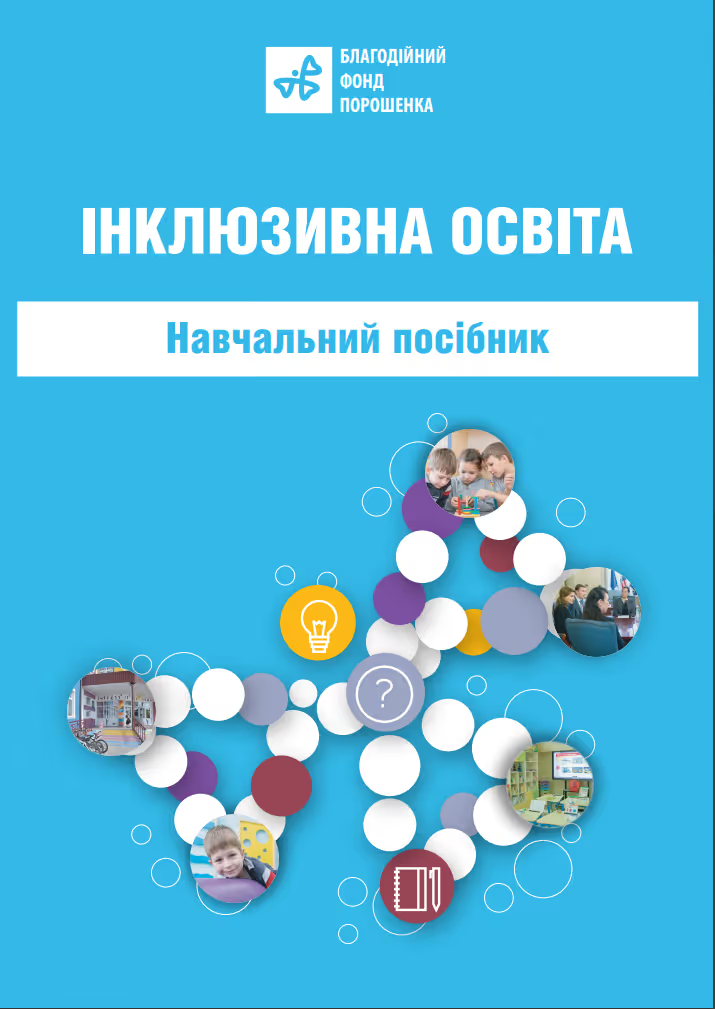
Inclusive Education
The manual “Inclusive Education” describes the conceptual principles of inclusive education, international and national legislation in a field of inclusive education, experience of inclusive education implementing in other countries, public-state governance of inclusive education. The special emphasis is put on the education of children with special needs in the system of general education. The manual is also aimed to provide practical information for teachers working in the inclusive educational environment. The manual includes glossary, practical tasks for experienced and future teachers.
The main purpose of the resource is to equip teacher trainers working in the pre-service and in-service teacher training institutes, other organizations with necessary information, practical recommendations and examples of activities they can conduct in the process of teachers` training and professional development.
The main issues, which are addressed by the manual, are the following: the concept of inclusive education, its objectives and main principles; the system of governance of inclusive education, including characteristics of the schools for children with special needs; introduction of International Classification of Functioning (ICF) as an instrument to identify additional support needs; universal design in education; psychological-pedagogical support of children with special needs within educational inclusive environment; individual educational program (IEP) and assessment in inclusive classrooms.
This is very useful resource for those who work with teachers in the system of pre-service and in-service teachers` training. In addition to useful theoretical information, it provides the examples of the tasks teachers can implement during the training activities and out of the training rooms. The following issues make this resource innovative and inspiring: introduction of inclusive education in the wider context of its understanding based on rights based approach, considering strengths of every child, his/her additional needs to provide equal access to quality education to every child.
button[src="http://poroshenko.com/data/group/21/site2-bff4eba3e5.pdf"][label="Download"]Published in:
Organization(s):
Ukrainian Step by Step Foundation
Language:
Contact:
Natalia Sofiy, nsofiy@gmail.com
Handout for Persona Doll - for practitioners
This handout presents in brief the Persona Dolls methodology and provides a brief and concise overview of how we can create a doll with personality, the main rules for making the dolls, the steps that need to be taken in advance, the main phases of a persona dolls session and some story examples that practitioners can use.
Note: for everyone interested in the persona dolls methodology, it is advisable to undertake a training prior using the methodology.
Published in:
Organization(s):
Partners Hungary Foundation
Language:
Contact:
Zsuzsa László, laszlozsuzsa01@gmail.com
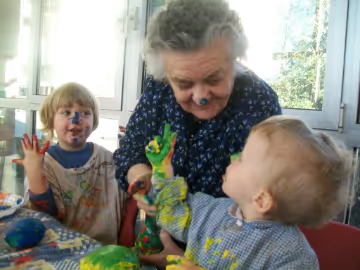
Together Old and Young
The purpose of the Together Old and Young (TOY) Programme is to promote intergenerational learning and to create new possibilities for older adults and young children to learn together and benefit from each others’ company. People are living longer but older adults and young children are having less and less contact with each other. Parents and grandchildren are migrating to cities and countries far away from grandparents. For many grandparents, it is also sometimes difficult to keep in touch with grandchildren. Other reasons for the lack of contact between old and young is that in many countries, older adults are living in senior citizen homes where they rarely see children and many young children are spending their days with their own age group in day care centres, pre-schools and schools.
The TOY Programme originated in the EU funded TOY Project (2012-2014) which took place in seven countries: Ireland, Italy, Slovenia, Spain, the Netherlands, Poland and Portugal. The TOY Project was unique amongst European intergenerational learning projects with its explicit focus on children in the early childhood years – birth to 8 years. The Project brought together the two ends of the lifelong learning spectrum - early childhood education and activities for older adults. In collaboration with universities, NGOs and municipalities documented and supported learning initiatives involving young children and older adults in Europe were researched. These initiatives took place in libraries, arts and cultural centres, community gardens, pre-schools and schools.
The TOY Project demonstrated clear benefits of learning together for both young children and older adults and for communities at large including: mutual understanding, improved feelings of wellbeing, decreased loneliness and satisfaction from sharing knowledge and experience with children and enhanced social cohesion. To be able to spread this valuable approach International Child development Initiative (ICDI) is: advocating at national and international level about the need to enhance the interaction between young children and older adults when developing policies for lifelong learning; developing accessible professional development tools and training with the intention that the TOY approach will be recognized and validated in adult education, and in pre-service and continuing professional development of practitioners; promoting IGL activities in disadvantaged and segregated communities and providing information, resources and links to research about intergenerational learning worldwide involving young children and older adults.
Published in:
Organization(s):
International Child Development Initiatives ICDI
Language:
Contact:
Margaret Kernan, margaret@icdi.nl

University Based in-service Training in Early Education
University based in-service training in early childhood education (ECE) is an in-service programme for early childhood educators accredited by Ilia State University. In this program educators of children three to six year are trained in evidence based contemporary ECE practice. Courses include child development, child centred practices, holistic approach, ECE curriculums and methodology, physical environment, observation and assessment, social and emotional development, principles and practices of inclusive education, and advocacy.
The programme is implemented by experienced trainers and lecturers from Ilia State University and includes a practical component, including in-service supervision and coaching from mentors at Ilia. Post training monitoring and evaluation visits have documented the establishment of child centred and inclusive practices in most classrooms. To date, the programme has worked with over 300 educators, but has been limited in its scope due to its affordability for the participants and limited numbers of participants in ach study stream. It is scalable if additional funding sources could be accessed including those from the kindergartens, centres and kindergarten management agencies.
Published in:
Organization(s):
Center for Preschool and Inclusive Education, Ilia State University, Georgia
Language:
Contact:
Khatuna Dolidze, khatuna.dolidze.1@iliauni.edu.ge
Supporting the Early Development of Children in Informal Roma Settlements
The practice Supporting the early development of children in informal Roma settlements aims to improve the social inclusion of children aged birth to six and their families. The Know How Centre organizes activities aimed at enriching Roma parents' skills living in settlements to provide quality opportunities for their children to develop and learn and at enhancing the competencies of professionals working with young children.
This practice includes a component of direct outreach in communities and provides supervision to outreach workers. Additionally, inclusive workshops are held for children and their families, and both preparation and material support are provided for children attending preschool programs.
Published in:
Organization(s):
Know How Centre
Language:
Contact:
Milenka Matic, cpzvns@gmail.com
Supporting Development of Early Inclusive Education in Tbilisi Kindergartens
Supporting Development of Early Inclusive Education in Tbilisi Kindergartens is a project aiming to support development of early childhood inclusive education: 1) by empowering mainstream kindergarten teachers and specialists working in kindergartens through modelling, practicing and sharing experiences, 2) by training Tbilisi Kindergarten Management Agency monitors/advisory team in observing, assessing and monitoring skills, using service standards developed by UNICEF Georgia and 3) by developing and conducting university accredited certificated courses for kindergarten practitioners and future teachers.
In addition two kindergartens were transformed into training centres for placing students during practicums and served as models for best practice. The achievements in the project included the introduction of peer supervision in practice based trainings in Kindergarten centres and the creation of 2 6ECT university based courses on Early Inclusive Education. The courses are shared with other regional Universities. The project can be scaled up by increasing accessibility of professionals beyond the current two kindergarten centres.
Published in:
Organization(s):
Center for Preschool and Inclusive Education, Ilia State University, Georgia
Language:
Contact:
Khatuna Dolidze, khatuna.dolidze.1@iliauni.edu.ge
Online learning support to Roma children in grades I to IV of primary school
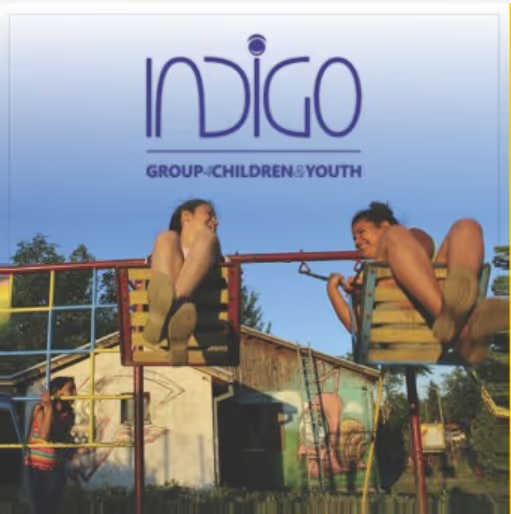
Responding to the COVID-19 crisis in Serbia, the Group for Children and Youth INDIGO, developed a noteworthy practice aiming at providing on-line learning support to Roma children enrolled in grades I to IV at the “Sreten Mladenovic Mika” Primary School. The learning support is provided three times a week, for three hours. One educator, one mediator and five volunteers work with 49 children (each person has seven children maximum in his/her group).Before starting the provision of the on-line support, Indigo assessed the situation of the children and their families. The parents were involved in designing the support.
The school was also involved by providing the information on the involvement of the children in the on-line learning provided by the school. As a result, we developed the instructions for the educator and volunteers, detailing the on-line learning and psychosocial support, having in mind the changed circumstances, the new challenges the families may face and difficulties in providing the basic sustenance for the children. Furthermore, we worked on the instructions having in mind that the volunteers are students in various fields such as psychology, pedagogy, history, social work, etc.The educator and each volunteer established good communication with schoolteachers and they cooperates and acted together on including the children in on-line learning and providing the on-line learning support.The schoolteachers included the educator, mediator and volunteers in Viber groups and other on-line learning platforms, so that they can follow the assignments and activities of the children in the learning process.
The on-line learning support is organized individually or in groups via Messenger, Viber, Skype. The educator and volunteers support children in doing homework and other school related activities. When a child finishes homework, s/he sends the photo of the homework to the volunteer. The child and the volunteer check the homework together, abefore the child sends it to the school teacher.The project coordinator and the supervisor are at the disposal of the volunteers and the educator for providing supervisory support, whereas they also provide psychosocial support to the children and parents, if the mediator, educator or volunteers decided that such support is needed.
The educators and volunteers report on the implemented activities with the children, as well as on their emotional state and family situation (in case it affects the learning process). They also report on the communication with the school teachers.
The supervisor and the project coordinator provide advice and suggestions and they also plan the future steps in the work with each child, together with the educator and volunteers.At the beginning, some staff members had problems to establish the “new” routine with the children. Some children were not at home during the support time and a lot of time was spent on getting used to a new schedule, new ways of communication and new ‘requirements’ by the school teachers. In order to overcome some difficulties, especially those related to using the devices and learning applications, we engaged two young people who live in the same settlement as the children and they now act as assistants to both the children and the staff members. As the time passes by, the on-line support to children is getting better and more productive.
Published in:
The Novi Sad Intersectorial Network for Children - NSMEDE
Novi Sad Intersectorial Network for Children (NSMEDE) is a local inter-sectorial network aiming to provide a strategic and systematic framework for improving the position of children in Novi Sad. Through the establishment of a flexible model of inter-sectorial cooperation among actors at the local level, the practice works to develop an optimal environment for the development of all children. Activities are tailored to the specific needs of children in the community. The Network merges members' resources into an integrated, structured system of cooperation. This system benefits the local community and creates conditions for peer education and exchange.
Published in:
Organization(s):
Know How Centre
Language:
Contact:
Tatjana Lazor Obradović, tatjana.lazor@gmail.com

Learning Centers Network
The Learning Centers Network initiated by Balkan Sunflowers connects 40 Learning Centers managed by different NGOs in Albania. These centers include preschool services, curriculum support, literacy and science programs, and an education mediator targeting the most vulnerable children and their families. The mediator works with schools and families to ensure children's school enrolment. Due to these efforts, 93% of the eligible children from the areas where centers are and mediators work enroll in the first grade fo school.
The Planned Activities for Cohesive Education (PACE) program has been implemented throgh the centers since 2015 and it was designed alongside national curriculum to provide children with the competencies needed to thrive in school. In addition to the academic support provided at these Learning Centers, they also act as community hubs where volunteers are able to get involved. Other activities provided by the Learning Centers include: School Preparatory and Language Programs (ages 5-7), Summer Programs, Women's Literacy Programs, Networking Programs.
Published in:
Organization(s):
Balkan Sunflowers
Language:
Contact:
Muhamet Arifi, muhamet_arifi@balkansunflowers.org
Growing Together
The Growing Together project consisted of three parts: improving preschool education practices by using the ISSA Principles of Quality Pedagogy and parent and community involvement; building community and partnerships at the primary school level, and parental education. The project's results were disseminated through Ministry of Education and other agencies.
Published in:
Organization(s):
Community Foundation Step by Step
Language:
Contact:
Dina Aidzhanova, daidzhan@mail.ru
Distribution of emergency educational kits for children in remote locations, enrolled in our alternative access to quality early education services, which were interrupted due to the pandemic
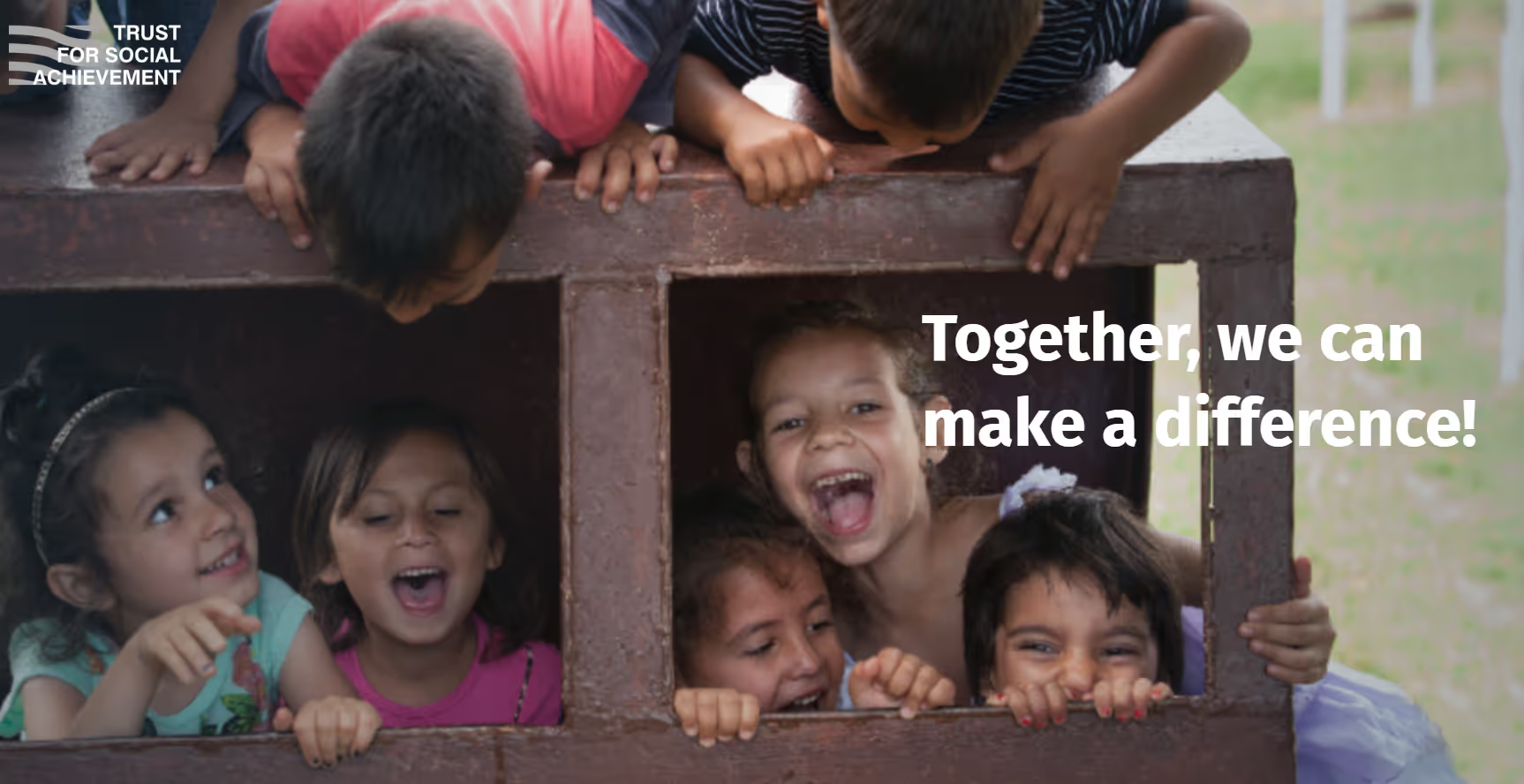
The Trust for Social Achievement Foundation – Bulgaria has been engaged since the onset of the pandemic in Bulgaria in searching for appropriate mechanisms to support the learning process for disadvantaged children, particularly those who face challenges to participate in the online distance learning, as well as those in remote or underserved locations for whom early learning and care programs were interrupted.
We have partnered with several business and with our network of partners from the local communities to provide equipment (laptops, PCs) for children in need.
Additionally, we also try to focus on providing educational supplies and consumables for the youngest children in our alternative access initiatives – those are projects offering high quality play-based learning for children from disadvantaged communities, living in remote rural areas, with no direct ECEC service offered, esp. those aged 2-4 y.
To meet the need of those children and families of basic educational supplies like pensils, colouring books, materials for home-based educational play, so as not to stop the advancement of children’s skills and learning, already achieved, TSA has been facilitating the shipment of such materials or directly providing and disseminating those.
Our most noteworthy effort in this regard was in partnership with World Wide Orphans-Bulgaria, who initiated and provided supply of emergency educational kits, including basic food supplies and hygiene products, prepared the kits, facilitated the distribution. Our network of local partners coordinated the distribution with the local authorities and the community centers, involved in our project.
Additionally, the local network regularly distributes materials and ideas for home-based educational play for parents to use and get inspiration from. The channel for this communication is social media groups and individual phone consultations.
As a result, children and families were supplied with basic necessities for continuing the work for developing important socio-emotional and language skills during the months of interrupted access to the activities of the project.
Published in:
Organization(s):
Trust for Social Achievement, Worldwide Orphans – Bulgaria (providing the emergency kits) Network of implementing NGOs at local level – “Znanie”-Lovech, Club of NGOs-Turgovishte, Health and Social Development Foundation – Sofia, New Road Assn.- Hayredin
Language:
Contact:
Linka Toneva, ltoneva@tsa-bulgaria.org
Learning Together
The Learning Together project has created a network of 15 Centres for Peer Support, which provide a platform for mutual learning across institutions. This platform provides peer support across eight kindergartens and eight primary schools to help improve the competences of teachers, create practice-based resources for staff, and organize internships for educators.
The project produced video samples to monitor the process of creating such peer support programs and developed spaces to share experiences among colleagues and further professional development. The project helps teachers systematically reflect on their own work and receive direct support tailored to the conditions in which they work.
Published in:
Organization(s):
Step by Step