Knowledge Hub
All the resources stored here have been created by ISSA Members
or ISSA Secretariat in partnership with Members or partners.



Handout for Persona Doll - for practitioners
This handout presents in brief the Persona Dolls methodology and provides a brief and concise overview of how we can create a doll with personality, the main rules for making the dolls, the steps that need to be taken in advance, the main phases of a persona dolls session and some story examples that practitioners can use.
Note: for everyone interested in the persona dolls methodology, it is advisable to undertake a training prior using the methodology.
Published in:
Organization(s):
Partners Hungary Foundation
Language:
Contact:
Zsuzsa László, laszlozsuzsa01@gmail.com
Together Old and Young
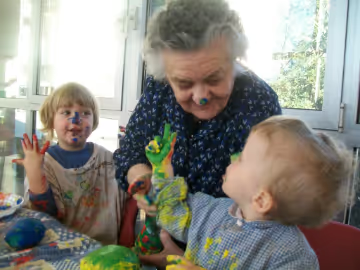
The purpose of the Together Old and Young (TOY) Programme is to promote intergenerational learning and to create new possibilities for older adults and young children to learn together and benefit from each others’ company. People are living longer but older adults and young children are having less and less contact with each other. Parents and grandchildren are migrating to cities and countries far away from grandparents. For many grandparents, it is also sometimes difficult to keep in touch with grandchildren. Other reasons for the lack of contact between old and young is that in many countries, older adults are living in senior citizen homes where they rarely see children and many young children are spending their days with their own age group in day care centres, pre-schools and schools.
The TOY Programme originated in the EU funded TOY Project (2012-2014) which took place in seven countries: Ireland, Italy, Slovenia, Spain, the Netherlands, Poland and Portugal. The TOY Project was unique amongst European intergenerational learning projects with its explicit focus on children in the early childhood years – birth to 8 years. The Project brought together the two ends of the lifelong learning spectrum - early childhood education and activities for older adults. In collaboration with universities, NGOs and municipalities documented and supported learning initiatives involving young children and older adults in Europe were researched. These initiatives took place in libraries, arts and cultural centres, community gardens, pre-schools and schools.
The TOY Project demonstrated clear benefits of learning together for both young children and older adults and for communities at large including: mutual understanding, improved feelings of wellbeing, decreased loneliness and satisfaction from sharing knowledge and experience with children and enhanced social cohesion. To be able to spread this valuable approach International Child development Initiative (ICDI) is: advocating at national and international level about the need to enhance the interaction between young children and older adults when developing policies for lifelong learning; developing accessible professional development tools and training with the intention that the TOY approach will be recognized and validated in adult education, and in pre-service and continuing professional development of practitioners; promoting IGL activities in disadvantaged and segregated communities and providing information, resources and links to research about intergenerational learning worldwide involving young children and older adults.
Published in:
Organization(s):
International Child Development Initiatives ICDI
Language:
Contact:
Margaret Kernan, margaret@icdi.nl

University Based in-service Training in Early Education
University based in-service training in early childhood education (ECE) is an in-service programme for early childhood educators accredited by Ilia State University. In this program educators of children three to six year are trained in evidence based contemporary ECE practice. Courses include child development, child centred practices, holistic approach, ECE curriculums and methodology, physical environment, observation and assessment, social and emotional development, principles and practices of inclusive education, and advocacy.
The programme is implemented by experienced trainers and lecturers from Ilia State University and includes a practical component, including in-service supervision and coaching from mentors at Ilia. Post training monitoring and evaluation visits have documented the establishment of child centred and inclusive practices in most classrooms. To date, the programme has worked with over 300 educators, but has been limited in its scope due to its affordability for the participants and limited numbers of participants in ach study stream. It is scalable if additional funding sources could be accessed including those from the kindergartens, centres and kindergarten management agencies.
Published in:
Organization(s):
Center for Preschool and Inclusive Education, Ilia State University, Georgia
Language:
Contact:
Khatuna Dolidze, khatuna.dolidze.1@iliauni.edu.ge
Supporting the Early Development of Children in Informal Roma Settlements
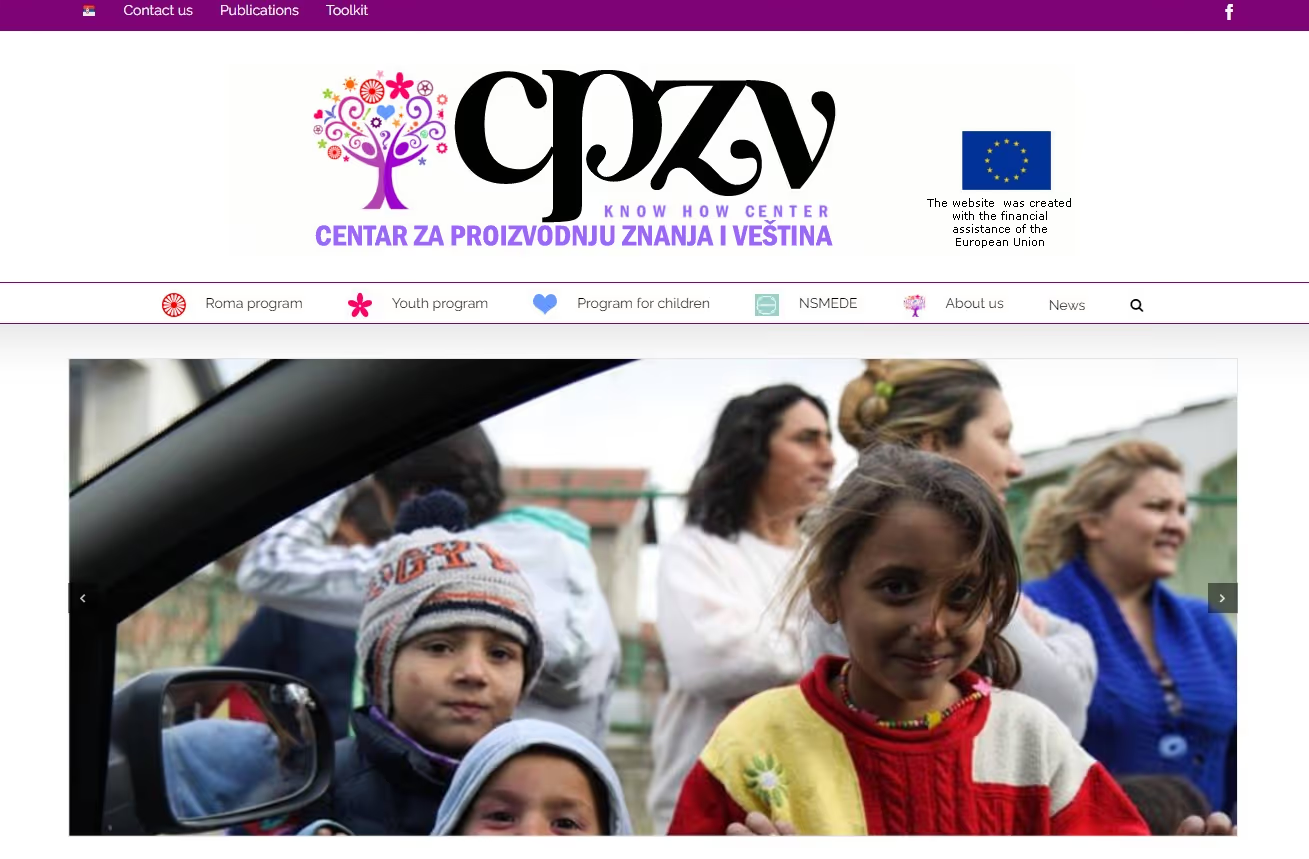
The practice Supporting the early development of children in informal Roma settlements aims to improve the social inclusion of children aged birth to six and their families. The Know How Centre organizes activities aimed at enriching Roma parents' skills living in settlements to provide quality opportunities for their children to develop and learn and at enhancing the competencies of professionals working with young children.
This practice includes a component of direct outreach in communities and provides supervision to outreach workers. Additionally, inclusive workshops are held for children and their families, and both preparation and material support are provided for children attending preschool programs.
Published in:
Organization(s):
Know How Centre
Language:
Contact:
Milenka Matic, cpzvns@gmail.com
Supporting Development of Early Inclusive Education in Tbilisi Kindergartens
Supporting Development of Early Inclusive Education in Tbilisi Kindergartens is a project aiming to support development of early childhood inclusive education: 1) by empowering mainstream kindergarten teachers and specialists working in kindergartens through modelling, practicing and sharing experiences, 2) by training Tbilisi Kindergarten Management Agency monitors/advisory team in observing, assessing and monitoring skills, using service standards developed by UNICEF Georgia and 3) by developing and conducting university accredited certificated courses for kindergarten practitioners and future teachers.
In addition two kindergartens were transformed into training centres for placing students during practicums and served as models for best practice. The achievements in the project included the introduction of peer supervision in practice based trainings in Kindergarten centres and the creation of 2 6ECT university based courses on Early Inclusive Education. The courses are shared with other regional Universities. The project can be scaled up by increasing accessibility of professionals beyond the current two kindergarten centres.
Published in:
Organization(s):
Center for Preschool and Inclusive Education, Ilia State University, Georgia
Language:
Contact:
Khatuna Dolidze, khatuna.dolidze.1@iliauni.edu.ge
The Novi Sad Intersectorial Network for Children - NSMEDE
Novi Sad Intersectorial Network for Children (NSMEDE) is a local inter-sectorial network aiming to provide a strategic and systematic framework for improving the position of children in Novi Sad. Through the establishment of a flexible model of inter-sectorial cooperation among actors at the local level, the practice works to develop an optimal environment for the development of all children. Activities are tailored to the specific needs of children in the community. The Network merges members' resources into an integrated, structured system of cooperation. This system benefits the local community and creates conditions for peer education and exchange.
Published in:
Organization(s):
Know How Centre
Language:
Contact:
Tatjana Lazor Obradović, tatjana.lazor@gmail.com

Learning Centers Network
The Learning Centers Network initiated by Balkan Sunflowers connects 40 Learning Centers managed by different NGOs in Albania. These centers include preschool services, curriculum support, literacy and science programs, and an education mediator targeting the most vulnerable children and their families. The mediator works with schools and families to ensure children's school enrolment. Due to these efforts, 93% of the eligible children from the areas where centers are and mediators work enroll in the first grade fo school.
The Planned Activities for Cohesive Education (PACE) program has been implemented throgh the centers since 2015 and it was designed alongside national curriculum to provide children with the competencies needed to thrive in school. In addition to the academic support provided at these Learning Centers, they also act as community hubs where volunteers are able to get involved. Other activities provided by the Learning Centers include: School Preparatory and Language Programs (ages 5-7), Summer Programs, Women's Literacy Programs, Networking Programs.
Published in:
Organization(s):
Balkan Sunflowers
Language:
Contact:
Muhamet Arifi, muhamet_arifi@balkansunflowers.org
Growing Together
The Growing Together project consisted of three parts: improving preschool education practices by using the ISSA Principles of Quality Pedagogy and parent and community involvement; building community and partnerships at the primary school level, and parental education. The project's results were disseminated through Ministry of Education and other agencies.
Published in:
Organization(s):
Community Foundation Step by Step
Language:
Contact:
Dina Aidzhanova, daidzhan@mail.ru
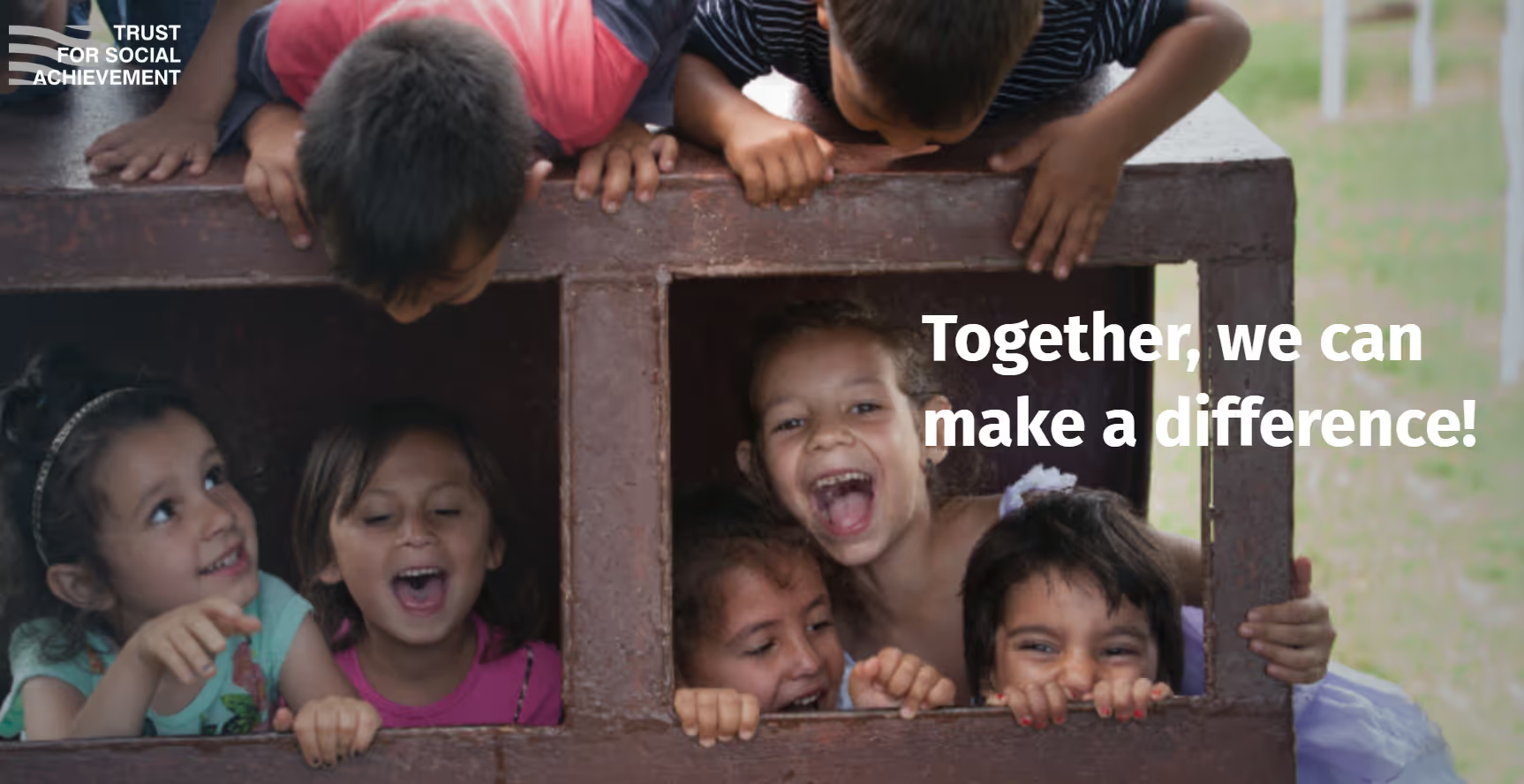
Distribution of emergency educational kits for children in remote locations, enrolled in our alternative access to quality early education services, which were interrupted due to the pandemic
The Trust for Social Achievement Foundation – Bulgaria has been engaged since the onset of the pandemic in Bulgaria in searching for appropriate mechanisms to support the learning process for disadvantaged children, particularly those who face challenges to participate in the online distance learning, as well as those in remote or underserved locations for whom early learning and care programs were interrupted.
We have partnered with several business and with our network of partners from the local communities to provide equipment (laptops, PCs) for children in need.
Additionally, we also try to focus on providing educational supplies and consumables for the youngest children in our alternative access initiatives – those are projects offering high quality play-based learning for children from disadvantaged communities, living in remote rural areas, with no direct ECEC service offered, esp. those aged 2-4 y.
To meet the need of those children and families of basic educational supplies like pensils, colouring books, materials for home-based educational play, so as not to stop the advancement of children’s skills and learning, already achieved, TSA has been facilitating the shipment of such materials or directly providing and disseminating those.
Our most noteworthy effort in this regard was in partnership with World Wide Orphans-Bulgaria, who initiated and provided supply of emergency educational kits, including basic food supplies and hygiene products, prepared the kits, facilitated the distribution. Our network of local partners coordinated the distribution with the local authorities and the community centers, involved in our project.
Additionally, the local network regularly distributes materials and ideas for home-based educational play for parents to use and get inspiration from. The channel for this communication is social media groups and individual phone consultations.
As a result, children and families were supplied with basic necessities for continuing the work for developing important socio-emotional and language skills during the months of interrupted access to the activities of the project.
Published in:
Organization(s):
Trust for Social Achievement, Worldwide Orphans – Bulgaria (providing the emergency kits) Network of implementing NGOs at local level – “Znanie”-Lovech, Club of NGOs-Turgovishte, Health and Social Development Foundation – Sofia, New Road Assn.- Hayredin
Language:
Contact:
Linka Toneva, ltoneva@tsa-bulgaria.org

Health and hygiene interventions targeting Roma families with children aged 0-1 years
We used the method of “Social accountability and Legal Empowerment", with the to empower the Roma community, to learn their rights in the Social and Health domains. In Macedonia, Governmental prevention programs for reproductive and child health are offered. In those programs, it is also included the program for active protection of the mother and children. Our aim is to empower Roma women to take up benefits, measures and activities that are offered free to pregnant women, and families who use social welfare. In order to achieve our objectives, we organized trainings for the community and after this we looked at accountability from responsible institutions. These action are very important, especially during crisis, such as the COVID-19 pandemic.
As a result of our engagement, the condition of Roma community in Bregalnica region is the best in Macedonia. More than 50 % of Roma women visit minimum one time per year a gynecologist, and the coverage of immunized Roma children is more than 90%. During COVID-19, we distributed humanitarian packages and education materials to Roma families about how to manage with COVID-19five times. As a result,untill now no one from the Roma community in Bregalnica region is affected from COVID-19.
Published in:
Organization(s):
NGO "KHAM" Delcevo, main donor is Open Society Foundation, partners are local governments and health centres from three municipalities
Language:
Contact:
Zoran Bikovski, z_bikovski@yahoo.com
Family Resource Centres
Family Resource Centres were established in Kyzyforda, Zhambul and Semey in Kazakhstan to assist families whose children were not attending preschool (typically poor families). The centers welcomed children and families to prepare them for primary school. The parents received information on child development ad how to promote it at home. The families also learned how to communicate with the schools and became advocates of democratic approaches.
Published in:
Organization(s):
Community Foundation Step by Step
Language:
Contact:
Dina Aidzhanova, daidzhan@mail.ru

Creating Inclusive Resource Centers
Inclusive Resource Centers (IRC) in five sites in four regions were developed under the programme supported by USAID. Their main purpose is to provide complex inter-sectorial support to children with special needs, their parents and teachers working with these children in pre-school and primary classrooms trough psychological-medical-pedagogical consultations.
The main achievements included:
1) increased number of services for parents of children with special needs;
2) increased level of trust;
3) more competent teachers.
The government adopted the Resolution to create such Centers all over Ukraine by September 2018.
Published in:
Organization(s):
Ukrainian Step by Step Foundation
Language:
Contact:
Natalia Sofiy, nsofiy@gmail.com
Emergency Family Support for Families Affected by COVID-19
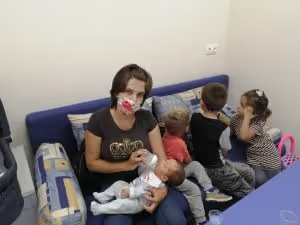
Our social services are providing food material support to children and their families who have been affected by the global pandemic and its mitigation measures. Such an event, like the pandemic, may disrupt parenting practices and family routines and thus affect child health and development. By supporting the economic stability and reducing the material hardship of dozens of families who use our services we enhance parents' capacity to deal with or avoid the instability caused by the crisis.
The support was targeted at families with children under the age of 7 and pregnant women. We selected those who had lost their job because of the pandemic or whose economic condition has worsened enough to prevent them from meeting their basic needs. We were working with families that were already our clients as well as with families that we identified during outreach initiatives in Fakulteta - one of the largest Roma neighborhoods in Sofia. We signed a contract with each of the families for a period of three moths and within this period, we provided them with two sets of supplies with nonperishable food.
The programme involves five stages:
1. Evaluation of the needs of the family.
2. Developing a support plan in collaboration with the family.
3. Providing the emergency support.
4. Reporting on the effects.
5. Closing the case or referring the family to a different programme in coordination with the education, healthcare and/or social support systems.
Published in:
Organization(s):
For Our Children Foundation, Bulgarian Food Bank
Language:
Contact:
Desislava Ilieva

Creating your own YouTube video for online teaching
An Early Childhood Educator shows how one can video tape themselves and then create a YouTube video which students can watch at home at their convenience. The practice has helped other educators who were unable to use platforms like Zoom and still wanted to create a video of themselves teaching for their students.
button[src="https://cdn.prod.website-files.com/694724257114b734f4bb749a/6985cc5223279c3ff6e8c284_Creating%20a%20video%20on%20Youtube.pdf"][label="Download the presentation"]Published in:
Organization(s):
Early Childhood Development Association Malta (ECDAM)
Language:
Contact:
Juanita Sultana
Creating a Functioning Model of Stakeholders Collaboration in Municipalities with Romani Communities
Published in:
Organization(s):
Wide Open School
Language:
Building of an Early Childhood Intervention system in Ukraine
The intervention “Building of an Early Childhood Intervention system in Ukraine” is based on the strategy that was developed for building four good ECI practices in four pilot regions and combines lobbying and advocacy at the regional and national level. The experience gained during the four pilots form the basis for the policies at the national level.
At the national level we stimulated the creation of the National Council on ECI; to develop national policies, regulations and financing mechanisms; for coordination and lobby & advocacy; and for the input from the NGO ECI service providers and parents organisations from the four pilot regions. The health, social policy and education sectors and NGO actors are stimulated and encouraged by the consortium partners to work in partnership. A train the trainer course for ECI professionals was provided and a national team of certified trainers is created.
At the regional and local level, the ECI systems are developed in practice. The four pilot practices feed in the policy development on both regional and national levels, for which coordination is needed between all stakeholders. Civil servants from state bodies and state and NGO care providers are informed about and trained in the principles of ECI, and in multi-sectoral and multi-disciplinary work. The ECI concepts are realized in the four existing NGO ECI service providers (who are recognized as the ‘methodological centers’). In the four pilot regions, ECI policy platforms are developed on community, city, rayon, and regional level. Meanwhile, the government approved six more pilot regions based on the experiences in the four initial pilot regions. Other governmental and non-governmental institutions are introducing ECI concepts in their work. In 2020, 31 ECI-teams operate in 10 regions. To ensure the quality of ECI services, training and supervision of the staff is crucial. NAPD, SOFT Tulip and the Ukrainian network of four ECI centers operate as an informal consortium from where the dialogue with all mayor stakeholders takes place. Simultaneously, the All-Ukrainian Parents Forum for Early Intervention (AUPFEI) is functioning in 10 regions. The parents’ forum pro-actively advocates for ECI services at the local, regional and national levels. The purpose is to mobilize NGOs, established and led by parents, and strengthen their potential to effectively advocate for ECI by providing training, network building, developing communication and relationships at the local, regional and national levels.
An important aspect of the strategy are the many training sessions for ECI professionals, that have been provided by care experts from the network of Dutch care service providers, affiliated to SOFT Tulip.
Published in:
Organization(s):
Stichting SOFT tulip, National Association of People with Disabilities of Ukraine, Charitable Foundation Early Intervention Center of Kharkiv, Dzherelo Day Care and Rehabilitation Center of Lviv, Path of Life Center for Complex Rehabilitation of Uzhgorod
Language:
Contact:
Eric Bloemkolk, eric.bloemkolk@softtulip.nl