Knowledge Hub
All the resources stored here have been created by ISSA Members
or ISSA Secretariat in partnership with Members or partners.



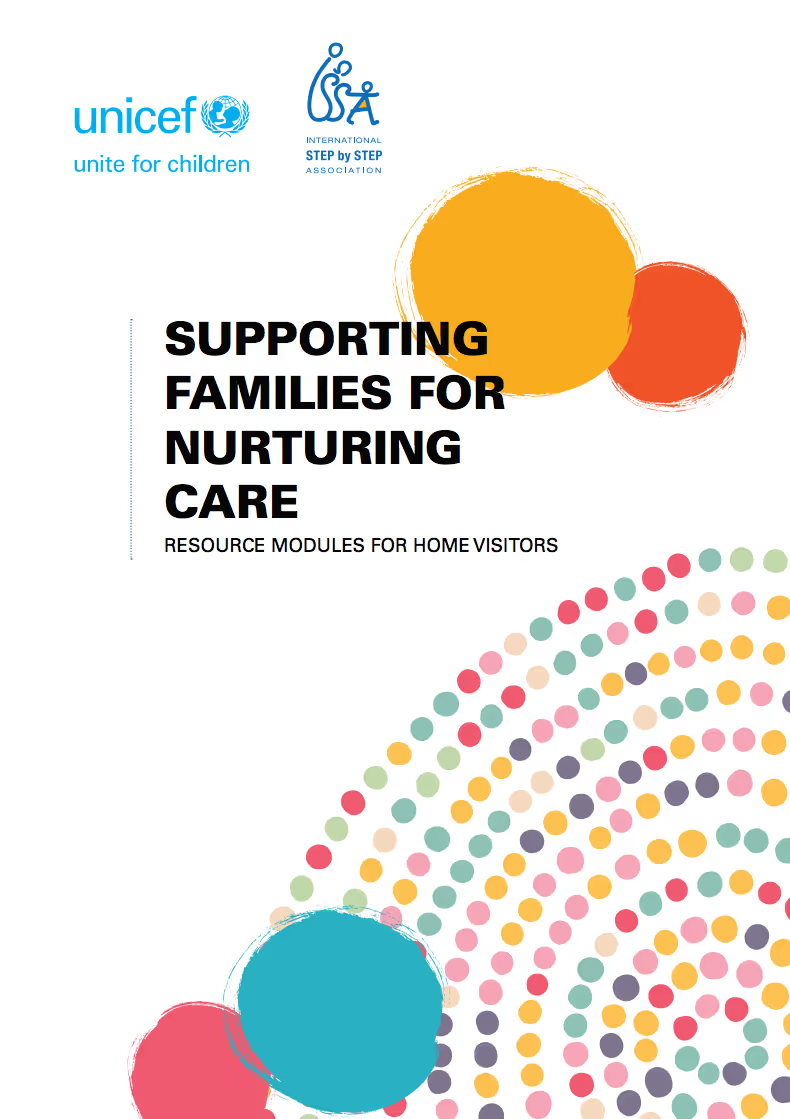
Supporting Families for Nurturing Care
Introduction to Home Visitors Modules Supporting Families for the Nurturing Care. You can access all the modules here.
Published in:
2022
Organization(s):
UNICEF ECARO & ISSA
Language:
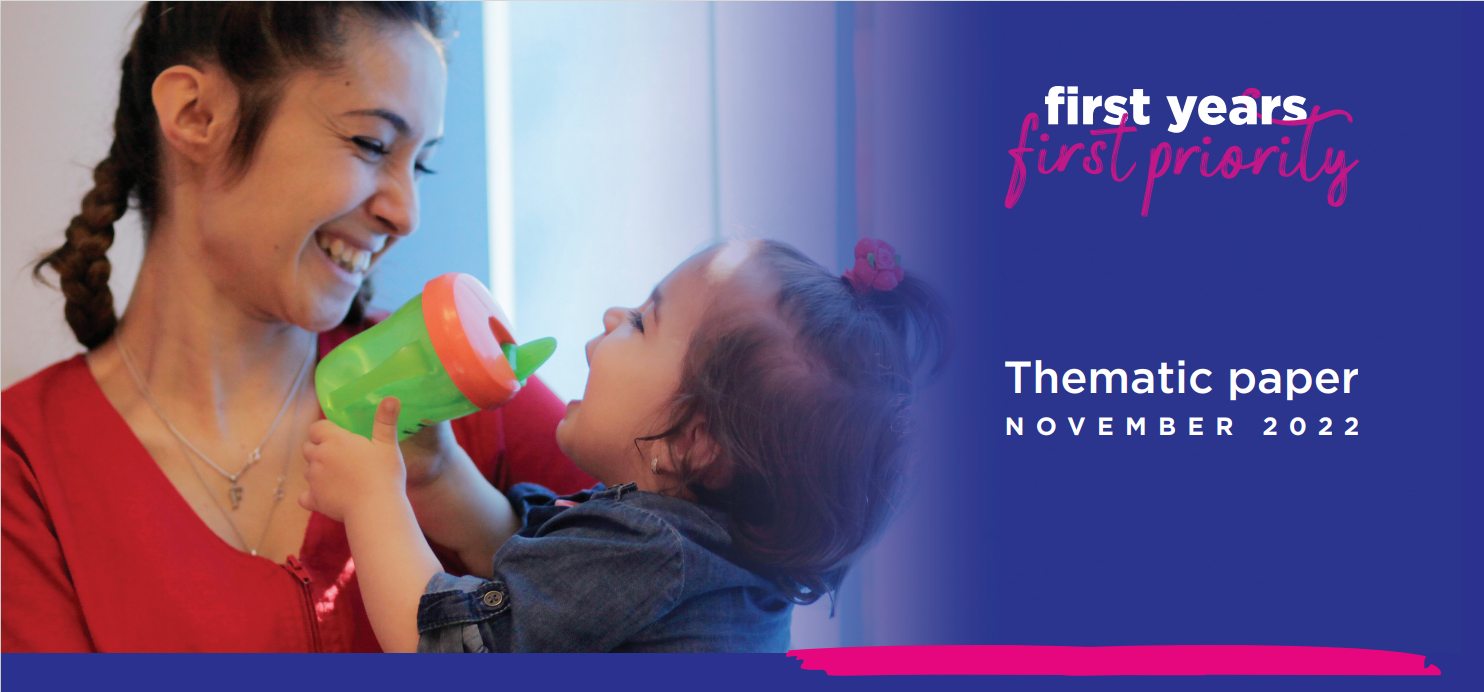
Prioritising the professionalisation of early childhood education and care staff
Early childhood education and care (ECEC) services for children under six years of age play a fundamental role in laying strong foundations for lifelong learning and wellbeing, especially in the first three years of life. Quality ECEC services can make an extraordinary difference in children’s lives, especially for the most disadvantaged. Research indicates that children from vulnerable groups derive even greater benefit from high-quality ECEC than their peers from more advantaged families.
Our Recommendations:
- Promote the societal value of ECEC services and ECEC profession
- Establish a minimum standard of qualification accompanied by opportunities for career development for ECEC staff working with children under three years of age.
- Track data on ECEC staff qualifications and define targets for the levels of qualification of ECEC staff working in ECEC services, especially those working with children under three years of age.
- Define aligned competence profiles across different categories of ECEC staff to ensure high-quality service provision.
- Implement policies and mechanisms that bring more diversity in the ECEC workforce (gender, cultural background, etc.).
- Increase investments for improving the ECEC staff working conditions (child-adult ratio, child-free time, renumeration, working environment).
This paper was developed under the First Years, First Priority Campaign.
First Years, First Priority is a joint initiative of Eurochild and the International Step by Step Association (ISSA). We are the leading European networks representing the children’s rights and the early childhood sectors. Our partnership pools our respective strengths to campaign for the prioritisation of early childhood development in public policies across Europe. The European Public Health Alliance and Roma Education Fund are associate partners.
Published in:
2022
Language:
Contact:
Dr. Mihaela Ionescu, mionescu@issa.nl; Francesca Colombo, fcolombo@issa.nl
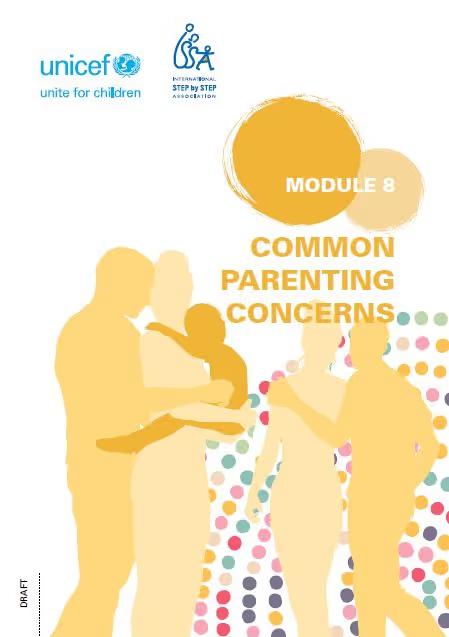
Module 8: Common Parenting Concerns
Module 8: COMMON PARENTING CONCERNS is a part of the Home Visiting Resource Modules Supporting Families for Nurturing Care. You can access the whole package here.
Published in:
2022
Organization(s):
UNICEF ECARO & ISSA
Language:
Module 17: Supervision - Supporting Professionals and Enhancing Service Quality
Module 17: SUPERVISION - Supporting Professionals and Enhancing Service Quality is a part of the Home Visiting Resource Modules Supporting Families for Nurturing Care. You can access the whole package here.
Published in:
2022
Organization(s):
UNICEF ECARO & ISSA
Language:
Module 16: Responsive Feeding
Module 16: RESPONSIVE FEEDING is a part of the Home Visiting Resource Modules Supporting Families for Nurturing Care. You can access the whole package here.
Published in:
2022
Organization(s):
UNICEF ECARO & ISSA
Language:
Module 12: Children who Develop Differently - Children with Disabilities or Developmental Difficulties
Module 12: CHILDREN WHO DEVELOP DIFFERENTLY - Children with Disabilities or Developmental Difficulties is a part of the Home Visiting Resource Modules Supporting Families for Nurturing Care. You can access the whole package here.
Published in:
2022
Organization(s):
UNICEF ECARO & ISSA
Language:
Module 13: Developmental Monitoring and Screening
Module 13: DEVELOPMENTAL MONITORING AND SCREENING is a part of the Home Visiting Resource Modules Supporting Families for Nurturing Care. You can access the whole package here.
Published in:
2022
Organization(s):
UNICEF ECARO & ISSA
Language:
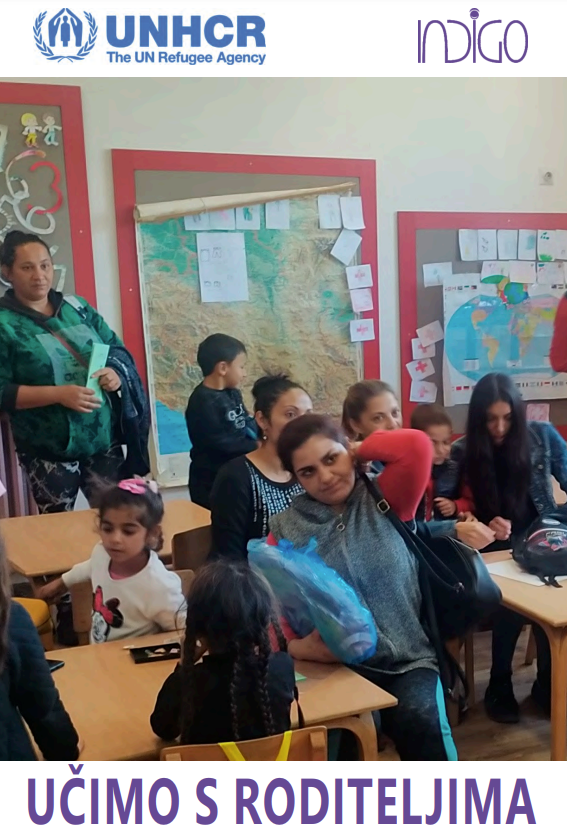
Published in:
2022
Organization(s):
Group for Children and Youth “Indigo”
Language:
Contact:
Tamara Simonovic, tamara@indigo.org.rs

InTrans Infographics - status of early childhood care and education systems in five EU countries
The ultimate goal of the InTrans project is to ensure that all children and families — especially the most vulnerable — benefit from warm and inclusive transitional practice in ECEC and school.
To achieve this goal, the project is supporting professionals through action at the policy advocacy and training levels.
At the level of policy and governance, InTrans has been facilitating activities to create awareness, knowledge development, and exchange for national and international policymakers in order to help them develop a shared vision on warm and inclusive transitions and corresponding policy measures.
More concretely, the project has conducted policy analysis research in each of the four countries involved (Belgium, Finland, Italy and Slovenia). Based on the resulting baseline policy country reports, these infographics have been created to provide an overview of the present state of early childhood care and education systems in the countries (including Denmark).
For an overview of the challenges and opportunities in the field of transitions across the four countries, read the comparison analysis executive summary report [link].
Published in:
2022
Organization(s):
VBJK, Step by Step Centre for Quality in Education
Contact:
Katrien van Laere (katrien.van.laere@vbjk.be)
Supporting Families for Nurturing Care: Resource Modules for Home Visitors
Together, UNICEF ECARO and ISSA have developed a set of Resource Modules for Home Visitors: Supporting Families for Nurturing Care, intended to better equip home visitors with the latest knowledge and tools to support and engage with the families of young children.
Drawing upon the most recent scientific evidence, the modules have been developed through a consultative process involving international and regional experts, national trainers, and home visiting professionals. They can be delivered through various training methods and adapted to train other service providers.
These modules empower home visitors to take a strengths-based approach that promotes nurturing relationships between the caregiver and child as well as contributing to risk reduction by supporting and referring families to other services when necessary.
The modules are accompanied by several supporting tools. They provide ample opportunity for the learner to be actively engaged in reflection and deliver guidance on the knowledge, skills, attitudes, and practices required for home visitors in their “new and enriched role”. These tools can support home visitors to work in partnership with families, to support parents and caregivers, and empower them to provide the best possible environment for their young children.
We trust that training courses based on these modules, whether in-person or online, will enable home visitors to develop positive, respectful, and sensitive relationships with parents, empowering them to make informed decisions and take positive action with regard to the development and all-around wellbeing of their young children.You can learn more about the Nurturing Care Framework here.
In partnership with:

Published in:
2022
Organization(s):
UNICEF ECARO & ISSA
Language:
Contact:
Zorica Trikic, ztrikic@issa.nl
Diversity+ Charter: First steps towards diversity positive services
With the aim to support ECEC settings, leaders and professionals to identify and overcome these challenges, the Diversity+ project has launched the Diversity+ Charter: a set of minimum requirements that ECEC services and institutions have to meet to accommodate different types of diversity and be classified as inclusive and diversity positive (Diversity+).
Following the Council Recommendations on High Quality ECEC, the Diversity+ Charter is organised around five key areas: Access, Workforce, Curriculum, Monitoring and Evaluation and Governance for diversity inclusion. Each area contains a set of indicators defining what should be in place for Diversity+ ECEC.
The Charter invites ECEC managers and professionals to engage in a continuous discussion and critical reflection on their existing policies with the aim to ensure that all children, their families, and ECEC staff feel welcomed, valued and respected.
Tweet about this resource.
Published in:
2022
Language:
Contact:
Zorica Trikic, ztrikic@issa.nl
TOY to Share, Play to Care: Impact Evaluation and Policy Recommendations Executive Summary
TOY to Share, Play to Care is a two-year project (January 2019 – January 2021) that builds on previous work undertaken by International Child Development Initiatives (ICDI), a Netherlands-based non-governmental organization. Specifically, it follows upon the project TOY for Inclusion, 2017-2019.
The TOY to Share, Play to Care consortium comprises ten partner organizations based in nine European countries.
The initial TOY for Inclusion project developed and piloted Play Hubs, i.e., low-threshold, community-based, and informal early childhood spaces open to young children, their families, and community members of local Roma communities. Play Hubs offer toys for borrowing (toy libraries), stimulating activities for young children, opportunities for inter-generational encounters, and generally safe and welcoming spaces for everybody.
The follow-up project TOY to Share, Play to Care takes the existing Play Hubs as its starting point and builds on their experiences in order to scale up the model.
The project design includes a comprehensive data collection, monitoring, and evaluation framework to enable shared learning from project experiences. The following research questions were explored in this report using a qualitative methodology for data collection and analysis.
1. What does impact/making a difference mean to your locality in relation to inclusive early years community initiatives i.e., this project? How do you know? For whom?
2. What do you envisage will help you make a difference to your locality in relation to inclusive early years community initiatives?
3. What do you envisage will make it difficult to make a difference in relation to inclusive early years community initiatives?
Published in:
2021
Organization(s):
Early Childhood Research Centre, DublinCity University
Language:
Contact:
Giulia Cortellesi, giulia@icdi.nl
EDUCAS - Policy recommendations: Strengthening the importance of SPACE and EDUCARE approach
Educating and caring for young children is a big responsibility, challenge and commitment. The POLICY RECOMMENDATIONS for strengthening the importance of SPACE and EDUCARE approach in early childhood systems aim at providing a comprehensive set of recommendations for policymakers on EU and national levels, funders, and other ECEC stakeholders.
These policy recommendations are based on the findings and insights from the EDUCAS project implemented in Belgium (Fl), Italy and Lithuania, the extensive literature review, country policy recommendations, and other international documents developed by project partners.
Published in:
2021
Organization(s):
EDUCAS team
Language:
Contact:
Nima Sharmahd, nima.sharmahd@vbjk.be

Investing in professionalization of ECEC staff to foster smooth transitions in times of crisis and beyond
Lessons learned from the COVID-19 pandemic
The COVID-19 pandemic showed how crucial it is to keep the relationship between ECEC centres and families and children alive. Considering the possible fear and stress that parents and children experienced during the pandemic situation, ECEC had to invest even more than usual in establishing a partnership with families based on mutual trust.
The INTRANS project has identified six key actions that policy decision-makers, providers and leaders should undertake – in dialogue with trade unions organisations – to promote professionalization of ECEC staff, in times of crisis and beyond.
One of the key requirements to support children’s transitions into and from ECEC settings is having a competent staff. This calls for investment in both initial and continuing education paths for all ECEC staff (core practitioners, assistants etc). On the one hand, there is a need in raising and improving the level of qualification required for ECEC staff, and on the other hand, investment in support reflection on daily practice is needed.
Published in:
2021
Contact:
Nima Sharmahd, nima.sharmahd@vbjk.be
Reclaiming transitions as inclusive relational spaces in times of crisis and beyond
Lessons learned from the COVID-19 pandemic
The InTrans project has identified five key actions that policy decision-makers, providers and leaders should undertake – in social dialogue with trade union organizations – to enhance the participation of children and families to ECEC in times of crisis and beyond.
By interconnecting its educational, social and economic functions, ECEC can play a key supportive role in facing the crisis for all children and families, especially those who are at risk of social exclusion (Communication on Achieving the European Education Area by 2025, 2020; Council Recommendation on High Quality ECEC, 2019).
Removing structural barriers related to availability, accessibility and affordability of provision is certainly a first step to be undertaken in this direction. However, the evidence collected during the first and second waves of the COVID-19 pandemic revealed that implementing such measures do not suffice to ensure participation of societally disadvantaged groups to ECEC. Research shows that building relationships of trust with children and families is of uttermost importance to reduce the risk of withdrawal and ensure continuity of children’s attendance.
Published in:
2021
Contact:
Nima Sharmahd, nima.sharmahd@vbjk.be
Bulgaria grows with its children: Building professional competences of the early childhood workforce
The topic of people working directly with children and families in the health, education and social work stands out when looking for sustainable solutions to challenges faced in early childhood care and education. This topic is even more important in Bulgaria given the workforce shortage in these sectors as well as the low indicators of reach of healthcare, early childhood education and care, and social protection to children.
This study presents data from the experience of 461 specialists working directly with children and families, and outlines main directions for improvement of the professionalisation of the early years workforce in three areas: initial education, professional development and working conditions. In addition, also formulates recommendations for policy development in this area.
Download summary report in English
Download full report in Bulgarian
Download summary report in Bulgarian
Download summary report in English
Published in:
2021
Organization(s):
For Our Children Foundation
Language:
Contact:
Dimitar Ivanchev, d.ivanchev@detebg.org
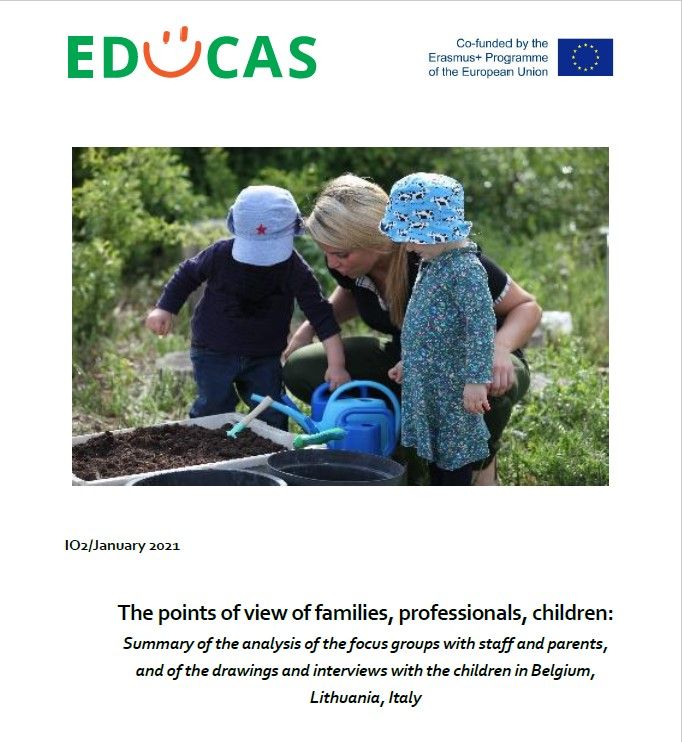
The points of view of families, professionals, children
The EDUCAS project planned to start the Continuous Professional Development Paths (CPD) in the three countries involved (Belgium, Lithuania, Italy) with specific focus groups involving families and staff in the ECEC centers partners of the project. The aim of the focus groups has been:
1) gaining insight about families’ and staff’s ideas/beliefs/feelings in relation with the ECEC spaces where their children are and their connection with education and care;
2) exploring ideas concerning the ‘ideal’ ECEC service for families and staff (which core elements)
Through the focus groups, partner organizations aimed at getting a better insight concerning the needs, ideas and beliefs of staff and families concerning the theme of the project, with the purpose of elaborating a bottom-up participatory implementation path (case study – action research).
Each research center carried on two focus groups in each of the two ECEC centers involved in each country (plus an extra one in Italy): one with parents, one with staff, for a total of four focus groups per country (five in Italy). In total 13 focus groups took place, involving 47 professionals and 36 parents. The method and themes of the focus groups have been discussed and agreed in advance, in order to have ‘similar readable data’ at the end of the process.
This report presents the summary of the analysis of the focus groups with staff and parents, and of the drawings and interviews with the children in Belgium, Lithuania, Italy.
Published in:
2021
Organization(s):
VBJK, Center for Innovative Education in Lithuania, University of Parma
Language:
Contact:
Nima Sharmahd, nima.sharmahd@vbjk.be
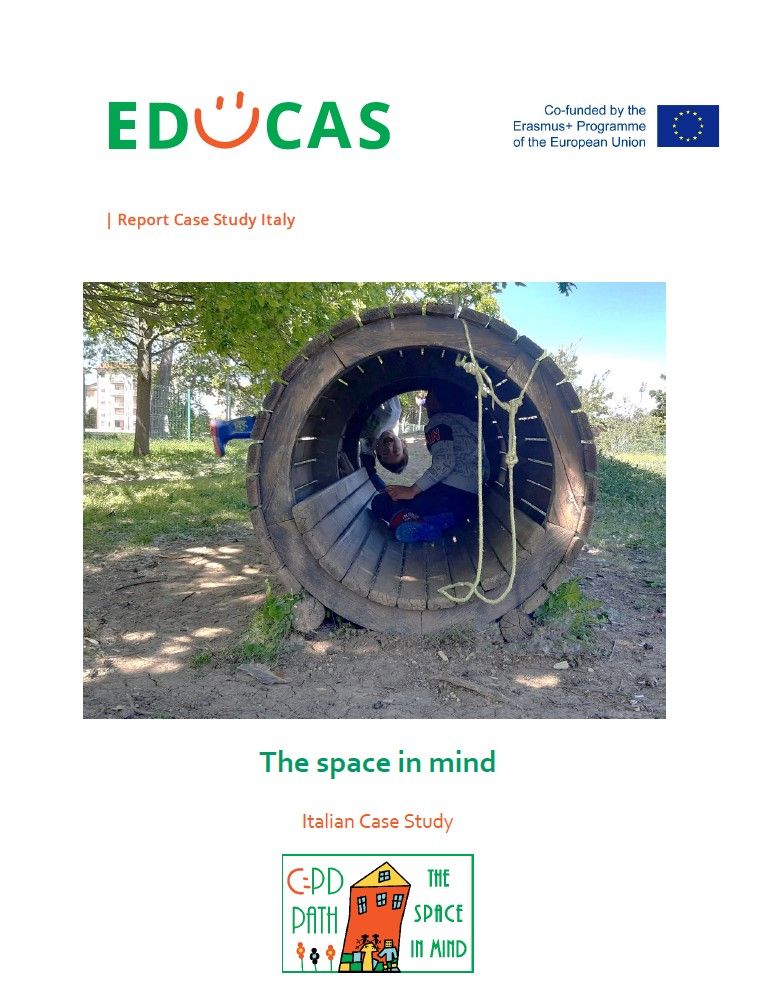
EDUCAS - Case Study Italy: The space in mind
Throughout the three years of the EDUCAS project, partners in Belgium (FL), Italy and Lithuania have undertaken a thorough examination of existing visions and methods related to organizing ECEC environments in their contexts. With the support of two ECEC centres in each country, they have locally developed Action Research paths that are tailored to the contexts in which the six ECEC centers are working. The project aims to improve the organization of these ECEC centers’ space and materials within the educare approach.
The case Study in Italy presents the action research that was coordinated by Univestity of Parma and developed together with the two ECEC centres Gelsomino in Parma and Maria Vittoia in Torino).
Published in:
2021
Organization(s):
University of Parma
Language:
Contact:
Sara Berti, sara.berti@unipr.it