Knowledge Hub
All the resources stored here have been created by ISSA Members
or ISSA Secretariat in partnership with Members or partners.



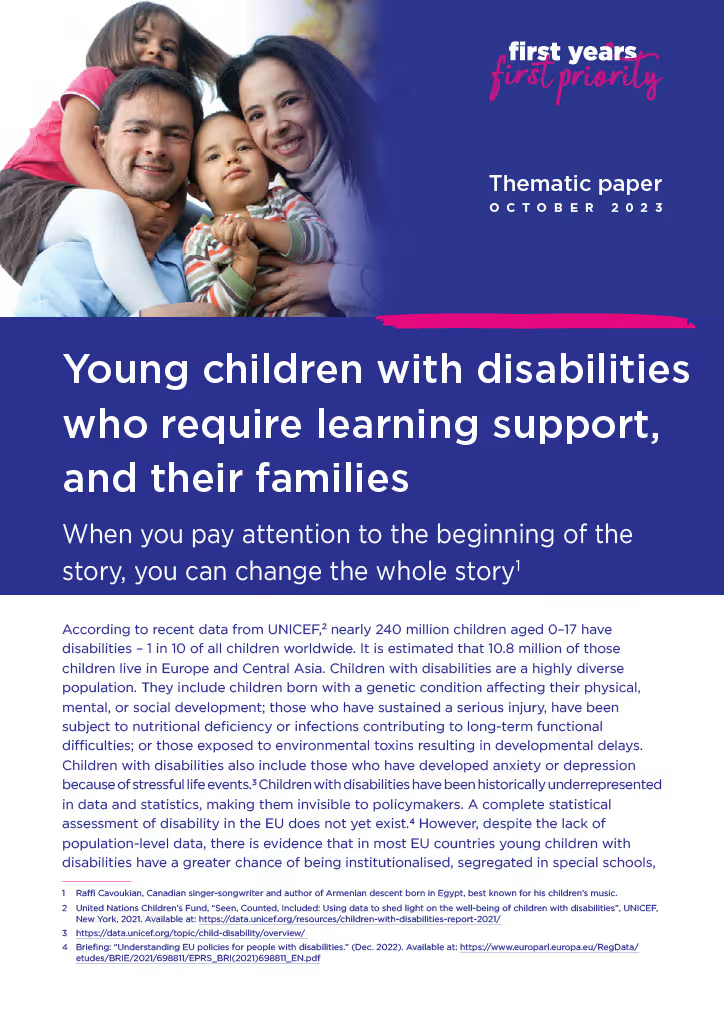
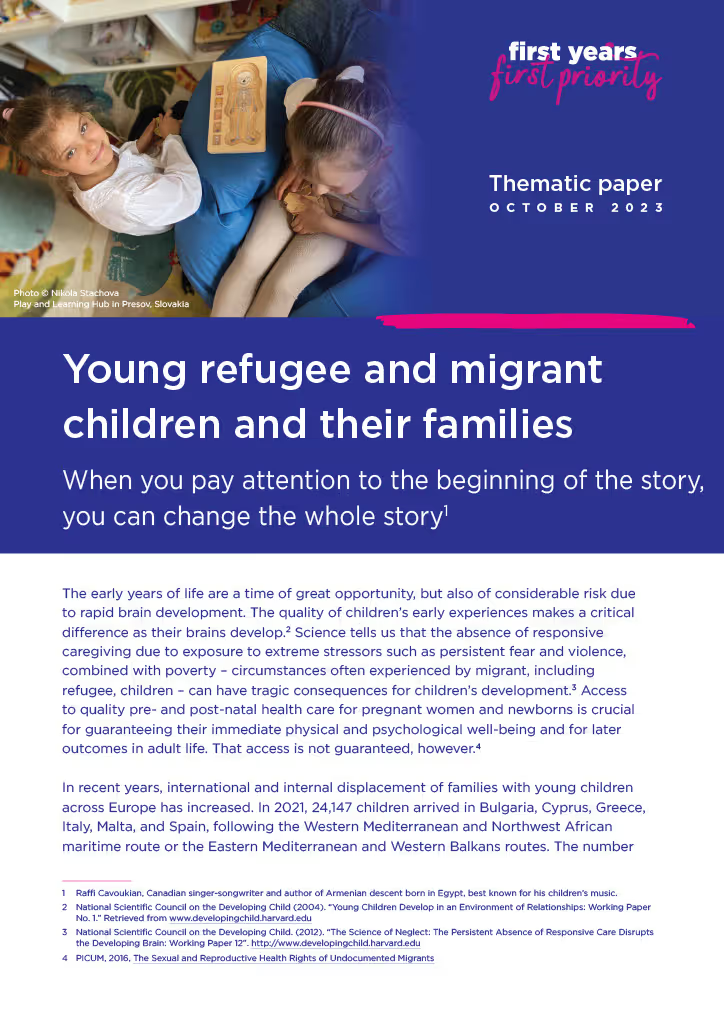
Young refugee and migrant children and their families
The available data shows that refugee children and children with a migrant background, in Europe, are at greater risk of poverty and social exclusion. Governments have an essential role in fostering a welcoming environment for young refugees and migrants by offering inclusive early childhood development services.
Developed by the First Years, First Priority Campaign, this Thematic Paper includes:
- Key recommendations at the EU and country level
- A snapshot of EU policies addressing young migrant children, including refugees
- Examples of national policies and programmes supporting young migrant children and their families
- Key priorities for addressing the well-being of young migrants, including refugees
button[src="https://firstyearsfirstpriority.eu/wp-content/uploads/2023/11/First-Years-First-Priority-Refugee-and-Migrant-Children.pdf"][label="Download resource"]
Published in:
2023
Language:
Contact:
Francesca Colombo, fcolombo@issa.nl
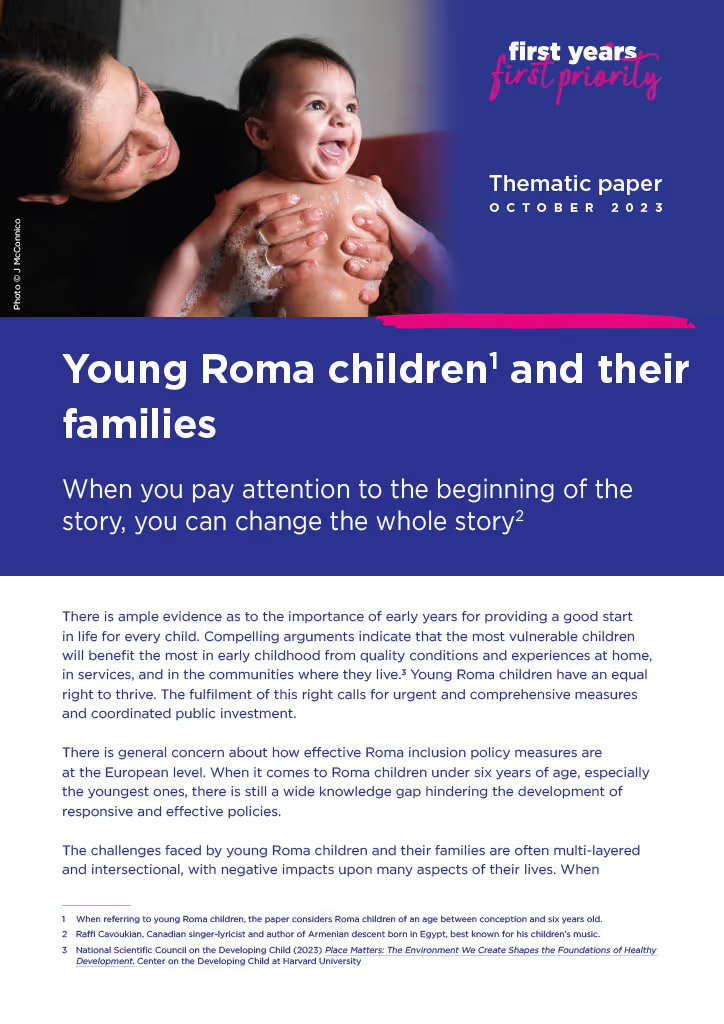
Young Roma Children and their families
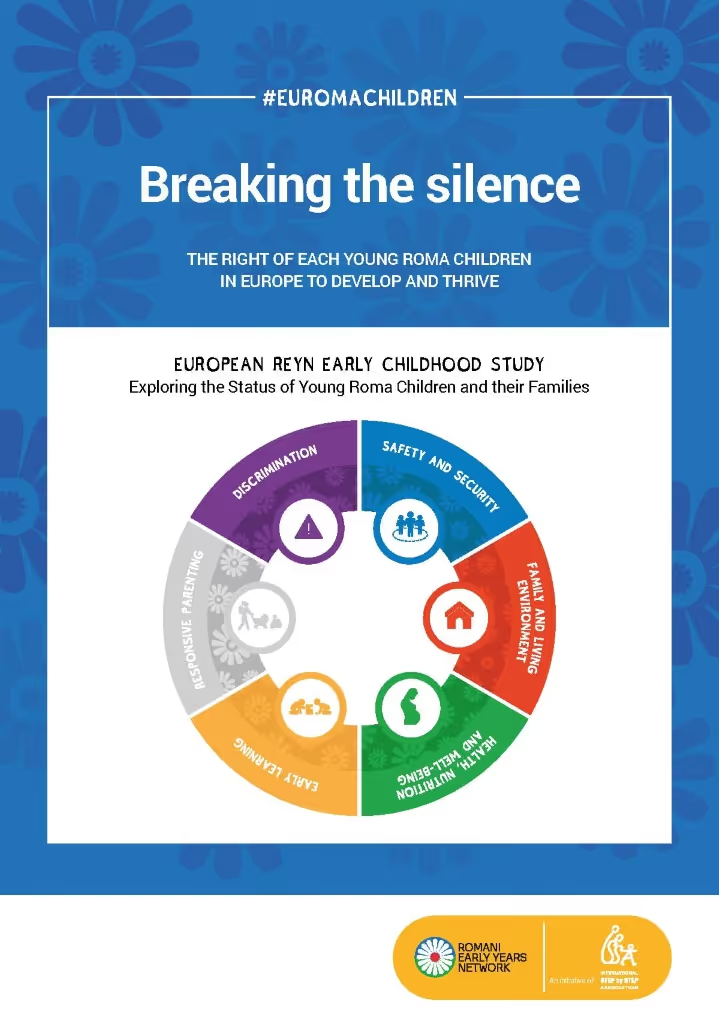
Young Roma children have an equal right to thrive. The fulfillment of this right calls for urgent and comprehensive measures and coordinated public investment. However, there is general concern about how effective Roma inclusion policy measures are at the European level.
Developed by the First Years, First Priority Campaign, this Thematic Paper includes:
- Key findings from the REYN Early Childhood Research Study and key recommendations at the EU and country level
- Snapshot of mainstream and targeted EU policies related to young Roma children
- Examples of national policies and programs in Bulgaria, France, Hungary, Serbia and Spain
- Key priorities for unlocking young Roma children’s potential
Published in:
2023
Language:
Contact:
Francesca Colombo, fcolombo@issa.nl
Module 9: Home Environment and Safety
Injury is a leading cause of death and disability globally for children 5 to 19 years of age. The majority are unintentional injuries – injuries that result from an unintended incident without anyone intending that harm be done to children. These are not “accidents,” as they are preventable and for young children, the majority of unintentional injuries occur in the home. This module 9 was designed to support home visitor in supporting families creating safe home environments and preventing accidents.
You can access the whole package here.
button[src="https://cdn.prod.website-files.com/694724257114b734f4bb749a/6985cf842886276ab5b43605_9.Home-Environment-and-Safety.pdf"][label="Download"]
Published in:
2023
Organization(s):
ISSA - International Step by Step Association
Language:
Module 23: Becoming a parent: Prenatal visits to families
Published in:
2023
Organization(s):
UNICEF ECARO & ISSA
Language:
Contact:
Zorica Trikic, ztrikic@issa.nl

Module 24: Using Telehealth in Home Visitation
The term telehealth intervention implies the use of electronic platforms or apps such as telephone calls, video meetings and conferences, text messaging, the use of various online apps and social media tools or content presented on online platforms as resources utilised to provide support to individuals or families.
Module 24 aims to enable reflection on the ways in which telehealth resources can enrich current family support programs based on home visits, including the polyvalent home visiting services in working with families expecting children or providing care for young children.
You can access the whole package here.
button[src="https://cdn.prod.website-files.com/694724257114b734f4bb749a/6985cf70fefdf169b527a379_24.%20Module-TelehealthinHomeVisitation-ENG.pdf"][label="Download resource"]
Published in:
2023
Organization(s):
UNICEF ECARO & ISSA
Language:
Contact:
Zorica Trikic, ztrikic@issa.nl
The ISSA Network Advantage - Prioritizing young children's development in emergencies
Published in:
2023
Organization(s):
ISSA
Language:
Contact:
Dr. Mihaela Ionescu, mionescu@issa.nl
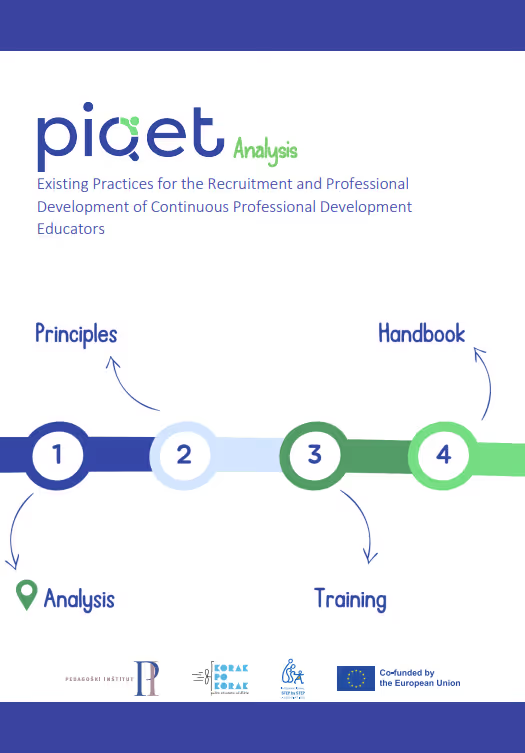
Existing Practices for the Recruitment and Professional Development of Continuous Professional Development Educators
Published in:
2023
Organization(s):
Educational Research Institute, Open Academy Step by Step, International Step by Step Association
Language:
Contact:
Aljoša Rudaš, arudas@issa.nl
Elements and Pathways to Establish Professional Learning Communities for Early Childhood Professionals
In the dynamic landscape of early childhood professional development, the traditional, one-size-fits-all approaches have proven insufficient, often disconnected from the real-world context in which professionals operate. Recognizing the limitations of top-down decision-making and isolated learning methods, the concept of Professional Learning Communities (PLCs) emerges as a transformative approach. The overarching goal of PLCs is to foster a collaborative, adaptive environment where professionals can collectively pursue common goals and purposes, ultimately enhancing the quality and impact of their work in early childhood settings.This resource is developed by ISSA staff, under the Health Systems for Early Child Development Initiative, and tailored specifically for professionals working with young children and families across sectors, emphasizing the power of PLCs in fostering sustainable, high-quality practices through collaborative and ongoing peer support.This guide depicts the essential elements of PLCs, offering a roadmap for setting up and efficiently managing these communities. While the concept of PLCs has deep roots in the educational realm, its applicability has expanded into the health and social sectors, addressing the unique needs of those working with young children and families. This guide also illustrates the application of PLCs in early childhood education and health settings, using relevant examples. These examples serve as models for the creation and sustainability of a PLC, underscoring the flexibility of the content to align with the diverse professional priorities and needs of PLC members across various sectors.
button[src="https://cdn.prod.website-files.com/694724257114b734f4bb749a/6985ce566ca73e3f96daa836_PLC_HS4ECD_July23.pdf"][label="Download resource"]
Published in:
2023
Organization(s):
International Step by Step Association
Language:
Contact:
Zorica Trikic, ztrikic@issa.nl

Early Childhood Development Complexes: A multi-sector approach to early
This case study is based on the Early Childhood Development Complexes of For Our Children Foundation (FoC), Bulgaria, that provided several different socially integrated services concentrated within reach, which together form a safety net for children and families. FoC in Bulgaria created the Early Childhood Development Complexes in Sofia and Plovdiv to pay attention to the first, most important years of every child's life and to support them when it is not too late. In addition to working directly with children with disabilities and difficulties in the development and supporting families in vulnerable situations, FoC organized trainings for prospective adoptive parents, foster families, as well as for prevention of violence, development of parental capacity and more.
button[src="https://cdn.prod.website-files.com/694724257114b734f4bb749a/6985cc6b567d6d1d294be098_ISSA-Case-Study-ForOurChildrenFoundation-singlepage.pdf"][label="Download resource (single page)"] button[src="https://cdn.prod.website-files.com/694724257114b734f4bb749a/6985ce2a5eb0b715b71c829b_ISSA-Case-Study-ForOurChildrenFoundation_final.pdf"][label="Download resource (double page)"]Published in:
2023
Organization(s):
For Our Children Foundation
Language:
Contact:
Ayça Alaylı, aalayli@issa.nl
The MANDELA model for Early Childhood Education and Care
The MANDELA model for Early Childhood Education and Care is a framework to place inclusivity at the heart of practice with babies, children, and families. It recognises the importance of relationships and belonging and ensuring environments reflect this. It also acknowledges that if we change the start of the journey, we can change educational outcomes for children that can impact across their life course.
The MANDELA way is not about prescription it is about FREEDOM and the workbook uses the word MANDELA to frame questions to enable a deeper understanding of practice to emerge, develop developmental plans and then embed a practice that is constantly evolving:
- Make Time– to really understand the community that uses the setting-staff, children, families. Use this information to shape different conversations, develop relationships, co-construct action plans and ensure they are enacted.
Acknowledge- is about striving for inclusivity in all we do through acknowledging our Needs, Differences, Education, Life experiences and Age. - Needs – what are the different needs of those using the setting, remembering people have the right not to share. How can you ensure the setting in inclusive of all needs? How do staff know and feel their needs are being addressed? How do parents and carers know their child’s needs will be met?
- Difference – this is about recognising we are all different. How do I know I am safe in you setting? Do you see me? Do you value who #I am?
- Education Experiences- acknowledging previous education experiences, providing training and further development of staff. Supporting parents and carers develop their knowledge about child development.
- Life Experience – our journey are all different, how to we value these and how do we create safe environments for people to use and work. How do we ensure are staff are safe practitioners? How does the setting value family diversity and the different experiences of the children using the setting?
- Age -how does the setting value people of different ages. What is its approach to intergenerational sharing? Does it know how age is viewed in different culture?
To learn more about the MANDELA Model, listen to this podcast episode with Dr Prospera Tedam who developed the Model, and Professor Eunice Lumsden who designed the Unique Childhoods Workbook. In the episode, they discuss these tools and how they can be used to support connection and build trust, deepening our anti-discriminatory practice and bringing about change in early childhood education.
Published in:
2023
Organization(s):
University of Northampton Tapestry Foundation Stage Forum
Language:
Contact:
Professor Eunice Lumsden; eunice.lumsden@northampton.ac.uk
BE KINDER: unravelling paths to address gender stereotypes in education and early childhood
This book brings together some of the KINDER project’s key contributions to the construction of a transformative and gender-sensitive education. It offers a set of common learning experiences developed by the KINDER international partners, which must be shared as a starting point for policies and programmes aiming at integrating gender issues at an early age at national and European level.
The chapter, Positive gender socialisation at home and school for transformative change, was authored by the ISSA Secretariat's Progam Director, Dr. Mihaela Ionescu, and Junior Program Manager, Ayça Alaylı. It emphasizes the importance of positive gender socialization (PGS) beginning from early years for each child to develop holistically and reach their unique potential. The main aim of the chapter is to provide a deeper understanding on gender transformative approaches and the pathways of applying gender transformative methodolologies in parenting and education, to promote PGS. The chapter examines the concepts, but also provides practical recommendations for parents and practitioners.
Published in:
2023
Language:
Contact:
Ayça Alaylı, aalayli@issa.nl

InTrans Infographics - status of early childhood care and education systems in five EU countries
The ultimate goal of the InTrans project is to ensure that all children and families — especially the most vulnerable — benefit from warm and inclusive transitional practice in ECEC and school.
To achieve this goal, the project is supporting professionals through action at the policy advocacy and training levels.
At the level of policy and governance, InTrans has been facilitating activities to create awareness, knowledge development, and exchange for national and international policymakers in order to help them develop a shared vision on warm and inclusive transitions and corresponding policy measures.
More concretely, the project has conducted policy analysis research in each of the four countries involved (Belgium, Finland, Italy and Slovenia). Based on the resulting baseline policy country reports, these infographics have been created to provide an overview of the present state of early childhood care and education systems in the countries (including Denmark).
For an overview of the challenges and opportunities in the field of transitions across the four countries, read the comparison analysis executive summary report [link].
Published in:
2022
Organization(s):
VBJK, Step by Step Centre for Quality in Education
Contact:
Katrien van Laere (katrien.van.laere@vbjk.be)
Executive Summary - Challenges and opportunities emerging from cross-national comparison
The InTrans project ultimate goal is to ensure that all children and families — especially the most vulnerable — benefit from warm and inclusive transitional practice in ECEC and school.
To achieve this goal, the project is supporting professionals through action at the policy advocacy and training levels.
At the level of policy and governance, InTrans is facilitating activities to create awareness, knowledge development, and exchange for national and international policymakers in order for them to develop a shared vision on warm and inclusive transitions and corresponding policy measurements.
More concretely, the project has conducted a policy analysis research in each of the four countries involved (Belgium, Finland, Italy and Slovenia). This Executive Summary has been put together based on the resulting baseline policy country reports. In addition, a set of infographics have been created to provide an overview of the present state of early childhood care and education systems in country (including Denmark).
Published in:
2022
Organization(s):
VBJK, Step by Step Centre for Quality in Education
Contact:
Katrien van Laere, katrien.van.laere@vbjk.be
InTrans Policy Baseline Reports
The ultimate goal of the InTrans project is to ensure that all children and families — especially the most vulnerable — benefit from warm and inclusive transitional practice in ECEC and school.
To achieve this goal, the project is supporting professionals through action at the policy, advocacy, and training levels.
At the level of policy and governance, InTrans has been facilitating activities to create awareness, knowledge development, and exchange for national and international policymakers to help them develop a shared vision on warm and inclusive transitions and corresponding policy measurements.
More concretely, the project has conducted policy analysis research in each of the four countries involved (Belgium, Finland, Italy and Slovenia). The result is the policy country reports that can be downloaded here.
In addition, together with a cross-country analysis executive summary report, a set of infographics has been created to provide an overview of the present state of early childhood care and education systems in each country (including Denmark).
Available in English.
Published in:
2022
Organization(s):
VBJK, Step by Step Centre for Quality in Education
Language:
Contact:
Katrien van Laere, katrien.van.laere@vbjk.be

Parenting on the Move: empowering parents to best support their children through migration and refugeehood
Parenting on the Move (PoM) has been developed to help parents create an environment of resilience, well-being, and education for kindergarten and school age children during situations of migration and refugeehood. PoM offers psychosocial support, education, and entertainment, as well as encouraging family cohesion and intercultural exchange.
The program has three components: parent workshops, family workshops (led by trained moderators), and materials for activities that parents and children can engage in, in a family setting.
As a program package, PoM provides a comprehensive framework for implementing the program through a) training of the facilitators of the workshops; b) mentoring through the implementation; c) monitoring and evaluation.
Watch the interview about the program.
Published in:
2022
Organization(s):
CIP-Center for Interactive Pedagogy, Save the Children North West Balkans
Language:
Contact:
Milena Mihajlović, milena@cipcentar.org

Module 21: The care of small and/or sick newborns
The Module “The care of small and/or sick newborns” is intended to support home visitors in providing advice and support to parents and families of small and/or sick newborns before and after the discharge from health facilities.
Part 1 provides information about supporting families while the baby is still in the Neonatal Intensive Care Unit (NICU) or Pediatric ward.
Part 2 focuses on the care for small and/or sick newborns at home.
You can access the whole package here.
Published in:
2022
Organization(s):
UNICEF ECARO & ISSA
Language:
Contact:
Zorica Trikic, ztrikic@issa.nl