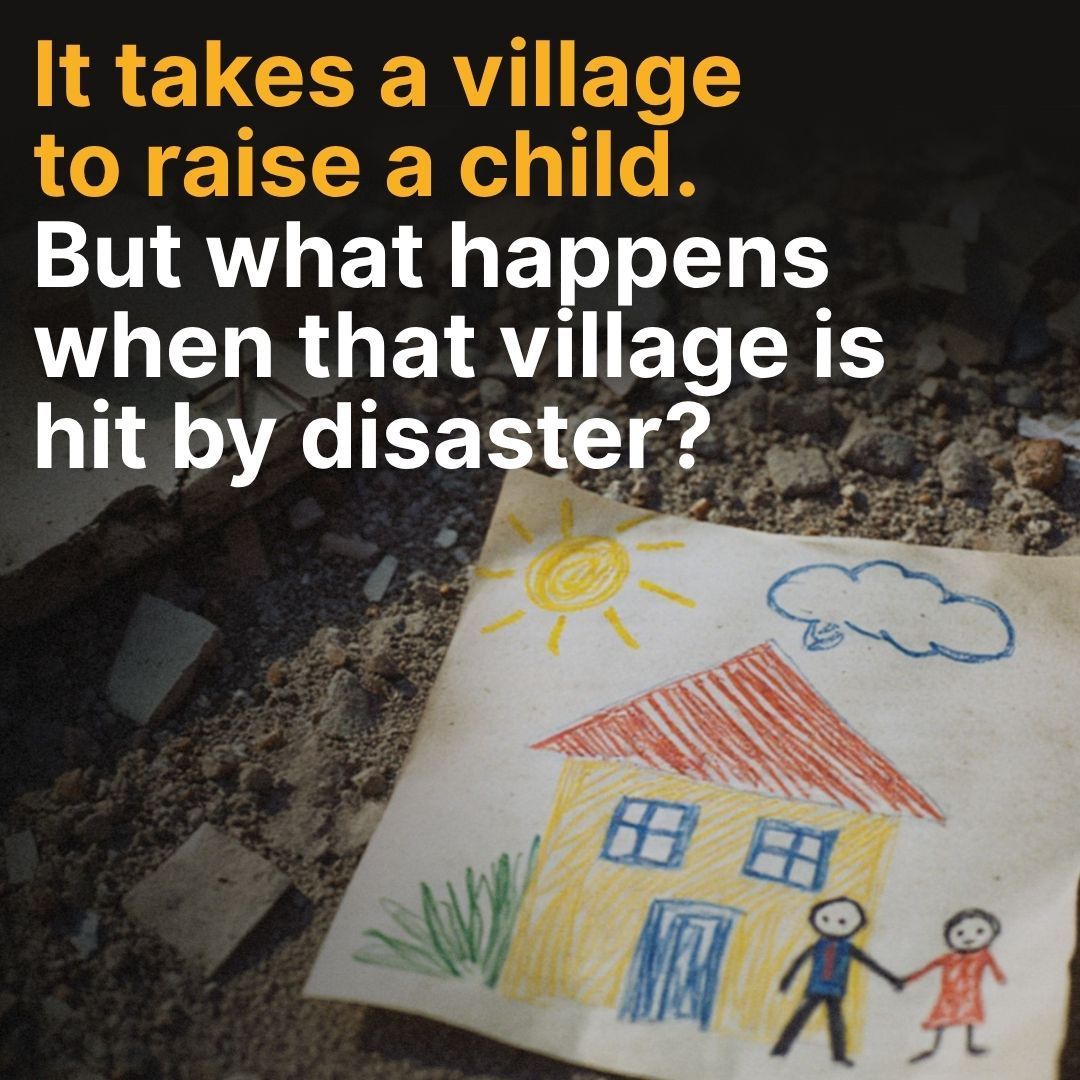
When ISSA members came together online in late November for the launch of ISSA’s Early Childhood Development in Emergencies Compendium, the conversation was not framed around if crises will happen again, but around what needs to be in place before they do, and how to ensure coordination at the system level.
Watch the launch event here.
When Early Childhood Systems Are Put to the Test
Across regions and contexts, emergencies have become a constant: war and displacement, earthquakes, pandemics, climate-related disasters. What changes, participants agreed, is not the need for response, but the level of preparedness and coordination embedded in early childhood systems.
The Compendium captures this collective learning. Drawing from member experiences across Europe and beyond, it frames ECD system preparedness around five interconnected components: emergency preparedness and response systems; flexible service delivery; workforce capacity and wellbeing; integrated mental health and psychosocial support; and governance, coordination, and accountability. Preparedness, as speakers stressed, is not a document on a shelf, it is a system’s ability to bend without breaking.
Lessons for Building Prepared ECD Systems
During the event, ISSA members shared first-hand experiences of how their organizations have responded to various recent crises. These are the experiences that have directly shaped the Compendium.
In Ukraine, Transcarpathian Regional Charitable Fund Blaho showed what flexible service delivery and community-rooted emergency response look like in practice. A small Roma-focused education centre became, almost overnight, a shelter and learning space for displaced families. With formal emergency ECD systems largely absent, Blaho’s ability to respond depended on what was already in place: trusted relationships with families, adaptable staff, and access to peer support and training through the ISSA network.
Similar dynamics emerged in contexts of displacement across Central Europe. International Child Development Initiatives (ICDI) and partners in Slovakia and Hungary illustrated how flexibility and psychosocial support can stabilise children’s lives in crisis. Through the rapid expansion of PlayHubs, Ukrainian children excluded from formal ECEC services gained access to predictable, restorative spaces for play, learning, and connection. These spaces also provided vital support for overwhelmed parents. At the same time, these experiences highlighted gaps that the Compendium seeks to address weak preparedness frameworks, limited mobile services, and insufficient coordination across sectors.
From Türkiye, ASAM and AÇEV shared experiences from the aftermath of the 2023 earthquakes that vividly illustrated how early childhood responses take shape in conditions of extreme disruption. The scale of devastation made conventional planning impossible. In the first weeks, needs assessments collapsed under the weight of survival, and early childhood support could only begin once basic needs — shelter, water, safety — were addressed. From there, mobile units, adapted curricula, safe spaces, and intensive caregiver support became critical for restoring continuity. As Koray Tanrısever (ASAM) put it, children cannot pause their development because a crisis is unfolding — a reminder that ECD responses must persist even when systems around them have collapsed.
Based on their experiences during the Covid-19 pandemic, Trust for Social Achievement and RISE Bulgaria, alongside Step by Step Albania, demonstrated the importance of workforce capacity, wellbeing, and adaptability. When services were rigid, they fractured. Where flexibility existed, organisations adapted — shifting to home-based play, low-tech learning materials, phone check-ins, digital peer support for educators, and practical guidance for caregivers in under-resourced communities. The pandemic exposed both the fragility of early childhood systems and the resilience of practitioners holding them together.
Taken together, these member experiences bring the Compendium’s framework to life. They show what happens when systems are stretched — and what allows them to respond with dignity, equity, and care. Emergencies expose weaknesses, but they also clarify priorities: workforce wellbeing, mental health support, service flexibility, and coordination cannot be optional add-ons.
We invite you to explore our interactive compendium: https://issa.nl/compendium/ecdinemergencies/
Watch the launch event here: