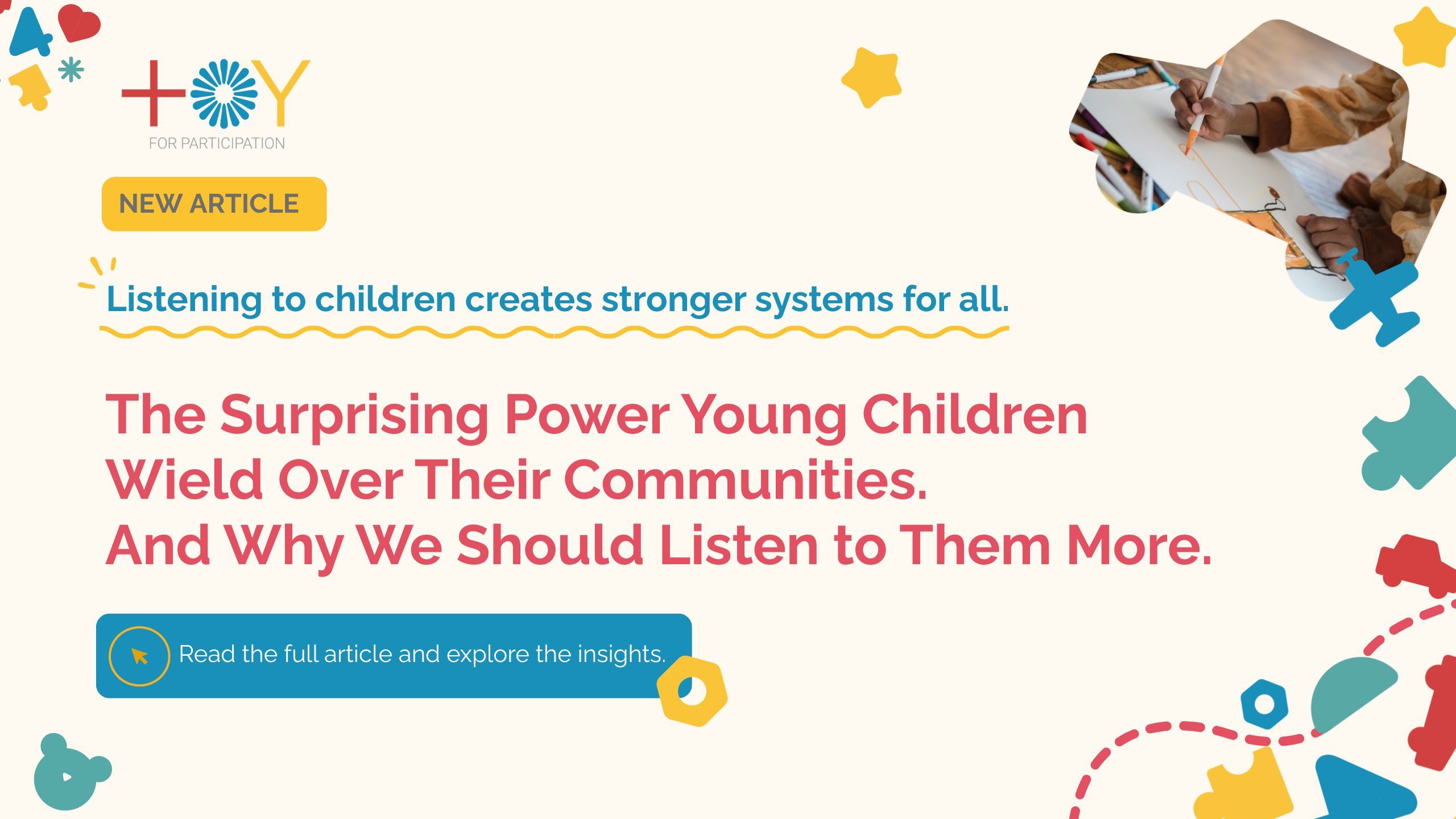
Across Europe, Play Hubs participating in the TOY4Participation project have been exploring what child participation can look like in everyday practice among young children. So far, many of the most meaningful changes have emerged through small moments and routines. But these small moments have major implications for better outcomes.
Across Play Hubs, child participation among the youngest has entailed choosing between activities during morning circles, voting on whether to play indoors or outside, helping create shared rules, or deciding how they want to participate in daily routines.
In some spaces, children voted by placing tokens into decorated boxes. In others, facilitators used picture cards to help younger children express preferences before the day began.
Elsewhere, participation emerged through changes to the environment itself. In Croatia, children used modular furniture to shape their own spaces inside the Play Hub. In Bulgaria, educators lowered artwork to children’s eye level after realizing much of the environment had been designed around adults rather than children. In Italy, multilingual books and open-ended sensory materials helped children explore identity, belonging, and self-expression more freely.
Several Play Hubs also began adapting participation around children’s different ways of communicating and engaging, such as in Latvia, where children helped update shared rules and decorated voting boxes used for collective decisions.
Many of these changes were simple. Yet across the Play Hubs, they gradually began influencing how children moved through the space, interacted with adults, expressed preferences, and participated in group life.
Research on early childhood participation has consistently found that small everyday opportunities for choice, negotiation, and self-expression can strengthen children’s confidence, autonomy, communication skills, and sense of belonging (Pascal & Bertram, 2012).
No single model has emerged across the project. Participation has looked different depending on the relationships, needs, ages, and realities of each community.
But across very different contexts, many partners are beginning to describe participation less as a separate educational activity and more as an ongoing practice woven into everyday interactions, routines, and decisions.
And in many cases, those small shifts have started opening up much bigger reflections about children’s confidence, belonging, and role within shared community spaces.
References:
Pascal, C., & Bertram, T. (2012). The impact of early education as a strategy in countering socio-economic disadvantage. CfBT Education Trust.