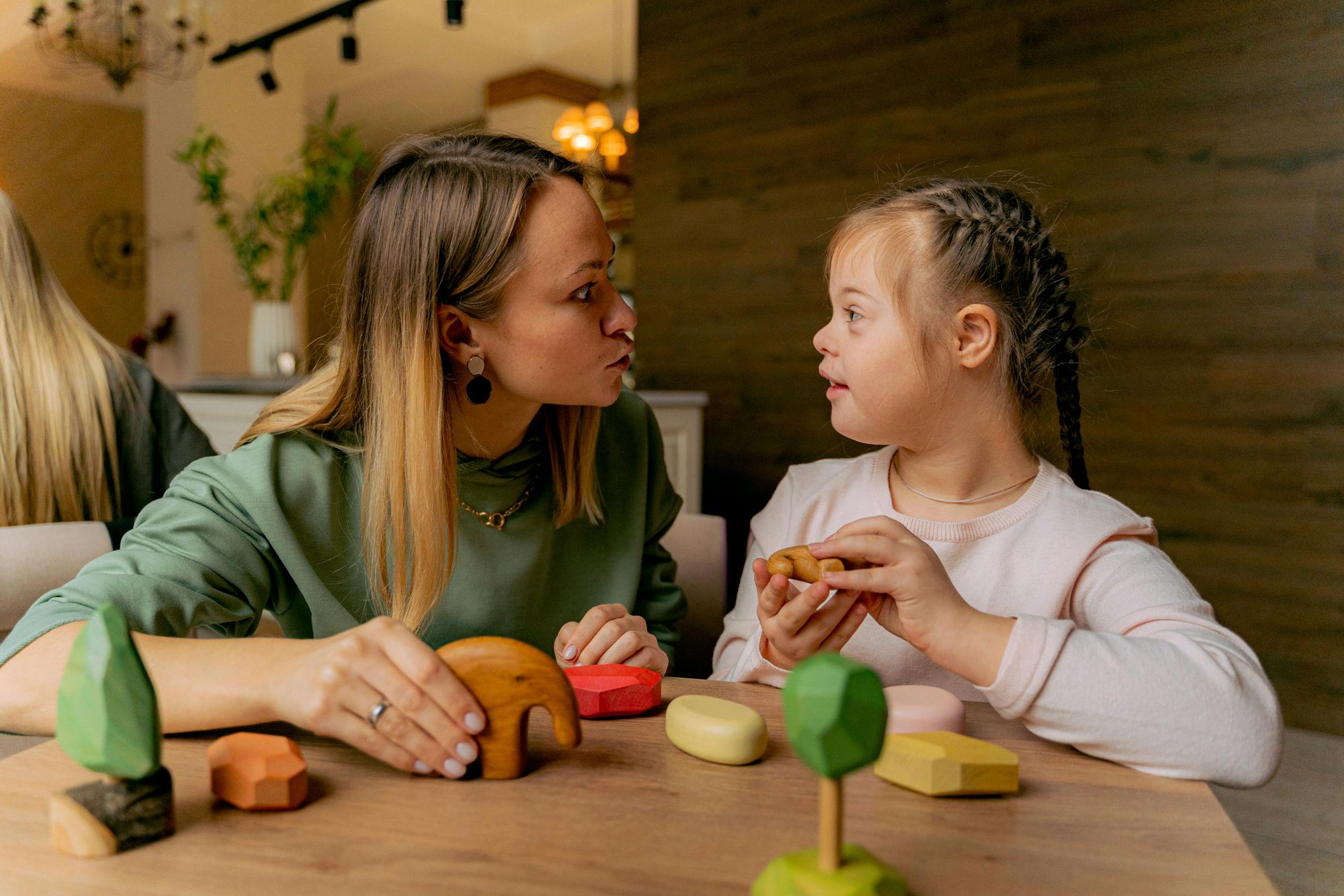
Making Space for Children's Voices Doesn't Mean Giving Up Yours
As the concept of child participation gains traction in education, health, and social work as well as among parents, so do the misunderstandings. For many adults, whether caregivers, educators, or other professionals, the idea can trigger a mix of curiosity, uncertainty, or even defensiveness. Does it mean children get to call all the shots? Are we expected to step back from our responsibilities?
Not at all. Here are five common myths about child participation and what the practice actually involves, along with small examples you can try.
1. “It means letting children make all the decisions.”
This is by far the most common misconception. In reality, child participation is about sharing decisions with children, not handing over control. Adults remain responsible for ensuring children’s well-being, safety, and development. But children are recognized as active agents with valuable insights. Participation means listening to them, taking their views seriously, and involving them in decisions that affect them in a meaningful, age-appropriate way¹.
💡 Try this: If you're making a change to a child’s routine, like moving bedtime or starting a new school, ask how they feel about it and what might help make it easier. You’re still guiding the decision, but they feel seen and involved.
2. “Young children are too little to participate.”
Even the youngest children can express preferences, emotions, and intentions. A baby turns their head away when overstimulated; a toddler points to a favorite toy; a preschooler explains what scares them and why. These are all forms of participation. As children grow, their capacity to reflect and engage increases, and so do the ways we can support their involvement². The key is tuning into their unique ways of communicating and providing consistent opportunities for expression.
💡 Try this: Let preschoolers vote on which story to read at circle time. You’re supporting democratic decision-making, even with very young voices.
3. “If I give children a say, I’ll lose control.”
In fact, the opposite is often true. When children feel their voices matter, they tend to be more cooperative, confident, and emotionally secure. Inviting participation doesn’t remove boundaries, it strengthens them by rooting them in mutual respect and understanding. It doesn’t mean every wish is granted. But when children understand how decisions are made and feel heard, they are more likely to accept and learn from those decisions³.
💡 Try this: When setting rules for a shared space (like a classroom or bedroom), ask children what they think is fair. Include their suggestions, and talk through why some ideas might not be used.
4. “Children don’t really know what’s best for them.”
Children may not have all the answers, but they are experts in their own lives. They know what brings them joy, what makes them feel safe or anxious, what helps them learn best. When adults combine their knowledge and experience with children’s lived perspectives, the result is better, more relevant decisions. Excluding children from conversations that impact them is a missed opportunity for deeper connection and more thoughtful outcomes.
💡 Try this: If a child seems hesitant about a planned activity or transition, ask why. You might learn something you didn’t consider, like sensory overwhelm, anxiety, or a past negative experience—and adjust accordingly.
5. “It’s just a buzzword, it won’t work in real life.”
Child participation isn’t a trend. It’s a right, enshrined in the UN Convention on the Rights of the Child, and backed by decades of research and international practice. It works best when integrated into everyday moments: asking for children’s input during classroom planning, involving them in household routines, or giving them a voice in decisions about their care. Participation isn’t one big conversation, it’s built through many small, consistent acts of inclusion.
💡 Try this: Invite children to co-create a weekly schedule or visual routine chart. Use photos or drawings if they don’t yet read, and talk through the steps together.
So what’s the takeaway?
Child participation doesn’t mean losing control or reversing roles. It means working in partnership. It means acknowledging that children have thoughts, feelings, and experiences that matter now, not just in the future. And it means taking the time to ask, listen, reflect, and respond.
When we do, we raise children who feel respected and who grow into adults who respect others.
Stay tuned for our forthcoming Toolkit being developed under the TOY for Participation project, which will support professionals working in non-formal as well as in formal ECEC settings to embed meaningful child participation from the start and accompany parents and communities along the child’s development journey.
Footnotes
- United Nations (1989). Convention on the Rights of the Child, Articles 12–13.
- Lansdown, G. (2010). The Realisation of Children’s Participation Rights: Critical Reflections.
- Thomas, N. (2007). Towards a theory of children’s participation. The International Journal of Children’s Rights, 15(2), 199–218.
About TOY for Participation
TOY for Participation is a European initiative co-funded by the European Commission and led by ICDI, working with partners across 8 countries to promote young children’s right to participate. Together, we’ve reached over 40,000 children and families through 40+ Play Hubs, with more to come. Learn more about the project and the partners on our website: https://www.reyn.eu/toy4inclusion/toy-for-participation/