Why integrated systems
A child does not live in one sector
We talk about early childhood in sectors, health, education, social protection, family support, because that is how ministries and budgets are organised. Children do not experience their lives that way.
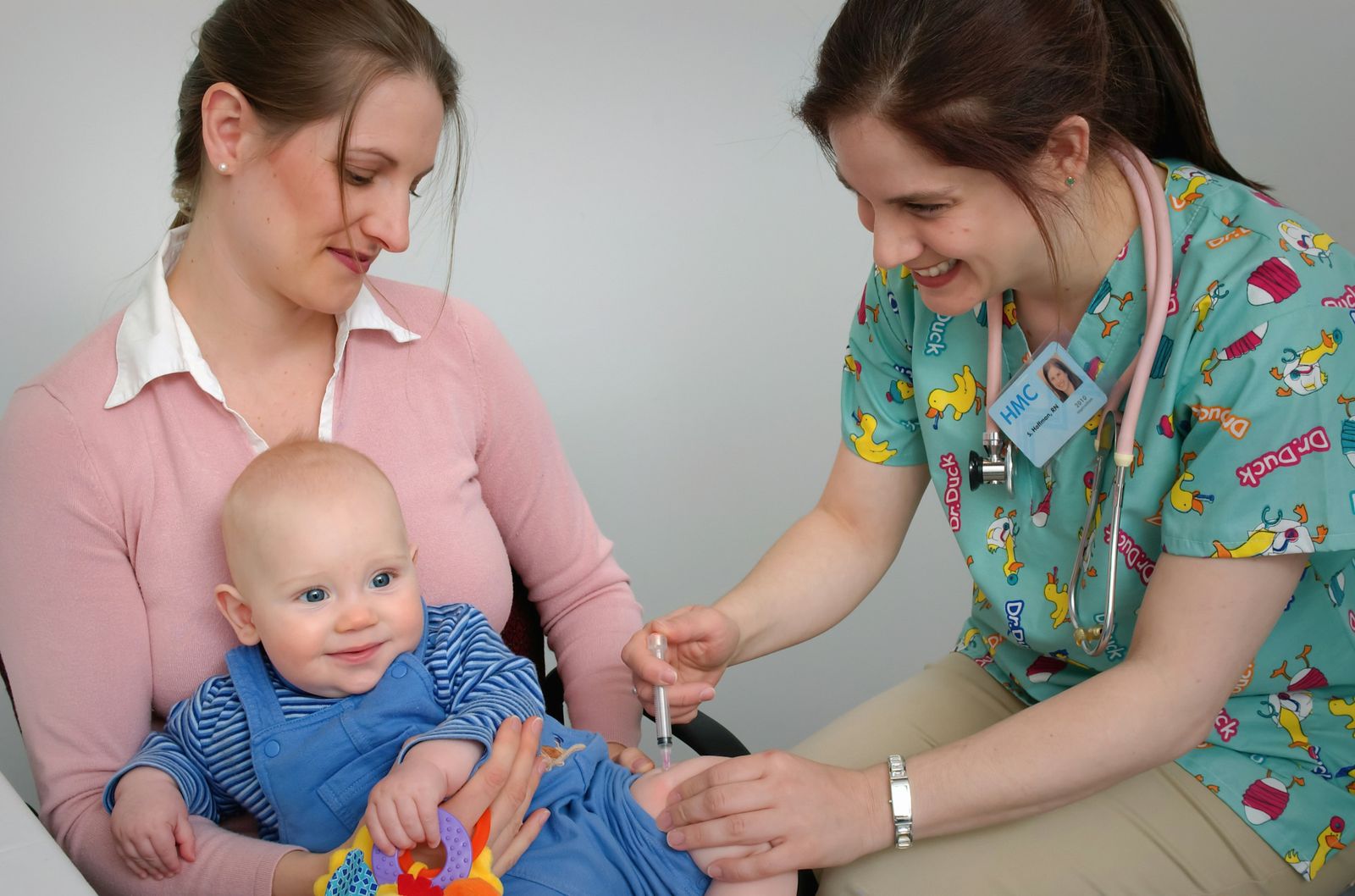
A one-year-old who isn’t speaking yet is a health question, an education question and a family question at the same time. Whether they get help depends on whether the nurse, the kindergarten teacher and the social worker ever speak to each other. In many communities, they do, but anecdotally, case by case, when someone knows somebody or feels compelled to pick up the phone.
Integration means making that happen on purpose.
Development happens at 360° degrees
Early childhood development asks for a broader understanding of policies, services and programmes than any one sector can hold. All of them shape how a child grows. And there are many ways in which services are reaching children:
- Formal, non-formal and informal — the nursery or kindergarten, the playhub, the home or playground
- Centre-based, home-based, community-based — the classroom or group in crèche, the home visit, the library story hour
- Health-focused, education-focused, social protection-focused
- Public and private
A comprehensive early childhood strategy therefore covers more than formal services. It covers:
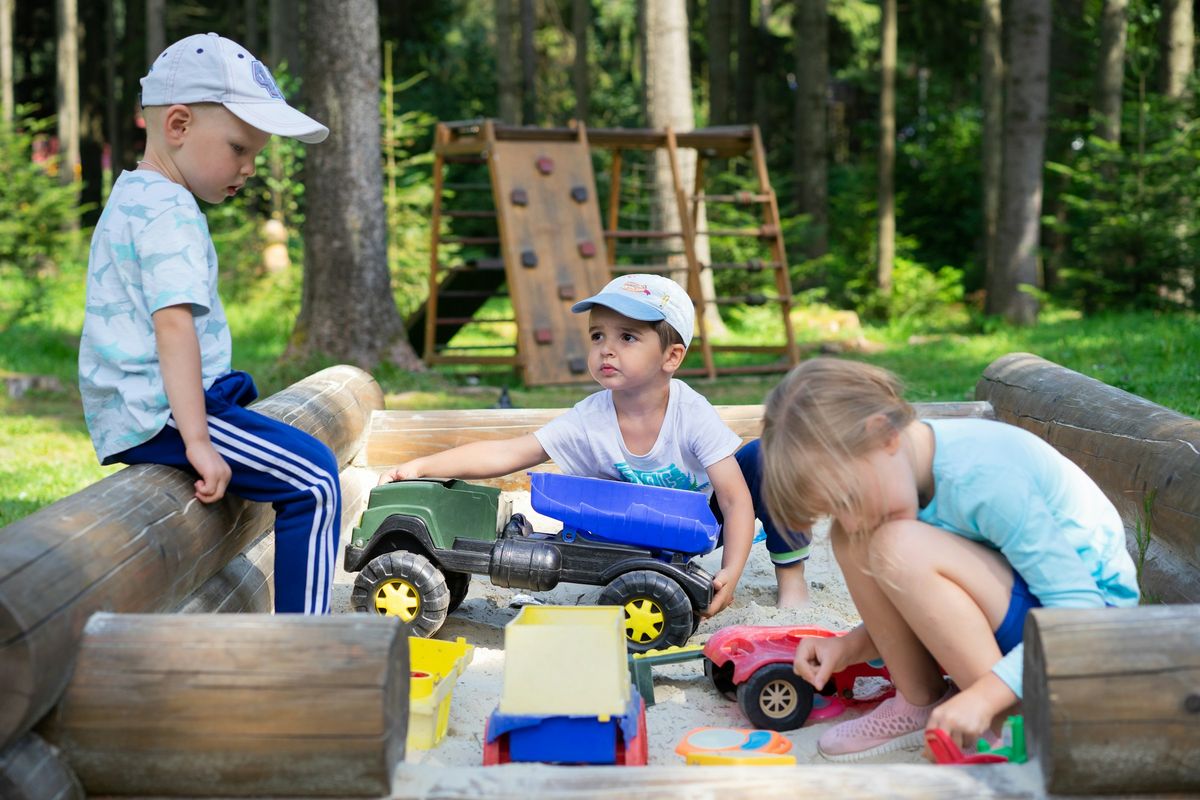
- The places children live in — child- and family-friendly planning: playgrounds, green space, public transport, pedestrian areas, safe crossings
- The services all children use — crèches, kindergartens, health care, social protection, and the venues where children and their caregivers can meet, play and interact
- The support some children and families need — educational support, health care and social services for families, and therapeutic services for specific children
Two directions of connection
Horizontal connection
links the services a child and family use at the same time — the paediatrician, the parenting programme, the playgroup, the family meeting place, the neighbourhood itself. It takes collaboration, cooperation, coordination, regular communication, shared values and joint training.
Vertical connection
links the services a child uses one after another — prenatal support, then the health visitor, then the playgroup, then the daycare centre, then preschool, then primary school. It takes deliberate work on transitions, so that nothing a family has already explained has to be explained again from scratch.
Without both, children and families fall through the cracks between well-meaning services.
The same package of services for everyone — and more for those who need more
Integrated systems are not only about coordination. They are about who actually benefits.
The progressive universal model sets out three tiers:
- Universal — the same basic package of services for all children and families: health promotion, healthy lifestyles, support with common childhood challenges, early detection of difficulties, access to information and benefits.
- Enhanced — additional care with inter-sectoral coordination for some children and families: counselling, work with the caregiver–infant relationship.
- Intense — for those children and families with identified special needs: intensive services facilitated through multi-disciplinary case management.
Families from all walks of life need support. Some face several disadvantages at once. A good system does not choose between universal and targeted provision — it builds one on top of the other.
Framework from the UNICEF–ISSA package for Strengthening the Capacity of Home Visitors.
What we are up against
These are the challenges this work exists to address. They came out of ISSA’s own analysis across the region, and they showed up again in almost every situation analysis in every country.
- Siloed approaches to early childhood development
- A vacuum of local leadership on early childhood
- Community needs unknown which remain unmet
- Growing inequities in who accesses and benefits from early childhood services
- Underfunding of the sector at the same time as demand for it rises
- Services that are not responsive to what families actually need
- Inefficient use of the resources a community already has
That last point deserves emphasis. Again and again, the local situation analyses found that communities had more than they realised — expertise, buildings, willing people, existing programmes — but no mechanism to see it, connect it or point it where it was needed.
The evidence for acting early
Source: The Primokiz Process: A Handbook. Developing a comprehensive early childhood strategy. (2016) Jacobs Foundation.
1. Every child has a right to be protected, to develop, to play and to education — from birth
The UN Convention on the Rights of the Child emphasizes that all rights are indivisible and interdependent.
2. Young children are learning constantly, through play, everywhere
Estimates suggest that only a share of what children learn is acquired within formal education settings. Much of their learning happens through play, relationships and everyday experiences — in the family, with peers, in childcare and across the wider community. This makes the quality of the environments surrounding young children a central part of early childhood policy.
3. Early learning lays the foundation for later learning
The skills children develop in the early years shape how they engage with learning once they enter school. Through conversation, play, exploration and everyday problem-solving, children build the language, thinking and early mathematical understandings that later support reading, writing and numeracy. Strong foundations in the early years make it easier for children to take on more complex learning as they grow.
4. Quality early childhood education and care promotes equitable opportunity
Children arrive at preschool with dramatically different skills. Evidence shows that children who fall behind early find it difficult to catch up later.
5. It eases the burden on children and schools
Good early provision lowers the cost — in money, time and staffing — of supporting developmental delays later on.
6. It builds bridges
Accessible, network-based programmes for young children and parents promote social integration, social cohesion, and open conversations about parenting, child development and support systems.
7. Countries with strong early systems have better PISA scores
Fifteen-year-olds in countries with well-developed early childhood systems do better in reading, mathematics and science.
8. Early childhood investment pays off
Every dollar a society invests returns at least seven times more. The later an intervention comes, the lower its social benefit — and often the higher its cost.
9. It combats poverty
Early education lays the foundation for a successful educational trajectory, and a system tailored to children’s and parents’ needs supports the work–life balance that reduces family and child poverty.
And arguments from neuroscience
Brains aren’t just born. They’re built.
- Early experiences build brain architecture.
- That architecture shapes behaviour, learning, and lifelong physical and mental health.
- Brains are built in stages: more complex circuits rest on simpler ones.
- Children cannot build strong architecture on their own. The foundation has to be laid throughout early childhood, starting prenatally, through quality interactions.
On stress
The body responds to stress by releasing hormones for fight or flight. Elevated too far and for too long, these disrupt brain architecture. There are three kinds:
- Positive stress is part of healthy, normal development.
- Tolerable stress does no harm if supportive caregivers are present.
- Toxic stress can damage brain architecture — and not only brain architecture.
The presence of a reliable adult is what separates the second from the third. That is a system design question as much as a parenting one.
Children need to develop in environments that prevent them from toxic stress exposure and ensure a healthy stimulation of their development, wherever they live and grow.