Knowledge Hub
All the resources stored here have been created by ISSA Members
or ISSA Secretariat in partnership with Members or partners.



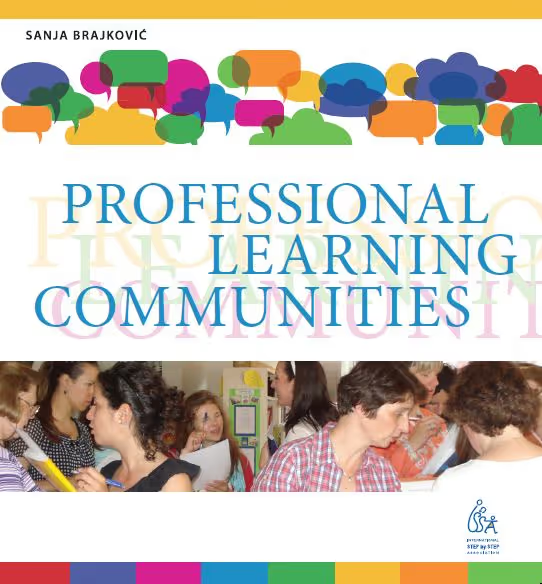
Professional Learning Communities
The book, Professional Learning Communities, provides both the theoretical background and the practical experience as it came about while building Professional Learning Communities in Croatian schools around ISSA’s Definition of Quality Pedagogy and the Quality Resource Pack. The book provides an in depth overview of research and findings that underline the importance of professional development based on teacher's and school’s needs, and how a learning community can be created by teachers through professional collaboration. The book describes all developmental steps of a learning community, offers lessons learned and practical guidelines for activities.
Open Academy Step by Step, ISSA’s member organization in Croatia, has worked for many years on developing Professional Learning Communities (PLCs) within preschools and primary schools, as a school-based professional development model using ISSA’s Quality Resource Pack. They developed a training module for teachers who are leaders of learning communities. As a result of their experience, the NGO published the book Professional Learning Communities (PLC) in Croatia, authored by Sanja Brajkovic, at that time Program Director at Open Academy Step by Step.The book, which promotes ISSA’s definition of Quality Pedagogy and the Quality Resource Pack, provides both theoretical background and practical experience in building PLCs in Croatian schools.
‘The values of this book are numerous. It provides an overview of research and findings that underline the importance of professional development for teachers based on teacher’s and school’s needs, which teachers create through professional collaboration. Furthermore, the book describes in detail all the steps in the development of a learning community, gives warning of possible problems and provides practical guidelines for activities. Finally, the special value of the book is that it was built on experience in Croatian schools, which confirms the high motivation of our teachers for changing themselves and the school from the "inside."’ (Prof Vlatka Domovic, Reviewer of the book).
Published in:
2014
Organization(s):
Open Academy Step by Step, Croatia
Language:
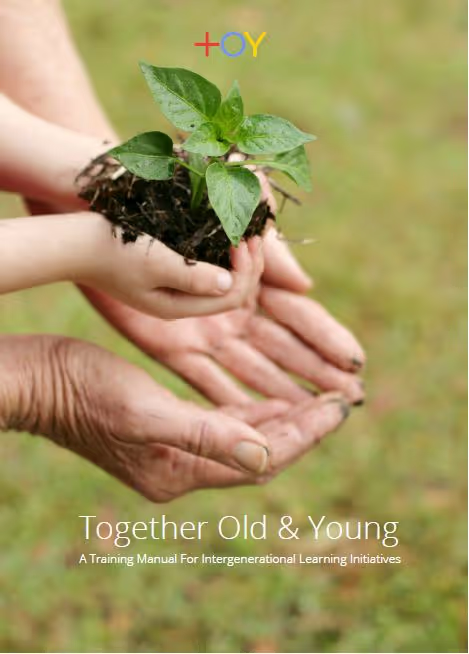
Together Old and Young: a Training Manual for Intergenerational Learning Activities
Launched in 2012, the TOY project (Together Old and Young) is about bringing young children, up to 9 years old, together with older people for them to meet, get to know each other, learn and have fun. Funded by the European Commission and implemented in several European countries like The Netherlands, Portugal, Italy, Spain, Poland, Ireland and Slovenia, the project counts now with a practical manual on how to organize intergenerational workshops.
The toolkit provides background information on this new learning approach, guidelines on how to structure and organize a TOY training workshop and five modules with examples of activities, hand-outs and additional research material.
button[src="https://cdn.prod.website-files.com/694724257114b734f4bb749a/6985cc5ba2fa85d67abbf4bf_TOY_manual.pdf"][label="Download"]Published in:
2014
Organization(s):
ICDI - International Child Development Initiatives
Language:
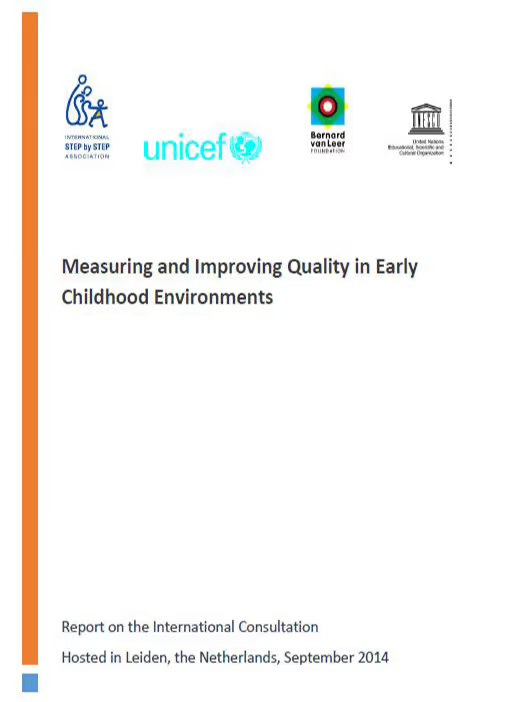
Measuring and Improving Quality in Early Childhood Environments
Measuring and Improving Quality in Early Childhood Environments report reflects discussions and conclusions from the international consultation organized by ISSA, UNICEF, UNESCO and the Bernard van Leer Foundation, in partnership with the World Bank and the Brookings Institution met in in September 2015 in Leiden, the Netherlands to draw attention to the importance of measuring and improving quality in early childhood environments.
Early childhood experts and stakeholders representing different regions of the world, who have experience in the measurement and improvement of quality of early years services came together to identify points of consensus in measuring quality and future directions for increasing the strength, innovation and cultural applicability of quality measurement.
Discussions around quality in early childhood environments have increased in recent years, while dilemmas concerning methodology, measuring and consistency remain largely unresolved. The aim of the meeting was to establish an agenda around which these questions can be answered.
This exceptional opportunity for specialists from around the world to converge and combine their thoughts and skills was held in Leiden’s Child Rights Home.
You can read the full report here.
button[src="https://cdn.prod.website-files.com/694724257114b734f4bb749a/6985cf4e567d6d1d294cf87a_Measuring_and_Improving_Quality_in_Early_Childhood_Environments2_1.pdf"][label="Download"]
Published in:
2014
Organization(s):
ISSA - International Step by Step Association
Language:
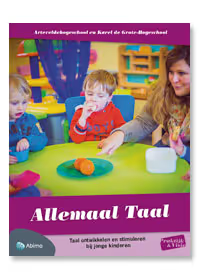
All About Language
All about language is a resource offering concrete tips and ideas to support professionals in language stimulation for young children. It is generally acknowledged that language development is an important aspect of the overall development of children and consequently, a stimulating language environment is a crucial aspect of quality early childhood education and care. Language cards and coaching cards are immediately inspiring and answer frequently asked questions about language stimulation and language coaching. The book is useful for caregivers as well as for their coaches, and can be integrated in the bachelor programs for early childhood professionals.
Published in:
2014
Organization(s):
Artevelde University College
Language:
Contact:
Ine Hostyn, ine.hostyn@arteveldehs.be

Invest in Quality Teachers
Invest in Quality Teachers is an easy to use advocacy leaflet aiming to promote the importance of quality educators and mobilize policy and governance level to invest in educators, their education, professional development, working conditions and status of profession.
Evidence shows that high quality teaching derives from qualified, motivated and supported teachers. The key to an effective and successful education system lies in improving the teacher´s practices, through:
- Providing policy support and funding for high quality pre-service and in-service training of early childhood educators.
- Developing responsible and responsive practices that meet the needs of children and families.
- Ensuring good working conditions, appropriate wages and paid time for professional development.
- Creating competent Early Childhood Development systems that nurture reciprocal relationships between individuals and teams, institutions and competent governance at the policy level.
With its twenty years of experience in the field of early childhood education and a network of more than 80 NGO´s worldwide, ISSA firmly believes that through the implementation of its Quality Resource Pack, decision makers are investing in quality teachers, making a lifelong difference for their society and the new generations.
Russian
button[src="https://cdn.prod.website-files.com/694724257114b734f4bb749a/6985cea75eb0b715b71cd904_Advocating%20for%20Quality_Decision-makers_ISSA%20(1).pdf"][label="Download"] button[src="https://cdn.prod.website-files.com/694724257114b734f4bb749a/6985cea8c2a180a3ebb3cf6d_decision-makers-ISSA-RU.pdf"][label=""]Published in:
2013
Organization(s):
ISSA - International Step by Step Association
Language:

Give Your Child the Best Start in Life
Give Your Child the Best Start in Life is an easy to use advocacy leaflet aiming to inform parents and caregivers how important the role is that they play in a child's life. Building on ISSA Quality Principles this tool is aiming to help parents and caregivers understand what Early Childhood Education and Care services should provide for their children, and provides guidance in choosing quality services.
As parent, you are your child´s first educator. As your child moves from home to an early education facility, building a relationship with the educators becomes important for your child´s well being. Therefore, ISSA supports parents in identifying a quality early childhood environment that should meet the following set of principles:
- Interactive learning, with constant communication between the educator and the child.
- An inclusive approach to the family and the community.
- Embracing inclusion, diversity and democratic values.
- A teaching process that is well planned and continuously assessed.
- Effective learning strategies based on the crucial role of play.
- A warm, welcoming and personalized learning environment.
- An ongoing professional development of the educators.
ISSA firmly believes that parents are key actors in shaping an enriching environment for their children, making a difference in the lives of children, families and communities through advocating for quality education.
Russian
button[src="https://cdn.prod.website-files.com/694724257114b734f4bb749a/6985ce6e6ca73e3f96dab1ef_Advocating%20for%20Quality_Parents_ISSA.pdf"][label="Download"] button[src="https://cdn.prod.website-files.com/694724257114b734f4bb749a/6985ce6f028979a5a0003f26_parents-flowery-ISSA-RU%20(1).pdf"][label=""]Published in:
2013
Organization(s):
ISSA - International Step by Step Association
Language:

Early Childhood Educators Change Lives
Early Childhood Educators Change Lives is an easy to use advocacy leaflet aiming to promote importance of the role that educators play in young child's life and profession in general. Building on ISSA Quality principles it offers 7 ‘golden rules’ to help them keep their personal, social and professional knowledge in good health at all times.
As an early childhood educator, you are one of the child's most important guides into his/her surrounding world, spending hours and hours daily in direct interactions with young children. As research has shown:
- The ways that educators teach strongly influence a child’s learning outcomes.
- Educators can have a positive impact on a child’s progress regardless of his/her socio-economic background and level of preparation for schooling.
- Proactive educators invest great energy on individual progress. They adapt their teaching strategies for each child and ensure warm and caring interactions all around.
- Quality educators do not see a child’s learning as a result of his/her personal strengths and capabilities alone. They take into account individual differences and acknowledge their own potential in shaping child’s learning outcomes. They do not leave the responsibility of the child’s development to the family alone.
You have the power to make a difference! In ISSA we are aware that turning educational policies into reality can be hard work. To support educators in their professional development, ISSA has developed the Quality Resource Pack through which they can find ways to broaden their skills and assess their work.
Click below for the russian version:
button[src="https://cdn.prod.website-files.com/694724257114b734f4bb749a/6985ce32028979a5a0001b83_Advocating%20for%20Quality_Teachers_ISSA.pdf"][label="Download"] button[src="https://cdn.prod.website-files.com/694724257114b734f4bb749a/6985ce335eb0b715b71c86ef_teachers-flowery-RU.pdf"][label=""]Published in:
2013
Organization(s):
ISSA - International Step by Step Association
Language:
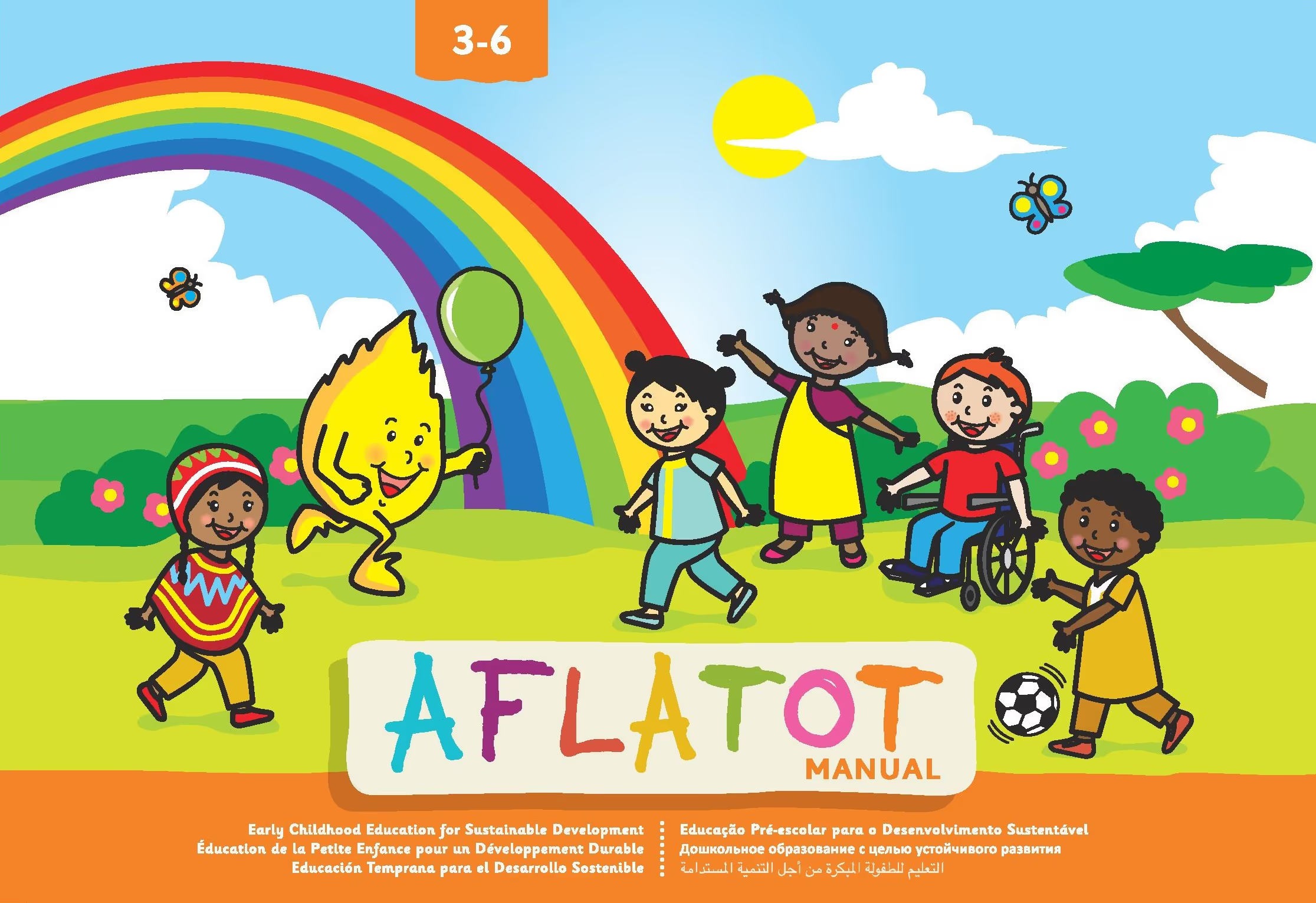
AFLATOT Manual (Social and Financial Education for Early Childhood)
The AFLATOT program for children who have not yet entered primary school (typically 3 to 6yrs old) aims at providing the building blocks of social and financial literacy, equipping children with the skills and competencies that will ensure they contribute to sustainable development – individually and collectively. The AFLATOT Manual should be used by professional teachers or facilitators who are equipped with Aflatoun technique and pedagogic to deliver sessions from the manual. Aflatoun believes that children need a balance of social and financial education if they are to become agents of change in their own communities.
Even in their early years, children are highly capable and competent, regardless of their backgrounds, experiences and ages. Children are active, self-motivated learners eager to understand the world in which they live. They learn best when supported through adult interactions. The early childhood years offer a unique window of opportunity in which to nurture a child’s physical, intellectual, emotional and social development. Positive learning experiences in this period lay the firm foundation that is essential if children are to reach their full potential.
Published in:
2013
Organization(s):
Aflatoun Child Savings International
Language:
Contact:
Tetiana van Waveren-Valkova, tetiana@aflatoun.org
Manual for Diversification of Programs for Preschool Education
Two ISSA members, CIP (Center for Interactive Pedagogy/Serbia) and VBJK/Belgium, co-authored this manual as a result of the work they carried out under two large projects in Serbia:
- IMPRES Project – Improvement of Preschool Education in Serbia, with funding from the European Commission and the Ministry of Education, Science and Technological Development/Serbia
- Kindergarten without Borders: Expanding Early Learning Opportunities for Young Children - supported by UNICEF and IKEA.
Both projects have focused on creating conditions to increase the coverage of children age 3 to 5 in less developed areas of Serbia with high quality preschool programmes of different content and duration. For that it was
crucial to create new understanding that preschool provision can be improved not only through building new kindergartens and organizing full day programmes, but also through development of diversified programmes adjusted to the needs of children, parents and communities as well as to the capacities of Local Self-Governments.
Published in:
2013
Organization(s):
VBJK - Center for Innovation in the Early Years & CIP-Center for Interactive Pedagogy
Language:

Growing through Sharing Together: Needs and Aspirations of Romani Early Childhood Professionals
Growing through sharing together: Needs and aspirations of Romani early childhood professionals report was developed to support ISSA and Early Childhood Program at the Open Society Foundation to launch The Romani Early Years Network (REYN). The selected group of practitioners provided information through questionnaires and interviews regarding their continuous professional development needs stating that it would be of great importance to combine formal and in-service training which would result in either certification or diplomas. They also showed significant interest in study-visits as a form of in-service training, and saw value in participating in a European ECD network supporting emerging and established Romani early childhood development professionals, as well as other professionals working in the field of ECD with Roma, Ashkali, Egyptian, Sinti, Gitano and other communities.
Given the results of the study, ISSA and OSF/ECP moved forward with launching a new partnership initiative in the second half of 2012. The Romani Early Years Network (REYN) is a network hosted and managed by ISSA, launched as a partnership with Open Society Foundations' Roma 'Kopaçi' initiatives of the Early Childhood Programme. The Network focuses on emerging and established Romani early childhood development professionals, as well as other professionals working in the field of ECD with Roma, Ashkali, Egyptian, Sinti, Gitano and other communities. REYN's main purpose is to support the development of skills and good practice, extend the knowledge drawn from experiences of working effectively with Romani families and children in ECD, establish effective partnerships between Roma and other ECD professionals and paraprofessionals and support professional development for those working with these marginalized and excluded groups. Practitioners who are interested in joining the REYN network are encouraged to write to membership@issa.nl.
button[src="https://cdn.prod.website-files.com/694724257114b734f4bb749a/6985ce73ffec81957ce1883f_Mapping_the_Interests_and_Needs-WEB.pdf"][label="Download"]Published in:
2013
Organization(s):
ISSA - International Step by Step Association
Language:

Early Childhood Education and Care Services for Children from Birth to Three years Old
The report Early Childhood Education and Care Services for Children from Birth to Three years Old contains results from the survey run among ISSA members to map the strengths, weaknesses, and the gaps that exist in early childhood systems in their respective countries for the birth to three age group. Particular attention was paid to legislations, types of services, accessibility, financing, quality insurance and the workforce.
button[src="https://cdn.prod.website-files.com/694724257114b734f4bb749a/6985ce31cfff02717baa0309_3-6-Early_Childhood_Services_for_Children_from_Birth_to_Three_Years_Old.pdf"][label="Download"]
Published in:
2013
Organization(s):
ISSA - International Step by Step Association
Language:
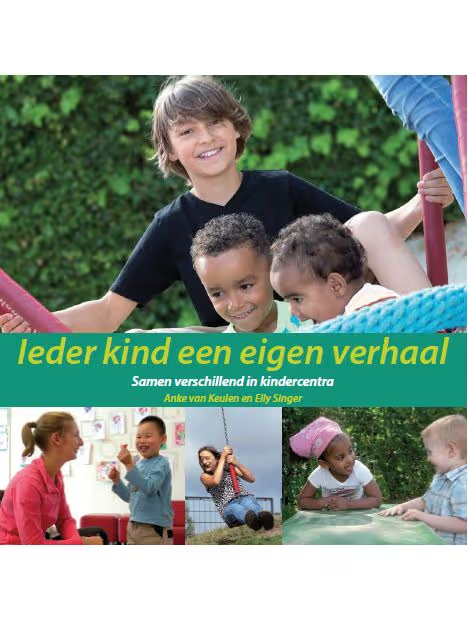
Each Child its Own Story: Diversity in Child Care Centers
Each child its own story: Diversity in child care centres (from birth to 13 years) is a book acknowledging that every child starting at a childcare centre (day care, preschool and afterschool care) brings along its own experiences and its own history. An early childhood centre is like a micro society for children, families and professionals where diversity plays a key role among children, the adults and their ideas. The centre is a meeting place that gives a feeling of belonging to the child and where nobody is less or more important.
Each child its own story tells about respect for diversity, handling similarities and differences in issues like preferences, talents and cultural backgrounds. Attention is also paid to children with special needs. This publication has been written for parents, educators and teachers inviting them to learn from each other and to experience how diversity can broaden their horizons and their world. So they can encourage each child to feel welcome. The publication is based on the Dutch national pedagogical framework Diversity in child care centres 0-13 years’ (2012) from the same authors.
This publication is available only in Dutch.
button[src="https://cdn.prod.website-files.com/694724257114b734f4bb749a/6985cc66fefdf169b526772d_Ieder_kind_LR_totaal-1.pdf"][label="Download"]Published in:
2013
Organization(s):
Bureau MUTANT
Language:
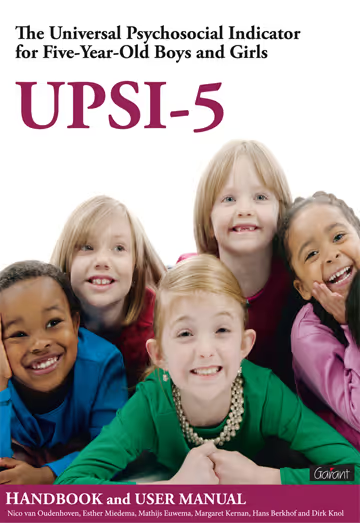
UPSI- 5: The Universal Psychosocial Indicator for Five-Year-Old Boys and Girls
The UPSI-5 is an easy to administer instrument to measure the psychosocial well-being of 5 year old children. The UPSI-5 consists of 29 questions which can be filled in by someone, for example a teacher or a social worker. The UPSI-5 provides an urgently needed counterpart to the strictly physical indicators and mortality indicators commonly used to measure young children’s well-being and survival.
The UPSI-5 can be used for comparative research, programmatic as well as for lobby and advocacy purposes. Specifically, the UPSI-5 might be used:
- For baseline and evaluation of programmes aimed at improving young children’s (psychosocial) well-being;
- Comparative research, for instance drawing comparisons between provinces/ regions in a particular country as well as between countries;
- Longitudinal study, whereby comparisons are made at different points in time over longer periods of time;
- Analysis of correlations between the UPSI-5 of a population of children and other indicators such as under five mortality rates (U5MR), school enrollment and achievement indicators, socio-economic status, and other relevant social and health related indicators. In a similar vein, UPSI-5 results might be used against the backdrop of an analysis of current child welfare and protection policies;
- Finally, we expect that the UPSI-5, in combination with, for instance, correlations with health and welfare indicators, can be used as powerful means to support broad child welfare lobby and advocacy initiatives.
Published in:
2012
Organization(s):
ICDI - International Child Development Initiatives
Language:
Contact:
Margaret Kernan, margaret@icdi.nl
Summer Program Curricula
Summer Program curriculums contain different educational activities to be implemented with the children ages 6 - 12. Each curriculum has 4-5 weeks of planned activities.
Published in:
2012
Organization(s):
Balkan Sunflowers Kosova
Language:
Contact:
Muhamet Arifi, muhamet.arifi@balkansunflowers.org

School Mediation Training Manual
School Mediation Training Manual contains 20 training modules and can be used for teachers and school mediators with the aim to prevent dropouts, increase cooperation between educational stakeholders and parents involvement.
button[src="https://cdn.prod.website-files.com/694724257114b734f4bb749a/6985cfd35eb0b715b71d8f54_Kosovo%20School%20Mediation%20Manual%20ENG.pdf"][label="Download"]Published in:
2012
Organization(s):
Balkan Sunflowers Kosova
Language:
Contact:
Muhamet Arifi, muhamet.arifi@balkansunflowers.org

Professional Development Tool for Improving Quality of Practices in Primary School
This tool specifically illustrate (for primary school levels of education) each of the 85 indicators of quality in the ISSA Principles of Quality Pedagogy. It deconstructs how educators move on a continuum from inadequate practice, to a good start, to quality practice and then into transformational practice whereby they begin to create systemic change in the teaching paradigm and practice. Concrete examples of the different kinds of action educators may take at different levels of practice are given for each indicator of quality, in a continuum format.
However, the tool also recognizes that quality is a concept that is socially constructed. The tool was designed with dialogue in mind by asking a question at the end of each indicator: What are other ways that educators can...? Although the tool may be very useful in describing levels of practice, there are always other examples of behaviours or actions in each of levels for each of the indicators, and such examples could be developed by educators working with others so that different perspectives can be presented and reflected upon. The examples are meant to be changed based on the specific and diverse contexts that educators work in, and not as fixed indicators.
button[src="https://cdn.prod.website-files.com/694724257114b734f4bb749a/6985cfa7b64497b92fbcfa1d_ISSA-PDT%20Primary%20school-EN-excerpt-pp%201-21.pdf"][label="read the excerpt"]Published in:
2012
Organization(s):
ISSA - International Step by Step Association
Language:

Professional Development Tool for Improving Quality of Practices in Kindergarten
Professional Development Tool for Improving Quality of Practices in Kindergarten illustrates each of the 85 indicators of quality in the ISSA Principles of Quality Pedagogy. It shows how early childhood educators advance and move on a continuum from inadequate practice, to a good start, to quality practice and then into transformational practice. Concrete examples of the different kinds of action educators may take at different levels of practice are given for each indicator of quality, in a continuum format. The tool was designed to foster a dialogue on quality when different perspectives can be presented and reflected upon.
The examples are meant to be changed based on the specific and diverse contexts that educators work in, and not as fixed indicators.
button[src="https://cdn.prod.website-files.com/694724257114b734f4bb749a/6985cfa5028979a5a0010525_ISSA-PDT%20Preschool-EN-excerpt-kinderg-pp1-21.pdf"][label="read the excerpt"]
Published in:
2012
Organization(s):
ISSA - International Step by Step Association
Language:
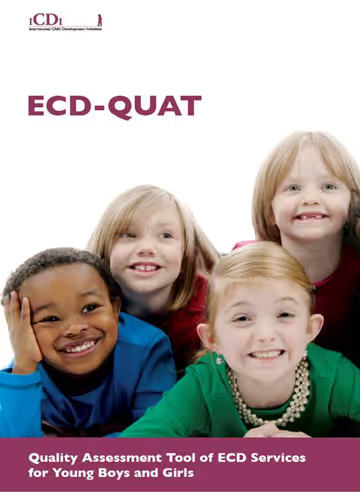
ECD-QUAT: Quality Assessment Tool for Early childhood Development Services for Young Children
Ensuring quality in early years services is essential for young children's well-being and healthy development. The Early Childhood Development Quality Assessment Tool or ECD QUAT developed by ICDI is a free and accessible tool for practitioners, parents and communities to jointly measure and improve the quality of services where young children spend their time. The six dimensions of the ECD QUAT: child friendliness; connectedness; safety, health and protection; staffing; sustainability and agency are based on the UN Convention on the Rights of the Child.
ICDI believes that quality measurements gain additional meaning when framed in open and ongoing discussions, where contextual variables, inputs from all stakeholders, values, visions and dreams all have a place. Ultimately, there has to be a commitment by all involved to improve quality for children and their families. The ECD QUAT is designed to support this process. It can be adapted for use in a wide variety of services for young children such as daycare centres, pre-schools, kindergartens, toy-libraries and home based provision. The ECD QUAT is also available in other versions: for toy libraries, for ECEC Play Hubs.
Published in:
2012
Organization(s):
ICDI - International Child Development Initiatives
Language:
Contact:
Margaret Kernan, margaret@icdi.nl