Knowledge Hub
All the resources stored here have been created by ISSA Members
or ISSA Secretariat in partnership with Members or partners.



How to teach a child to identify emotions
During the lockdown, the Child Development Institute at Ilia State University continued its activities by providing services at the distance. All distance interventions included parents or other family members. In order to support their work at home, specialists were designing tailored activities for children with Autism Spectrum Disorder (ASD). Written visual materials alongside phone or online guidance were provided to any the family who was willing and able to participate in such an exchange.
Online connections have led to more close contact with family members identifying some areas which needed an urgent response. Therefore, the team of specialists designed distance parent education courses and invited all parents to engage. Talks were transferred on ISU’s page. The Institute Talks were held in Georgian on a weekly basis.
Published in:
2020
Organization(s):
Child Development Institute, Ilia State University
Language:
Contact:
Khatuna Dolidze, khatuna.dolidze.1@iliauni.edu.ge

How to tell a child that she/he has got ASD
During the lockdown, the Child Development Institute at Ilia State University continued its activities by providing services at the distance. All distance interventions included parents or other family members. In order to support their work at home, specialists were designing tailored activities for children with Autism Spectrum Disorder (ASD). Written visual materials alongside phone or online guidance were provided to any the family who was willing and able to participate in such an exchange.
Online connections have led to more close contact with family members identifying some areas which needed an urgent response. Therefore, the team of specialists designed distance parent education courses and invited all parents to engage. Talks were transferred on ISU’s page. The Institute Talks were held in Georgian on a weekly basis.
Published in:
2020
Organization(s):
Child Development Institute, Ilia State University
Language:
Contact:
Khatuna Dolidze, khatuna.dolidze.1@iliauni.edu.ge

How to help a child to understand speech
During the lockdown, the Child Development Institute at Ilia State University continued its activities by providing services at the distance. All distance interventions included parents or other family members. In order to support their work at home, specialists were designing tailored activities for children with Autism Spectrum Disorder (ASD). Written visual materials alongside phone or online guidance were provided to any the family who was willing and able to participate in such an exchange.
Online connections have led to more close contact with family members identifying some areas which needed an urgent response. Therefore, the team of specialists designed distance parent education courses and invited all parents to engage. Talks were transferred on ISU’s page. The Institute Talks were held in Georgian on a weekly basis.
Published in:
2020
Organization(s):
Child Development Institute, Ilia State University
Language:
Contact:
Khatuna Dolidze, khatuna.dolidze.1@iliauni.edu.ge
Feasibility study for upscaling: Providing Access to Childcare and Employment (PACE)
Providing accessible childcare can improve chances of vulnerable parents in general and on the labour market. With PACE we want to explore organising occasional and/or flexible childcare. As we are working with vulnerable parents, we have to be aware of their difficult living reality, where they face multi problems which will stand in the way of work and have to be tackled.
As the tests in PACE are performed in living lab environments, they sometimes do not need to follow all regulations of regular childcare. Also, some aspects of the tested method cannot be implemented in another region of the 2 Seas areas because of different local regulations. Regulation can stimulate innovation or can be a barrier. Therefore, it is certainly helpful to uncover the legal barriers as well as the inconsistencies between goals, capabilities, and implementation at different levels. A feasibility study on this is needed to allow largest possible upscaling of the tested methods. Throughout the duration of the project, the PACE officers of the different participating partners in the 4 countries have continuously indicated where they encountered organisational and legal barriers to apply the PACE method(s).
Published in:
2020
Organization(s):
Artevelde University of Applied Sciences, Department of Early Childhood; Karel de Grote University of Applied Sciences and Arts
Language:
Contact:
An Raes, an.raes@arteveldehs.be
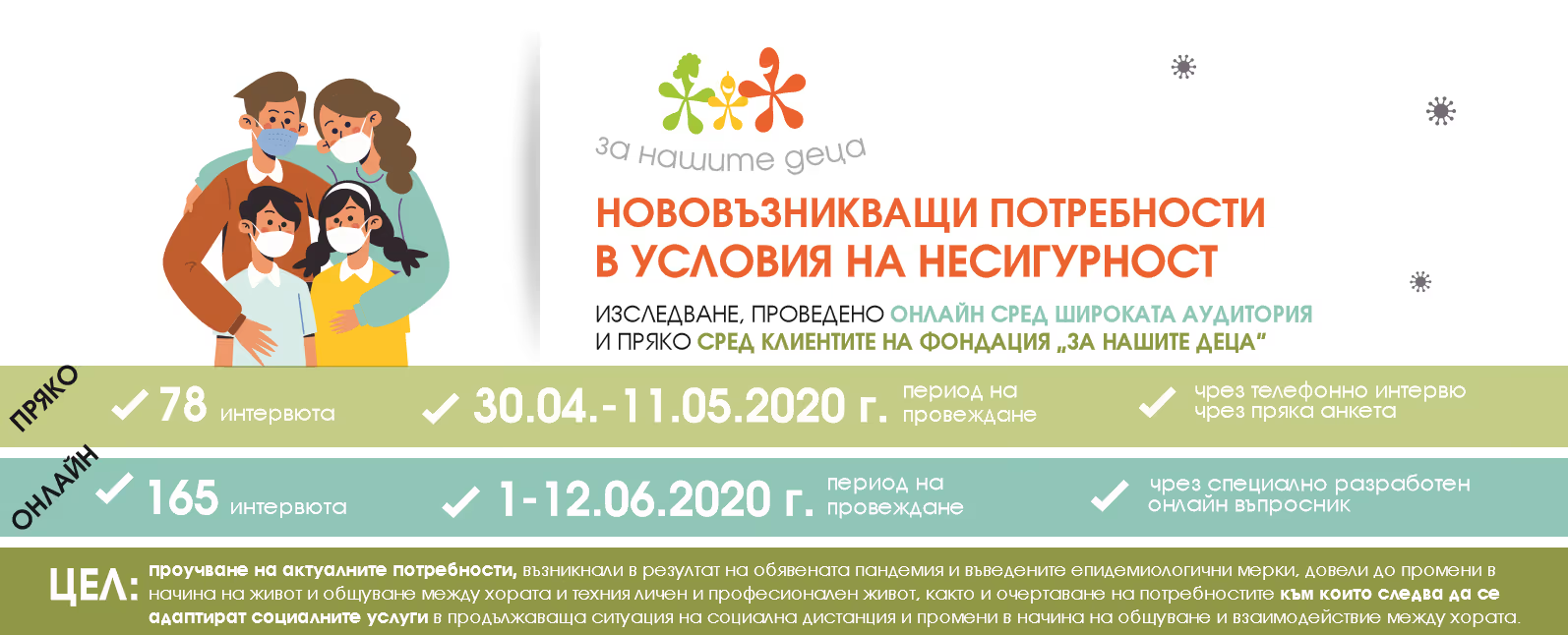
Emerging Needs of Parents of Children in Early Age under Uncertainty
The COVID crisis and its effect has put families with children under a lot of stress. This is especially true for those families that were already experiencing difficulties or were at risk.
In this new and turbulent situation, we as service providers are aware that the pressure can seem overwhelming and being a good parent might seem unfeasible. This prompted us to conduct an emergency survey of the immediate and prospective needs of parents. We targeted both our clients and a wider sample of parents. The aim was to inform the delivery of our services so that they are as effective as possible in this fast changing situation.
Social service requires a close relationship of trust, which might be challenging both for professionals and for parents during social distancing. As a result, from the survey we created a report that analyzes the needs of the respondents and an infographic that summarizes our findings. Our “Emergency Family Support Program” was informed by the results.
The resources might be useful for service providers who have to adapt their social services in order to be able to be functional and at the same time follow the anti-pandemic guidelines and protect the health of their clients and staff. The situation requires us to be proactive and have the knowledge and evidence to provide adequate support and stay on top of the crisis.
Published in:
2020
Organization(s):
For Our Children Foundation
Language:
Contact:
Dilyana Maneva
‘Walk the Talk’ in Times of Crisis. Noteworthy Practices from the Early Childhood Field
The COVID-19 pandemic and its mitigation measures have created an extra burden for grass-roots organizations and the communities they serve. Although ensuring sustainability of their programmatic work and finding innovative ways to meet the diverse needs of the families and children, especially of those living in vulnerable and adverse contexts, have always been at the core of their everyday work, the shock caused by COVID-19 is unprecedented in terms of speed, scope, and intensity. ISSA Members have been proactive in tackling the challenges of the pandemic at the institution/program level but also at the level of the populations they serve. This brief provides an overview of ways in which five ISSA Members across Europe have responded to limit the impact of COVID-19 on the most vulnerable people they serve.
button[src="https://cdn.prod.website-files.com/694724257114b734f4bb749a/6985cc5db64497b92fbb88ab_walk-talk-times-crisis-noteworthy-practices-early-childhood-field.pdf"][label="Download"]
Published in:
2020
Organization(s):
ISSA
Language:
Contact:
Eva Izsak, eizsak@issa.nl
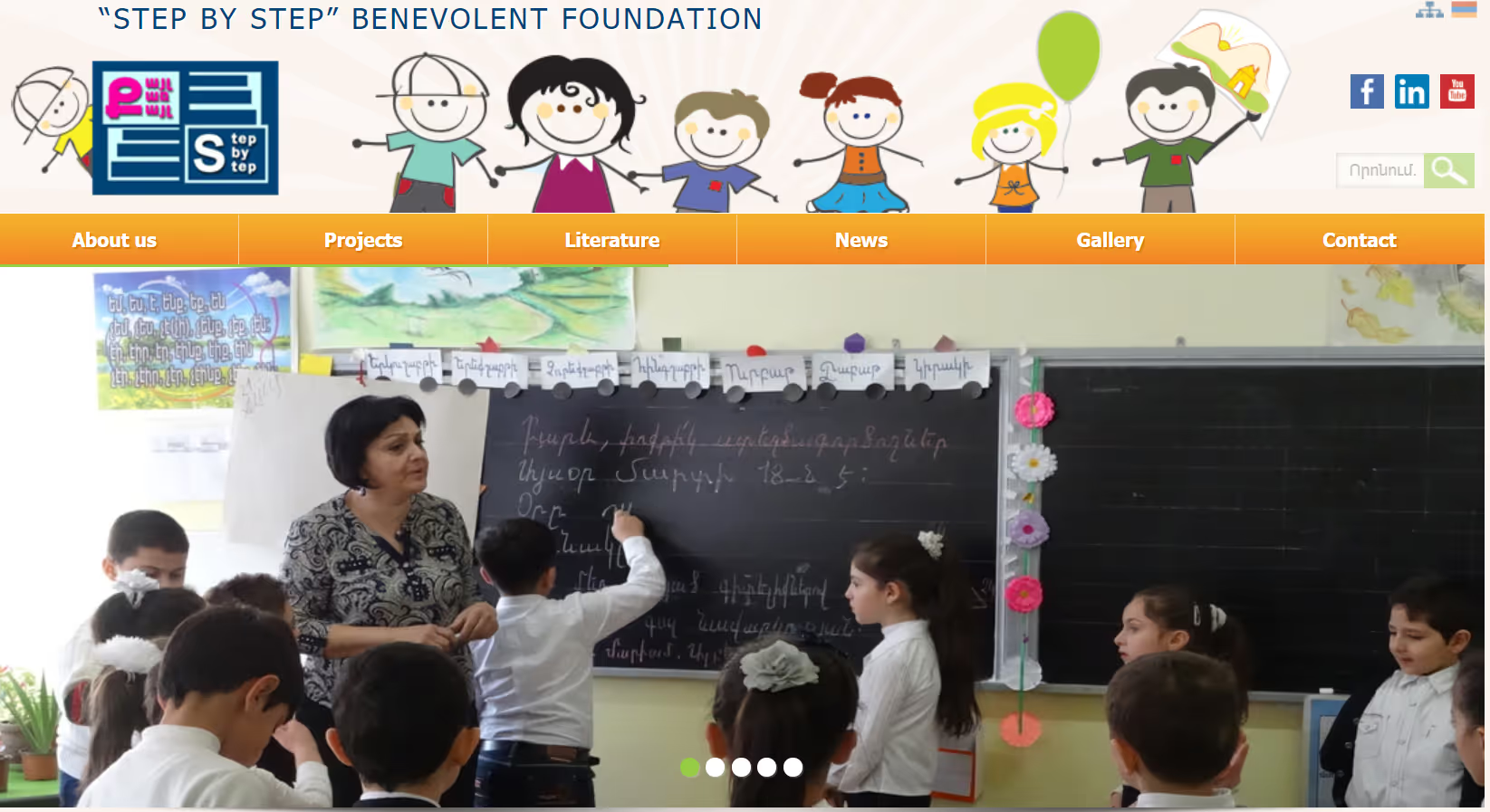
Thematic Unit: “What we need to know about coronavirus. How to protect ourselves and our families"
The materials aim to develop preventive skills of hygiene, behaviors of healthy lifestyle and awareness raising regarding COVID-19 for early childhood educators. The goal is to establish healthy lifestyle routines through age-appropriate thematic studies that can be incorporated in play time and time for reading.
The SBS team developed lesson plans and corresponding learning materials for preschool educators about introducing topic of hygiene and protection from coronavirus. The topic was introduced through series of thematic units and as a result the skills and knowledge are taught in an enjoyable and interactive ways, such as through play. This approach enables educators to integrate content from various subject areas for exploration of a central topic. In these times, when children listen a lot about coronavirus from different sources it is appropriate to use the momentum and based on emerging issue provide richer learning opportunities for them.
The SBS team outlined the following main sections of the thematic unit:
• What we should know about coronavirus disease (COVID-19) and how to protect yourself and your family members?
• What are the modes of transmission of COVID-19: what can children do to prevent spread of coronavirus (the book “Hello I am virus’’, handwashing posters, songs, etc.).
• Actions we need to practice for general hygiene (the story “Five actions before I go to sleep”).
During the thematic study we focus on developing some of the skills listed below:
• Shaping healthy lifestyle behaviors, such as coughing and sneezing in the elbow and washing hands often.
• Singing songs while washing hands to maintain the recommended 20 seconds.
• Cleaning hands with disinfectant.
• Use puppets or dolls to show symptoms (sneezing, cough, fever) and developing empathy and safe care behavior.
• Keep the children away from each other, let them try to spread and shake their hands.
The lesson plans were developed according to ERR framework, and included all the necessary learning materials (thematic pictures, coloring sheets, small cards, activity sheets, etc.) and step by step guidance for teachers. Background reading materials for educators are also included in the lesson plans. In the thematic studies the adapted version of the Armenian translation of the book “Hello I am virus” was used. We have adapted and used handwashing song, posters and a text “Five things to do before going to sleep”.
The thematic unit is based on “Developmental and Education Standards for Children Birth to Six” as well as national preschool curricula for children from 3 to 6 year of age. The thematic unit consists of lesson plans with activities.
Deliverables:
Developed thematic units included all the necessary learning materials (thematic pictures, coloring sheets, small cards, activity sheets, etc.) and step by step guidance for teachers. Background reading materials for educators are also included in the lesson plans. In the thematic studies the adapted version of the Armenian translation of the book “Hello I am virus” was used. We have adapted and used handwashing song, posters and a text “Five things to do before going to sleep”.
Published in:
2020
Organization(s):
Step by step Benevolent Foundation, Armenia; UNICEF
Language:
Contact:
Marine Mkrtchyan, Ashkhen Gyurjyan
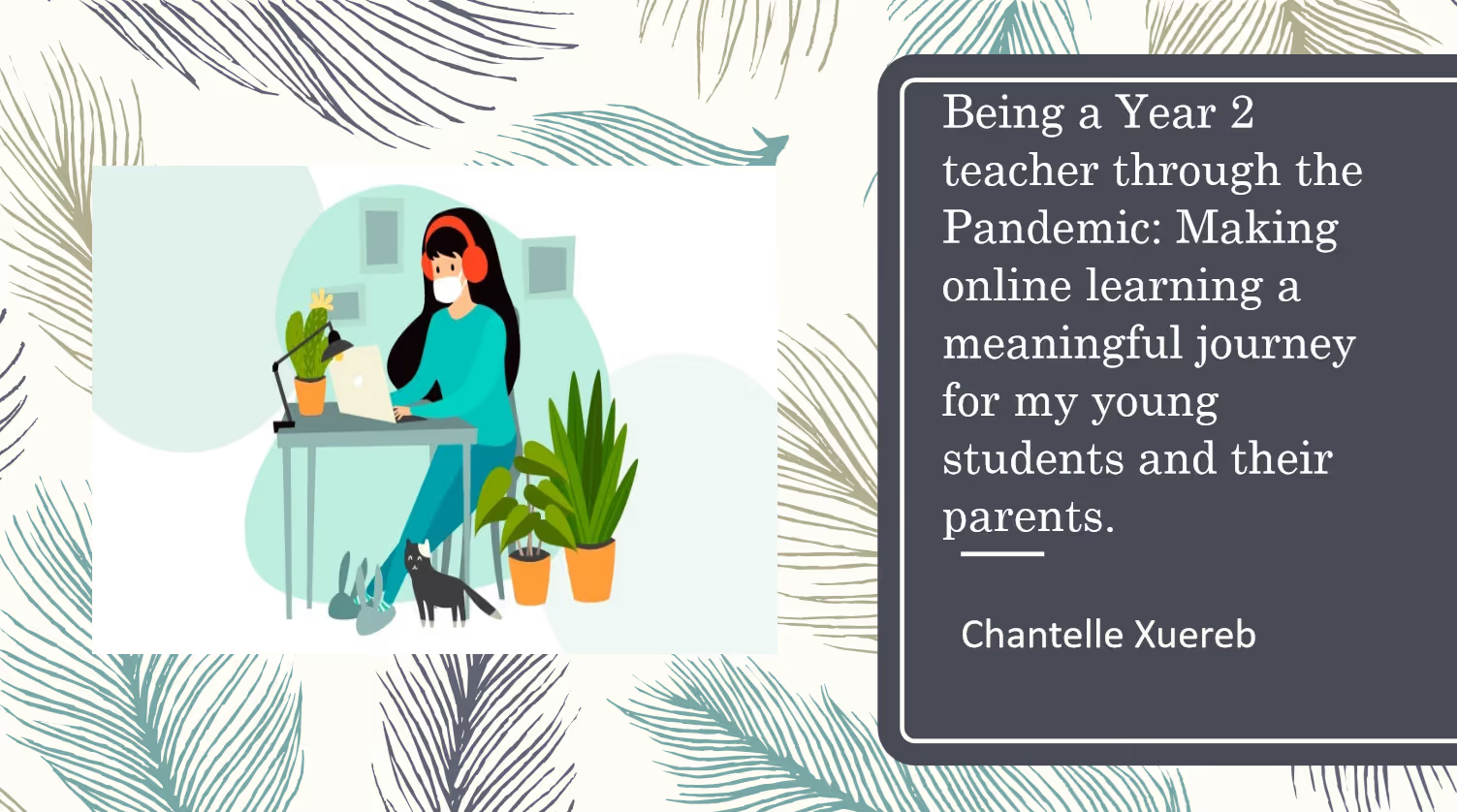
Coping with new methods of teaching during COVID-19
This presentation shows how one early childhood educator managed to cope with the new method of teaching – online learning with Year 2 students. She explains how to make online learning a meaningful journey for her young students and their parents. It served as an example of good practice to early childhood educators in ECDAM.
button[src="https://cdn.prod.website-files.com/694724257114b734f4bb749a/6985cc50028979a5a0febc6e_Online%20Learning%20during%20COVID-19%20pandemic.pdf"][label="Download the presentation"]
Published in:
2020
Organization(s):
Early Childhood Development Association (ECDAM)
Language:
Contact:
Chantelle Xuereb

Baytna Hubs – a network of identity-informed and trauma-informed ECD partners
Baytna Hubs is an initiative between Amna and Help Refugees, supported by Open Society Foundation, to scale up a specialist Early Childhood Development (ECD), called Baytna, which has been developed within the context of the Greek refugee crisis.
The Baytna model provides high-quality pre-school educational and psychosocial support to refugee children and their caregivers, based around core values (respect, understanding, curiosity and linking) and with a trauma- and identity-informed approach. Baytna Hubs is an 18-month programme of capacity building to train and support local organisations around Greece to deliver Baytna. After a competitive application process in February 2019, Amna and Help Refugees selected three Baytna Hubs partners: Athens Comic Library, Elix, and Perichoresis.
In March 2020, as Baytna Hubs were gaining momentum in delivering Baytna, and with communities now established and regularly attending the Baytna spaces, the coronavirus pandemic reached Greece. Following government regulations related to the closing of schools and restrictions on gatherings, Baytna delivery halted across all sites. It was important to us all that we continued to support the families who attended Baytna so that they feel cared for, connected to a community, emotionally and socially supported, and still have activities to do that are Baytna-aligned. These activities and resources are being developed to be identity- and trauma- informed, and produced in different languages.
1. To start with, Amna developed psychosocial activity ideas for parents and their children, a taste of Baytna at home, which require no materials (e.g. crafts), and were shared by partners to families via translated text messages and calls. The activities were for different age groups and include valuable PSS introductions for parents. Amna also provided suggested messages in English, Greek and Arabic on how to explain centre closures to families, as well as information on hygiene activities. Feedback from families has been positive.
2. Next, the network co-created interactive resources and videos for families drawing on partners different strengths and the combined collaborative power of the network. Our aim is for members of the refugee community, such as caregivers and Baytna facilitators, to also produce videos thereby helping to ensure content is identity-informed and community-led. We have together developed fun and engaging multimedia for the Baytna community, including videos of Baytna activities (storytelling, dance and movement, and interactive songs) which families can watch at home and interact with, as well as PDFs of activity ideas in different languages and for different ages. These are being released on the Amna's facebook page and will be added to a resource section on the website.
3. Finally, we are now at a capacity building stage, so that the partners themselves develop their own ideas for supporting the communities that they know best. The capacity building will happen alongside Amna continuing to send out activity ideas, and to create online resources that hubs can also share with their communities.
4. Throughout, we are seeking to understand and be led by the needs of the community and to gather feedback from them on the usefulness and impact of these activities and resources.
We would like to highlight in this practice the power of a network approach, the importance up building up local capacity, and the role of having a value-based approach which supports flexible approach adaptable to different circumstances.
Published in:
2020
Organization(s):
RTI, Perichoresis, Elix, Athens Comic Library, Irida Women’s Centre, Open Cultural Centre
Language:
Contact:
Evelyn Wilcox
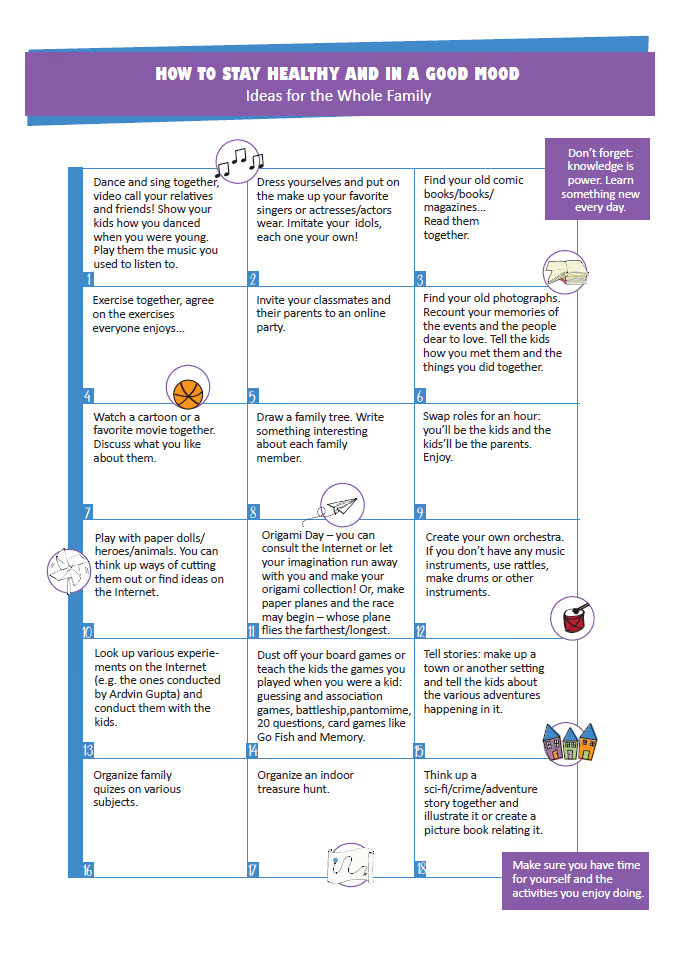
Calendar with ideas for the family activities
Calendar with ideas for the family was developed by the Center for Interactive Pedagogy as an immediate response to COVID-19 pandemic. The resource was developed with the ultimate aim to support parents/caregivers in organizing activities for their children during self-isolation. The Calendar includes ideas for 31 activities which foster learning, exploration, and quality interaction among family members whereas at the same time encourage online exchange among families and children. The Calendar also invites parents/caregivers and children to document their day to day activities.
Although initially intended for families and caregivers, the Calendar can (and has been) used also my teachers and NGO’s working with families, in order to inform the (online) activities they organize for children and their families.
Published in:
2020
Organization(s):
CIP – Center for Interactive Pedagogy
Language:
Contact:
Aleksandra Kalezic Vignjevic, aleksandra@cipcentar.org
Bridge Back to School
Bridge Back to School was created by the Irish National Autism Charity ‘AsIAm’ and education exper/researchers at Mary Immaculate College, Limerick, Ireland, with the support of the supermarket chain SuperValu. The COVID-19 pandemic continues to impact society in unimaginable ways, with children identified as among a specific and vulnerable section of the population who have experienced the pandemic differently, notably from the removal of the stability in their lives that pre-school and school brings. COVID-19 has posed challenges for everyone globally and for many autistic people, the loss of structure and routine has been particularly challenging. While many have been struggling, there are also many who find the lack of pressure to go to school, social events and everyday activities a relief. However, as children return to education re-establishing routines in settings that may have changed substantially will be a challenge. Acknowledging that autistic children and their families have been particularly impacted by the COVID-19 pandemic, the Bridge Back to School learning resource has been developed to help autistic children from early years to post-primary level prepare during the summer months to return to school in September.
The aim of the resource is to support a facilitator (parent, para-professional, teacher or home support worker) in working with an autistic student to support them in preparing for this transition back to pre-school and school through specifically addressing the challenges experienced by autistic children in managing transitions effectively. Based on the four key principles of promoting research-informed practice, universal design for learning, the centrality of student voice and adopting an autism-specific lens, the toolkit provides guidance in key areas that will enable autistic students to navigate the transition back to education as Ireland re-opens.The open access resource covers key topics from social skills to “my first day back in school” and are augmented by an online bank of further information and activity sheets. A focus is maintained throughout the resource on adopting a strength-based approach; managing the transition back to school; the role of executive functioning in autistic children’s learning and development; communication and social skills; self-regulation from both a sensory and emotional perspective; motor skills and self-care. While Bridge Back to School is firmly located in research on how best autistic children learn and develop, the resource is presented in an easily accessible manner to ensure that parents, teachers, para-professionals, home support workers and autistic children themselves can engage with, and benefit from the resource.
Published in:
2020
Organization(s):
Mary Immaculate College
Language:
Contact:
Prof Emer Ring, emer.ring@mic.ul.ie

10 design elements for breastfeeding information and support
The World Health Organization advises mothers to exclusively breastfeed their newborn babies for at least 6 months. In the Netherlands, a recent assessment of breastfeeding practices showed that 69% of the mothers start breastfeeding after birth. After one week this number declines to 58%, and to 47% after a month. At 6 months only 19% of babies are still breastfed.
Low rates of sustained breastfeeding are linked to challenges many mothers encounter during the first weeks, such as pain during breastfeeding or concerns about milk production. As a result, many mothers don’t stick to the breastfeeding aspirations and goals they set during or even before pregnancy. Mothers of newborns in the Netherlands indicated that they did not always get, or experience, the support they needed from care professionals, or know where to get breastfeeding guidance, especially after the support from maternity care ended. In this context, 10 design-elements for breastfeeding information and support were developed in collaboration with mothers of newborns and professionals.
These design-elements include the following recommendations: A) to define and adjust breastfeeding information to 1) the target audience and 2) the phase of breastfeeding, B) to address 3) personal breastfeeding attitudes or expectations, 4) personal breastfeeding wishes or goals, 5) possible actions and 6) good examples, C) to take into account, 7) the partner and broader social environment, 8) the basic needs of the baby, 9) the health care system, and D) to consider 10) the form of support. Elements 3, 4, 5, and 6 were based on behavior change theories on how to transfer from “knowing” to actually being motivated and perform and sustain breastfeeding.
Health organizations and professionals were encouraged to apply the 10 design-elements when providing (online) information and support to pregnant women and mothers of newborns about breastfeeding. For example, Centering Pregnancy, a new form of group care for pregnant women led by midwives, recently used the 10 design-elements. During Centering Pregnancy group sessions, pregnant women are encouraged to openly discuss both the advantages and challenges of breastfeeding and how they might overcome the latter. The group sessions have shown to have a positive effect on the uptake of breastfeeding. Centering Pregnancy has now recently applied the 10 design-elements in visual breastfeeding conversation cards, to help encourage discussions of solutions for breastfeeding-related challenges and activities that pregnant women can perform to prepare for breastfeeding.
button[src="https://www.tno.nl/media/16447/tno-2020-tien.pdf"][label="Download"]Published in:
2020
Organization(s):
TNO Child Health
Language:
Contact:
Sylvia van der Pal, Sylvia.vanderpal@tno.nl; Wilma Otten, wilma.otten@tno.nl
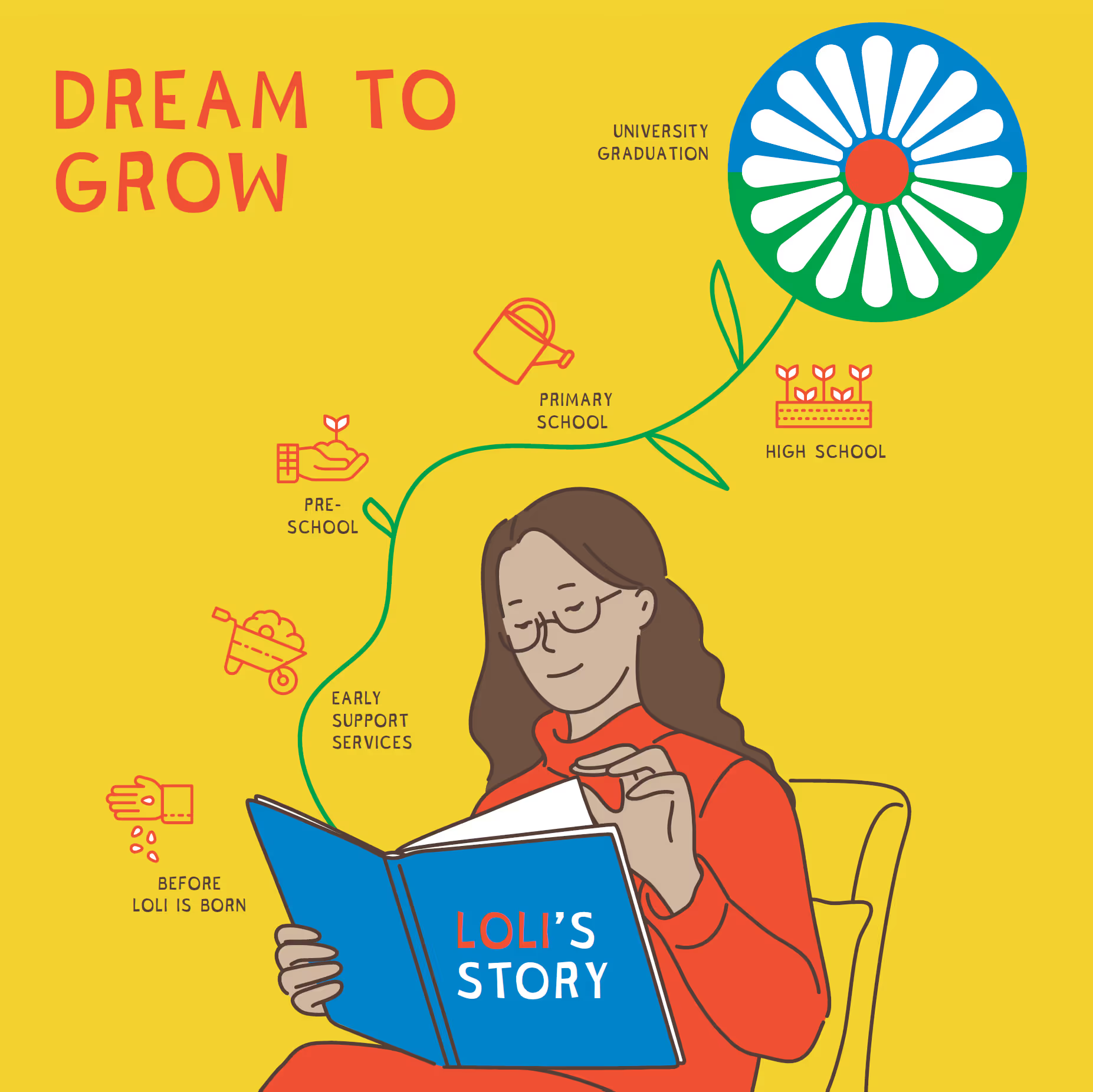
Roma ECD professional success stories - Dream to Grow
When it comes to policies, strategies, and programs that support the inclusion of the most vulnerable and marginalized children, we cannot fail to consider the early childhood development (ECD) professionals with the same cultural and ethnic backgrounds as the children with whom they work.The Dream to Grow campaign shares 12 multipurpose advocacy stories, highlighting the successes of Roma ECD professionals who are supporting Roma children and families in their countries – celebrating the example they are setting for future generations. These inspiring stories highlight Roma ECD professionals’ different pathways to become who they are today, following Roma standing with dignity and pride, ready to shape Europe’s future, and rewrite the current narrative.Available in English, Albanian, Bosnian, Bulgarian, Croatian, Dutch, Hungarian, Italian, Serbian, Slovak, Slovenian, and Ukrainian.
Published in:
2019
Organization(s):
REYN
Language:
Contact:
Aljosa Rudas (arudas@issa.nl)
The WANDA Method: Overview and Steps Forward
This resource summarizes the contents of the Peer Learning Activity (PLA) among ISSA members during 5 years, which focused on the WANDA methodology. WANDA is a co-reflective method aimed at improving early childhood education and care (ECEC) quality through staff group reflection on their practice.
The method has been developed by VBJK and Artevelde University College in Belgium (FL) and then re-adapted to the contexts of Czech Republic (Step by Step), Hungary (Partners Hungary Foundation), Croatia (Open Academy Step by Step), Slovenia (Educational Research Institute Step by Step), Estonia (Hea Algus).
It started with the WANDA meets ISSA project (ESF) and, given the high member take-up, through the ISSA Peer Learning Activities. In 2018, the seven above mentioned members organized a PLA in order to share and discuss ideas and possibilities concerning the use of the method and its further development. This resource is the report of this activity and it 1) gives an overview about the use of Wanda in each country, by reporting the results of a survey carried on locally; 2) reports an analysis and conclusions/suggestions at a local level (for each country involved) and on an international level, underlying needs and possibilities for further development of Wanda.
Besides being inspiring for the organizations already working with WANDA, the resource can be interesting for other ISSA members interested in co-reflecting methods for ECEC staff. It is foreseen for practitioners, researchers, coaches, trainers and policy makers.
Published in:
2019
Organization(s):
Artevelde University College, VBJK a.o.
Language:
Contact:
Nima Sharmahd, nima.sharmahd@vbjk.be
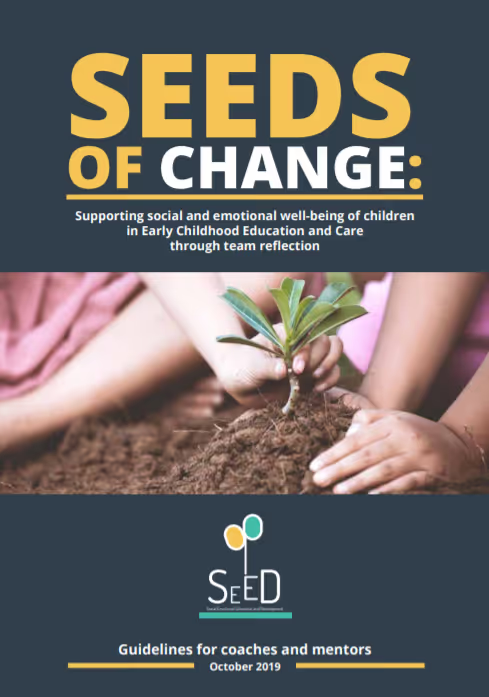
Supporting Social and Emotional Well-Being of Children in Early Childhood Education and Care through Team Reflection
These Guidelines are the outcome of the second part of the SEED project, during which a group reflection pathway, called WANDA1, was piloted with 80 ECEC practitioners with the aim to help them to deal with daily challenges in their practice so they could better support the socio-emotional well-being of children in their care.
The Guidelines include a mix of insights from research and i.e. practitioners’ reflections, as well as practical tools that coaches, mentors and facilitators can use to guide and support ECEC practitioners to reflect on their practice. They are meant to be an inspiration for ECEC pedagogical coaches, mentors and trainers who want to invest in reflecting on practice with teams or groups of practitioners, in order to support the socio-emotional well-being of children.
button[src="https://cdn.prod.website-files.com/694724257114b734f4bb749a/6985cffa2886276ab5b46224_SEED-Guidelines.pdf"][label="Download"]
Published in:
2019
Organization(s):
ICDI, VBJK
Language:
Contact:
Margaret Kernan, margaret@icdi.nl

START- Sustaining Warm and Inclusive Transitions across the Early Years. Final report with implications for policies and practices
Transitions across the home environment, early childhood education and care (ECEC) settings and compulsory school education (CSE) mark significant changes in the life of children and their families and communities. Positive experiences of transition between educational levels can be a critical factor for children’s future success and development, while negative experiences can have lasting challenges leading to poorer educational performance, especially for more disadvantaged children. Adopting a more unified approach to caring and learning (educare) across educational settings in order to sustain continuity of children’s experiences over time, can significantly improve children’s educational achievement and socio-emotional development. In turn promoting inter-institutional professional learning communities of ECEC and primary school staff as well as involving parents in the transition process are considered to be key factors in ensuring successful transitions. Taking these crucial elements into account, practitioners and researchers from four different countries have collaborated in a transnational action-research study (START/Erasmus +) in order to foster warm and inclusive transitions across the early years. This final report will discuss the challenges of the lack of well thought out transitional practices on children and families, how this problem can be addressed and what the implications are for policies and practices in the EU and its member states (EU MS).
button[src="http://start.pei.si/wp-content/uploads/sites/11/2017/01/06_FINAL-REPORT.pdf"][label="Download"]Published in:
2019
Organization(s):
Educational Research Institute, University of Bologna – Department of Education ‘G.M. Bertin’, VBJK – Centre for Innovation in the Early Years, Pen Green Centre and Research Base, Preschool and Primary School Direzione Didattica di Vignola, et al
Language:
Contact:
Katrien Van Laere, katrien@vbjk.be
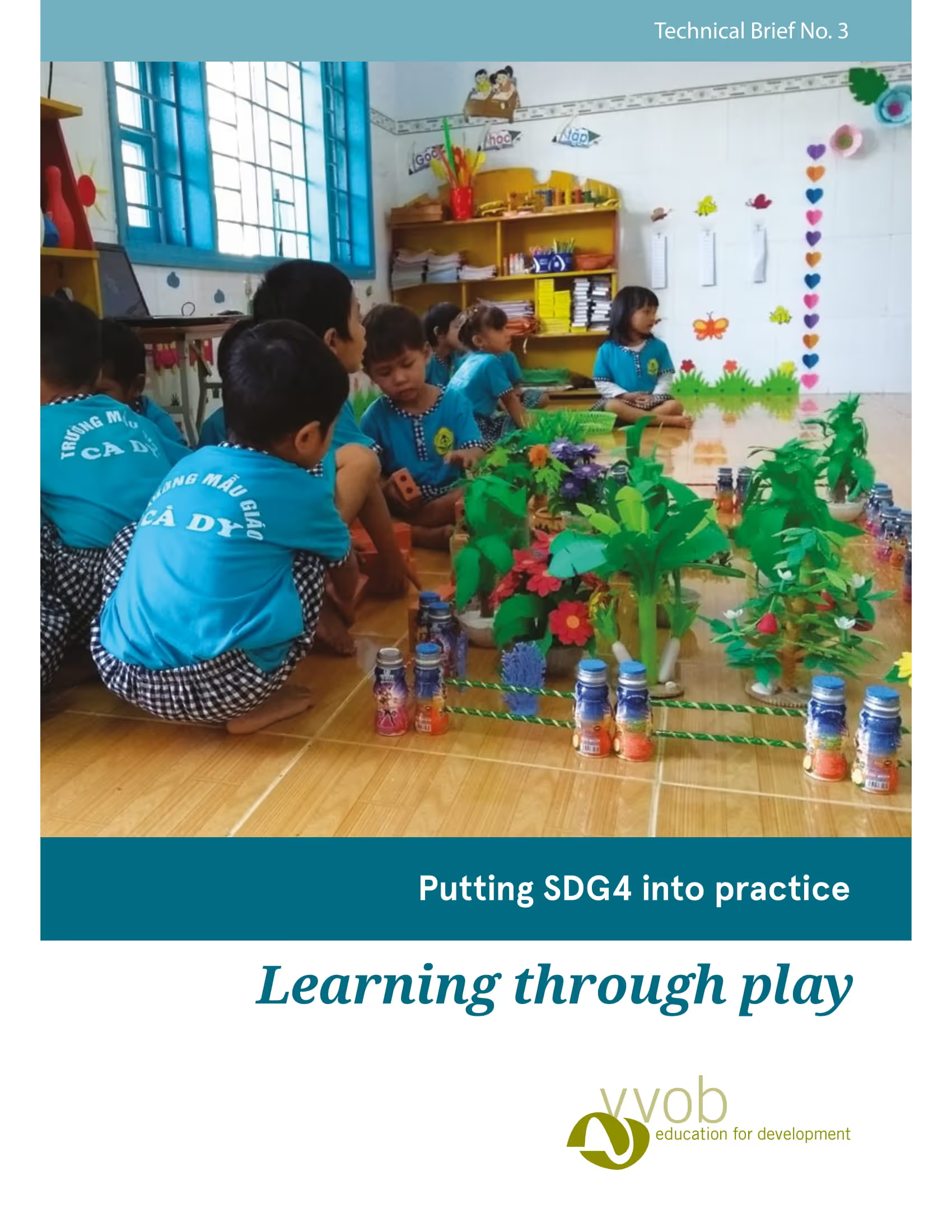
Putting SDG 4 into Practice: Learning Through Play
Learning through play has gained momentum in early childhood education and beyond. Yet translating well-meaning policies into concrete teaching practices is a complex process.
This technical brief by VVOB (1) zooms in on the proven positive effects of learning through play on a child's wellbeing and involvement in learning, (2) discusses characteristics and types of learning through play, and (3) delves deeper into VVOB's approach to implementing learning through play, with case studies from partner countries Vietnam and Zambia.
button[src="https://cdn.prod.website-files.com/694724257114b734f4bb749a/6985cfaac68523b77a0283e8_2018_VVOB_technical-brief_Learning-through-play_Web.pdf"][label="Download"]Published in:
2019
Organization(s):
VVOB Education for Development
Language:
Contact:
Katelin Raw, katelin.raw@vvob.be
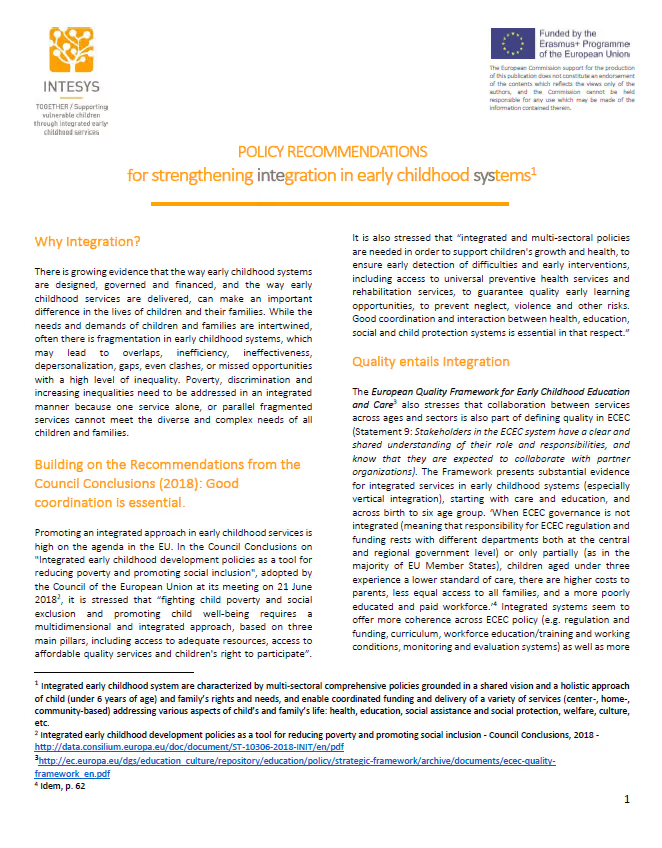
Policy recommendations for strengthening integration in early childhood systems
These Policy Recommendations were written under the INTESYS Project, Erasmus+ Key Action 3 pilot project implemented in four European countries (Belgium, Italy, Portugal and Slovenia). INTESYS proposed and piloted an innovative Reference Framework and the Toolkit Towards Integrated Early Childhood Systems- Building the Foundations. The project aimed to support the early childhood actors at national/local level in their efforts to increase the cooperation and coordination among early childhood sectors and services, to better serve the young children and their families, especially the most disadvantaged.
During the INTESYS Project, an extensive literature review, interviews with key stakeholders more than 20 countries across Europe and lessons learned from the pilot interventions contributed to identifying several key factors that may support or hinder integration in the early childhood systems.
button[src="https://cdn.prod.website-files.com/694724257114b734f4bb749a/6985cfa26ca73e3f96db6ee1_INTESYS-Policy-Recommendations.pdf"][label="Download"]Published in:
2019