Knowledge Hub
All the resources stored here have been created by ISSA Members
or ISSA Secretariat in partnership with Members or partners.



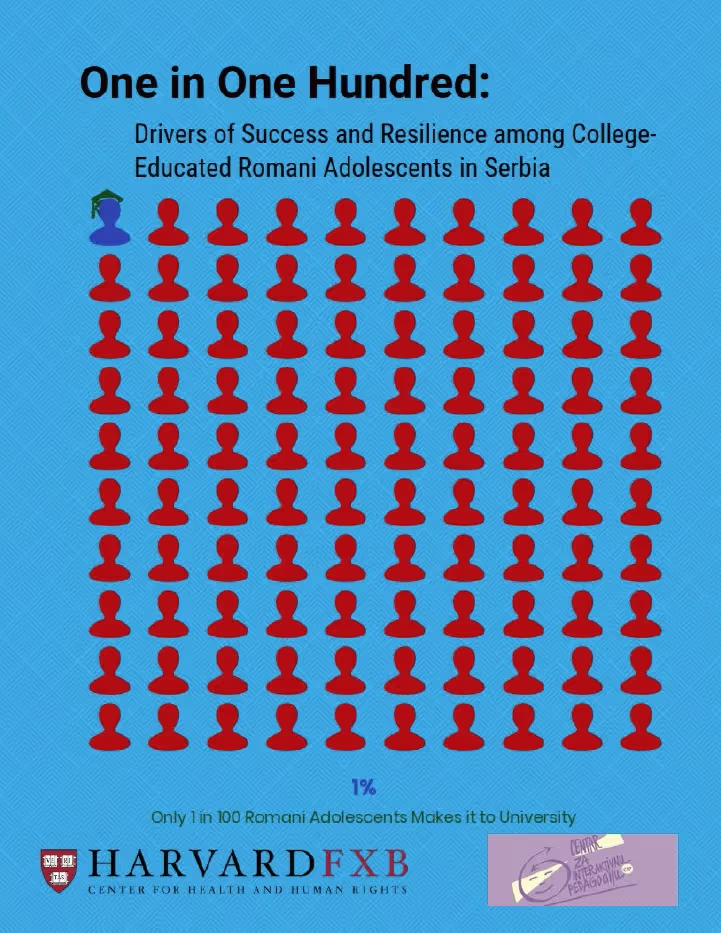
One in One-Hundred - Drivers of Success and Resilience among College-Educated Romani Adolescents in Serbia
One in a hundred Roma makes it to University, why is that? The study One in One Hundred: Drivers of Success and Resilience among College-Educated Romani Adolescents in Serbia, is a collaboration between the François-Xavier Bagnoud Center for Health and Human Rights at Harvard University (Harvard FXB) and the CIP - Center for Interactive Pedagogy ISSA's member from Belgrade, Serbia.
The research goes beyond the scrutiny of educational deficits and obstacles to find out what actually works.Although the focus of this research is on Serbia, the statistics (and related patterns) reverberate throughout Europe. As Dr. Margarete Matache, director of the FXB Roma Program, concludes, “Instead of focusing on Roma ‘behavior’ to improve the educational performance of Roma students, both research and policy development need to target the deeply prejudicial and rights-violative institutional and societal enviroments in which Roma try to access their right to education.”
Researchers studied the responses from surveys, interviews, and a “Writing Romani Lives” workshop conducted with 89 Romani adolescents who made it to college and 100 who did not. The findings showed that strong teacher and peer support systems, access to early childhood development services, and a high level of education among immediate family members corresponded to educational success.
button[src="https://cdn.prod.website-files.com/694724257114b734f4bb749a/6985cf8b8cb0caf576abad94_OneinOneHundred.pdf"][label="Download"]
Published in:
2019
Organization(s):
Harvard University, CIP-Center for Interactive Pedagogy
Language:
Contact:
Boris Spasic, boris@cipcentar.org
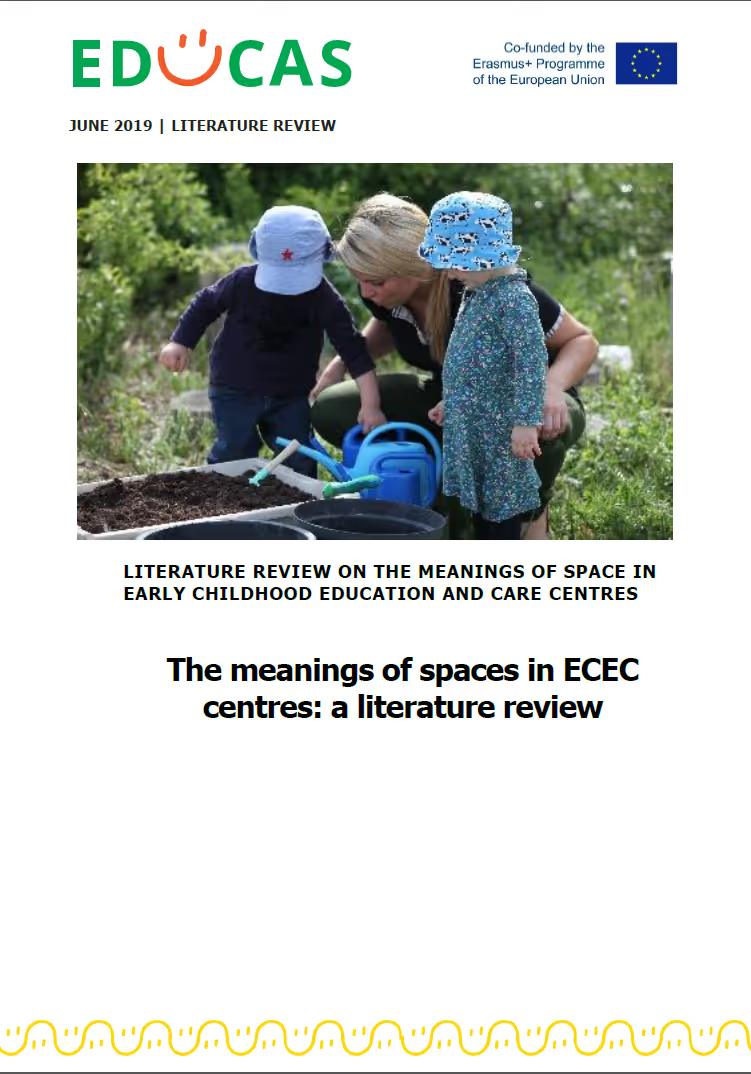
The meanings of spaces in ECEC centres: a literature review
This literature review, written under the EDUCAS project, investigates the meanings, relevance, and importance of physical indoor and outdoor space in early childhood education and care (ECEC) services for children from birth to school age. Authors map, synthesize and critically analyze the findings of studies carried out internationally as well as national studies from Italy, Lithuania, Belgium, and the Netherlands.
Special attention is placed on the Educare approach and on the involvement of children and families in the discourse. Three specific questions guided the authorship of this review:
- how can space support children’s development?
- how can space support an Educare approach?
- how can space support the inclusion of all children and families?
The particular value of this literature review is the inclusion of both scientific international peer-reviewed publications and local contributions published in the national language of each country participating in the EDCUAS project (Italy, Lithuania, and Belgium).
Drawing from the findings of the literature review, implications for practice are discussed and some key recommendations are provided, to orient education professionals, researchers and policymakers on space issue in ECEC centers and its connection with an Educare approach.
button[src="https://cdn.prod.website-files.com/694724257114b734f4bb749a/6985cf4c9328b81c1b1e3133_EDUCAS%20Literature%20Review%20.pdf"][label="Download"]Published in:
2019
Language:
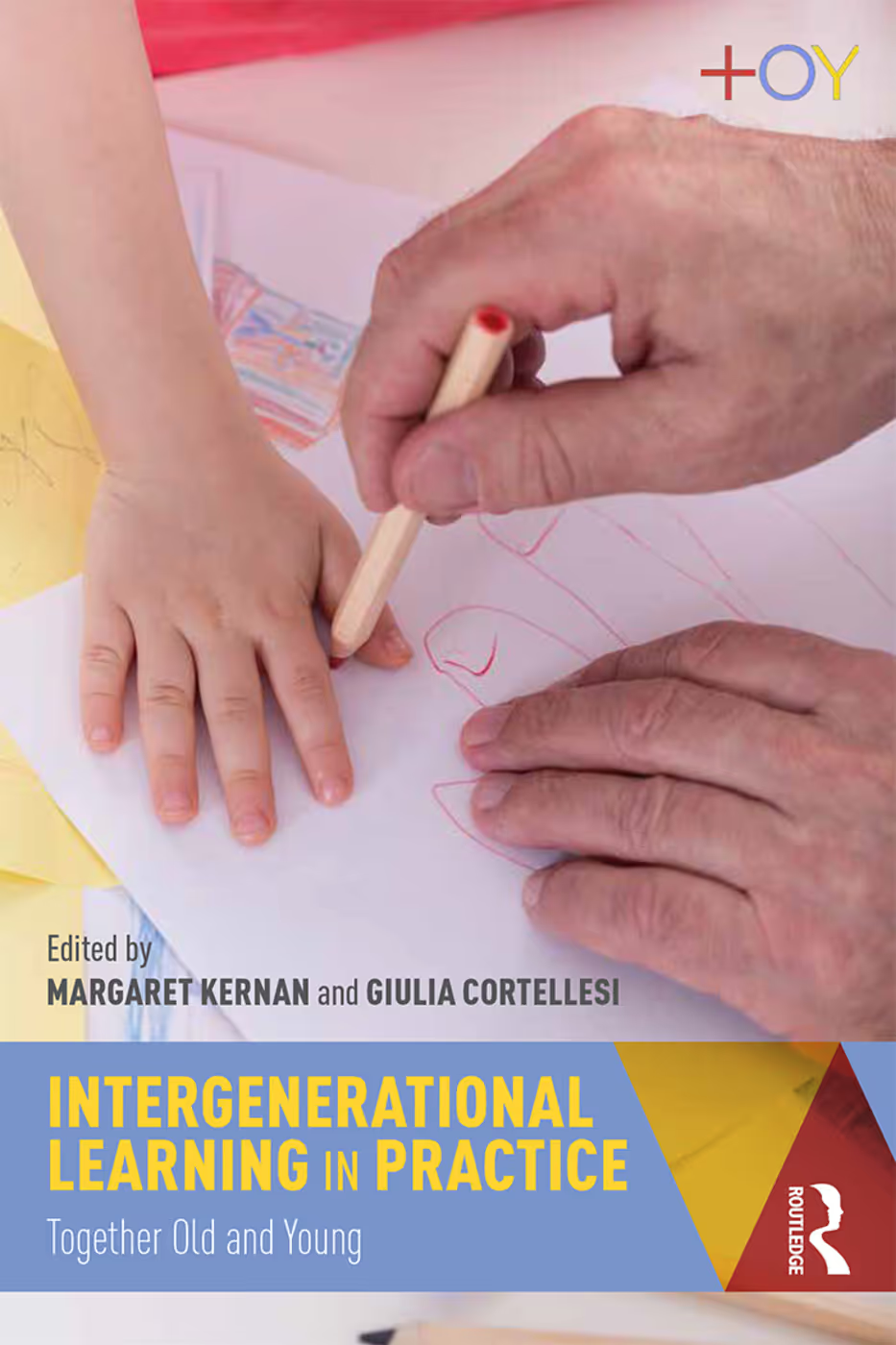
Intergenerational Learning in Practice: Together Old & Young
Based on innovative global practice, Intergenerational Learning in Practice presents a unique contribution to the field of intergenerational learning. Drawing on the Together Old and Young (TOY) programme, this book provides a comprehensive background to intergenerational learning, along with tools and resources to help develop and improve your own intergenerational practice.
Experienced international authors from Europe, North America and Australia provide a broad array of perspectives on intergenerational learning, ranging from pedagogy to planning and community development, and cover topics including:
• The context, theory and existing research behind intergenerational learning
• The changing relationships between young children and older adults
• Building communities and services for all ages
• Managing everyday encounters in public spaces between young and old
• Ensuring quality in intergenerational practice
• Insights on how intergenerational learning challenges discrimination
Intergenerational Learning in Practice is a valuable resource for practitioners and leaders in Early Childhood Education and Care and those working in primary schools, as well as professionals caring for older adults, and those working in community development.
Published in:
2019
Organization(s):
International Child Development Initiatives ICDI
Language:
Contact:
Giulia Cortellesi, giulia@icdi.nl
INTESYS Toolkit: Towards Integrated Early Childhood Education and Care Systems – Building the Foundations
An extended literature review, interviews with stakeholders from more than 20 countries in Europe and the piloting experiences from Belgium, Italy, Portugal and Slovenia have contributed to the development of the innovative toolkit Towards Integrated Early Childhood Education and Care Systems – Building the Foundations, part of INTESYS project (Together: Supporting vulnerable children through integrated early childhood services) funded through the Erasmus+ Programme.
The Toolkit advances a Reference Framework for Integration in ECEC systems consisting of three building blocks of the process: Values and Principles, Key Factors and Quality Practices. The building blocks indicate the most important elements to be considered when working towards more and better integration in early childhood systems, across sectors, services, and levels of governance. The Toolkit proposes a journey for integration guided by the Reference Framework, following a cyclic process of change. Each phase is accompanied by guiding questions, envisaged outcomes, general recommendations, tips, lessons learned from the pilots conducted in the four countries and attuned tools to each phase of the process.
The Toolkit is meant to guide the path of various actors towards higher level of integration, while keeping in mind that the entire early childhood system (from macro policy to financing and front line quality delivery with qualified practitioners) has to work primarily for the benefit of every young child and their family.
Published in:
2019
Organization(s):
INTESYS
Language:

GRP4ECE Toolkit: Gender-Responsive Pedagogy for Early Childhood Education, a Toolkit for Teachers and School Leaders
While a lot of progress has been made in both early childhood education and gender-responsive education, less has been done on the crossroads of both. V.VVOB- education for development, Forum for African Women Educationalists (FAWE) and public education partners in Rwanda, South Africa and Zambia have joined forces to develop a practical approach to gender-responsive pedagogy for early childhood education (GRP4ECE).
The toolkit is best used in trajectories of continuous professional development of teachers and school leaders, and empowers them to challenge gender stereotypes in the classroom. An environment free of stereotypes lays a firm foundation for young children to grow up freely exploring and developing their unique interests and talents. With some adaptations it can also be used with children under 3 years and in the primary school settings.
Published in:
2019
Organization(s):
VVOB Education for Development
Language:
Contact:
Katelin Raw, katelin.raw@vvob.be

Education for diversity toolkit: Program for adults working with and for children
This toolkit represents the compilation of different programs and specific activities developed by ISSA and its members over the past 15 years. The backbone of the toolkit is ISSA’s core document Competent Educators of the 21st century: Principles of Quality Pedagogy which focuses on process, quality and educators as agents of change and their power and ability (with more or less support) to enrich the lives of children, families and communities and thus of society in general. The main focus is on developing an understanding and respect for diversity that creates a climate in educational institutions so that every child can thrive.
The entire toolkit acknowledges the knowledge that exists in communities and seeks ways to erase the resistant boundaries that can exist between educational institutions and some of the communities that they serve. The toolkit contains numerous tips, theoretical and conceptual explanations, more than 50 activities for children and 14 workshop sessions for educators. Sessions for educators can easily be combined with the sessions from Embracing diversity, creating equitable societies through personal transformation – Program for adults.
button[src="https://cdn.prod.website-files.com/694724257114b734f4bb749a/6985ce52968661f2e9e360f3_Education_for_diversity_website_licensed%20version.pdf"][label="read the excerpt"]
Published in:
2019
Organization(s):
ISSA - International Step by Step Association
Language:
Contact:
Zorica Trikic, ztrikic@issa.nl
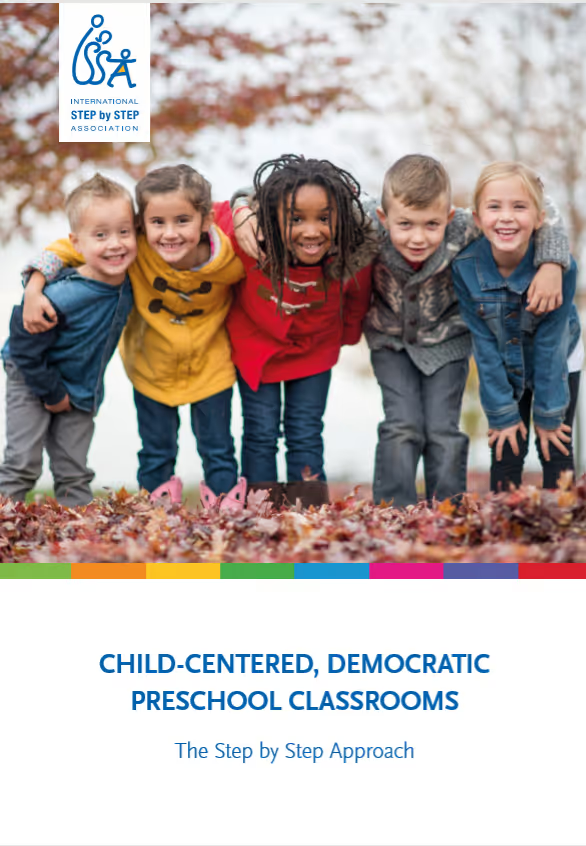
Child-Centered, Democratic, Pre-school Classrooms: The Step by Step Approach
For over 25 years, the Step by Step Program, flagship initiative for Early Childhood Education reform of the Open Society Foundations, has implemented a democratic child-centered classroom approach where families and children are placed at the heart of the pedagogical practice. For everyone to take advantage of the multiple benefits such a program delivers, ISSA is offering the comprehensive guide Child-centered Democratic, Pre-school classrooms: The Step by Step Approach specially addressed to early childhood educators and pre-school staff who work with children aged from 3 to 6 years.
Throughout its six chapters, the book provides both the theoretical background and the practical tools to implement evidence-based, high-quality practices that facilitate young children’s development and learning regardless of the national context. The book dives into everything from how to build strong partnerships with families and communities, strengthening their role as educators, to how to set the stage for active learning. A thorough explanation of the Step by Step approach is provided, detailing the promotion of a democratic, inclusive and respectful culture in the classroom- and outdoors- in which each child’s identity is reinforced. In addition to this, the reader is provided with a detailed methodology on the implementation and development of Step by Step competences in all areas of knowledge: Mathematics, Language and Literature; Civic and Culture; Science; Creative Arts; Technology and interactive media competences; Physical competences as well as tips on specific practices.
Published in:
2019
Organization(s):
ISSA
Language:
Contact:
Eva Izsak, eizsak@issa.nl
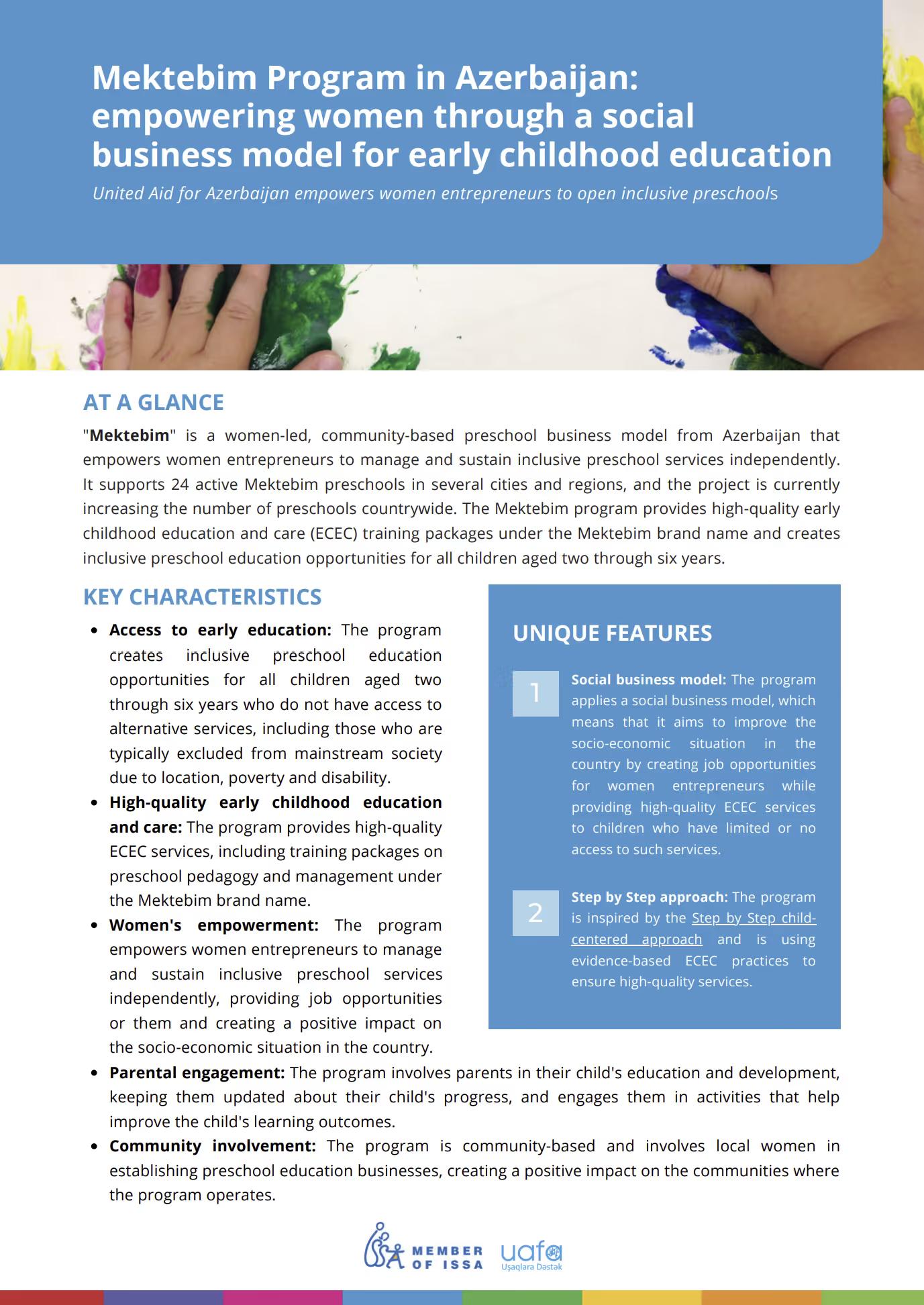
Mektebim (My School)
Mektebim is a women-led, child-centred, community-based, inclusive preschool business.
Our mission
To provide the sustainable community-based and inclusive Early Childhood Education (ECE) services for all children, including those who do not have the chance to study, due to location, disability, or poverty, through empowering and engagement of local women to entrepreneurship in preschool education business.
Mektebim program
The Program addresses below mentioned target groups from the low-income rural areas:
Currently Mektebim supports 24 active Mektebim schools in Azerbaijan in the following cities and regions: Baku, Sumgayit, Absheron, Gandja, Haciqabul, Lankaran, Shirvan, Zaqatala, Neftchala.
To ensure the sustainability of the program, we organise capacity building and awareness raising activities to empower women entrepreneurs who run Mektebim groups and strengthen their abilities to market their business in local communities. Right after joining Mektebim, our team provides selected women with preschool assets; training packages on preschool pedagogy and management, and the “Mektebim” brand name. the “Mektebim” brand name offers advantages such as a child-oriented preschool program, a single preschool design, and a country-wide PR. In later stages, women engage in Membership activities such as regular meetings, training, and conferences.
Mektebim is inspired by Step by Step approach and Azerbaijani Government National Curriculum for their program. All the kids can participate in the classes together to improve their creativity, critical and logical thinking, communication skills etc. to get fully ready for the school life later. Mektebim also involves parents in order to keep them updated about their child’s development and work together to achieve the best experience for the children.
Our supporters are:
Watch a video about the program here.
button[src="https://cdn.prod.website-files.com/694724257114b734f4bb749a/6985cc54a2fa85d67abbf063_Vignette-Mektebim-Program-in-Azerbaijan-ISSA.pdf"][label="Download overview"]Published in:
2018
Organization(s):
United Aid For Azerbaijan (UAFA)
Language:
Contact:
Sabina Aghayeva sabina.aghayeva@uafa.az
What works guide: ECEC Play Hubs - a first step towards integration
This guide documents the promising practices of the Early Childhood Education and Care (ECEC) Play Hubs, which support integration of Roma at local level. The practices and the accompanying recommendations are based on the evidence from the TOY for Inclusion project piloted in seven countries. The guide is designed for practitioners and local authorities. It can assist them in the implementation of community-based ECEC services for Romani and other children to improve social cohesion. The guide also informs local, national and EU level policy-makers about how to use social and economic solidarity between cultures and generations to promote desegregation and inclusion. The recommendations presented in the guide complement one another and are most effective when implemented simultaneously. Together the practices and recommendations provide clear guidelines for a systemic approach and sustainable local solutions in both policy and in practice.
button[src="https://www.reyn.eu/wp-content/uploads/2019/05/What-Works-Guide-WEB.pdf "][label="Download in English"] button[src="https://www.reyn.eu/wp-content/uploads/2019/02/What-Works-Guide-HR.pdf"][label="Download in Croatian"]
Published in:
2018
Organization(s):
International Child Development Initiatives ICDI
Language:
Contact:
Giulia Cortellesi, giulia@icdi.nl
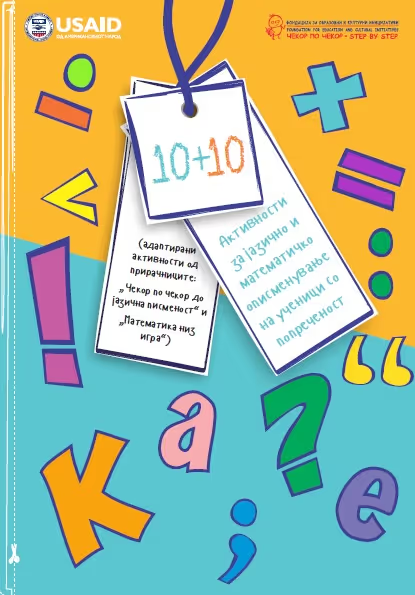
Handbook for Work with Students with Disabilities for Improving Literacy and Numeracy Skills - Macedonian
Handbook with activities for work with students with disabilities for improving their literacy and numeracy skills contains 20 activities for lower grades of the primary school . Two special educators from a special primary school in Macedonia made an adaptation of ten activities from each of the two previously published handbooks (“Step by Step to Literacy” and “Learn Math through Play”).
All of the activities can be easily replicated in the classroom with affordable and easy-to-get materials. This handbook is a useful resource for teachers from the special schools, but also for teachers from all other inclusive classrooms.
Published in:
2018
Organization(s):
Foundation for Education and Cultural Initiatives Step by Step
Language:
Contact:
Suzana Kirandziska, info@stepbystep.org.mk
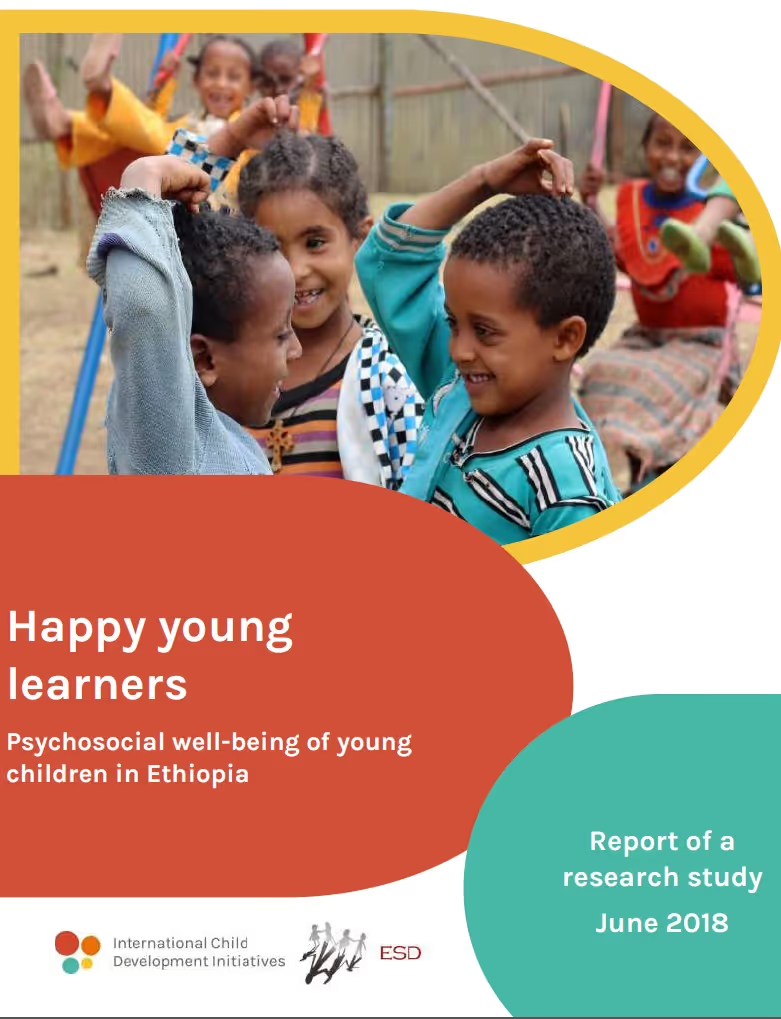
Happy Young Learners: Psychosocial well-being of Young Children in Ethiopia: Research study
Happy young learners: Psychosocial well-being of young children in Ethiopia report presents the findings and recommendations of a research and practice project about the psychosocial well-being of five year-old children. It took place between 2016 and 2018 in two regions in Ethiopia: Amhara and Southern Nations, Nationalities, and Peoples’ Region (SNNPR). It consisted of: 1) a research study, 2) a programme to improve the quality of four preschools in the study areas, and 3) the making of a short documentary film called ‘Happy young learners in Ethiopia’.
All of these actions took place to inform Early Childhood Care and Education (ECCE) practice, teacher education and policy in Ethiopia. The project was a collaborative effort between Education for Sustainable Development (ESD), in Ethiopia and International Child Development Initiatives (ICDI), in the Netherlands.
Published in:
2018
Organization(s):
ICDI - International Child Development Initiatives
Language:
Contact:
Margaret Kernan, margaret@icdi.nl
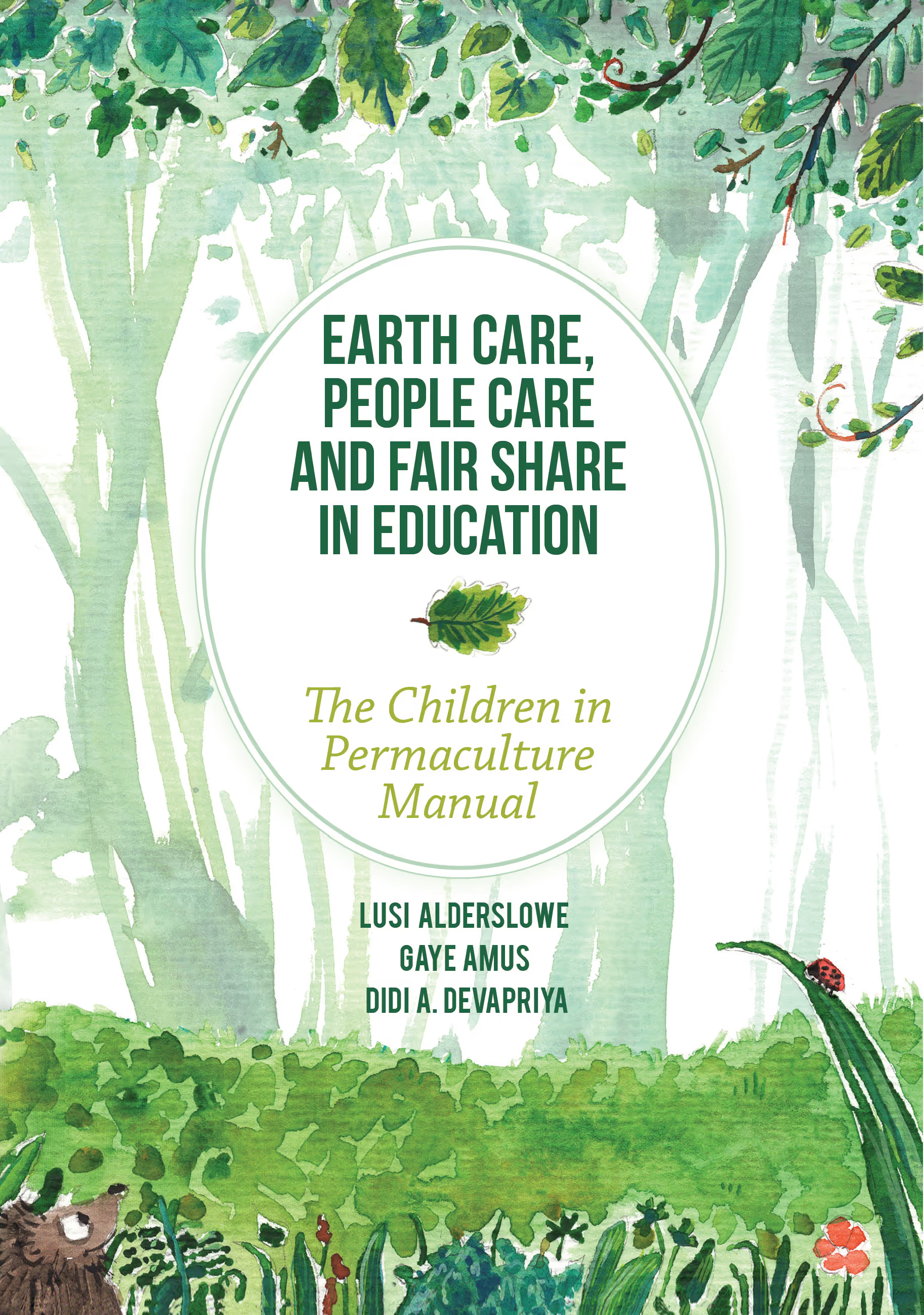
Earth Care, People Care and Fair Share in Education: The Children in Permaculture Manual
The Earth Care, People Care and Fair Share in Education is a ground-breaking manual which uses a permacultural lens to inspire child-friendly approaches to embed education for a sustainable future into preschool, kindergarten and primary school programs.
The resource is designed to provide practical tools and guidelines to professionals and other practitioners dedicated to the vision of a better planet and on how to address ecological habits, values and attitudes with young children. The manual ilustrates holistic pedagogy and contains ideas for activities, session plans, and inspiration for reflections.
Published in:
2018
Organization(s):
Neohumanist Educations Association
Language:
Contact:
Didi A. Devapriya, didi@amurtel.ro

Early Childhood Development in Bulgaria: A Study on Systems Supporting Early Childhood Development
This research study from Bulgaria documents how healthcare, social, and education systems in the country organize and encourage early childhood development. The study aimed to: provide an overview of the legislative and political context in which sectors related to early childhood development are currently functioning; insight in the extent to which the healthcare, social, and education systems interact with one another in terms of ECD, and how such interaction is reflected on the existing services and forms of support; estimate the extent to which institutions and professionals involved in childcare at an early age apply a family-oriented approach; present parental attitudes towards the state of the early childhood development systems. The study also addresses the extent to which the healthcare, social, and education systems are driven in their work by the principles of social inclusion in the organization of the provision of care for young children with special needs.
The study was conducted during the period from December 2016 to April 2017 using desk research, group discussions (focus groups), interviews, case studies and a quantitative study of parental attitudes. The combination of various methods and locations aimed to ensure a comprehensive and multifaceted study, which takes into consideration different points of view on the policies and practices related to early childhood care in Bulgaria including those of: politicians, decision-makers, experts at national and regional levels, professionals working with children at early ages, service providers, and parents.
The study makes a number of recommendations for reforms of the systems supporting ECD. It can be used by policy makers, practitioners and advocates in their work to advance ECD development in Bulgaria, as well as by researchers who are studying the functioning of different national ECD systems.
Published in:
2018
Organization(s):
For Our Children Foundation
Language:
Contact:
Vania Kaneva, v.kaneva@detebg.org
Videocoaching 'Imagination'
Video coaching 'imagination' professional development practice is about video coaching teaches and educators how to videotape themselves in order to be able to reflect on the quality of interactions they have with the children, the needs and strengths of the children, their initiatives, and the growth opportunities that may present themselves. The purpose of the video coaching is to promote higher quality interactions with children and to grow as a professional. The video tapes can also be used to present interactions with children and to discuss and reflect on them with other staff members in early childhood education.
Published in:
2018
Organization(s):
Artevelde University College
Language:
Contact:
Ine Hostyn, ine.hostyn@arteveldehs.be
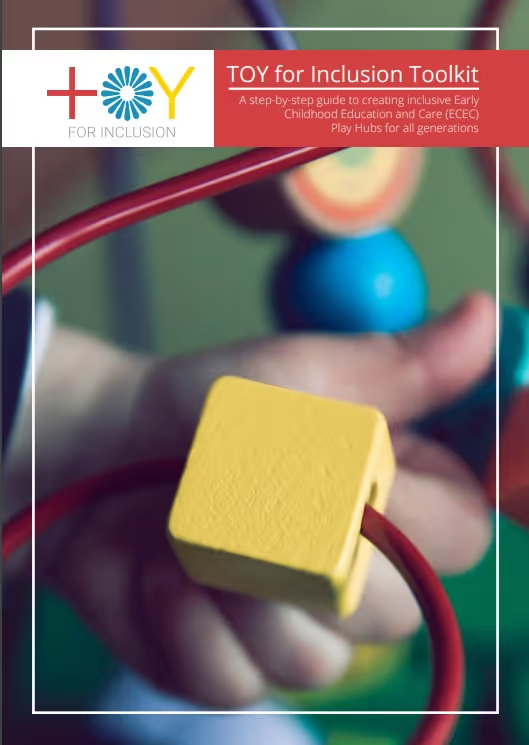
TOY for Inclusion Toolkit: A step-by-step guide to creating inclusive Early Childhood Education and Care (ECEC) Play Hubs for all generations
TOY for Inclusion Toolkit: A step-by-step guide to creating inclusive Early Childhood Education and Care (ECEC) Play Hubs for all generations provides all the necessary conceptual and practical information to enable trainers and practitioners from different sectors to set-up and run non-segregated multigenerational play spaces. The toolkit pays particular attention to social integration, intercultural and intergenerational dialogue, and social inclusion in the context of early childhood education and care (ECEC).
The following topics are addressed: Setting the vision for all the children in the local community; The importance of community-based ECEC and integration of services for inclusion, equity and respect for diversity; Play spaces as community resource hubs; All generations learning and playing together (intergenerational learning); The importance of desegregated ECEC for Roma and non-Roma children, and Anti-bias education and Quality in community-based ECEC projects.
The TOY for Inclusion partners are available to provide guidance and training, in case your organization is interested in setting up an ECEC Play Hub. The training materials (PowerPoints) mentioned in the Toolkit are available upon request.
button[src="https://cdn.prod.website-files.com/694724257114b734f4bb749a/6985d0232886276ab5b46a9d_TOY4Inclusion%20TOOLKIT_final_18%20May.pdf"][label="Download"]Published in:
2018
Organization(s):
ICDI - International Child Development Initiatives
Language:
Contact:
Margaret Kernan, margaret@icdi.nl
A Systemic Approach to Quality in Early Childhood Services for Children from 3 to 10 Years of Age
The power of early childhood education and care (ECEC) interventions in transforming the lives of very young children is highly dependent on the quality of the services provided. More recently, evidence has increased the focus on the value of process quality as determinant of the outcomes.
This study documents ISSA’s work on process quality improvement to support member organisations in their efforts to contribute to systemic and professional changes in their respective countries. A concrete set of resources, tools and mechanisms – the ISSA’s Competent Educators of the 21st Century: Principles of Quality Pedagogy and its Quality Resource Pack – supports the members to promote inclusive quality practices in early childhood education and care (ECEC) services for children aged 3 to 10.
This study was commissioned to learn how much the resources and the support provided to ISSA members managed to determine new approaches, new practices and influence new policies. Equally important was being able to share the learning journey of ISSA both as a learning community and as a reflexive network which deeply believes in the co-construction of knowledge, transnational networks of support, nurturing innovation and empowering agents of change.
The structure of this study consists of four parts. Parts I and II provide the conceptual framework and the contextual background for the development of the ISSA’s work on quality improvement in ECEC. Part III is the core of the study, presenting the main findings of ISSA members’ use of the QRP and its influence on ECEC practice and policy. Part IV summarizes the lessons learned.
button[src="https://cdn.prod.website-files.com/694724257114b734f4bb749a/6985cffcc2a180a3ebb3edcf_A%20Systemic%20Approach%20To%20Quality%20in%20Early%20Childhood%20Services%20For%20Children%20from%203%20-10%20021018%20V1.pdf"][label="Download"]Published in:
2018
Organization(s):
ISSA - International Step by Step Association
Language:
Strengthening and Supporting the Early Childhood Workforce: Training and Professional Development- Executive Summary
This report from 2018, is the first in the Early Childhood Workforce Initiative's Landscape Analysis Series and it advances existing knowledge on the early childhood workforce by synthesizing for the first time data on the approaches to and challenges associated with training and professional development experiences from across sectors, regions, and roles. Ten key findings and recommendations from this study are yield from an extensive review of published and grey literature, and key informant interviews with ECD experts.
button[src="https://cdn.prod.website-files.com/694724257114b734f4bb749a/6985cfe0567d6d1d294d52c5_Training_Professional_Development_ExecutiveSummary.pdf"][label="Download"]Published in:
2018
Organization(s):
Results for Development (R4D) & ISSA - International Step by Step Association
Language:
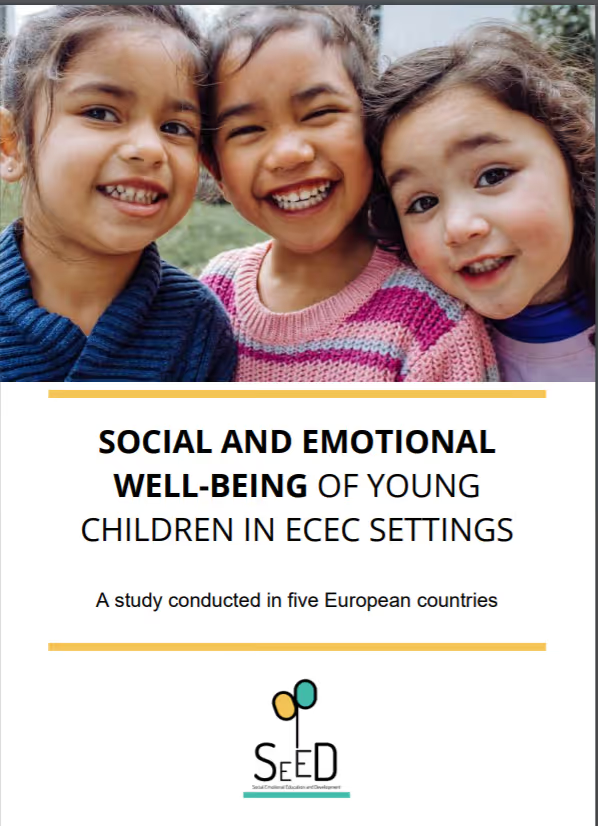
Social and emotional well being of young children in ECEC settings. A study conducted in five European countries
Children’s long term success at school is influenced as much by social, emotional and self-regulation skills as by academic skills and knowledge. The overall goal of SEED was to improve psychosocial well-being and healthy development of young children (2,5 to 6 years old), with an emphasis on those growing up in difficult circumstances such as children on the move, children with a low socio-economic status or children victims or witnesses of domestic violence. We did this by conducting a country level screening of psychosocial well-being of 5-year-old children in 5 countries in Europe.
The aim of this research study is firstly to assess the psychosocial well-being of 5-year-old children in ECEC settings infive countries in Europe (Croatia, Hungary, Latvia, the Netherlands and Norway) through interviews with ECEC practitioners and secondly to identify the factors in ECEC settings that promote and hinder children’s psychosocial well-being in each country.The study is part of European project titled: SEED (Social and Emotional Education and Development). The activities in SEED, including this research study, are designed to draw attention to the importance of psychosocial well-being for children’s learning and development, and support the continuing professional development of practitioners working with 2.5 to 6 year-olds in this area. The SEED Project is funded by the European Commission under the Erasmus+ Programme –Strategic partnerships for school education.
Contact person: Margaret Kernan, margaret@icdi.nl
button[src="https://icdi.nl/media/uploads/downloads/seed-research-report-21dec18-final.pdf"][label="Full report"] button[src="https://icdi.nl/media/uploads/downloads/seed-report-summary-final-dec18-eng.pdf"][label="English summary"] button[src="https://icdi.nl/media/uploads/downloads/seed-guidelines-summary-hungarian.pdf "][label="Hungarian summary"] button[src="https://icdi.nl/media/uploads/downloads/seed-guidelines-summary-croatian.pdf"][label="Croatian summary"] button[src="https://icdi.nl/media/uploads/downloads/seed-guidelines-summary-the-netherlands.pdf"][label="Dutch summary"]Published in:
2018
Organization(s):
International Child Development Initiatives ICDI
Language:
Contact:
Margaret Kernan, margaret@icdi.nl