Knowledge Hub
All the resources stored here have been created by ISSA Members
or ISSA Secretariat in partnership with Members or partners.



Health by the Book
Health by the Book is not only a nutrition book, it is also an educational handbook for well-being and a healthy life style. Step by Step Centre for Education and Professional Development in Romania developed this guidebook together with the Lidl company. The format of the handbook is a magazine with 36 pages containing primary school applications, games, healthy recipes to be cooked by children with parents or teachers, recommended activities for in the home, experiments, crosswords. This resource is full of scientific information expressed in language for children, teachers and parents and illustrated with relevant pictures.
The main purpose of the handbook is to develop healthy habits in children between 6 – 12 years old by integrating nutrition knowledge into the school curricula and practicing healthy habits in every school day and at home.
The main issues addressed refer to: knowing food and how to eat a balanced diet, appropriate portions, shopping, hydration, what is dangerous to eat, allergies and intolerances, obesity, and the importance of physical activities.
Through every topic, the authors send the message that the key to health is life style and this is built in the first years of life! Another important message is that healthy habits and physical training are built in the families and in schools, so parents are the important educators!
Every primary teacher can use this resource integrating healthy habits in school activities, practicing recommended activities, and working with parents through children and/or directly. They can also be inspired by this guide to create their own activities, recipes, experiments for promoting healthy habits.
Published in:
2017
Organization(s):
Step by Step Center for Education and Professional Development
Language:
Contact:
Roxana Avram, roxana.avram@stepbystep.ro
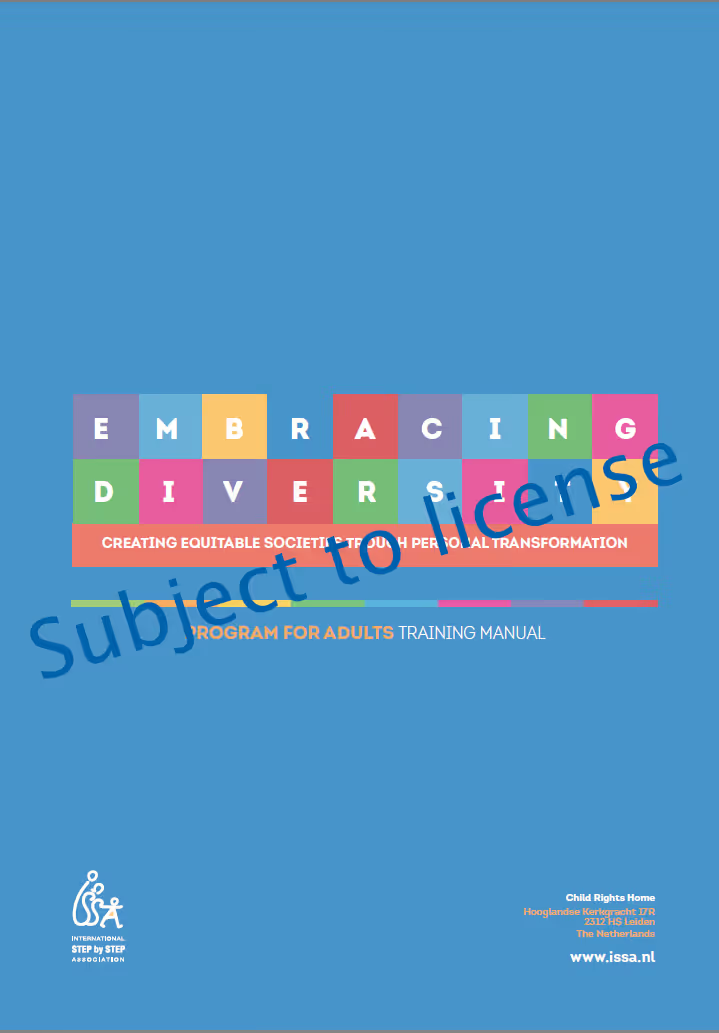
Embracing Diversity. Creating Equitable Societies Through Personal Transformation. Program for Adults, Training Manual
Embracing Diversity Training program for adults promotes the values of anti-discrimination, anti-bias, equity and respect for diversity in different settings: in communities, at the workplace, and in society. Embracing Diversity guides participants through a process of personal transformation, which helps them to become agents of change towards inclusive and social cohesive societies.
During the training, participants get theoretical overview and knowledge about most relevant concepts related to diversity, interculturalism, equity and social justice and they also build critical consciousness trough naming reality, giving voice to those who are usually silenced and by building alliances. The program consists of well-elaborated theoretical part, guidelines for reflection and 25 training sessions. Additional materials and resources listed can serve for adaptation of the program to meet the needs of diverse participants and specificity of different contexts.
button[src="https://cdn.prod.website-files.com/694724257114b734f4bb749a/6985ce58028979a5a0002daf_embracing%20diversity%20publication_short_for%20license.pdf"][label="read the excerpt"]
Published in:
2017
Organization(s):
ISSA - International Step by Step Association
Language:
Contact:
Zorica Trikic, ztrikic@issa.nl
My Green Childcare Booklet
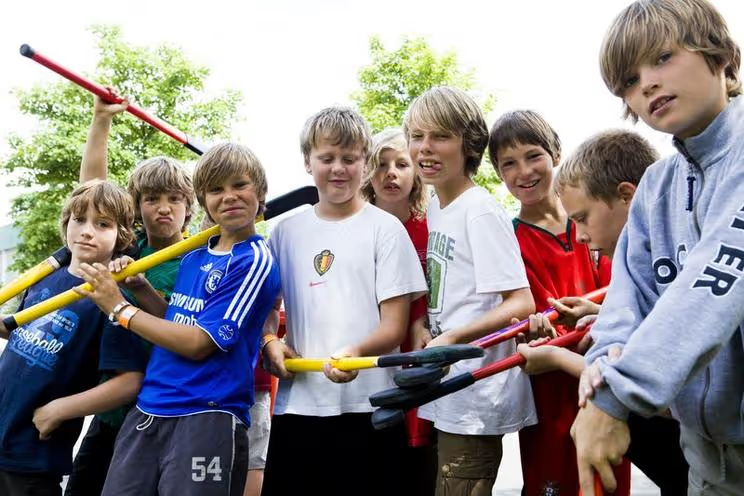
A number of childcare facilities (children under 3 years of age) of the City of Ghent incorporated sustainability and ‘green principles’ in their pedagogical vision and daily practice, engaging children, parents, community and the care team. Each of our childcare centers works from a well-defined, holistic pedagogical vision, focusing on total wellbeing and involvement of children and their environment. The so-called ‘profiled centers’ elaborate a specific aspect of this vision. The “Green childcare centers” look for different ways to bring children in contact with nature and to bring nature into their childcare. To support this, each child gets its own ‘GREEN BOOKLET’: a personalized notebook with a series of ‘green’ activities each child should experience before the age of 3, such as walking barefoot on grass or sand, play with water, dance in the rain, stare at clouds, make mud cakes, smell flowers, watch a bug, help to prepare and eat natural healthy foods… Whenever a child does any of these activities for the first time, it’s indicated in his green booklet, if possible with a picture of the child enjoying this activity and personal notes of the childcare team, such as when did the child do this, how did he experiment, enjoy the activity….
It stimulates the care team to ensure that each child (as an individual and member of the group) is offered a varied scale of green and sustainable experiences. Nature offers a wide range of materials stimulating children’s phantasy, creativity and senses. The goal is that each child does each of the ‘green’ activities at least once before he leaves childcare. The booklet is used as a tool to talk with the team, children and parents about what the kids do, focusing on the green and total development and wellbeing of each child. The practitioners start participation with observing children in a natural environment. Children’s language development is stimulated by telling and sharing the stories of their discoveries. The care team and parents can discuss the child’s development, wellbeing and the integration of green principles in the child’s education. And most of all, the Green booklet is a valued souvenir for children and parents when they say goodbye to the childcare. The green booklet was first designed by Childcare center, De Bubbels, and further developed and implemented by the “Green colleague group”, consisting of the coordinators of all green childcare centers and a pedagogical coach of the City of Ghent. The booklet can be easily adapted to any child and any environment a childcare center works in.
Published in:
2017
Organization(s):
Child Care Unit, City of Ghent, Belgium
Language:
Contact:
Evelyne Pauwels, diko.pb@stad.gent
Childeas - Tiny Little Thoughts
With the project “ZAMISLICE” (CHILDEAS – Tiny Little Thoughts), ISSA member from Slovenia, Mala Ulica wished to acquaint all new parents with the importance of early interactions. They provided parents with a pendant that can also serve as a pram mobile – a small, but important gadget that offers 30 handy cards with ideas for simple activities with babies which promote the child's overall development, anywhere, any time. In addition to description of a concrete activity, each card contains a brief explanation of why this activity is important and how it will foster child development. That was the way to encourage parents and stimulate them to engage with children in meaningful interactions, making them aware that all sorts of activities, even if they seem inconsequent, such as singing, dancing or counting fingers are more than simple games. That they are activities that intensely promote the development of children's brain. And shape their future.
The material for “Zamislice” is developed in cooperation with the Pedagogical Institute and the Community Health Centre Ljubljana. Zamislice are presented and given to parents at their first baby health check by the pediatricians in Ljubljana. The project has various options for upgrading, e.g. the same accessory for toddlers (1–2 years, 2–3 years and 4–5 years), a mobile application and web site with instructions for early learning, etc., which Mala Ulica is planning to realize and implement in the future. The results of numerous research papers in the fields of neuroscience, developmental psychology, pedagogy and other disciplines prove that experiences up to the third year of children’s life have an extremely strong influence on the realization of their social, physical and mental potential. Children's brains develop the fastest in the early years of life and thus create the basis for learning in the future. The future of our children and consequently the future of our society are therefore first and foremost in the hands of their parents.
Published in:
2017
Organization(s):
Association Mala ulica - Center for children and families in Ljubljana, Slovenia
Language:
Contact:
Eva Strmljan Kreslin, evaskreslin@malaulica.si
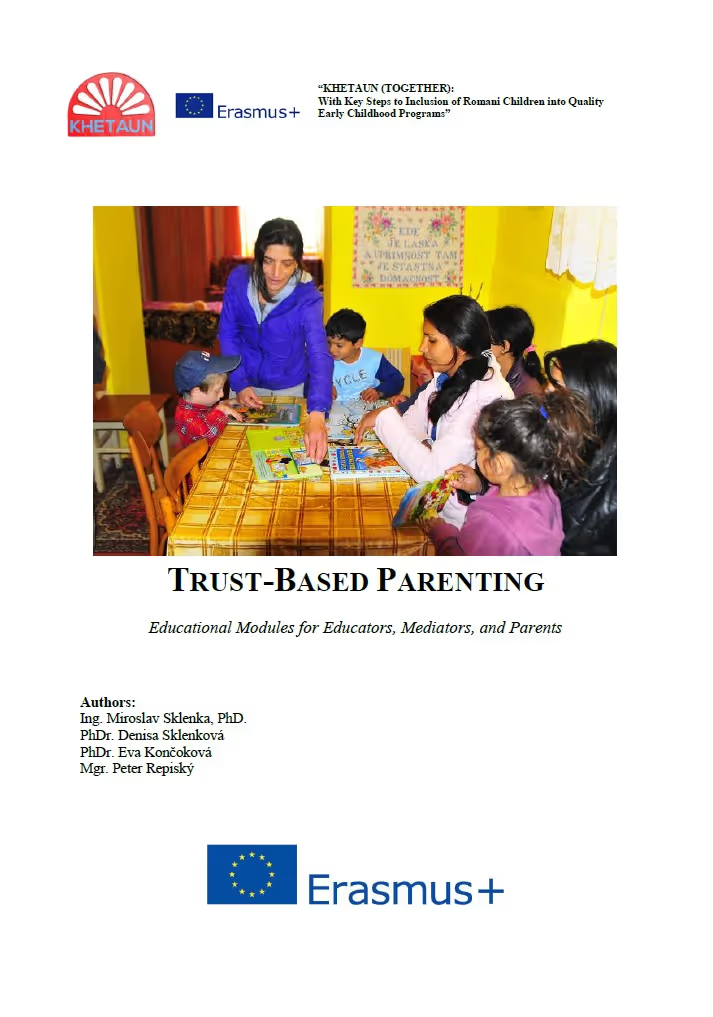
Trust Based Parenting
Trust Based Parenting is an educational material for professionals and para-professionals working with Romani communities, for Romani parents, grandparents and children at an early age. The material can be used for trainings, workshops and home visits. Content of the manual consists of various topics connected with education for social justice, building the confidence of Romani parents and preparation of Romani children for primary education.
button[src="https://cdn.prod.website-files.com/694724257114b734f4bb749a/6985d0292886276ab5b46d0a_Trust%20Based%20Parenting.pdf"][label="Download in English"] button[src="https://cdn.prod.website-files.com/694724257114b734f4bb749a/6985d02afefdf169b527e158_Rodicovstvo-zalozene-na-dovere.pdf"][label="Download in Slovak"]Published in:
2016
Organization(s):
Skola dokoran – Wide Open School n. O.
Language:
Contact:
Miroslav Sklenka, miroslav.sklenka@gmail.com
Planned Activities for Cohesive Education (PACE)
The Planned Activities for Cohesive Education (PACE) program was initiated by Balkan Sunflowers Kosova in their learning centers. This program outline activities to be used with children within the national curriculum to improve their core competencies necessary to succeed in school and life. PACE incorporates science and literacy activities and technology based learning from the Balkan Sunflowers Kosovo"s Reading for Discovery and Learning Through Experiments project.
The Second Edition of the PACE curriculum was published in the Fall of 2016, outlining learning outcomes for practical and hands-on activities for children in primary school - Grades 1-6. It incorporates the innovative component of Social-Emotional Learning (SEL) that aims at helping, monitoring and evaluating the social-emotional learning of the children.
Published in:
2016
Organization(s):
Balkan Sunflowers Kosova
Language:
Contact:
Muhamet Arifi, muhamet.arifi@balkansunflowers.org

The Nest Center: a Home Away from Home
The Nest Center is an open, close-to-home type of center, where a stable, fixed group of 30 to 60 children aged 7-16 from multi-problem families spend time before and/or after school, and in weekends and holidays.
The overall objective of the Nest Center is to provide children from multi-problem families with a safe space, where they can enjoy interaction with peers and adults in leisure and learning activities, to enhance their psychosocial well-being and strengthen their resilience.
For each child attending the Nest Center an Individual Action Plan (IAP) will be formulated, with clear, mutually agreed upon goals and activities (contributing to the afore mentioned overall objective). This IAP will be regularly monitored and adapted to give the best possible support to a child.
Published in:
2016
Organization(s):
ICDI - International Child Development Initiatives
Language:
Contact:
Margaret Kernan, margaret@icdi.nl
Math through Play - 50 Activities for Improving Student Numeracy Skills
The Macedonian handbook Math through play is comprised of 50 activities that aim to improve lower grade students’ numeracy skills. All activities are divided in six teaching and learning areas (Numbers; Math Operations; Measurement; Data Analysis; Word problems and Geometry) as defined in the Macedonian national teaching curricula. The Handbook describes each activity separately, including the necessary materials, the preparation process and the method of conducting the activity. Additionally, each activity is supported with one or more photos presenting the preparation process.
All of the activities can be easily replicated in the classroom with affordable and easy-to-get materials. This manual is a useful resource for the lower primary grade teachers and to the parents. Both teachers and parents can use one activity at a time and in this printable version of the Handout they can also write their comments when conducting the activity with their students/children.
button[src="http://stepbystep.org.mk/WEBprostor/toolbox/Matematika_niz_igra.pdf"][label="Download in Macedonian"] button[src="http://stepbystep.org.mk/WEBprostor/toolbox/Matematika_n%C3%ABp%C3%ABrmjet_loj%C3%ABs.pdf"][label="Download in Albanian"]Published in:
2016
Organization(s):
Foundation for Education and Cultural Initiatives Step by Step
Language:
Contact:
Suzana Kirandziska, info@stepbystep.org.mk
A Guidebook for Parents and NGO Representatives
A Guidebook for parents and NGO representatives consist of two thematic units: psycho-motor and psycho-social development of children and youth and development of partnerships between family and educational institutions.
button[src="https://cdn.prod.website-files.com/694724257114b734f4bb749a/6985ce754ab2bbd98fab3046_A%20Guidebook%20for%20Parents%20and%20NGO%20Representatives.pdf"][label="Visit the website"]Published in:
2016
Organization(s):
Pedagogical Center of Montenegro
Language:
Contact:
Biljana Maslovaric, biljana.maslovaric1@gmail.com

Health and Child
Health and Child is an educational material for professionals and para-professionals working with Romani communities, for Romani parents, grandparents and children at an early age. This material is used for trainings, workshops and home visits. Content of the manual consists from health topics and advices in the area of health, vaccination, regular check-up calendar, etc.
button[src="https://cdn.prod.website-files.com/694724257114b734f4bb749a/6985ce7f5eb0b715b71cc3a2_Health%20and%20child.pdf"][label="Download in English"] button[src="https://cdn.prod.website-files.com/694724257114b734f4bb749a/6985ce7fc4fb26a46f702234_Zdravie-a-dieta.pdf"][label="Download in Slovak"]Published in:
2016
Organization(s):
Skola dokoran – Wide Open School n. O.
Language:
Contact:
Miroslav Sklenka, miroslav.sklenka@gmail.com
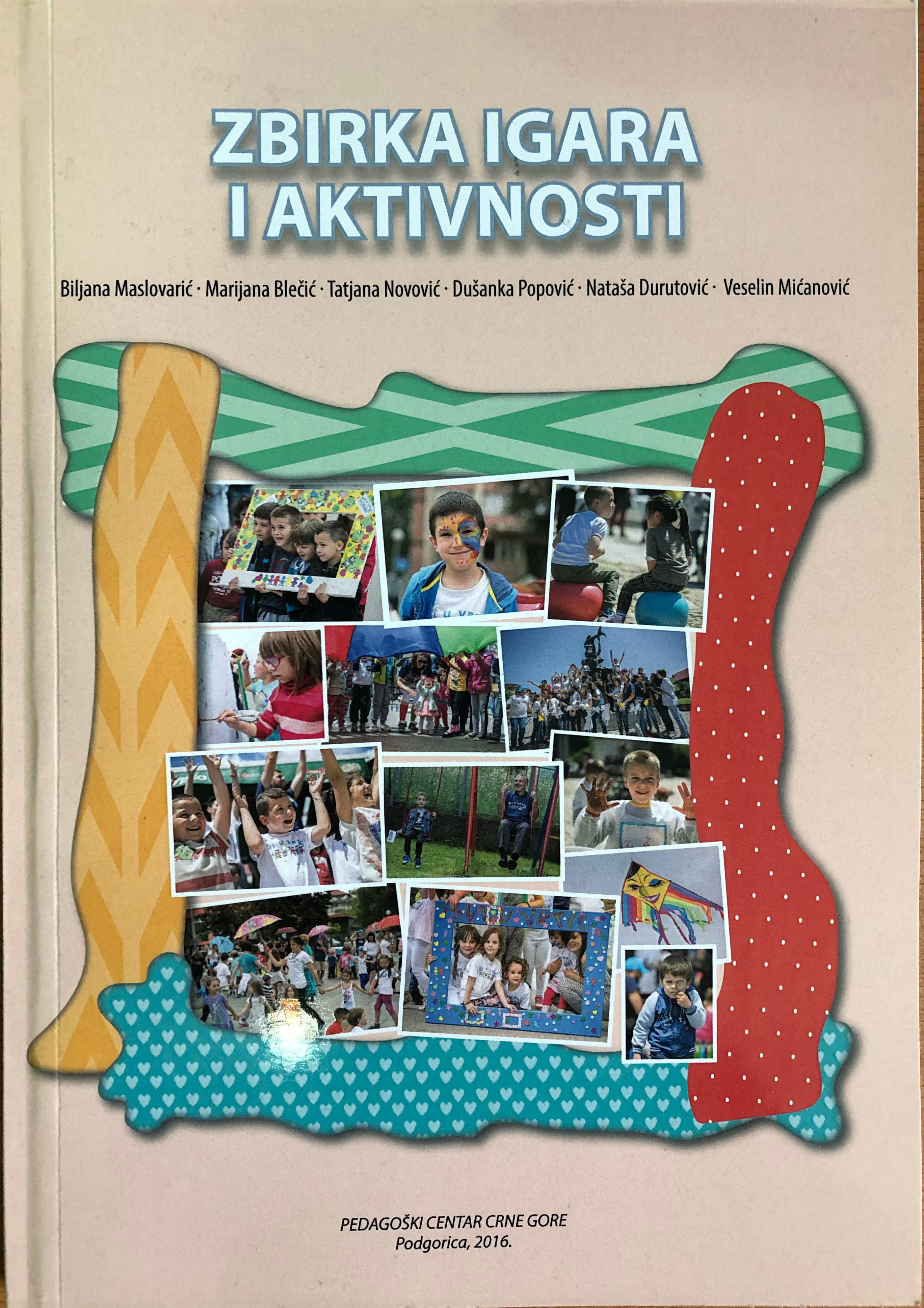
Compendium of Games and Activities for Children
Compendium of games and activities for children is the guide promoting the holistic approach to child development. It is covering five areas: the child in the world of nature, smells and sounds; the child in the world of manipulative games and maths; the child in the world of colors and lines; the child in the world of modeling and research; the child in the world of friends and theater.
button[src="https://cdn.prod.website-files.com/694724257114b734f4bb749a/6985cc4d23279c3ff6e8bdf7_Compendium%20of%20Games%20and%20Activities%20for%20Children%20compressed.pdf"][label="Visit the website"]Published in:
2016
Organization(s):
Pedagogical Center of Montenegro
Language:
Contact:
Biljana Maslovarić, biljana.maslovaric1@gmail.com
WANDA
To develop a new method of professionalization for low qualified practitioners in the 0-3 sector of the Flemish Community of Belgium, in 2010 Artevelde Hogeschool (University College in Gent) and VBJK (Center for Innovation in the Early Years), with ESF (European Social Fund) funds, started a project called WANDA . The methodology used in Wanda has its roots in the French ‘Analyze de Pratiques’ and in the Anglo-Saxon ‘Appreciative Inquiry’. The Wanda project is a new adaptation of these two methods, that has been successfully developed in 12 ECEC initiatives and in 7 training centers in the Flemish Community of Belgium. The Wanda methodology has also been tested in 4 pilot countries in Europe, and has proven its value.
The framework in which this method takes place is the “reflective practitioner” (Shön, 1983) and the concept of “competent system”. In order to reach quality in the educational system, we need practitioners that are able to negotiate, to deal with uncertainty, to reflect on the meanings of what they think and do (Schön, 1983), to question themselves and constantly find the balance between agreement and disagreement in the group, as stated also in the document edited by the DECET/ISSA Working Group on Professionalism (DECET/ISSA, 2011). The Wanda method aims to increase the professional development of low qualified practitioners and to improve the reflective competences of this group in a context of increasing diversity. This hands-on manual provides insight in the background of the methodology, a clear facilitator manual, as well as toolbox to facilitate sessions.
Published in:
2016
Organization(s):
Artevelde University College, VBJK
Language:
Contact:
Sofie Vastmans, sofie.vastmans@arteveldehs.be
Roma Empowerment and Support for Inclusion – Case study Rome, Italy
Growing through sharing together: Needs and aspirations of Romani early childhood professionals report was developed to support ISSA and Early Childhood Program at the Open Society Foundation to launch The Romani Early Years Network (REYN). The selected group of practitioners provided information through questionnaires and interviews regarding their continuous professional development needs stating that it would be of great importance to combine formal and in-service training which would result in either certification or diplomas. They also showed significant interest in study-visits as a form of in-service training, and saw value in participating in a European ECD network supporting emerging and established Romani early childhood development professionals, as well as other professionals working in the field of ECD with Roma, Ashkali, Egyptian, Sinti, Gitano and other communities.
The case study on Rome, Italy focuses on two projects, Sar San (1 and 2) and Stop Roma Apartheid (continued as Aver Drom) implemented by Associazione Luglio 21 Onlus from Rome and ABCitta Societa Cooperativa Sociale Onlus from Milan. The two projects complemented each other: Sar San (since 2013) focused on providing services for Roma children and families living in camps and Stop Roma Apartheid (started in 2014 and continued as Aver Drom since 2015) which focused solely on advocacy on the level of municipality and in national fora. The case study clearly demonstrates both the urgent need for intervention and the challenges of working in a politically and economically hostile environment marked by discriminatory practices and segregation of Roma in Italy. It also showcases the importance of advocacy efforts and actions aimed at addressing child- and human rights and with awareness raising on the importance of inclusion of young Roma children and their families in the mainstream society.
button[src="https://cdn.prod.website-files.com/694724257114b734f4bb749a/6985cfcf2b1ff4831ba76881_Case%20Study%20Italy-web.pdf"][label="Download in English"] button[src="https://cdn.prod.website-files.com/694724257114b734f4bb749a/6985cfd0b64497b92fbd0c96_Case%20study%20Italy_IT.pdf"][label="Download in Italian"]Published in:
2016
Organization(s):
ISSA - International Step by Step Association
Language:
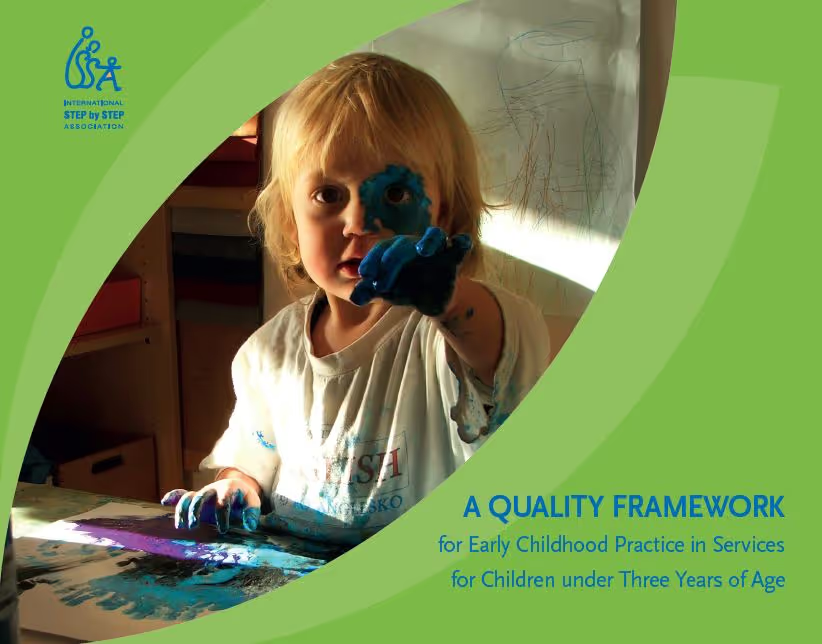
Quality Framework for Birth to Three Services
ISSA’s Quality Framework for Early Childhood Practice in Services for Children under Three Years of Age is grounded in the Convention on the Rights of the Child and stands for the centrality of the child and family in conceptualizing, designing and implementing programs dedicated to this age group, no matter the type of service, program, or sector.
It comprises 31 principles and 143 recommended practices, grouped around 9 Focus Areas, thus covering the complexity of the practices and responsibilities that binds all professionals working in early childhood services.
Through this framework, ISSA launches an invitation for dialogue and joint action among practitioners, managers, policy- and decision-makers, program coordinators, trainers/mentors from all sectors and institutions active in early childhood systems, so they may develop an articulated vision and a shared understanding around quality practices impacting the lives of the youngest children.
button[src="https://cdn.prod.website-files.com/694724257114b734f4bb749a/6985cfb23139d7275e745cfc_ISSA_Quality_Framework_0-3_e-version_screen.pdf"][label="Download in English"] button[src="https://cdn.prod.website-files.com/694724257114b734f4bb749a/6985cfb4028979a5a0010e11_Quality%20Framework%20Birth%20to%20Three_Dutch_Final.pdf"][label="Download in Dutch"] button[src="https://cdn.prod.website-files.com/694724257114b734f4bb749a/6985cfb5a00c77551ab9368a_Quality%20Framework%20Birth%20to%20Three_Russian.pdf"][label="Download in Russian"]
Published in:
2016
Organization(s):
ISSA - International Step by Step Association
Language:
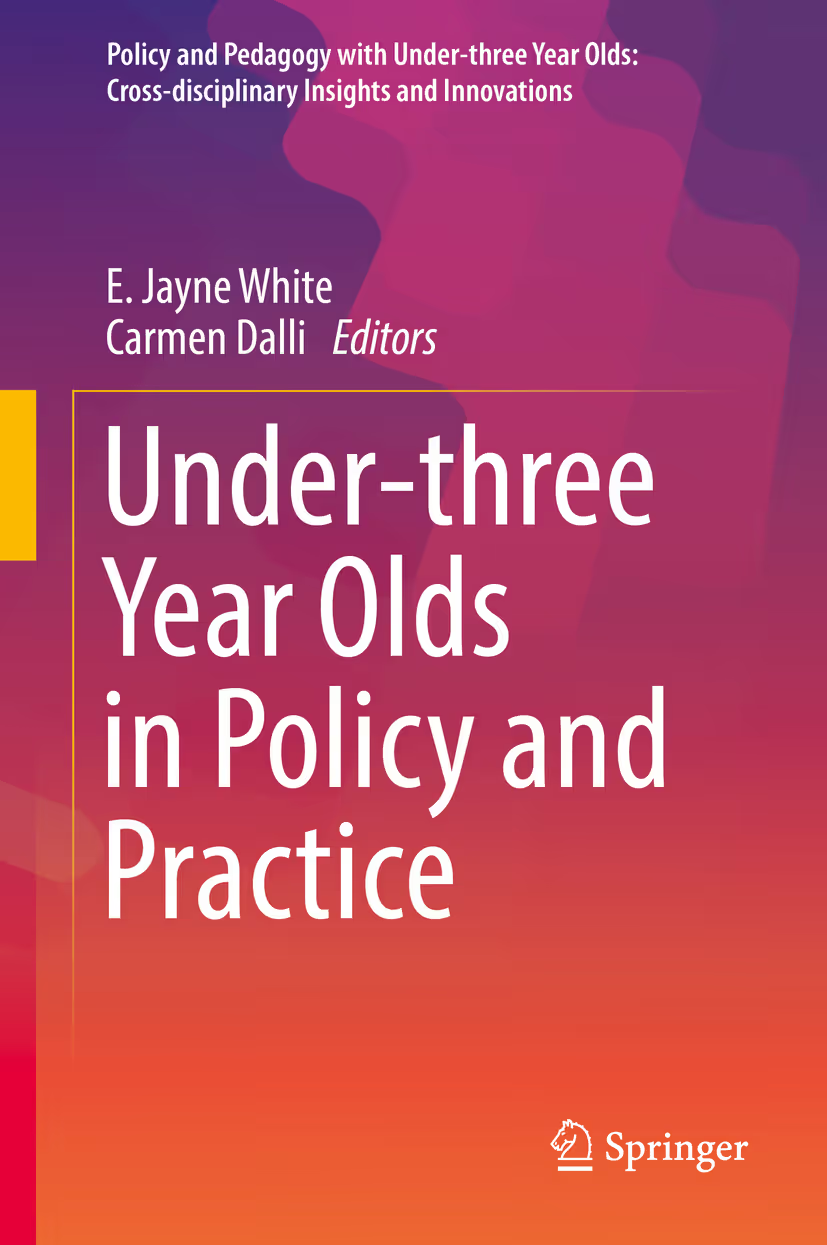
Under-three Year Olds in Policy and Practice
The first book in the series Policy and Pedagogy with Under-three year olds: Cross Disciplinary insights and innovations establishes a path for the much-needed examination of the experiences of infants and toddlers in contemporary educational settings across the globe. Bringing together internationally renowned scholars in the field, it starts a series of discussions about the positioning of under-three year olds in contemporary practice and policy contexts. It takes an in-depth look at what this means for our understanding of under-three year olds and those who share their worlds. Featuring some of the most important contemporary topics in this pedagogical domain, such as care, well-being, belonging, professionalism and status, the contributors offer a kaleidoscope of perspectives for contemplating the new normality of very young children living their lives in group-based early childhood settings, and what gives rise to their current realities. It also explores some important policy directions and trends.
The chapter Quality Framework for Early Childhood Practices in Services for Children Under Three Years of Age: Starting Regionally – Moving Globally, is ISSA's contribution to the first book in the new Springer series, Under-three Year Olds in Policy and Practice. The chapter describes participatory process of development of ISSA's Quality Framework and shares the insights from the pilots on the multiple uses of the Quality Framework to address systemically the issue of quality within a ‘pedagogy of care’ in Bulgaria, Lithuania and Slovenia.
Published in:
2016
Organization(s):
Springer
Language:
Roma Empowerment and Support for Inclusion report - Synthesis report of the Case Studies in Ghent, Belfast and Rome – Policy Recommendation
Roma Empowerment and Support for Inclusion Report - Synthesis report of the Case Studies in Ghent, Belfast and Rome summarizes the cross-national issues regarding Roma empowerment and support for inclusion with a specific focus on young children such as parenting support, access to quality early childhood services, awareness on Roma inclusion and importance of early childhood development and capacity building and agency of Roma actors. The policy recommendations presented in the publication are the result of the policy round table meeting organized by ISSA in partnership with Bernard van Leer Foundation in Brussels and they highlight different ways for breaking the barriers for inclusion such as existence of political will and finances; the role of mediators, comprehensive and strength based approach and support to families.
The case study is available in English.
button[src="https://cdn.prod.website-files.com/694724257114b734f4bb749a/6985cfd1cfff02717baad5bf_Syntesis%20and%20Policy%20Recommendations_web%20(1).pdf"][label="Download"]Published in:
2016
Organization(s):
ISSA - International Step by Step Association
Language:
Roma Empowerment and Support for Inclusion – Case study Ghent, Belgium
Published in:
2016
Organization(s):
ISSA - International Step by Step Association
Language:

The Role of Psychologist in Early Education
The Role of Psychologist in Early Education is the first guidebook created for psychologists working in early childhood settings. The psychologists in Georgian kindergartens are one of the personnel responsible for development of inclusive practice in kindergartens.
button[src="https://issa.nl/sites/default/files/www-issa/pdf/resources/%E1%83%A4%E1%83%A1%E1%83%98%E1%83%A5%E1%83%9D%E1%83%9A%E1%83%9D%E1%83%92%E1%83%94%E1%83%91%E1%83%98%E1%83%A1%20%E1%83%A0%E1%83%98%E1%83%93%E1%83%94%E1%83%A0%E1%83%98%20%25281%2529.pdf"][label="Download"]Published in:
2016
Organization(s):
Center for Preschool and Inclusive Education, Ilia State University
Language:
Contact:
Khatuna Dolidze, khatuna.dolidze.1@iliauni.edu.ge