Knowledge Hub
All the resources stored here have been created by ISSA Members
or ISSA Secretariat in partnership with Members or partners.



Published in:
2007
Organization(s):
ISSA - International Step by Step Association
Language:
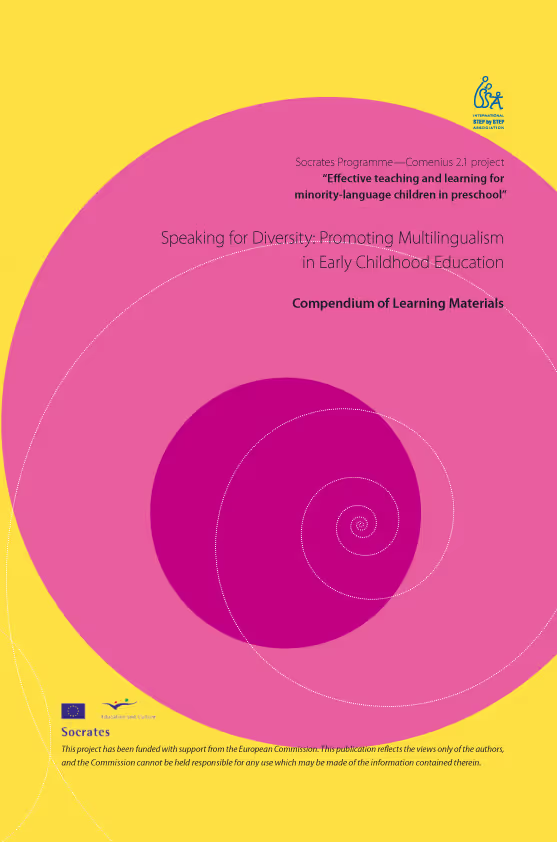
Effective Teaching and Learning for Minority-language Children in Pre-school
ISSA's Effective teaching and learning for minority-language children in preschool is a set of materials developed under the Socrates Programme-Comenius 2.1 project in partnership with ISSA’s members from Slovakia, Open School Foundation, and from Estonia, Hea Algus with input from international partners from Italy (Cooperation per lo sviluppo dei Paesi Emergenti/COSPE) and the Netherlands (Sardes Education Services). The set consists of: Teachers' Guide "Speaking for Diversity: Promoting Multilingualism in Early Childhood Education";
Training Modules for adult educators; and Compendium of learning materials focusing on the benefits of multicultural/intercultural and child-centered approaches for second language learners, the long term social and cognitive benefits of supporting children's home language while learning new languages; the effective classroom teaching and learning strategies for second language learners; assessing and planning instruction for second language learners; the importance of building bridges with families and communities of minority language speaking children etc. In 2009, the project was featured by DG Education and Culture as one of the most creative and innovative best practice from EU programs.
Published in:
2006
Organization(s):
ISSA - International Step by Step Association
Language:

Supporting Families for Nurturing Care
Supporting Families for Nurturing Care: Resource Modules for Home Visitors
Supporting Families for Nurturing Care
Trainer Guide for Home Visitors
Module 1: The Early Childhood Years - a Time of Endless Opportunities
Module 2: The New Role of the Home Visitor
Module 3: Nutrition for Infants and Young Children
Module 4: Falling in Love - Promoting Parent-Child Attachment
Module 6: The Art of Parenting - Love, Talk, Play, Read
Module 7: Parental Wellbeing
Module 8: Common Parenting Concerns
Module 9: Home Environment and Safety
Module 10: Caring and Empowering - Enhancing Communication Skills for Home Visitors
Module 11: Working Against Stigma and Discrimination - Promoting Equity, Inclusion and Respect for Diversity
Module 13: Developmental Monitoring and Screening
Module 14: Keeping Young Children Free from Violence, Abuse and Neglect
Module 15: Working with Other Services
Module 16: Responsive Feeding
Module 17: Supervision - Supporting Professionals and Enhancing Service Quality
Module 18: Gender Socialisation and Gender Dynamics in Families - the Role of the Home Visitor
Module 19: First Steps to Preschool
Module 20: Healthy Weight, Physical Activity and Sedentary Time
Module 21: The Care of Small and/or Sick Newborns
Module 22: Protecting Young Children from Vaccine Preventable Diseases
Published in:
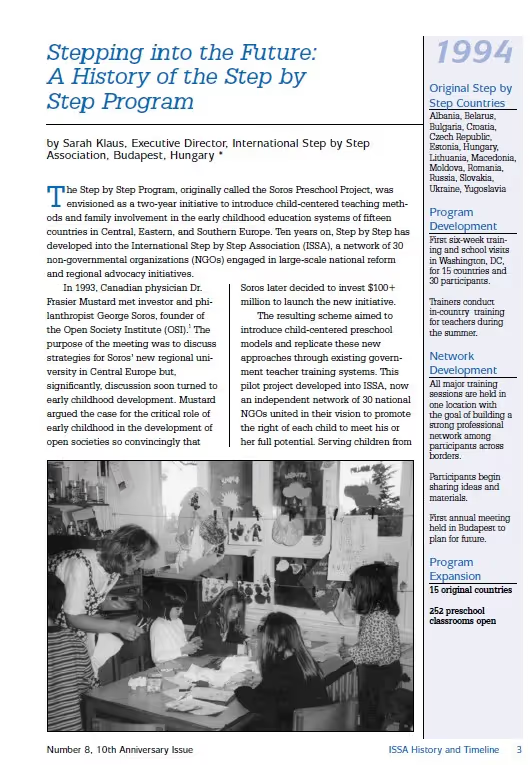
Stepping into the Future: A History of the Step by Step Program
An article offering an overview of the Step by Step Program's 30-year history.
Published in:
Step by Step Program | Reports and Evaluations
Step by Step Program Reports and Evaluations
Access evaluations and reports, which offers in-depth analyses and insights into the effectiveness and impact of various educational programs. Our evaluations and reports include:
- Evaluation of the Step by Step Program (Education Development Center, 1998) - Executive Summary: A thorough assessment of the Step by Step program's implementation and outcomes.
- Master of Science in Early Childhood Development: Selected Summaries of Student Research (Institute of Education Development, BRAC-IED, Dhaka, 2010): Summaries of notable research conducted by graduate students in the field of early childhood development.
- Building Open Societies Through Quality Early Childhood Care and Education: Case Studies of the Step by Step Program: Case studies demonstrating how quality early childhood education can contribute to the development of open, inclusive societies.
- Starting Strong Evaluation: Impact Evaluation Research Brief (June 2019): A research brief highlighting the impacts and outcomes of the Starting Strong evaluation.
- Starting Strong Evaluation Policy Brief (June 2019): A policy brief offering key recommendations based on the findings of the Starting Strong evaluation.
- Consolidated Final Report: Evaluation of the Program for Children and Parents – Dam Len Phaka’ (April 2019): The final report evaluating the program designed to support children and parents.
- Creating Financing and Governance Preconditions for Inclusive Early Childhood Development and Education Systems: Latvia, Serbia, Bulgaria, Ukraine, and Lithuania (2015): An analysis of the financial and governance conditions necessary for inclusive early childhood development and education systems in various countries.
Published in:
Language:
Step by Step program | ISSA Journals
ISSA Journals
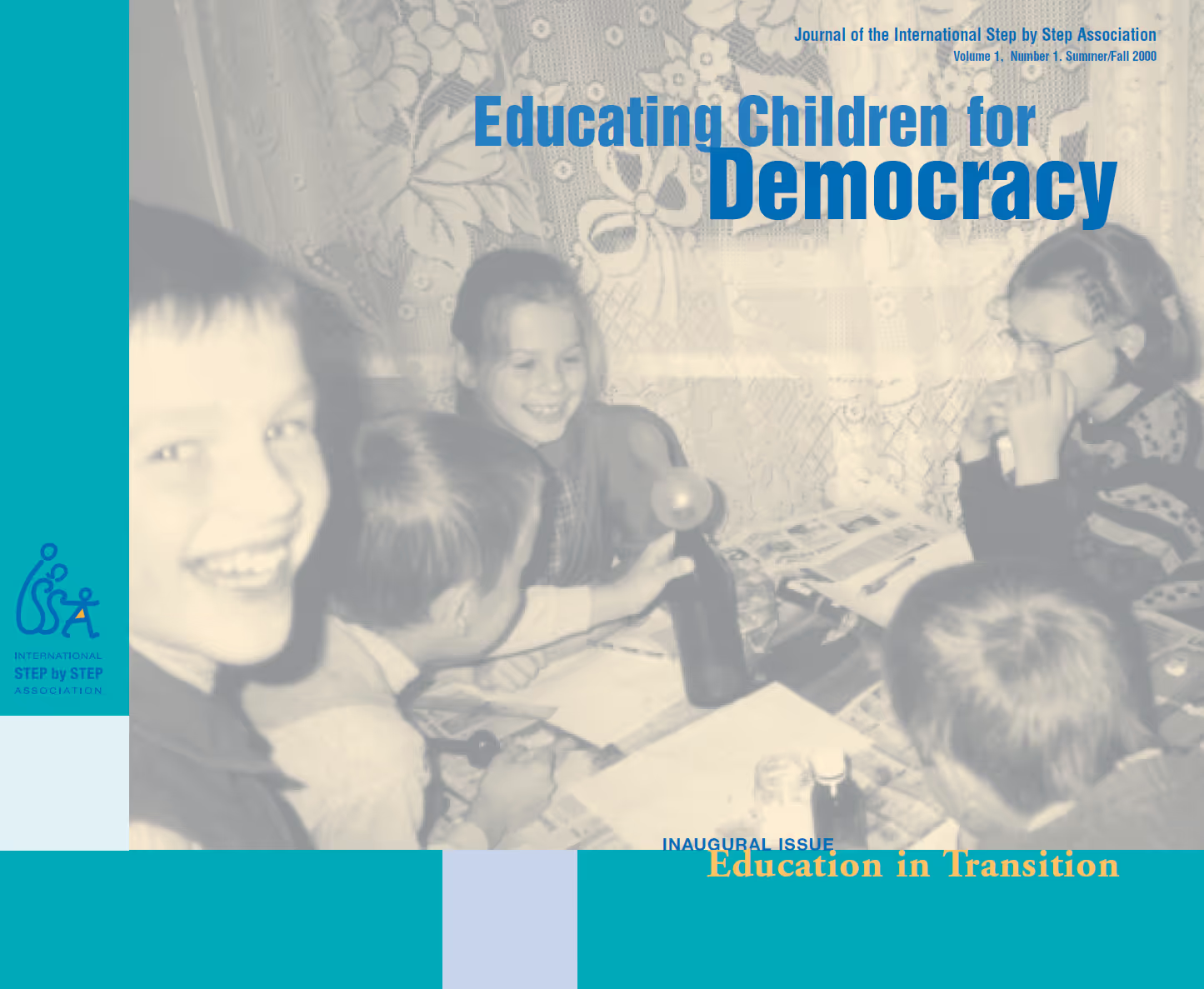
Between 2000 and 2005 the International Step by Step Association produced nine Issues of the Journal Educating Children for Democracy. The journals feature lively articles about Step by Step and child-centered early education written by regional and international early childhood pedagogues and experts.
Number 1: Summer/Fall 2000
Number 2: Winter/Spring 2002 Family and School Partnerships
Number 3: Summer/Fall 2002 Family and Community Involvement
Number 4: Winter/Spring 2003 Learning Through Play
Number 5: Summer/Fall 2003 Child-Centered Education: Roots, Renewal and Growth
Number 6: Winter/Spring 2004 Early Childhood: A Global Concern
Number 7: Summer/Fall 2004 Quality in Early Childhood Education
Number 8: November 2004 A Decade of Steps in Educational Reform
Number 9: Summer/Fall 2005 Transforming Early Childhood Education
Published in:

From Special School to Resource Centre: Supporting Vulnerable Young Children in Central and Eastern Europe: A Guide for Positive Change
This guide supports a wide range of professionals working alongside parents and caregivers in both special and mainstream systems to manage and implement the ongoing transitions that affect how special and mainstream institutions provide services and coordinate actions. This includes those who may be special educational needs teachers, special pedagogues, psychologists, teaching assistants, or sign language interpreters. It also includes mainstream teachers and other school staff working to support improvements in provision, which promote quality inclusive education for all children at preschool and school level. The guide introduces the principles of inclusion along with ideas and strategies that can be used to manage change.
This guide serves two purposes. First, it provides information and strategies that can help solve problems and manage change. Second, it facilitates self-directed professional development that helps empower staff to fulfill the leadership role expected of resource centers.
Published in:

Module 22: Protecting young children from vaccine preventable diseases
“Immunization is one of the most cost-effective ways to save lives and promote good health and well-being. Every year, vaccines save 2-3 million lives, and millions more are protected from disease and disability. It routinely reaches more households than any other health service and brings communities into regular contact with the health system. This provides an effective platform to deliver other primary health care services and upon which to build universal health coverage”. (Gavi – The Vaccine Alliance, 2019)
You can access the whole package here.
button[src="https://cdn.prod.website-files.com/694724257114b734f4bb749a/69b01da8181826e2778c3987_YCHW%20HV%20922%20Immunisation%20ENG.pdf"][label="Download"]
Published in:

Module 19: First steps to preschool
This module presents key information on what you can do as a service provider to help parents understand the importance of quality early childhood education and care (ECEC).
The information and guidance presented in this module is most applicable to parents and teachers of ECEC-aged children, and particularly those aged between 3-6 years.
The aim of this module is to enhance and update your knowledge regarding the value and importance of young children attending high-quality, inclusive preschool programmes and how you can support parents in this matter.
You can access the whole package here.
button[src="https://cdn.prod.website-files.com/694724257114b734f4bb749a/69b01dd5928a9f4cc4a73613_YCHW%20HV%2019%20Preschool%20Education.pdf"][label="Download"]
Published in:

Module 20: Healthy weight, physical activity and sedentary time
The foundations of a healthy life style – healthy weight, an adequate amount of physical activity, and sufficient sleep – have their roots in the early years.
Levels of physical activity and quality of sleep significantly affect child health, development and wellbeing. Good quality information and behaviors, starting at (or even before) conception through the early years, can create the foundation for life long health and wellbeing.
You can access the whole package here.
button[src="https://cdn.prod.website-files.com/694724257114b734f4bb749a/69c0f601515f75e6143c18a5_20-HealthyWeight-Physical-Activity.pdf"][label="Download"]
Published in:
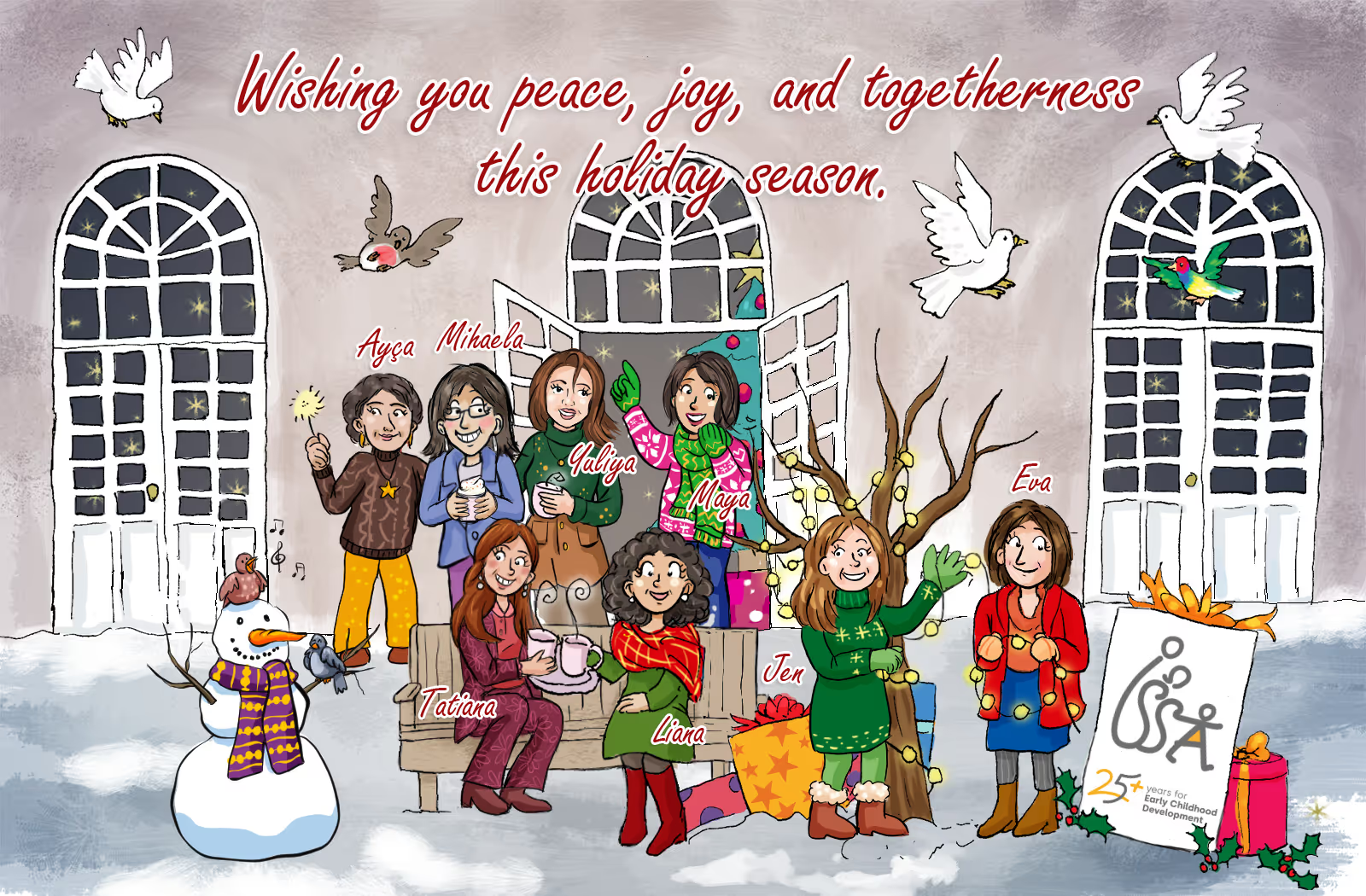
Warm Greetings as We Welcome a New Dawn Together
As we close this year, we are reminded of a familiar moment in history. Before the Renaissance illuminated Europe, it was preceded by centuries often called the “Dark Ages”, a term that obscures the quiet breakthroughs, steady innovation, and determination that made later flourishing possible.
Published in:
TOY for Inclusion training inspires coordinators of new Play Hubs
Eight candidates to be Play Hubs coordinator attended a three-day training in Croatia. “I felt understood; people accepted me as I am,” said trainee Tatiana Pastorekova.
Eight new TOY for Inclusion Play Hubs will open in 2020. The in-training coordinators followed a three-day international training session in Sisak (Croatia) this week.
“I like to work with children and people. It is in my heart and I want to give something back to society”, said one of the trainees, Tatiana Pastorekova. She is a preschool teacher and has been selected as a coordinator of the Play Hub that will open in Roskovce (Slovakia) next year...
Continue reading on reyn.eu.
Published in:
Thirty Trainers Receive Psychological First Aid Training in Budapest
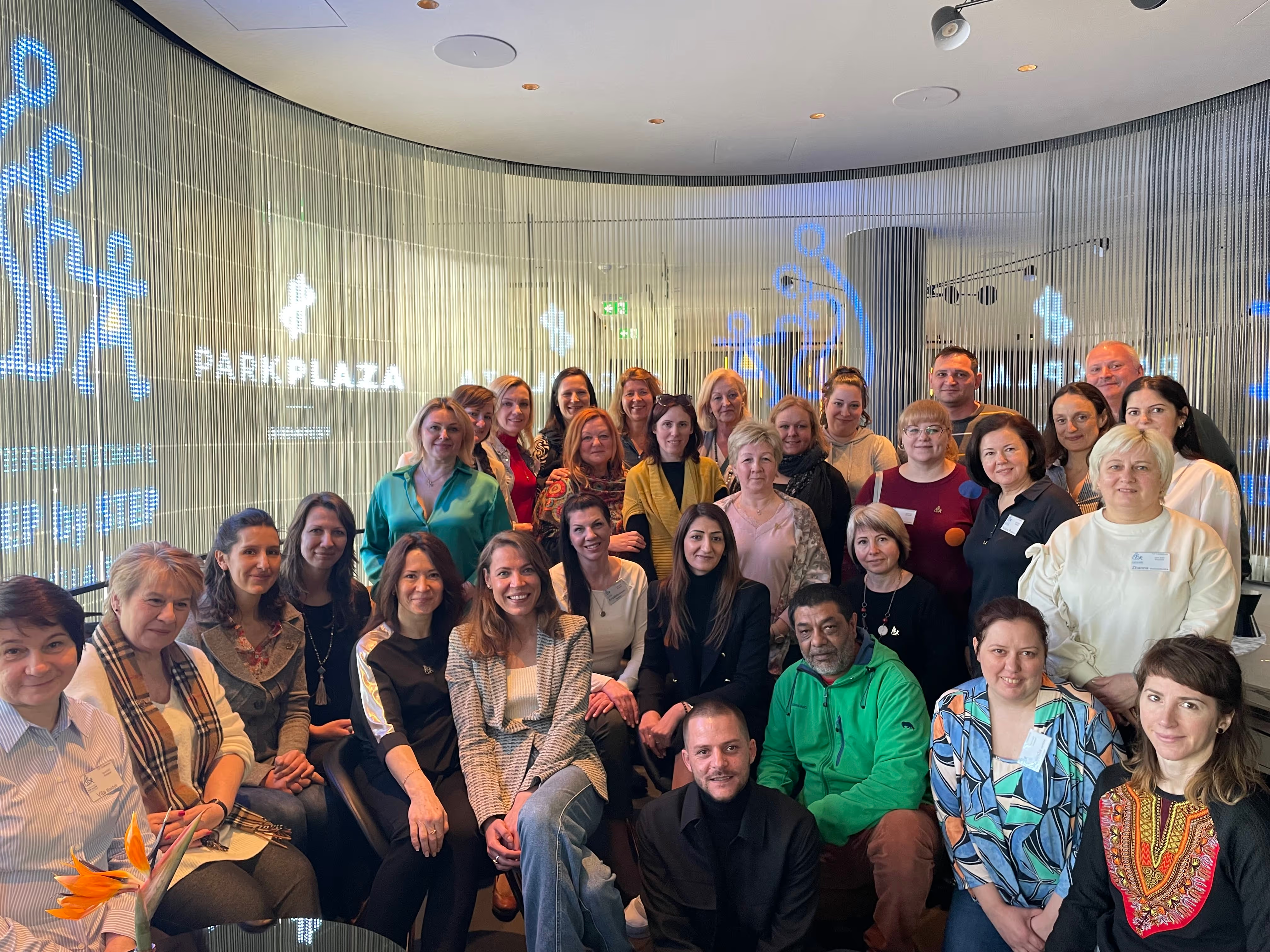
From April 3-5, 2023, International Step by Step Association (ISSA) staff and trainers from ISSA member organizations in four countries gathered in Budapest, Hungary for the first in-person edition of the “Training of trainers” (ToT) on “Foundational psychological first aid (PFA) and trauma-informed practices for young children and their caregivers”. The participants included a large contingent of Ukrainian trainers, a large contingent of Hungarian trainers, and representatives of NestingPlay in Hungary, Partners Hungary Foundation, CIP-Center for Interactive Pedagogy in Serbia, and Step by Step Center for Quality in Education in Slovenia.
The training was developed in 2022 in partnership with War Child Holland and ISSA Member, Amna, to support caregivers working with young children and families in Ukraine and in countries where they have fled and was held online four times in 2022. This first in-person edition was supported by the Minderoo Foundation and represented a unique opportunity to gather as a community of experts and professionals, to share stories and experiences, and to build new relationships with other practitioners.
Building blocks of the training
Over the course of two-and-a-half days, the training covered three key building blocks:
- Key concepts and guiding principles of PFA.
- Working with children and caregivers who have been through distressing situations.
- Managing stress in professionals.
Day one began by setting the scene for the training and included energizer activities to help the participants get to know each other and get a sense of their combined experience. The training then explored how conflict and displacement affects young children, how to recognize when children are in distress, and how this can be seen in the way that children play.
ISSA trainers, Zorica Trikic and Aljosa Rudas presented the guiding principles of psychological first aid, namely “Do no harm”, “Look, Listen, Link”, and highlighted the importance of remaining in ones’ own scope of practice and not trying to diagnose or label children. The first day of the training ended with a session on creating safe spaces for children and harnessing the healing power of play — using stress management activities, such as “squeezing the lemons”. This activity, and others done during the training were taken from the "Let's Play Activity Cards", developed by ISSA in 2022.
Day two of the training explored the importance of self-care to help caregivers sustain themselves and their work, trauma and trauma sensitive practice, emotional regulation and returning to the “window of tolerance”, identity-informed practices, language and communication, and managing stress in professionals to avoid burnout.
One session largely focused on language and communication — where we learned through various activities such as "My story rocks" conducted in mixed language groups, that language is not only the words we speak and that there are ways to overcome language barriers. The highlight of the day was an exercise on group formation using different colored post-it notes and the lesson that followed on stereotypes and unconscious biases.
Day three of the ToT was a half day which consolidated all the learnings of the previous two days. The morning began by recapping the information from the day before and included a group discussion on identifying coping resources to help professionals handle stress.
The final session of the training put knowledge into practice through a case study asking how Ivona, a kindergarten teacher, would console a crying child while simultaneously addressing the various needs of the other children in the room. This activity required the participants to draw on everything that had been discussed over the previous two days. The training concluded with the participants awarding each other their certificates.
Reflections on the first in-person ToT on psychological first aid
Having conducted this psychological first aid ToT online four times prior, this was a unique and valuable opportunity to hold the training in person. Being in the same room brought the activities to life, enabled the participants to experience the power of touch and connection, and sparked joy and laughter as participants took part in activities like “Elephant in jail” and “Dancing in the rain”. In turn, this created a sense of kinship, and enabled the participants to build new relationships.
Published in:
Supporting local governments to build comprehensive early childhood services – experience from Slovenia
For the past two years, ISSA Member Step by Step Center for Quality in Education (Slovenia) has been piloting the Primokiz approach in eight municipalities in Slovenia to establish integrated early childhood support systems for families with young children by developing local strategies approved by the respective municipal councils.
The Primokiz approach outlines the main arguments for investing in early childhood services and offers a structured seven-phased process for building local leadership to develop, tailor, and improve local early childhood services, across sectors, with the contribution of trained Primokiz facilitators. Moreover, it provides guidance for every step of the process — building capacity at the local level to identify and respond to the needs of children and families.
As a result of the pilots, early childhood development is now on the political agenda in the municipalities involved. They are committed to a long-term, strategic vision and increased capacity of local actors. The pilots have set the groundwork for sustainable, intersectoral coordination to provide responsive services for children and their families. This increased focus is highlighted by the recommendation of one municipality to establish an ombudsperson to oversee the issues and priorities in the field of early childhood.
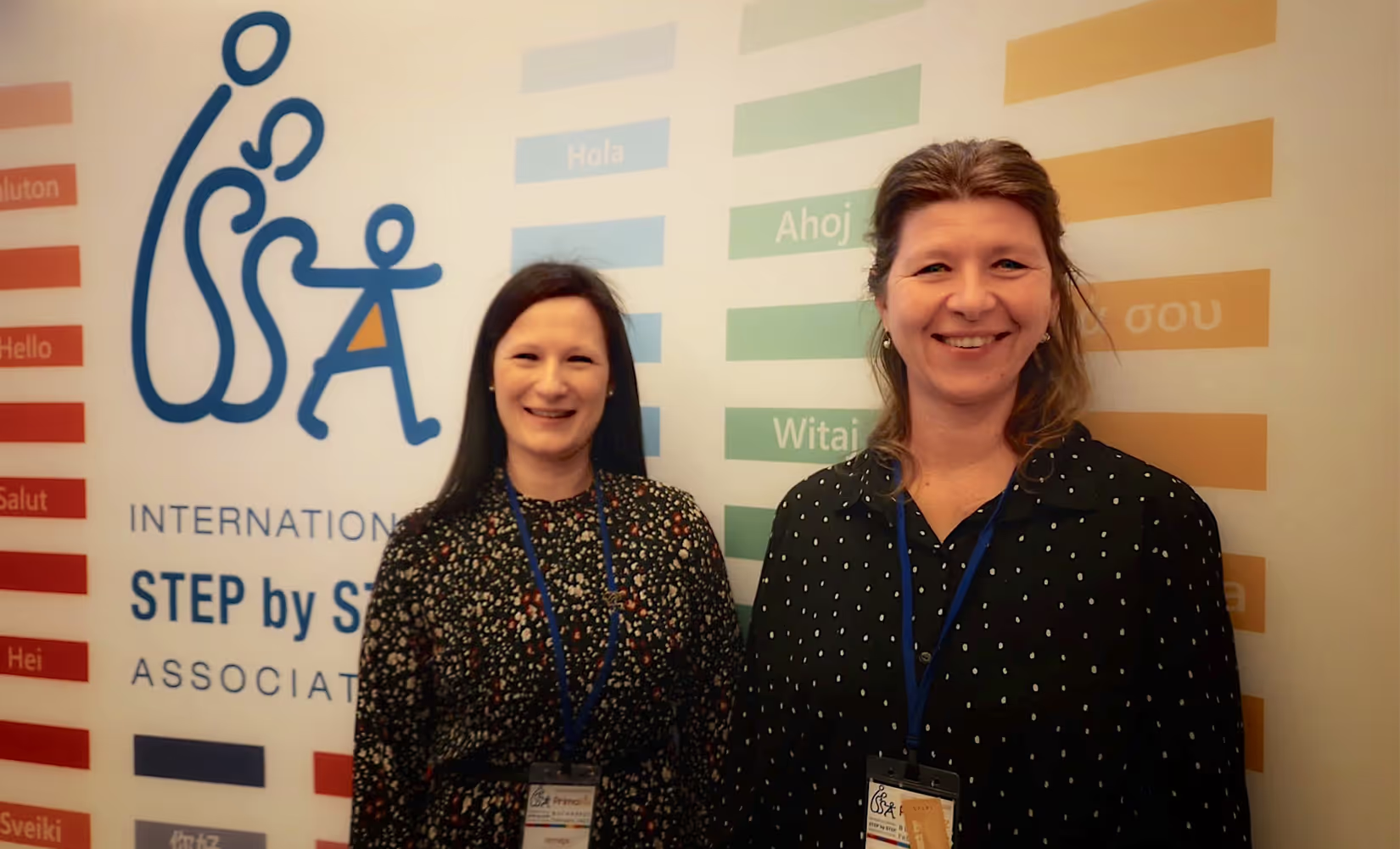
In February 2023, the ISSA Secretariat hosted an introductory Primokiz workshop in Bucharest, Romania. Experts from the ISSA Secretariat accompanied by experts from Step by Step Center for Quality in Education (Slovenia) and Centrul Step by Step (Romania) provided training to four peer organizations in the network on using the Primokiz methodology. The newly trained ISSA Members learned how to provide technical support to municipalities in assessing the needs of families, enhancing cooperation among sectors, developing, and implementing early childhood strategies.
After the workshop, ISSA spoke with Jerneja Jager, Head of the Step by Step Center for Quality in Education, and Mateja Rezek, researcher at the Center, to learn how this workshop was beneficial for their process and how their experience can benefit other ISSA Members.
Can you share how helpful and useful the Primokiz approach was in your work with municipalities?
Jerneja
In our case, the Primokiz approach was very helpful for working with municipalities because before Primokiz we were mainly working with the education sector—with teachers. Now, through Primokiz we expanded the focus of our work. While we have worked with municipalities before, especially to address the inclusion of Roma children in ECEC services, through the Primokiz approach we expanded our focus to all children and families.
Mateja
Through the Primokiz approach we also moved to a system level change. If before we were more focused on content, now we are supporting systemic change. We think this is really important, but this was also a big change for us. And systemic change also means involvement of political actors, who are quite important in this work.
What are your key takeaways from the Primokiz workshop in Bucharest?
Mateja
For us, it was really helpful to be a part of this learning process because we had an opportunity to reflect. Although we have had a lot of opportunities to reflect on our work over the past two years, this workshop had an intensive reflection component, and helped us really grasp the essence of our experiences. It seemed like a good starting point if we were to start the process over again – to discuss what to focus on, and what is really important.
As an ISSA Member, how is it to have the opportunity to share your rich experiences in implementing the Primokiz approach in Slovenia with fellow ISSA Members that are present here?
Jerneja
First of all, we are very honored to be in a position where we have the opportunity to implement this initiative in Slovenia and share it with other ISSA Members. We have been an ISSA Member from the very beginning (1999), and we learned a lot from other Members. Now we are really happy that we can contribute with our experiences to other Members’ learning as their peers, as their mentors… this makes our organization stronger. It makes it stronger especially in the international field, but also at the national level. Because when we are disseminating this approach, we always mention that this is an international initiative, which is very important in this field.
Mateja
It's a nice flow of knowledge growing. When we started with the Primokiz implementation, we got theoretical knowledge from the ISSA Secretariat and information on concrete experiences from Centrul Step by Step in Romania (ISSA Member). Now we were able to give back our experience to other Members. I think it's really nice how this knowledge and understanding of the process is growing and spreading to other Members and how this transfer of knowledge is going on and on.
Could you share some highlights or feedback that you got from fellow ISSA Members, related to what we have been talking and sharing here.
Mateja
Colleagues shared that this exchange of experience is meaningful and valuable for them because it's a new process they are starting. Although they are really experienced in other areas, this is new for them. And they feel safe because they know that in this ISSA family, they have someone they can always rely on and always ask if they have questions if they have doubts. It's really important that you feel you have support. It's a big network of support they can have through ISSA.
Jerneja
If I reflect on the beginning of implementing the Primokiz approach, the support we got from our peers was a very, very big help. When we started, we got this support from our Romanian colleagues who started the process a little bit before us. While we got that general framework from ISSA, when we connected with Romanian colleagues, it really gave us an additional perspective in a more practical way. It was great to have someone in the network to rely on, to ask concrete questions. And that really helped us in planning the initiative in our country.
Read more about the achievements, and the process, of these pilots.
Published in:
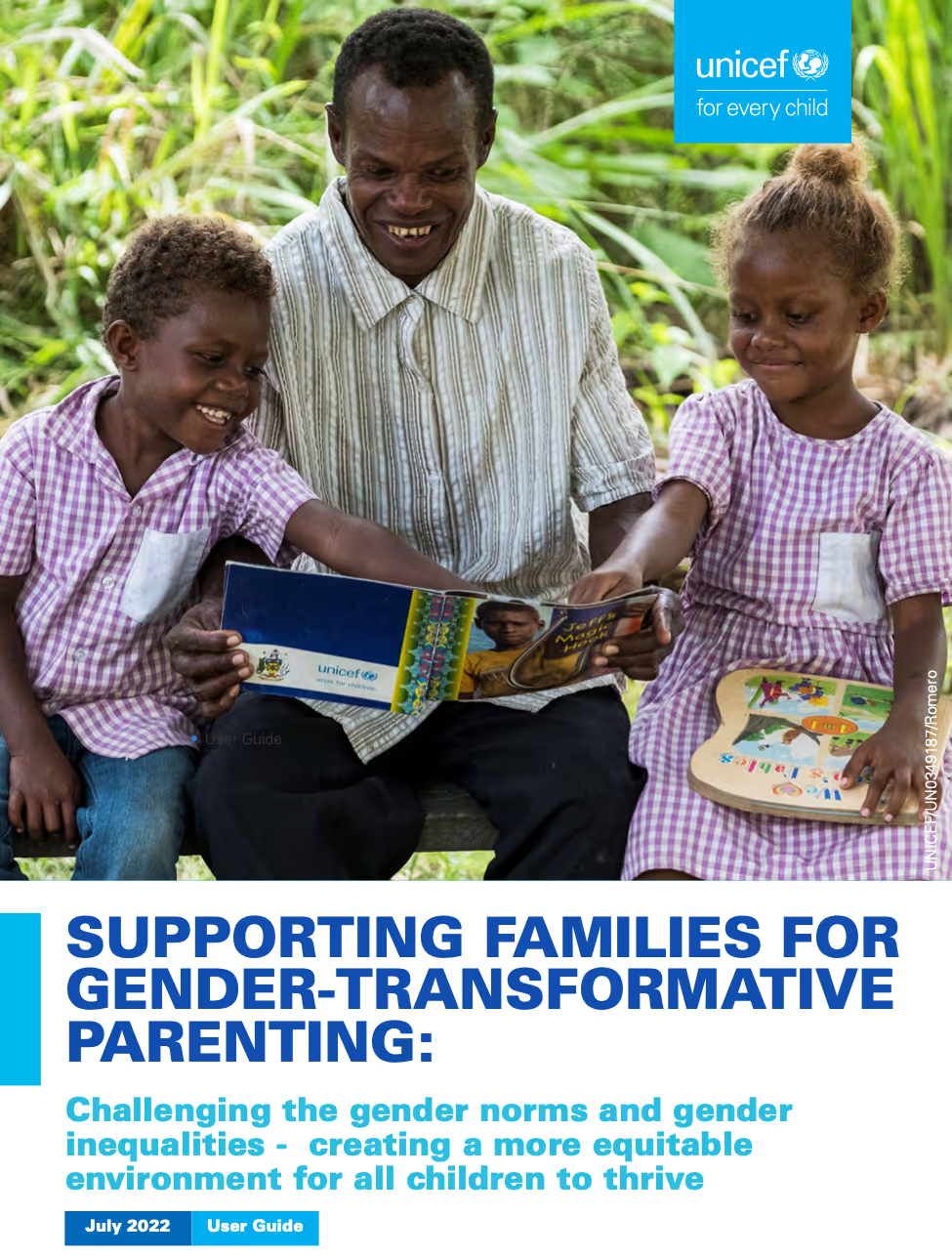
Supporting families for gender transformative parenting: Challenging gender norms and gender inequalities to create a more equitable environment for all children to thrive
The Gender Transformative Parenting Training Resource Package for frontline workers from different sectors was created in partnership with UNICEF Regional Office for Europe and Central Asia (ECARO).
The package provides evidence-based information, recommendations, and training modules for frontline workers to support parents in implementing gender-transformative parenting practices at home and support positive gender socialization of children aging between 0 to 18, covering all childhood periods: early childhood, middle childhood and adolescence.
The package was designed to be a global resource, meaning that the modality of use allows flexible adaptation and contextualization.
Find the resources here:
- User Guide
- Resource Modules
Published in:
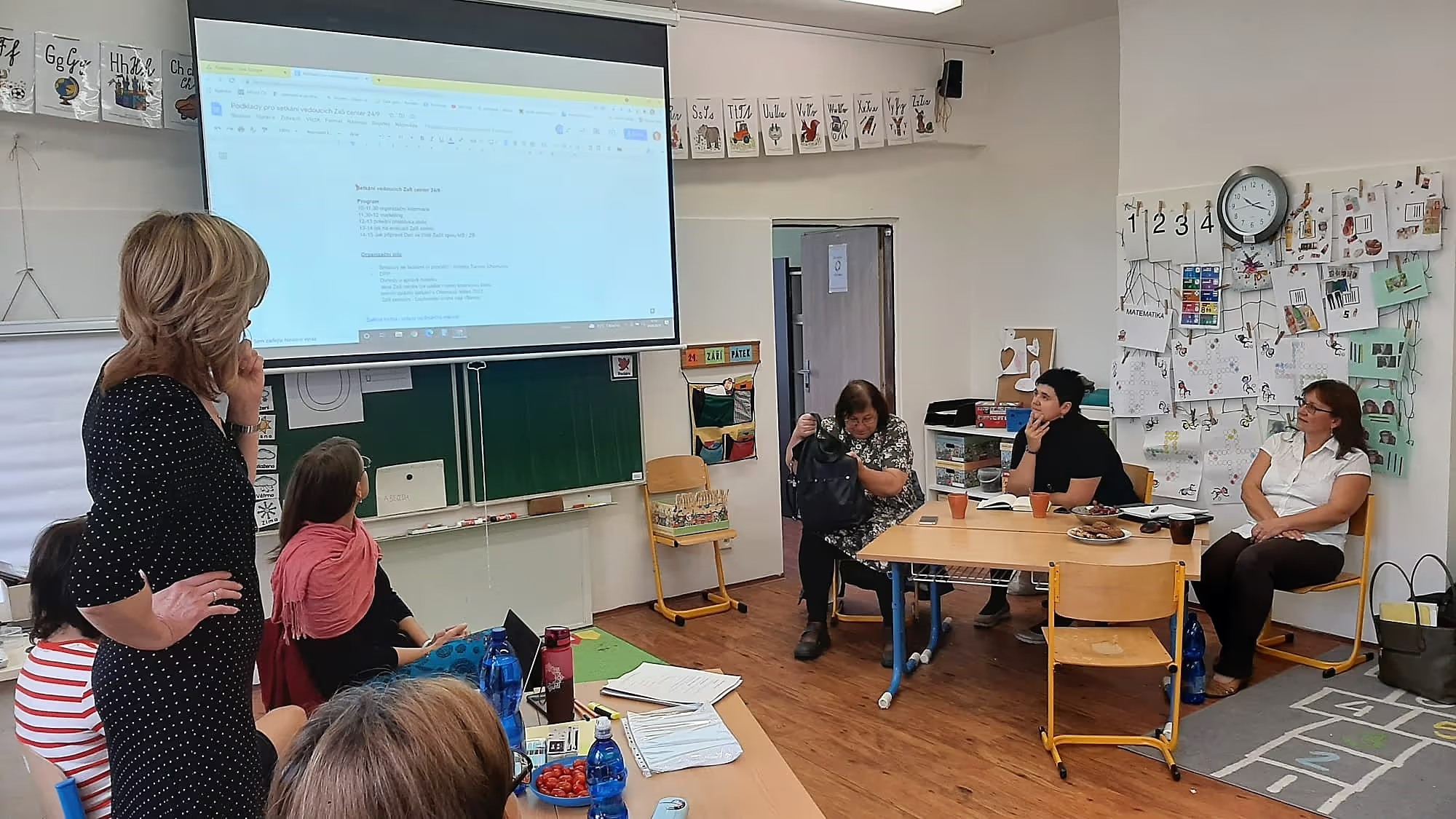
Step by Step ČR is helping Ukrainian children settle into Czech schools
Since the start of the war in Ukraine, more than 120,000 Ukrainian children have arrived in the Czech Republic. Step by Step ČR responded swiftly to this influx of Ukrainian families by hosting webinars in late March and early April, titled “We have new, Ukrainian classmates” in which they examined how Ukrainian children can be supported and included in their transition into Czech schools.
The webinars unpacked the impacts that the current situation is having on everyday life at school and offered guidance to teachers on how to work with the newly arrived children and their families. They also gave tips on encouraging students to cooperate, communicate, and learn from each other.
Plans for integrating Ukrainian children
Despite the swift response from NGO’s, Iveta Pásaková from Step by Step ČR says that, overall, the response from the government has been “uncoordinated and random”. The government is currently in the process of developing new rules and guidelines that will take effect at the start of the new school year. At this point, school attendance will become mandatory for all Ukrainian children.
In order to facilitate the smooth transition of Ukrainian children into Czech schools, Step by Step ČR has obtained a grant which will be used to train teaching assistants who will work with Ukrainian children in schools and kindergartens in the new school year. Currently, the organization is busy planning how these funds will be used.
What do Ukrainian parents and children need most right now?
Iveta says that, “What Ukrainian families need most right now is guidance and support in settling into their new environments.” For parents, it is essential that they receive help in applying for visas, looking for jobs, and finding schools for their children. Without first addressing these bureaucratic hurdles, settling into a new society will be even more challenging and complex.
"For children, it is important that they are included and received with empathy to help them process their traumatic experiences and re-establish a sense of normalcy. This is crucial to their development."
- Iveta Pásaková, Director, Step by Step ČR
Ultimately, Iveta says that the main priority of Step by Step ČR currently is influencing the school climate with the aim of supporting teachers as they try to facilitate cooperation between the families of Czech and Ukrainian children in order to avoid frustration on both sides. She adds that Step by Step ČR is actively traying to “encourage sympathy and receptivity for the needs of Ukrainian children”. However, the biggest challenge they are faced with at the moment is in developing strategies for effectively understanding and communicating with the children in another language.
You can offer financial support to the Association and other ISSA Members here.
Published in:

Services and policies on Early Childhood Intervention
Early Childhood Intervention (ECI) services focus on strengthening the capacities of the parents to support their child with developmental problems in daily routines. The natural environment is crucial for the best possible development of the child’s abilities and its inclusion in the education system. In this Lab, ISSA Members form a learning community, share good practices on both policy and practice levels and organize professional development opportunities for ECI service providers from their countries.
Co-hosted by the SOFT Tulip Foundation, the Netherlands and the For Our Children Foundation, Bulgaria, the Lab has provided important peer support to the participating five ISSA Member Organizations.
Published in:
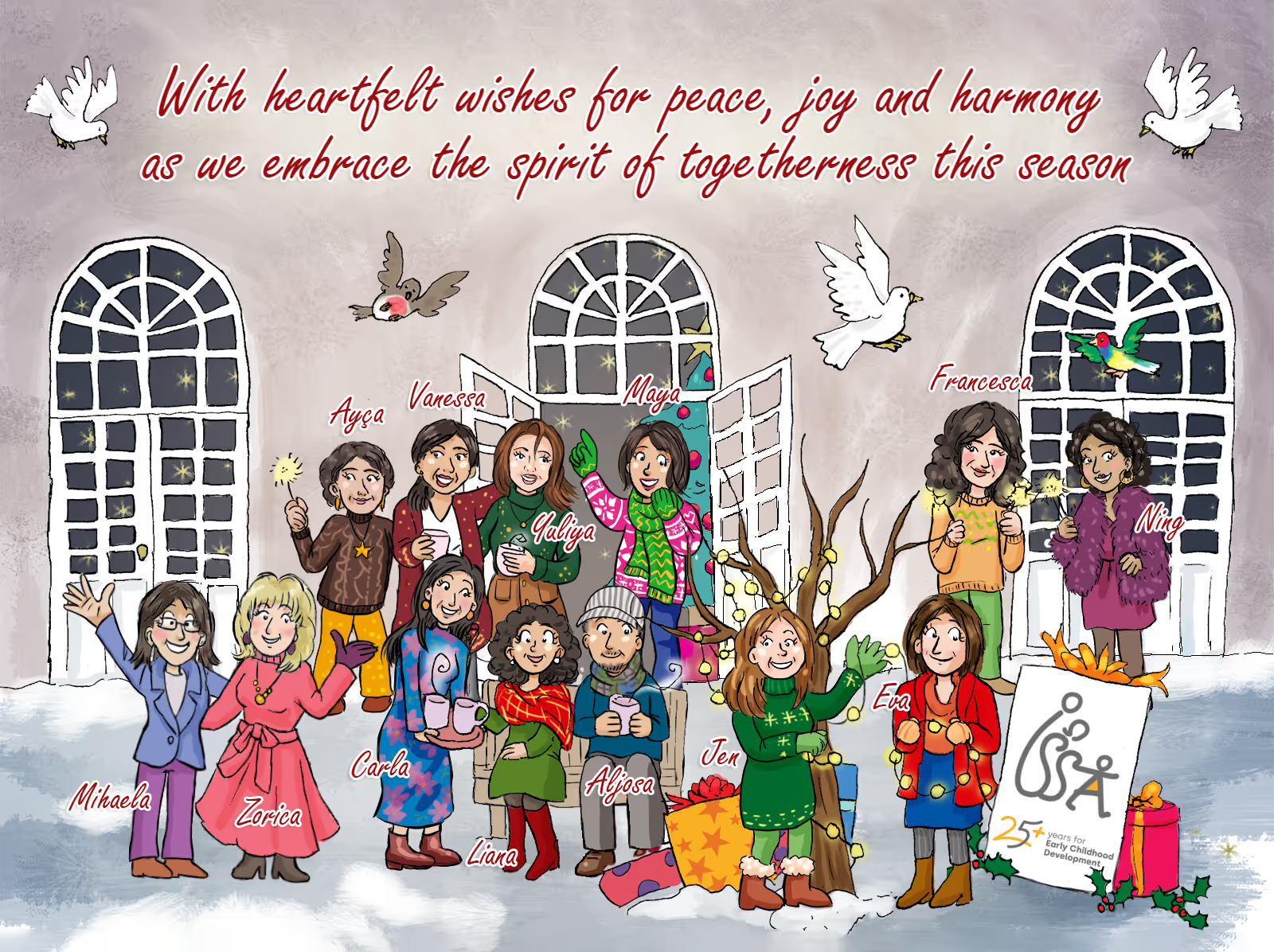
Seasons greetings, best wishes, and many delicious recipes
Dear Members, Partners, and Friends,
As 2024 comes to a close, let's take a moment to celebrate an extraordinary year! Together, we marked 25 years of ISSA and 30 years of Step by Step—a testament to decades of shared passion, commitment, and impact for young children and their families.
This year, we embraced fresh energy and bold changes. We began implementing our 2024–28 strategy, focused on stronger distributed leadership and shared ownership in our diverse, growing network, with the aim of furthering our collective impact. The long-awaited ISSA Conference brought us together for the first time in five years, inspiring connections and reaffirming our commitment to an early childhood ecosystem where all children can thrive.
Together, yet again we took great strides this year in advancing the Early Childhood Development field—through advocacy, knowledge-sharing, and capacity-building initiatives that promote quality practices and systemic change. Reflecting our momentum, we unveiled a vibrant branding refresh to carry us confidently into the next 25 years. It captures the spirit of who we are: a dynamic network dedicated to championing holistic and integrated systems, policies, and high-quality services for all young children. Throughout, we've also shown incredible resilience in the face of challenges, remaining steadfast in our mission.
As we look to 2025, exciting opportunities await us! We'll continue to push boundaries, amplify our impact, and harness the new network tools such as the Members Room introduced this year to help members connect and collaborate more effectively.
But before we dive into the new year, let's pause to celebrate and recharge. This holiday season, we invite you to explore a special cookbook we've compiled with recipes from each of the countries where we have members, featuring submissions from members and others we've sourced. We hope you'll try some of these dishes as you gather with loved ones, sharing the warmth of good food and cherished company. May this season bring you peace, laughter, and inspiration to greet the year ahead with renewed energy and hope.
Thank you for being part of this incredible journey. Together, we are building a brighter, more equitable future for all young children—and we can't wait to see what we'll achieve next.
With festive cheer and gratitude,
The ISSA Network Hub