Knowledge Hub
All the resources stored here have been created by ISSA Members
or ISSA Secretariat in partnership with Members or partners.



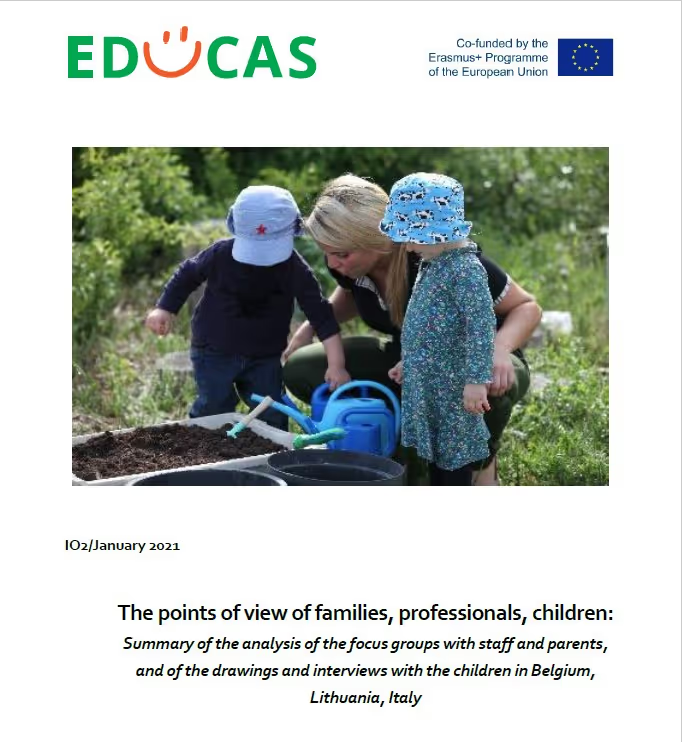
The points of view of families, professionals, children
The EDUCAS project planned to start the Continuous Professional Development Paths (CPD) in the three countries involved (Belgium, Lithuania, Italy) with specific focus groups involving families and staff in the ECEC centers partners of the project. The aim of the focus groups has been:
1) gaining insight about families’ and staff’s ideas/beliefs/feelings in relation with the ECEC spaces where their children are and their connection with education and care;
2) exploring ideas concerning the ‘ideal’ ECEC service for families and staff (which core elements)
Through the focus groups, partner organizations aimed at getting a better insight concerning the needs, ideas and beliefs of staff and families concerning the theme of the project, with the purpose of elaborating a bottom-up participatory implementation path (case study – action research).
Each research center carried on two focus groups in each of the two ECEC centers involved in each country (plus an extra one in Italy): one with parents, one with staff, for a total of four focus groups per country (five in Italy). In total 13 focus groups took place, involving 47 professionals and 36 parents. The method and themes of the focus groups have been discussed and agreed in advance, in order to have ‘similar readable data’ at the end of the process.
This report presents the summary of the analysis of the focus groups with staff and parents, and of the drawings and interviews with the children in Belgium, Lithuania, Italy.
Published in:
2021
Organization(s):
VBJK, Center for Innovative Education in Lithuania, University of Parma
Language:
Contact:
Nima Sharmahd, nima.sharmahd@vbjk.be
NESET Analytical Report - Governing quality Early Childhood Education and Care in a global crisis: first lessons learned from the COVID-19 pandemic
The central aim of this study is to examine what measures have been taken by selected EU member states – two countries (Sweden and Croatia), as well as three regions (Flanders in Belgium, Berlin in Germany and Emilia-Romagna in Italy) – to deal with the COVID-19 crisis during the first year of the pandemic (March-December 2020), in order to ensure quality ECEC for children and families.
The data analysed show that ECEC played a crucial role in countering the negative effects of the pandemic on children, families and communities. However, compared with other levels of education, ECEC appears to have been one of the sectors most vulnerable to the policy decisions taken in response to the COVID-19 pandemic.
The InTrans project statements - Reclaiming transitions as inclusive relational spaces in times of crisis and beyond, and Investing in professionalization of ECEC staff to foster smooth transitions in times of crisis and beyond - are based on the results of this report.
Published in:
2021
Organization(s):
VBJK
Language:
Contact:
Nima Sharmahd, nima.sharmahd@vbjk.be
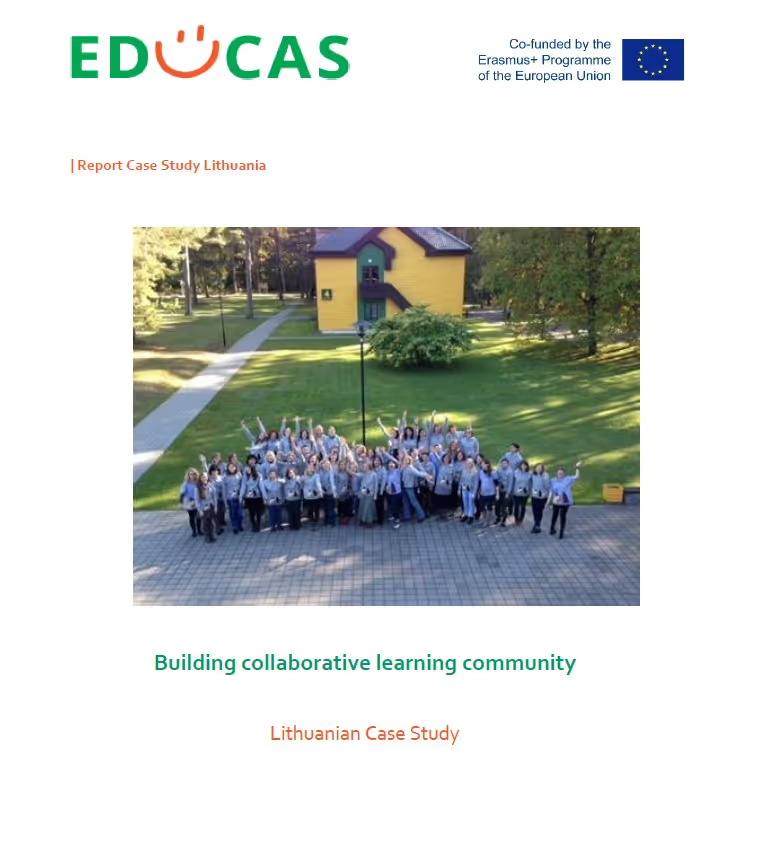
EDUCAS - Case Study Lithuania: Building collaborative learning community
Throughout the three years of the EDUCAS project, partners in Belgium (FL), Italy and Lithuania have undertaken a thorough examination of existing visions and methods related to organizing ECEC environments in their contexts. With the support of two ECEC centres in each country, they have locally developed Action Research paths that are tailored to the contexts in which the six ECEC centers are working. The project aims to improve the organization of these ECEC centers’ space and materials within the educare approach.
The case Study in Belgium (FL) presents the action research that was coordinated by Center for Innovative Education and developed together with the two ECEC centres (Aukstelkes mokykla daugiafunkcis centras and Vaikystes Sodas).
button[src="https://cdn.prod.website-files.com/694724257114b734f4bb749a/6985ce3f5eb0b715b71c8de3_EDUCAS_%20Report_Case_Study_LITHUANIA.pdf"][label="Download"]Published in:
2021
Organization(s):
Center for Innovative Education
Language:
Contact:
Regina Sabaliauskiene, regina@uic.lt
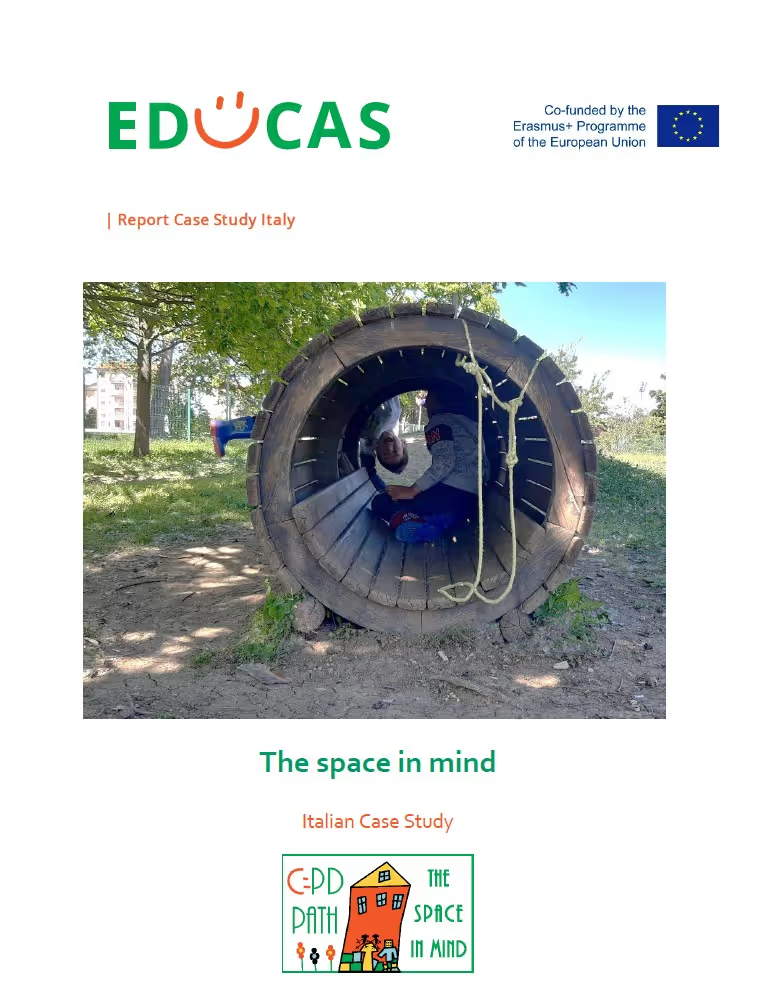
EDUCAS - Case Study Italy: The space in mind
Throughout the three years of the EDUCAS project, partners in Belgium (FL), Italy and Lithuania have undertaken a thorough examination of existing visions and methods related to organizing ECEC environments in their contexts. With the support of two ECEC centres in each country, they have locally developed Action Research paths that are tailored to the contexts in which the six ECEC centers are working. The project aims to improve the organization of these ECEC centers’ space and materials within the educare approach.
The case Study in Italy presents the action research that was coordinated by Univestity of Parma and developed together with the two ECEC centres Gelsomino in Parma and Maria Vittoia in Torino).
button[src="https://cdn.prod.website-files.com/694724257114b734f4bb749a/6985ce3c5f801d30a525ad6e_EDUCAS_%20Report_Case_Study_ITALY.pdf"][label="Download"]Published in:
2021
Organization(s):
University of Parma
Language:
Contact:
Sara Berti, sara.berti@unipr.it
EDUCAS - Policy recommendations: Strengthening the importance of SPACE and EDUCARE approach
Educating and caring for young children is a big responsibility, challenge and commitment. The POLICY RECOMMENDATIONS for strengthening the importance of SPACE and EDUCARE approach in early childhood systems aim at providing a comprehensive set of recommendations for policymakers on EU and national levels, funders, and other ECEC stakeholders.
These policy recommendations are based on the findings and insights from the EDUCAS project implemented in Belgium (Fl), Italy and Lithuania, the extensive literature review, country policy recommendations, and other international documents developed by project partners.
button[src="https://cdn.prod.website-files.com/694724257114b734f4bb749a/6985ce40c68523b77a02314d_EDUCAS_Policy_recommendations_0.pdf"][label="Download"]Published in:
2021
Organization(s):
EDUCAS team
Language:
Contact:
Nima Sharmahd, nima.sharmahd@vbjk.be
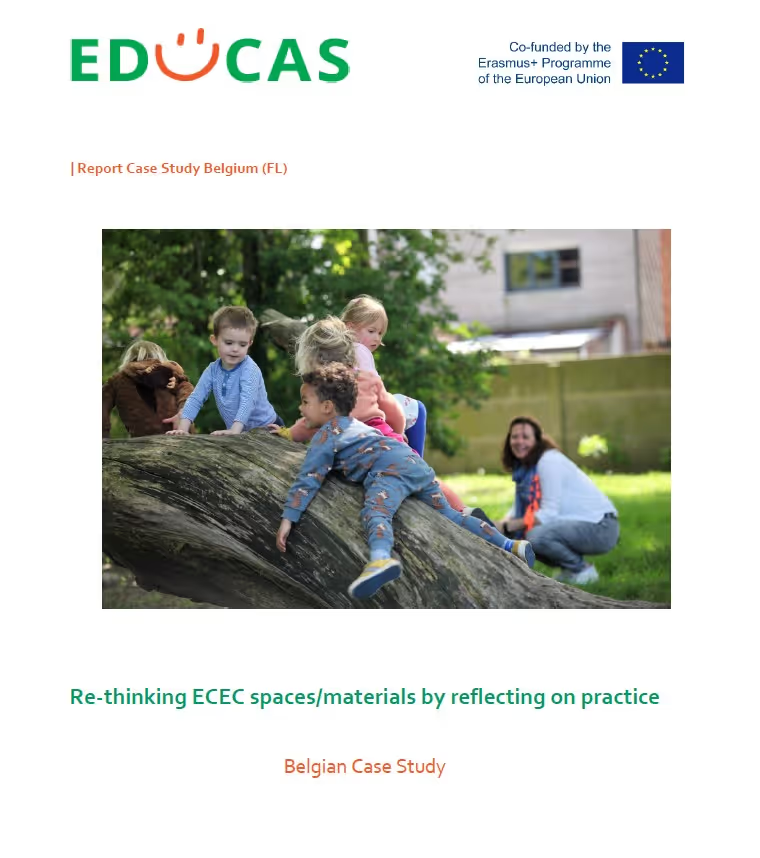
EDUCAS - Case Study Belgium (FL): Re-thinking ECEC spaces/materials by reflecting on practice
Throughout the three years of the EDUCAS project, partners in Belgium (FL), Italy and Lithuania have undertaken a thorough examination of existing visions and methods related to organizing ECEC environments in their contexts. With the support of two ECEC centres in each country, they have locally developed Action Research paths that are tailored to the contexts in which the six ECEC centers are working. The project aims to improve the organization of these ECEC centers’ space and materials within the educare approach.
The case Study in Belgium (FL) presents the action research that was coordinated by VBJK and developed together with the two ECEC centres (Hippo’s Hof and De Tandem).
In addition, drawing on the process and results of EDUCAS project, in combination with the results of other projects/research concerning educare/spaces, a set of implications (for the Belgian-FL context) for policy and practice on a local and regional level have been elaborated.
button[src="https://cdn.prod.website-files.com/694724257114b734f4bb749a/6985ce39b64497b92fbc82a8_EDUCAS_Case_Study_BELGIUM.pdf"][label="Download"] button[src="https://cdn.prod.website-files.com/694724257114b734f4bb749a/6985ce3a5eb0b715b71c8a5d_EDUCAS_Implications_for_policy_and_practice_Belgium.pdf"][label="implications (for the Belgian-FL context) for policy and practice on a local and regional level"]Published in:
2021
Organization(s):
VBJK
Language:
Contact:
Nima Sharmahd, nima.sharmahd@vbjk.be
Designing and implementing parenting support policies and programs. Tailored brief for service providers and policy makers
Creating warm, nurturing home environments is not easy, especially when confronted with the many challenges of daily life, and it has been widely acknowledged that all families, within or outside a “crisis mode”, need support.
More and more, reports echoing parents’ voices (Cooney, 2020) highlight that “parents are not ok”. Thus, the challenges related to translating evidence into practice on effectively supporting parents to provide nurturing care to their children (Britto et al., 2015) have been also amplified, as new needs have emerged, and new modes of support are needed.
This tailored brief, developed with the support of the Bernard van Leer Foundation, sets out to provide recommendations for policy makers and service providers to consider prior to designing and implementing parenting support policies and programs. This brief also emphasizes the necessary factors that can bring parenting support programs to scale sustainably.
button[src="https://cdn.prod.website-files.com/694724257114b734f4bb749a/6985cc5fcfff02717ba873da_Parenting%20support%20-%20Tailored%20brief_1.pdf"][label="Download"]
Published in:
2021
Organization(s):
ISSA
Language:
Contact:
Eva Izsak, eizsak@issa.nl
Value Roadmap: Pathways towards strengthening collaboration in early childhood
The ambition of this roadmap is to inspire you, as a reader, to strengthen collaboration between assisting and core practitioners in ECEC. The underlying idea is that better collaboration strengthens individual practitioners and teams in addressing all aspects of children’s well-being, development and learning needs.
In order to strengthen collaboration between assisting and core practitioners, this roadmap presents both a framework and ideas to develop pathways for continuous professional development, engaging both assisting and core practitioners, as well as leaders.
The content in the roadmap is inspired by the experiments developed, tested and evaluated in pilot projects in different ECEC settings in four countries (Belgium, Denmark, Portugal and Slovenia). More precisely, the roadmap builds on the following background studies:
- The baseline study, which was based on a survey sent to the participants in the pilot projects and built on quantitative data and statistical analyses.
- Four country reports, reporting the process and results of the professional development initiatives in each country.
- The endline report presenting the overall evaluation and highlighting the findings from the professional development initiatives in the four countries.
Published in:
2020
Organization(s):
VBJK - Centre for Innovation in the Early Years, ERI - Educational Research Institute, DPU – Danish school of Education, Aarhus University Aga Khan Foundation, ESE – IPSantarém, Erasmus University College, Karel de Grote University College
Language:
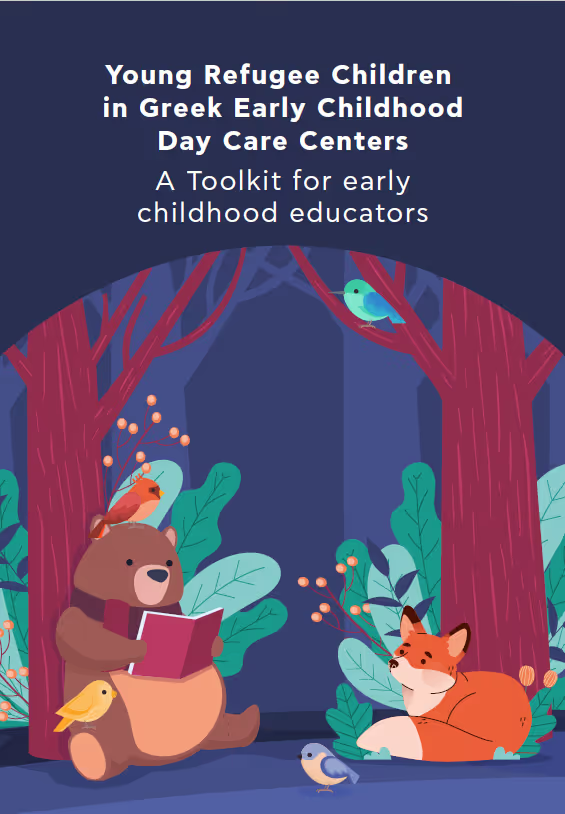
Toolkit for Day Сare Centers “Young Refugee Children in Greek Early Childhood Day Care Centers”
The Toolkit aims to support the work of nursery teachers with young refugee children and their families. It consists the Guidebook with methodological and theoretical guidelines; Activity cards with examples of activities for children under 4 years of age organized in 3 clusters: Welcoming the child = Welcoming the family, Dictionary with key words and phrases in Greek, French, Arabic and Farsi; Belonging and We are all different, we are all equal. It is accompanied with downloadable children’s songs from Syria, Afghanistan, Congo, and Iran played by one of the famous Greek musician Georgos Xaronitis.
button[src="https://cdn.prod.website-files.com/694724257114b734f4bb749a/6985d013028979a5a00146b4_Guidebook_EN_1.pdf"][label="Download the toolkit in English"] button[src="https://cdn.prod.website-files.com/694724257114b734f4bb749a/6985d0158cb0caf576abe7db_Cards_EN.pdf"][label="Download activity cards in English"] button[src="https://cdn.prod.website-files.com/694724257114b734f4bb749a/6985c9a003debdee6964768c_Guidebook_Gr.pdf"][label="Download the toolkit in Greek"] button[src="https://cdn.prod.website-files.com/694724257114b734f4bb749a/6985d01a92c498362c9aa043_CARDS_GR.pdf"][label="Download activity cards in Greek"] button[src="https://cdn.prod.website-files.com/694724257114b734f4bb749a/6985d01db64497b92fbd343e_music.zip"][label="Download music"]Published in:
2020
Organization(s):
EADAP and ISSA
Language:
Contact:
Natacha Papaprocopiu, natachaapapap@gmail.com
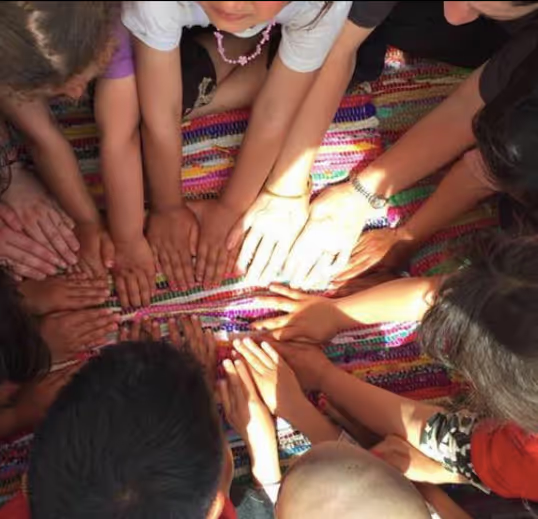
Resources to support psychosocial wellbeing, developed for refugee children, parents, and young people and for NGO workers
Refugee Trauma Initiative and our partners deliver Baytna - a trauma- and identity-informed model of Early Childhood Education for refugee children and their families living in Greece. Baytna was being implemented across five centres up until early March 2020, when delivery was halted due to government regulations related to COVID-19.
While centres are closed, it is important to us that we continue to support the families who attended Baytna so that they feel cared for, emotionally and socially supported, and still have activities to do that are aligned with the Baytna model. Relationships are the core of Baytna, and we want to keep the relationships with children and families alive by providing simple activities that are modified for different age groups and which don’t require materials. We provide written, audio and visual materials to appeal to different preferences and literacy needs.
RTI’s response to COVID-19 included developing activity ideas, videos, and other resources, hosted on a resource library on our website, that are aimed at supporting psychosocial wellbeing. This includes supporting the relationship between mothers and children, assisting with relaxation through mindfulness activities, helping with the identification, regulation and release of emotions, and providing children with a crucial opportunities for fun and play. Resources include: story-telling, movement, interactive songs, ‘how to’ storytelling prop guides. Also relaxation and release audio and visual guides for parents such as grounding and breathing meditation techniques. They are being developed in a variety of languages to meet the needs of the diverse community we work with, and are being created in a collaborative way that draws on the different strengths of our partners. Crucially, the resources are focused on psychosocial support and identity- and trauma-informed.
Published in:
2020
Organization(s):
RTI
Language:
Contact:
Evelyn Wilcox, evelyn@refugeetrauma.org
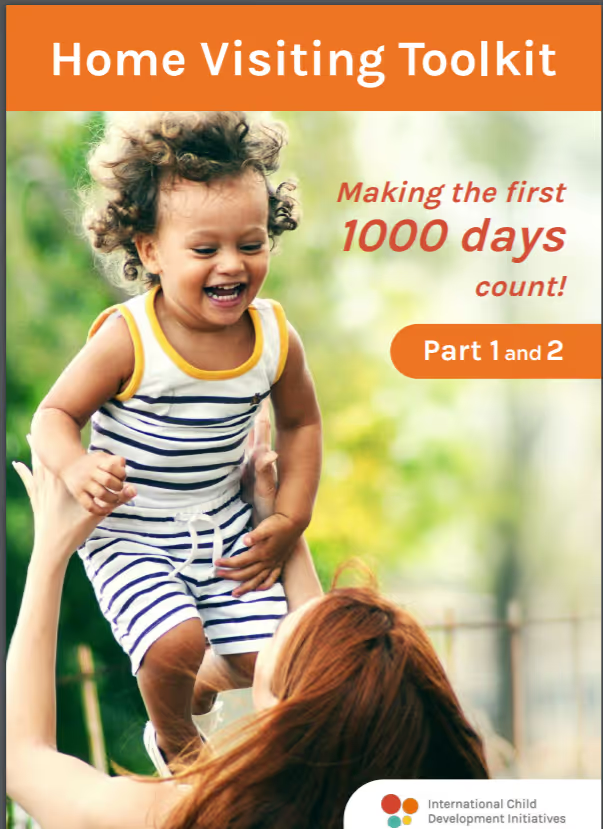
Making the first 1000 days count! Home Visiting Toolkit
This Toolkit has been developed in the context of the project ‘Making the first 1000 days count!’. The aim of this Toolkit is to provide Home Visitors with the latest scientific evidence about child development, learning and well-being as well as practical advice and materials, which they can share with parents and carers. The tool will also be used to prevent child abuse and improve child well-being by providing education and services in families’ homes through parent education and access to community resources.
The information and materials provided in this Toolkit focus on play, learning and development in the first 3 years of a child’s life. Attention is also given to their safety and protection.
Quality home visiting programmes help parents provide safe and supportive environments for their children. Specifically, they can alert the parents to the importance of establishing healthy connections with their babies and of building loving, trustful and supportive relationships with their children. They can learn how to do that during their routine and everyday family activities. Home visiting programmes are also intended to reduce the stress parents and carers may experience in their parenting role – by providing a listening ear, calm reassurance, support and information.
The Home Visiting Toolkit is composed by four parts:
• Part One: Being a Home Visitor.
• Part Two: Home visits in Practice.
• Part Three: Info Cards on child development, play, learning and parenting (for Home Visitors)
• Part Four: Activity Cards to promote responsive parenting, child development and playful learning
It is composed of original material produced by ICDI, as well existing materials from other organisations including the ISSA-UNICEF ECARO Resource Package for Home Visitors. Part One and Two in English and Amharic are publicly available, but if an organisation is interested in applying it, ICDI offers a training during which Part 3 and 4 are also explained and shared.
Published in:
2020
Organization(s):
International Child Development Initiatives ICDI
Language:
Contact:
Giulia Cortellesi, giulia@icdi.nl
The Home Visiting Workforce Needs Assessment Tool
The Home Visiting Workforce Needs Assessment Tool aims to help Ministries and government agencies reflect on the ways in which they can support personnel delivering home visiting programs across sectors for pregnant mothers and caregivers with children under 3. Drawing inspiration from the UNICEF Pre-Primary Diagnostic and Planning Tool, this tool is intended for countries with home visiting programs at either the sub-national or national levels. The scope of this tool includes home visitors who work directly with young children and their families, as well as supervisors and trainers.
button[src="https://www.earlychildhoodworkforce.org/sites/default/files/www-issa/resources/HomeVisitingWorkforceNeedsAssessmentTool.pdf"][label="Download in English"]
Published in:
2020
Organization(s):
Results for Development & ISSA
Language:
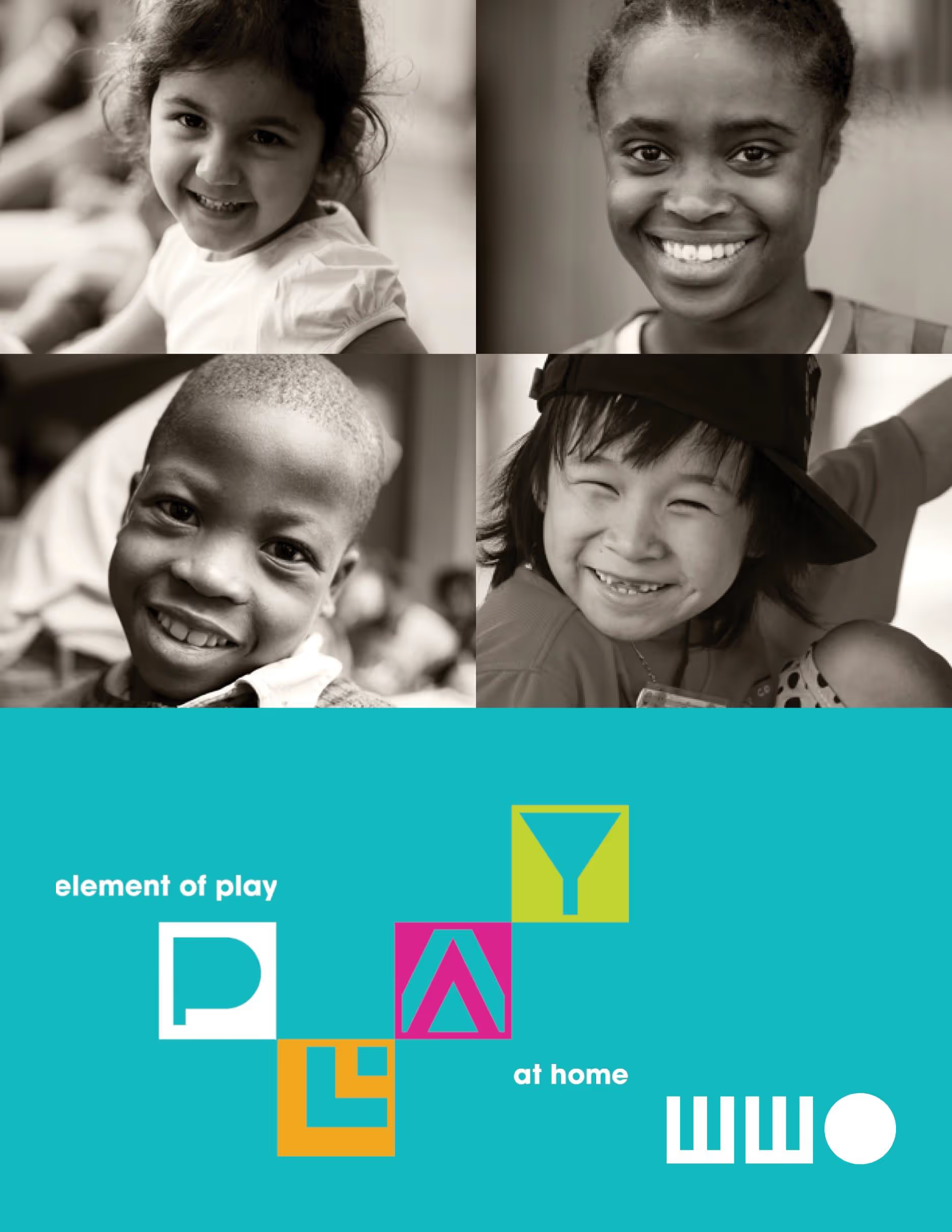
Element of Play® at Home activities manual
Worldwide Orphans (WWO) created a learning at home activity manual with 20 activities to do in 20 minutes, targeted for children from 6 months-8 years of age with focus on supporting parent capacity to play with and support their child’s ongoing learning. The activity manual has been rolled out in Bulgaria, Ethiopia, Haiti and Vietnam and translated into the local language within each country.
Activities were selected based on:
• An understanding that most of our families have limited resources and few toys in the household.
• A desire to strengthen the relationship between parent and child through short (20minutes) quality activities.
• Selection of play-based learning activities that promote early childhood development, including language, listening, math and problem-solving skills.
Maintaining a routine in times of crisis is vital for children. This program consists of 20-minute play sessions that parents/caregivers can do with their children at home using very basic items: a pencil, some paper, a box of crayons or a deck of cards.
Training was done via phone call or Zoom with manuals and learning kits distributed to each family. Feedback suggests that parents have appreciated the activity ideas and have been more engaged in their child’s learning and play. The manual is available in the other languages upon request.
Published in:
2020
Organization(s):
Worldwide Orphans Foundation
Language:
Contact:
Melissa Middaugh, melissa@wwo.org

Flexibility in childcare
This book is one of the main outputs from the PACE (Providing Access to Childcare and Employment) project. This European project tested new models of making childcare and employment more accessible for families living in vulnerable conditions, at distance from childcare and employment, including single parent families, families with a non-European background, a low education level and low income. When parents want to start an education, training or a route towards employment, they often have barriers to address, including health, housing, mobility and language barriers. Another main barrier for parents with young children is childcare. We have found that current childcare systems are not well-equipped to meet the needs of families who start a trajectory to employment.
Most early years settings expect regularity and continuity. It is difficult to find childcare at short notice, during brief periods or at non-standard hours. This lack of flexibility is a barrier that adds to existing structural barriers that lower access to childcare for vulnerable families. In PACE, 13 project partners in four countries examined what is needed to make childcare more flexible and at the same time create comfort for children, families and staff. The book ‘Flexibility in childcare’ explains why more flexibility in childcare is needed. It also looks into how a more flexible, holistic form of childcare can be organised, describing 5 prototypes. Finally, the book looks into what actions organisations can take to make flexible childcare sustainable on the business side, to assure pedagogical quality and a warm environment for the whole family, to support staff members and to cooperate with other stakeholders.
The book is available in three languages, open source. We believe that it can be a valuable resource for any policy makers, academics and early years providers and teams interested in working in a more holistic and flexible manner. The book contains a lot of background, context and theory, many concrete examples from the PACE project and hands-on advice on how to make a setting work more flexibly and holistically, including advice on the business side, working with families, teams and in collaboration with other services.
Published in:
2020
Organization(s):
Artevelde University of Applied Sciences, Department of Early Childhood; Karel de Grote University of Applied Sciences and Arts
Language:
Contact:
An Raes, An Piessens, Dietlinde Willockx
Building Bridges: Bridging the Gap - Supporting wellbeing, learning, development and integration of young refugee and migrant children
A guidebook which aims to support and inform the work of kindergarten teachers engaged in kindergartens in refugee camps on the Aegean islands, but can also be of help in various kindergarten settings.The guidebook besides hints on how to support kindergarten teachers, addresses topics such as creating safe, well structured, child friendly, and stimulating environments in camps; providing psychosocial support to children and families and dealing with trauma; supporting children who do not speak language of instruction. In the guidebook for each of the topics a set of suggested hands-on activities is provided alongside with theoretical explanations of the rationale behind them.
button[src="https://cdn.prod.website-files.com/694724257114b734f4bb749a/6985c99aaeda2349e9e2e830_Building%20bridges_BG_final.pdf"][label="Download in Bulgarian"] button[src="https://cdn.prod.website-files.com/694724257114b734f4bb749a/6985c99c0eedb04db5ada896_Building%20bridges_CZ_final.pdf"][label="Download in Czech"] button[src="https://cdn.prod.website-files.com/694724257114b734f4bb749a/6985c99e5f801d30a5250d45_Guidebook_EN_0.pdf"][label="Download in English"] button[src="https://cdn.prod.website-files.com/694724257114b734f4bb749a/6985c9a003debdee6964768c_Guidebook_Gr.pdf"][label="Download in Greek"] button[src="https://cdn.prod.website-files.com/694724257114b734f4bb749a/6985c9a30eedb04db5adabb7_Building%20bridges_HU_final.pdf"][label="Download in Hungarian"] button[src="https://cdn.prod.website-files.com/694724257114b734f4bb749a/6985c9a64ab2bbd98fa8c20f_Building%20bridges_PO_final.pdf"][label="Download in Polish"] button[src="https://cdn.prod.website-files.com/694724257114b734f4bb749a/6985c9a8cfff02717ba63109_Building%20bridges_RO.pdf"][label="Download in Romanian"] button[src="https://cdn.prod.website-files.com/694724257114b734f4bb749a/6985c9aaaeda2349e9e2f081_Building%20bridges_RU.pdf"][label="Download in Russian"] button[src="https://cdn.prod.website-files.com/694724257114b734f4bb749a/6985c9adcfff02717ba631de_Building%20bridges_SLO.pdf"][label="Download in Slovak"] button[src="https://cdn.prod.website-files.com/694724257114b734f4bb749a/6985c9af124b1cbf7c1a680b_Building%20bridges_UA_final.pdf"][label="Download in Ukrainian"]Published in:
2020
Organization(s):
ISSA, University of Patras and Amna
Language:
Contact:
Zorica Trikic, ztrikic@issa.nl
Business Model for high quality, accessible and flexible childcare services
How to Business Model Canvas (BMC) provides guidance on how to deal with both external and internal organisational needs and the ways to best respond to them as an organisation. BMC is designed to increase accessibility and flexiblity to provide childcare inclusively for all by keeping high-quality standards.
The toolbox consists of a folder, four concrete examples of business models and a template of a business model canvas that you can complete yourself.
This publication has been produced within the INTERREG 2 Seas project PACE (Providing Access to Childcare and Employment) ran from 2016 to 2020 in four countries: Belgium, the Netherlands, France and England. The project’s aim was to make childcare and employment more accessible for families in vulnerable situations.
For more resources from the PACE project: https://www.mechelen.be/documents-pace
For more information about the PACE project, visit https://www.interreg2seas.eu/en/pace
Published in:
2020
Organization(s):
Artevelde University of Applied Sciences, Department of Early Childhood; Karel de Grote University of Applied Sciences and Arts
Language:
Contact:
An Raes, an.raes@arteveldehs.be
Video interaction guidance
During the lockdown, the Child Development Institute at Ilia State University continued its activities by providing services at the distance. All distance interventions included parents or other family members. In order to support their work at home, specialists were designing tailored activities for children with Autism Spectrum Disorder (ASD). Written visual materials alongside phone or online guidance were provided to any the family who was willing and able to participate in such an exchange.
Online connections have led to more close contact with family members identifying some areas which needed an urgent response. Therefore, the team of specialists designed distance parent education courses and invited all parents to engage. Talks were transferred on ISU’s page. The Institute Talks were held in Georgian on a weekly basis.
Published in:
2020
Organization(s):
Child Development Institute, Ilia State University
Language:
Contact:
Khatuna Dolidze, khatuna.dolidze.1@iliauni.edu.ge

Two sides of emotional regulation and self-regulation
During the lockdown, the Child Development Institute at Ilia State University continued its activities by providing services at the distance. All distance interventions included parents or other family members. In order to support their work at home, specialists were designing tailored activities for children with Autism Spectrum Disorder (ASD). Written visual materials alongside phone or online guidance were provided to any the family who was willing and able to participate in such an exchange.
Online connections have led to more close contact with family members identifying some areas which needed an urgent response. Therefore, the team of specialists designed distance parent education courses and invited all parents to engage. Talks were transferred on ISU’s page. The Institute Talks were held in Georgian on a weekly basis.
Published in:
2020
Organization(s):
Child Development Institute, Ilia State University
Language:
Contact:
Khatuna Dolidze, khatuna.dolidze.1@iliauni.edu.ge