Knowledge Hub
All the resources stored here have been created by ISSA Members
or ISSA Secretariat in partnership with Members or partners.



Early Childhood Development in Bulgaria: A Study on Systems Supporting Early Childhood Development
This research study from Bulgaria documents how healthcare, social, and education systems in the country organize and encourage early childhood development. The study aimed to: provide an overview of the legislative and political context in which sectors related to early childhood development are currently functioning; insight in the extent to which the healthcare, social, and education systems interact with one another in terms of ECD, and how such interaction is reflected on the existing services and forms of support; estimate the extent to which institutions and professionals involved in childcare at an early age apply a family-oriented approach; present parental attitudes towards the state of the early childhood development systems. The study also addresses the extent to which the healthcare, social, and education systems are driven in their work by the principles of social inclusion in the organization of the provision of care for young children with special needs.
The study was conducted during the period from December 2016 to April 2017 using desk research, group discussions (focus groups), interviews, case studies and a quantitative study of parental attitudes. The combination of various methods and locations aimed to ensure a comprehensive and multifaceted study, which takes into consideration different points of view on the policies and practices related to early childhood care in Bulgaria including those of: politicians, decision-makers, experts at national and regional levels, professionals working with children at early ages, service providers, and parents.
The study makes a number of recommendations for reforms of the systems supporting ECD. It can be used by policy makers, practitioners and advocates in their work to advance ECD development in Bulgaria, as well as by researchers who are studying the functioning of different national ECD systems.
button[src="https://issa.nl/sites/default/files/www-issa/pdf/resources/%D0%A0%D0%B0%D0%BD%D0%BD%D0%BE%D1%82%D0%BE-%D0%B4%D0%B5%D1%82%D1%81%D0%BA%D0%BE-%D1%80%D0%B0%D0%B7%D0%B2%D0%B8%D1%82%D0%B8%D0%B5_0.pdf"][label="Download"]
Published in:
2018
Organization(s):
For Our Children Foundation
Language:
Contact:
Vania Kaneva, v.kaneva@detebg.org
TOY for Inclusion Toolkit: A step-by-step guide to creating inclusive Early Childhood Education and Care (ECEC) Play Hubs for all generations
TOY for Inclusion Toolkit: A step-by-step guide to creating inclusive Early Childhood Education and Care (ECEC) Play Hubs for all generations provides all the necessary conceptual and practical information to enable trainers and practitioners from different sectors to set-up and run non-segregated multigenerational play spaces. The toolkit pays particular attention to social integration, intercultural and intergenerational dialogue, and social inclusion in the context of early childhood education and care (ECEC).
The following topics are addressed: Setting the vision for all the children in the local community; The importance of community-based ECEC and integration of services for inclusion, equity and respect for diversity; Play spaces as community resource hubs; All generations learning and playing together (intergenerational learning); The importance of desegregated ECEC for Roma and non-Roma children, and Anti-bias education and Quality in community-based ECEC projects.
The TOY for Inclusion partners are available to provide guidance and training, in case your organization is interested in setting up an ECEC Play Hub. The training materials (PowerPoints) mentioned in the Toolkit are available upon request.
button[src="https://cdn.prod.website-files.com/694724257114b734f4bb749a/6985d0232886276ab5b46a9d_TOY4Inclusion%20TOOLKIT_final_18%20May.pdf"][label="Download"]
Published in:
2018
Organization(s):
ICDI - International Child Development Initiatives
Language:
Contact:
Margaret Kernan, margaret@icdi.nl
The SAGE Handbook of Early Childhood Policy
The SAGE Handbook of Early Childhood Policy draws critical attention to policy in Early Childhood Education and Care (ECEC) its relationship to service provision and its impact on the lives of children and families all around the world.
ISSA's program staff contributed to this relevant publication with the Chapter 33, dedicated to introducing the ISSA’s Quality Framework for Early Childhood Practices in Services for Children under Three Years of Age, a policy document and a tool that invites policy makers and professionals working in various early childhood services across sectors to dialogue about quality, practices and policies for the benefit of the young child’s development and wellbeing.
Part 1: The Relationship Between Research, Policy And Practice: Country Case Studies
Part 2: Equitable Early Childhood Services: Intervention to Improve Children’s Life Chances
Part 3: Extending Practice: The Role of Early Childhood Services In Family Support
Part 4: Participation, Rights and Diversity
Part 5: Future Directions for Early Childhood Policy
This handbook is essential reading for practitioners, stakeholders and others committed to working within early years services to achieve an awareness of policy and its implications for services and practice.
Chapter 33 written by the ISSA program staff is dedicated to introducing the ISSA’s Quality Framework for Early Childhood Practices in Services for Children under Three Years Old. This is a policy document and a tool that invites policy makers and professionals working in various early childhood services across sectors to dialogue about quality, practices and policies for the benefit of the young child’s development and wellbeing.
Published in:
2018
Organization(s):
SAGE Publications Ltd.
Language:
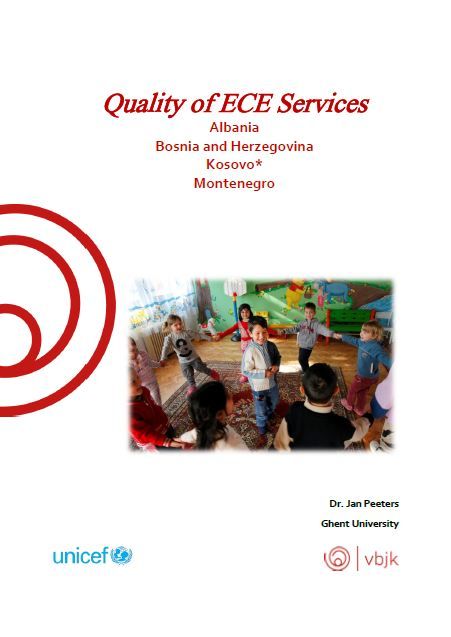
Quality of Early Childhood Education Services - Albania, Bosnia and Herzegovina, Kosovo, Montenegro
The report Quality of Early Childhood Education Services - Albania, Bosnia and Herzegovina, Kosovo, Montenegro resulted from a consultancy carried out by Jan Peeters from VBJK (ISSA's member from Flanders) for the UNICEF Regional Office for Europe and Central Asia (UNICEF ECARO). The report was commissioned based on the findings and recommendations of the 2014 Multi-Country Evaluation (MCE) on Increasing Access and Equity in Early Childhood Education carried out by UNICEF ECARO.
The MCE covered all UNICEF activities related to advancing Early Learning and School Readiness (ELSR) efforts for children in the 3-6 year age group and covered the period from 2005 to 2012. The report addresses the possible risks to quality of practices and services arising from rapidly increasing access.
button[src="https://cdn.prod.website-files.com/694724257114b734f4bb749a/6985cfb0567d6d1d294d3541_Quality%20in%20ECEC%20services%20-%20Albania%2C%20Bosnia%20and%20Herzegovina%2C%20Kosovo%2C%20Montenegro.pdf"][label="Download"]
Published in:
2018
Organization(s):
VBJK - Center for Innovation in the Early Years
Language:
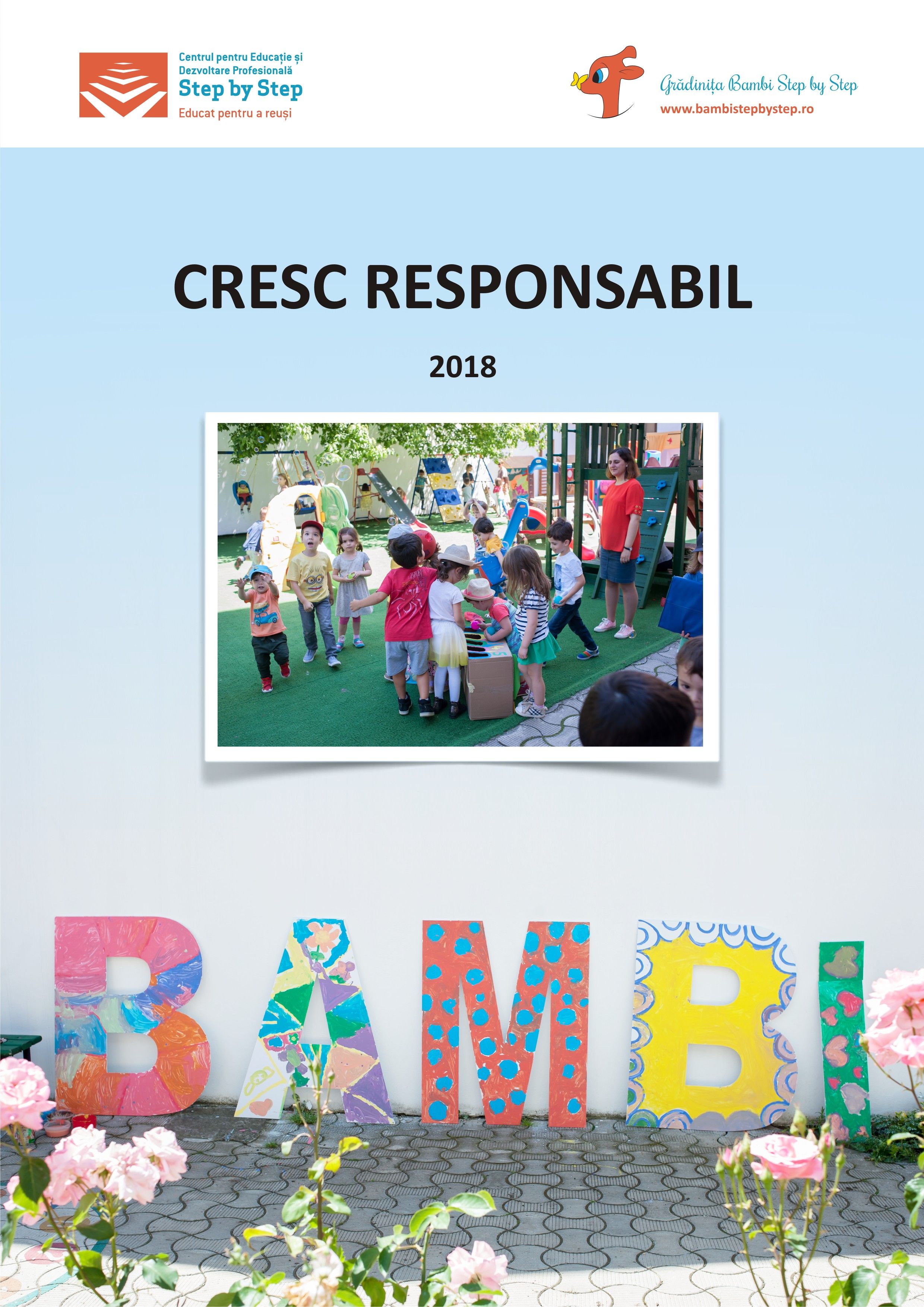
I Grow Responsibly – Step by Step Handbook
To promote child's holistic development and prepare children for the competences needed in the XXI century, Bambi Kindergarten (Bucharest, Romania) implemented a programme to stimulate child's initiative and entrepreneurial abilities and independent skills - autonomy (age- appropriate) in the teaching and learning process. These competences are promoted in the children’s work in activity centres as well as through study visits in the community. For example, when children were studying the theme of Physical Activity and Health, they visited a fitness centre and a stadium which inspired them to organize a centre for renting bicycles/scooters in the kindergarten, including creating a business plan, decorating the rental facility, writing the schedule and rules, using money for renting, negotiating their roles, communicating and interacting with 'customers.'
With these types of activities, children are able to practice a wide range of skills. In these activities, teachers act as facilitators of learning by equipping the activity centers with the needed resources and scaffolding children's efforts. Techers play a key role in organzing the environment, proposing some of the activities, and empowering families to encourage their children to practice their new abilities. Another key role is played by families who become learning resources. By expanding the learning opportunities into the community, children make a closer connection between learning and real life, raising their motivation to learn. This practice can be scaled-up based on sharing this experience using direct approach (workshops for teachers), but also sharing resource (handbook with good practices examples, video, teachers’ and parents’ testimonials).
button[src="https://cdn.prod.website-files.com/694724257114b734f4bb749a/6985ce87c4fb26a46f702f70_Ghid%20Educatoare%20Cresc%20Responsabil%202018%20online_0.pdf"][label="Download"]
Published in:
2018
Organization(s):
Step by Step Center for Education and Professional Development
Language:
Contact:
Cristina Boca, cristiana.boca@stepbystep.ro
Child Protection in the Early Years
The book Child Protection in the Early Years provides information on what is child abuse and the its causes. It explores how to provide safe, nurturing environments for young children. It also explains the impact of trauma on young brains and explores how practice can be developed. It also addresses your responsibility to be safe practitioner.
Published in:
2018
Organization(s):
The University of Northampton
Language:
Contact:
Eunice Lumsden, eunice.lumsden@northampton.ac.uk
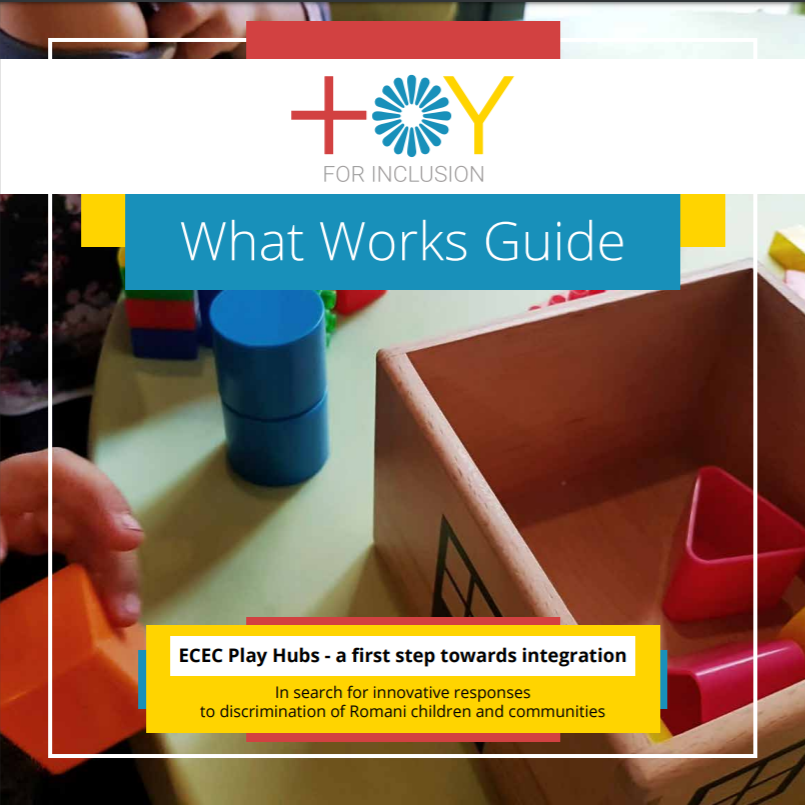
What works guide: ECEC Play Hubs - a first step towards integration
This guide documents the promising practices of the Early Childhood Education and Care (ECEC) Play Hubs, which support integration of Roma at local level. The practices and the accompanying recommendations are based on the evidence from the TOY for Inclusion project piloted in seven countries. The guide is designed for practitioners and local authorities. It can assist them in the implementation of community-based ECEC services for Romani and other children to improve social cohesion. The guide also informs local, national and EU level policy-makers about how to use social and economic solidarity between cultures and generations to promote desegregation and inclusion. The recommendations presented in the guide complement one another and are most effective when implemented simultaneously. Together the practices and recommendations provide clear guidelines for a systemic approach and sustainable local solutions in both policy and in practice.
button[src="https://www.reyn.eu/wp-content/uploads/2019/05/What-Works-Guide-WEB.pdf "][label="Download in English"] button[src="https://www.reyn.eu/wp-content/uploads/2019/02/What-Works-Guide-HR.pdf"][label="Download in Croatian"]
Published in:
2018
Organization(s):
International Child Development Initiatives ICDI
Language:
Contact:
Giulia Cortellesi, giulia@icdi.nl
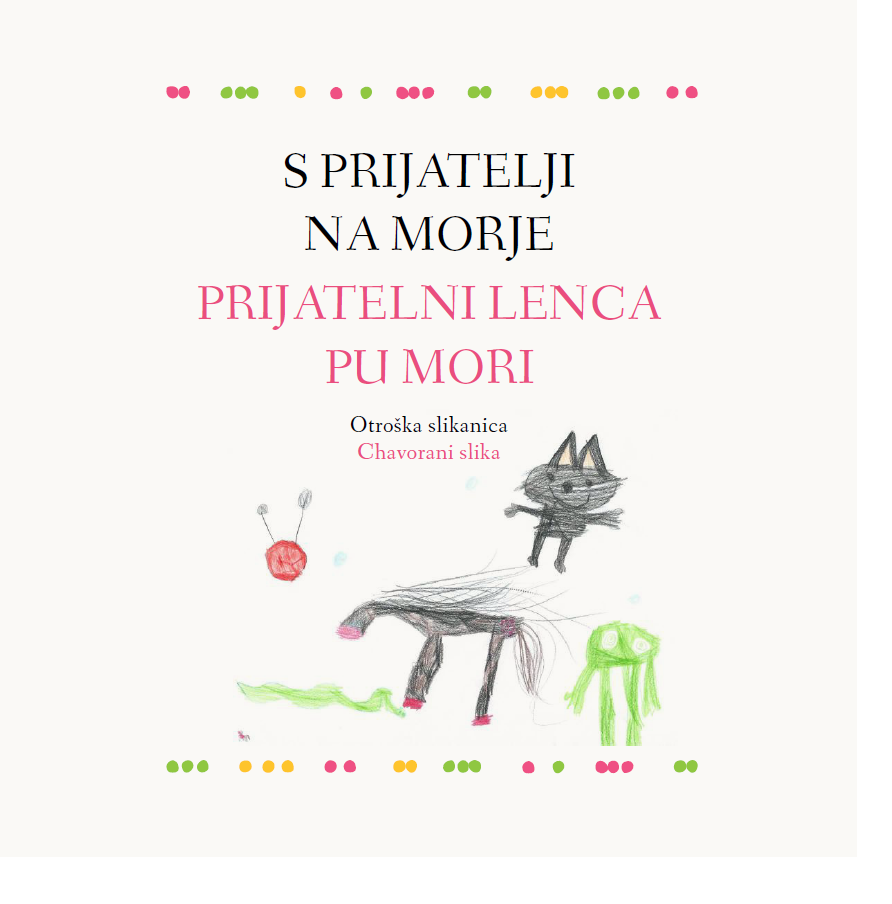
With Friends to the Seaside
With Friends to the Seaside is a picture book created by children under the mentorship of preschool teachers at a meeting attended by Roma children and their parents. It is written in Slovenian and Romani with the possibility for including additional translation of the text.
button[src="https://cdn.prod.website-files.com/694724257114b734f4bb749a/6985ce6c854dca6a701672d4_S%20prijatelji%20na%20m.pdf"][label="Download"]
Published in:
2017
Organization(s):
Step by Step Centre for Quality Education
Language:
Contact:
Jerneja Jager, korakzakorakom@pei.si
NESET II Analytical Report: Transforming Europen ECEC services and Primary school into professional learning communities: drivers, barriers and ways forward
NESET II report on Professional Learning Communities. Each child its own story: Diversity in child care centres (from birth to 13 years) is a book acknowledging that every child starting at a childcare centre (day care, preschool and afterschool care) brings along its own experiences and its own history. An early childhood centre is like a micro society for children, families and professionals where diversity plays a key role among children, the adults and their ideas. The centre is a meeting place that gives a feeling of belonging to the child and where nobody is less or more important.
Each child its own story tells about respect for diversity, handling similarities and differences in issues like preferences, talents and cultural backgrounds. Attention is also paid to children with special needs. This publication has been written for parents, educators and teachers inviting them to learn from each other and to experience how diversity can broaden their horizons and their world. So they can encourage each child to feel welcome. The publication is based on the Dutch national pedagogical framework Diversity in child care centres 0-13 years’ (2012) from the same authors. This publication is available in English and Dutch.
button[src="https://cdn.prod.website-files.com/694724257114b734f4bb749a/6985cf89ffec81957ce20dd8_NESET-II_AR2_2017_PLC.pdf"][label="Download"]
Published in:
2017
Organization(s):
VBJK - Center for Innovation in the Early Years
Language:
The Role of Special Ed Teacher in Early Education
The Role of Special Ed Teacher in Early Education is a guidebook for special education teachers working in early childhood settings. Special educators for kindergartens are new to the Georgian kindergarten staff. The main goal for the creation of the guidebook is to help these professionals realize their role in development of inclusive practice in early childhood settings.
button[src="https://cdn.prod.website-files.com/694724257114b734f4bb749a/6985cfcafefdf169b527bc6c_Specialuri%20ganatleba.....pdf"][label="Download"]
Published in:
2017
Organization(s):
Center for Preschool and Inclusive Education, Ilia State University
Language:
Contact:
Khatuna Dolidze, khatuna.dolidze.1@iliauni.edu.ge
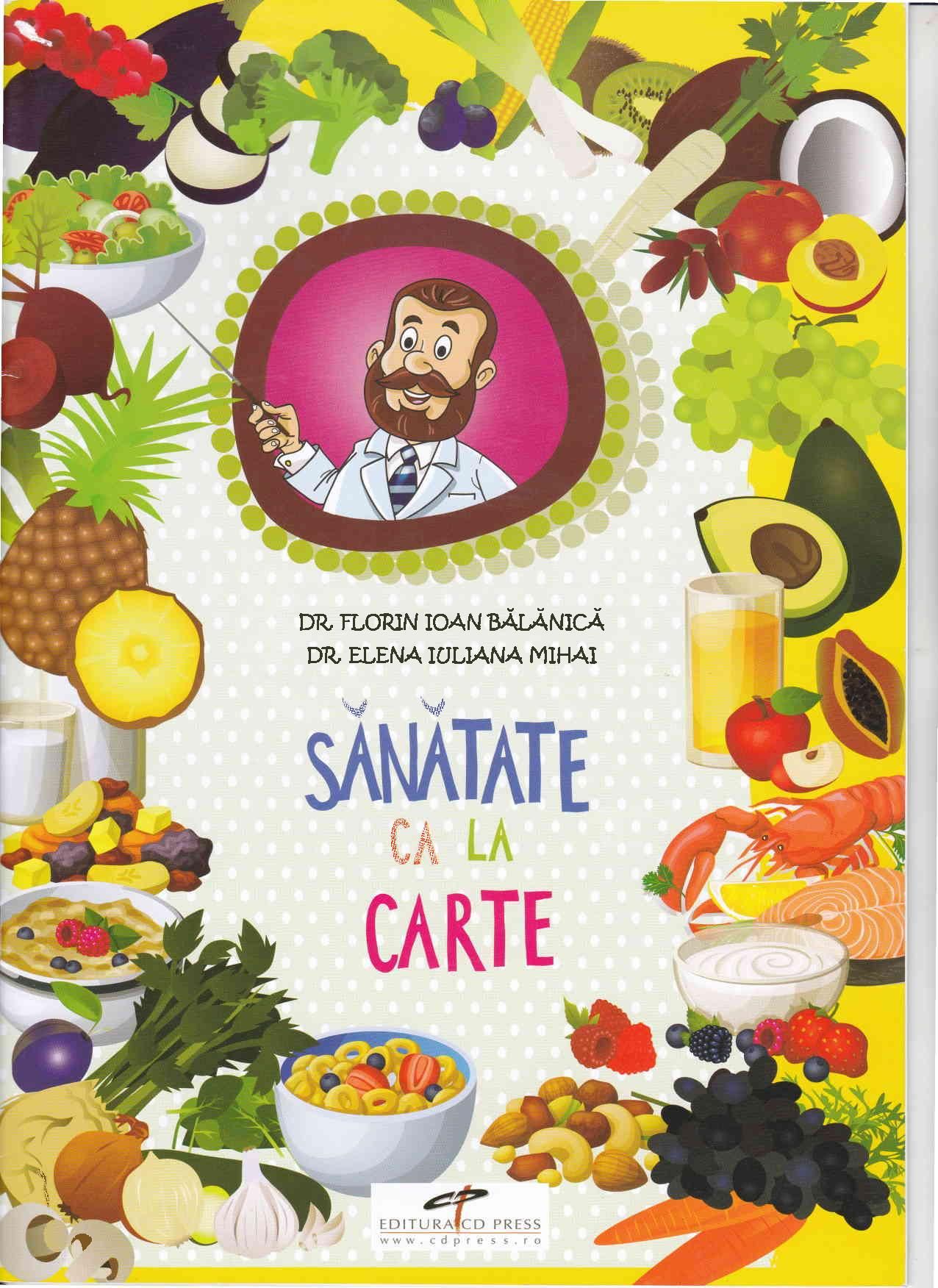
Health by the Book
Health by the Book is not only a nutrition book, it is also an educational handbook for well-being and a healthy life style. Step by Step Centre for Education and Professional Development in Romania developed this guidebook together with the Lidl company. The format of the handbook is a magazine with 36 pages containing primary school applications, games, healthy recipes to be cooked by children with parents or teachers, recommended activities for in the home, experiments, crosswords. This resource is full of scientific information expressed in language for children, teachers and parents and illustrated with relevant pictures.
The main purpose of the handbook is to develop healthy habits in children between 6 – 12 years old by integrating nutrition knowledge into the school curricula and practicing healthy habits in every school day and at home.
The main issues addressed refer to: knowing food and how to eat a balanced diet, appropriate portions, shopping, hydration, what is dangerous to eat, allergies and intolerances, obesity, and the importance of physical activities.
Through every topic, the authors send the message that the key to health is life style and this is built in the first years of life! Another important message is that healthy habits and physical training are built in the families and in schools, so parents are the important educators!
Every primary teacher can use this resource integrating healthy habits in school activities, practicing recommended activities, and working with parents through children and/or directly. They can also be inspired by this guide to create their own activities, recipes, experiments for promoting healthy habits.
button[src="https://cdn.prod.website-files.com/694724257114b734f4bb749a/6985ce8192c498362c9a368d_SANATATE%20CA%20LA%20CARTE.pdf"][label="Download"]
Published in:
2017
Organization(s):
Step by Step Center for Education and Professional Development
Language:
Contact:
Roxana Avram, roxana.avram@stepbystep.ro
Embracing Diversity. Creating Equitable Societies Through Personal Transformation. Program for Adults, Training Manual
Embracing Diversity Training program for adults promotes the values of anti-discrimination, anti-bias, equity and respect for diversity in different settings: in communities, at the workplace, and in society. Embracing Diversity guides participants through a process of personal transformation, which helps them to become agents of change towards inclusive and social cohesive societies.
During the training, participants get theoretical overview and knowledge about most relevant concepts related to diversity, interculturalism, equity and social justice and they also build critical consciousness trough naming reality, giving voice to those who are usually silenced and by building alliances. The program consists of well-elaborated theoretical part, guidelines for reflection and 25 training sessions. Additional materials and resources listed can serve for adaptation of the program to meet the needs of diverse participants and specificity of different contexts.
button[src="https://cdn.prod.website-files.com/694724257114b734f4bb749a/6985ce58028979a5a0002daf_embracing%20diversity%20publication_short_for%20license.pdf"][label="read the excerpt"]
Published in:
2017
Organization(s):
ISSA - International Step by Step Association
Language:
Contact:
Zorica Trikic, ztrikic@issa.nl
Step by Step to Literacy - 50 Activities for Improving Student Literacy Skills
The Macedonian handbook Step by Step to Literacy- 50 activities for improving student literacy skills is composed of 50 activities divided in six teaching and learning areas (Listening and talking; Reading and writing; Language; Literature; Verbal expression and creative writing and Media culture) as defined in the Macedonian national teaching curricula for the first three grades.
The handbook describes each activity, including the necessary materials, the preparation process and the method of conducting the activity. Additionally, each activity is supported with one or more photos presenting the preparation process. All of the activities can be easily replicated in the classroom with affordable and easy-to-get materials. This handbook is a useful resource for the primary grade teachers who want to expand their array of innovative and effective strategies for improving student literacy.
button[src="http://stepbystep.org.mk/WEBprostor/toolbox/Cekor_po_cekor_do_jazicna_pismenost.pdf"][label="Download in Macedonian"] button[src="http://stepbystep.org.mk/WEBprostor/toolbox/Hap_pas_hapi_deri_te_shkrim-leximi_gjuh%D0%B5sor.pdf"][label="Download in Albanian"]
Published in:
2017
Organization(s):
Foundation for Education and Cultural Initiatives Step by Step
Language:
Contact:
Suzana Kirandziska, info@stepbystep.org.mk
About Parents
The book presents the psychology of parenthood.
button[src="https://cdn.prod.website-files.com/694724257114b734f4bb749a/6985c933fac0a43475a8247b_About%20Parents.pdf"][label="Visit the website"]
Published in:
2017
Organization(s):
Pedagogical Center of Montenegro
Language:
Contact:
Biljana Maslovaric, biljana.maslovaric1@gmail.com
European Quality Framework: High 5 Quality Scan
The High 5 Quality Scan is an evaluation tool based on the European Quality Framework for Early Childhood Education and Care accompanying the 5 Steps to Quality Training Package. ISSA has translated this resource so it is now available in English.
This document offers childcare centres, nurseries, after-school care, and integrated childcare centres the ability to evaluate and improve their internal quality on these five principles.
This explicitly sets the link to the national pedagogical frameworks and curricula, and the organization’s own pedagogical policy. A reflective method where the involvement of all participants is crucial.
The training package was developed by Bureau Mutant and VBJK in the framework of the Peer Learning Activities supported and co-financed by ISSA in 2015/2016:
button[src="https://cdn.prod.website-files.com/694724257114b734f4bb749a/6985ce61a2fa85d67abccc75_B5-High%20Five%20Quality%20Scan%20Tool%20EN-screen.pdf"][label="Download"]
Published in:
2017
Language:
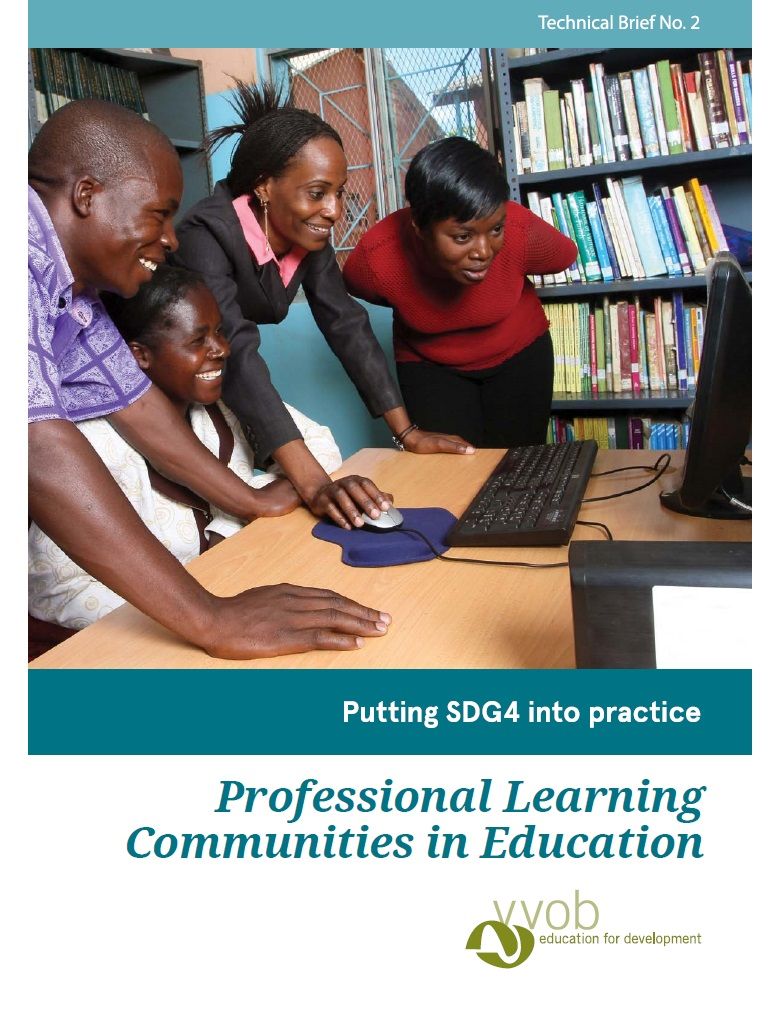
Putting SDG into practice: Professional Learning Communties in Education
Putting SDG 4 into practice: School leadership, a technical brief describes why professional learning communities (PLC) matter for quality education, VVOB’s approach to sustainably creating and managing these communities, and how this works in practice in our partner countries.
PLCs play an important role in the professional development and motivation of teachers and school leaders. VVOB’s model for successful PLCs is two-dimensional: both the policy environment and the capacity to implement are crucial to organizing effective and sustainable PLCs, that genuinely enhance the professional development of teachers and school leaders. The experiences of VVOB demonstrate how reinforcing the capacities of national and local education authorities to establish and support PLCs is indeed of crucial importance to the success of these communities.
button[src="https://cdn.prod.website-files.com/694724257114b734f4bb749a/6985cfaecfe21592332c6892_201706_VVOB_Technical-Brief_PLCs_web2.pdf"][label="Download"]
Published in:
2017
Organization(s):
VVOB Education for Development
Language:
Contact:
Tom Vandenbosch, Tom.Vandenbosch@vvob.be
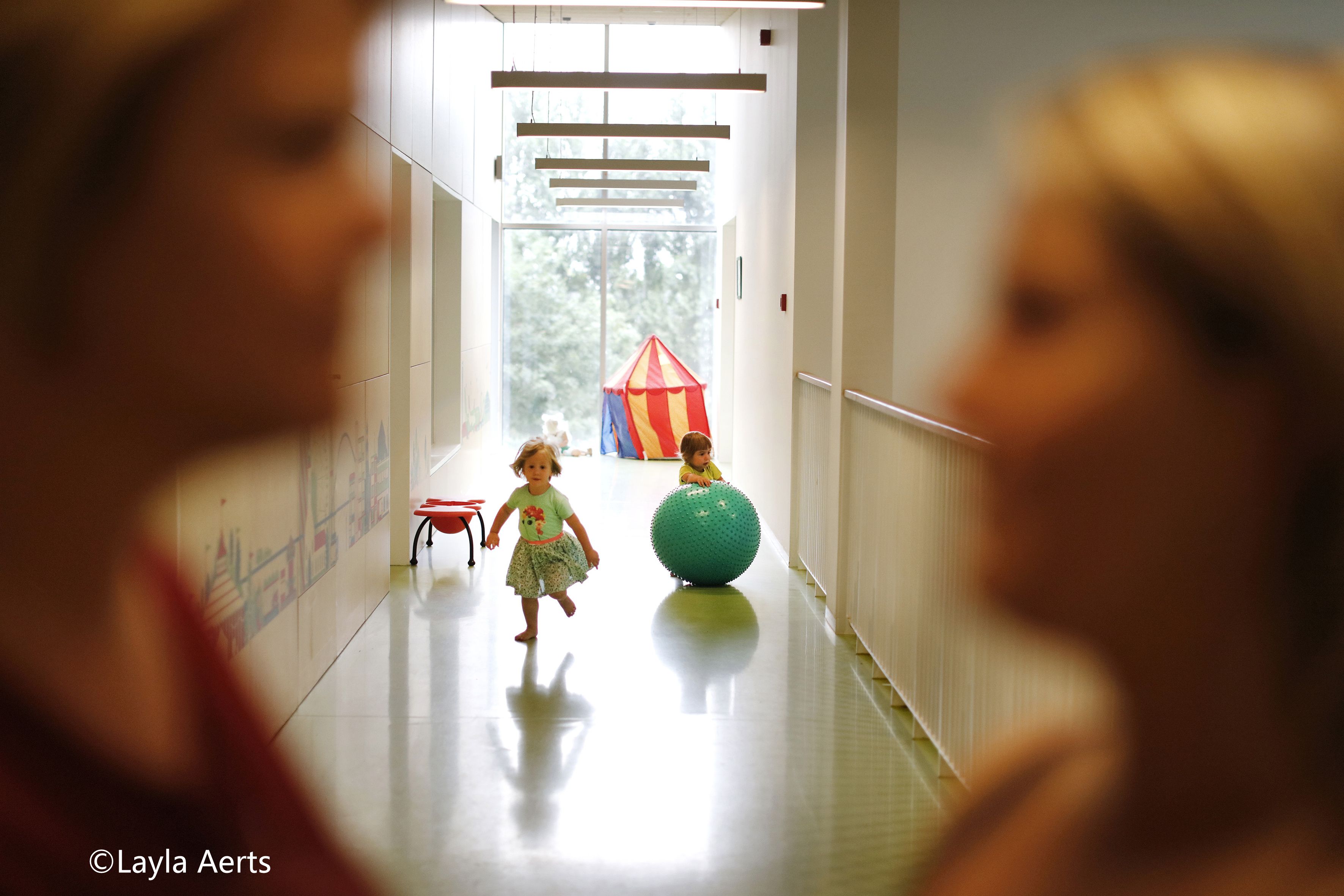
ProuD! Pedagogical, Reflective, Orgulous and Useable Documenting!
ProuD! Is a manual of how to use documentation of children’s learning including photos, audio-visual recordings, quotes, written notes, and children’s work products to reflect on children’s learning and development through discussing and reflecting upon them with colleagues. These kinds of systematic discussions support reflective collegial learning, promote better knowledge of yourself and your colleague(s), and both demonstrate and reinforce professional work and growth.
Published in:
2017
Organization(s):
Artevelde University College
Language:
Contact:
Ine Hostyn, ine.hostyn@arteveldehs.be
European Quality Framework: 5 Steps to Quality
The training package 5 Steps to Quality is promoting the implementation of the European Quality Framework for Early Childhood Education and Care (EQF) with the aim to building and improving the quality in early childhood education and care services at country and organisation level. The training focuses on awareness raising, reflection and dialogue on the five quality elements in the EQF (accessibility, workforce, curriculum, monitoring and evaluation, finance and governance), at the same time linking these five quality elements with the contextual country guidelines and laws.
The training package was developed by a cross-country team led by ISSA members Bureau Mutant (The Netherlands) and VBJK (Belgium) in 2015-2016, within a Peer Learning Activity supported financially by ISSA. A second Peer Learning Activity provided members from Bulgaria, Macedonia, Moldova and Montenegro and Slovenia with the opportunity to explore together with their colleagues in The Netherlands and Belgium how they can further use the training package in their respective countries.
button[src="https://cdn.prod.website-files.com/694724257114b734f4bb749a/6985ce5f0eedb04db5b11998_5%20Steps%20to%20Quality%20-%20Training%20Package%20-%20final%20version.pdf"][label="Download"]
Published in:
2017
Organization(s):
VBJK, Bureau Mutant