Knowledge Hub
All the resources stored here have been created by ISSA Members
or ISSA Secretariat in partnership with Members or partners.



ISSA welcomes three new Members
The ISSA Network continues to grow in 2020, we are proud to introduce three new ISSA Members organizations.
The Early Childhood Research Centre (ECRC) is an interdisciplinary research centre, led by Professor Mathias Urban, Desmond Chair of Early Childhood Education. The Centre and its research team build on a long tradition of critical inquiry in the field. Members investigate policies and politics, pedagogies, and practices in early childhood locally and internationally from a critical perspective that is informed by a shared interest in the transformative potential of collaborative research. ECRC actively promotes close collaboration between research, policy, and practice in the field. Read more about ECRC.
Worldwide Foundation for Vulnerable Children focuses on early education and trauma-informed, research-based, therapeutic play program named the Element of Play. Additionally, they provide skills development for youth and adults. They train in a structured play program that leads to transferable skills to further their education and career.
Their focus is quality pedagogy, parenting support programs, and social inclusion for children with special needs. They also hold camps for children dealing with difficult illnesses. Learn more about Worldwide Foundation for Vulnerable Children.
TNO-Child Health Research Group operates under TNO’s Healthy Living unit. Their vision is that every child should be allowed to grow up healthy, safe, and should have equal opportunities. They focus on health programs, access to services, and parenting support programs. TNO is a public organization in the Netherlands that works both nationally and internationally. Read more about TNO-Child Health Research Group.
Published in:

ISSA Welcomes a New member: CEF “School for All”, Kazakhstan
ISSA New Member Community Educational Foundation (CEF) “School for All” is one of the successful Kazakhstani NGOs that implements innovative educational initiatives based on democratic approach in teaching to make it more effective, meaningful, relevant and useful. The Foundation cooperates with other academic and research institutions in the country and abroad.
CEF “School for All” oversees projects with partner organizations relating to Inclusive education and teacher leadership, and advocates for policies to improve access and quality of education. Besides, the Foundation publishes academic articles and conducts qualitative and quantitative research to learn about current issues, improvements and other aspects of the education sector. Moreover, CEF “School for All” provides in-service training and mentoring for teachers of all levels, develops and publishes methodological guides and teaching materials, attends and presents at the local and international academic conferences.
“Through our last three years’ experience, we can share the idea of non-positional teacher leadership development that empower teachers as agents of change and help building innovation-friendly professional cultures in schools,” says Gulbadan Zakayeva, director of CEF “School for All”.
Becoming the ISSA Member, CEF “School for All” hopes to collaborate and build partnerships with the other members, share the information, promote good practices, design and apply joint proposals to the international organizations.
“We have achieved significant success in the development of inclusive education at the Higher School of Kazakhstan and we have made a crucial contribution to making the Inclusive Education course mandatory for all pedagogical specialties of universities in our country,” says Gulbadan Zakayeva, director of CEF “School for All”. We have developed and published a number of methodological materials, including the manual "Fundamentals of Inclusive Education", conducted more than 10 trainings on inclusive education and trained over than 300 teachers of pedagogical colleges and universities. During COVID-19, we have created an online course "Inclusive Education", which has become an important educational and information resource not only for students and university teachers, but has also become accessible and open to a wide range of stakeholders.”
In CEF “School for All” they strongly believe that their efforts and achievements will contribute to the development and transformation of education in Kazakhstan.
Published in:

ISSA’s Professional Development Opportunities Boost Kosova Education Center’s Shift to an Advocacy Organization
Based on an interview with Hana Zylfiu-Haziri, Program Manager Kosovo Education Center
As a membership organization, ISSA unites and supports professionals to deliver responsive, high-quality, and equitable services to all children and their families. For its broad diverse base of members, it offers a wide variety of opportunities to co-create and share knowledge and professional development and networking events. This blog presents how, as a result of a professional development opportunity offered under ISSA’s initiative REYN, the Kosova Education Center has made a programmatic shift by including advocacy in their work, vision and mission.
The Kosova Education Center (KEC)
KEC is a non-governmental organization funded in 2000 with the idea of focusing on provision of in-service teaching training programs. But lately Kosova Education Center has grown and now the organization focuses on 4 pillars: quality education; human rights; networking and participation in policy making; and educational research in general. KEC has also its own primary, secondary and gymnasium schools, and currently runs different projects and programs employing 30 people. Among many initiatives, KEC is working on the one that we shed light on in this blog - KRAEEYN - Kosovo Roma, Ashkali, and Egyptian Early Years Network through which KEC supports equitable access to education for Roma, Ashkali and Egyptian children, which still live in a vicious circle of poverty and social exclusion. On how KEC managed to integrate the advocacy component into its work we will learn from Hana Zylfiu-Haziri, a Program Manager at Kosovo Education Center.
How a professional development on advocacy led to an organizational shift?
According to Hana, initially KRAEEYN supported professionals and paraprofessionals in a grassroot level, as well as small organizations that supported Roma, Ashkali, and Egyptian children at the local level. Then, KRAEEYN participated in a professional development opportunity, organized by ISSA, with a focus on advocacy. It consisted of two trainings held in Sofia and Zagreb, respectively.
Back in Pristina after the trainings and sharing of the knowledge gained among KRAEEYN members, the network decided to shift its mission by integrating the component of advocacy in their existing mechanisms. Nowadays KRAEEYN is better positioned and engaged in advocacy actions at local, regional, and national levels to reach institutions and key stakeholder and decision-makers to influence the policy change at national level. KRAEEYN remains as a strong voice advocating for professionals and paraprofessionals working in the field making sure their needs are reflected in local and national action plans.
Although the topic of advocacy was familiar to her, Hana used to consider it as a big activity in which you have to gather people, and to do, and to plan. However, during the training and discussion with other national REYN representatives from 10 different countries, Hana and her team realized that they were actually doing so much advocacy, without knowing it, and “it was like an opening of our minds”. And so, they just have to be conscious that they are doing it and go for it, and maybe invite other people to join the initiative.
Hana says: “And this is when actually we decided to get into it. Since we are already doing some small steps, let's try to do something much bigger which doesn't require money or planning, and where only we have to think whom to reach”. And she concludes: “So these are the things that have influenced us, everything has been influenced by advocacy and now we are shifting completely as a network, we are doing more and more on advocacy”.
“One of the aspects that I found key to learn about advocacy is something I’m trying to put in practice in my work: how important is to find the right people to be with you and to act together as one voice. Now I see that so many things I have done and maybe I didn't succeed because I did alone. Now, all the time I'm trying to have more people on board”.
Hana also stressed that such professional development activities offer many opportunities not only to learn from the trainer but also from each other, from the peers attending such trainings. Hana shares: “Such professional development opportunities offer the chance to seat with representatives from different organizations and countries, with whom you listen to and learn from. In the training in Sofia, I was there with my program colleague. On our way back home, we had five or six hours of travel ahead of us, and this was excellent opportunity for us to reflect on the training, the content as well on the inspiring examples other participants presented during the sessions. It encouraged us to plan our future activities and make some nice plans. For instance, we heard from Croatians about an advocacy campaign they had done with soccer players, and also the Bulgarian team had some nice examples. And that was a point when we said … okay, we have to do something in this direction as well. It is very good that we are supporting paraprofessionals and professionals and we should continue supporting them, but as a KRAEEYN we are a voice that can be heard, so we have to change our way of being perceived”.
Hana continues commenting on the importance of the peer learning that takes place during such opportunities: “As we talk, things are coming to my mind, and the last REYN meeting that we had in Zagreb in 2019, was really nice. Not only because it was organized by you (ISSA) and that everything was good. We had the opportunity to reflect, to share, to think together, and to work as a team. It was really valuable, especially learning from the others what they are doing, and trying to see what can we do in our network, and how can we adapt or change current actions. That meeting was really good, really good one”.
ISSA’s support and influence goes beyond the training on advocacy
During the interview Hana stressed that ISSA has provided lots of professional development opportunities to its Members, which have also benefitted KEC and have been a great opportunity for them. One of them are the Peer Learning Activities (PLA). Specifically, Hana mentioned that they had submitted twice a proposal for the Peer Learning Activities: On the first one, at national level with three other organizations from Kosovo, Hana says “we have worked on 10 preschool institutions on improving their pedagogical practice, which has led to build in community of learners within the institutions.” The second, at international level with another ISSA member in Albania, led to a huge network of institutions from both countries to meet and where the teachers from both countries had the chance to speak, talk and share. Hana adds: “We had also the conference, where we provided a booklet with activities that teachers have created in their classrooms”.
According to Hana, both projects taking place under the PLA’s built on ISSA’s Quality Resource Pack. KEC presented ISSA’s Principles of Quality Pedagogy to the Ministry, which decided to approve them as a national document.
Hana stressed: “The document is there and teachers, even though they cannot be so much present at the moment, they are still using it. They have a system of monitoring their quality and what is also good is that the Faculty of Education has included parts of the Quality Resource Pack in their syllabuses as well. So, it all started with professional development opportunities”.
Motivations to participate in the professional development opportunities
When asked what motivated KEC to participate in these professional development opportunities, Hana mentioned that they knew that they were good chances for them to learn and share, and they wanted to be active in such activities. Hana said: “In the first case, when we applied for PLA we knew that we could do something together with other organizations from the ISSA network. For example, in our work with Albanian peers, we share a common “language” when referring to our similar situation in education we know where the problems are, what is needed and how we can we support our educational system.
In advocacy, what motivated me was more like I wanted to learn more: I needed to know more about what advocacy is and what can I do with it at national level. The training helped me first of all to understand some things and then I shared with colleagues. It actually helped me to reflect about my work as well, and not only on the current project, but also in other projects where I'm involved. And now I always try to enforce the component of advocacy also in the other projects”.
Why would Hana recommend to participate in such kind of professional development opportunities?
Hana said that first of all, she would strongly recommend to herself to continue be part of these kind of professional development opportunities and she will continue as much as she can. And she continued by saying: “But why would I do it? Because for sure they will benefit as we did it. First of all, every time you learn something, you share, for instance, we had that nice opportunities from professional development activities we have developed, we had the case when we developed a project, so there are really nice opportunities for our network to learn, to share, and to be part of different activities and initiatives”.
Published in:
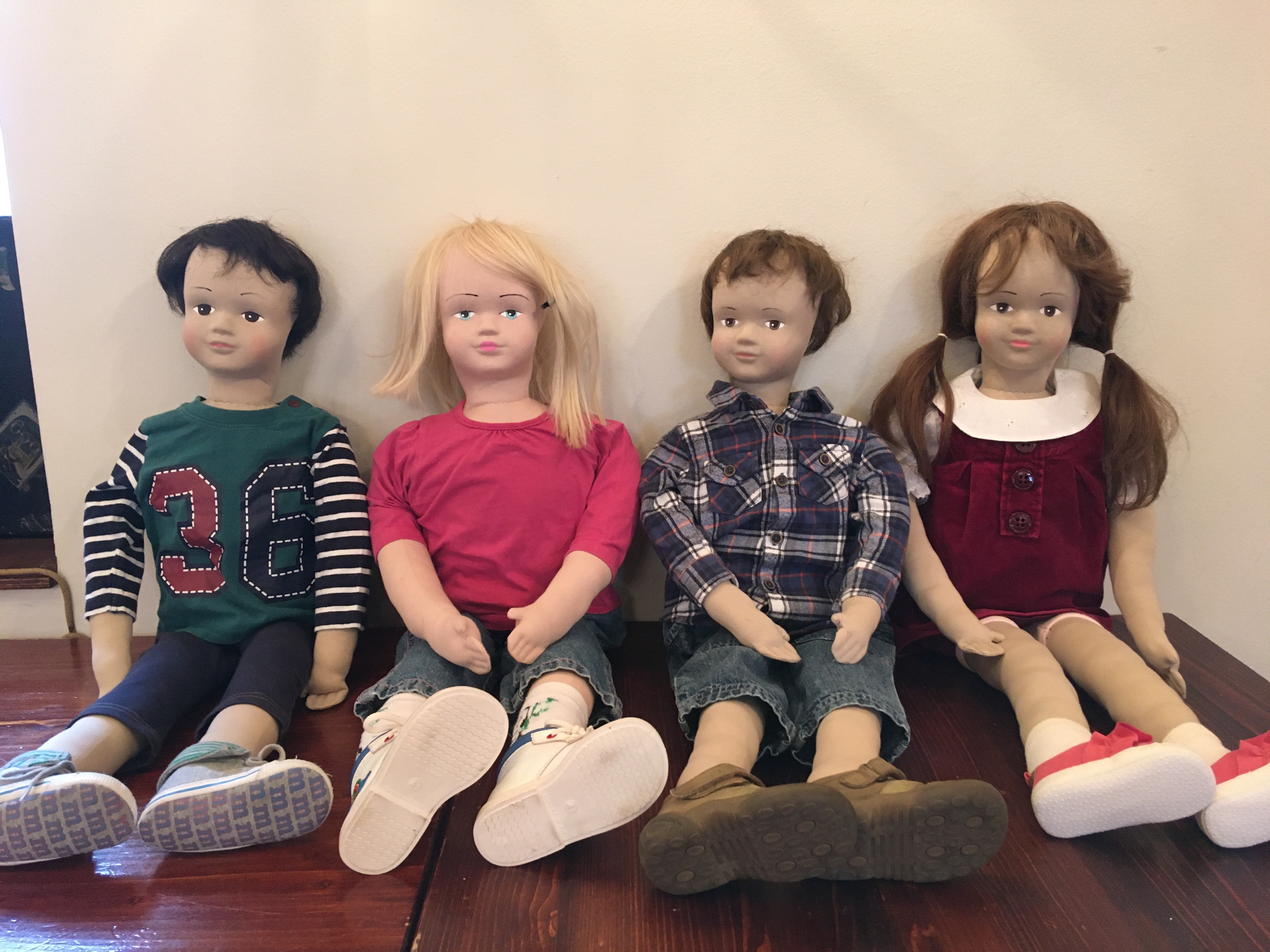
Interview with Zsuzsa Laszlo: the ISSA Network’s Persona Doll learning community
Interview with Zsuzsa Laszlo: the ISSA Network’s Persona Doll learning community
Over the last 15 years, Partners Hungary Foundation has been providing Persona Doll training for ISSA Members, resulting in a significant number of early childhood practitioners incorporating the dolls into their practice within the region. The diversity of participants engaged in ISSA Peer Learning Activities and Joint Learning Labs contributes significantly to the enriching experience of the training for the entire group. In this interview, Zsuzsa Laszlo, an experienced Persona Doll Certified Trainer, shares her valuable insights, providing a deeper understanding of this approach.
What is the Persona Doll method, and why is it meaningful?
The Persona Doll is a method for encouraging discussions about emotions and feelings among children aged three to eight. It offers a non-threatening and enjoyable means to address issues of equality, challenge stereotypes, and discourage discriminatory thinking in young children. The method also encourages critical thinking, fosters empathy, and empowers children to confront instances of unfair treatment.
Originating in the UK and widely successful globally, the Persona Doll method provides an efficient and playful approach to tackle stereotyping and promote equality. Designed for professionals in early childhood development, this innovative tool isn't only useful for addressing prejudice-related conflicts but is also effective in handling various conflicts among children.
The method centers around a lifelike rag doll (approximately 60 centimeters tall), endowed with personality traits by the professional, such as family background, characteristics, favorite foods, and belongings. This Persona doll "visits" the children, creating an opportunity for professionals to broach sensitive topics through everyday stories. This approach encourages discussions that might have been difficult to initiate otherwise.
The method aims to transform teasing and exclusion into attitudes of respect and care. To implement the method effectively, sessions should occur bi-weekly, and in the interim, professionals gather stories from the group's experiences that generate significant discussion or recurring problems (teasing, bullying, conflicts, etc.), situations where occasional verbal warnings prove ineffective.
An example of a story that generates discussion in the classroom is the following: A Roma girl who is new to kindergarten shares that in her previous school, she was told, 'I don’t like Roma.’ As the preschool children sit in a circle, they react with surprise or empathy, saying things like 'Wow, that happened?' and 'Oh, that’s very hurtful', but also 'They should be punished or hit'. While the preschool teacher facilitates the discussion, the children come up with ideas and try to find a solution for the new girl.
The Persona Doll method is specifically designed for preschool and primary school teachers but is equally suitable for teaching assistants, preschool and school social workers, as well as preschool and school psychologists.
What are some of the most unexpected outcomes or success stories you've encountered through using Persona Dolls in educational settings?
All of our stories are unique in their own way, but perhaps we can highlight stories where the Persona Doll method thrives independently within kindergartens. For example, at one kindergarten in the region, we initially started with just one teacher, and now there is a thriving learning community where teachers collaborate, plan together, and only come to us for support and mentoring when needed. We believe that true success lies in the autonomy of the Persona Doll, where its magic continues to flourish independently.
How do ISSA’s PLA and JLL contribute to the use of the method?
Our aim is to create a vibrant professional community within ISSA at two levels. Firstly, by offering Peer Learning Activities (PLA), we provide the basics for professionals who are interested but not yet familiar with the method. Through Joint Learning Labs (JLL), we establish a learning hub with intense mentoring and peer support, assisting individuals at all levels of practice and serving ISSA with a dynamic professional learning environment. We aim to build a community where anyone with a basic understanding of the Persona Doll Method can receive support, feedback, and peer mentoring. Our ultimate goal is to increase the number of professionals actively engaged in the field of diversity and equity within ISSA.
Being part of the ISSA Network has enabled us, to spread the Persona Doll approach across a diverse group of dedicated professionals internationally and to establish connections with organizations we might otherwise never have known about. It is almost a mini network we started.
What are the plans for 2024? Any opportunity for ISSA Members who haven’t done it yet to get some training on Persona Doll?
In 2024, we are offering JLL for practitioners who have a basic understanding of Persona Dolls. Together, we will learn, collect case studies, and offer solutions for a wide range of situations occurring in kindergartens. At the end of the year, we will compile a handbook based on these stories for the Persona Doll community within ISSA. Looking ahead, we aim to offer more training opportunities for those interested in experiencing the magic of Persona Dolls in the long run.
Learn more about ISSA’s Joint Learning Lab on the Persona Doll Method.
Published in:
Peer Learning Activities 2020 - A Conversation with Zsuzsa László
The Persona Doll Method is a practical approach to help children talk about emotions and feelings in early childhood settings. The method provides a powerful, non-threatening, and enjoyable way to raise equality issues and counter stereotypical and discriminatory thinking with young children. The dolls help children express their feelings and worries, think critically, develop empathy, and challenge unfair treatment.
We sat down with Zsuzsa László of Partner’s Hungary who ran the Peer Learning Activity (PLA)* titled Using the Persona Doll method during and after COVID. Zsuzsa explains the PLA, the process, and what she found meaningful about it in the interview below.
Can you share a brief overview of the topic of your PLA?
The Persona Doll Method is for preschool teachers. They use 60 centimeter long dolls to teach children how to work on stereotypes or prejudices and include children who have disabilities or belong to any minority group. It's a very useful and very fun tool for a serious and delicate topic. It's delicate because we all have prejudices. We all have stereotypes, and preschool teachers are no exception.
We always try to work on our stereotypes first before giving the doll to the practitioners. The core point of the method is this: it brings a story to the class, a story of another child, or a story of his or her family, a story about himself or herself, or a story about something that happened. The children in the class help the doll solve the problem. For example, the doll went to another kindergarten, but because her skin color is darker, some children told her that they don't like Roma. And then, she brings the story to the class. It's a preschool -- I mean, they are five, six years old, sitting in a circle, and they get shocked by the story.
"Wow, wow, that happened?" they ask. And they try to find a solution. Sometimes the children will say, "oh, okay, you should talk to your mom," or "you should speak with the teacher," or "you should tell them that it's very hurtful" — they come up with ideas. The research suggests that when a situation happens in real life, they know what to say. They know how to act when something discriminative happens or when there is bullying in a preschool community. So this is the method.
In the training, we always start with a whole day of working on ourselves and saying that it's okay that we have stereotypes. But we have to deal with it. It's okay if you hold prejudices, but then we have to do something about it. That's why it's a long process.
So, that's what we did on the first day of the training. Then, on the second day, we went to the core -- practicing, watching films, and again practicing and practicing. Then, the practitioners went back to their communities and tried the method. After several weeks, we held the third session.
The PLA we hosted had two groups. One group was for the practitioners. And then we had another group of trainers because we thought this would be very good for trainers to be able to share the method in their countries.
The first two days were combined. On the last day, we split the groups because with the practitioners; we were talking about their experiences. With the trainers, we talked more about how to teach the method. We did this step-by-step; we also produced training material for the trainers and a handout for the practitioners.
We also produced two different kinds of materials because there were two groups. We had a huge training material step-by-step and the stories for the trainers. Whereas, for the practitioners, we shared many stories on how to use it, which was also important because of COVID-19. We had a huge session on how to talk about the COVID pandemic with the children, how to talk when we go back to normal, how to check if they are okay. So we produced some stories that the doll might bring in, not related to prejudice, but other important things that happened in the children's lives about COVID or the pandemic time.
What was the most meaningful part of hosting a PLA for you and your organization?
I am the coordinator of REYN Hungary, and that is one of my missions. The other is the Persona Doll Method - spreading Persona Doll Method. I'm really happy when I don't have to organize the participants because you are already the trainer, the methodology developer, and then it is a lot to be the organizer and marketeer.
So I'm really grateful that I just received a list of great people who just jumped on the zoom, and we started the work. I think it's, it's really, really good for, for a trainer or for someone who wants to share their work. Of course, we could do it, but it takes a lot more work.
ISSA has such a huge network, and I think it's great that people can choose what PLA they want. You go as a trainer, and the people are already signed up for the PLA, and they are the right people. I think just perfectly organized, and it was one of the best training for the Persona Dolls that I ever did, so I truly enjoyed it.
For Partner's Hungary, it was very good that we are now linked with many other people or other organizations that we might not have had contact with before. We will continue working with them. We also created a closed Facebook group for these practitioners, and they can share their experiences. And, and so if let's say we want to do something with similar innovative methods, we can go into this group, and they are there. I know all their faces, they know my face -- it's a new network that started. So it was also a very useful thing.
Can you tell us what you think were the main outcomes of your PLA despite, or maybe due to being organized online?
Doing the PLA online was good because we had so many people from so many countries. When you have to travel, it can be difficult to go. I mean, sometimes it's a whole week off, and this way, participants are able to switch on from anywhere. The Latvian group that attended our PLA, a group that had five people, they were able to join from one laptop. Online PLAs allow people to attend from the workplace. Other people can also hear it, and participants can share it right there in the kindergarten. Sometimes I had a feeling that we walked into their community. It was also good, for this PLA, that we could take two weeks of break. When I do the training in Hungary, I always use these breaks because they have to digest the information and have to practice. It was very good. If people travel for this PLA, you cannot do it. And the downside, of course, is that we missed the real-life we miss the contact -- doing something together, learning about each other.
What would you like to let other ISSA members know about hosting or participating in an online PLA?
Hosting an online PLA can attract more people because it is more flexible. For individuals, when you get an invitation, you have a better chance to attend if you don't have to travel. You don't think about your schedule if you have family things or another appointment because you can click on Zoom, switch on the camera, and you are a part of the PLA! I think it's a huge advantage.
Can you share an example of how the topic of your PLA is important for your work?
I'm not only very enthusiastic about the Persona Doll Method but always about embracing diversity. I either do an Embracing Diversity or Persona Doll trainings. So this is my mission.
Where can one find more information on this question?
You can check our website Partner's Hungary. If you speak Hungarian, you can also visit the REYN Hungary website.
If you want much more information about the Persona Doll Method, I suggest you check the Persona Doll Training website, because they have many resources.
The Practitioners Training Manual developed for this PLA is on the ISSA Knowledge Hub.
*Every year ISSA Members benefit from Peer Learning Activities (PLAs), which aim to build Members’ capacity, deepen their knowledge and act as enabling spaces for Members to co-create new knowledge. You can learn more about Peer Learning Activities offered in the ISSA Network here.
Published in:

Peer Learning Activities 2020 - A conversation with Gillian Cante
Many recent neurological studies have shown that violent and malicious educational practices impact a child’s emotional development and self-esteem. Questioning, defining, and understanding them in order modify our reactions becomes essential.
This is the topic addressed in the Peer Learning Activity (PLA)* entitled Gentle violence and ordinary educational violence: Tackling the issue and fostering children’s development of self-esteem and identity, hosted by Le Furet.
This PLA focused on these questions, aiming to help professionals question their practices and build quality within their teams. Participants learned to identify “ordinary educational violence”, develop active listening and respectful collaboration, and create evaluation methods to track their progression.
Read the interview with Gillian Cante, Chair of Le Furet, as she shares more on the theme, how it is used in Le Furet’s work and why she recommends others participate in PLAs.
Can you share a brief overview of the PLA you hosted online? (the topic, participants, number of sessions)
The workshop we ran was called ordinary violence and subtle violence, which is a sensitive theme for a lot of childcare providers. We really wanted to bring up notions of how we are with children, not what we know to do with children and how we know to take care of them, but more just about our professional posture and the subtle things we do that can send a different message to children and affect them emotionally in their development. We spend so much time with them in childcare. So we thought this is a very important subject to touch upon. So, we ran a session over four days, two and a half hour sessions, so a total of 10 hours. So it was quite a substantial program.
We could have done quite a bit more, but we knew that the time was limited. And so we ran this over two weeks at twice a week, and we had a total of 25 people who were signed up. We found ourselves with about seven participants, but very happy to have such a small group because it was dynamic. And we were able to do some interesting group work with them.
What was the most meaningful part of hosting a PLA for you and your organization?
One of the most meaningful things about hosting this kind of activity is meeting people from different backgrounds. I think it's also a big part of the value of ISSA -- these intercultural opportunities to meet others.
Childcare is so based on our cultural perceptions and who we are as people. I think that being able to do a lot of sharing and group work was immensely enriching for everybody who participated.
We had quite an interesting group, which meant that everybody brought their personal experiences and cultural references. To be able to share that was enriching. I wasn't expecting how enriching that would be.
Tell us were the main outcomes of your PLA, despite or due to being organized online?
One of the advantages of hosting a PLA online, and we might all be able to recognize this advantage, was being able to record what we were doing. Although I'm not a great fan of going and doing replays, I found it very interesting to go back and hear what some of the participants were saying – to go over and relive the moment. So that was, that was an interesting outcome to have. Because the technology [Zoom] allowed us to create classrooms, we still could get into groups and work and I could go into one group or the next to see how they were doing. It also enabled us to share some videos and some tools that were online.
I'm hoping that the participants have come away with some more knowledge on how much attention we should pay to our subtle behaviors and our position as an adult -- this big, dominant position as an adult. And how seriously we should take that role and question our posture with children.
One of the outcomes is that the participants will talk about this topic in their work. We did not have many childcare minders or childcare providers. We mainly had people who were involved in associations like our own who accompany professionals. So we're hoping that this subject will be transmitted throughout these programs elsewhere.
What would you like to let other ISSA Members know about hosting or participating in an online PLA?
I congratulate ISSA for organizing this because I can only imagine the logistics behind getting everyone together. I'd have to say for anyone who's going to host a Peer Learning Activity, you should feel comfortable because we were accompanied very strongly by the ISSA team. Many thanks to Eva [Izsak] and everyone who helped us out -- answering those little questions that we had. We weren't thrown out there in the dark to try and figure this all out ourselves.
I can highly recommend doing an activity regardless of the size of your organization. It's a very feasible activity to run. Obviously, technology helps out. You have to make sure you're comfortable with talking to the camera, but you're also talking to someone across the other side in the PLA, and we were able to create quite intimate groups.
Doing the PLA online is the opposite of what you might think. We created an intimate group, and we're able to talk openly and share.
Can you share an example of how the topic of your PLA is important in your work?
Our organization has had over 20 years of working on questions of equality and combating discrimination in all its forms in early childhood. So the subject of ordinary violence is so pertinent to us. It's a subtle way that we discriminate in a lot of practices.
Our postures are influenced by our beliefs and our social and cultural backgrounds. When we get into the field of early childhood, we have to do a "self-check" and make sure that we're on board with the importance of the role we're fulfilling for children in their first stages of development. We need to grow a deeper understanding of ourselves and the child's social and emotional needs.
The work that we've been doing is in this area is a cornerstone of all the work we do at Le Furet. It influences us in all of the training courses we run and the accompanying work we do with other networks and professionals.
Where can we find more information about this topic?
You can find more information on this topic on the Le Furet website, which is in French. For those who don’t know Le Furet actually means ferret, a little animal that digs and digs – a very curious animal.
The author who developed this outlook on ordinary violence is named Christine Schuhl, she is a good reference on this topic in French.
*Every year ISSA Members benefit from Peer Learning Activities (PLAs), which aim to build Members’ capacity, deepen their knowledge and act as enabling spaces for Members to co-create new knowledge. You can learn more about Peer Learning Activities offered in the ISSA Network here.
Published in:
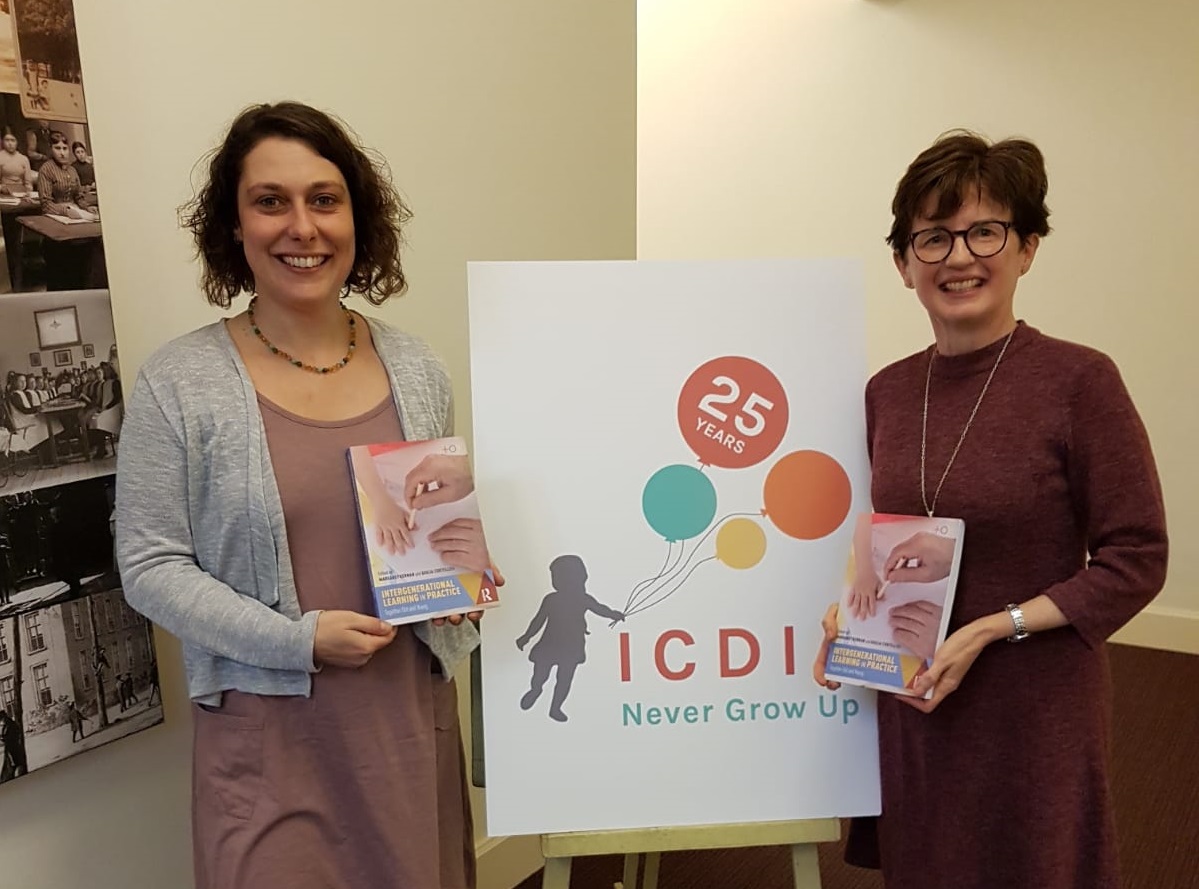
ICDI’s new edited book: Intergenerational Learning for ECEC practitioners
This month, ISSA Member International Child Development Initiatives (ICDI), launched the book Intergenerational Learning in Practice, which is published by Routledge[1]. Intergenerational Learning (IGL) brings together young children and older adults, or those who are at “two ends of the lifelong learning spectrum.” The book leverages ICDI’s successful IGL initiative Together Old and Young (TOY)[2], which in partnership with other organizations, has built a case for IGL involving young children and older adults, with evidence demonstrating how it helps to improve feelings of wellbeing, decrease loneliness and enhance social cohesion.
While there are many promising practices that bring together young children and older adults taking place around the world, the knowledge and expertise in this area has not yet been combined in one resource. This unique publication brings together the most current research as well as practical examples. The book is set to become the IGL go-to for practitioners, leaders, and researchers across sectors.
It also presents a special opportunity to highlight some noteworthy practices taking place in the ISSA Network. Editors of the book, Margaret Kernan and Giulia Cortellesi of ICDI discuss the importance of intergenerational learning, what this book is all about, and their other work on the subject.
How did TOY start and what makes it such a meaningful initiative?
Giulia:
We started looking at this in 2011 when we were seeing societal and demographic changes in Europe that are still happening. It is about migration - so children growing up away from their grandparents. It is about age-segregation - so children growing up in institutions with other children and older adults segregated in aged care facilities. We also have the fragmentation of social life in our neighborhoods. There are towns where young families are living in certain neighborhoods and other neighborhoods that become the homes for older adults.
Margaret:
Isolation and loneliness was and is another big issue. IGL addresses these concerns. Children benefit from having focused attention from older adults or mentors who have time for them and are interested in them and give an understanding of what it was like to be a child years ago. It is also a way for children to develop social skills, norms of behavior. Older adults benefit from feeling needed, involved, valued and being more physically active. The engagement with the children has a very positive effect on their health and well-being. It is important to emphasize that both groups learn from one another.
The broader family network also benefits. Parents really value their children having more contact with older adults, particularly parents who are really busy or do not have a strong relationship with the children’s grandparents. It also contributes to the general community health, creating a sense of social cohesion in the community. It gives communities the feeling that they look after one another and everyone has a role in the community and a contribution to make. Often it is the young children and older adults that are forgotten in discussions about the sustainability of communities. The focus tends to be on the employed generation so IGL gives value to these two age groups.
Giulia:
When we look at social inclusion we also look at it from a diversity standpoint. We believe that IGL can contribute to the promotion of intercultural dialogue. If older adults are involved as volunteers or mentors for young children with a minority, migrant or refugee background it is easier for the family to adjust to the new reality and it is easier for the hosting society to overcome stereotypes and build relationships with the newcomers or minorities. This was also the rationale of the TOY for Inclusion project[3]. The project gives older adults from the Roma community a chance to share their knowledge, their passions, and their traditions with children from various backgrounds, which helps the majority overcome stereotypes and prejudices against Roma.
We see this as a growing movement worldwide. We would like to see this become structural childcare and aged care.
"Intergenerational learning is a catalyst, a mobilization tool for communities."
- Giulia Cortellesi, ICDI
What communities is IGL for - do you focus only on urban communities or is it also for rural communities?
Giulia:
This is for everyone, everywhere.
Margaret:
A lot of learners participating in the TOY Online Course at the moment are talking about how relevant IGL is for their rural communities because people are feeling more isolated in rural communities. The TOY initiative makes absolute sense because it reminds them of what multi-generational community interaction can mean—and what it used to mean in the past. It is a reminder that it is healthy for different age groups to spend time together.
Giulia:
Intergenerational learning is a catalyst, a mobilization tool for communities. It can be a tool or it can be a goal in itself. Sometimes you want to facilitate intergenerational learning because there is a lack of relationship between the generations. In some other cases, it is a tool to use to reach more indirect goals like social cohesion, inclusion, and so on.
Say there is a park that needs to be redesigned, who do you consult and how do you consult them? We propose a way that is friendly to all ages instead of just consulting one age group. Instead of building new spaces in a community for one age group, why don’t we think about sharing sites? We can have childcare and aged care under one roof and staff that is trained to work with the different services.
Margaret:
It can be an approach to address many issues in all communities.
What does IGL look like?
Giulia:
It can take many different forms. It can be formal or informal. In the Netherlands, a group of older adults is supporting teachers in primary schools as teacher assistants. They receive training to support teachers and students. They are actually embedded in the school system.
Sometimes it is about institutions cooperating together and creating shared sites; in some other cases it is organizing activities or events together. There is an example of a multigenerational summer camp in Italy. For the last 5 years, they offer a summer camp for older people from a care home and children whose parents are working, so they can spend their time together during the school holiday. There are intergenerational activities purposely designed for them during a period of 6 weeks.
Margaret:
And it isn’t just about meetings between frail older adults living in residential care homes. It is also about recognizing the role of active adults who may be in their 60s and 70s, possibly retired or with some free time who would like to give something back to their community as volunteers. They can share their hobbies and interests with children in different settings such as in community arts centers, libraries, museums, or visit children at home to read to stories children.
"This is a living topic, people are aware of the importance of connecting these age groups..."
- Margaret Kernan, ICDI
What can you tell us about the book?
Margaret:
We were really keen to invite authors from different backgrounds. In the book you’ll see chapters from people who are experts in pedagogy in early childhood and working with families and community. You will also read insights from people who are expert in older adults, gerontologists.
There is also a chapter written by two architects from Denmark who describe themselves as spatial practitioners and describe with lots of photos and drawings how age-inclusive spaces might be developed.
This is a living topic, people are aware of the importance of connecting these age groups and it is something that is being discussed in Australia, United States, Canada, as well as in different countries in Europe. So, the book has contributions from many different countries and contexts.
Giulia:
We wanted to have a book where there was enough theoretical contribution, as this is a new field of research it was good for us to bring together people from different disciplines to write about pedagogy, architecture, etc.
And, we also wanted this to be an inspirational book for those who want to start their own intergenerational initiatives. So, we tried to collect as many examples of practice as possible and also give some practical tips. All the chapters in the second half of the book contain suggestions and tips for implementation.
You will read about intergenerational learning as a way to promote environmental sustainability, as a way to promote cultural transmission, as a way to promote social cohesion, as a way to promote age-friendly planning and design.
We also managed to bring in some well-known intergenerational initiatives like the TV program broadcast by Channel 4 in the UK and replicated in other countries. It is now in four or five countries. There is a chapter in the book from the first group who did it.
Why was it meaningful for ICDI to write this book now?
Margaret:
TOY is a programme which ICDI has been leading for 7 years now, and it was really time to bring the research and the practice of IGL to a broader audience. As far as we know, no one else has written a book on intergenerational learning focusing on young children and older adults.
It was also an opportunity to give our partners a chance to write about their work and reach an international audience.
Who is this book for?
Margaret:
Practitioners, researchers, community development workers, primarily but it could also be for architects and town planners. It is a very multidisciplinary area of work and it really benefits from perspectives from planning, from pedagogy, from housing, from social care. This work is rooted in the community. It is best understood when you think about it from the perspective of the child, from the perspective of older adults, from the perspective of community workers, and families. We’ve tried to reflect that in the selection of the authors—IGL is multi-sectoral and the understanding of the topic is enriched if you look at it from all these different perspectives.
We really would like the book to be a recommended or even essential text for courses about working with families in the early years, but also in social care. Our publishers, Routledge are primarily marketing this book for practitioners and leaders in Early Childhood Education and Care, but it is equally relevant for people working in social care or aged care, or community development.
If you are a researcher or lecturer and you are really interested in reading the most up-to-date research in this area, this book is also useful for you. If you are thinking about developing new research on IGL then the first half of the book is particularly useful for you.
If you are a practitioner interested in developing this new way of thinking and working then there are some inspirational practices and really practical tips and tools in the second half of the book to help you.
Giulia:
We also recommend the book to those taking the TOY Online Course[4]. This is a self-paced online course for ECEC, social care and community development practitioners worldwide runs twice per year, and is free. We recommend the book as a companion to the course. See more about the online course below.
What other materials/tools do you have related to IGL?
Margaret:
The TOY course includes discussion forums, video lectures, quizzes, and readings. It is very reassuring for those taking the course to hear that there are people doing similar work in other parts of the world—all with the belief that these two age groups need more attention and that there are huge opportunities to link young children and older adults.
We are also hearing from those in the course that they would really like to start this work but they need support from us and the course in thinking about a plan. So, we provide planning templates on the course which is very helpful for them.
Giulia:
This is the direction in which our TOY for Quality programme[5] goes to as well. We’ve developed a self-assessment tool, which is also included in a chapter in the book. We define 6 dimensions of quality in IGL and we provide guiding questions and indicators so that groups of practitioners that would like to start, or are involved in IGL, can reflect on their own practice and also identify areas for improvement.
We are really building the tools that practitioners and services need to scale-up their IGL work.
Where can you access all these tools and resources?
The book provides loads of first-hand experiences and case studies. ISSA has been lucky enough to witness some of these practices first-hand. If you are interested in reading about some of the case studies buy the book and visit the TOY Blog.
The next TOY online course begins in March 2020, learn how to join here.
[1] https://www.routledge.com/Intergenerational-Learning-in-Practice-Together-Old-and-Young-1st-Edition/Kernan-Cortellesi/p/book/9781138363465?fbclid=IwAR2-r3eAkq8H_RgdYPjlI90TR8tBFhy4Bvzk3neUXhWYeArUvNg3b3a7WmM
Published in:

Health and hygiene interventions targeting Roma families with children aged 0-1 years
We used the method of “Social accountability and Legal Empowerment", with the to empower the Roma community, to learn their rights in the Social and Health domains. In Macedonia, Governmental prevention programs for reproductive and child health are offered. In those programs, it is also included the program for active protection of the mother and children. Our aim is to empower Roma women to take up benefits, measures and activities that are offered free to pregnant women, and families who use social welfare. In order to achieve our objectives, we organized trainings for the community and after this we looked at accountability from responsible institutions. These action are very important, especially during crisis, such as the COVID-19 pandemic.
As a result of our engagement, the condition of Roma community in Bregalnica region is the best in Macedonia. More than 50 % of Roma women visit minimum one time per year a gynecologist, and the coverage of immunized Roma children is more than 90%. During COVID-19, we distributed humanitarian packages and education materials to Roma families about how to manage with COVID-19five times. As a result,untill now no one from the Roma community in Bregalnica region is affected from COVID-19.
Published in:
Growing Together
The Growing Together project consisted of three parts: improving preschool education practices by using the ISSA Principles of Quality Pedagogy and parent and community involvement; building community and partnerships at the primary school level, and parental education. The project's results were disseminated through Ministry of Education and other agencies.
Published in:
Family Resource Centres
Family Resource Centres were established in Kyzyforda, Zhambul and Semey in Kazakhstan to assist families whose children were not attending preschool (typically poor families). The centers welcomed children and families to prepare them for primary school. The parents received information on child development ad how to promote it at home. The families also learned how to communicate with the schools and became advocates of democratic approaches.
Published in:
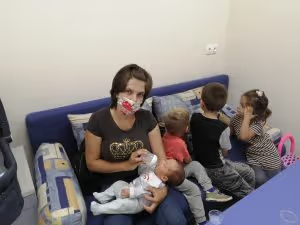
Emergency Family Support for Families Affected by COVID-19
Our social services are providing food material support to children and their families who have been affected by the global pandemic and its mitigation measures. Such an event, like the pandemic, may disrupt parenting practices and family routines and thus affect child health and development. By supporting the economic stability and reducing the material hardship of dozens of families who use our services we enhance parents' capacity to deal with or avoid the instability caused by the crisis.
The support was targeted at families with children under the age of 7 and pregnant women. We selected those who had lost their job because of the pandemic or whose economic condition has worsened enough to prevent them from meeting their basic needs. We were working with families that were already our clients as well as with families that we identified during outreach initiatives in Fakulteta - one of the largest Roma neighborhoods in Sofia. We signed a contract with each of the families for a period of three moths and within this period, we provided them with two sets of supplies with nonperishable food.
The programme involves five stages:
1. Evaluation of the needs of the family.
2. Developing a support plan in collaboration with the family.
3. Providing the emergency support.
4. Reporting on the effects.
5. Closing the case or referring the family to a different programme in coordination with the education, healthcare and/or social support systems.
Published in:

EDUCAS project – Achievements of the Consortium
EDUCAS project awarded with Epos quality label for 'Good practice in 2021'
In March 2022, Epos agency, responsible for the implementation in Flanders of various programs and actions, such as the Erasmus+ programme, has granted the EDUCAS project with an
'Epos Quality Label for Good practice in 2021'.
Over the past three years, the EDUCAS project has been working to contribute to creating child and family friendly learning spaces in Early Childhood Education and Care (ECEC) centres. The project consortium has published the following seven resources during the project to help professionals create ECEC environments that support children’s development holistically.
EDUCAS Toolbox - Wonder and Beauty: Connecting ECEC spaces and educare
The EDUCAS Toolbox aims to support coordinators, coaches, trainers, professionals that seek to stimulate professional development paths with ECEC staff with the aim to create child and friendly learning spaces in ECEC centres.
The Toolbox includes pedagogical approaches, methods and tools used during the EDUCAS project to support professionals in improving ECEC environments with an educare approach.
You can access the full Toolbox here and download your copy in English, Dutch, Italian or Lithuanian.
Watch the video recording presenting the Toolbox.
Policy recommendations - Strengthening the importance of SPACE and EDUCARE approach
Educating and caring for young children is a big responsibility, challenge and commitment. The recently released “Policy recommendations for strengthening the importance of SPACE and EDUCARE approach in early childhood systems” aims to provide a comprehensive set of recommendations for policymakers at EU and national levels, funders, and other ECEC stakeholders.
These policy recommendations are based on the findings and insights from the EDUCAS project implemented in Belgium (FL), Italy and Lithuania, an extensive literature review, country policy recommendations, and other international documents developed by project partners.
Read and download EDUCAS Policy recommendations here.
EDUCAS Case Studies
Throughout the three years of the project, partners in Belgium (FL), Italy and Lithuania have undertaken a thorough examination of existing visions and methods related to organizing ECEC environments in their contexts. With the support of two ECEC centres in each country, they have developed action research paths locally that are tailored to the contexts in which the six ECEC centres are working.
Each case study presents the action research coordinated by each project partner, and developed together with the ECEC centres involved.
- Belgium (FL) – Re-thinking ECEC spaces/materials by reflecting on practice
- Italy – The Space in mind
- Lithuania – Building collaborative learning community
The points of view of families, professionals and children
The EDUCAS project started the Continuous Professional Development Paths (CPD) in the three countries involved with specific focus groups involving families and staff in the ECEC centres partners of the project.
The aim was to get a better insight of the needs, ideas and beliefs of staff and families concerning the theme of the project, and to elaborate a bottom-up participatory implementation path (case study – action research).
The report titled “The points of view of families, professionals, children” presents a summary of the analysis of the focus groups with staff and parents, and of the drawings and interviews with the children in Belgium, Lithuania, Italy.
Download and read here.
The meanings of spaces in ECEC centres: a literature review
This literature review investigates the meanings, relevance, and importance of physical indoor and outdoor space in ECEC services for children from birth to school age.
Special attention is placed on the educare approach and on the involvement of children and families in the discourse.
Drawing from the findings of the literature review, implications for practice are discussed and some key recommendations are provided.
Access the literature review here.
EDUCAS project in a nutshell? Watch this video
Published in:

ECD activity cards (English)
ECD activity cards
Children’s right to play, leisure and education is threatened during and after emergency situations. Many young children living in refugee homes arrive in their host country after a dangerous journey, and potentially traumatic experiences. Life has changed, and the new living environment is different — and often not child friendly. Many parents suffer from high levels of stress and find it difficult to provide their children with the comfort, support and incentives they need to develop and learn.
The ECD Activity Cards were developed by UNICEF and ISSA as a practical tool to support the planning of Early Learning and Play Groups (ELPG) as part of the daily management of Child Friendly Spaces (CFS) in refugee homes. The cards are designed to create physically and psychologically safe spaces where children feel welcome, valued and empowered to learn and develop — helping to alleviate psychological distress and re-establish stability.
The ECD activity cards can also be used to strengthen parent-child bonds and to support educational and accountable care by providing caregivers with ideas for activities they can use to help children play and relax.
Available in Bulgarian, English, Romania, Russian and Ukrainian.
Published in:
Diversity+
Diversity+
The high quality, inclusive Early Childhood Education and Care (ECEC) is an essential foundation for children’s successful lifelong health, learning, social integration, and personal development. It can also help close the achievement gap for children from vulnerable and disadvantaged groups and provide them with the best start in life. Yet, ECEC facilities, approaches and services have not always been designed and professionals prepared to meet the pluralistic needs of all children and their families.
What Diversity + project aims to?
To address these challenges Diversity+ aims to provide ECEC professionals, managers and practitioners with governance, benchmarking, recognition and professionalization tools to help them transform their practice and open up to diversity that exists among children and families.
What are we going to do?
This three-year project will develop concrete and practical resources that offer a structured and supported approach to quality inclusive service design. The toolkit will contain:
- A Diversity+ Charter to set out the minimum requirements for an ECEC organization to be considered as “Diversity positive”;
- An interactive digital Assessment tool which ECEC practitioners and managers will be able to use to assess current services and track improvements;
- A “European Qualification Framework” (EQF) profile and training resources to profile key knowledge, skills and attitudes required to respond to the individual needs of children from different backgrounds or with special educational needs
- A set of thirty interactive games that will help ECEC practitioners to work with children on recognizing and addressing biases, prejudice, discrimination, and exclusion, to sustain critical thinking in children, and support them to speak out for themselves and others, and threat everybody with empathy and respect regardless of their origin, gender, background, level of abilities, language and other existing differences.
Who is involved?
The project is led by the Italian partner CIAPE, and it involves other partners such as Link Campus University in Italy, Aspire-Igen in UK, Fondatsiya na Biznesa za Obrazovani in Bulgaria, Skola Dokoran in Slovakia, and Schola Empirika in the Czech Republic. ISSA contributes to the project by providing technical support for the development of different tools and resources, and leads its dissemination activities.
Diversity+ Toolkit
Diversity+ Charter
A set of minimum requirements that ECEC services and institutions have to meet to accommodate different types of diversity and be classified as inclusive and diversity positive (Diversity+). The Diversity+ Charter aims to provide practical guidelines and recommendations on how to make the ECEC environment more inclusive. Read more.
Download: ENGLISH | BULGARIAN | DUTCH | CZECH | ITALIAN | SLOVAK
Read more about the Diversity+ Charter
Diversity+ Footprint Assessment Tool
Based on the European Quality Framework for Early Childhood Education and Care, this interactive digital tool is meant to support ECEC officers - often not specialised in diversity inclusion - to assess current services and mostly understand in a visual way the concrete, necessary steps needed to improve their provision. The organizations rated as having an ‘excellent’ Diversity footprint get a Certificate likely to increase the prestige of the organisation itself and encourage others to undertake a similar path.
Apply the tool in ENGLISH | BULGARIAN | CZECH | DUTCH | ITALIAN | SLOVAK
Read more about the Diversity+ Footprint Assessment Tool
EQF of Diversity Ambassador in ECEC environments
The "European Qualification Framework of Diversity Ambassador in ECEC environments” is expected to improve ECEC HR management, to profile key knowledge, skills and attitudes required to respond to individual and group needs of children from different backgrounds and with special educational exigencies. Specific learning resources complement the EQF profile in order to smoothly develop the role of a Diversity Ambassador: key feature of a diversity positive ECEC provision. Also, the tool eases the readability of the profile, thus ultimately the professionals' mobility, across Europe.
Download: ENGLISH | BULGARIAN | CZECH | ITALIAN | SLOVAK
Read more about the Diversity+ Ambassador
Diversity+ Serious Game
An online game-based tool with 30 interactive scenarios, addressing teachers and other staff in early childhood education and care (ECEC). The animated scenarios are built around common situations arising in everyday dynamics related to discrimination, racism, bias and stereotypes.
Play the interactive scenarios ENGLISH | BULGARIAN | CZECH | ITALIAN | SLOVAK
Diversity+ eBook
The Diversity+ eBook aims to present the variety of approaches found across different European countries during the research phase of the project, and to provide examples of inspiring practices and solutions to existing problems. Read more.
Download: ENGLISH I BULGARIAN I CZECH I ITALIAN I SLOVAK
Published in:
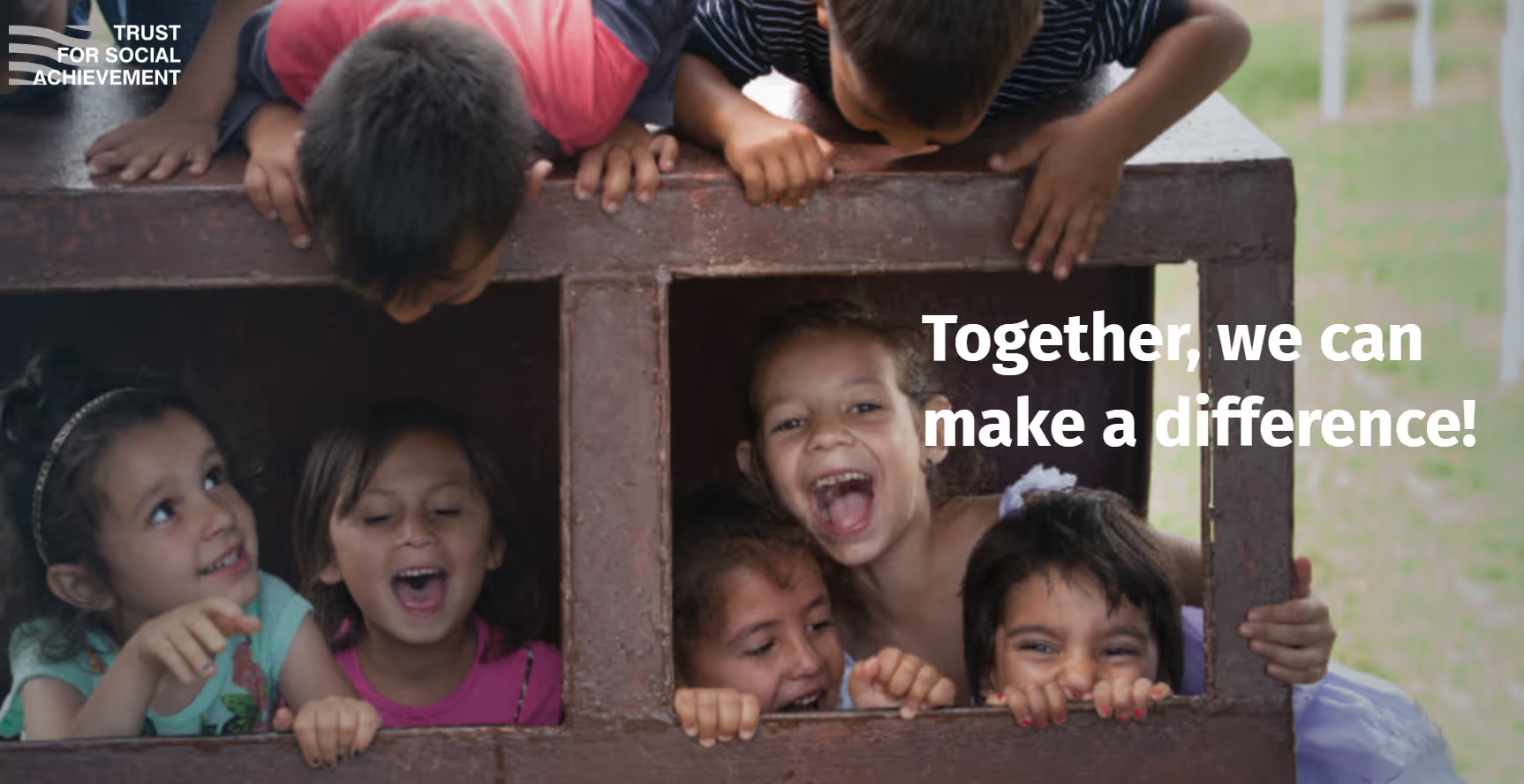
Distribution of emergency educational kits for children in remote locations, enrolled in our alternative access to quality early education services, which were interrupted due to the pandemic
The Trust for Social Achievement Foundation – Bulgaria has been engaged since the onset of the pandemic in Bulgaria in searching for appropriate mechanisms to support the learning process for disadvantaged children, particularly those who face challenges to participate in the online distance learning, as well as those in remote or underserved locations for whom early learning and care programs were interrupted.
We have partnered with several business and with our network of partners from the local communities to provide equipment (laptops, PCs) for children in need.
Additionally, we also try to focus on providing educational supplies and consumables for the youngest children in our alternative access initiatives – those are projects offering high quality play-based learning for children from disadvantaged communities, living in remote rural areas, with no direct ECEC service offered, esp. those aged 2-4 y.
To meet the need of those children and families of basic educational supplies like pensils, colouring books, materials for home-based educational play, so as not to stop the advancement of children’s skills and learning, already achieved, TSA has been facilitating the shipment of such materials or directly providing and disseminating those.
Our most noteworthy effort in this regard was in partnership with World Wide Orphans-Bulgaria, who initiated and provided supply of emergency educational kits, including basic food supplies and hygiene products, prepared the kits, facilitated the distribution. Our network of local partners coordinated the distribution with the local authorities and the community centers, involved in our project.
Additionally, the local network regularly distributes materials and ideas for home-based educational play for parents to use and get inspiration from. The channel for this communication is social media groups and individual phone consultations.
As a result, children and families were supplied with basic necessities for continuing the work for developing important socio-emotional and language skills during the months of interrupted access to the activities of the project.
Published in:

Creating your own YouTube video for online teaching
An Early Childhood Educator shows how one can video tape themselves and then create a YouTube video which students can watch at home at their convenience. The practice has helped other educators who were unable to use platforms like Zoom and still wanted to create a video of themselves teaching for their students.
Published in:

Creating Inclusive Resource Centers
Inclusive Resource Centers (IRC) in five sites in four regions were developed under the programme supported by USAID. Their main purpose is to provide complex inter-sectorial support to children with special needs, their parents and teachers working with these children in pre-school and primary classrooms trough psychological-medical-pedagogical consultations.
The main achievements included:
1) increased number of services for parents of children with special needs;
2) increased level of trust;
3) more competent teachers.
The government adopted the Resolution to create such Centers all over Ukraine by September 2018.
Published in:
Creating a Functioning Model of Stakeholders Collaboration in Municipalities with Romani Communities
A functioning model for multi-stakeholders collaboration at municipality level to work with Romani communities is developed to improve the responsiveness and accountability of local authorities, particularly elected and senior civil servants towards marginalized Roma communities and to build the capacity of local authorities and Roma community representatives to develop and implement policies and public services that are inclusive of all, including Roma.
The initiative does this by:
a) raising awareness and building the commitment of local authorities to Roma inclusion;
b) agreeing on what needs to be done to improve the educational level of the Roma community;
c) creation and operating of Local Action Teams (LAT) from the representatives of local Roma community and municipality staff in order to plan, prepare, monitor and evaluate actions for improvement of the educational results and level of the Roma community; d) Delivery of trainings for Local Action Teams: Governance and Leadership in Multicultural Environment, Intercultural, Inclusive Policies and Strategies, Communication and Self-organizing, Access to EU funding mechanisms and project writing/management.